REVIEW: Johnny Cash – American IV: The Man Comes Around (with DVD, 2003)

For Lara, and Rob.
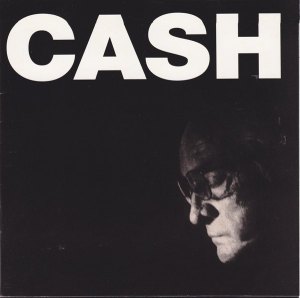
CASH FRONT

JOHNNY CASH – American IV: Β The Man Comes Around (2003 American)

I have published over 300 reviews here at mikeladano.com (use the search button on the top right to look up anything you want). Β Yet, I still hadn’t got around to Johnny Cash! Β That’s strange, because Johnny Cash is very special to me.

Everybody “says” they love Johnny Cash. Β Many of them jumped on board when he died and became “cool” again. Β Take Dandy, for example, a trend chaser who inked Johnny’s face on his arm a few months after he died. Β But hey, if you’re on board now, that’s cool. Β There’s plenty of room for everyone.

Johnny Cash was my first concert. Β In Canada in the early 1980’s, Johnny had an endorsement deal with Canada Trust, where my dad worked. Β Their brand new ATM machines were called Johnny Cash machines, and my dad even had some promotional Johnny Cash bills, a cool marketing gimmick. Β He went to see Johnny, his idol, when Johnny came to town. Β The first night of a two-nighter, my dad met him. Β On the second night, he brought me along (I didn’t get to meet him). Β Johnny modified his original concert opening by saying, “I’m Johnny Cash, 24 hour money machine” (in reference to the ATMs). Β I still remember June kicking off her shoes!

The Man Comes Around is my favourite of the American Recordings, helmed by Rick Rubin. Β It was also the last one released in Johnny’s lifetime. Β It is, all at once, extremely powerful, morose, joyful, and catchy. Β All filtered through Johnny’s unmistakable baritone, worn and weary but no less strong and expressive. Β Like other American albums, it is a mixture of originals and covers, oldies and more recent fare.

The most well-known song on American IV was “Hurt”, the Nine Inch Nails cover. Β It is remarkable by being so different, yet true to the spirit of the original. Β I prefer Johnny’s take on it to Trent’s, truthfully. Β “Hurt” is only one of many remarkable covers on this album. Β Johnny and Fiona Apple tend “Bridge Over Troubled Water”, with quiet mellotron in the background.

My favourite song is Sting’s “I Hung My Head”. Β I couldn’t believe the credits when I read that (having skipped Sting’s Mercury Falling album). Β I thought for certain this had to be a new Cash original. Β Lyrically, I was convinced this tragic tale came from the mind of the Man in Black, but I was wrong. Β It’s a spellbinding song, painting a clear picture, and Johnny’s delivery is perfect.

“In My Life” is the favourite of Mrs. LeBrain. Β She’s a huge Beatles fan. Β We selected this song for the signing of the register at our wedding. Β I received kudos on the musical selection from Tom Morwood and Jen’s Uncle Rick, who loved the Johnny. Β While very different from the Beatles version, I think I can safely say I like both equally.

I’m not too keen on the Depeche Mode cover (“Personal Jesus”), but I don’t like Depeche Mode much. Β I know some who think the cover is brilliant, so we’ll go with that. Β Johnny and Rubin tranform the song into a dark acoustic stomp.

Other highlights include the classic “Sam Hall”, which Johnny also performed on his 1965 album,Β Johnny Cash Sings Ballads of the True West. Β I love Johnny’s energetic delivery on this traditional. Β We enjoyed this one at the record store, a lot. Β “Danny Boy” is another from 1965 (Orange Blossom Special) that Johnny takes a second crack at. Β This time it’s a more intimate affair without the backing vocals. Β Johnny compensates with his rich storyteller’s voice, each flaw telling a story of its own.

Elsewhere, I love “Desperado”. Β And that’s interesting because like the Dude, I hate the fuckin’ Eagles.

The album closes with “We’ll Meet Again”, the Vera Lynn classic. Β I always think of Kubrick (Dr. Strangelove) when I hear this song. Β So for me, I can hear a sly wink in “We’ll Meet Again”, a hint of humour, as if Johnny knew this would be the last song on the last album released in his lifetime.
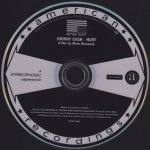
HURTBut it’s not really the last song. Β On my wishlist is the vinyl edition, which had two bonus tracks: Marty Robbins’ “Big Iron” (another personal favourite) and an exclusive version of “Wichita Lineman”.

My copy of the album came with a bonus DVD. Β Nothing to get excited about, it’s just the music video for “Hurt”. Β Granted that’s a great video, but the DVD is less special in 2013 than it was in 2003. Β Now, everybody Youtubes.

Wow, I just used “Youtube” as a verb.

Anyway. Β 5/5 stars!

REVIEW: Deep Purple – Power House (1977 Japanese import)

PH FRONT CD

DEEP PURPLEΒ – Power House (1977 Β Warner Bros, Japanese import)

I have always loved listening to the Power House album,Β featuringΒ the classic Deep Purple Mk II era. After Purple broke up in ’76, the market was inundated with compilations and live albums. This one, and others likeΒ Last Concert in Japan, and When We Rock We Rock…Β were snapped up by fans who wanted more Purple. All of these albums have been rendered redundant by superior, current Deep Purple remasters. Β If you’re the kind of fan who collects all of those 70’s posthumous Hendrix albums, then you’ll dig Power House,Β a brief but enjoyable romp through less familiar Purple. You’ll even get the original liner notes by Simon Robinson.

Power House consisted of 6 then-unreleased tracks. Here’s your complete track list:

1. “Painted Horse”. Β This is an outtake from the Who Do We Think We Are sessions in July 1972. Β This is the track that Blackmore “didn’t like”. Β He hated what Gillan did with the vocal, and demanded it be changed. Β Gillan refused, and the result was a great, unique Deep Purple rocker that remained unreleased until after the band was defunct.

2. “Hush”
3. “Wring That Neck”
4. “Child In Time”
From the Concerto for Group and Orchestra program in September 1969. Β The original hit LP release of the Concerto had just the three movements of that piece. Β Deep Purple played a standard three song set before the Concerto, and here it was released on Power House. Β These three versions remain among my favourite performances of these songs. Β “Child In Time” had yet to be recorded on album, and Jon Lord’s melodies are experimental and in development. Β Very cool. Β It’s “Hush” that really smokes, a definitive version of this cover. Β Gillan made it his own right there.

Today the Concerto is available remixed on two discs, with the full piece, the Deep Purple set, and the Royal Philharmonic’s rendition of Malcolm Arnold’s “Symphony No. 6”, which was also performed that night.

5. “Black Night”. Β Another nearly definitive version in my books! Β This is a B-side, recorded at the Made in Japan dates in August 1972. Β This is widely available today on various extended versions of the Japan shows, the Singles A’s and B’s, 24 Carat Purple, and many others.

6. “Cry Free”. Β Outtake from the Deep Purple In Rock sessions in January 1970. Β It is incredible how fertile the band were in the early 1970’s. Β As if In Rock wasn’t amazing enough, this kind of song doesn’t even make the album? Β Amazing that Deep Purple’s outtakes were so impressive. Β That they could throw this away speaks volumes of their confidence at the time.

Regardless of Power House beingΒ supersededΒ in recent years by better packages, I still enjoy this album, in this sequence.

4/5 stars

Part 196: Happy Rockin’ Mother’s Day!


RECORD STORE TALESΒ Part 196: Β Happy Rockin’ Mother’s Day!

I’m hoping I don’t embarrass my mom too much with this post. Β I love my mom. Β My friends love my mom. Β Everyone loves my mom, they always have. Β It used to drive me nuts, actually. Β Particularly with my friend Bob, it drove me nuts. Β My friends would come over and spend more time talking to my mom than to me!

Joe, who ran one of our stores, was one friend that always enjoyed seeing my mom in his store. Β Unfortunately for me, Joe really used to tease me about it, too. Β Long time LeBrain readers will remember one story in particular.Β  Here’s the pertinent text from that tale:

One morning I was opening the store, and my computer beeped the sound that told me, “An order just arrived, please read me!”Β  So I did.Β  Only the order looked something like this.

ARTIST:Β  I’m totally going to

TITLE:Β  bone your mom.

I was digging through boxes of stuff, as Mrs. LeBrain and I prepare to move to a larger place this year. Β In a closet I found a card from the record store. Β Joe had signed it.

For my mom…happy Mother’s Day!


Next time on RECORD STORE TALES…

What’s on the menu?

REVIEW: Ozzy Osbourne – “Flying High Again” (2011 Record Store Day exclusive single)

FLYING HIGH AGAIN_0003

OZZY OSBOURNEΒ – “Flying High Again” (2011 Record Store Day exclusive)

Here’s something of an underappreciated item. Β Everybody knows that Ozzy and Sharon re-recorded the drums and bass on Blizzard of Ozz and Diary of a Madman back in 2002. Β In retrospect this was a shrewd move despite the fan backlash. Β In Lucas-esque fashion, it enabled them to restore the original versions for much-hyped reissues in 2011. Β To usher in these new/old releases, Record Store Day shoppers were able to buy a replica original “Flying High Again” single.

Both the reissue and the original 1981 single featured the B-side, “I Don’t Know”, recorded live at an unspecified gig. Β Like Diary of a Madman itself, this B-side had its bass and drums re-recorded in 2002. Β It is difficult to hear the differences, but listen to the bass tracks right around the 2:10 minute mark. Β Where Bob Daisley plays lots of interesting harmonics, the re-recorded version has Rob Trujillo hitting the lows. Β The bass parts are very different.

DIARY_0001

The credits on the 2002 edition of Diary indicate all tracks, “live” one included, were remixed with new bass and drums.

When Diary was reissued in 2011, it did not include this B-side, but instead an entire (different) concert on a bonus CD. Therefore the original version of the “I Don’t Know” B-side remains a vinyl exclusive. Β Cool. Β I am not sure why this was notΒ advertised on the single sleeve or in the media. Β In fact, I’ve owned this single for two years without putting 2 + 2 together. Β The “Flying High Again” vinyl single is the only place you can get the original, untampered “I Don’t Know” live B-side!

For that reason alone:

5/5 stars

But is this worth $12 as per the price tag? Β That’s one thing that bugs me about these singles today. Β I understand that manufacturing costs have changed and it’s a niche item, but still! Β $12 for one song. Β  Β One song, because they were going to sell us all “Flying High Again” itself on the Diary reissue, asΒ advertisedΒ on the front.

Price: 2/5 stars

REVIEW: Deep Purple – Deep Purple (1969)

DP FRNT

DEEP PURPLE –Β Deep PurpleΒ (1969 EMI, 2000 The Original Deep Purple Collection)

I love when bands release a self-titled album as their third, perpetually (purpetually?) confusing fans who think it’s their first! Β Maybe not so much in the Wikipedia age, but many of my customers thought that Deep Purple was the band’s debut.

This album is unbelievable. I know people, very particular music fans, who consider this to be the best Deep Purple album. I wouldn’t make that claim myself (I prefer Fireball) but I rank this one very high. Neither of the first two albums by Deep Purple Mk I did much for me. Β I found them meandering and plodding. Β Somehow, by the third record, the band had morphed into something different. Β The singer was Rod Evans (Captain Beyond) and the bassist was Nicky Simper (Warhorse). Β And of course more changes would come, since this would prove to be the last album for both men.

Side one, track one is an amazing opener called “Chasing Shadows” (not to be confused with a later Deep Purple song just called “Shadows”) that features a Paice-arranged drum orchestra throughout the whole song. “Blind” is second, which features Lord on harpsichord. How 1960’s! Great song though, slow and mournful with a wicked Blackmore solo. Β This is followed by the Donovan cover “Lalena”. It is another sad sounding track in a row, but with a beautiful organ opening from Jon Lord. A brief instrumental called “Fault Line” is a crazy interlude, recorded backwards with the bass recorded forwards. That melds into a serious rocker called “Painter”, which ends side one. “Painter” to me is best remembered for Ian Paice’s inventive drumming and Blackmore’s excellent bluesy playing.

Side two began with “Why Didn’t Rosemary?”, a groovy blues rocker with the relentless rhythm section of Paice and Simper driving it. “Bird Has Flown” follows, but not the Beatles song. It verges on heavy metal with Blackmore leaning heavily on the wah-wah peddle. The final track, “April”, is a 12 minute tour-de-force and an obvious foreshadowing to the next Deep Purple album, Concerto For Group And Orchestra. It features a long opening in two movements. The first movement is mostly organ and classical guitar, with some electric guitar accents. The second is based entirely on classical instruments and sounds very medieval at times. (Foreshadowing Blackmore’s Night!) Β Finally, the band kicks in with an intense rocker, Paice laying it down hard. Β Rod Evans’ lead vocal is among his best, a fitting swan song, although he certainly didn’t know that at the time!

Indeed, even while Deep Purple were gigging with Rod Evans and Nick Simper in the band, they would soon secretly begin rehearsing and recording with their replacements, Ian Gillan and Roger Glover!

This excellent CD remaster comes with an extensive booklet and five bonus tracks. Some of these bonus tracks were completely previously unreleased. These are live BBC performances and non-album singles. Notably included are two cool, catchy and rare singles A-sides: Β “Emmaretta” and “The Bird Has Flown” (an earlier version of “Bird Has Flown”). Β Some of the BBC performances have since been released on compilation albums, but these are rare performances indeed. Β In a short while, the band would write In Rock and drop most of the old songs from their set.

The only flaw with this CD, (and I’m talking the only flaw), is the cover. That awesome painting by Hieronymus Bosch is one of the coolest, creepiest, most interesting paintings I know. The original LP was a gatefold and you could fold the whole thing out and stare at it for years. The cover on this CD is so tiny, and doesn’t show the back part of the LP. Β That’s a real shame. Β For such a great cover, for it to be chopped and rendered down to about 2″ per side…it doesn’t make any sense. Β What a blown opportunity. Β The CD should have come with a small fold out poster, at least.

5/5 stars…but pick up an original LP if you can. I have a purple vinyl reissue, but it lacks the gatefold, and you really lose something without the gatefold.

An original LP is seen below.

REVIEW: Criss – Criss (1993 EP)

“LIKE” the LeBrain Facebook page for exclusive content.

CRISS – Criss Special Limited Edition (1993 EP, TNT Records)

At long last, Peter Criss was releasing new music, for the first time since 1982’s Let Me Rock You, over a decade prior. Β Tellingly, it was a mail-order only release, on a small California label called Tony Nicole Tony Records. Β It ran me over $40 Canadian (with shipping) to order it. Β It was a limited edition, all copies to be numbered and signed by the Cat himself.

An angry letter and six months later, I finally received my Criss EP to find that the hyped signature was just printed on. Β Yes, it was numbered (mine is #2408), but for $40…come on.

I overlooked the sad artwork of Peter’s face, half painted in his old cat makeup, and hair bleached blonde. Β I cracked the seal, put the disc in and hit play.

I was struck immediately by the poor production. Β The drums sound awful. Β For a solo EP by a drummer, I was hoping for better sounding drums than this. Β Peter’s singing was OK, but the lyrics? Β He does this section near the end of the the first song, “The Cat”, that was just…stinky.

Listen to this one now.
Gene and Paul went up the hill to fetch a pail of water,
Gene fell down and broke his crown,
And Paul came tumbling over.

And then his does this weird high pitched shriek that is soΒ embarrassinglyΒ terrible, that I couldn’t believe it made it only to the album. Β Well, it could only get better from there.

Nope.

The same awful sounding drums, rapping, and another awful lyric:

Planes, trains and limozines,
So what? What does it mean?
We’re burning down like Mercury,
God bless the Killer Queen.

This time the singer isn’t Peter, but a fellow with a mohawk called Mike Stone. Β This same Mike Stone would later end up in a band called Queensryche. Β And if anything was worse than Peter’s shrieking on track one, it’s Mike Stone’s singing on track two. Β And the song sucks, too.

“Good Times”, an electric ballad with a soulful vocal from Peter, is pretty good. Β It has the vibe of something that would have fit onto Peter’s 1978 solo album, without the schlock. Β OK, one good song. Β At least there’s one.

But then Mike Stone rears his ugly mohawk again, on a song called “What You’re Doing”. Β No, not the Rush tune. Β It’s not a bad song, but Stone’s truly awful singing renders it unlistenable. Β Finally, Peter saves this drowning EP with an acoustic remake of “Beth”. Β It must be remembered that up to this point, an acoustic version of “Beth” had never been released. Β It was presented that way in the Kiss Meets the Phantom of the Park movie, but until this EP, you couldn’t buy it like that. Β So this is cool, and slightly different from the version that later ended up on the Cat #1 album.

I have no doubt this is very rare today, and I’ve never seen another copy. Β If you can find it, great. Β But you may not need to listen to it.

1.5/5 stars

REVIEW: Quiet Riot – Rehab (2006)

Part 2 of my 2-part review of the Quiet RiotΒ Twin PackΒ set. Β Twin PackΒ bundled the band’s final two releases: Β a retro live album, and the final studio album,Β Rehab.

QUIET RIOT – Rehab (2006 Demolition)

I love Quiet Riot, even more than I have reason to. Metal Health was the first “metal” album I ever bought, on cassette, and I’ve re-bought it three more times since. I just love that album, and I admit it’s probably 60% music and 40% nostalgia. Since it came out, I’ve managed to collect a lot of Quiet Riot. Β PrizeΒ possessionsΒ are my CD copies of Quiet Riot I and II. Β This Twin Pack set was important to me because the version of Rehab contained herein has the European bonus track, “Wired To the Moon”.

It turns out, however, that Rehab kindaΒ sucks. It has its supporters who enjoyed the heavier, bluesier sound. Β Rehab unfortunately repeats the problem that Quiet Riot have had for many years: Β they don’t write very many good songs! Β Kevin DuBrow and Frankie Banali were reduced to a duo after the departures of Rudy Sarzo (who went on to Dio and is now in Tateryche) and Carlos Cavazo (now in Ratt). Β Rehab had the right ingredients in place, with the awesome Tony Franklin on bass and Glenn Hughes providing backup vocals, but it was not to be. I give them an A for effort, as I am usually in favour of heavying up the sound and adding blues elements. Β They get a D for execution.

The concept was to leave behind the glam rock, but the songwriting is so underpar. Β Choruses and verses don’t mesh, melodies don’t stick in the head, and riffs don’t hit you where it hurts. The best song, “South of Heaven”, is a really good Zep-ish tune though. Β “Strange Ways” features an incredible solo by Neil Citron, like a cross between jazz fusion and Eddie Van Halen. Β Jazz Halen? Β On the other hand, “Old Habits Die Hard” is one of the more colossal failures. Β Aping Joe Cocker’s “With A Little Help From My Friends”, DuBrow sinks this one all by himself with his overwrought lead vocal.

There are some good moments. Β Pretty much all the guitar solos and instrumental sections are incredible. Β The drums are good. Β A song called “Beggars and Thieves” is one of the better songs, because it is anthemic and memorable like old Quiet Riot. Β Unfortunately, that cannot be said of most of this material. Β Glenn Hughes classes up the place by several notches when he shows up at the end, but this also highlights Kevin DuBrow’s limitations.

I dislike the cover art and packaging. Β DuBrow’s wig, oh my God. Β Seriously? The old Quiet Riot logo is also gone, and the masked mascot dude is barely visible. Β The album was self-produced by Kevin and Frankie, but they really should have spent some money on a producer with a decent set of ears. Β These songs would not have passed muster with any serious producer. Β The title of Quiet Riot’s final album is now a sad irony, considering DuBrow’s overdose at age 52.

2.5/5 stars

And sadly, almost unbelievably, the band’s legacy has been tarnished even further with Banali’s hack version of the band currently touring without any original members. Β And Kevin rolls in his grave.

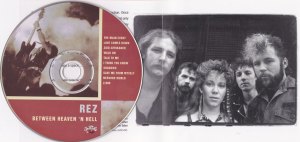
Part 195 / REVIEW: REZ – Between Heaven ‘N Hell (1985)

Β RECORD STORE TALES Part 195: Β REZ – Between Heaven ‘N Hell

March, 1986.

“I got some cool new bands,” said Bob one day after school. Β He had been working at the nearby Harvey’sΒ restaurantΒ and had been exposed to some unfamiliar music from his co-workers.

“Have you ever heard of Christian rock?” he asked me.

“Yeah,” I answered. Β “Stryper are Christian rock. Β I like Stryper.”

“Well,” Bob explained, “I taped all the best songs by two awesome bands: Β REZ and Darrell Mansfield. Β REZ is short for Resurrection Band. Β Darrell has this awesome song called ‘Thunder and Lightning’. Β You have to hear it! Β It is so cool.” Β Bob then sang the chorus to me. Β Sounded good.

The songs he, and soon I, were enthralled with were as follows:

Darrell Mansfield: Β “Thunder and Lightning”, “After the Storm”.

REZ: Β “Zuid Afrikan”, “2,000”, and “Shadows”.

Bob taped them from a guy at Harvey’s, and then I taped them from him. Β I had a third generation tape, which I played over and over. Β We played the hell out of those three REZ songs. Β They were absolutely incredible songs, and the lyrics were cool too. Β They didn’t come across as “overtly” Christian, but all had positive messages. Β Bob particularly loved “Shadows”, and a brilliant song it was. Β He loved the lyrics, as Bob and I were both very anti-drug:

In the words of his mama,Β ‘He was my only son.’
In the words of his sister,Β ‘He was on the run.’
In the words of his girl,Β ‘How could it end this way?’
In the words of his daddy,Β ‘Well he never had much to say.’

The lyrics mentioned “angel dust and tortured dreams”, and we knew what had happened to the subject character of the song. Β It focuses on the friends and family left to carry on. Β But before too long, an uplifting chorus:

Lord You, You took the shadows,
All my fears and doubts, and brought me out of the night,
Lord You, You take the shadows,
Give me hope and love, turn my darkness to light.

For a little while, we had a new favourite song.

We didn’t know the name of the singer (Glenn Kaiser), but his gravelly voice was a cross between Bob Seger and Rod Stewart. Β He was our new vocal hero that spring. Β Now, if only we could hear more by REZ…

REZ CD

March, 1998.

By this time, my old cassette tape with the REZ songs was unlistenable. Β Because of this I hadn’t heard anything by the band in many years. Β I had been working at the store for four years, but never saw any listing for this band. Β ButΒ T-Rev had a tendency to check out-of-the-way places for CDs. Β Downtown Kitchener one Sunday afternoon, we were checking out a new local pawn shop. Β In their $1.99 CD bin, I found an interesting title: I believe it wasΒ called Inspirational Rock. Β It struck my eye immediately because one of the included tracks was “Shadows”, by REZ. Β It was an automatic purchase.

I closed the door and hit play. Β A single haunting, acoustic guitar played a dark melody.

You, you chase the shadows,
Because your hopes and dreams have been lost in the night.

Once again, I had a new favourite song.

March, 2008.

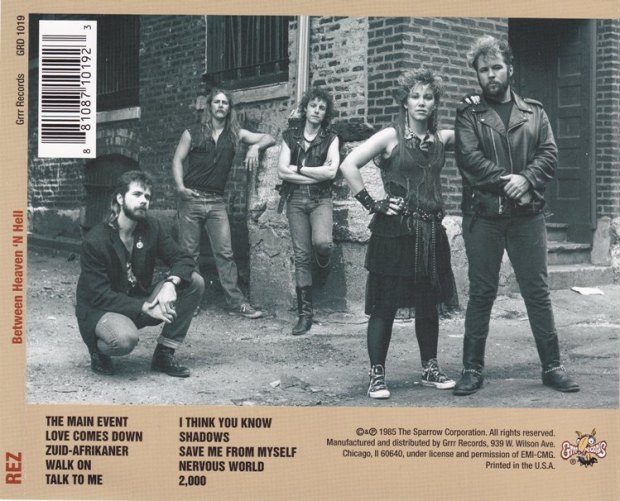
I learned that Between Heaven ‘N Hell, by REZ, was finally issued on CD, 23 years after its initial release! Β Amazon.com had it for a reasonable price, and of course I had to have it. Β For the first time in almost two decades, I had the chance to hear “2,000” and the anti-apartheid track “Zuid Afrikan” once again. Β And they were just as good as the first time I heard them. Β I found other standout tracks as well, such as the scorching “I Think You Know”.

I was surprised to find that the band had a second lead vocalist, Wendy Kaiser. Β In fact she’s on the front cover! Β Her songs tend to be more new wave oriented, but she does rock out on some, like “Save Me From Myself” and “Nervous World”. Β Unfortunately, her voice is not to my taste, so I tend to gravitate solely to the Glenn Kaiser songs.

The final song on the album is “2,000”, one that Bob and I used to rock out to all those years ago, in the parking lot of Stanley Park Sr. Public School on Hickson Ave. in Kitchener Β We’d pop like 14 D-cells or something like that into a ghetto blaster, grab a basketball, and shoot some hoops while listening to “2,000”. Β We loved the futuristic, echo-y vocal. Β This was an anti-nuclear weapons song, much like Ozzy was doing around the same time on his Ultimate Sin album.

Shame this one wasn’t a scorcher all the way through. Β Still, it has enough positive rock power, gritty but powerful choruses, and memorable songs to earn a passing grade.

REZ – Between Heaven ‘N Hell (1985 Grrr Records)

3/5 stars

REZ BACK

NEXT TIME ON RECORD STORE TALES…

It’s Mother’s Day, again!

REVIEW: Quiet Riot – Live & Rare (2005)

Part 1 of my 2-part review of the Quiet Riot Twin Pack set. Β Twin Pack bundled the band’s final two releases before DuBrow’s untimely death: Β a retro live album, and the final studio album, Rehab.

QUIET RIOT – Live & Rare (2005 Demolition)

I will tell you right off the bat, the only reason to own Live & Rare by Quiet Riot is if you are like me (obsessive collector), and must own everything. That’s it. There are no other reasons. This is a terrible, terrible CD. Awful. It is so cheaply and carelessly put together that it truly is the definition of “cash grab”.

The original pressing of this CD hadΒ a major flaw, a 2 second gap between the songs. Β ThisΒ amateurΒ mistake caused the audience noise to cut out and then start again in a way that was just jarring and unpleasant. They partially fixed the problem on my second printing…but only partially. The 2 second gap is gone, but it is replaced by a quick split-second pause — think about the way a live album sounds when you play it on an mp3 player. It’s not nearly as bad as the 2 second gaps, and it makes the album so much more listenable. Β  At the end, the live portion doesn’t even finish with a fade-out. Β Just anΒ amateurΒ abrupt silence. Β Lastly, the three demo tracks at the end aren’t even listed in the correct order on the CD sleeve. Β I have a hard time imagining how these flaws made it past quality control — twice!!

I can remove the gaps using Audacity, and re-burn the thing using Nero, but really what’s the point? Β If the album was decent, it might be worth the effort. Β Unfortunately, Live & Rare is pretty poor. Β You wouldn’t expect this to be the case upon reading the track list. Β Live performances from the 1983 Metal Health and 1984 Condition Critical tours, the golden years with the classic lineup. Β Throw on three bonus tracks from the 1981 DuBrow demo and it should be a pretty satisfying listen, gaps or no gaps.

Musically the songs are fine, but the recordings are terrible! Basically this sounds like a bootleg, and I have heard far better bootlegs. Β I’ve heard audience bootlegs that were better quality than Live & Rare. Β It’s nice that there are some rarely played tracks on here (“Gonna Have a Riot” and “Danger Zone”) plus a drum solo, but otherwise the CD is close to unlistenable. What’s the point of a drum solo if it sounds this terrible? Β The only, and I mean only, saving grace on this CD are the three unreleased DuBrow demos. They date from a time when Quiet Riot was actually broken up, and Kevin was Β recording under the name DuBrow. Banali was a part of the DuBrow lineup. They were eventually renamed Quiet Riot and they recorded Metal HealthΒ and made metal history. These demo tracks are historically significant to fans, and it’s nice to finally have them.

Buyer beware. I was not at all impressed with this CD, and I think Quiet Riot should have beenΒ embarrassedΒ to release it. The liner notes state that it was “produced and mixed by Neil Citron and Frankie Banali”. I wonder exactly what they did to produce and mix it. I speculate that they adjusted some levels on a home PC and burned a copy to CD…without removing the 2 second gaps! Not very pro at all.

1/5 stars

Part 194: Marilyn Manson’s Ribs

RECORD STORE TALESΒ Part 194: Β Marilyn Manson’s Ribs

“Hey, sir? Β My friend has a question for you,” said the young kid. Β 12 or 13 years old if I had to guess. Β He pushed his friend slightly forward.

“Yeah, uhh,” said the kid with the question. Β “Is it true that Marilyn Manson had two of his ribs removed?

“What?” I responded, befuddled.

“Yeah, uhh,” said the kid once again. Β “I heard that, like, at a Marilyn Manson concert, he sucked himself off. Β He had his bottom two ribs removed so that he could bend far enough over to do it.”

“Wow,” I uttered, a little stunned. Β “Where did you hear that?”

“I bet another kid at school $5 that it wasn’t true. Β He said it was.”

I paused to build anticipation. Β “He owes you $5 then.”

“YES!” said the kid as he high-fived his friend. Β “I knew it wasn’t true.”

They strolled out, looking incredibly relieved.

NEXT TIME ON RECORD STORE TALES…

Christian Rock!