RECORD STORE TALES Part 277.5: Klassik Kwote – The Dandy Douche Strikes Back
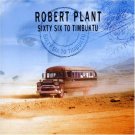
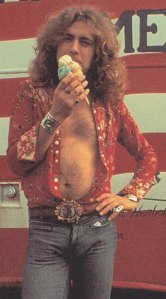
I’m a pretty big Led Zeppelin fan, having bought all their albums more than once (and at least once more) over the years. When this Robert Plant CD came out in November 2003, it was high on my radar. I didn’t own any Plant solo albums (beyond The Honeydrippers), but wanted something of his in my collection. This compilation of hits and rarities was perfect for my needs.
I was listening to it in the store one afternoon when Dandy sauntered in. Always eager to criticize my musical selections on any given day, he had this to say about Robert Plant’s Sixty Six to Timbuktu:
“I was talking to my dad about why Led Zeppelin sucked,”he said. “Now I know. It’s not Led Zeppelin that sucked, it was just Robert Plant all along.”
Welcome to PRIEST WEEK! It’s all Judas Priest, all week. Let’s go!
JUDAS PRIEST – Rocka Rolla (1974 Gull Records)
Years before the glory of Sad Wings of Destiny, Judas Priest was just another Birmingham bar band playing their version of the blues. Original lead singer and founder Al Atkins wrote a lot of the early material, with a variety of lineups. Atkins quit the band in the early 1970’s and “Bob” Halford was brought in, along with second guitarist Glen Tipton. Judas Priest as we know it was born.
I remember the next door neighbor George played me the song “Rocka Rolla” and I immediately loved it. It had a cool riff and a hypnotic chorus. Years later (1989) I walked into Sam the Record Man and bought my LP copy off the near-legendary Al King. Finding a copy on cassette was nigh on impossible so I bought an LP. Little did I realize that was a good move. I can still play the LP and it sounds great, whereas a cassette would be in a Thunder Bay landfill by now.
Unfortunately Rocka Rolla disappointed me. I didn’t like it when I got it in ’89 and I still find it kinda dull. The band wrote a lot of songs with Al Atkins, largely blues-based rock, and that’s what Rocka Rolla is: Leftovers from the Atkins era, slow blues jammers meandering along at a leisurely pace. There is precious little heavy metal here. “Run of the Mill” and the “Winter” suite, for example, run the gamut from hippy-dippy flower power love to amateur British bar blues. Yet, Jethro Tull these guys were not, and Rocka Rolla is strictly second rate. The drummer on Rocka Rolla was John Hinch, a musician that Tipton described as “inadequate” to play Priest’s more challenging material. Maybe that is one reason that Rocka Rolla lacks power.
There are a couple decent moments that keep this album from being a 1-star stinker. The title track is a fun proto-metal number, with a neat classic sounding riff. There is also the outro to “Dying to Meet You”, known as the “Hero, Hero” section which actually has some spark. “Never Satisfied” has some powerful moments. “One For the Road” is a good song. The rest is basically a band trying to find its direction, not sure whether it’s a jam band, a blues band, or a rock band, and excelling at none of those sounds.
There’s a bonus track on some CD versions, tacked-on but unrelated. This is the version of “Diamonds & Rust” from the Best Of album. Great song and great version, sounding totally out of place here. Also of note, there are two album covers. I prefer the soda bottle cap much more than that weird football player bomber guy.
Two years later, Judas Priest laid down one of my all-time favourite metal classics Sad Wings of Destiny. How they turned the ship around so drastically is beyond me. New songs, new chemistry? Let’s be grateful they did turn it around, for if this band failed to do so you never would have heard of them.
1999 was shaping up to be an exciting year. The Black Crowes’ most recent disc, Three Snakes & One Charm, wasn’t bad but it didn’t excite me. Rolling Stone magazine made negative comments about Chris Robinson’s beard as if the beard wrote the songs. The rumour mill was going full speed, that the Crowes had returned to their “earlier” sound. The new album, By Your Side, would be more like Shake Your Money Maker, and less like a bunch of bearded hippies jamming after a toke. I know today the Crowes had recorded an album called Band (now available as CD 2 of The Lost Crowes), but it was rejected by American Recordings who wanted the band to make a basic rock n’ roll album, so they shaved off their beards and that’s what they did.
OK, sure, whatever – I was on board. I don’t mind some changes to shake things up. I don’t necessarily always endorse a full-on “return” to a sound, because you can’t really duplicate a specific era. But this was the Crowes, a band who injected integrity into everything they’d done so far.
The first single released, “Kickin’ My Heart Around” was a frickin’ steamroller of a rock song. It was released in November 1998, about two months before By Your Side was to come out. It created a real buzz. I was hearing excitement in the store from a lot of Crowes fans. Naturally, the new Crowes album would be a subject for Statham and I to discuss, and discuss it we did. Statham knew then that I collected Crowes B-sides, and “Kickin’ My Heart Around” had two that weren’t going to be on the album.
I’m not too sure about Chris’ Prince Valiant haircut
In late December, Statham strolled into my store with a surprise. He had picked up for me my own copy of “Kickin’ My Heart Around” since I had been unable to locate one! Best of all, it was a Christmas gift – the first gift that I was given by a customer at the record store that I can recall. I was quite blown away. I didn’t ask Statham to get the CD for me, and I certainly didn’t expect a gift from a customer! But then again, as he has said in the past, he believes in treating his record store guys right. That’s something I’ll never forget.
The two B-sides “It Must Be Over” and “You Don’t Have To Go” were both quality tunes on top of it all. I was thrilled. I brought the CD home and showed it to my dad.
“Get this, dad!” I began. “One of my customers bought me this CD that I have been looking for! It’s an early Christmas present! Cool, huh?”
My dad, being the “negative Nancy” that he can be sometimes said, “I don’t think it’s a good idea for you to accept gifts from customers. What does he expect in return?”
“I don’t think he expects anything in return, dad. It was just a thoughtful gift. He’s a nice guy.”
“Well just be careful,” my dad cautioned. “In my experience nothing’s free!”
I’m glad to say in this case, my dad was wrong. Statham had no secret agenda, beyond friendship, and we’re still friends 15 years after that. If anything we’ve taken gifting music to each other to an extreme that we both enjoy. The mutual benefits have been incalculable! Thank you Statham for this CD, which I still treasure today.
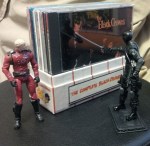
Good things come to those who wait. Longtime contributor STATHAM has returned to talk about shoppin’ for Black Crowes. He’s in italics, me in burgundy. (That makes him Snake Eyes while I remain the Crimson Guard.) Let’s boogie!
RECORD STORE TALES Part 260: Sho’ Nuff – The Return of Statham
I believe in being friendly to record store employees. A lot of people just treat them like any other retail clerk, but not me. Talk to them, find out common ground. They learn your interests, make recommendations… it’s a way better world than just treating them like a gas jockey. And there’s no reason why you can’t be nice to the people at the gas station, either, you know.
I started going to Mike’s shop sometime in 1995. And I left to go live in Montreal in 1999. In those four years I was in that shop a lot. I like music, and it was basically across the street from where I lived. My favourite was the Bargain Bin. Always a treasure or three in there. And Mike always seemed to be there. Rare was the trip in that he wasn’t on duty. I think he slept in the back room.
True to my practice, I talked to the guy, we discovered a lot of common ground. He was most fair on CDs I was trading in. He steered me to many great records (and laughed with [or at] me when I chose some stinkers). We never hung out outside the store, though there’s no reason why not. But over that time I got to know him as a stand-up guy.
In late 1998, The Black Crowes were gearing up for what was hyped to be a “comeback”; a “return to their classic sounds.” The fact that Chris Robinson had shaved off his cave-beard was supposed to indicate something to fans that fell off the wagon after 1994’s Amorica. Part of this calculated campaign including reissuing all four original Black Crowes studio albums, remastered, with bonus tracks and videos.
Statham kept me apprised of the latest Crowes happenings. He had his finger on the pulse, and during his regular visits he would update me. We discussed the band, the reissues, what we hoped for, and as always we disagreed over favourite albums. I’m an Amorica guy. He’s a Southern guy.
One day, Statham phoned me at the store with some exciting news.
Somewhere in 1998, my sister (who took my introduction of her to the Black Crowes and ran with it something fierce) told me the Crowes had announced a box set, called Sho’ Nuff. This was exciting for many reasons, mainly the extra tracks that were rare (at that point), two on each album, and the live EP to be included. We already owned the four albums in the box, and couldn’t care less about any remastering job done to them.
Also remember, this was in the days when the internet existed, but it was nowhere near what it is now. We certainly never ordered CDs online. It was pure brick and mortar for us. Seemed this set was (purportedly) some kind of exclusive release. We HAD to have it.
He’s right, the box set was an American exclusive — no Canadian release. However, the big HMV in Toronto was going to be importing a limited quantity. The live EP included within was from the Amorica tour which put it high on my priority list, and it was also exclusive to the box set. It is simply titled The Black Crowes Live.
I told Mike about the set, and how we were going to Toronto to get them ASAP. I’d called ahead to the HMV at 333 Yonge and they said they might still have a couple on hand. We panicked. “A couple?” Gah! We need to get these! Our course was set. I asked Mike, did he want us to bring one back for him? I don’t think his reply was precisely “hell yes!” but the level of enthusiasm was in that ballpark.
Even today I can recall the tingle of anticipation, the trip there taking too long. We got downtown, made the trek to the flagship HMV and… the staff didn’t know where the sets were. Computer said there should be some on-hand, they’d have to look… finally they were found in some corner, nowhere near anywhere that one would think (like, near the Crowes section, or in a Boxed Sets section. No, that would’ve been too easy). And there were enough for each of us (and not many more). Hooray!
Box sets procurred, we made the most of the rest of our day, and headed home. I brought Mike his copy on my next trip in to the store. He seemed pretty damn happy about it. I wouldn’t do something like that for everyone I meet, probably, but Mike was another story and it was a pleasure to help out. He’d helped me out with a lot, in the store. It was good to return the favour, in some small way.
I wouldn’t be lying if I said whenever I listen to that Black Crowes set, it always reminds me of all the great conversations with Statham. Some obscure memory always flashes back, be it a conversation or a long meandering email thread.
I still have the box set (of course), everything intact including the four stickers (one included in each studio CD) and the fragile blue jewel case for Three Snakes and One Charm. I’m not sure how I would have acquired (or even known about) Sho’ Nuff without Statham. Thanks man. I still owe you for this one! (Figuratively, I did pay him!)
When this album came out I bought it immediately. Well, as soon as it was made available by Columbia House music club, that is. I remember that I described it to a work friend named Mark as “raw bluesy shit”, and I still stand by that three word description. With an emphasis on raw. For 1989, this kind of production was unheard of. You can hear everything on this album, you can hear Jake’s fingers talking. Very little embellishment going on here.
Badlands were almost a supergroup of sorts: Ray Gillen (ex-Black Sabbath), Jake E. Lee (ex Ozzy Osbourne), Eric Singer (also ex-Black Sabbath, now in Kiss) and Greg Chaisson (ex-nobody significant). Jake had always complained he didn’t have an outlet to play the blues in Ozzy’s band, so this is his version of the blues, and it’s hard as hell! The band also had a vision of an album with two sides: a first harder rocking side, and a second bluesier side with longer songs.
“High Wire” kicks Badlands off with Jake’s raw, stripped back guitar sound. Producer Paul O’Neill (Savatage, Trans-Siberian Orchestra) was also managing Badlands, and his production work here is completely different from the layers that he is better known for. The effects are stipped back, and Jake’s guitar is very different from The Ultimate Sin. A groovy exciting track, “High Wire” is driven by the riff and Gillen’s authoritative Coverdale-esque lead vocals.
The single “Dreams In The Dark” is next, the closest thing to a commercial song that this album gets. It has a strong chorus, instantly memorable, but you’ll be forgiven for thinking this is a Whitesnake outtake at first. A brief instrumental precedes my favourite song, “Winter’s Call”. It is as close is you’ll get to a ballad on this album, and only because its intro is slow and acoustic. However once that first riff kicks in, there’s no looking back. Eric Singer’s drum patterns are complex and hard hitting. The song itself is atmospheric and still kicks my ass all these years later. It’s infectious, like an old Zeppelin number. I hear sitar!
A pair of rockers finish side one, “Dancing On The Edge” (an accelerated raw rocker with a great chorus) and “Streets Cry Freedom” a steamy, slower tune like a classic Coverdale prowl. Both songs are standouts.
Side two starts with a serious rocker, “Hard Driver”, but from there it is on to the long, slower bluesy numbers that the band talked about. “Rumblin’ Train” is the bluesiest number, and “Devil’s Stomp” is as heavy as the title implies. “Seasons” is a slow moody one, brilliantly dramatic thanks to Gillen’s emotive vocal. The cassette/CD bonus track was called “Ball & Chain” and it finishes the album on a another hard bluesy note. (Yes, back then when they couldn’t fit all the songs on an LP, they’d still include it on the cassette version and call it a “bonus track”.)
Badlands made a couple more albums, but this one is my favourite. Martin Popoff himself rates this one a 10/10. I gotta agree with the man on this one. On a 5 scale…
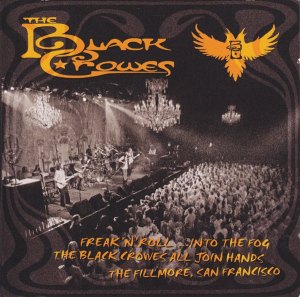
THE BLACK CROWES – Freak ‘n’ Roll…Into the Fog: All Join Hands, The Fillmore, San Francisco (2006 Eagle Records)
I somehow missed this when it first came out! This double live album (acquired at Sonic Boom Music for the awesome price of $7.99), recorded in 2005, reunited the Robinson brothers with members from the classic era. Returning are Marc Ford (guitar), Ed Hawrysch (keyboards, from Toronto Ontario), Sven Pipien (bass) and original drummer Steve Gorham. I believe the original bassist, Johnny Colt, was busy with Rock Star Supernova at the time…
Anyway, with a set concentrated on classic Crowes tunes from the earlier albums with a few other gems, this is an awesome collection. There are a few later songs, such as a mind-blowing psychedelic version of “Soul Singing” (Lions). Many of the songs, “Soul Singing” included, turn into long extended jams. I wouldn’t call them meandering jams; they are spellbinding and with purpose at every moment.
The Crowes are backed by guests: the Left Coast Horns and backup singers. The horns kick ass on the extended “(Only) Halfway to Everywhere”. They transform “Welcome to the Goodtimes” into something a little more sassy, likewise with “Let Me Share the Ride”, and “Seeing Things” from the first LP. They also help stretch “Non Fiction” into 10 minutes of exploratory rock. The backup singers really compliment “My Morning Song” transforming it into an ecstatic moment.
I have always taken a bit of flak from other Crowes fans over my favourite album. Mine is Amorica, and most people I knew favoured Southern Harmony. Regardless, it’s a delight to hear “Wiser Time” from Amorica on this album. Songs like this are really special, and with most of the original players on it, “Wiser Time” shines.
I enjoy that the Crowes threw some rarities, covers and B-sides on Freak ‘n’ Roll. “Sunday Night Buttermilk Waltz” and “Mellow Down Easy” are among the highlights of these tracks, but I was most excited about “The Night they Drove Ol’ Dixie Down”. The original is a favourite of mine so I couldn’t wait to hear the Crowes’ interpretation. And guess what? It’s awesome. It would be ludicrous to compare it to the original by The Band. All that matters is that the Crowes wring more soul out of the song than you’ll hear in modern rock on any given day.
The Walmart version of the CD came with a download code for a bonus track, the Stones’ “Loving Cup”. I obtained it via the seedy underbelly of the internets. On the DVD this was played after “Welcome to the Goodtimes”. I’m glad to have this song because the horns really fatten it up nicely, and it’s also a great tune!
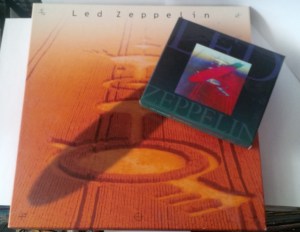
Take a trip back to September, 1993. Led Zeppelin had no greatest hits albums available and just three years previous, the monstrous Led Zeppelin box set was a smash hit. I believe it was the most successful box set ever at the time!
It was, however, just a sampling of Zeppelin’s catalogue. A generous sampling, but a sampling nevertheless. 31 album tracks were missing, as it was just a four disc set. The missing tracks are not throwaways though. How could you say that about “Good Times, Bad Times”, “Living Loving Maid”, “Out On The Tiles”, “The Rover”?
So, predictably, three years later came Box Set 2 with all those tracks plus the recently discovered “Baby Come On Home”. The result is a complementary set; you really can’t have one without the other. Having both sets is how I originally heard the Zeppelin catalogue, and I do have a certain nostalgia for these sets.
Much like the first box, this set was lovingly sequenced and remastered by Jimmy Page himself. As such, the track order takes you on a journey of sorts. Unfortunately it’s just not as epic a journey as the first box. How can there be? With no “Kashmir” or “Stairway” available, it could never be as monumental. Still, it’s a pretty cool trip. Starting you off on disc one with “Good Times, Bad Times” and closing disc 2 with the melancholy “Tea For One”, this tracklist does what it was meant to do. Sandwiched between there are some of the best Zeppelin album cuts of all time.
I don’t think I need to go over highlights. I do? Alright. “Down By the Seaside” is simply gorgeous, one of my personal favourite Zeppelin songs. It’s in my top five for sure. Although it’s a bit silly, I dig the country hoe-down of “Hot Dog”. It’s certainly the heaviest country music I ever heard. With John Bonham on drums, how could it not be? “That’s the Way” is another beauty, acoustic and pretty. It’s “Carouselambra” that throws me the most, a complex swirl of synthesizers and howling Plant vocals.
The sound quality was great for its time, but technology, tastes and standards change. The songs have been remastered since, and will be again. Personally I have no qualms with the sound and I still enjoy this box to this day, even though I own the massive 10-disc Complete Studio Recordings as well. Really, my only issue was the inclusion of just one previously unreleased song. “Baby Come On Home” is a wonderful slice of soul, a young Plant belting about a cheating woman while Pagey plays some elegant notes behind him. Yet, as we saw later with the release of the BBC Sessions, there was more in the vaults. Why couldn’t “The Girl I Love She Got Long Black Wavy Hair” or “Something Else” be included here much like “Traveling Riverside Blues” was included on the first box set? We know Jimmy has dug up more rarities since.
It is what it is. Maybe it was a bit shameful to bait die-hard fans with one new song, but the remastering of the set was also considered a major selling feature. The set, being only a 2 disc set, is physically much smaller than the original, and contains one new essay, by David Fricke. The packaging is quite beautiful, and everything from the cover art to the layout echoes the first box. Clearly, you are meant to have both.
A photo-heavy review for you today folks, enjoy the goodness! This one goes out to Rich, from KamerTunesBlog, a collection of detailed journeys through the discographies of many great artists.
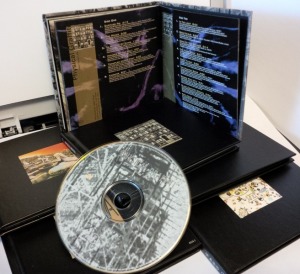
LED ZEPPELIN – The Complete Studio Recordings(1993 10 CD Atlantic box set)
It’s funny to read some of the complaints about this box set on sites like Amazon! “The Song Remains the Same isn’t included!” Well, correct. It’s called Complete STUDIO Recordings, not Complete Live Recordings. “The artwork is too small!” Well, it’s a CD, not an LP. I’m of the belief that you can’t go wrong buying the Zeppelin LPs in mint condition. Much like Kiss or Alice Cooper, Zeppelin often gave you extra bang for your LP buck (more on that later). “Presence and Coda suck!” Well, I’m sorry if you feel that way, but this is the COMPLETE Studio Recordings, not the Personal Favourite Studio Recordings.
Anyway, I listened to the entire box set last weekend once again, and it’s always nice to revisit Zeppelin’s back catalogue in that way. After all, each album is a portrait of where they were at that time, and are truly best when played as complete albums, not songs on a compilation. Zeppelin I and II are an embrionic, pseudo-heavy metal band with hippy tendencies, but you are immediately blown away by how good this band was. All four members were simply stunning, a raging and ripping Plant included. By Zeppelin III they really started to explore the “light and shade” that Pagey speaks of in the included Cameron Crowe essay. It is a beautiful album. Zeppelin IV of course combines the sounds of the first three together into one multi-platinum work of art.
After Zeppelin IV, their albums become harder to characterize, but diversity is still key. Much like the Beatles before and Queen after, Zeppelin were not content to be a simple bass/guitar/drums combo. Strings, prototypical tape-based synth, and numerous other instruments are brought in to add to the Zeppelin mosaic. Houses of the Holy contains one of my favourite moments in “No Quarter” which is anchored by John Paul Jones’ keyboard and synth work, a hauntingly beautiful piece. Physical Grafitti contains perhaps their highest achievement in “Kashmir”, but certainly songs like “The Rover” continue the metallic goodness that spawned the band. Presence is an album misunderstood by many, a back-to-basics tour-de-force of power. The very Rush-like “Achiles Last Stand” combines progressive rock tendencies with Plant’s lyrical mysticism. Finally In Through the Out Door represents Pagey taking a step back and Jones filling the gap with modern forward-thinking synthesizer arrangements. “All My Love” is a ballad that came about five years too soon, a Plant/Jones penned masterpiece of beauty. “In The Evening” haunts with Plant’s vocals buried in the mix under cascades of Jonesy’s synth and Page’s whammy bar. “Hot Dog” is a pure country ho-down, and Zeppelin ended their career with the diversity that they started it with. But it doesn’t end there, as an expanded version of Coda is included, an odds-and-sods collection of outtakes. Certainly these are not the absolute greatest of Zeppelin moments, but “Bonzo’s Montreaux” represents the kind of experimentation that Zeppelin were founded on. A sequel of sorts to “Moby Dick”, it is a drum orchestra and worthy of the albums before. The expanded edition includes one of my favourite tracks, Zeppelin’s version of “Traveling Riverside Blues”. Page’s slide guitar is eloquent as it is excellent.
The packaging is ample. A thick booklet with photo after photo is included, as well as the aforementioned Cameron Crowe essay. Reading it, you can see where much of Almost Famous came from. Each CD is packaged with a reproduction of each LP’s original artwork. That means, for In Through the Out Door, you get all six covers, plus an image of the paper bag, and the inner sleeve. Zeppelin III gives you a miniature version of “the wheel”, and Physical Graffiti, the “windows”. These are static versions; if only you could manipulate them like the originals, but alas.
Remastering job is OK. I detected what I thought were a couple problems, I thought I heard some tape drop-out. I hate to say it, but maybe the Zeppelin catalogue could use a fresh remastering. 20 years have passed since this was released. And hey, just in time, Jimmy’s working on remastered deluxe editions of each album! Stay tuned.
As for the here-and-now, you can either go out and buy each album separately, or you can buy this set. Personally I think this set is the way to go, especially if you care about packaging. And it’s Zeppelin — you kind of need all the albums, don’t you? I won’t rate albums individually (that would require a Zeppelin series, something I would like to do) but I can give this box set:
DEEP PURPLE – Come Taste the Band (35th Anniversary edition, 2010 originally 1975, EMI)
For those keeping score, now every single album from the original run of Deep Purple 1968-1976 has been remastered with some sort of deluxe edition. Come Taste The Band is the final album of this series. Deep Purple imploded shortly after and the band was no more until Perfect Strangers in 1983.
Personally I have always liked Come Taste The Band right from first listen. However, I never heard the album until 1996 so the idea of a great Purple album without Richie Blackmore was not foreign to me. With open ears you can really appreciate what Deep Purple were up to on this powerfully rocking album. It has a solid groove, a much harder sound than Stormbringer and some greasy unconventional guitar playing from Tommy Bolin. Everybody is playing amazingly, even the coked-out Glenn Hughes who just rips it to shreds on “Gettin’ Tighter”, my favourite track. Paicey is awesome on said breakneck track.
Really though there are no losers on Come Taste The Band. Every song is incredible right from the opener of the ferocious “Comin’ Home” to the philosophical “You Keep On Movin'”. Another personal favourite is the sliding groover “Dealer”, a tale of warning from David Coverdale to Glenn Hughes about his habit. Bolin takes his first and only studio Deep Purple lead vocal on the bridge.
As with all previous special editions, the liner notes are excellent, revealing, and loaded with pictures. One fact I didn’t know: The band were going to kick out Hughes if he didn’t kick the coke.
Bonus material is present. The single edit of “You Keep On Movin'” is tacked on to the end of disc one, but this is previously available on such albums as Singles A’s and B’s. The second disc contains the entire album remixed by Kevin Shirley. Shirley is truly a great mixer. It’s hard to discern what he did differently here, except the songs are a bit more punchy. Some now continue on past their original fade points, revealing never before heard playing from the band, right to the end of the song. This was done on previous remasters such as Machine Head and I like this touch a lot.
Two previously unreleased tracks are included. These tracks will be worth the price of purchase alone to Purple collectors. “Same In L.A.” is a nearly complete song with lead vocals and lyrics. If it had been included on the original album, it would easily have been the most pop, it sounds more suited to Stormbringer material. “Bolin Paice Jam” is also unreleased — not even heard before on Days May Come and Days May Go or the limited edition 1420 Beachwood Drive albums. This is a massive, fiery jam capturing the best of both players. Difficult to understand why this was not included on the aforementioned two compilations, but it’s just awesome and I’m glad it’s out.
Once again, Simon Robinson has outdone himself with the final Deep Purple remaster of this series. These albums, while expensive and difficult to obtain (mine took almost two months to ship) are well worth it to the faithful.
 I’m a pretty big Led Zeppelin fan, having bought all their albums more than once (and at least once more) over the years. When this Robert Plant CD came out in November 2003, it was high on my radar. I didn’t own any Plant solo albums (beyond The Honeydrippers), but wanted something of his in my collection. This compilation of hits and rarities was perfect for my needs.













 mikeladano.com