classic rock

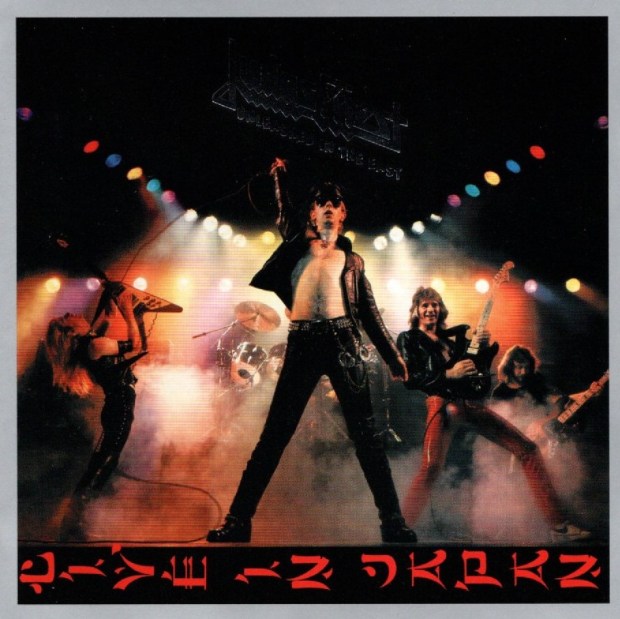
REVIEW: Judas Priest – Unleashed in the East (1979, Remastered)

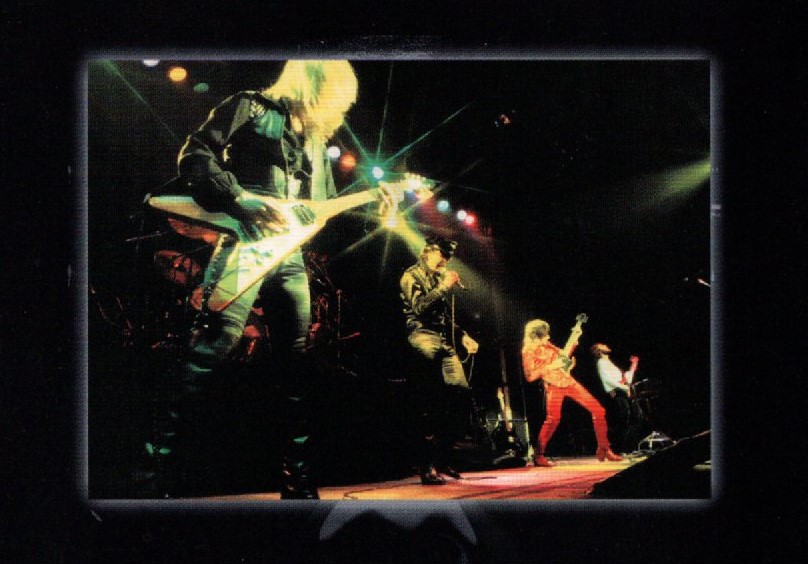
JUDAS PRIEST – Unleashed in the East (Originally 1979, 2001 Sony reissue)

The best Judas Priest live album isn’t the biggest or the newest.  It’s the first:  the humble Unleashed in the East.  The first Priest album to be produced by Tom Allom, the last with Les Binks on drums…this is a special album for a number of reasons but most important are the songs.  It would not be going out on a limb to suggest that some of these tracks are now the definitive versions.

Like many live albums of the 1970s, it has been questioned how much of Unleashed in the East was redone in the studio.  Rob Halford has maintained that only the vocals were touched up, but it does not matter one iota when the needle hits wax or laser strikes plastic.  The band were at a musical peak in 1979, and with accelerated tempos, they attacked the best of their body of work, although neglecting the bluesier debut Rocka Rolla.

With “Exciter” (from 1978’s Stained Class) opening the set, this collection has more energy by comparison to the somewhat stiffer studio counterparts.  Les Binks has his foot on the pedal and the band is fully energized on this proto-thrash classic.  “Stand back for Exciter” indeed, as Halford has the Tokyo crowd in the palm of his hand, heavy on the echo.  “Running Wild” (1978’s Hell Bent for Leather) is extra caffeinated compared to the in-the-pocket original, giving the album the feel of a race.  KK goes bananas at the end, and then it’s his showpiece:  “Sinner” from 1977’s Sin After Sin.  Finally it sounds like Priest have stopped hurryin’ about.  About half of the track features KK taking his guitar to outer space in a trippy solo segment.

In its original form, “The Ripper” (1976’s Sad Wings of Destiny) was thin and stiff by comparison.  Here it is a beast, with Rob Halford fully unleashed and stalking the back-alley streets.  Easiest contender for most definitive version of a song on Unleashed in the East.  “Green Manalishi” also comes close, with this electrifying version containing the full-blown dual solo in fantastic, crisp, live glory in stereo.  Each part of the solo is an essential part of the song, just as “Green Manalishi” is an essential part of the album.  If you own the LP, this is where you flip sides and go straight into an adrenalized “Diamonds and Rust”, keeping the energy moving.  Binks’ double-bass work is fun as hell to listen to, like a kid who can’t stop tapping his feet excitement.

The Priest epic “Victim of Changes” takes its time to unfold, though mightily it does.  The live setting and the unstoppable Les Binks make this another definitive Priest live version.  It is the climax of the album, with the last two tracks “Genocide” and “Tyrant” unable to surpass its mountainous metal spires.  Regardless, both are far more fuelled than their seemingly crippled studio counterparts.  Halford is more expressive and engaging live, while the guitars riff on relentlessly.

This album would be 5/5 stars right here, full stop, no need to elaborate.  The already definitive Priest live album became even more definitive in Japan in 1979, and 2001 in the rest of the world, with additional bonus tracks.  On the 2001 remastered Sony edition, all the tracks blend into one another without fade-outs.

Most of the tracks originated on Hell Bent for Leather, with one from Sin After Sin.  “Rock Forever” and “Delivering the Goods” cook!  Not too dissimilar from the originals, these are nice additions that extend the album without weakening it.  “Hell Bent for Leather” was conspicuous by its absence from the album proper, so its restoration is significant.  Finally the lengthy “Starbreaker” occupies the final slot, including a Binks drum solo.  An odd positioning but a stellar version nonethless.  All said and done, the version of Unleashed with bonus tracks is just over an hour long.  By today’s standards that’s a bit short for a live album, but it certainly does feel more complete.

Though he was indeed a significant source of Judas Priest’s musical power both on stage and in the studio, Les Binks quit the band mid-tour to be replaced by ex-Trapeze drummer Dave Holland for the remainder.  Binks was never made an official member on paper and was dissatisfied.  To be sure, other Priest drummers can sympathise.  The only taint on this otherwise perfect “live” metal album is the absence of the departed drummer on the front cover.

5/5/5 stars


JUDAS PRIEST REVIEWS

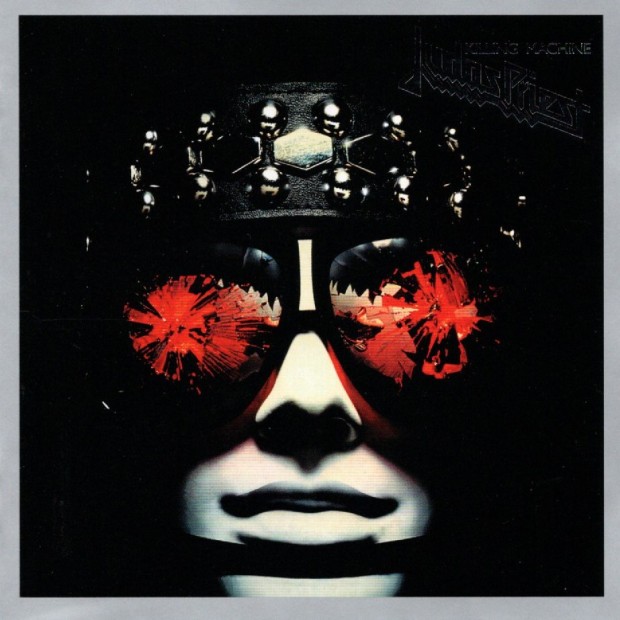
REVIEW: Judas Priest – Hell Bent for Leather / Killing Machine (1978)

JUDAS PRIEST – Hell Bent for Leather / Killing Machine (Originally, 1978, 2001 Sony reissue)

After producing “Better By You, Better Than Me” on Judas Priest’s Stained Class LP, James Guthrie was hired to do their next album.  This coincided with another step in Judas Priest’s evolution.  In the 1980s they would streamline and simplify their sound, but their earlier albums were darker and more complex.  1978’s Hell Bent for Leather (called Killing Machine in the UK) is the dividing line between the two sides of Priest.

A stuttering riffs opens “Delivering the Goods”, one of the best known tracks from this excellent LP.  A newly upbeat Priest does indeed deliver the goods on this bright rocker.  “Feeling like we’re ready to kick tonight, no hesitating, my bodies aching, looking for some action, satisfaction all right.” This is a far cry from “Saints in Hell” and “Dissident Aggressor”.  Now Priest are uplifting your rock and roll souls.  It’s a heavy, headbanging party track with solid gold riffage.  The outro is a showcase for drummer Les Binks, unfortunately on his final Priest studio album.  His loss would be felt through the entire 1980s.

Another simple hard rock classic, “Rock Forever”, is second in line.  Binks’ double bass work is like an impatient kid anxious to quit school for the day.  Part way through, a multi-tracked Halford turns into a cool choir of Robs.  Further in, “Evening Star” is a bit of a surprise.  Starting as a ballad, it quickly turns into a…rock and roll singalong?  As one of Priest’s most melodic songs, it could have easily swayed new fans onto this band.  It also could have turned off fans who liked their metal heavy.

Two tracks from this album have consistently been in the Priest setlists.  One is “Hell Bent for Leather”.  It has a delightfully dry sound, with guitars cranked and Binks on overdrive.  It was obviously good enough to close Priest’s shows going forward (mostly), with Rob riding out on his Harley.  It’s not Priest’s greatest song, but it is one of their most legendary.

Closing side one is “Take On the World”, sort of a prequel to “United” from British Steel.  With double tracked drums, it has a “We Will Rock You” quality, but done Priest style.  It’s clearly meant to be sung from the stage, to a screaming audience.  “Put yourself in our hands so our voices can be heard, and together we will take on all the world!”  Repeat, rinse, dry.

Side two’s opener is one of Rob’s naughty numbers:  “Burnin’ Up”.  The sexy groove on this one will nail you to your seat.  It’s an album highlight though it might leave you feeling funny, like that time you climbed the rope in gym class.  “You dish the hot stuff up but you keep me waiting, so I’ll play it dirty until your body is breaking.”

At this point, the US version of the album breaks into what I will call the greatest song Judas Priest have ever done.  It’s the second one that has remained in setlists.  And it’s not even one of theirs.  It’s Fleetwood Mac’s “The Green Manalishi (With the Two-Pronged Crown)”.  Rarely does a band make a cover song their own like Priest did with “Green Manalishi”.  Everything on this is perfect, from the impeccable tempo, to the immaculately composed solos, to the flawless riff.  Les Binks is right in the pocket, and it’s very telling that live versions with Dave Holland on drums were stiffer.  If you only ever get to hear one Judas Priest song in your whole life, make sure that it’s “The Green Manalishi (With the Two-Pronged Crown)”.

You could put a fork in the album at this point and call it “done”, but there’s still plenty of awesome to go.

A funky Priest groove goes down on “Killing Machine”.  A menacing Halford warns, “I got a contract on you,”  backed by trademark Priest riff.  The middle section with the solo is a whole different beast.  A faster song,  “Running Wild”, pumps the adrenaline with chugging guitars.  “I take on all comers, they back up or they fall,” sings Rob with a challenge in his voice.  At this point I’m convinced that this guy could take on the world for real.  “I rebel but I worked hard, and I demand respect,” he sings with earnest.

There’s a respite here before the end, with a ballad:  “Before the Dawn”, which reminds of softer moments from Sad Wings of Destiny.  The guitar solo is legendary, but Rob Halford is the star on this melancholy masterpiece.  Finally, Priest go dirty again with “Evil Fantasies”.  Lock up your kinks, or just go with it!  It’s another sexy groove.  Rob knew how to write lyrics appropriate to the music.  “You pout, I snarl, you whimper.”  It’s like a Romulan having sex with a Klingon.  It shouldn’t be, but it is, and it’s cool!

Sony tacked on two completely unrelated bonus tracks, but review them we must.

“Fight For Your Life” is a demo of “Rock Hard, Ride Free” from Defenders of the Faith, almost identical except for some of the lyrics, and solo section.  Great bonus material for that album, but not this one.  Also unrelated is a live version of “Riding on the Wind” originally from Screaming for Vengeance.  This blitzkrieg is from the legendary US festival.

Bonus tracks quibbles aside, Hell Bent for Leather (with “Green Manalishi”) is essential metal.  Period.

5/5 stars

* The lyrics on the Japanese version were poorly translated:  “Feeling rock queers, ready to kick tonight.”

JUDAS PRIEST REVIEWS

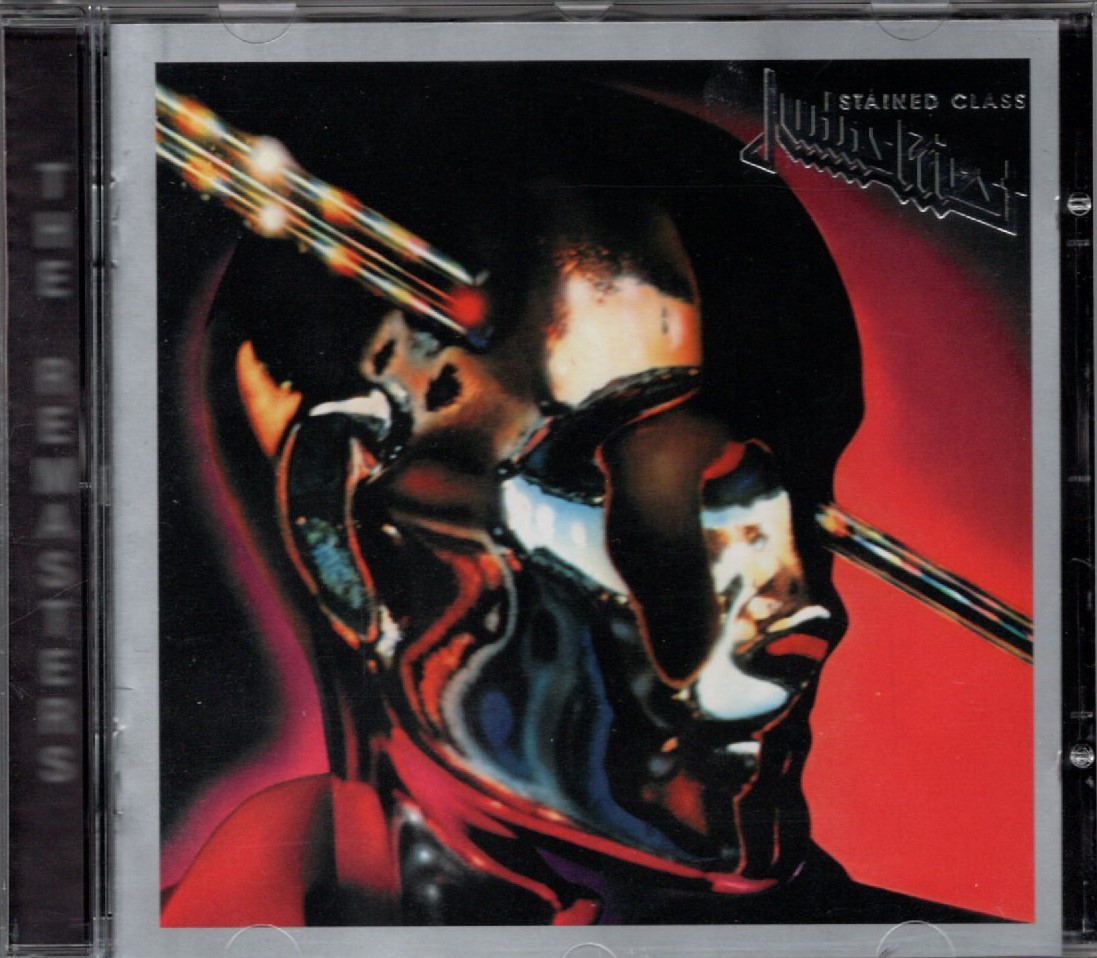
REVIEW: Judas Priest – Stained Class (1978, Remastered)

JUDAS PRIEST – Stained Class (Orignally 1978, 2001 Sony reissue)

I always considered Stained Class to be the “lost” Judas Priest album.  I rarely saw its name in a print magazine, and never saw a copy in a store.  Not until 1989.  As it turns out, I only needed one Priest tape to complete my collection.  There it sat, at Zellers at the mall.  My dad got out his wallet and bought it for me.  I could tell that he was not as impressed as I was that I had finally completed my Priest cassette library.

A year later after I bought it, Stained Class became world famous.  In 1990, Priest were taken to court over “Better By You, Better Than Me”, a song from the album.  Lawyers in Nevada argued that Priest had embedded backwards “do it!” messages within the song, prompting James Vance and Raymond Belknap to attempt suicide by shotgun.  Belknap succeeded, but Vance survived, horrifically disfigured.  In the summer of 1990, everybody knew the name Judas Priest.  But there were no backwards “do its!” embedded in the music.  Even if there were, what does “do it” even mean?  And why would a rock band want to kill off their source of income?

In short, I’m telling you that it’s perfectly safe to listen to Stained Class.  As one of the finer Priest albums, your life will be better for it, not worse.

Nine tracks.  New drummer.  The smouldering odor of quenched steel.  Stained Class.

Fall to your knees and repent if you please, and be sure to stand back for “Exciter”!  Though the production of the 1970s robs it of its potential thunder, “Exciter” does not fail.  Judas Priest had mastered the art of the speedy riff, and Halford coloured them with vibrant wordy imagery.  “When he leaps amidst us, with combustive dance, all shall bear the branding of his thermal lance.”  While it could have come from a comic book, it’s certainly a more challenging lyric than “Rock hard, ride free, all day, all night.”

Fire imagery continues on “White Heat, Red Hot”, a Glenn Tipton number with one of those mid-tempo guitar grooves that Priest specialize in.  The new kid, Les Binks, lends it a relentless heavy beat.  Yet it’s a cover tune, the aforementioned “Better By You, Better Than Me” (Spooky Tooth) that knocks me out.  That groove!  The record company suggested the tune, to balance an otherwise pretty heavy album.  It was a good idea.  While it’s not as notable as “Diamonds and Rust” or “Green Manalishi”, Priest put their own spin on it.  Headbangingly so!  Rob Halford’s vocal performance is top notch.

Side one ends with the closing duo “Stained Class” and “Invader”.  Halford duets with himself on the title track, a pretty cool effect for a metallic midtempo stomper.  Enjoy some nice guitar harmonies from the duo of Tipton and Downing.  Its gleaming chorus upholds a great song.  “Invader” has a similarly burnished chorus hook and a victorious tone.

The album’s second side is more challenging to the uninitiated.  A tantalizing riff leads in to the doomy “Saints In Hell”.  Shrieking, Rob agonizes over going “down into the fire”, but the real heat is coming from churning guitars.  Next, “Savage” is just that.  Time changes with tricky drum work, dualing solos, and screamin’ Rob is what you will get.  “What have we done to deserve such injustice?” pleads Halford, giving 110%.

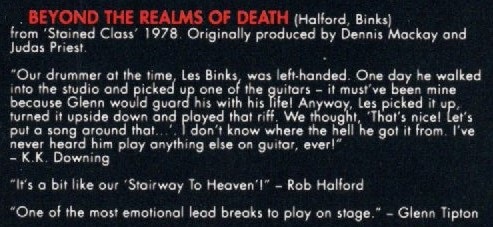
It is Les Binks that is credited with writing the guitar part to the album’s epic.  Says KK:  “Our drummer at the time, Les Binks, was left handed.  One day he walked into the studio and picked up one of the guitars.  It must have been mine, because Glenn would guard his with his life!  Anyway Les picked it up, turned it upside down, and played that riff.”  They built “Beyond the Realms of Death” around the guitar part.  Downing adds that he’d never seen Binks play anything on guitar before or since!  Like “Victim of Changes” before, it has distinct sections and builds up on itself.  “It’s a bit like our ‘Stairway to Heaven’!” said Rob; or perhaps to hell?  The centerpiece of the album.

Closing on “Heroes End”, Priest go out with a serious rocker and a couple more cool riffs for your collection.  An extended outro solo is one of its main features.

But that’s not all folks, because Sony added two bonus tracks on this 2001 CD edition!  And hey, I have nothing against “Fire Burns Below”, but this Turbo / Ram It Down outtake should have been added to a different album, not Stained Class.  The synth and programmed drums are jarring.  The back cover states it was recorded during “the earlier years of our career”.  This is obviously not true.  Too bad, as it’s a cool track although Priest probably didn’t need any more ballads at that point.  They already had “Out in the Cold” and “Blood Red Skies”, not to mention “Red, White and Blue”.  Decent ballad, but on the wrong CD altogether.  A live take of “Better By You, Better Than Me” has more relevance.  This is from the Painkiller tour in 1990, when the song was resurrected in their set after a long absence.  A middle finger to the lawsuit.  For that reason, this live version is important for the collector.

It’s a real shame this album was so rare when I was a kid.  Stained Class is Priest at one of their many peaks.  This was them at peak curiosity: willing to take chances, play with tempo and riff changes, and to challenge themselves.  By the next album they were starting to hone in on a commercially viable sound.  Cover tune aside, that’s not a consideration on Stained Class.

4.5/5 stars


JUDAS PRIEST REVIEWS

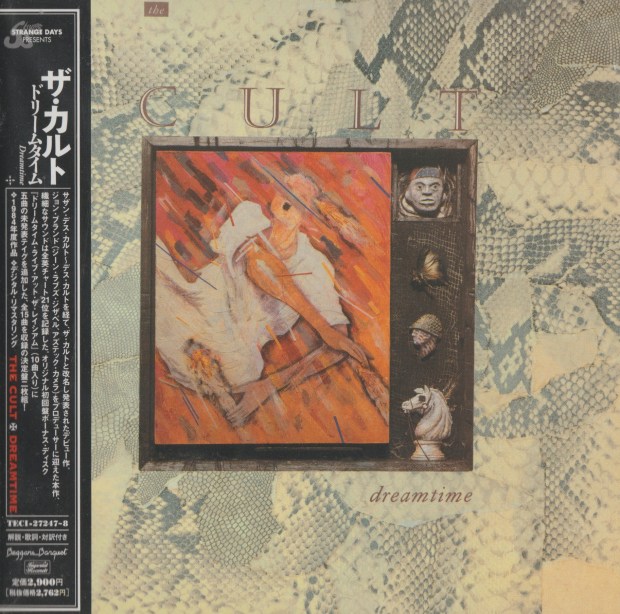
REVIEW: The Cult – Dreamtime / Live at the Lyceum (Japanese import)

THE CULT – Dreamtime (Originally 1984) / Live at the Lyceum (Originally 1986) (2006 2 CD Beggars Banquet Japanese set)

This was a bit of a surprise to me. Once I got this Japanese pressing in my hot little hands and opened it up, out popped two CDs! This was not advertized on the case. (Well, maybe it was in Japanese, but I can’t read Japanese!) The second CD is the legendary and extremely hard to find live album, Live At The Lyceum. For that live album alone, this Japanese import is worth the price of admission.

The debut album by The Cult is surprisingly solid, a fully-formed vision of the band with complete and catchy songs. For a long time this album was hard to get and all but unknown to “new” fans of the band who thought that it started with Love. This was rectified in the 90’s with numerous reissues, plus many of these songs found their way onto the Pure Cult compilations.

Dreamtime has a punk-like energy.  The drums (by Nigel Preston) hit hard.  “Horse Nation” and “Spiritwalker” open Dreamtime with a powerful one-two punch.  “Gimmick” has soaring vocals with stabbing guitars, coupled with a fast beat that gets the heart racing.  The title track has a similar accelerated pace.  The Cult are also known for their slower, darker, macabre side.  “83rd Dream”, “Bad Medicine Waltz” and “Butterflies” certainly cover that.  Dreamtime sounds like an angry young band unwilling to compromise.

Yet tracks like “Go West” had tremendous commercial potential.  Memorable, punchy melodies and Ian Astbury singing with all the panache he can muster.  “A Flower in the Desert” could be called a ballad if you like.  A dour, dusky one.  An impactful “Rider in the Snow” has some excellent guitar shimmer.

Gladly, I have found that there is not one weak track on this album. The songs are more challenging and not as instantaneous as Love, but when Astbury’s one-of-a-kind vocals mix with Duffy’s angular guitars, it sounds like the Cult. Period. From aggressive rock songs to mournful dirges like “Bad Medicine Waltz”, this album has a bit of everything that the Cult would later become, in embryonic form.  This set contains just the album, the original 10 songs, and none of the B-sides. Don’t fret however as those songs can be found on the Rare Cult set.


Although I got Live at The Lyceum (the original abbreviated cassette which only had eight of the 15 songs) in my teens, I was a stranger to early Cult.  This raw live disc (which opens with a bit of Wendy Carlos’ score from The Shining) includes all the songs from the 1983 Death Cult EP:  “Christians”, “Horse Nation”, “Ghost Dance” and “Brothers Grimm”.  It also includes the blistering Death Cult single “God’s Zoo” live, and the B-side “Bone Bag”.  Going even further back, “Moya” predates Billy Duffy, being an early single by Ian’s band Southern Death Cult.  It slams with vital energy.  As good as this whole live album is, “God’s Zoo” has to be the highlight.

Astbury is as combative as ever, and the crowd eats it up. The energy of this live album is astounding. I strongly encourage you to look for a Japanese copy of this CD for the live album — it is totally worth your time and money to do so. Lyceum was the second Cult album I ever owned (shame it was just a cassette) and I have very fond memories of learning about the Cult’s history by playing  that tape over and over.

This Japanese CD release has the original, superior cover art.  With the full 15 song version of Live at the Lyceum included, it’s the standout version to own.  What an album, and what a live disc to boot.  Dig into the Cult.

4/5 stars

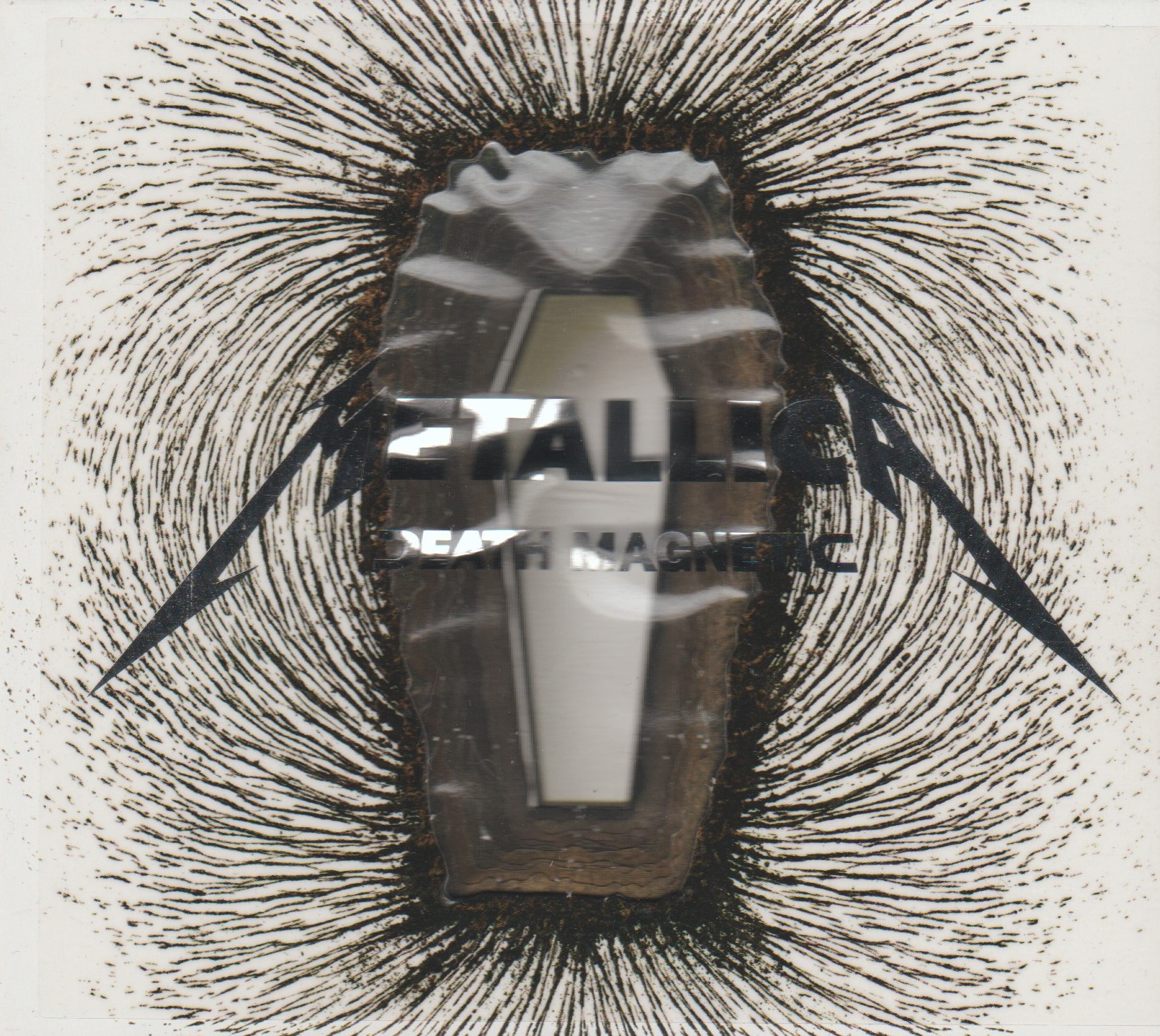
REVIEW: Metallica – Death Magnetic (Coffin Box)

METALLICA – Death Magnetic (2008 Vertigo Coffin Box)

“What don’t kill ya, make ya more strong!”

Like many bands these days, Metallica decided to release a boxed special edition of Death Magnetic to make a little extra cash.  And also like a lot of other bands, this “coffin box” edition was crazy expensive. To me the deciding factor wasn’t all the bells and whistles (and there are a lot of them) it was the inclusion of the exclusive CD Demo Magnetic. This disc includes 10 demo tracks, unfinished and otherwise unreleased versions of the final Death Magnetic songs.

There were only 2000 copies of this made, so if you didn’t pre-order, chances are you gotta pay the late tax.

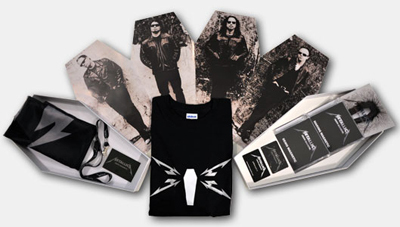
Contents:

  • Death Magnetic CD (the digipack version, identical to the retail release)
  • Demo Magnetic CD
  • The Making of Death Magnetic DVD
  • Four imitation guitar picks (made of flimsy plastic, not actual guitar picks)
  • Exclusive T-shirt
  • Exclusive bandana
  • Backstage pass with lanyard
  • A card with a download code for a free show
  • Coffin-shaped poster

Death Magnetic is, unfortunately, one of the most famous victims of the Loudness Wars.  Why put time and effort into production only to drown it all out in the mastering?  Apparently the version of Death Magnetic that was used in the video game Rock Band 3 was mastered “normally”, and is far better.  This CD has punch though, I’ll give it that.

On its own the album is worth 4 stars.  Mastering aside,  It is an above-average collection of typical Metallica rockers. Gone are the nu-metal tendencies of St. Anger and that was the correct move. Clearly, Metallica were reaching back and trying to write riffs that sound like the late 80s and that’s also fine.  Metallica are not Dream Theater.  They do what they do, and they do it quite well.

Expect typical Metallica riffage, barking Hetfield vocals, the usual Lars drumming, some tasty solos from Kirk, and slamming bass from Robert.  That is what Metallica do.  It’s not a bad album and some of these songs are damned near as good as the old days.  You’ll love “Broke, Beaten & Scarred”, “That Was Just Your Life”, and “The End of the Line”.  A favourite song for sheer chorus reasons is “All Nightmare Long”. The demo version (called “Flamingo”) is also really decent.

If you’re a diehard Metallica fan, the kind who owns Fan Cans, then you’ll want this box set for the exclusive music. It’s sure to become a rare collectible.

4/5 stars


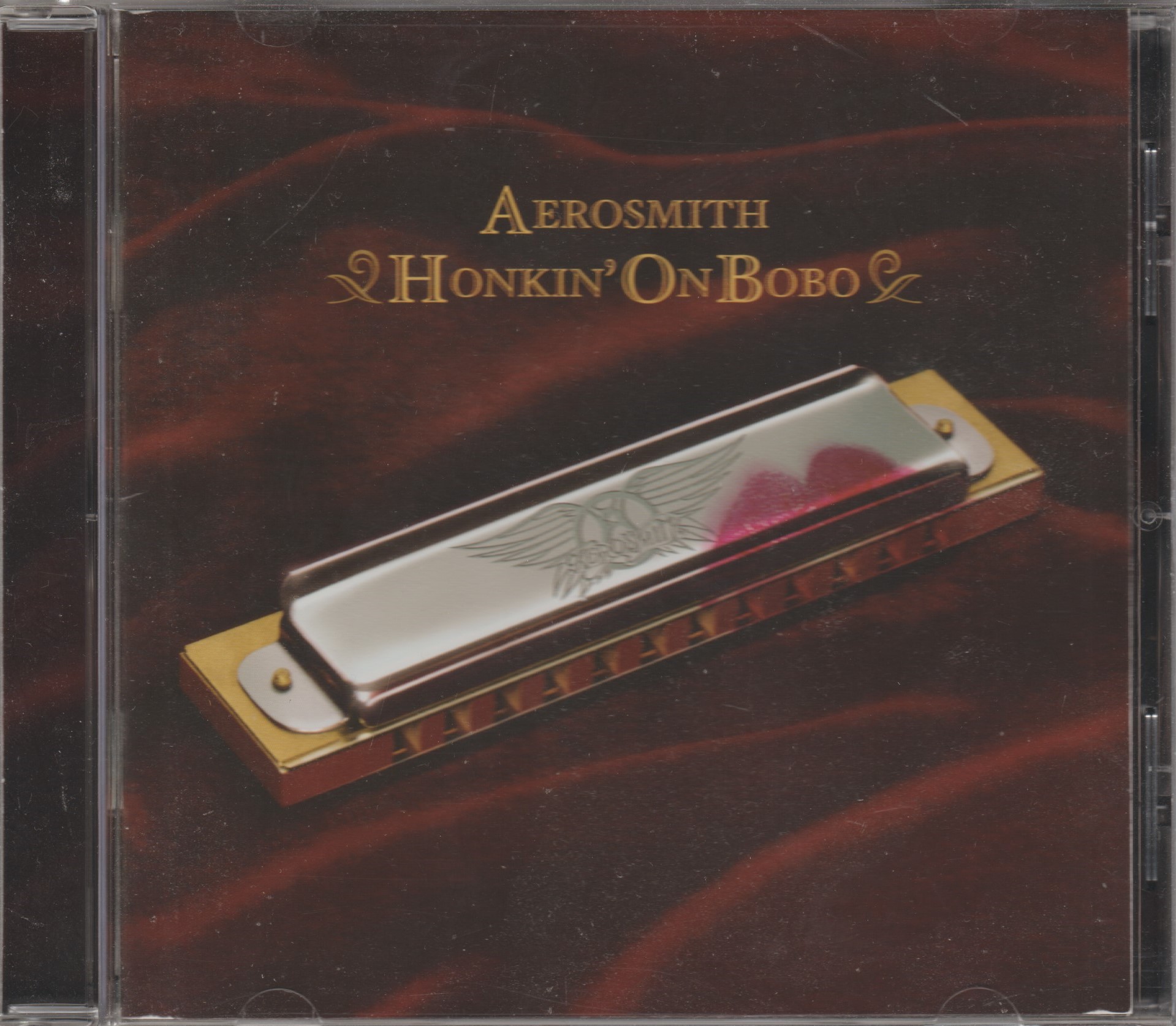
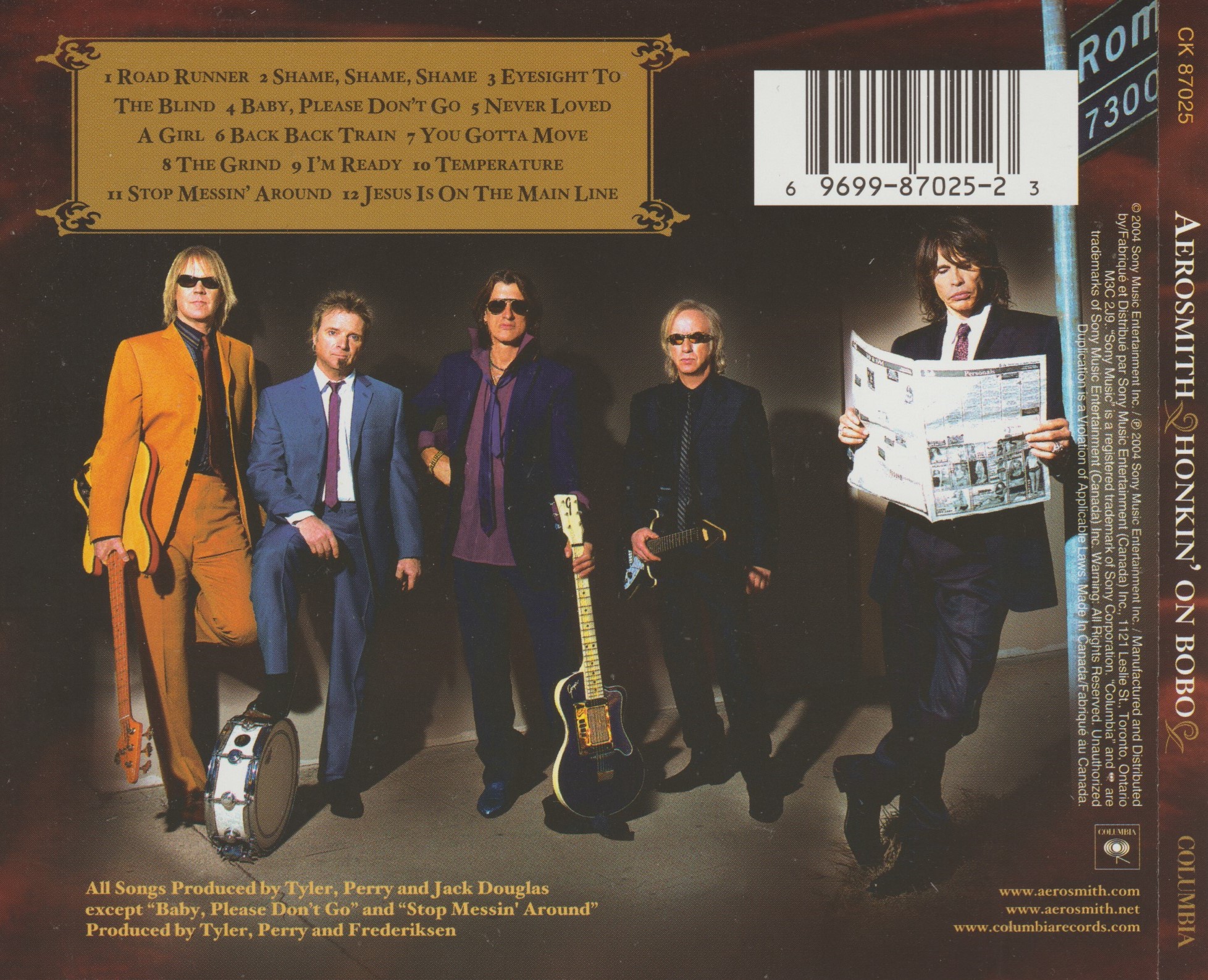
REVIEW: Aerosmith – Honkin’ On Bobo (2004)

AEROSMITH – Honkin’ On Bobo (2014 Columbia)

Sometimes we take one for the team. For no reason other than to get it done, we take out albums we strongly dislike just for the sake of writing them up. Sometimes there are pleasant surprises and time has been kinder than our memories have been. And sometimes you’re just Honkin’ on Bobo, whatever the fuck that means. It could be code for Sucking the Big One.

Necessary background:  After 2001’s putrid Just Push Play, Aerosmith were eager to strip it back to basics and record an album live in the studio.  They returned to producer Jack Douglas and picked an album’s worth of blues covers to Aero-fy.  This is a formula that rarely works out well for rock bands, and Aerosmith fell into the blues cover trap with both feet.

The only exception is one new original, a ballady blues called “The Grind”.  It happens to be one of the best tracks, though firmly within that Aerosmith bluesy ballad niche that they carved out for themselves in the early 90s with “Cryin'” and “Blind Man”.  That this is an album highlight is a warning as sure as a watchman yelling “iceberg dead ahead!”  We’re about to take on water, and there aren’t enough lifeboats.

One of Aerosmith’s issues since the mid to late 90s is how they’ve become a caricature of themselves.  Bob Diddley’s “Road Runner” is thick with Aerosmith clichés to the point that it sounds like an Aerosmith covers band filling their set out with standards.  “Road Runner” isn’t limber, it’s thick in the thighs with thuddy rock tropes.  Joey Kramer injects some life into “Shame, Shame, Shame” but it only makes you wish Aerosmith had tackled the track in 1974 instead of 2004 so it wouldn’t sound so contrived.  “Eyesight to the Blind” (Sonny Boy Williamson) isn’t convincing, as Tyler huffs through the song like a burlesque singer.  “Baby Please Don’t Go” makes you crave AC/DC’s superior version, although the groove on this one is positively unearthly.  It’s an unbelievable groove that perhaps should have been made into an Aerosmith original rather than a throwaway cover.

Aretha’s “Never Loved a Man” is transformed into “Never Loved a Girl”, and with the Memphis Horns on board there’s some value to it, but compared to Aretha they sound like rookies.  Like an amateur artist copying a master with crayons.  “Back Back Train” is actually OK, and it might be that Joe Perry is a more appropriate vocalist for a blues classic.  Tyler’s histrionics wear thin on this album, but Perry’s laid back singing works better.  Tyler surely doesn’t aid the sluggish “You Gotta Move”.

A dreary “I’m Ready” (Muddy Waters) is still a long way from the end.  “Temperature” also drags along, Tyler turning it into a parody.  Fleetwood Mac get the Aero treatment on “Stop Messin’ Around”, at least the second Mac cover that Aerosmith have done after “Rattlesnake Shake”.  Please welcome Joe Perry back to the microphone on “Stop Messin’ Around”, and please keep Tyler away!  Unfortunately it’s a boring tune (blazing fretwork aside), and so is the closer “Jesus is on the Main Line”.

Even the most stalwart defender must concede that Honkin’ On Bobo isn’t a blues album for a blues lover.  It’s a blues-rock forgery that occasionally captures the odd highlight for posterity, but is otherwise expendable.  In other words if you’re in a Zombie apocalypse looking for CDs to chuck at the undead, Honkin’ On Bobo can be flung guilt-free.

1.5/5 stars

And once again, it’s the return of the dreaded flaming turd!


AERO-REVIEWS:

MORE Aero-Reviews:


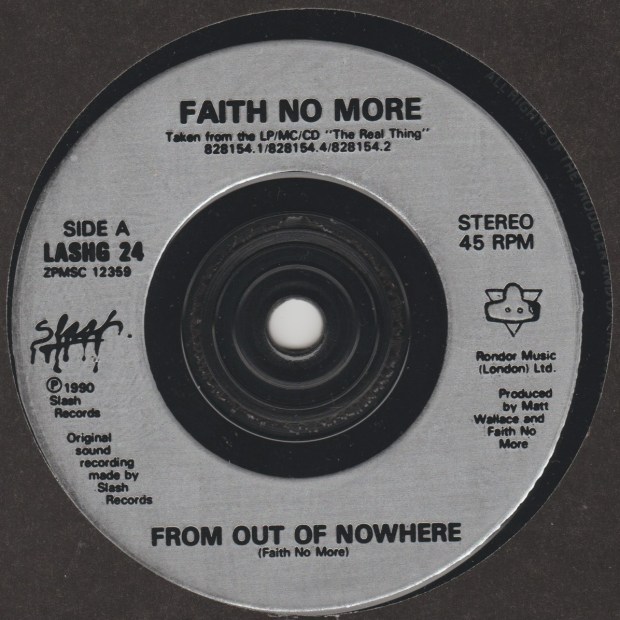
REVIEW: Faith No More – “From Out of Nowhere” (1990 UK 3 track 7″ single)

FAITH NO MORE – “From Out of Nowhere” (1990 Slash records 3 track 7″ single)

When I was beginning to seriously collect Faith No More in 1991 onwards, I had no idea what was out there.  I found the UK 7″ single for “From Out of Nowhere” at a record show in Guelph.  There are different versions of this single out there with “Cowboy Song” on the B-side, but that track can also be found on Live at the Brixton Academy.  The UK single on Slash/London has two live tracks you can’t find anywhere else, recorded by the BBC on March 2 1990.  Shortly after “Epic” was released as a single, but before it went mega.

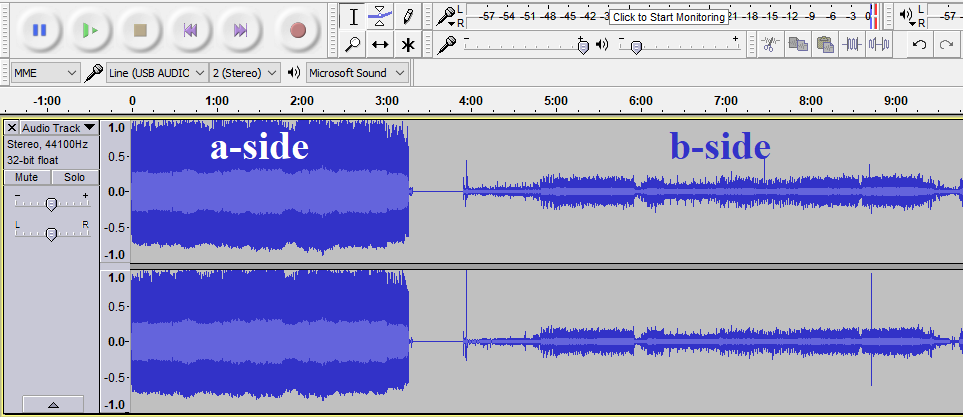
The problem is, with 10 minutes of music squeezed onto the B-side, this single sounds horribly thin and is ridiculously quiet.  Tons of surface noise too.  The A-side, which spins at 45 rpm, is better.  Have a look at the unaltered waveform in Audacity for comparison.

Faith No More didn’t truly make it big until the end of the (first) vinyl age.  The album version of “From Out of Nowhere” was always an excellent song; one of their most “mainstream” if you can call it that.  The keyboard hook is the main angle, and Patton’s notable for using that clean nasal voice he discontinued not long after.  An excellent song, and a cornerstone of any nutritious Faith No More collection.

The B-side, the exclusive live recordings, rotates at 33 1/3 rpm.  Captured in Norwich, “Woodpecker From Mars” is Faith No More’s instrumental classic led by a keyboard violin voice by Roddy Bottum.  There is a different performance on a home video called You Fat Bastards (which is the complete Brixton set) but nothing else on audio.  “Epic” is disappointingly edited by the BBC.  They obscure the line where Mike Patton naughtily sings “get down on it and fuck it some more.”  The band sound fresh and almost green with enthusiasm for the song, playing it a bit more straight than they would later on.

On the plus side, this single comes packaged in a gatefold sleeve, a rarity for 7″ release.  Inside Mike Patton is givin’ ‘er live on stage.  Some kids probably taped this to the wall as-is.

In short, the music is great.  The vinyl is not.

2.5/5 stars

REVIEW: Sloan – “Stood Up” / “Same Old Flame” (1995 7″ single)

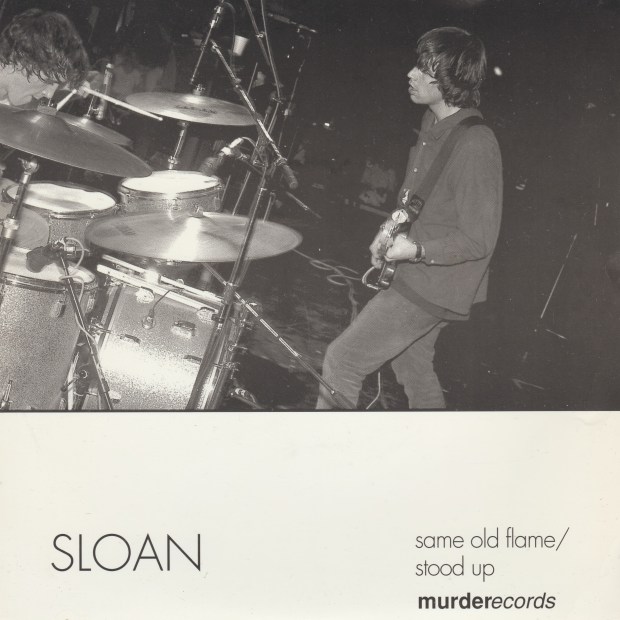
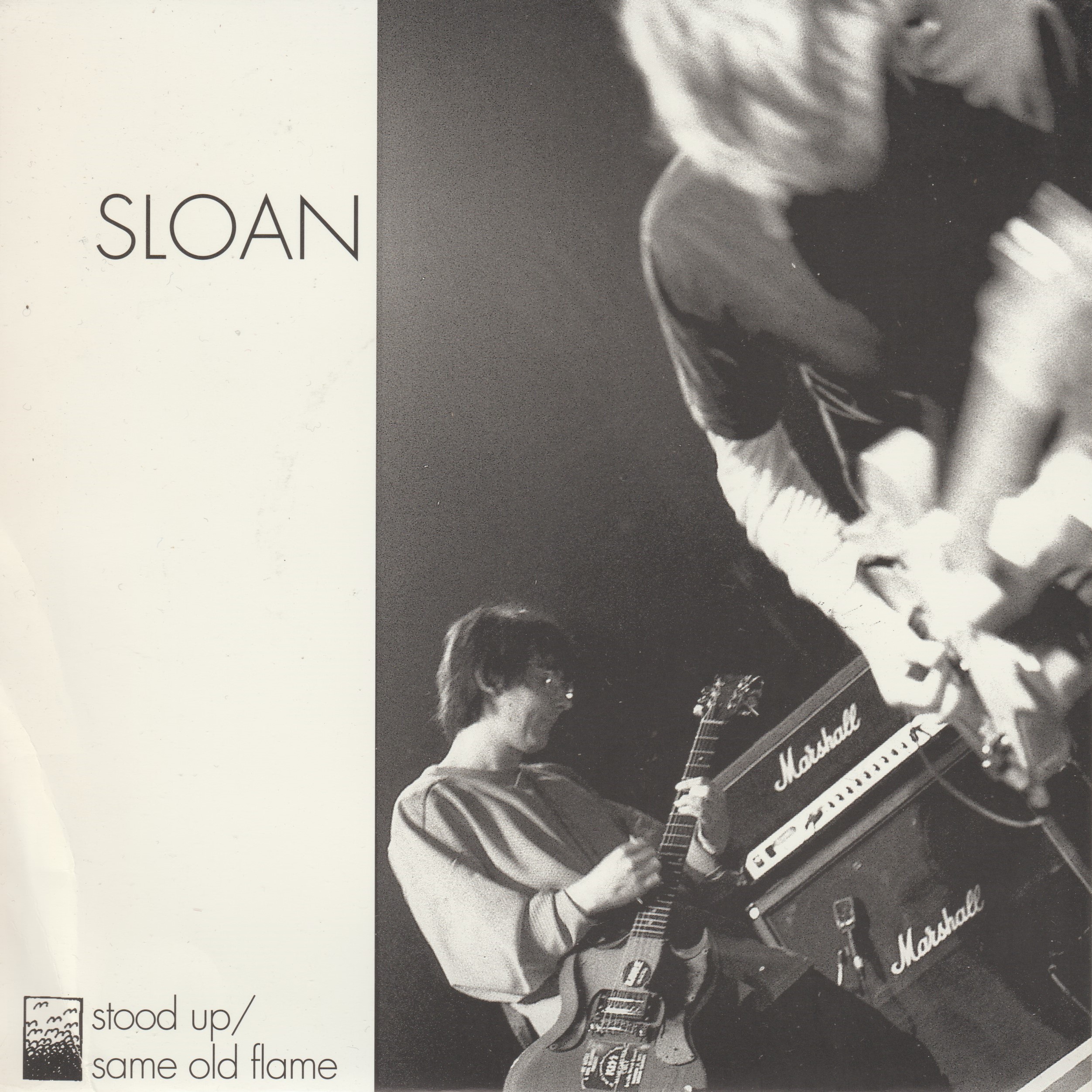
SLOAN – “Stood Up” / “Same Old Flame” (1995 murderecords 7″ single)

Though those without the syrup of the Mighty Maple flowing through their veins might not be familiar with Sloan, there are some who consider the east-coast quartet to be Canada’s greatest rock band.  With four writers / singers / instrumentalists, it’s an argument with some merit.  Though some say they are too sloppy live, in the studio they have some truly shining diamonds.  Some of those gems aren’t even from albums.

1995 was a difficult time for Sloan.  After receiving no support from Geffen for their shoulda-been breakthrough album Twice Removed, the band either broke up, or were about to break up, or considered themselves broken up even though they weren’t.  The double A-sided “Stood Up” and “Same Old Flame” single comes from this murky period in their timeline, released on their own label murderecords.  (In Japan, these two songs were included as bonus tracks on their third full length CD, One Chord to Another.)

“Stood Up” is a Chris Murphy number with a catchy tremolo guitar hook.  The lo-fi recording is so tasty.  Sloan’s usual vocal harmonies create the melodic blend you expect, but that relentless guitar groove is center stage.  Not dark, but shady, with energetic shouts.  By contrast, Patrick Pentland’s “Same Old Flame” is light and upbeat.  The fun verses set up a more plaintive chorus, all danceable.  Though both songs are equally strong, it’s “Same Old Flame” that you will singing and tapping your feet to.

For only $7, I found this single at yet another record show in Guelph with my buddy Peter.  Today it sells for twice that.  Though I hoped to find more than just one Sloan single that day (“Rhodes Jam” still eludes me), at least I left with what I came for.  A great single for any Sloan collection, big or small.  An essential one in fact, now that everybody is into vinyl again as their primary format.

5/5 stars

REVIEW: Poison – “Every Rose Has Its Thorn” (1988 3″ CD single)

POISON – “Every Rose Has Its Thorn” (1988 Capitol 3″ CD single)

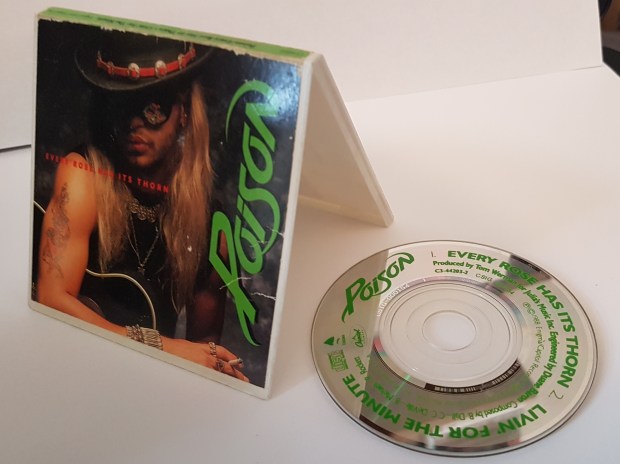
This is a beautiful item that I’m happy to have in my collection.  3″ CD singles were uncommon, but you’ve probably seen one before.  What is less common is the clamshell 3″ case that this Poison single came in.  A lot of 3″ singles came in regular 5″ cases, or a cardboard sleeve.  Clamshells are rare.  This one, called a “Gem Pak” (patent pending) was specifically made to house a “CD3”, another outdated term.  It’s made of white plastic and the artwork is in the form of a sticker which covers the front, back and spine of the case.  The Gem Pak’s flaw (patent pending!) is that it does not hold the disc in securely.  It wants to pop out.  Take care when handling one of these that the disc doesn’t fall out when you open it.

I’m a defender of “Every Rose Has Its Thorn”.  I loved it as a kid.  I remember some people saying it might be “too country”, which is wasn’t.  It’s just an acoustic ballad but a well written one and deserving of its success, if not its notoriety.  It tended to spawn a generation of soundalikes, a fuzzy swarm of late 80s acousti-balladry that ultimately only served to take bands like Poison down, while ushering in the grunge era.  “Every Rose” broke down walls for Poison, but the backlash was inevitable.  When Bill & Ted quoted it to get into heaven in 1991, it was already all over.  I can hear all that history when I listen to this single.  It’s an excellent song, and even C.C.’s solo, as inarticulate as it is, still fits like an electrically heated glove.

The B-side “Livin’ for the Minute” shows off the heavier side of Poison.  Fans might forget that Poison liked to really spit one out every now and then.  C.C.’s solo is bonkers on this one, but perfectly suited to the frantic tune.  Bret really cuts loose too.  Poison actually have some pretty cool B-sides.

These tracks are both available on the remastered Open Up and Say…Ahh!! CD, but you gotta snap this one up if you find it in the wild.

3.5/5 stars

REVIEW: Metallica – “Mama Said” (1996 CD singles one and two)

Part Two of a two-part “Mama Said” review

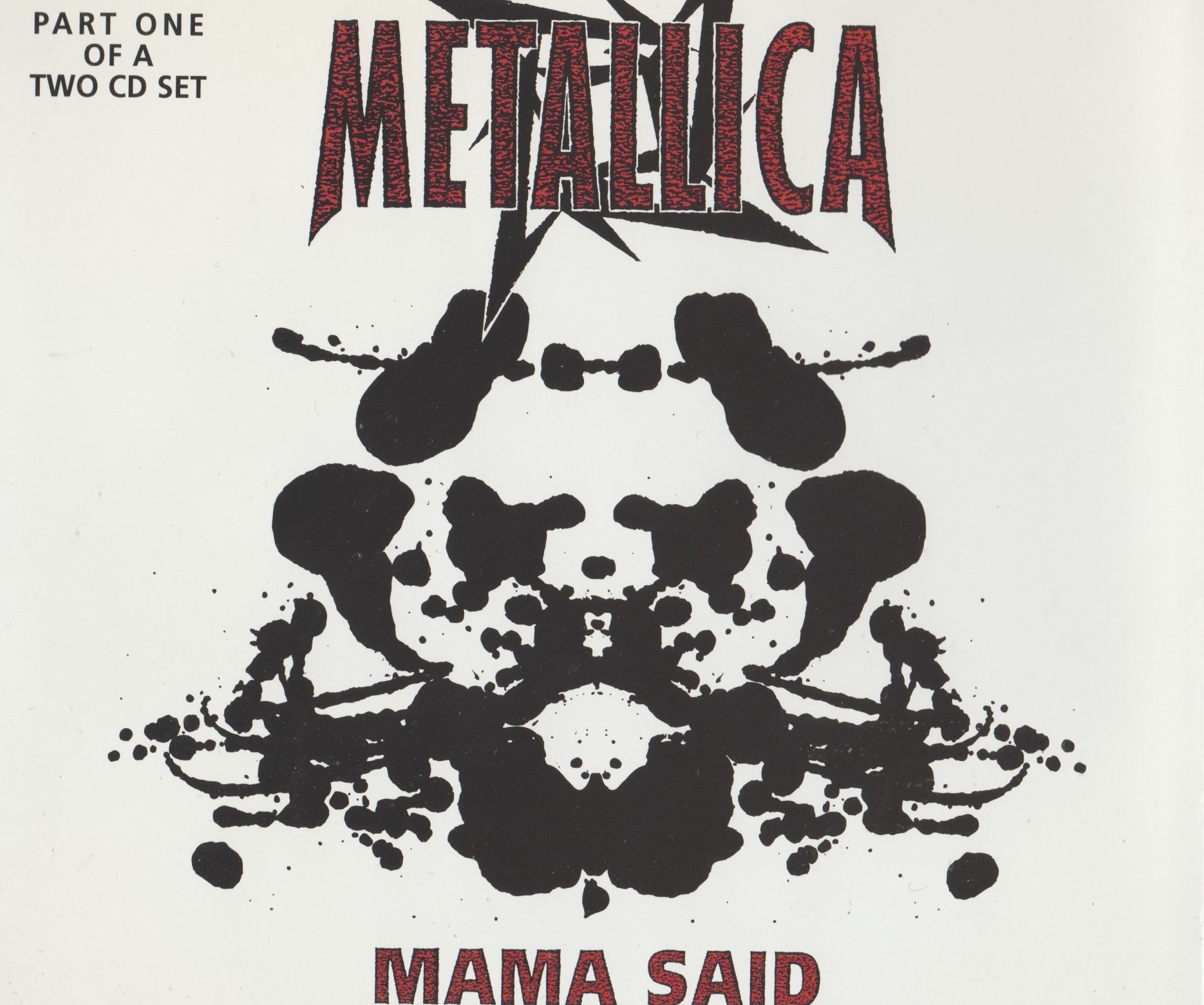
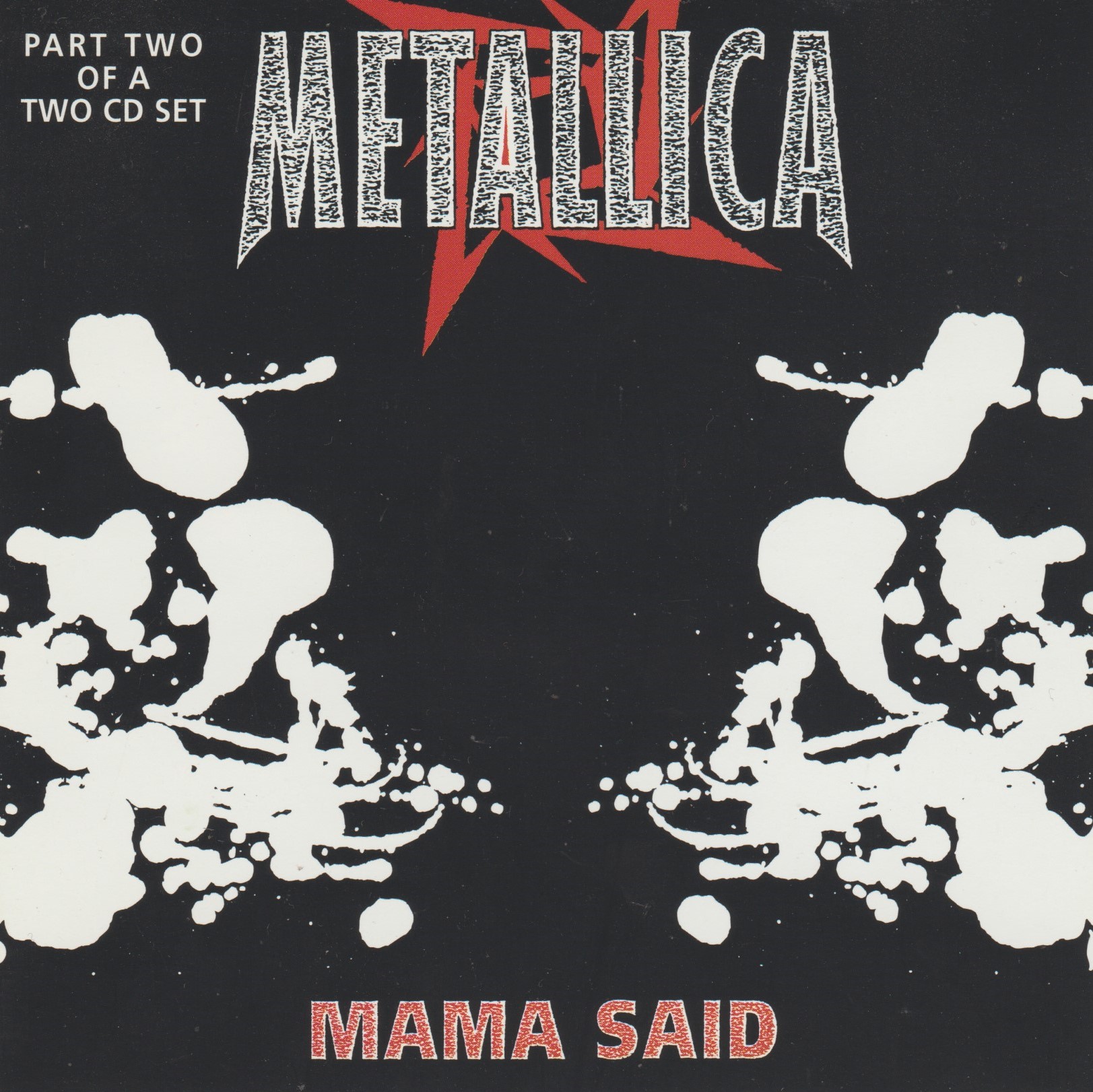
METALLICA – “Mama Said” (1996 Vertigo CD singles parts one and two)

In order to get all the songs, you had to buy three separate singles.  You needed the 7″ vinyl (reviewed yesterday) and two CD singles.  The total payoff was seven B-sides:  five live, one demo, one single edit.  The 7″ picture disc included “Ain’t My Bitch” live from Irvine Meadows in ’96, and the rest are on the two CDs each sold separately.

The first single ignites the live feast with “King Nothing”, which finds Metallica in an informal mood before kicking into the track.  Though “King Nothing” was eventually released on its own as the fourth single from Load, it was never really one of the best songs from that album.  It slams heavy enough and would have been fun to mosh to.  They go old school on “Whiplash” which has that energy you want out of live Metallica.  The old fans boo the new fans, but everybody gets what they want.  Lars is sloppy as fuck; what do you expect?  When Metallica play stuff like “Whiplash” live it’s not about precision, it’s about energy and this version delivers.

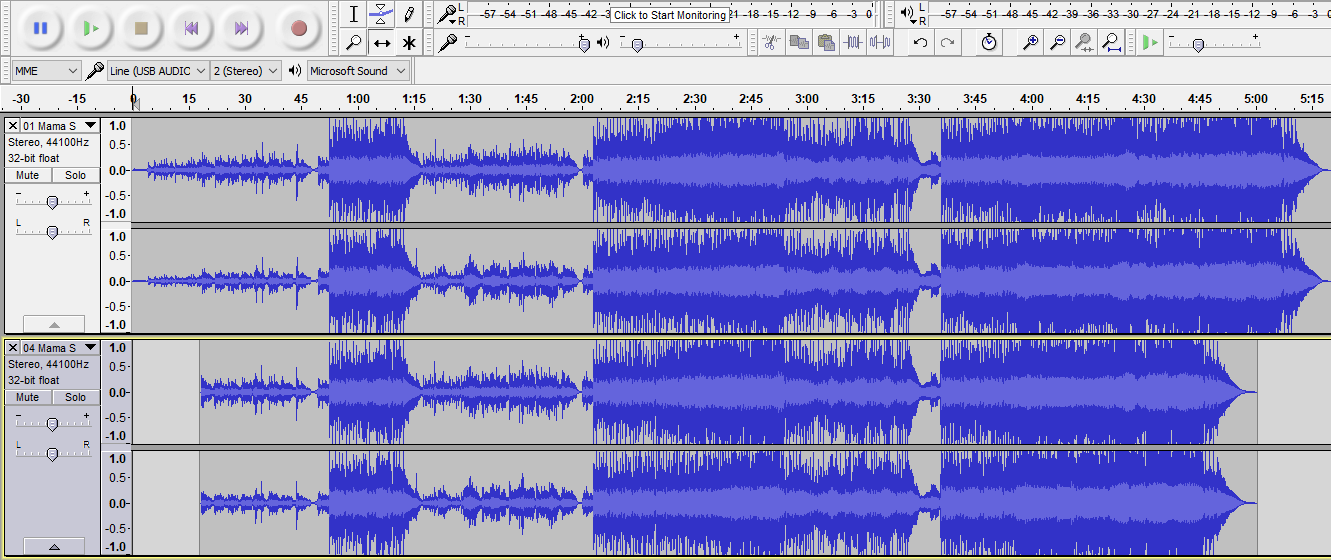
The first CD ends with just a single edit of “Mama Said”, a good ballad with a country twang that some fans might have found unpalatable.  It’s shorter by 40 seconds, starting immediately with James’ lead vocal.  15 seconds chopped at the start and 20 more at the end.  Do Metallica fans need single edits?  No; Metallica was always resistant to compromises like that.  Paul DeCarli was given the job of the edit, presumably being told to get it safely under five minutes for radio.

“Mama Said” album version (top) and single edit (bottom) waveforms

The second CD in the set wastes no time going for the throat.  It’s “So What”, the infamously vulgar Anti-Nowhere League cover that was a B-side for Metallica once upon a time before.  It was so notorious that it became a live favourite unto itself, often turning up in the encores.  That’s followed by “Creeping Death”, an epic way to cap off the live tracks.  That mountainously heavy rock just never lets up until it gives way to another massive one.

The last and most interesting track among the B-sides is the original “Mama Said” demo recorded solely by James and Lars in Ulrich’s basement.  Electric guitar at first instead of acoustic, but beautiful.  The purity of this version, unadorned as it may be, is the reason to seek it out.  The twangy guitar part is in place, as are the lyrics (not always the case with James’ songs).  Metallica could easily release an album of their demo versions, but they haven’t so you gotta get the singles.

Seek these out.

4/5 stars