classic rock

REVIEW: Alice in Chains – Rainier Fog (2018)

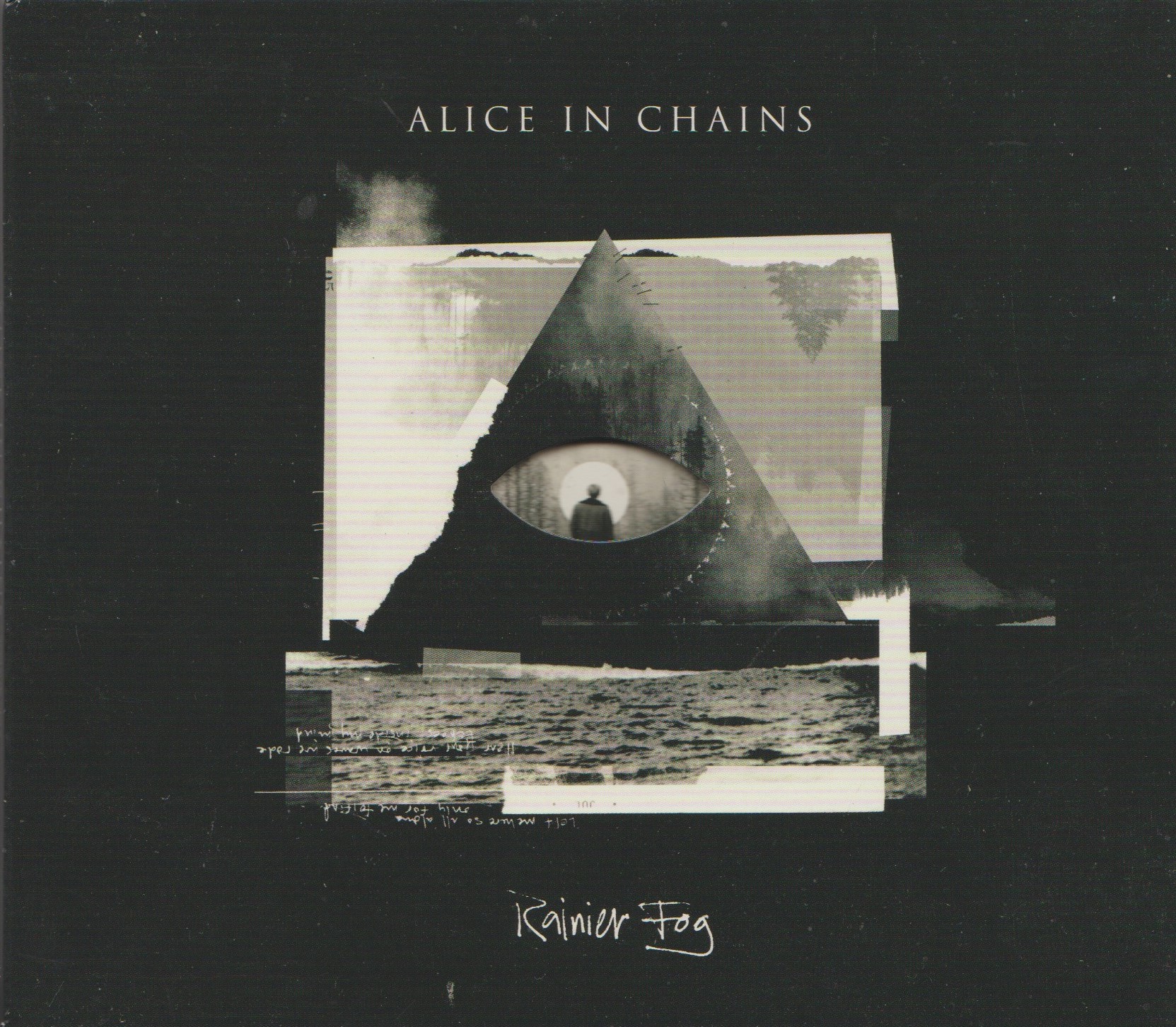
ALICE IN CHAINS – Rainier Fog (2018 BMG)

It’s always disappointing when you give a new album a fair shot, but it refuses to stay in your skull. Such is the case with the latest Alice In Chains, Rainier Fog.

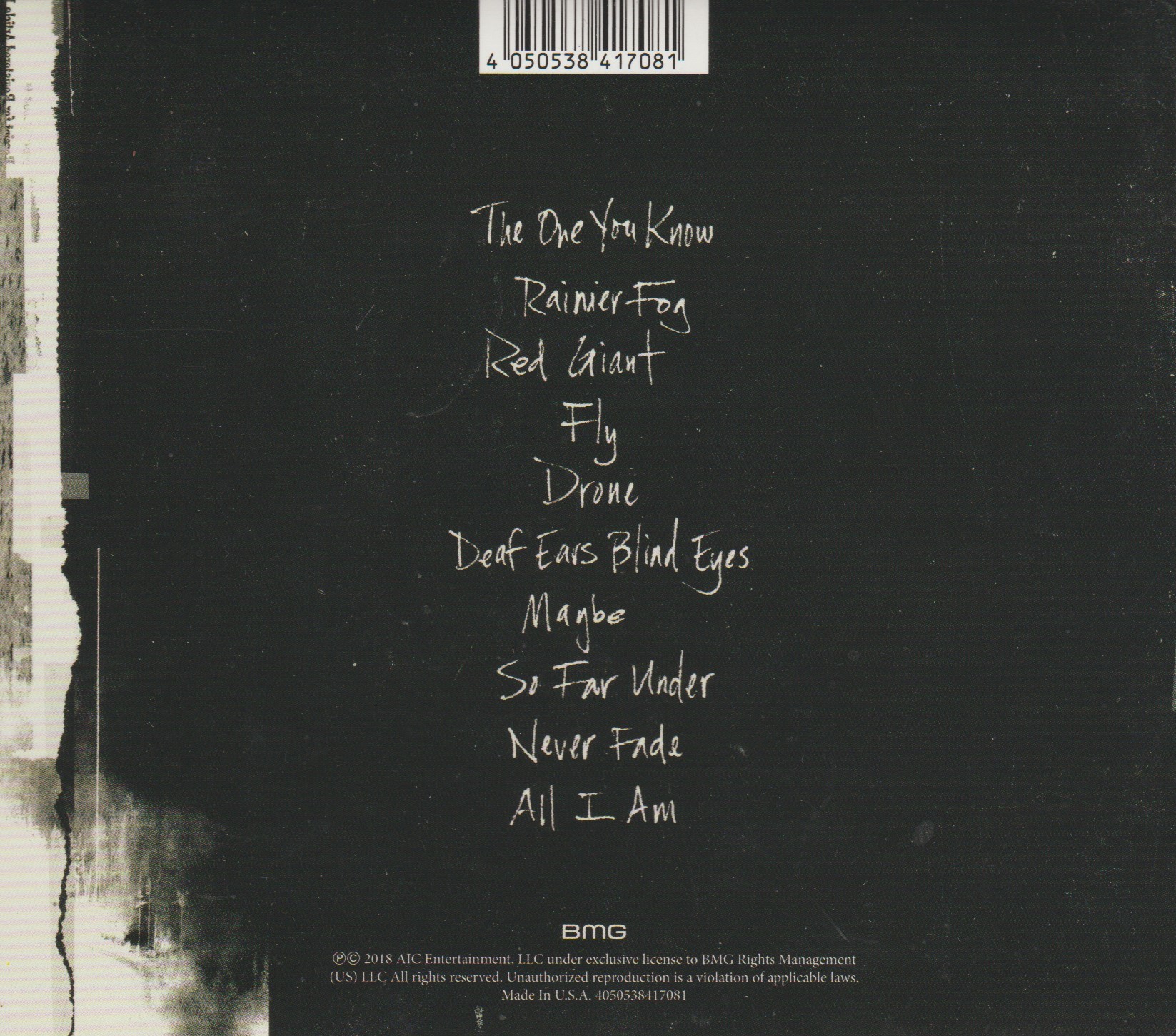
It’s especially disappointing since their last platter, 2013’s The Devil Put Dinosaurs Here, was so crushingly perfect.  It’s hard to put a finger on exactly why Rainier Fog lacks the same impact.  It’s not singer William Duvall — this is his third album with Alice In Chains, and he’s done an admirable job every time out.  It’s also not the fault of the lead track, “The One You Know” which is a terrific starter.  “Rainier Fog” is also slammingly good.  From there on, the songs are less memorable, with the exception of “Never Fade” which has a chorus that goes on for miles.

What’s the issue?  Is it that we’ve heard all this before?  Ever since the passing of Layne Staley, Alice In Chains lost that certain “fucked up” quality to their music.  Staley seemed to bring an unschooled approach, completely unafraid to make unconventional music.  Rainier Fog is terribly conventional by comparison with Dirt.  There are verses, choruses, melodies and all the accoutrements.  And they are all good ones.  Little guitar hooks snake in and out of verses, cool as hell.  Riffs are constructed from the strongest mortar.  These foundations support a collection of well written songs.  But most of them refuse to stick.  It’s baffling.

Perhaps Rainer Fog is one of those albums that doesn’t click until the 100th listen.  They exist and when they do, they often become favourites.  If that happens here, we will line up Rainier Fog for a re-review.

3/5 stars

#750: KISS II

GETTING MORE TALE #750:  KISS II

Kiss frontman Paul Stanley seems emboldened by the monumental success of their End of the Road tour.  Why “emboldened”?  Because they’re pulling it off with only half the original band.  Ace Frehley has not shown up to sing “Shock Me” and Peter Criss seems happily retired.  Tommy Thayer and Eric Singer remain in the greasepaint and the spotlight.  It’s proof that the majority of the masses don’t know or don’t care who is in a band anymore.  The “fans” who refer to Thayer and Singer as “scabs” have had no impact on ticket sales with their boycotts.

Many bands have toured successfully in recent years without key members.  AC/DC made headlines by replacing Brian Johnson with Axl Rose.  Deep Purple are going strong with only one original member.  Queen sell out with Adam Lambert taking Freddie Mercury’s place on stage, and bring home terrific reviews to prove it.  Kiss too are doing just fine.

Would they be able to do it with even fewer original members?  Like, say, none?  Paul Stanley thinks so.  He’s said so before and recently he raised the idea again:

“I think that Kiss has served a huge purpose and brings incredible joy to people on the End Of The Road tour. The shows are packed, and not only with the early followers of the band, but people who have heard the legend of what this band does live. And it’s something that’s more than music. It really is a preaching of self-empowerment and the idea that anything that you’re willing to work hard for, you can probably attain. And the idea of celebrating life. Things that may seem simplistic or overtly simplistic, but actually have a timeless depth to them. So when bands continue, ultimately the people in ’em need to change or have to, because of circumstances.

“So that’s a long explanation for me feeling that I would have an enormous amount of pride in knowing that we can continue the band once I’m not there anymore.  That would be the ultimate test of its credibility and the role, I think, that it serves.

“I didn’t invent the wheel. I am the product of all the people who I looked up to, all the musicians who I respected, and it was kind of like a stew, and then I added my own ingredients to it. But there are other people who are out there who wouldn’t necessarily imitate me any more than I imitated my heroes. But there are people out there, I’m sure, who are well equipped to pick up the flag and run with it.”

Paul is correct to say that bands must sometimes change out of necessity.  He is actually the best proof of this.  Paul cannot sing anymore and has been miming a huge percentage of his lead vocals on this tour.  We won’t go down that rabbit hole this time.  Suffice to say, if this wasn’t the End of the Road, Paul couldn’t really continue singing lead in Kiss.

But replacing him?  That’s a whole other bowl of Cheerios.

The idea of Kiss going on without Paul and Gene – let’s call the hypothetical band “Kiss II” – would certainly cross a line with me.  Bands with one or two original members is one thing.  Many bands have replacement members far more important than the originals.  Phil Collen is a key member of Def Leppard, vastly more so than his predecessor Pete Willis.  Same with Roger Glover and Ian Gillan in Deep Purple.  Adrian Smith in Iron Maiden.  The list goes on and on.

Could a Kiss II be a viable prospect with Eric Singer the longest serving member?  With Tommy Thayer as band leader?

No.  Paul and Gene control Kiss.  The other guys have just been hired guns ever since the originals left.  Kiss may have started as four guys, but for the last few decades it’s the vision of just two.  (In the 80s, just one, as Gene went Hollywood.)  You could imagine Paul and Gene controlling a Kiss II band from behind the scenes, but that is a hollow prospect.  Imagine Stanley and Simmons discussing new costumes and approving setlists for a Kiss II tour without them.  Would you pay to see that?

I wouldn’t.

Kiss have already gone down in history, many times, for their accomplishments.  Making the band immortal with all parts replaceable might also be historic, but not in a good way.  There are guys out there who can sing better than Paul, and play better than Gene.  Tribute bands have all the moves down pat.  But you can go see a tribute band for $10.  Kiss II would be, in essence, an “official” tribute band and with Paul and Gene behind the scenes they’d be charging a hell of a lot more than $10 per ticket.

I think Paul has lost perspective.  Kiss has been successful, against the odds, in replacing Peter Criss and Ace Frehley.  But there was precedent for that.  Kiss made fantastic albums without either.  That doesn’t mean you can remove Paul or Gene from the picture and still call it Kiss.  Paul and Gene have always been the ones with the drive and the vision.  They are not so easy to replace.  Can you picture some replacement guy imitating Paul’s stage raps?  There might have been a brief window in the late 80s when Kiss could have gone on without Gene, only Paul, since he had become the captain of the ship for a while.  However that ship sailed long ago and it’s all but impossible to imagine the band without them both.

No, Kiss II is a lousy idea.  It’s just a way to milk naïve fans in this era of hologram and nostalgia tours.  Would they sell tickets?  Sure, they’d sell some.  These hologram tours are proof that people will pay to see anything.  Would it be good?  Hell, no!


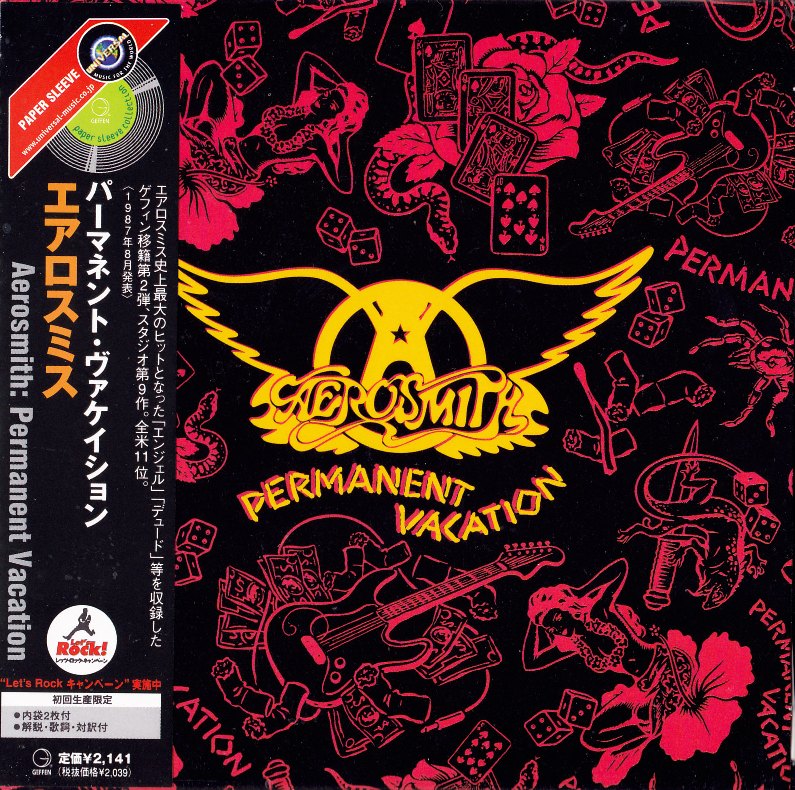
Just Listening to…Aerosmith – Permanent Vacation

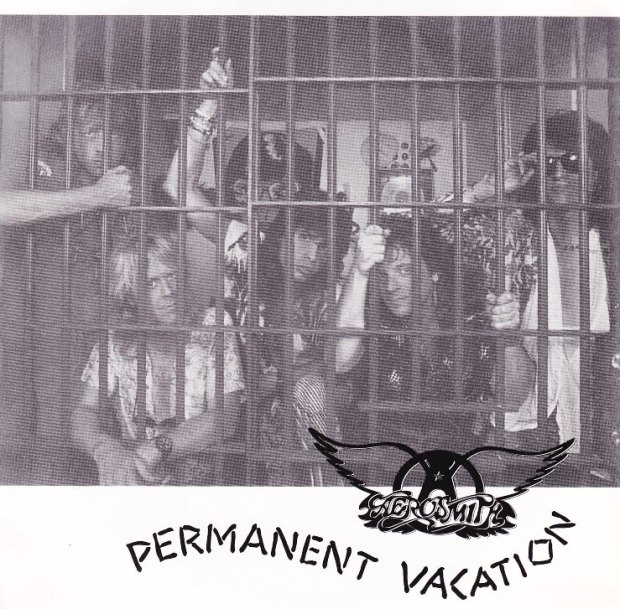
This revisit is due to your Heavy Metal Overlord, who told me that Permanent Vacation is his favourite go-to album for reunited Aerosmith.  Due to the tremendous respect (and fear) I have for HMO, I decided that I needed to give it another listen.

My conclusion after hearing it again is that I had it dead wrong in my album review.  Yes, there are a couple filler songs.  “St. John” and “Girl Keeps Coming Apart” still don’t resonate with me.  But, man, there are some bangers on Permanent Vacation.  I didn’t remember how awesome “Heart’s Done Time” really is.  I forgot about the cool Beatles cover “I’m Down”.   I didn’t give due credit to the terrific title track. But most important of all is “Magic Touch”.  Is Joe Perry playing a whammy bar in the beginning?  What a song.  Could it be the best song on the album?  It certainly has a chorus that goes on for miles.

Permanent Vacation, as an album, might be overshadowed by its own singles “Dude”, “Angel” and “Rag Doll”.  But I’ll be damned if “Angel” doesn’t still make the hair on my arms stand up to this day.

I’ve been unfair to Permanent Vacation. It’s far better than I thought it was.


Just Listening to…Aerosmith – Nine Lives

It’s been a while since we’ve been “Just Listening” to an album here, but this one’s always good for a revisit.  The last truly great Aerosmith album was 1997’s Nine Lives.  I stand by that, because it’s a killer album.  We reviewed it back in 2015, so if you’re looking for a more in-depth analysis, check that out.  Today we’re just appreciating an album that is too often overlooked for the strengths it has.

The heavy stuff was heavy enough, and the ballads had balls.  Songs like “Nine Lives” and “Taste of India” are juggernauts.  Drummer Joey Kramer really took them to the next level, which is remarkable since he was sidelined for part of the making of the album.  His partner in rhythm, bassist Tom Hamilton, is also on top of things with his lyrical bassline meanderings.  You’ll rarely find a better guitar tag team than Joe Perry and Brad Whitford, but Steven Tyler’s words are also noteworthy.  The guy is a poet with a dirty mind, and Nine Lives has some of his better lyrics.   “‘Cause love is like the right dress on the wrong girl, You never know what you’re gonna find.”

Most people think of Pump or Get a Grip as the last decent Aerosmith.  Although it didn’t have as many great singles, Nine Lives is actually a better album than Get a Grip.  It has less filler, and rock fans don’t really care about singles anyway.  The fact is, from beginning to end, Nine Lives is just a smoother ride.


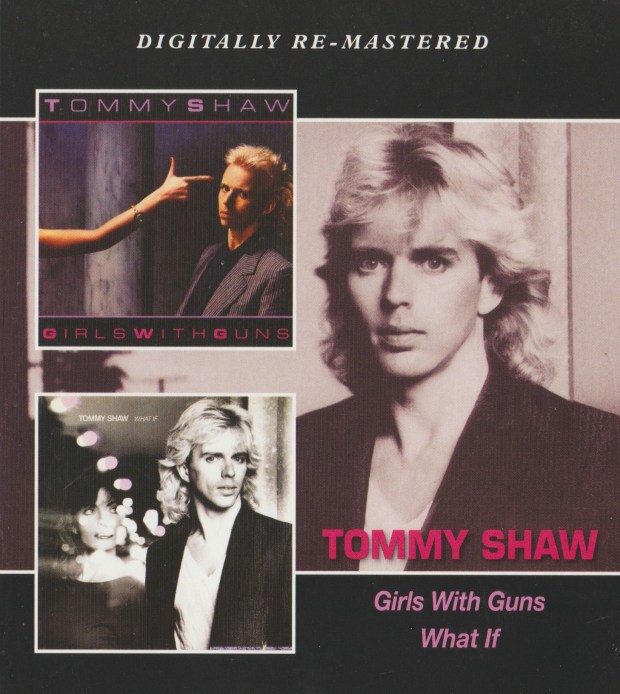
REVIEW: Tommy Shaw – What If (1985)

TOMMY SHAW – What If (1985 A&M, 2013 BGO Records)

Tommy Shaw’s second solo album What If didn’t have a big hit like Girls With Guns.  It did have some solid if lesser known songs.  Production wise, the edges are a little sharper.

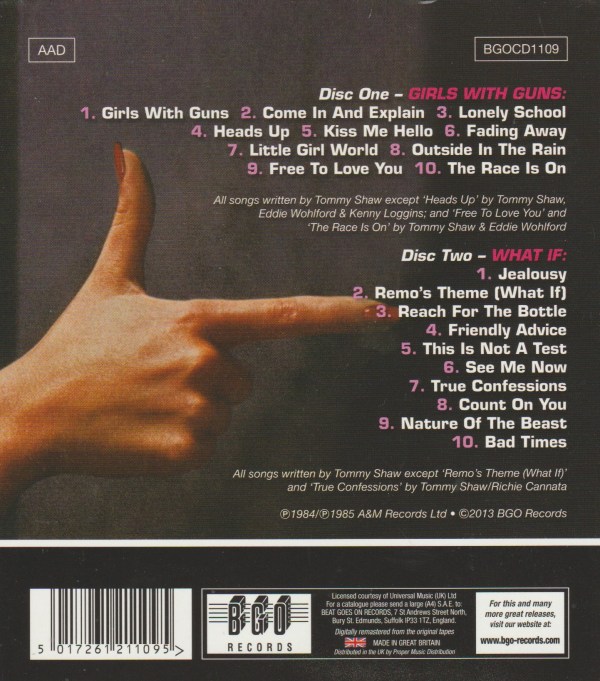
Hot opener “Jealousy” boasts a cool sax solo, and a memorable chorus beefed up with soulful backing vocals.  Second up, “Remo’s Theme” is from the movie Remo Williams, a forgotten film with a decent lead song.  Unfortunately the drums have that electronic gate that indicates samples, but fits the 80s vibe of “Remo’s Theme”.  It sounds like a Miami Vice episode waiting to happen.

Shaw goes for the dusky nightclub scene with “Reach for the Bottle”.  Songs can paint pictures, and this one is made for drinking.  The electro-funk of “Friendly Advice” however just reeks.  Musicians would slap me and point to it as a high point of sheer playing ability, but I’m holding my nose over here.  It gets better on “This is Not a Test”, still lodged deep in the 80s but in a good way.  The subject matter is right out of 1985:  the threat of nuclear war!  This was a popular subject in the 80s, just ask Ozzy.

The second side opened with “See Me Now”, an inspirational energising tune, carefully composed like…layers of gouda on a cheese sandwich.  Dig?  It tastes good, but too much is probably not good for you.  “True Confessions” is similarly a pop guilty pleasure.  God that drum sound is awful!  Moving on, “Count on You” has a Floydian (80s of course) ballad vibe, with more of that tasty sax.  “Nature of the Beast” is another ballad with terrific melodies and more of them drum samples.  Finally “Bad Times” ends the album with a “good time” song.  Loads of saxophone,  upbeat hooks, and less obtrusive drums.

What If is not a bad album, but some the production gets to way too clunky on some tracks.  When it’s played closer to rock and roll, the basic instruments, it works far better.

3/5 stars

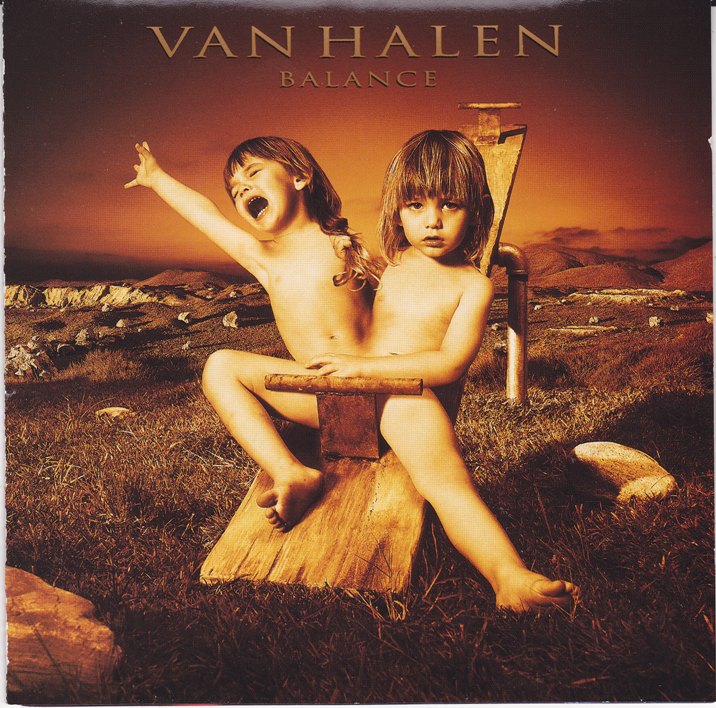
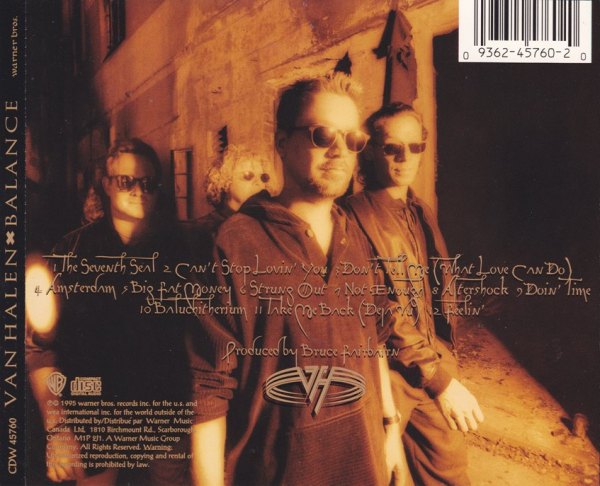
GUEST REVIEW: Van Halen – Balance (Derek vs. LeBrain)

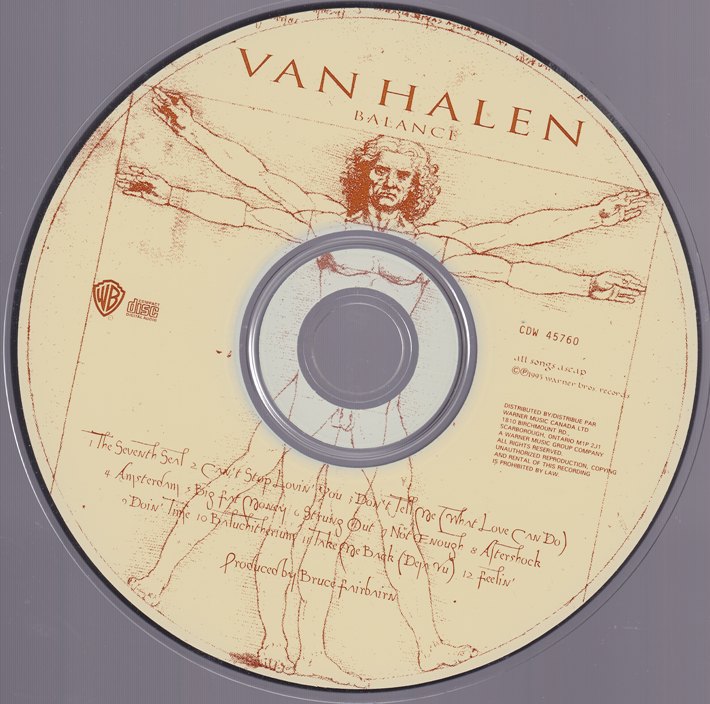
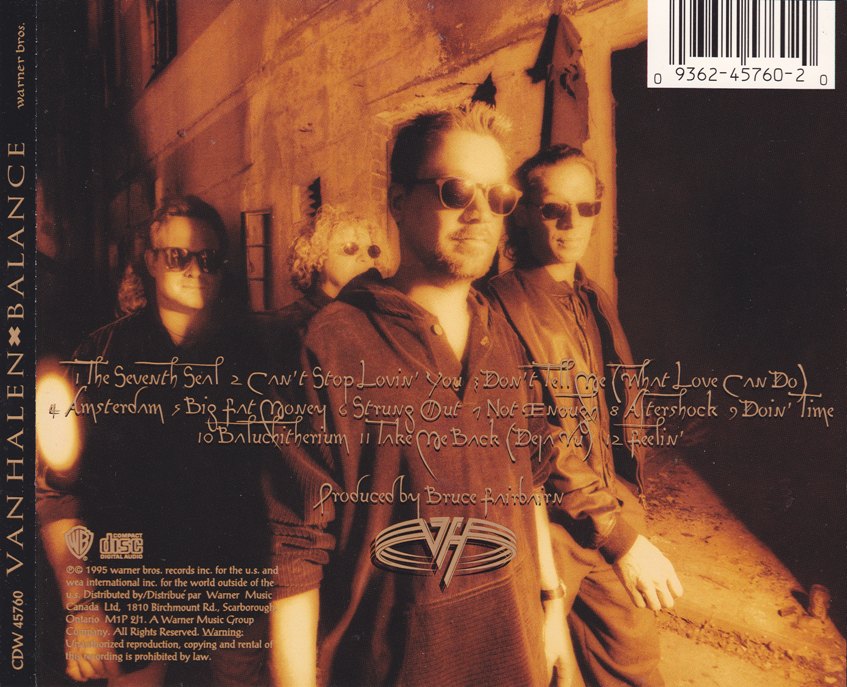
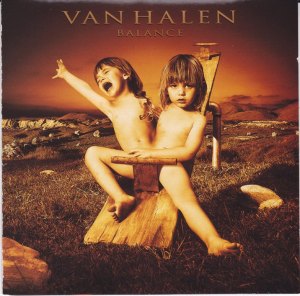
VAN HALEN – Balance (1995 Warner)

By DereK

I was perusing Mike’s blog like I sometimes do (what can I say, I’m a fan). I stumbled upon his review for a Van Halen record that means a lot to me, and frankly, is the one I love the most among all of the Hagar years AND Roth years. I was really surprised with just how harsh Mike was on what I’ve always regarded as the pinnacle of Van Halen’s creativity and musicality.

After discussing it with Mike, I decided to write somewhat of a rebuttal to his 3.75/5 review.  I plan to try to explain why this record means so much to me as a Van Halen fan and professional composer/musician. I will quote from the original review to make this sort of sound like a discussion rather than me just being a dick and touting my opinion as better. If anything, I just want detractors of this record to give it another view and possibly a second chance.

Ready? Let’s go!


Balance takes Van Halen into a highly polished, commercial direction. This is “balanced” with heavier grooves and a couple more “serious” lyrics.   The result turned out to be one of Van Halen’s most pop outings.
Right off the bat I will disagree with you Mike. I argue that this is Van Halen’s most EXPERIMENTAL outing since Fair Warning. The melodic phrasing and song structures on some of these songs are incredibly progressive, and additionally, I believe that there are enough instrumental pieces that push what people’s perception of the band could be.

As for the polish, that isn’t a negative, the band has never sounded better. The way Alex tuned his drums is brilliant and crisp, Eddie’s tone never sounded more varied (at least until Van Halen III), and the band sounded incredibly tight and focused (Mike’s bass in particular is fucking blistering). The record being heavy is 100 percent a positive as well, as this applies not only to the slamming instrumental but also the lyrical content.

This is hard rock, metal, and avant-garde with pop overtones. Not pop.

This is “The Seventh Seal”, and Sammy’s voice is in top form. Michael Anthony’s bass rolls and hits the notes at just the right moments. This is truly a great song, completely different from Van Halen of old, but surely a triumph.

No argument from me here. The Buddhist monks chanting in their low vocal register leading into Sammy’s fever dream about the End Times as described in the book of Revelation is a beckoning call to fans that Van Halen is in its most mature incarnation. Balance is established right off the bat as a theme involving spirituality, but that isn’t the only type of Balance pursued in the record. I see many of these songs as mirrors of one another, focusing in on a true sense of balance. I will extrapolate on this as I go on.

“Can’t Stop Loving You”, is an embarrassing foray into pop. While Van Halen wrote pop stuff before (“Love Walks In”), this song lacks cojones of any kind. The guitar is really thin, Alex Van Halen cha-cha’s his way through the drum fills, while Sammy sings a lyric that David Lee Roth would have used to wipe his ass.

Hoo boy. As I have already stated, I think the production on Balance is brilliant so we won’t retread that issue here. I always found this song to be sad, to me it is about the kind of longsuffering love that only couples who have been together for decades will understand. It shows an evolution in Van Halen’s views on love, which before were often juvenile in the sense that it was more about the start of the relationship before things get hard. The theme of commitment never really factored into the equation until this track, just the hormones in your body exploding when love is raw and new to you. David Lee Roth could never have come up with something like this, ever.

“Don’t Tell Me (What Love Can Do)” is anything but a love song. Sammy tackles drugs, faith, youth in crisis, and the 1990’s. Hagar has never sounded more foreboding, or mature for that matter. Eddie’s riff is simple, but dark and rhythmic. Michael locks onto the riff, creating this unstoppable wall of groove.

We agree here, this song is fucking genius in its execution and is the closest to metal Van Halen get until they write “Humans Being” a little later. Also here is where we begin to see the theme of Balance, which I argue permeates the record, take shape. The prior track is about a fulfilling love, this track is about the absence of love and how the dejected react in situations of pure despair. Pay attention, pretty much every song on the record has a directly opposing relationship to the song that it follows.

There is nothing wrong with this mid-tempo rocker (“Amsterdam”) with spare Eddie riff, except the lyrics.

Look the lyrics are in a party song, which as I recall, are not required to be Shakespeare. Do you really think that any DLR era gems known for partying like “Take Your Whiskey Home” are any more profound? Lyrics aside, this song is setting up another element of Balance by exploring sins of the flesh and addictive behaviors that can be found in so many cities. It is about losing control and giving into your desires, especially in this case with regards to alcohol and drugs. This is one part of the Balance equation, as the next track deals with sins of a different kind. Greed.

I’ll give VH a C for trying, but “Big Fat Money” is a C+ at best.

“Big Fat Money” is a raucous psychobilly freakout of a song. Every member of the band loses their fucking mind by giving all their energy into this burner of a track. Sammy shreds his vocal chords as he rapid-fires phrases, Eddie brings up-tempo blues and ragtime sounds to the forefront, Alex plays double-time almost punk rock beats, and Michael Anthony just slays you with his furious basslines. Furthermore, the element of Balance in relation to the prior track is the other most focused-upon sin in society (Greed). The song shows the destructive nature in a way, however, as you feel like the lyrics hint at somebody losing their mind to their desires that began in Amsterdam and continued to spiral downwards into pure insanity. The balance is the lure of desire and then the destructive after-effects of such desire.

“Strung Out” is a jokey opener to the ballad “Not Enough”.

I look at this track as an example of “chance music.” Much like the music of John Cage and other contemporaries of his, the aleatoric nature of “Strung Out” is based on numerous factors. It is essentially Eddie fucking around with piano strings, but it isn’t a joke in my opinion. If anything, it shows Van Halen willing to ask their listeners what music is, and more importantly, what they should define Van Halen as. It is in every way an experimental, not pop, foray into a new direction.

That fades into “Not Enough”, another ballad… Tunes like this made Van Halen seem completely out of touch with what was happening in the 1990s. Within months of its release, Shannon Hoon would overdose, Layne Staley locked into a dance of death with smack, and Richey Edwards of the Manic Street Preachers went missing (presumed dead) after suffering long bouts of depression.
OK, a lot to unpack here. “Not Enough” isn’t a conventional ballad at all. It is about love and, more importantly, the loss of love. It doesn’t show a band out of touch at all, if anything, it shows that they are more in tune than ever. “Not Enough” is about the heart wrenching aspect of loss of someone you love. Period. The music video is somber and yet it also gives you hope. Eddie’s chorus-washed solo is a work of genius and as a whole the song remains the most mature expression of love and loss that I can possibly find in their catalogue.

As for the mentions of Layne Staley and Richey Edwards, I feel that I must interject that Alice In Chains and Manic Street Preachers are two incredibly important bands in my life. Layne spoke to my pain as a longtime sufferer of mental disorders and Richey looked at the world in the same cynical way that I do (plus as a Welsh-American, the Manics are a part of my culture and thus very important on another level to me). This is frankly a low-blow to the album that is unwarranted and patently false.

 “Aftershock” is another hard rocker, nothing embarrassing here, good riff, good melody, good song. 

As a drummer this is one of my all-time favorite songs to jam to. The entire song just blows the roof off of everything in its vicinity and remains a testament to just how hard Van Halen can rock. It also, however, brings in that same element of Balance that I speak of. “Not Enough” is about the raw and compassionate feelings of loss, namely in a relationship, but Aftershock is about the rage and bitterness that is likely to follow in the grieving process of a relationship. Both essential. Both a part of Balance.

A pair of instrumentals follow, an interesting touch seeing as Van Halen didn’t do too many instrumentals post-Dave. “Doin’ Time” is Alex messing around on the drums, which segues straight into “Baluchitherium”. 

These two songs are another part of me arguing about the experimental nature of this record. To devote so much time to instrumentals, especially the way they are structured here, is to push the band out of the Billboard 100 arena and into the “thinking” arena. The band is showing they are incredibly versatile and willing to take risks. Furthermore, guitar and drums are naturally instruments needed in order to balance out the equation of a rock band. Taken a step further, the instruments are played by brothers who are in many ways needed in their personal and professional lives to achieve balance.

Nothing on this record is haphazardly added.

“Take Me Back (Deja Vu)” is a pop song that I don’t mind at all, accented with acoustic guitar. 

It’s a brilliant song with brilliant instrumentation and vocals from Sammy. Also, it fits into the balance equation as it is about longing for better times. The reminiscing for the good times is here because the next track is all about the ugly of the present times.

“Feelin’” is a morose song but with an epic, powerful chorus. It is very different from anything the band had done prior.

The song is a masterpiece. Sammy is singing of a world on fire in every aspect of society as we know it. The song twists and turns with dazzling instrumentals and lyrics that are screamed at the heavens. It is the band completing its evolution into the mature incarnation of the band once known for wanting to “Dance the Night Away”. This would be the last song on the record unless you got it in Japan (more on that in a second), and it brings everything to a close. It is the end of the record, and unfortunately, the beginning of the End for the Hagar years.

If you’re lucky enough to be in Japan, there was one bonus track: this is the groove laden, oddball “Crossing Over”.  It’s a song about the afterlife and lyrically it’s probably the best tune of the bunch.

I am often called an experimental composer, so I suppose it is no surprise that I love this song and was so disappointed that it took me years after purchasing Balance to find it. I believe that this track completes the cycle started in “The Seventh Seal”. Notice how I talked about every song on the record being related in a balanced symmetry? I believe that “Crossing Over” is the mirror to “The Seventh Seal”. The album opens with nightmares of spiritual chaos, and this track is the completion of such chaos.


So, what do I have to say in closing? This record shows Van Halen at its highest possible output of creativity, and most importantly, its ability to show a deep philosophical approach to its writing never seen before or since. Balance is the culmination of everything that Van Halen was destined to be, and for that reason, it is the best record they ever wrote. Even if you disagree 100 percent with me, or just really hate Sammy Hagar, give this one another chance.

You might be surprised what you find.

5/5 stars
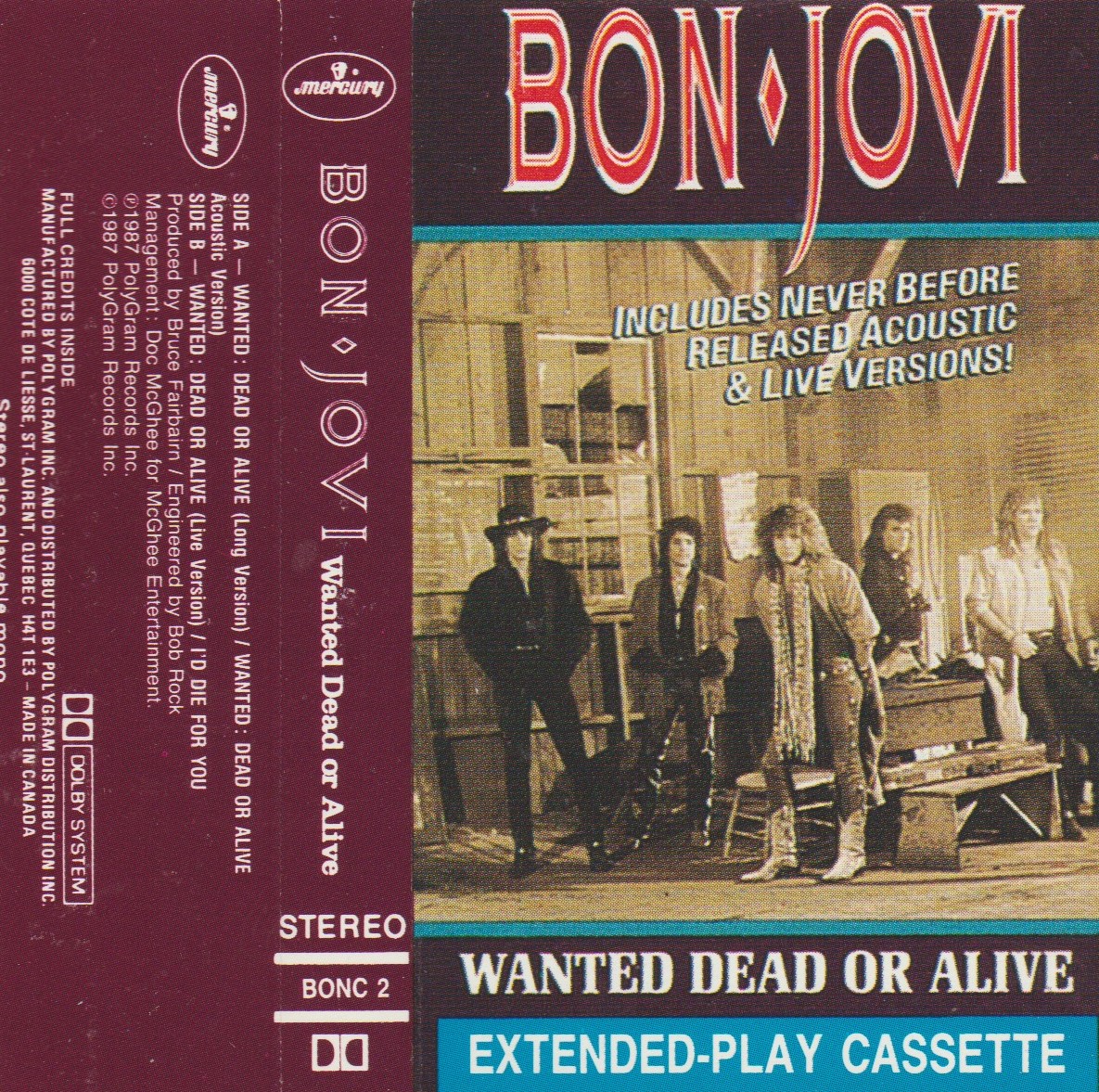
REVIEW: Bon Jovi – “Wanted: Dead or Alive” (1987 cassette)

BON JOVI – “Wanted: Dead or Alive” (1987 Mercury extended play cassette)

Some rarities are easiest to find on tape.

That’s definitely still the case for “Wanted: Dead or Alive”, the 1987 acoustic version originally released only on an extended play cassette in most of the world.  This version, discussed below, is a Holy Grail collectable.  What about CD or vinyl?  There was a rare Japanese version with a slightly different tracklist, but for 30 years, all I had was this cherished cassette.

The tape has four tracks.  The original studio version (titled “Long Version” here to avoid confusion with the  4:10 single edit) leads side A.  “Wanted” is Bon Jovi’s first truly brilliant song.  An extended cowboy metaphor about the road, it’s timeless.  It always has been.  Richie Sambora’s 12 string guitar made all the young guitar kids want to play one.  His backing vocals were the real highlight.  Funny thing about Bon Jovi:  the backing vocalist was better than the lead singer!  Smoking guitar solo too, where every note counts.  You can hear Richie pushing those strings and wrenching that solo from the instrument.  It’s a perfect song, with every component serving a purpose and coming together.  The old west as seen from New Jersey.

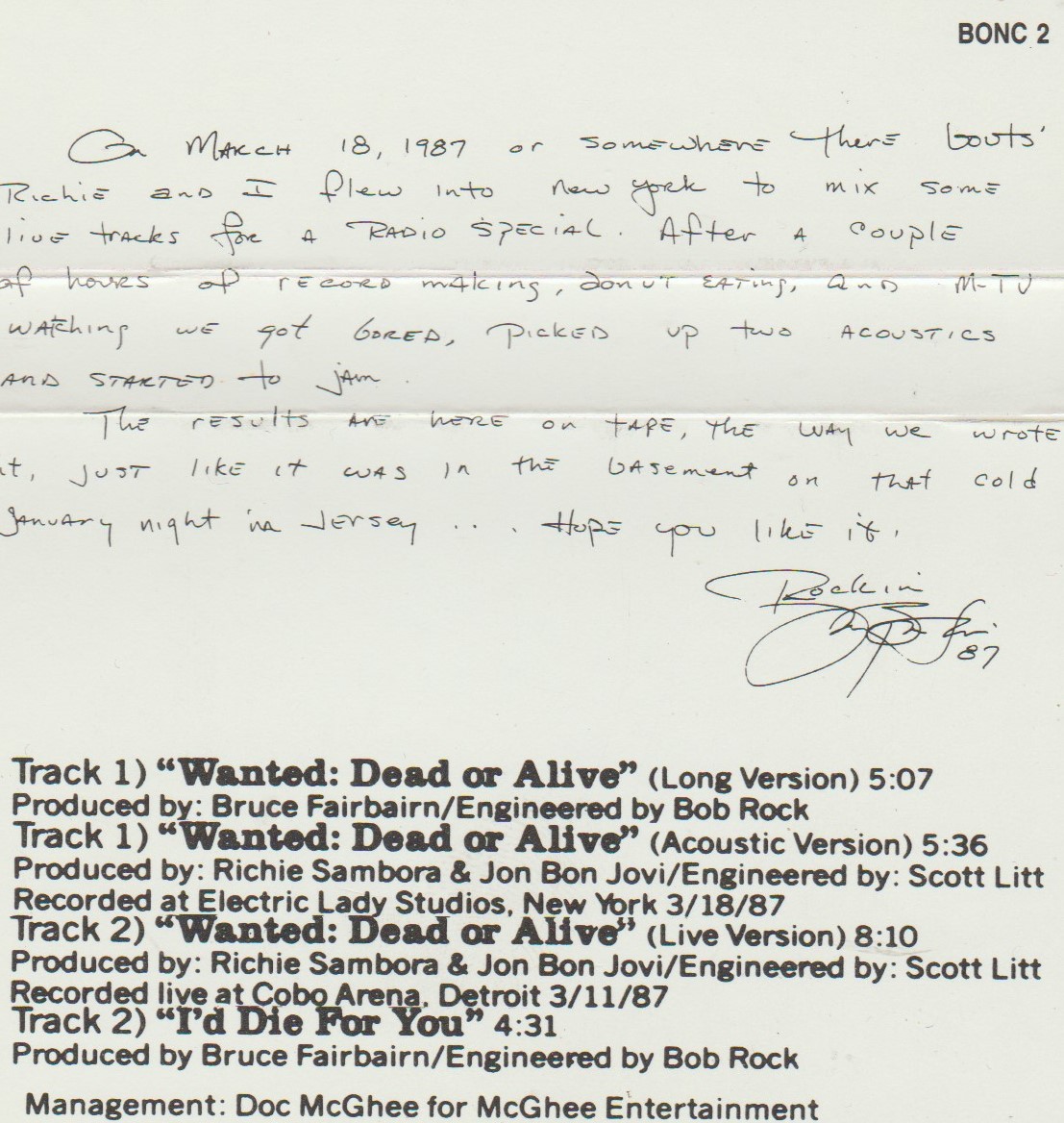
The acoustic version of “Wanted” is the real delight here.  It’s just Jon and Sambora together with two acoustic guitars.  Jon explains the details in the liner notes, but only the cassette has this information: one more good reason to hunt down the tape.  Read below:

“On March 18, 1987 or somewhere there bouts, Richie and I flew into New York to mix some live tracks for a radio special.  After a couple hours of record making, donut eating, and MTV watching we got bored, picked up two acoustics and started to jam.  The results are here on tape, the way we wrote it, just like it was in the basement on that cold January night in Jersey.”

If that doesn’t set the scene, nothing will.  Richie sings more of the lyrics, and belts out a killer acoustic solo too.  It was this recording that demonstrated to me the talents of Mr. Sambo.  What it lacks in glossy finish, it makes up for in spades with vibe.

On side B, the live version of “Wanted” is another rarity.  It’s an extended 8:13 full band version, with a long instrumental prologue.  According to the liner notes (again, only on the cassette), it was recorded at Cobo Hall in Detroit on March 11, exactly a week before the studio jam was recorded.  It’s likely this is one of the live songs that Jon and Richie were in New York mixing on the 18th.  (Production is credited to both.)  You may have lots of versions of “Wanted” already, but owning an extended take from early ’87 is better.

The tape ends on “I’d Die For You”, a song that was good enough to be a single in its own right.  However, it wasn’t.  It’s just an album track from Slippery When Wet, but it’s safe to say it’s a bit of an unsung classic.  The Japanese CD version, on the other hand, comes with the non-album rarity “Edge of a Broken Heart”, one of their best tunes ever.  After “Edge”, there is an exclusive unlisted interview with all five band members.  Inside, Japan also got a “Bon Jovi Dictionary (R to Z)”.  Presumably the other volumes of the dictionary can be found in other Japanese CDs.

Though this cassette has an overabundance of “Wanted”, you simply need to get that acoustic version.  You want the one that’s 5:31 long, recorded in March ’87.  In fact, you need that one.  And even though CD is the superior format, the tape has the liner notes and other details you won’t find on CD.

5/5 stars

Thanks to Mitch Lafon for helping me locate a CD copy of these tracks!

REVIEW: Blue Rodeo – “Diamonds in the Rough” / Demos and Other Stuff….. (1989)

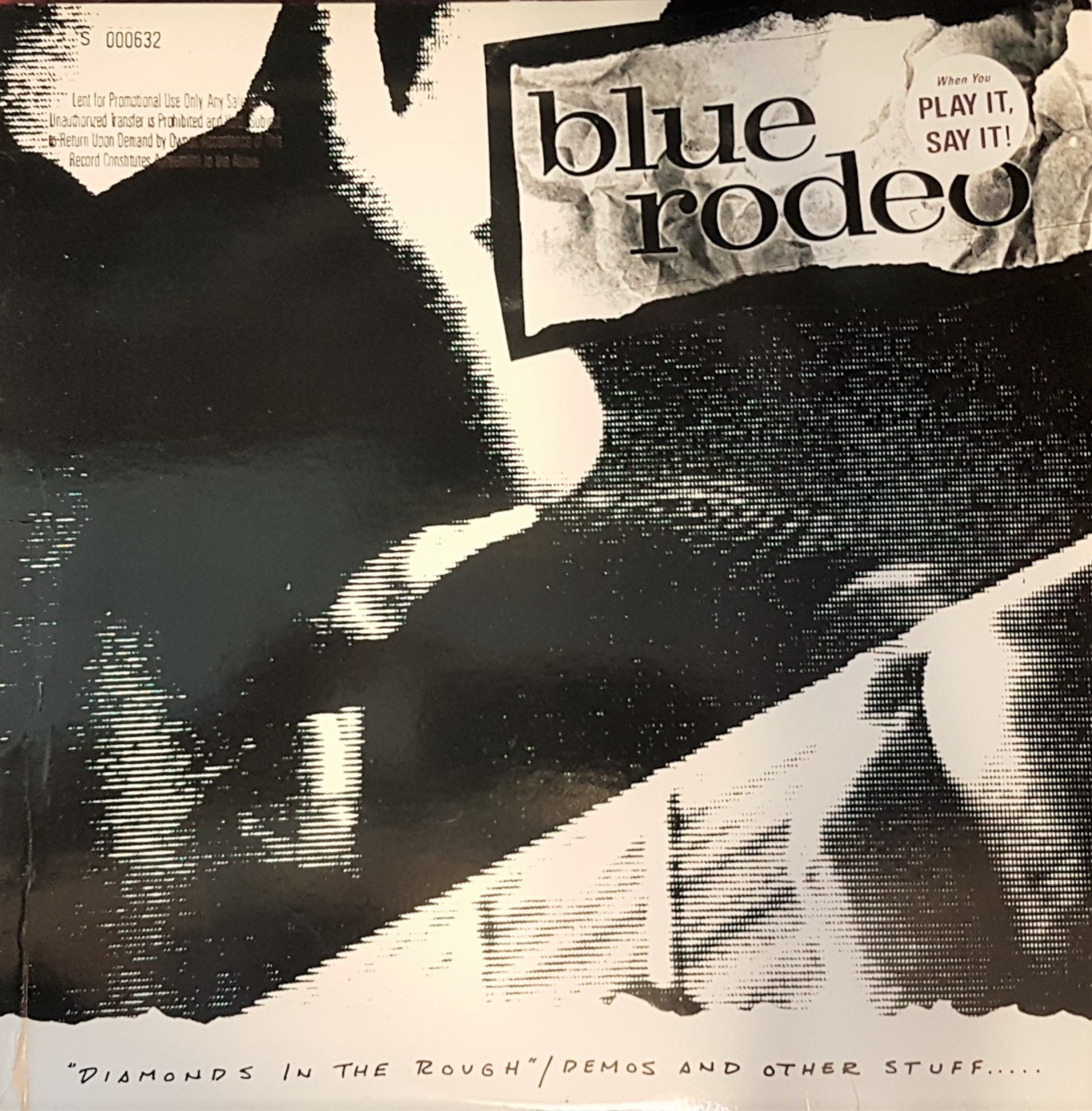
BLUE RODEO – “Diamonds in the Rough” / Demos and Other Stuff….. (1989 Atlantic promo EP)

Here’s the funny thing about “Holy Grail” records.  Most of the time, you don’t even know they exist until you find one!

Blue Rodeo is one of those bands for whom I collect “everything”.  Their box set filled a lot of gaps, but I am still missing a few things.  To the Discogs!

I was searching for one of the Blue Rodeo Live in Stratford albums.  There are two; I only have one, and it’s excellent.  While searching for that live album, I found this promo EP instead, at a good price and in great condition.  Upon reading the tracklist, it contained four Blue Rodeo tracks I didn’t have and didn’t know existed!

1989’s Diamond Mine is still considered one of the band’s greatest albums today, if not #1.  The “God and Country” demo that leads off Diamonds in the Rough is an acoustic rendering of one of its best songs.   “How Long” is a fully arranged demo, sounding live off the floor.  Since this record was cut for radio stations to play, it’s quite possible that you heard these versions at some point in early 1989.  I hadn’t, and neither is included in the box set.  Of course they don’t have the production value of the full album, but that’s part of the appeal of collecting rarities like this.

Side one closes with a live version of “Outskirts”, also not on any Blue Rodeo album.  However this version of “Outskirts” is from another “Holy Grail” promo, The Live CFNY Concert.  That record is a double and still out my reach, so this energetic live cut will have to do for now.  (I mean, I could buy it right now…but the copy in the condition I want is almost $100.)

Side two has the single edit of their big hit “Diamond Mine”.  The album cut is 8:18, full of psychedelic organ solos and Doors-like jamming.  A shorter single edit of this song is always handy, and you can’t get it on their Greatest Hits CD. It’s similar if not identical to the music video version.

As if all of the above wasn’t enough to make this promo a worthy “Holy Grail” item, there are two unreleased demos for songs that never made it onto the Diamond Mine album!  “Galveston” is a cover of the Jimmy Webb song made famous by Glen Campbell.  Blue Rodeo’s version is manically fast, with Jim Cuddy’s sweet voice maintaining what made the song special.  Finally it’s “Jig”, an acoustic instrumental with Bobby Wiseman on concertina. This is little more than an idea of a song rather than something fully written.  Regardless, these two unreleased goodies go to prove what a band of musicians Blue Rodeo is, particularly Wiseman and bassist Bazil Donovan, possibly the country’s greatest bass player on this side of Geddy Lee.

If this record only had “Galveston” as its sole rarity, it would be still be a Holy Grail item.  As it turns out, none of these tracks can be found on a Blue Rodeo CD today, so it really justifies its own purchase!

5/5 stars


#746: Deepest Purple

A prequel to #462:  The Deep Purple Project

GETTING MORE TALE #746: Deepest Purple

Black Sabbath appeared on my radar before Deep Purple did.  Perhaps the first true “heavy metal” album I ever heard was Born Again.  Best friend Bob owned it; he raved about a song called “Zero the Hero”.  He was on to something.  Even though his cassette copy was murky and muddy, the chorus rose above.

What you gonna be what you gonna be brother – Zero the Hero,
Don’t you wanna be don’t you wanna be brother – Zero the Hero,
When you gonna be when you gonna be brother – Zero the Hero,
Impossibility, impissibolity mother – really a hero.

It was the first Black Sabbath I ever heard.  I didn’t know they had any other singers until one day I was sitting in the basement, recording videos off next door neighbour George.  One that I had selected to record was called “Neon Nights” by Black Sabbath.  By then, I knew enough to know that Black Sabbath had a “moustache guy” on guitar.  I was surprised to see a doppelganger on bass, but the singer kinda looked familiar.

I casually asked George, “Did Black Sabbath ever have anything to do with Ronnie James Dio?”

“Yeah, he was their singer!” he told me.  My world expanded that day.  It would be longer still before I had the chance to hear any original Sabbath with Ozzy.

I was picking up so much musical information from the neighbour kids.  I was intrigued by bands like Kiss, who had many lineups and sounds to go with it.  Clearly, Black Sabbath was one of those bands too.  “Neon Nights” didn’t sound much like “Zero the Hero”.

I sought to learn all I could about rock and roll.  When I had accumulated enough knowledge (barely), I made a little heavy metal trivia game.  I will never forget one question in particular:

Q: What do Ozzy Osbourne, Ronnie James Dio, and the lead singer from Deep Purple have in common?

A: They were all in Black Sabbath.

There are two things amusing about that.  1) I didn’t even know his name, and 2) “the” lead singer of Deep Purple!  Hah!  Finding out about David Coverdale?  That was a whole other story!

I made sure I learned his name quickly.  Ian Gillan was recognisable because of his long black hair often obscuring his face.  But I wasn’t ready to delve into Deep Purple yet.  The easiest (and cheapest) way for me to discover new music was by watching the Pepsi Power Hour on MuchMusic: two hours a week of all kinds of hard rock.  But Purple didn’t get much play.  Much didn’t have any clips of them in the 1970s, and in fact only had two Purple videos to run:  “Perfect Strangers” and “Knocking at Your Back Door“.  They weren’t exactly frequent flyers, so my exposure to Deep Purple took a lot of time to unfold.

Black Sabbath may have been my gateway to Deep Purple, but Purple eventually became an obsession that surpassed them.  In fact I used to go by the online name “Purpendicular”, named for one of their best albums.  I was known as “Purp” for so long that it became a bit of a phenomenon online in Canada and the UK when “Purp Ate My Balls” T-shirts were actually made for sale.  Most were in the UK.  This is an actual, true story!  A handful of people still call me “Purp”.


When people know you as “Purpendicular”, you better be a serious fan.  And I am.  I love Deep Purple.  I don’t think anyone can touch them for sheer integrity.

I floated through highschool without hearing a lot of Purple.  Much acquired a few more videos:  “Bad Attitude” and “Hush”.  They did not get played often.  I only caught “Bad Attitude” once or twice.  There was little interest in the band, it seemed.  Magazines announced that Ian Gillan had quit at the time of the Nobody’s Perfect album.  About a year later came the news that they hired on former Rainbow singer Joe Lynn Turner.

It took some time, but eventually Purple returned with new music.  I happened to have the radio on one afternoon in late 1990 when Q-107 debuted a brand new song called “The Cut Runs Deep”.

“At first it doesn’t sound like Purple,” said the DJ, “but then Jon Lord comes in with that Hammond organ!”

I hit “record” on the tape deck.

The Earth moved.  What a song.  What power!  And speed!  Rewind, hit “play” and listen again.  It was 5:42 of full-steam rock, with the kind of playing that makes the genre awesome.  Purple were heavier than I expected.  My ears were beginning to open.

I asked a friend at school named Andy about the new album.  Turns out, his brother had it.

“Is it heavy?” I queried.

He chuckled in bemusement.  “Heavier than Ian Gillan?  No.  No.”

I tried not to be crushed.

“It’s still good,” he added.

If it wasn’t for my sudden new interest in Led Zeppelin, that might have been the start of my Purple obsession.  Instead, I spent a year or so discovering Robert Plant, Jimmy Page, John Paul Jones and John Bonham.  To make matters even more congested, I soon found Queen, and began buying up old Black Sabbath albums too.

Finally, in the mid 90s, it was time to focus.  Once I had Deep Purple properly in the crosshairs, I commenced collecting.

My first doesn’t really count.  It was Purple’s latest, Slaves and Masters, their only album with Joe Lynn Turner.  It doesn’t count because it was just a taped copy.  Back when you could still rent CDs, I borrowed a copy from a video store up in Kincardine Ontario.  I put it in my boombox and began recording.  I remember my dad listening in on the last track, the epic “Wicked Ways”.  He asked who the band was.

“They are more of a musician’s band, aren’t they,” he remarked.  Yes!  Exactly.  My dad wasn’t into rock music, but he could hear that quality musicianship.  They were far and above the average rock band.

Slaves and Masters is a brilliant album, and although a full third of it is ballads, it’s hard not to like.  There are a lot of good songs on there.  So what if they are ballads?  “The Cut Runs Deep” and “Wicked Ways” more than made up for the lighter material.

Then:  two hits compilations.  Knocking At Your Back Door (a new release of 80s material) and Deepest Purple (all 70s).  This gave me plenty to absorb in a short period of time.  The most important song from this pair was “Child in Time”.  It appeared in live form on Knocking At Your Back Door and Ian Gillan was still in good enough vocal shape to do it.  I loved both versions.  When I played it in my bedroom, my sister could hear it through the door.  I played it so often that she gave it a name.  She called it the “Ahh Ahh Ahh” song.

Next:  Perfect Strangers.  A rewarding album in the long term.  Took a few spins to get there.

By 1993, Deep Purple got Ian Gillan back for another kick at the can.  The classic Mk II lineup was intact:  Richie Blackmore, Ian Gillan, Ian Paice, Jon Lord, and Roger Glover.  They did a so-so album called The Battle Rages On…, and it really did rage on.  As I learned more about the band, I discovered that even though they were all intelligent, schooled musicians, they fought like children!  This reunion was not built to last, though it was my next Deep Purple album.

I certainly didn’t expect Blackmore to quit.  And I didn’t even know about it.

The mid 90s were a bit of a black hole for metal information.  Few magazines were covering classic rock bands anymore.  I didn’t know that Blackmore quit until their live album, Come Hell or High Water, was out.  I found out from the liner notes!

The internet was in its infancy, but I did some digging and found out that Purple were playing live with a new guitar player.  Could you believe it?  Joe Satriani temped with them!, but he was already gone! They were on to a new guy.  The review that I read said specifically that the new guy “looked a lot like Steve Morse”.

Well shit!

Steve Morse was a legend in his own time!  I knew him by reputation only.  And I was really intrigued by this news.

I had to special order the new Deep Purple with Morse from the US.  It was 1995 and I was working at the Record Store.  You couldn’t even get it in Canada yet.  That’s how bad it was for rock bands in the 90s.  But I did get it, paying $24.99 for the import.  Purpendicular arrived one Tuesday afternoon.  T-Rev was working when it came in.  “I hope you don’t mind, but I played a little bit of your Deep Purple.  It wasn’t sealed when it came.  It sounds pretty good.”

He apologised for playing it but there was no need.  I thought it was cool that he was interested.  Turns out, he liked that album a lot and ended up buying a copy himself!

Indeed, Purpendicular is a special album.  There is magic in those grooves.  Maybe it was the freedom of working without the yoke of Blackmore.  Perhaps it was the rejuvenation of Steve Morse.  It was probably both and much more, but what happened with Purpendicular has never been repeated.  No matter how many good albums they have done since (and there have been several, including four with Don Airey replacing the late Jon Lord), none have had the…I hate to use this cliche over again, but…none have had the magic that Purpendicular has.  It’s impossible to put into words, but easy to hear for yourself.

I mean, I friggin’ named myself after that album!  There are T-shirts with my face on them that say “Purp Ate My Balls”.  That’s dedication, pal!


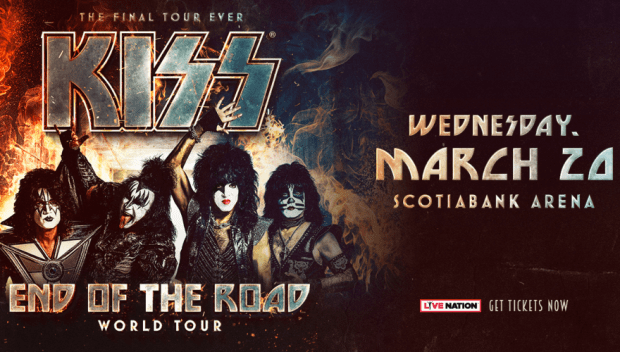
GUEST CONCERT REVIEW: KISS – Toronto – Scotiabank Arena March 20 2019 by Uncle Meat

UNCLE MEAT:  Well…I guess tonight I experience the controversy head on.

LeBRAIN:  What’s tonight?

MEAT:  Members of Black N’ Blue and Badlands.

LB:  Kiss?  You are going?  If so you are REQUIRED to write something for me. Or else!!

MEAT:  Old buddy, Scott Hunter, who I saw Kiss with twice in 1982 and 1983, messages me out of nowhere and has a paid-for ticket. Him and his buddy have VIP but only two, but who cares.  They had the Vault Experience with Gene last year too.

LB:  Go go go.

MEAT:  Only been 36 years since I saw Kiss live.  Mid-arena, 20 rows up.

LB:  It’s gonna be sad I think. Just my feeling.

MEAT:  Fairly good tickets. But yeah. The spectacle is the part to enjoy I guess.

LB:  I hope you have a good time.  But seriously if you don’t write this up for me, I am going to probably hurt you very badly. You won’t see it coming. Maybe we will be driving to the farm and I will punch your nuts so hard that you bleed from your ears. Just saying. Not that you “owe” me anything, you just have to. Or have your nuts tenderised. Your choice! You won’t see it coming but it will happen!


– Toronto – Scotiabank Arena, March 20 2019
Review by Uncle Meat

Kiss in 2019 was the best “show” I have ever seen.  Easily.

What about the singing?  I had watched a cool video the other day, where a guy pointed out in each song where Paul is lip syncing and where he is actually singing.  Which was good because before that I thought it was pretty much all tape. That being said, I could notice both last night.  It’s like he is trying some songs’ verses (or what have you) on different nights. But, 60% of the vocals (at least) were the same as they had been on other stops. I have heard the “Love Gun” track several times, how the verses have been re-recorded, and he does exactly the same inflections within the verses.

BUT!!!

Truth is? 20 seconds in, and I didn’t give a shit.  And while I hold the same opinion about it, it literally took ZERO away from a show I can only describe as almost perfect.

Gene sings 100% of his vocals, at least on the verses, and was kinda goofy all night.  More aloof than he usually is. Less Demon. More Mike Myers.  He is getting fat in the face though, wow…he looked like Bea Arthur in Gene makeup.

Paul still is on the very top shelf of frontmen, as per between-song banter.  He had me right in the trenches, clapping along, laughing out loud several times, just fuckin’ entertaining.

Eric Singer was a great drummer.  LOVED his voice in “Black Diamond”, and really really enjoyed “Beth”.  Like alot.  Surprising.

I was really blown away by Tommy Thayer’s guitar tone.  Fucking powerful, and creamy.  He changed just enough of the Ace solos to put his mark on it, but leaving the important parts of the solo in to suit the songs.  Great set list too.  “100,000 Years” and “Let Me Go, Rock and Roll” were serious highlights.

4.5/5 steaks 

The missing 1/2 steak only because of the lip-sync stuff.