NOTE: My text review of Blind Rage by Accept will go up in the coming days.
Johnny Metal and John the Music Nut have been breaking down, in detail, every Accept studio album. I jumped on board with Blind Rage, the third album with Mark Tornillo. I chose this album since I had the Japanese import and I wanted the two Johns to have a chance to cover a rare bonus track on their show.
In this episode, we break down the album track by track, with a high level of agreement between us. The Music Nut then goes through the tour in detail, discussing all the songs that were played live, and how often. Some are still played live today.
If you want a sneak preview into my Blind Rage review, watch this episode, as I tried something new here: reading my review aloud (not easy). I may have even done some singing.
Check out the show, and look for my text review in a few days.
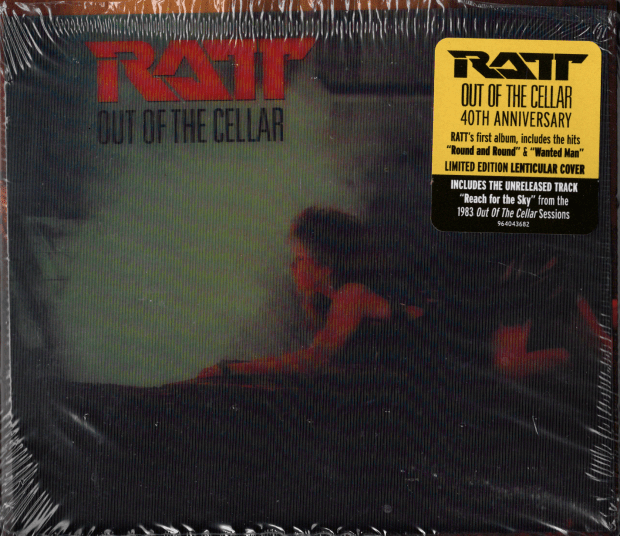
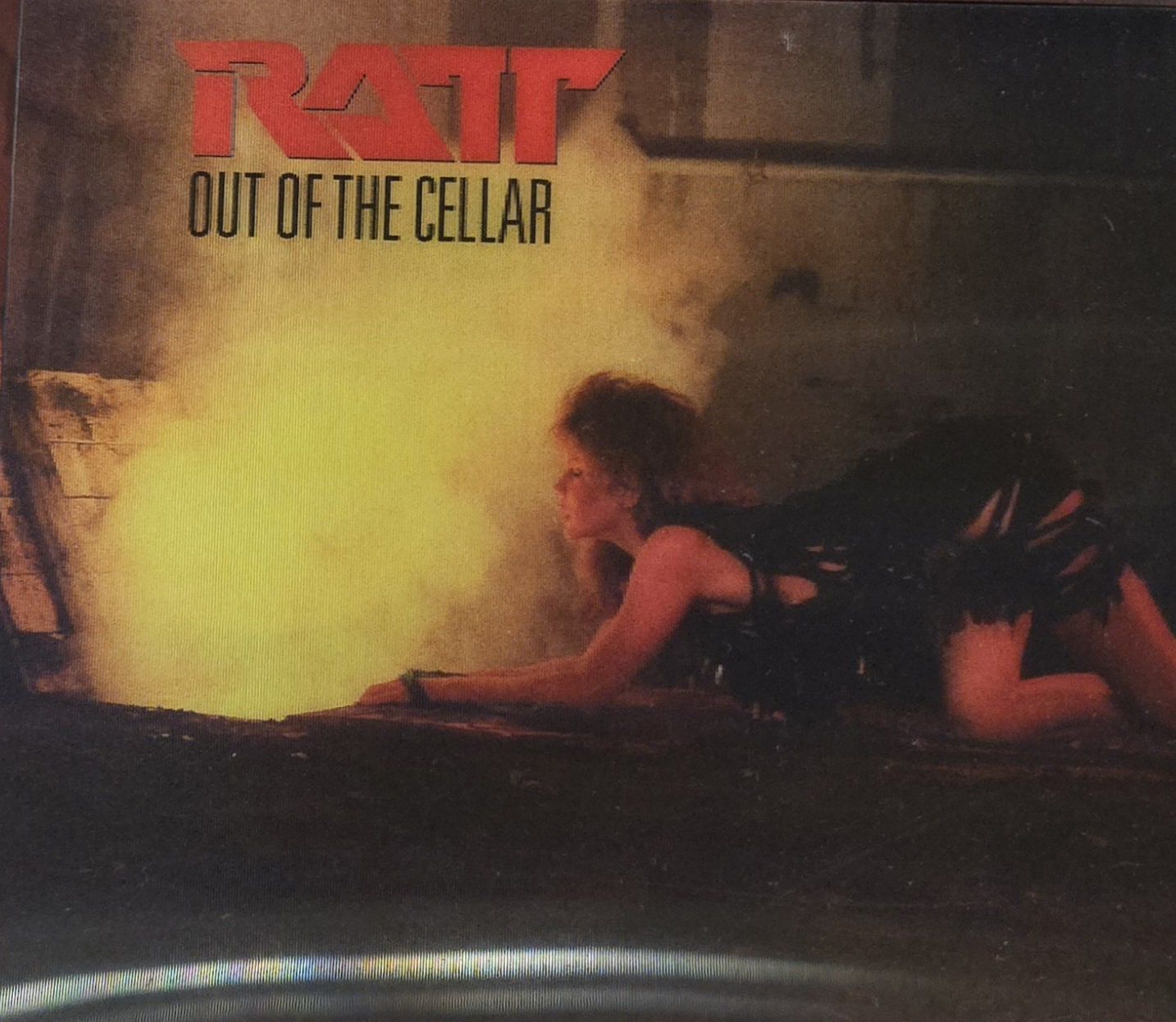
RATT – Out of the Cellar (1984 Atlantic, 2024 40th Anniversary edition)
Shame, shame, shame on Ratt.
In 2020 they released a beautiful Atlantic Years box set, featuring bonus tracks including one for Out of the Cellar. In 2024, they coughed up Ratt Rarities, with a bunch of unreleased Ratt tracks. And now, mere months later, we are given another reissue of Out of the Cellar, this one featuring lenticular cover art and one more unreleased Ratt song. This song could have been released on a 7″ single on its own, but if you want that, you have to buy the vinyl album all over again. If you want the unreleased song on CD, you have to buy Out of the Cellar one more time. I believe this is my fourth or fifth copy of Out of the Cellar now. This is just exploitative of the fans. Pearcy must need another swimming pool.
Is the one song worth re-buying the album again? Fortunately the answer is yes. “Reach For the Sky” is a 1983 Cellar demo written by Stephen Pearcy, Robbin Crosby, and Marq Torien of Bulletboys. It sounds remarkably finished. The guitar harmonies feel very latter-day Thin Lizzy, upon which the guys build a pretty cool song. Though not as slick as Cellar, it sounds fully produced and ready to release. Amazing that songs like this can remain buried for 40 years, and was never resurrected for an album even though the title was used in 1988 for the album Reach For the Sky. While this one song didn’t warrant an entire album re-release, at least we got it.
The album itself remains solid four decades after the fact. Opening with cowboy themed “Wanted Man”, the five Ratt Rodents were off to a compelling start. The disorienting sound of backwards drums heralds in “Wanted Man” is an inventive way to make their introduction. A simple, slow, chomping riff is menacing enough, while Stephen Pearcy growls though various Western metaphors. “By the road, you will hang, it’s your neck from this Ratt gang.” The capable harmonies of the band and especially Juan Crocier help nail the melodies that Pearcy alone can’t. Nice solo work. A great track worthy of a multiplatinum album.
“You’re In Trouble” is a little different. Juan’s clunky bass still sounds a bit out of place, though the choruses rule. But “Round and Round”? Still a total sleaze rock triumph. A keen sense of melody, rhythm and vibe mixed together with a sweaty Stephen Pearcy. Brilliant solo work from Warren DeMartini, and perfectly layered harmonies under the production of Beau Hill. Every element punches, from the simple but memorable riff and those echoey choruses. Dated to the period, but tasty for all ages.
A nice choppy guitar bodes well on “In Your Direction”, a slinky number that serves Stephen’s style well. Decent song, but with only one trick. “She Wants Money” is more fun, a fast upbeat blast on a familiar theme, with Robbin “King” Crosby on lead guitar. It’s hard not to headbang along with the melodic fun of “She Wants Money”. That ended side one on the original record.
The second side opens “Lack of Communication”, a biting track just missing one key ingredient: a real chorus. The saw-like riff smokes, the verses are great, but it never resolves into a definitive hook. It’s basically just the riff with some words over it. “Lack of communication, back off!”
“Back For More” is a little disjointed but salvages it with a killer chorus. Screamin’ Pearcy and the rodent choir give it the final polish. Brilliant solo work here by Warren. Then, one of the best non-singles is the blazing fast “The Morning After”. It has a bit of a Quiet Riot vibe. Juan’s bass is furious while Pearcy sings it for melody. “I’m Insane” is mindless fun; just bad boy rock with the popular “I’m crazy” theme that their pal Ozzy was milking for millions. Finally the album closes on “Scene of the Crime” which has a neat guitar hook that unfortunately is all but unrelated to the rest of the song. Some cool melodies with the patented Ratt harmonies here. Still, solid enough song that if they had been looking for another single, it could have been “Scene of the Crime”.
This reissue doesn’t have any additional packaging or liner notes besides the new lenticular cover. The lenticular art is nice, but it’s not solidly anchored to the packaging. It feels like a symbol for the half-arsed nature of this reissue.
Review dedicated to the donor of this CD, Mr. Harrison Kopp. I hope I like it. I am writing this review “live” so to speak, on first listen.
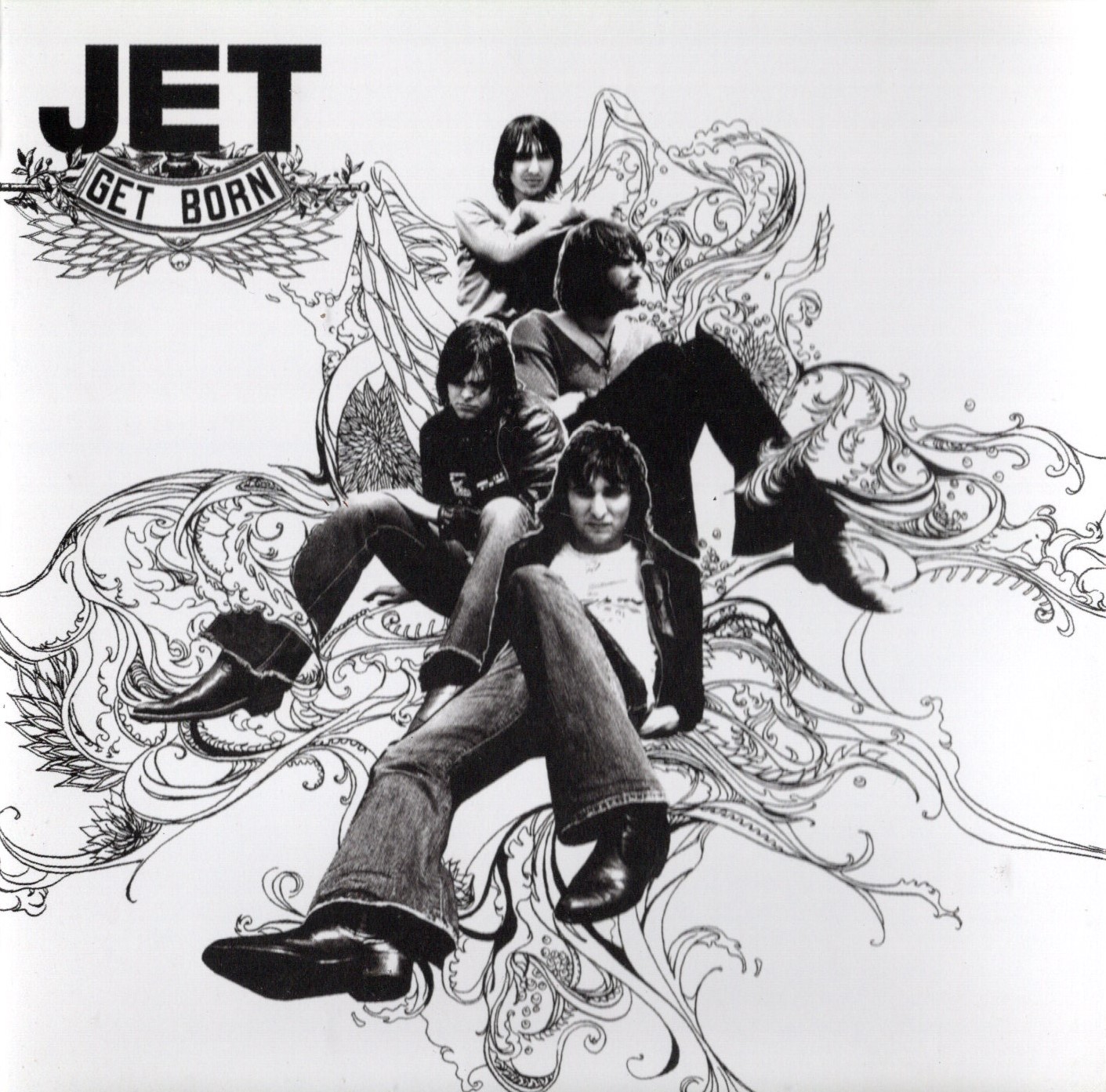
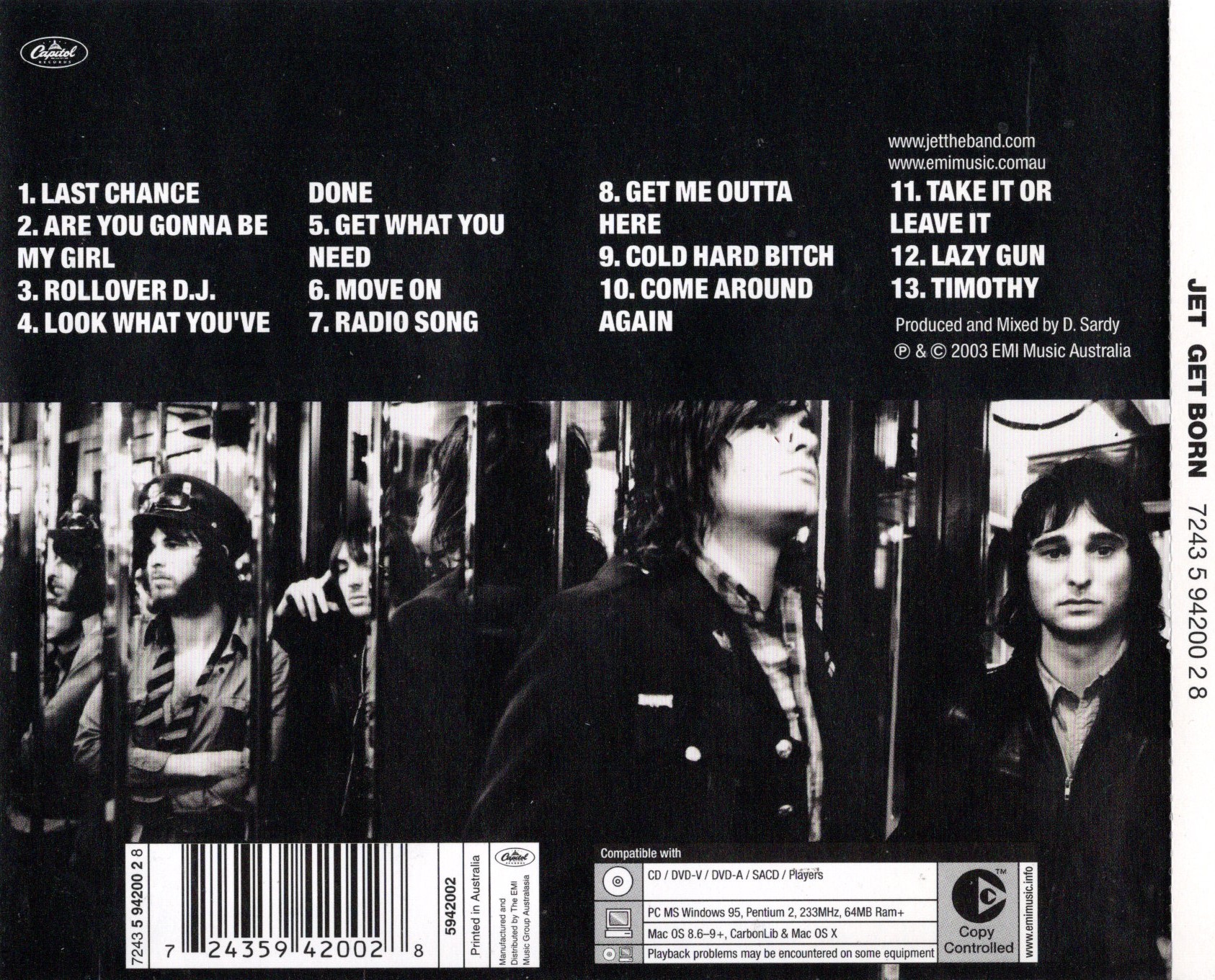
JET – Get Born (2003 EMI)
Get Born is Jet’s first LP, only two years after forming, and after one 4-track EP. Let’s listen and find out how adept this band got at writing songs after only two years. You already know track 2, “Are You Gonna Be My Girl”, the one that everyone says is “Lust For Life” re-written. Both songs utilize Motown beats, though the Jet song has more frantic energy. Plagiarism is excusable in some cases. In this case, I’m still undecided. Is the rest of the album more original?
Many of these songs are fast and short. Opener “Last Chance” doesn’t even break two minutes. It possesses a strong riff, reminiscent of AC/DC in their Bon Scott heyday. Lead singer Nic Cester is quite adept at “Yeahs!” and “Woos!” which will suffice. This leads directly into the signature bassline on “Are You Gonna”, which we don’t need to review. You already have your opinion, and mine is that you can’t tell me those guys never heard “Lust For Life”. That kind of thing always has a subliminal influence, intentional or not. The only question I have is how much was intentional, but I really stopped caring 20 years ago. It is, admittedly a good song if overplayed on radio (still).
“Rollover D.J.” hits right off the bat with bass and guitar, and sounds great in that second it smashes you in the face. Then it lays back a bit, in a Def Leppard-y way, when they used to rock. The chorus is punkier, but feels somehow incomplete. “Look What You’ve Done” switches up to a piano ballad, an unexpected twist. This tender song has an Oasis quality without the snot-nosed BS. This means, yes, you can hear a Beatles influence. Nic Cester demonstrates a smoother side to his singing. I didn’t want to like it, but the truth is, if this was on one of the first three Oasis albums, I would have liked it anyway. A keeper.
A nice rock n’ roll riff brings in “Get What You Need”, and one must admire the nice thick bass tone on this album. This song is all about the guitars. The melodies are inconsequential. It’s all the guitars, and the bass.
In another surprise, “Move On” opens with the distant sound of a steel guitar, before an acoustic intro. This western tinted ballad might be too soon after the previous ballad, but it’s a good song! Very much like the way the Stones would throw those acoustic numbers on their albums. It’s now clear that Jet are not interested in breaking new musical ground. They are focused on writing and recording classic sounding songs that fall within a certain boundary. That’s allowed.
Another surprise: acoustics and piano return on “Radio Song”, a moody trip that has me questioning everything I just wrote. Lead vocals by guitarist Cameron Muncey. I can hear some Radiohead, but the irony is the chorus: “This won’t be played on your radio, tonight.” It’s as if they knew “this is the song where we’re going to experiment a bit.” It’s different, and it has an audible heart to it. It goes epic by the ending, but not too much. Not into Guns N’ Roses bombast. Still sticking to the core instruments. An album highlight.
Back to rocking. A stock riff occupies the necessary space on “Get Me Outta Here”, which fortunately compensates for it with verse and chorus power! Really great work here, with all the singing parts hitting the spot, satisfying a certain craving for a song that’ll be in your head long afterwards.
AC/DC’s fingerprints are all over “Cold Hearted Bitch”, though with drums more out of the Who school of crashes and smashes. Unfortunately, momentum is lost on “Come Around Again”, another Stones-y ballad with piano and twang. It takes time to build, but the reward is brief. The mellotron and organ are the most interesting parts.
Energy returns on the punk-surf-rock-blast of “Take It Or Leave It”, like a shot of pure adrenaline to the album. By this stretch of the album, the “Yeah’s!” are getting a bit tiring and the schtick is wearing thin. “Lazy Gun” has a completely different vibe, with a Gary Glitter sound, and an unexpected secondary section that may or may not fit the first part. We’re over 40 minutes into the album now, and this, the longest song, shouldn’t be track 12. Ear fatigue is setting in.
Finally, “Timothy” is an acoustic ballad to close the album. It sounds extraneous, though with a psychedelic rock twist. I like the chorus, “It’s not what it seems, but it is…” but it seems the song never builds to anything bigger.
Two takeaways: 1) Jet is more diverse than I expected. 2) I don’t think they have a lot of character on this album. Nothing strikes me as unique. Further listens are warranted, but…
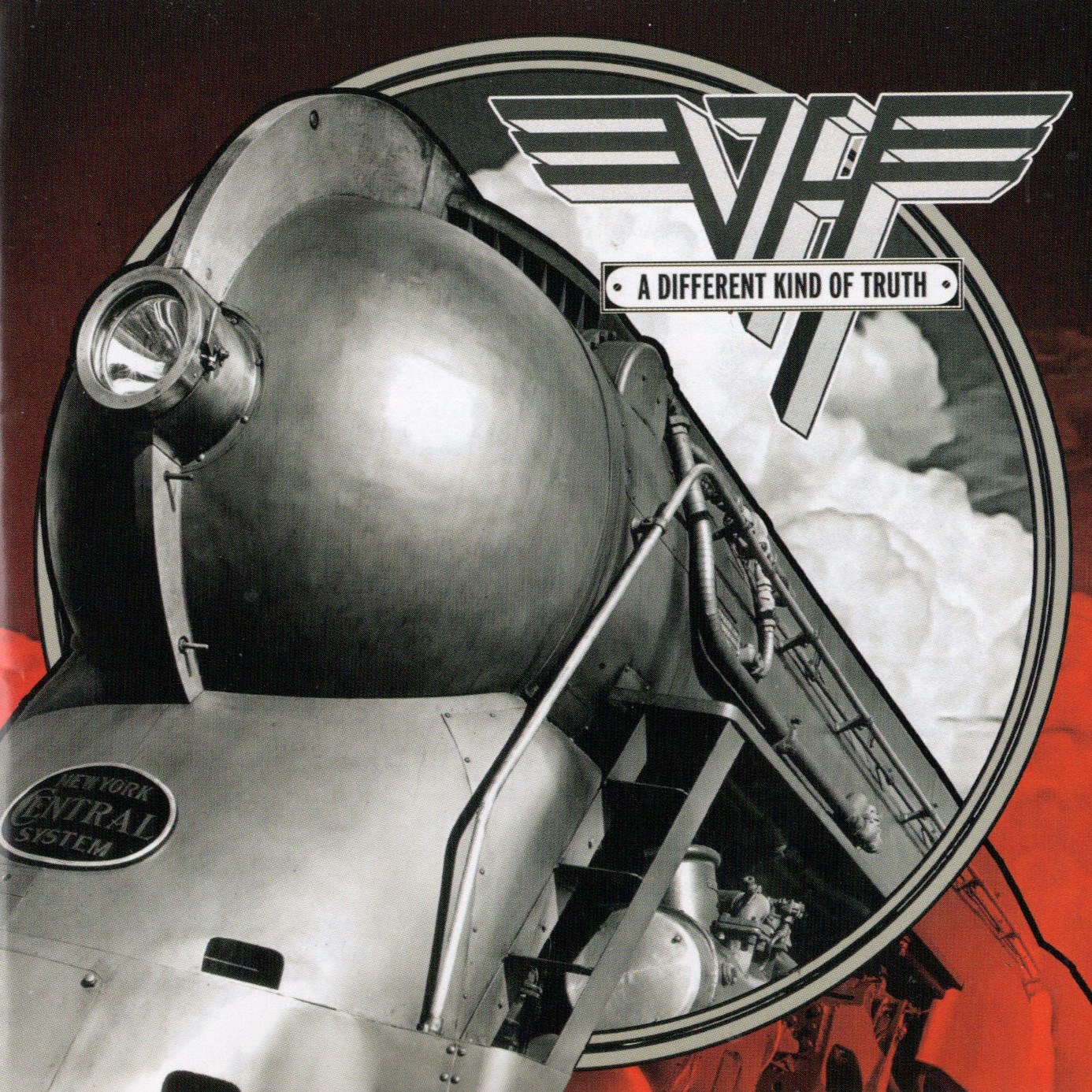
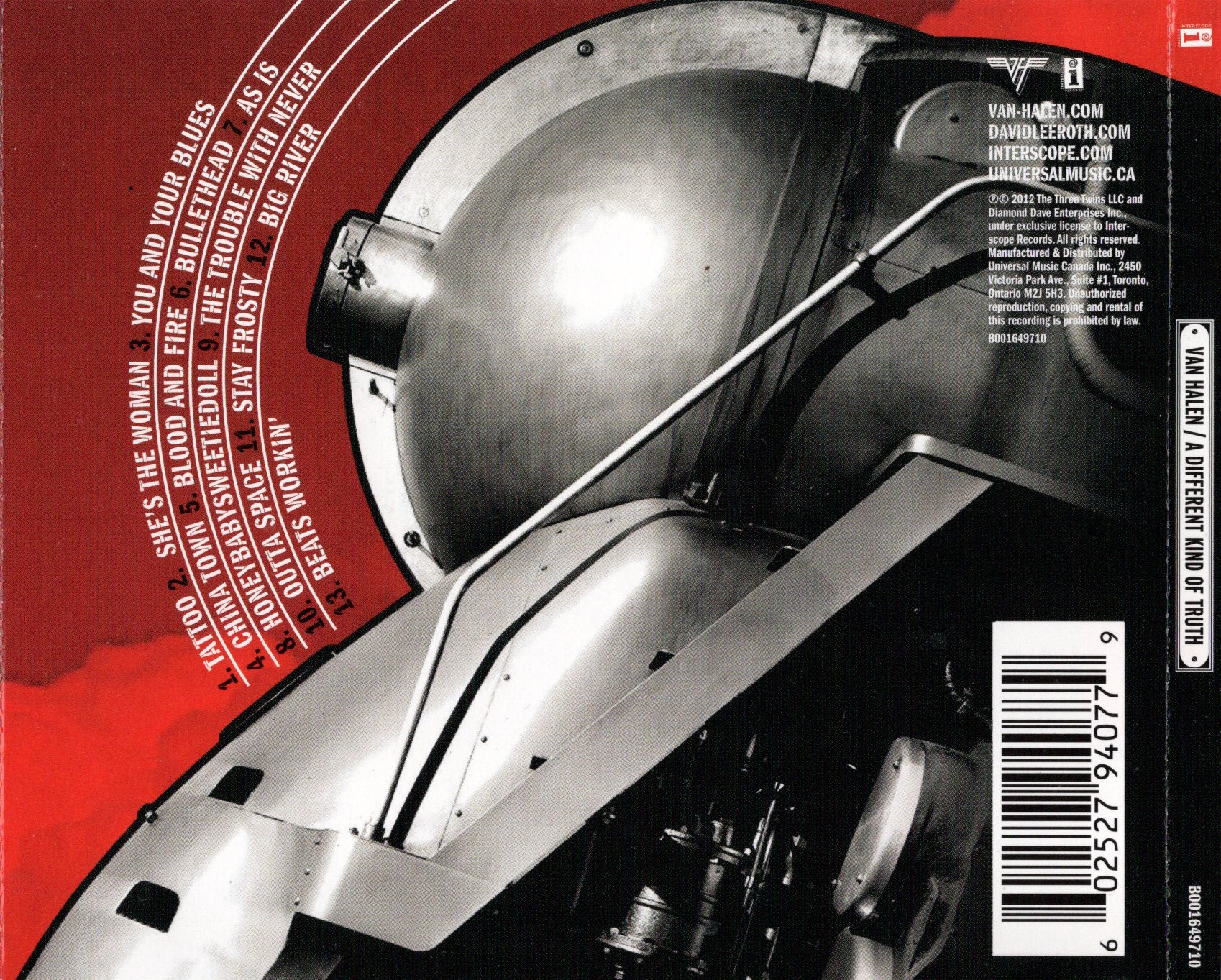
VAN HALEN – A Different Kind of Truth (2012 Universal CD/DVD set)
When this album was released in 2012, we all wanted Van Halen to win. Eddie had been through some tough times, but he finally did what the fans demanded: get back together with David Lee Roth, and record a new album. Sure, we all lamented that Michael Anthony was gone, but it was new bassist Wolfgang Van Halen that made it happen. Without Wolf, there would be no final Van Halen album. Just VHIII, and we know how most of you feel about that.
Working with new producer John Shanks in neutral territory, Van Halen managed to crank out a new album in just three years, starting with jams in 2009.
Wolf knew that Van Halen had to get back to a “classic” sound for their first new album with DLR since 1984. In addition to new music, Wolf dug back into Van Halen’s archive of unreleased material, and picked seven songs that rework and re-write. Roth called it a “collaboration with the past”, which is a good way of putting it. No, it does not sound exactly like old Van Halen; that would be impossible. It does, however sound like Van Halen with Roth.
Opener “Tattoo” was the first single and weakest track. It’s also the only one with audible keyboards (by Dave), though just for texture. Roth said the multi-layered chorus was inspired by artists such as Rhianna, but that chorus is actually the annoying part of the song. Eddie’s fills and Dave’s verses are fine and entertaining, as is Wolfie’s fuzzy bass. The chorus is the weak link, perhaps even worse than the lyrics: lines such as “tramp stamp tat” and “mousewife to momshell”. I like tattoos as much as the next guy, but I’ll never use the word “momshell” except when discussing this album.
The real banger is the second single, “She’s the Woman”, a pretty close approximation of the original Van Halen song (pre-debut album). Wolfie’s playing is monstrous, with a catchy circular bassline that proved the kid had the talent to be in this band. His dad must have loved jamming with him. Ed’s solo really brings us back to classic Van Halen, while Alex’s drums have that sound that we all missed. I hate to say it, but this rendition is probably superior to the original lineup’s version.
“You And Your Blues” has that choppy Eddie guitar we love, and those “ahh, ahh” backing vocals that scream Van Halen, even without Mike. Dave’s lower voice works well on the verses, though he is stretched out on the high notes in the chorus. A great Van Halen album-quality song. (If you’re fortunate enough to have a CD/DVD combo set, you’ll be treated to a cool acoustic version of “You And Your Blues” with loads of storytelling from Roth.)
“China Town” has some of the best shredding on album. From Wolfie’s crazy capo bass to the lightning fast tempo, all four members of Van Halen are on fire. If any song can be said to take the classic sound and launch it into orbit, it’s “China Town”, and Wolf is the star. The bass is not overly high in the mix, but when you listen to it and isolate it in your head, you realize that this guy has brought a new side to Van Halen: bass shred. Additionally, it’s a great song in every way.
Going back to 1984 and an instrumental section called “Ripley”, “Blood and Fire” was reworked in 2000 for an aborted reunion with Roth. Interestingly “Blood and Fire” actually sounds more like Hagar era Van Halen. It does contain one of Dave’s favourite concert phrases: “Well look at the all of the people here tonight!” If this track had been on 5150, it would have fit like a glove, though it would have been one of the more rocking tunes. Edward himself is the star on this one, as he rips, shreds, and tears as if it really was 1984 again.
“Bullethead” sounds new, and also goes back to the 2000 sessions. Van Halen speed and Dave “charasma” are held together by the rhythm section of Al and Wolf. It contains the lyric “Got a different kind of truth”, from which the album takes its title. Ed’s effect-laden solo is no less cool, though nobody will list “Bullethead” in their top 20 Van Halen songs. A cool album track it is, but that’s all.
One of the coolest tunes would have to be “As Is”. Opening with some Alex drum intensity, it breaks into a slow heavy riff, before finally accelerating into a powerhouse Van Halen smokeshow. That running riff sounds so classic, you could swear they injected Ed with youth serum. He sounds like a man reborn, both in terms of shred but also in fun. Ed gets to play with many different sounds and tempos on “As Is”, while Dave also gets to enjoy himself with singing and that spoken word stuff he does so well. Most of this is done very fast.
This sounds like a natural side break. “Honeybabysweetiedoll” (another 2000 track) comes across like a side two opener. Ed is experimenting with new sounds, like he used to, and you’ve never heard Ed sound or play like this before. He goes for a middle-eastern vibe, but with the kind of intensity that other bands do not have the mettle to muster. Dave’s lyrics about soccer moms don’t quite hit the spot where the music is concerned, but nobody’s listening to this song for the lyrics. It’s the guitar that makes the biggest impact here. You can imagine the Ed diehard fans just pounding their fists in celebration when they heard what Ed was up to, before they tried to figure out how he got that sound.
“The Trouble With Never” might be the only track that doesn’t seem like it goes anywhere. You also miss Michael Anthony the most on backing vocals here. It’s just a song. Not a great one, not a bad one…but with one hell of a cool bassline.
“Outta Space” originated in the mid-70’s as “Let’s Get Rockin'”. The riff is classic even though it never made an album before. Dave sings in his highest voice, which is actually cool after a lot of lower pitched songs. As you’d expect for a song originally called “Let’s Get Rockin'”, it smokes from start to finish, top speed and loaded with cool Eddie licks. It’s fun to hear the rhythm guitar drop out during his solo, just as it used to in 1978. Ed wasn’t fond of that sound, but it certainly evokes an era and a vibe. It’s like a warm sweater. Maybe Ed would appreciate that sometimes the absence of a guitar can also speak.
Dave plays acoustic guitar on the fun “Stay Frosty”, an old song that certainly recalls “Ice Cream Man” in every way. There’s one lyric that Dave liked to point out: “If you wanna be a monk, you gotta cook a lot of rice.” Hey, it’s not untrue. Let me put it this way: If you imagined a sequel to “Ice Cream Man”, it’s “Stay Frosty”. Not quite as good, but hits all the same beats that you want to hear.
“Big River” sounds like an older song. It has a cool curly guitar opening, before laying into this awesome guitar/bass groove. More a groove than a riff. Dave’s lyrics and singing are top notch on this song. Classic Van Halen. The surprise is that halfway through the song, for the solo section, it transforms into a completely different groove. This section has some of Eddie’s best playing too. It reverts back to the original riff for the last third of the song. All the while Wolfie is playing the most incredible bass fills, but never stepping on his dad’s toes. Think about that for a second. In the mix, you have the greatest guitar player in the world playing over this awesome riff, but the bass player still manages to throw a whole bunch of cool fills in there, without getting in the way. That’s a band, and that’s family, and that’s talent. If this song had been on an album like Fair Warning, people would still remember it today.
The closing song “Beat’s Workin'” starts with a cascade of Alex Van Halen drums, gone gonzo. It then breaks into a fun riff and a good time album-ender. A song called “Beats Workin'” should sound like a celebration. I get a bit of a Max Webster vibe, though heavier, along with a hint of Aerosmith. Once again the rhythm guitar drops out when Eddie goes solo, but then Wolf gets a moment in the spotlight too. His fuzz bass tone is very much unlike Michael Anthony’s. There’s a moment here when he and Alex are just playing while Ed does his thing, and it feels beautiful, especially now, knowing the family will never be reunited. But let’s not get too somber. It’s a party, after all.
The bonus DVD also includes acoustic versions of “Panama” and “Beautiful Girls”. They are alright. Valuable to have in your collection. You might not go back to listen to them very often. Another reason to own this physically is the lyric sheet, with cool sketches for each song. This is a Dave touch.
Final thoughts:
The album cover, though a cool picture of a train, just doesn’t feel like classic Van Halen. Then again, what does? They’ve had so many different kinds of covers.
The production on this album slams.
Though Eddie is the star, and we’re all listening to every note he plays, it doesn’t sound like an EVH solo album like VHIII did. It sounds like a real band album.
John Shanks and David Lee Roth did the best they could with what remains of Dave’s voice, and did a fine job of it by doing more of that speak-sing thing.
The flow on this album is excellent. There is hardly any filler, and every song works in its given slot, especially the closing trio of “Stay Frosty”, “Big River” and “Beats Workin'”.
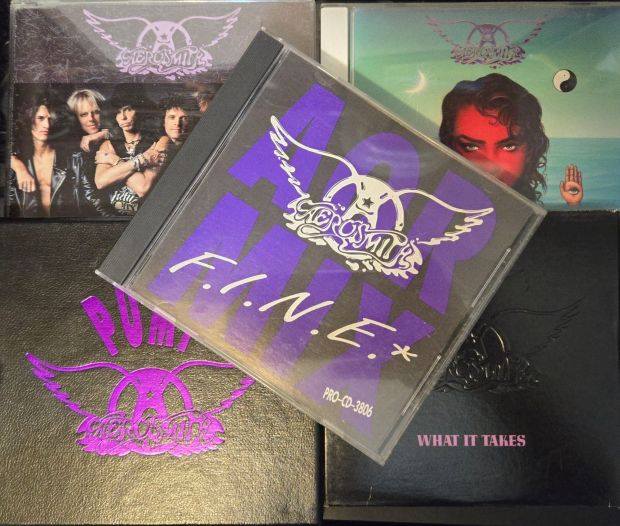
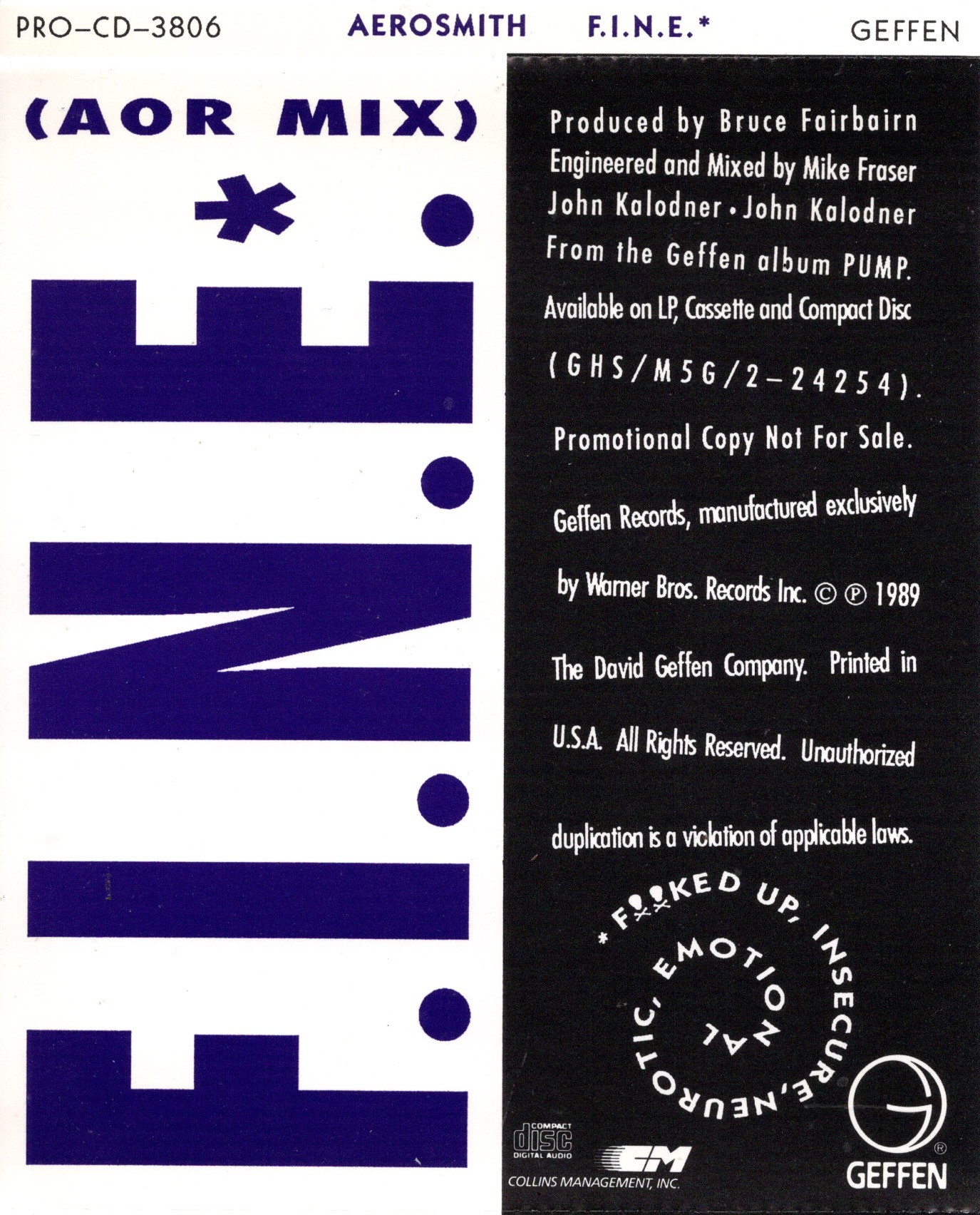
“AOR” equals “Album Oriented Rock”, a radio format established in the 1960s that essentially means “classic rock” by today’s standards. Therefore, this Aerosmith single would be a remix aimed specifically at those kinds of radio stations. Frequently and historically, many of these remixes are barely different at all from the album version. Additionally, “F.I.N.E.” from 1989’s Pump album was not really considered a single. It wasn’t available to buy commercially, and it wasn’t made into a music video. It was a radio single only. At 4:08, this track is not edited.
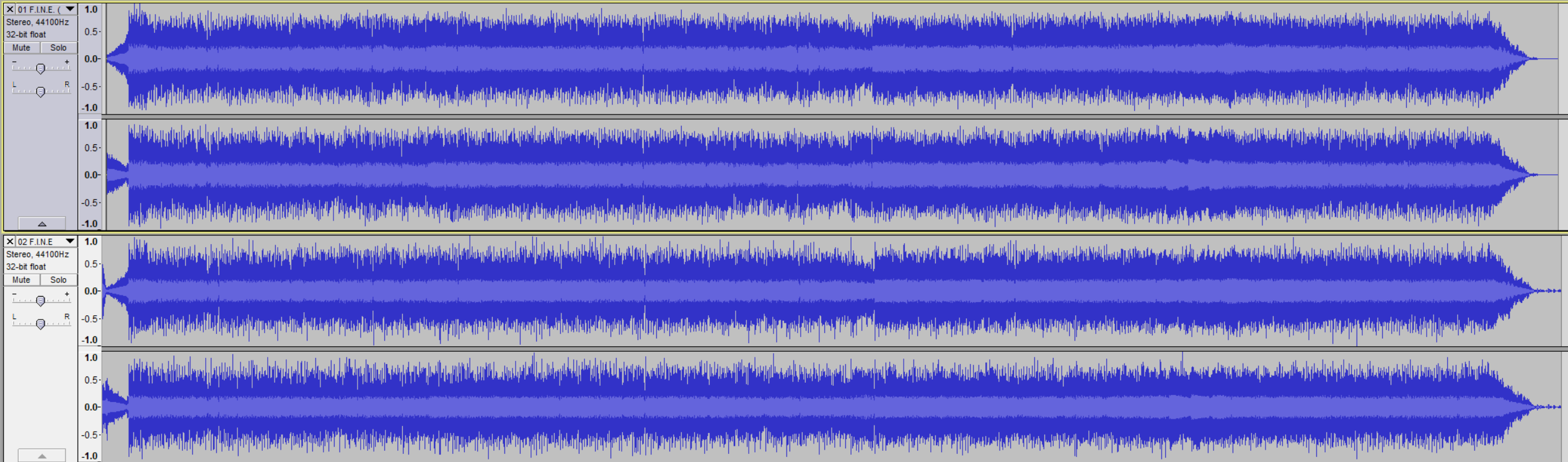
“F.I.N.E.”, which was track 2 on the album, is considered one of Aerosmith finer rock moments from the Geffen years. It was always focused on a biting heavy Aero groove, a melodic Tyler vocal, and that irresistible chorus of “It’s aaaaaaaalright!” This remix is hardly different at all. If anything, the bass might be coming through more clearly.
If you have a look at the waveform file below, you can see there isn’t much difference, though some are visible. The AOR mix is at top, the original 1989 CD file at bottom.
I don’t feel there’s any point in rating a promo CD single like on a scale of 5, because what’s the point? This CD is valuable as a collectible to fans and hoarders alike. It has an exclusive remix, and whether you can hear a difference isn’t the point to a collector. Sometimes obscure AOR mixes get reissued on greatest hits or box sets, but to date, this one has not.
“Joe Perry says I’m aaaaallright!”
Thanks again to Ash from Australia for sending me this CD which I shall file with my Pump collection!
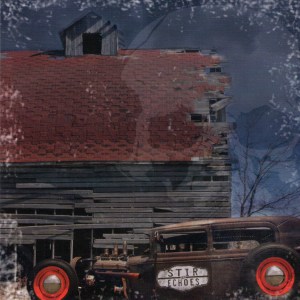
STIR OF ECHOES – Stir of Echoes (2008 Stir Records)
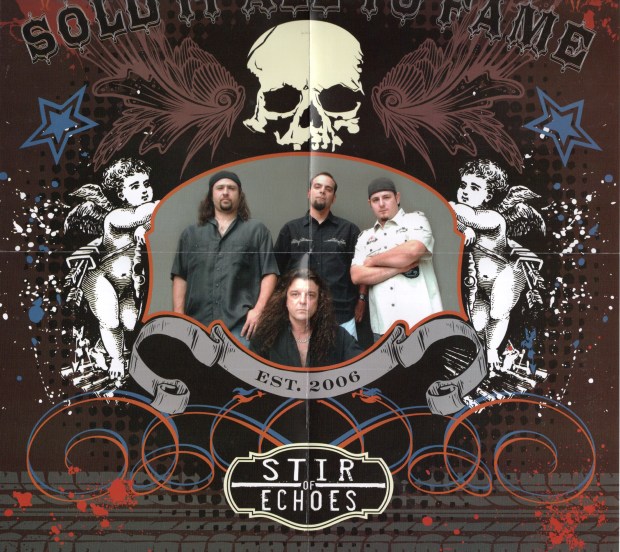
When Hamilton’s near-legendary metal band Mystique broke up at the end of the 1980s, singer Ray D’Auria bounced back with the hard rocking Slam Glory. That is a story and album unto itself. D’Auria’s next major release was a full lengther with quartet Stir of Echoes. The band formed in 2006 with a self-titled CD release in 2008. According to a note from filmmaker Marco D’Auria, the album was engineered by Steve Negus of Saga fame. What musical avenues would Ray explore this time, two decades after the end of Mystique?
The answer is: if Mystique was metal, and Slam Glory was hard rock, then Stir of Echoes is good old rough n’ raw classic rock. A heavier Led Zeppelin, perhaps.
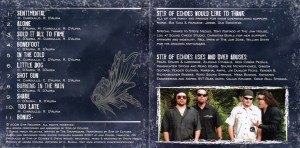
Ray’s voice has transitioned to a rougher, more raspy delivery though still with the power and range we expect. Opener “Sentimental” boasts some slippy-slidey guitar bits and bites, while a locked-in bass/drum groove keeps things moving. This bluesy rocker is world class. I like how the rhythm guitar part drops out when the solo comes in – very live sounding. That’s Marco Ciardullo on guitar.
Track two, “Alone” is an upbeat rocker with Ray shredding the vocal cords throughout. It’s actually a bit of a drum showcase on the side, with plenty of solos and fills by Darryl Brown. There’s a bit of Zeppelin in the vocal delivery when Ray sings, “I, I…” at the midway point. A brilliant track that smokes with a bass solo (by Carmine…just Carmine) and impressive musical exposition.
The groove of “Sold It All to Fame” recalls the classic British blues of bands like Humble Pie. It sounds like it was born from a jam. There’s a tasty guitar riff to bite into. Following this groove, they go heavier on “Bonefoot” which might recall a Sabbathy vibe, circa the first three or four albums, in the riff and looseness. “Lies, lies, lies!” screams Ray D’Auria like a man wronged.
Stir of Echoes slow things to a nocturnal crawl on the blues “In the Cold”. Many classic heavy rock bands boast a classic slow blues, and this sounds like Stir of Echoes’ stab at the genre. The band gets to stretch out musically while Ray focuses on the pain. “All of this time…alllll of this time…” Like a classic-era rock singer, Ray sounds out of another decade.
The burner gets turned up to 10, and things start smoking again on “Little Dog”, an absolute blitz. Then they go for a more fun vibe on “Shot Gun”, which has one riff that definitely reminds us of Zep’s “How Many More Times”. You have to question how Ray could sustain this kind is singing! It’s top level, at all times, with the rasp and high notes! At the end of the song, they ignite the afterburners and the whole thing goes stratospheric.
The first respite on the album lies within the acoustic intro of “Burning in the Rain”, the closest thing they offer to a power ballad. Emphasis on the power. Really, it’s more of a bluesy showcase for Ray to offer up some of his most passionate singing. “Shake” takes things back to boogie, and the mid-tempo groove really allows the bassline to breathe. This is a great song to dance or drink to.
The only song you might consider “soft” would be the acoustic closer “Too Late”. Very Zeppelin III in feel. The lack of volume allows Ray to lay back a bit and really just sing. It’s just him and some acoustics, so the spotlight is on, and he uses it well. Brilliant performance.
Except “Too Late” isn’t the closer! There is an unlisted bonus track called “Wild Eye” which may be the best of the bunch! It’s certainly one of the most memorable. The stuttery opening riff is just a little different from the pack.
Stir of Echoes aren’t as diverse as Mystique, and the subject matter is more grounded. Stir of Echoes is more laser-focused on a specific kind of rock, and they go all-in. They do what they do very well. The last band that attempted this kind of sound and did it this well was called Badlands. If you know, you know. Get it.
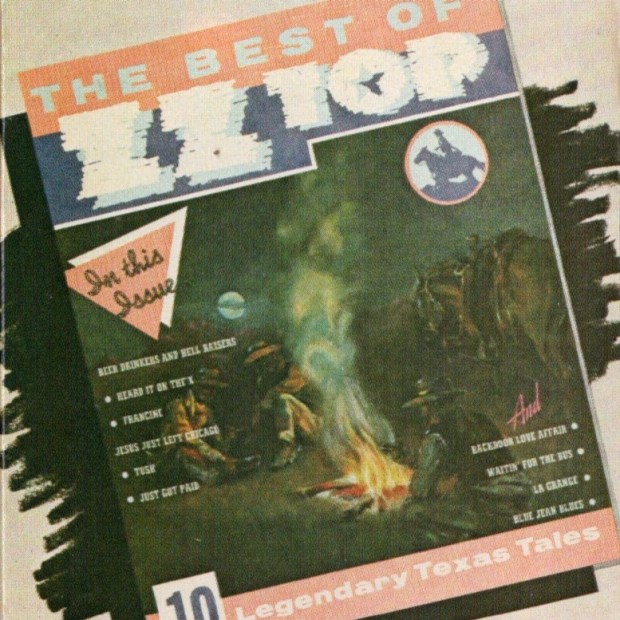
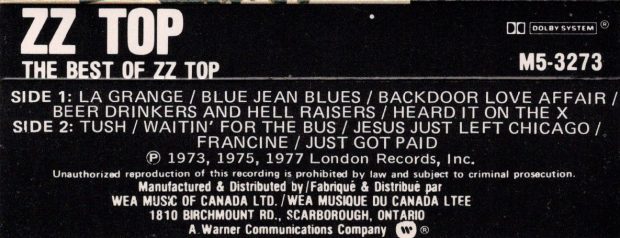
While ZZ Top were on a break between Tejas and Degüello, it made sense to issue the band’s first Best Of. This album was released in 1977 and though it did not chart high, it did eventually go double platinum, selling over 2,000,000 copies in the United States alone.
The cassette and vinyl releases had the sides flipped. This cassette copy in hand begins with “La Grange”, which is still a pretty solid opening even if the vinyl says otherwise! “La Grange” is an ode to a house of ill repute somewhere in Texas, and it became the prototype blues/rock shuffle for a generation. This song still burns up the radio today.
One of ZZ Top’s greatest blues had to be “Blue Jean Blues” from Fandango! So slow, so fully soaked in whiskey and gasoline that you can smell it from here. Billy Gibbons is fully in the driver’s seat here, but it is Frank Beard and Dusty Hill’s unobtrusive rhythm section that allows him to emote so well.
From the first album comes the dirty upbeat blues of “Backdoor Love Affair”. It’s a combination of elements: Billy’s distorted take on the blues guitar, mixed with Dusty’s melodic bass and Beard’s perfect punctuation. By the end of the song, it’s a jam around a tasty riff.
The familiar “Beer Drinkers and Hell Raisers” from Tres Hombres is an incendiary duet between between Billy and Dusty. Pedal to the metal, ZZ are off on one of the best rockers from the entire catalogue. This is the kind of song that endeared them to the headbangers. Similarly, “Heard it on the X” hones in on the speedy aspect of ZZ Top’s abilities. This is another duet with Dusty and Billy, and an ode to the Mexican radio stations that informed much of ZZ Top’s upbringing.
Flipping the tape, we are now hearing what is side one of vinyl. “Tush” ain’t a bad way to start. It’s the stuff of legend today. It boasts one of Billy’s best guitar riffs, yet it’s still little more than a basic blues. It’s just a winning combination: the blues progressions played by a rocking band. Billy’s leads are as much of legend as the song itself, stinging little zips of flavour in a bluesy soup of chords and drums.
“Waitin’ For the Bus” is a steady blues. The speed has been shed for this heavy sludgy one, with Billy laying down not just a guitar solo but a harmonica solo too, one after the other like one greasy blues rock statement. Then, just like on the Tres Hombres album, “Jesus Just Left Chicago” follows immediately after. Still blues, but of a different flavour. ZZ Top were always talented at showing us different sides of the genre, while mixing it with the sensibilities of rock guitar distortion.
“Francine” is a belter, a perfect pop rock tune, with more rock than pop. Billy’s little riff is tasty as candy, and the song has the necessary melodic mettle. Even so, it is overshadowed by the slide-drenched closer “Just Got Paid”. One of ZZ’s heaviest tracks, it’s made completely digestible by Billy’s incredible guitar work.
This is Def Leppard’s first 7″ single in 30 years – since “Action” in 1994!
I’m bored of Def Leppard’s glam throwback songs. I know that seems hypocritical, given that many of their biggest hits (“Pour Some Sugar On Me”) are basically that. “Just Like 73″ is their latest single, a standalone without an album, issued on various coloured 7” singles this year. While we applaud Leppard for releasing new music on a physical format, the song is not one of their greatest to date.
The coolest aspect of “Just Like 73” is the surprising guitar solo by Tom Morello. Rage Against the Machine and Def Leppard were diametrically opposed in 1993, but I suppose back in ’73, those guys were listening to a lot of the same records. On the B-side is a version without Mr. Morello, which is valuable to the collector, but the song is lesser without him.
Sometimes Def Leppard seem bent upon recreating their past, and not always hitting that mark. “Just Like 73” pushes those big “Hey!” vocals that are so commonly associated with Leppard. It has the Gary Glitter kind of beats that they are so fond of. Really, the only thing new here for Def Leppard is that Morello squonk all over the A-side. That’s a great mix and they should collaborate further.
Here we have a simple and straightforward one hour bonus DVD. No bonus features other than subtitles, so let’s dive in and watch Deep Purple hit the road! This documentary, unlike past ones, is not about the making of the =1 album. This is about Deep Purple on tour, and is more like a fly on the wall look at the band in their environment. We seem them relax, practice, drink and work.
We begin with Steve Morse, and his sad necessity to step down from Deep Purple after 28 years in the band. Roger Glover explains that Steve came in at a time (1995) when Deep Purple needed to reinvent themselves, which is what they did. Then, we transition to Deep Purple live on stage with Simon McBride, and “No Need to Shout” from the bonus live 10″ records included in this box set. Don Airey calls it a “fresh start”, and Ian Paice contemplates on how a new member creates new energy in the Purples. Roger praises Simon’s “cool” personality. The important thing, with any new Deep Purple member, is to musically just be themselves. Don jokes that Simon “brought the average age of the band down to 74.”
Time to hit the road. Ian Gillan talks about the routine, and the tour begins (to the tune of “Hush”). Hotels, breakfasts, limousines…and security tips from Gillan! It takes about three hours to set up the stage and start checking the PA. Drums are tuned and cymbals are attached to the kit. The guitar tech talks about the adjustment from Steve Morse to Simon McBride, and a different brand of guitars. We also get a good look at Don Airey’s keyboard rig. In a cute touch, Don keeps a bobblehead of his old boss, Ozzy Osbourne, on his keys. Finally the band turns up and sound checks. Don Airey tells Ian Paice a funny story about Gary Moore messing with his keys. The band have a quiet, very English sense of humour, but they are often seen laughing and kidding around.
During soundcheck, we get to hear Purple working on a new song: “Old-Fangled Thing”, which ended up on =1. Airey says he really enjoys soundchecks because it gives them a chance to play things like bossa novas, and entertain the crew. We move on to the 02 arena with Blue Oyster Cult opening, and other gigs with Jefferson Starship, who Purple seem to get along with famously.
There is a hilarious bit in Don Airey’s keyboard solo. He takes a wooden shim, and sticks it in the keys to hold them down. As a single note plays. A waiter with a glass and bottle emerges. Don pours himself a glass of wine as he takes a brief break. It’s all so very quaint and gentlemanly funny. Don’s son is actually the band’s stage manager, and it has allowed him to see more of his dad than he ever would at home.
The documentary then jumps to another day, and the 10 minute wait before showtime. Backstage, Roger Glover takes a crack at Ritchie Blackmore’s violent aversion to cameras. Ian Paice jokes about the palpable tension in the air, as the band continue to joke around and laugh, whiling away the last minutes before stage time. Paicey picks up a pair of bananas, plays a drum roll, complains the bananas are not properly balanced, and tosses them aside. That’s the wildest party moment in the Deep Purple dressing room.
Finally the waiting is over. The whole day revolves around the 90 minutes on stage, remarks Gillan. The band take the stage while Holst’s “Mars: Bringer of War” assaults the crowd in preparation. “Highway Star” (which, incidentally, is not included on the live records in the box) rolls out the thunder, and Simon McBride brings his own style to it. The documentary runs through a few live clips to give you a taste of the set, including the beautiful ballad “Nothing At All”.
When Deep Purple hits Berlin, Ian Paice has the idea to play a bit of “Let the Good Times Roll”. A young horn section is brought in, and it sounds great to everyone. We are treated to a clip of a soundcheck of “Hush” with the horns.
Show over, it’s off to the hotel, get a tea, and into bed with a book for Ian Gillan. Paicey prefers a glass of wine after a show, “because I’m allowed”.
Though it’s never overtly stated, one can’t help but notice the contrast in this documentary to the war stories of old. We remember the tales of on-stage and backstage blowups, food trays thrown about…but not any more. Now Deep Purple is five older gents who love playing together and don’t seem to mind each other’s company too much. That’s nice to see. And it’s still entertaining enough for an hour.
As a bonus DVD in a box set, this one’s easily a 5/5.
The box also came with art prints, a lanyard, guitar picks, a nice T-shirt and more, all seen in this unboxing video below.
DEEP PURPLE – =1 Live Album – 10″ Vinyl (2024 Edel)
When you buy a Deep Purple super deluxe, you get a new live album on three 10″ records every time. These records are each 45 RPM. This wonderful Deep Purple tradition carries on with this important release, the first live album with Simon McBride to be released. Let’s have a listen to all six sides.
Record 1 was recorded in Milan 2022, the same gig that yielded the B-sides for the “Pictures of You” single (“When A Blind Man Cries” and “Uncommon Man”), though they are not included here. This record opens with Machine Head‘s “Pictures of Home”, and Ian Paice beginning the proceedings with his usual drum intro. Don Airey’s organ dominates the mix, but Simon can be heard doing justice to the original arrangement. His tasty solo is his own unique composition, combining bluesy playing with shred in a way unheard before in Deep Purple. Blackmore fans who found Steve Morse to be just too different may prefer Simon McBride.
From 2020’s Whoosh! album comes “No Need to Shout”, one of the more straightforward tracks. It has a solid “Stormbringer”-like groove, but consider that Deep Purple remain unafraid to play new songs on tour every time. Simon and Don sneak in these quick licks that add season to the sauce. The chemistry with McBride is immediately undeniable.
A set highlight is the powerful ballad “Nothing At All”, probably the best song from Whoosh! Originally this song had a trademark Steve Morse guitar lick, but Simon acquits himself very well in this tricky part. It’s not identical, but the right notes are played, if in a very slightly different style. This beautiful song is harder live, with Ian Paice really smoking those drums, and Don Airey hitting his keys with more vigor.
The first record closes with another Machine Head classic, the undeniable “Lazy”, which we have so many live versions of. I have at least 34 live versions of “Lazy”, with more residing on live albums I have yet to rip to my PC. This version is the first available with Simon, and the word to use is “refreshing”. After 52 years, it is nice to have a version with another lead soloist, bringing his own powerful, melodic twist. Ian Gillan’s vocal is a little laid-back, but this version is a delight! When Ian starts playing the harmonica, it changes into something more akin to a country jam.
Record 2 was recorded in Sofia, Bulgaria in 2022. “Strange Kind of Woman” keeps us in classic territory. Somehow I get the feeling that Airey’s organ isn’t growly enough. Of course Gillan struggles with the high notes, but that’s old news and nobody should really care anymore. Simon’s solo is, once again, a fresh twist. Then they dig back even further with “Hush” from Shades of Deep Purple. Nothing different here, just the same classic groove and a killer organ solo, followed by a playful tradeoff between Simon and Don.
Side two only has newer material, beginning with “7 and 7 Is” (by Love) from the covers album Turning To Crime. Including “Hush”, that’s two covers in a row. It is cool that they were playing Turning To Crime material live, but this is skippable for most people (except Ian Paice fans who will dig the busy drum parts). More enjoyable is “Throw My Bones” from Whoosh! Don’s synth on this track is especially fun, and Simon makes it a bit heavier in the guitars. “Time For Bedlam” from InFinite closes this side. Ian Gillan struggles with the difficult vocals, which makes it harder to enjoy, though the guitar melodies are just sublime. This is a very technical track. Roger Glover holds everything together on bass while the feature players stretch out.
We are back to Milan on the third disc. Record 3 opens with the biggest surprise: “Anya” from 1993’s The Cattle Grazes Battle Rages On. It is no secret that making the album was an unpleasant experience for the band, especially Ian Gillan, but it is really cool to see them reaching back to the early 90s. This is the first version available with Don or Simon. Just as “Anya” is the only representation of the 1990s (a decade with four Deep Purple studio albums), “Perfect Strangers” is the only track from the 80s, as it often is. This is a solid workmanlike version.
The final side closes, of course, with “Smoke on the Water” and “Black Night”, leaving us without a version of “Highway Star” with Simon. This is a real shame; we hope one will come on future inevitable live albums. Ian Paice sounds great on these, and Simon’s solo on “Black Night” is bonkers, the same way that Blackers used to be bonkers.
This is a great little late-period live album. With a band and a back catalogue this extensive, it is natural that they can’t always fit in songs from Purpendicular, Now What, or In Rock. Newer material is more valuable in a live release such as this. Still…would have been nice to get “Highway Star”.

















 mikeladano.com