hard rock

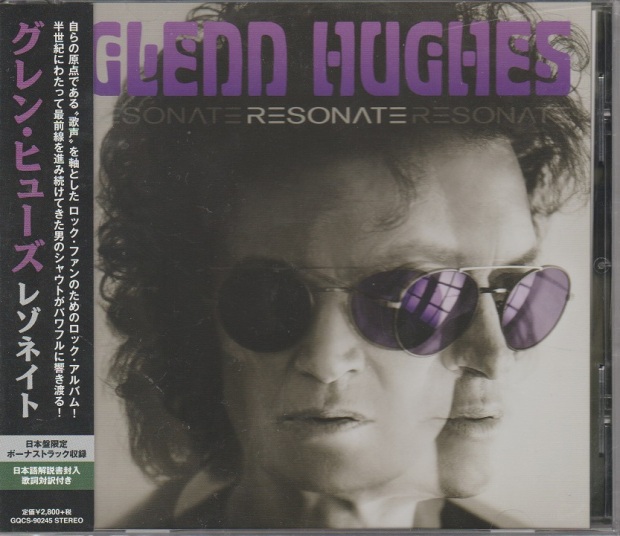
REVIEW: Glenn Hughes – Resonate (2016 Japanese version)

scan_20170131-4GLENN HUGHES – Resonate (2016 Frontiers Japan)

Glenn Hughes has been consistently prolific since a mid-90s comeback.  Lean, clean n’ mean, Glenn Hughes has reclaimed his title as The Voice of Rock.  His latest solo album Resonate made numerous top albums of 2016 lists.  The only reason he didn’t make ours is that we were holding out to get the Japanese version with the exclusive track.  In Japan they call him “The God of Voice” and this CD easily demonstrates why.

It is pointless to break this CD down song by song.  They are all incredible.  They represent the kind of hard rock that Deep Purple made famous: riffs, heavy organ, and incredible lead vocals.  In the Deep Purple days, it seemed Glenn’s soulful croon didn’t always fit in with heavy rock, which made them that more unique.  Today, Glenn sounds at home.  Resonate is consistently heavy, and impressive at every turn.  There are no big star names in his band, but Glenn’s old buddy Chad Smith from Red Hot Chili Peppers has two guest shots:  “Heavy” and “Long Time Gone”, the opener and closer on the standard tracklist.  Smith is always a joy to listen to, and when he works with Glenn, it’s the heaviest Chad Smith gets.  Glenn on bass and Chad on drums:  it seldom gets better than that.

Everyone will pick their own favourites, but one that we can’t put down is “Landmines”.  The funky electric boogie is one of the album highlights; a real hard rock dance number to get down to.  On “Landmines”, Glenn’s current self meets his 70s persona.  That should create a time travel paradox, but it doesn’t.  All it fuels is one hell of a boogie woogie oogie.  Runner up:  “Steady”.  But any of these songs can slide in and out of the top spot on a given day.

The Japanese bonus track is an acoustic version of the ballad “When I Fall”.  In some respects it’s better than the album version, but it’s all just a matter of taste.  The Zeppelin-like mellotron is delightful.  The only bummer is that the Japanese version doesn’t have the song “Nothing’s the Same”.  That’s OK; the domestic version of Resonate has that and a bonus DVD.  It’s a killer acoustic cover of a lesser known Gary Moore song, and it is worth buying the album again for.  It doesn’t matter which version you go for.  Resonate kills.

4.5/5 stars

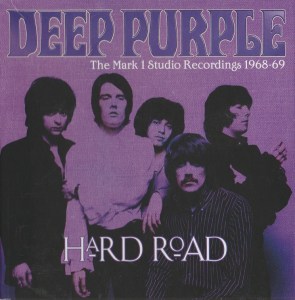
REVIEW: Deep Purple – Hard Road: The Mark I Studio Recordings 1968-69 (5 CD box set)

scan_20170123DEEP PURPLE – Hard Road: The Mark I Studio Recordings 1968-69 (2014 Parlophone)

It’s fantastic that old mono recordings are getting the CD treatment.  The original mono mixes of the old Beatles albums were a revelation to those who had never heard them before.  The original mono versions of Deep Purple’s Shades Of and Book of Taliesyn are less surprising, but still a welcome addition for completists who want to hear it “as it was” in 1968.  Comparisons are difficult, but both albums sound like they were meant to be in stereo.  Unlike the Beatles pop rock compositions, Deep Purple’s featured a lot of solo work and even full-blown orchestral movements.  The stereo separation makes that easier to appreciate.  Only Purple’s third album, 1969’s self-titled Deep Purple, did not receive a mono mix.  It is presented here in stereo only.

Now, these three Purple albums all received the deluxe edition treatment (single discs) in the year 2000.  Those versions on Spitfire (links in above paragraph) are still excellent ways to get this early Deep Purple music.  They are fairly common, have great liner notes and pictures, and feature the stereo versions plus 14 bonus tracks combined between them.  There is also a compilation CD called The Early Years featuring more bonus tracks, including 2003 remixes and live takes.  Where Hard Road fails is in replacing these previous four CDs completely.  One would hope you would get  all the associated bonus tracks from this period in one handy-dandy box.  Sadly this box is not quite so dandy.  Here is a list of tracks missing from Hard Road that were on the remastered single discs:

  • “Kentucky Woman” (alternate take on The Early Years)
  • “Hard Road” (BBC session on The Early Years and The Book of Taliesyn remaster)
  • “Hush” (live from US TV)
  • “Hey Joe” (live BBC recording from the remastered Shades Of).
  • “It’s All Over” and “Hey Bop-a-Rebop” (unreleased songs, live BBC sessions from The Book of Taliesyn)

The live BBC songs above can also be found on the double CD BBC Sessions…except for “Hard Road”.

scan_20170123-4

Of course there is plenty of material on Hard Road that is not on those earlier discs, making things that much murkier.  In addition to the original mono versions, these include:

  • “Kentucky Woman” remixed in 2003
  • “Playground” in a non-remixed version
  • “River Deep, Mountain High” and “The Bird Has Flown” (single edits)
  • A fresh 2012 stereo mix of “Emmaretta”
  • The isolated single B-side version of “April (Part 1)”
  • An early instrumental version of “Why Didn’t Rosemary”

Irritating, yes.  But only to completists.  For just about anyone else, Hard Road will satisfy their need for pretty much all the Deep Purple Mark I they can handle.  It’s not as complete as the title would let on, what with that live “Hush” and alternate take of “Kentucky Woman” missing in action.  Instead you will receive a large booklet with plenty of notes and a new 2013 interview with producer Derek Lawrence.  He was on board early, before they were in Deep Purple.  He describes an early version of the band called “Roundabout” (with Bobby Woodman on drums and Chris Curtis on bass) as “bland”.  When Ian Paice and Nick Simper joined, they sounded better, but to Lawrence clearly Ritchie Blackmore and Ian Paice were the stars.
Each disc comes in its own LP-style sleeve.  It’s a gorgeous set.  It sounds fantastic, and was assembled with the usual care that goes into a Deep Purple album.  A few niggling missing tracks aside, this is highly recommended to those looking add the first three Purple to their collection.

4/5 stars


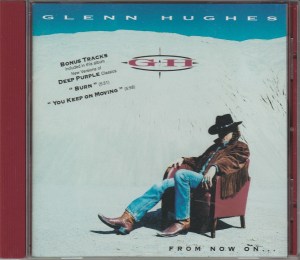
REVIEW: Glenn Hughes – From Now On… (1994 inc. 2 bonus tracks)

scan_20170122GLENN HUGHES – From Now On… (originally 1994, 1996 Explorer records reissue)

Glenn Hughes had his struggles, from being kicked out of Black Sabbath in 1986 to a long coked-out period of inactivity.  He began making waves again in 1992, but it was 1994’s From Now On… solo CD that really inaugurated the lean, clean & mean Glenn Hughes that still dominates today.  He has continued to release powerful soulful rock music under his own name and with supergroups such as Black Country Communion and California Breed.  The critics can’t stop raving about Glenn Hughes today, but in 1994 he wasn’t getting the attention deserved.

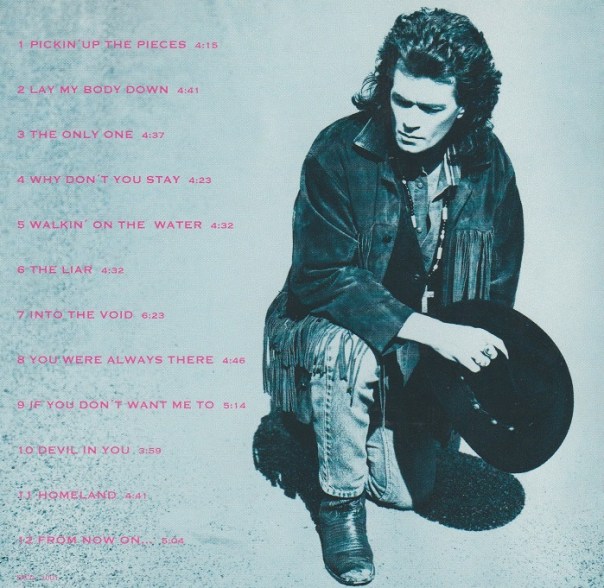
From Now On… features a Swedish band including two members of Europe: John Levén (bass) and Mic Michaeli (keys).  Comparing this album to the music that Levén and Michaeli make today, you can hear their influence.  There is the soul but also big big hooks.  The first opening track however is wide open and takes no prisoners.  “Picking up the Pieces” probably had an autobiographical meaning for Glenn, but the track is fast-forward bluesy metal as his old band Deep Purple have been known to do.  His voice is enviable, powerful and clean.  John Levén is a superb musician, but one only wishes it was Glenn on bass too, since he is the original maestro.  He takes it to a slower, sexier groove on “Lay My Body Down”, with big soul vocals.

Epic melodic rock diamonds begin to take shape with “The Only One”.  This epic track echoes some of the big choruses Glenn did with the supergroup Phenomena.  Think old tracks like “Kiss of Fire” and “Still the Night” from 1985.  “The Only One” is a successor to those tracks, with a big melodic chorus and a killer performance from Glenn.  “Why Don’t You Stay” is a soul ballad, but still in gear with the big 80s-style Glenn Hughes choruses.  It is closest in direction to Europe (a-la Prisoners in Paradise).  Hold on tight because that chorus crashes in like a tidal wave.

Back in the Deep Purple days, Glenn was the funky one.  “Walkin’ on the Water” brings a little bit of that funk vibe, but the focus is Glenn’s slinky vocalizin’.  A little bit of the Sabbath chug emerges on “The Liar” which acts as a natural side closer.  Rainbow’s 1995 album Stranger in Us All has a song with similar hooks called “Cold Hearted Woman”, but this is probably just coincidence.  Wicked guitars dart across the speakers as Glenn protests, “You’re the one they call the liar!”

There is a subtle progressive vibe to “Into the Void”.  Glenn sings it soft on the verses, and with power on the choruses.  You can hear the spooky keyboard influence of Mic Michaeli who co-wrote the song.  An unreleased Hughes/Thrall song finally emerged on “You Were Always There”, a funky little 80s number.  Re-recorded for 1994, it nonetheless sounds like period in which it was written.  Unfortunately “You Were Always There” begins a sluggish patch midway through the second side.  Rolling into the ballad “If You Don’t Want Me To”, nothing stands out like the previous songs.  “Devil in You”, another unreleased Hughes/Thrall song, begins to get things on track.  “Homeland” really delivers and it’s back to the soaring power choruses.  (And no, it’s not the same song as Europe’s “Homeland” on Prisoners in Paradise.  This one is co-written by Mel Galley.)  It’s bright days indeed, and “Homeland” is a beacon.  This builds up to the original CD closer and title track “From Now On…”.  This track pulses with understated power, and the incredible “voice of rock”, as Glenn is called.

The 1996 Explorer records reiusse adds two bonus tracks:  remakes of Deep Purple’s “Burn” (from Burn, 1974) and “You Keep on Moving” (from Come Taste the Band, 1975).  While Deep Purple re-recordings are numerous (hello Joe Lynn Turner and David Coverdale!), these two by Glenn Hughes are among the best you will find.  It is true that Whitesnake’s The Purple Album also has re-recordings of these two songs.  Glenn’s versions get the edge, due to the sheer power of the man’s vocal performance.  He didn’t have to downtune the songs as David did.

No album by Glenn Hughes will lead you astray, but From Now On… (with or without bonus tracks) is easy and cheap to find used.  Why not make it your first solo purchase from the man that the Japanese call “The God of Voice”?

4/5 stars

scan_20170122-3

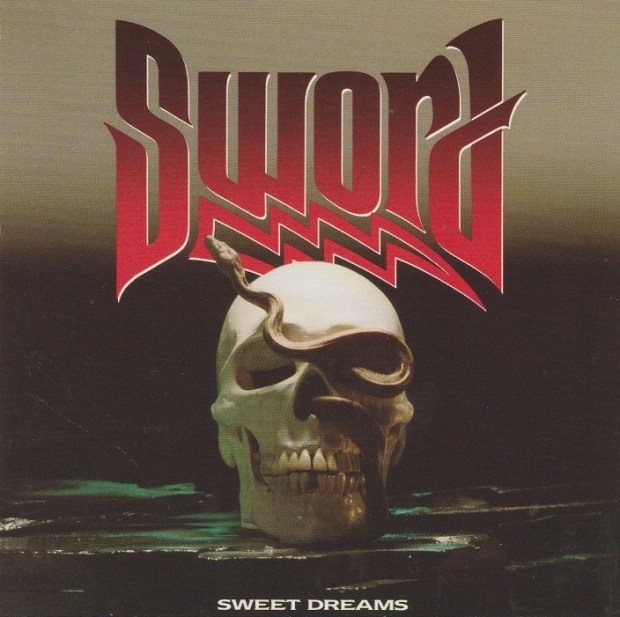
REVIEW: Sword – Sweet Dreams (1988)

scan_20170121SWORD – Sweet Dreams (1988 Capitol)

Canada’s mighty Sword took another swing on their second and final album Sweet Dreams.  They recorded a fine debut in Metalized (1986), but as with any band, growth is expected on album #2.  No problem for Sword.

Metalized was relentless, thrashy, fast, and punishing.  Sweet Dreams is heavy but diverse.  This is immediately obvious on the opening title track.  The tempo is condensed to a slow metal Zeppelin stomp.  The melodies are more focused.  The sound (thanks to Gggarth and Jack Richardson) has more oomph and depth.  What the band sacrificed in speed was paid back in other qualities.

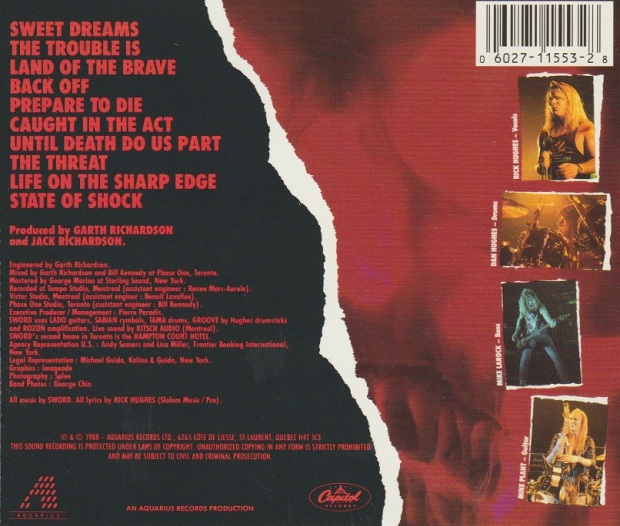
Capitol records released “The Trouble Is” as the first single/video. Rick Hughes’ enviable voice makes it sound like Sword, otherwise it could have been one of Dokken’s heaviest tracks. The lyrics are surprisingly still valid in 2017: “People are lying, they keep on trying, to live where they can be free. They jam into boats with a knife at their throats…” It hasn’t changed much in 30 years. “Land of the Brave” tackles war, a popular metal topic ever since Black Sabbath wrote “War Pigs” back in 1970. The screams of Rick Hughes mimic the horrors of the battlefield. An apt comparison would be Iron Maiden, with a little bit of Metallica. For some rebellious attitude, check out “Back Off”, which hits the gas pedal during the chorus. Another popular metal topic: “Back off preacher, stay away!” Ozzy would have been proud. Guitarist Mike Plant blasts through his solos effortlessly, showing off a variety of rock styles. “Prepare to Die” (also heard on the recent Live Hammersmith CD) is the thrashiest of the bunch on side one, sounding like vintage Sword.

Cool thrashy shreddery kicks “Caught in the Act” right in the nuts to commence side two.  It switches up on “Until Death Do Us Part”, focused by the stomp of the beat.  If Sweet Dreams has any weakness it is that there are two Swords.  The speedy metal of “Caught in the Act” and “Until Death Do Us Part” are a contrast to the more accessible rock of “The Trouble Is”.  One of the most stunning tracks on the album is “The Threat”, on which all the ingredients mix perfectly.  (They get bonus points for naming themselves in the lyrics:  “Ride with the sword in your hand, and some day with the sword you will die.”)  For a real surprise check out the slide guitar grease of the incredible “Life on the Sharp Edge”.  It’s all over with “State of Shock” which will knock you senseless for all the headbangin’ going on.  Seems Motorhead must have rubbed off on them a bit.  “State of Shock” goes out like a champ leaving you punched out drooling on the mat.

Sword stopped after two albums and Rick Hughes moved on to the mainstream rock band Saints & Sinners.  Sweet Dreams succeeded as a second album should.  It pushed the sound outwards.  Hughes and company should be proud of both of their records.

4/5 stars

scan_20170121-2

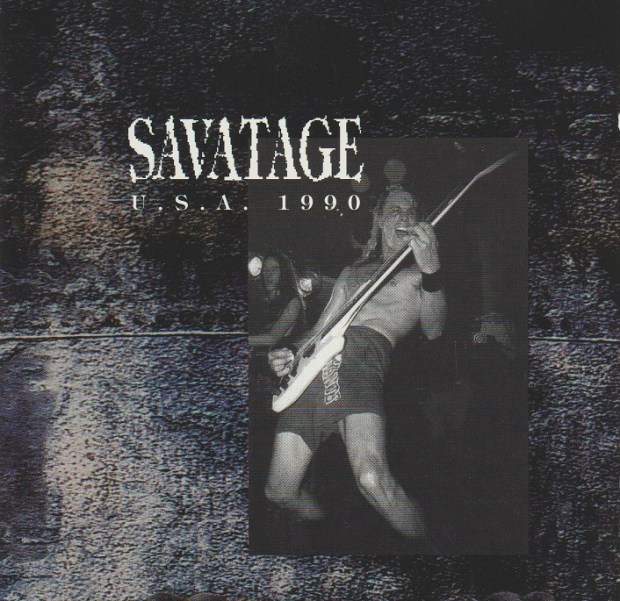
REVIEW: Savatage – U.S.A. 1990 (bootleg CD)

scan_20170120SAVATAGE – U.S.A. 1990 (1994 Live Storm bootleg CD)

When a bootleg live CD just has a picture of the bass player on the front, you know you’re not in for a perfect listening experience (Motorhead, Kiss and Iron Maiden bootlegs excepted).  Nothing against Johnny Lee Middleton of course, but it would make more sense to put Jon or Criss Oliva on the cover.  U.S.A. 1990 (released 1994) comes from Live Storm in Italy, where many bootlegs originated.  It seems to consist of songs from multiple shows, due to the repeating “Of Rage and War” and “Hounds”.

Repeat aside, U.S.A. 1990 focuses on early heavy tracks with not a single ballad.  Fans of early ‘Tage are going to love getting live versions of “The Dungeons are Calling” and “City Beneath the Surface” from the Dungeons are Calling EP (1984).  There is also the amazing riff-tastic title track from Sirens (1983), to this day still one of their best tracks.  Interestly enough, this very same version of “Sirens” was released officially (and in official sound quality) as a bonus track on the long deleted Music For Nations pressing of Sirens.  You can tell when Jon screams “Danke schön! Hello Deutschland!  You are metal!”  It’s the same version…but wait a sec!  Last I checked, Deutschland is not in the U.S.A.!  Such is the charm of a bootleg release.

“Hounds” from Gutter Ballet (1990) is ominous and evil-sounding, made more so by Jon’s blood curdling screams and howls.  He calls it “doom music”.  Also from 1990, “She’s in Love” is just speed on top of riffs on top of screams.   Gutter Ballet was an ambitious album, and part of that was a three-song suite about insanity.  From that suite “Thorazine Shuffle” is lifted, a classic example of Criss Oliva’s style of snaky guitars. “Of Rage and War” brings another menacing riff, and a topical lyrical message:

Better listen to me you son of a bitch,
Better disarm those missiles sleeping in the ditch,
You have no goddamn right to do the things you do,
The world would be a better place if we were rid of you!

“Sirens” is the centerpiece, a stormy metal drama loaded with waves of guitar crashing against the rocks, wrecking everything in their way.  Jon’s shrieks warn away the meek and timid.  Only the strong will survive the “Sirens”.  You will find no refuge in the “Hall of the Mountain King” either.  This castle of stone shall offer no protection from the riffage pouring down.  Madness reigns, so just go with the groove and get your stomping boots on.  The final track is the upbeat rager “Power of the Night”, the title track from their 1985 album.  It’s a string of lyrical cliches backed by some serious heavy rock.  Raise the fist of the metal child!  Unfortunately the track is cut short.

U.S.A. 1990 is a fairly common bootleg, so if you find one in the $7-8 range, take a shot.

2.5/5 stars

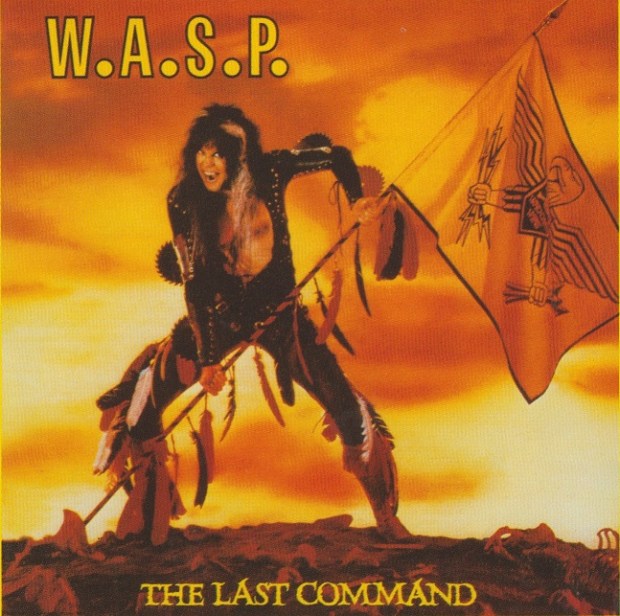
REVIEW: W.A.S.P. – The Last Command (1985, 1997 reissue)

scan_20170110W.A.S.P. – The Last Command (1985, 1997 Snapper reissue)

With W.A.S.P.’s second album The Last Command, Blackie & cohorts made a slight move closer to the mainstream.  Blackie Lawless gave the producer’s chair to Spencer Proffer who worked magic with Quiet Riot in 1983.  There was also a new drummer.  W.A.S.P. said sayonara to Tony Richards and hit Japan with new guy Steve Riley, who today is best known for L.A. Guns.  Riley’s pasty-white demeanor fit right in with W.A.S.P.’s horror rock fantasy.  This foursome (also featuring guitarists Chris Holmes and Randy Piper) became what many refer to as the “classic” lineup.

Each side of the original LP was top-loaded:  “Wild Child” led off side one while “Blind in Texas” was used to ignite side two.  This was a calculated move, as none of the rest of the songs are as memorable as the two singles.  The strategy worked as this album doubled the sales of W.A.S.P.’s first, and those two singles had a lot to do with it.  “Wild Child” in particular was proof that W.A.S.P. could write songs and not just iron riffs.  With a bright incandescence, “Wild Child” found its way onto radio.  It’s an early example of what Blackie Lawless can do when he gets everything right.

As for “Blind in Texas”?  It was always more of a novelty, a chance for the crowd to yell along with Blackie (just listen to the live B-side version on the Headless Children CD).  A cute ZZ Top cameo in the music video didn’t hurt their chances on the Power Hour, and even the staunchest critic must admit this is a blast of pure fun.

Delving into the deeper cuts, “Ballcrusher” is…a quaint love song, let’s say, with a metal chug and a cutting W.A.S.P. riff.  Throw on one of those shouty W.A.S.P. choruses and you pretty much know how “Ballcrusher” goes!  Wealth is celebrated on “Fistful of Diamonds” which is the blueprint for all the generic W.A.S.P. rockers to follow. Steve Riley made his songwriting debut on “Jack Action”, a cool but forgettable nocturnal chug. On side one, however you will discover one real diamond which is the slow and ominous “Widowmaker”. This one too is a blueprint, for classic W.A.S.P. prowls like “The Headless Children”.

Side two has its own pits and valleys. As a sequel to the first album’s ballad “Sleeping (In the Fire)”, “Cries in the Night” is less successful. However it does have a strangely futuristic Iron Maiden-circa-1992 vibe, as if Steve Harris nicked this song for some of his own on Fear of the Dark.  “The Last Command” is junk; limp and hookless.  Blackie plagiarized himself and not for the last time.  When Blackie goes “Running Wild in the Streets” it sounds as if he’s stealing from Quiet Riot.  Ask Spencer Proffer, but surely the similarity between the “all the way!” section and the “I want more!” part of “Scream and Shout” is not coincidence.  The point is moot as neither song is particularly amazing.  Closing The Last Command is “Sex Drive”, a “good enough” song but only just.

W.A.S.P. have been generous with their reissues and included virtually all their related B-sides on the CDs.  “Mississippi Queen” (Mountain) is actually a decent B-side cover.   You have to wonder if, in 1985, W.A.S.P. could have had a hit with “Mississippi Queen” just as Motley Crue did with “Smokin’ in the Boys’ Room”.  Then “Savage” is better than 90% of the actual album.  Why are songs like “Savage” left off albums?  Who makes the decision to release it as an obscure B-side?  The rest of the bonus tracks are all live B-sides, and all W.A.S.P. classics:  “Fuck Like a Beast”, “I Wanna Be Somebody”, “Sleeping (In the Fire)”, “Hellion” and “On Your Knees”.  Some suffer from excessive crowd noise, but it sounds like W.A.S.P. were formidable live.  Blackie should consider selling a live album made up of single B-sides like these, all in one place.

So good are the bonus tracks for The Last Command that they even alter its final score:

3/5 stars (original LP)

to

3.5/5 stars (CD reissue)

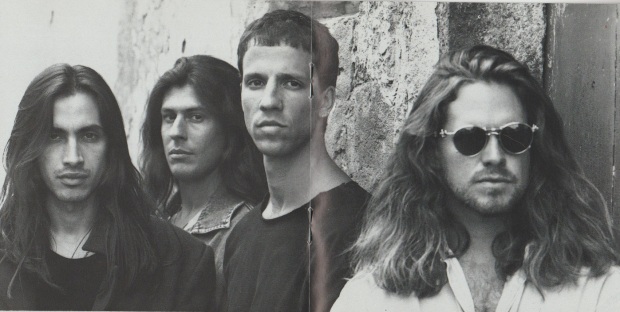
REVIEW: Extreme – Waiting for the Punchline (1995)

scan_20170114EXTREME – Waiting for the Punchline (1995 A&M)

Sometimes you just gotta laugh.  Extreme released two of their finest albums after grunge wiped the slate clean.  Extreme were the punchline, but that didn’t stop them from making a smokin’ fourth album.  In 1992 Nuno envisioned the next album as “really funky”, and there is some funk here.  However Waiting for the Punchline was much more straight ahead: stripped down, no orchestras, no rap, just guitar rock through and through.

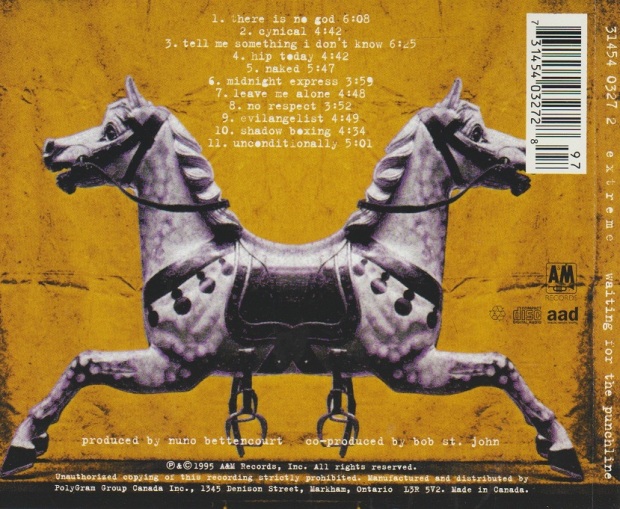
“There Is No God” sounds like an odd title from a band as Christian as Extreme were, but Gary Cherone has always been a lyrical champion.  It’s not as simple as it appears, but the groove just lays waste.  The next track “Cynical Fuck” turns it up further.  It is pure smoke, and perfect for the decade it was written in.  “Tell Me Something I Don’t Know” takes the soft/hard approach with a loud droning Nuno riff.  It’s another brilliant song, and harder than what Extreme were doing before.  Much of Waiting for the Punchline is driven by the bass and drums.  The interesting thing about this is that drummer Paul Geary left during the making of this album, and was replaced by Mike Mangini who is now in Dream Theater.  You hear two very distinct drum styles through the CD.  Geary has a straight ahead approach, while Mangini is capable of just about anything.  His first track is the single “Hip Today” and you can hear how his beats are anything but basic.

“Hip Today” is a good tune and a good indicator of what the album sounds like: Bass, drums, guitar. Listen to how the rhythm guitar drops out when Nuno solos. Just like the first classic Van Halen. The lyrics sound bitter as Gary warns the next generation of bands that their time too will end.  Things slow down a little on “Naked”, before the side-ending instrumental “Midnight Express”.  This is a truly brilliant track, proof that Nuno’s stunning plectrum practice has paid off.   When it comes to acoustic guitar work in rock and roll band, Nuno is among the very best.  “Midnight Express” gives me callouses just thinking about it.

Dark moods commence the second side with “Leave Me Alone”, a sentiment many of us understand.  Don’t worry about me — I’m happy alone sometimes.  Nuno uses volume swells a-la Van Halen’s “Cathedral” to create a nifty riff.  Into “No Respect”, Nuno makes his guitar purr, while the rhythm section throws it into overdrive.  “Evilangelist” tackles the religion questions again, with a funky riff and cool digitized chorus.  The dark and heavy vibes give way to light shortly on “Shadow Boxing” and “Unconditionally”.   Both tracks are brilliant but different.  “Shadow Boxing” might be considered the “Hole Hearted” of this album, while “Unconditionally” leans towards “More Than Words”.  Neither are re-writes, but those are the easiest comparisons.

One final surprise is the unlisted bonus track.  It wasn’t on the cassette version, but you will find the title track “Waiting for the Punchline” after “Unconditionally”.  There are two cool things about this.  One: it’s an awesome track, much like the angrier stuff on side one.  Two: it closes the album even better than “Unconditionally”.  Great little surprise so don’t hit “stop”!

The thing about Waiting for the Punchline is that it’s a grower.   The first couple listens, I thought “It’s not as good as their old stuff, but what is these days?”  The new stripped down Extreme didn’t seem as interesting as the lavish one from Extreme III or the flashy one from Extreme II.  After a few listens, different textures began to emerge, add their own colours and depth.  Particular with the guitar work, but also the rhythms, there is much delight to be discovered here.

5/5 stars

scan_20170114-3

REVIEW: Extreme – Running Gag (Japanese EP)

scan_20170112EXTREME – Running Gag (1995 A&M Japan)

You’ve read it here before, and we’ll repeat it again:  Japan gets the best stuff!

While the UK got the regular CD single for the song “Unconditionally” (four tracks), Japan called it the Running Gag EP and added a fifth track.  Due to various chart regulations in the UK, singles had to have four or less tracks to qualify.  Meanwhile, Japan seems to love releasing exclusive EPs and Running Gag is one such exclusive that Extreme fans will want to hunt down.

Extreme’s fourth album, 1995’s Waiting for the Punchline, was as much a treat as the prior albums.  It was as different from them as they are from each other.  This time, they went raw and stripped down.  You can usually hear only one guitar track at a time.  “Unconditionally” was the closing ballad, a fantastic song presented here as an edited remix.  Mike Mangini was added on drums, and you can hear slight differences from the album track.  Had the year been 1991, they would have had another hit on their hands.  Fans who know the song will recognize it for its heart and charm.

Three live songs with Mike Mangini on drums are the real treat of the set.  (He gets a chance or two to really smoke.)  “Am I Ever Gonna Change” from Extreme III is the middle part of their side-long epic “Everything Under the Sun”.  It worked well enough as a standalone song to be released as a promo single, and to be played live.  For the live situation, Nuno souped up his guitar solo.  Without the backing orchestra the album version has, it’s a very different sound.  Such is the danger of recording an album that is difficult to reproduce live.

The two tracks from Waiting for the Punchline sound more at home on stage.  “Tell Me Something I Don’t Know” (the Japanese exclusive) and “Naked” have a mean, catchy vibe.  Extreme were one of very few hard rock bands that adapted their sound well to the grunge onslaught.  These songs are not “grunge”, but they represent a step in that direction.  The songs have more bite, more bass, more groove.  The solos are sparse, though Nuno puts his foot to the gas pedal when required.  Without sounding dated Extreme simply pivoted just so into the 90s, but it sadly didn’t equal sales.

The final song is a studio ballad, “When Will it Rain” which has a vague Wings sound crossed with smooth Extreme balladeering.  It’s actually quite a great little bonus track.  Its quaint 70s qualities might not have fit in well on the original album, but hopefully you will have a chance to hear it in your travels.

Good little EP, just shy of great.

3.5/5 stars


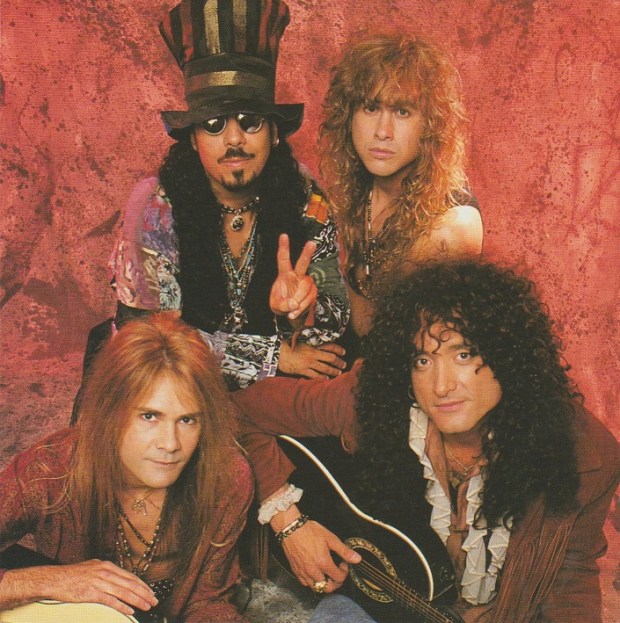
REVIEW: Quiet Riot – Terrified (1993)

scan_20170102QUIET RIOT – Terrified (1993 Moonstone)

Quiet Riot took the unusual step of firing their only original member, lead singer Kevin DuBrow, in 1987.  They soldiered on with new singer Paul Shortino and did a brief tour of Japan before calling it a day for the band.  Meanwhile, Kevin DuBrow was supposed to working on a new band called Little Women.

In 1991, various media were reporting that Kevin DuBrow and Carlos Cavazo had gotten back together in 1991 as a new band called Heat.  It was a quiet reunion for the singer and guitarist who had been estranged since DuBrow’s firing in 1987.  Within two years of forming Heat, the band had morphed into a new version of Quiet Riot, now featuring former drummer Frankie Banali and newcomer Kenny Hillary (RIP).

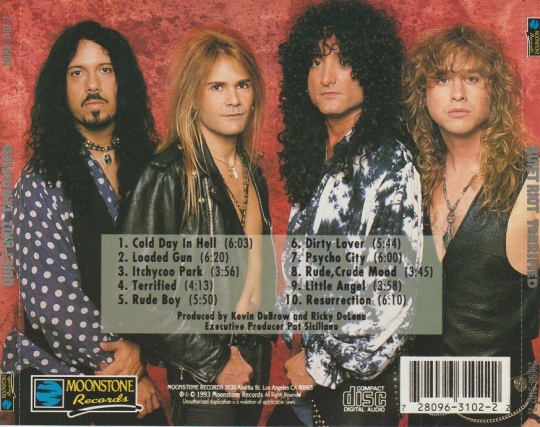
Terrified features 3/4 of the classic Metal Health lineup with only Rudy Sarzo being absent. (He’d join again later on Alive and Well). Like a mighty ship changing course in heavy waters, Terrified is a monstrous Quiet Riot CD, anchored by Cavazo’s newly heavy guitar playing and Banali’s inimitable thunder. The drum production on this album could be the best on any Quiet Riot disc, and up there with Banali’s sound with bands such as W.A.S.P.

Lots of winners on the Terrified: “Cold Day In Hell” boasts an angry 90s groove, but with the melodic sensibilities of Metal Health-era QR. “Loaded Gun” almost sounds like a Metal Health outtake, because it has a throwback vibe. Their cover of “Itchycoo Park” is the only acoustic song, a much needed respite before re-entering the fray on the storming title track.  Only a few filler tracks (in a row) almost derail the album, but soon we’re back on track with “Rude, Crude Mood”. It may be one of the worst lyrics that DuBrow’s ever written but the music sure rocks. “Little Angel” is fast but forgettable, and before long you’re into “Resurrection”, a six-minute instrumental tour-de-force. Banali and Cavazo take the helm on it with a shuddering riff, and they don’t let go until it’s fade out. An awesome track.

Quiet Riot’s career can be divided up into a number of phases.  In the 1970s, there was the Randy Rhoads era represented by two decent Japanese albums.  This was followed by the the so-called “classic era” of major label releases (Metal Health to QR) from 1983-1988.  Then there is the reunion era which runs from Terrified to Rehab (2006) and finally Kevin Dubrow’s death in 2007.  As a coda, Frankie Banali resurrected the name with a variety of lead singers and continues to tour and record.  Their last album was 2014’s 10 featuring lead singer Jizzy Pearl.  Terrified would stand as the best album of the reunion era, which they sadly struggled to equal on later releases like Down to the Bone.

Worth the investment.

4/5 stars

scan_20170102-3


REVIEW: Joe Satriani – Shockwave Supernova (2015)

Purchased at BMV for $7.99 during Toronto Record Store Excursion 2016.

scan_20161217JOE SATRIANI – Shockwave Supernova (2015 Sony)

Like a manic version of “Puttin’ on the Ritz”, the title track from Joe Satriani’s latest Shockwave Supernova will render you mute as you pick your jaw up from the floor.  Syncopated guitars and drums unite before Joe focuses everything on the melody.  Joe’s brand of instrumental rock usually features the lead guitar in a melodic position where a lead singer would normally deliver the hooks.  That’s Joe’s job and he has done it consistently well.

New age-y guitar twinkles highlight the ballad “Lost in a Memory”, which pulses with understated rhythms.  It is only appropriate that this spacey music was recorded at Skywalker Sound.  What atmosphere and what power.  Things take a turn down Weird Street on “Crazy Joey”, a showcase for sounds you didn’t know a guitar could make, but still with a cool melody to remember.  Unbelievable accuracy and dexterity here.  “In My Pocket” brings back Joe’s bluesy harmonica work (often overlooked) with a stripped basic track.  Then we fly “On Peregrine Wings”, but the song itself is heavy as granite.  An unorthodox guitar hook reminds us that Joe isn’t a typical songwriter or player.  Thunder returns on “Cataclysmic” which moves along with the grace of a herd of rhinos.

Joe hops in his Tardis for a trip back in time to the early 60s on “San Francisco Blue”, but of course with his own space age sound.  He just has to “Keep On Movin'”, but it’s still a surprise when the piano shares the spotlight.  There is no shortage of string majesty, but the piano is a nice touch.  Things cool down on “All of My Life”, a gentle song with breezy congas and unexpected twists.  “A Phase I’m Going Through”, track 10, is the point at which the listener begins to get a little bit of ear fatigue.  15 songs might be normal for a Joe album, but 10 songs might be the ideal length for the average listener.

Take a break if you have to because there are still great moments ahead.  “Scarborough Stomp” is an apt title for the snare-heavy 11th track.  It’s all about that uncomplicated beat, but there is a cool baroque section in the middle that sounds as if lifted from Joe’s brief stint in Deep Purple (1994).  A tender ballad (“Butterfly and Zebra”) is a transitional song leading to the ominous backwards guitar intro to “If There is No Heaven”.  This song is reminiscent of past Joe blasters like “One Big Rush”. Then you will see the “Stars Race Across the Sky” on one of Joe’s more atmospheric tracks. A “Goodbye Supernova” sends us off in dramatic fashion with heavy keyboard accents by veteran Mike Keneally.

Very few Satriani albums will let you down.  Though some might argue “if you have one Joe, you have them all”, his fans will appreciate the differences.

3.5/5 stars