heavy metal

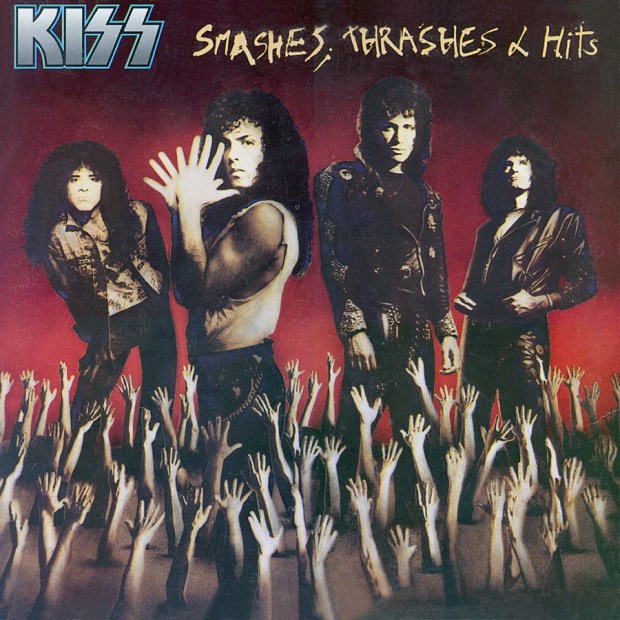
RE-REVIEW: KISS – Smashes, Thrashes & Hits (1988)

TheΒ KISS RE-REVIEW SERIESΒ Part 36:Β 

 – Smashes, Thrashes & Hits (1988 Mercury)

Though hard to believe, in 1988 Kiss needed the money.Β  According to CK Lendt in his book KISS and Sell, they were in trouble financially.Β  Some bad investments and too many expenses, plus the underperformance of Crazy Nights, had the band in a bind.Β  The traditional easy solution is to throw together a “greatest hits” set.

Gene announced this album to Canadian audiences on a trip to the Great White North promoting his record label, Simmons Records.Β  House of Lords were the band he primed to be big, and their debut album is held in high esteem by rock connoisseurs worldwide.Β  It seemed to fans that Simmons was transitioning from Hollywood to businessman.Β  Surely, it was hard to believe him when he claimed Kiss was still his priority.

Greatest hits albums need something new to sell them.Β  This was left to Paul Stanley, who produced two new songs co-written with Desmond Child (and Diane Warren on one).Β  Β It seems unlikely that Gene cared much at this point.Β  In the music video for one of the new songs, “(You Make Me) Rock Hard”, he can be clearly seen miming the wrong words.

Speaking of music videos, “Let’s Put the X in Sex” was something new for the band (and it wasn’t the lawsuit from the people who owned the building in the video).Β  Suddenly, Kiss were a three-piece backing band with a guitar-less frontman.Β  At least in the videos for Crazy Nights, Paul Stanley wore and danced with a guitar.Β  In “Let’s Put the X in Sex”, he is front and center, without instrument:Β  the frontman.Β  Gene’s just the bass player in these videos, looking completely lost.Β  Paul was doing all the work behind the scenes, therefore he was going to take the spotlight.Β  And why not?

Getting two new Kiss songs on a greatest hits was good in theory.Β  Even back then, we sensed they were more the “Paul Stanley Project” than Kiss.Β  For Kiss, they are too light and glossy.Β  “Let’s Put the X in Sex” has horns (or is it synth?) making it sound vaguely like an Aerosmith outtake from Permanent Vacation.Β  At least Steven Tyler injects a little cleverness into his innuendo.Β  Both Bruce Kulick and Eric Carr rise to the occasion with worthy work, but the tune is a dud.

Likewise with “(You Make Me) Rock Hard”, which passed for a rocker at the time.Β  Neither of the new tracks are as good as the four on Kiss Killers.Β  Paul must have just been out of gas.Β  He states these songs were the best he could do at the time without his partner in crime.Β  “Rock Hard” is just Kiss by numbers.

First two tracks aside, Smashes, Thrashes & Hits contains 13 of the greatest.Β  Most are remixed (ill-advisedly) to bring all the tracks to a standard sonic backdrop.Β  The remixes are from a variety of names in a number of studios:Β  Dave Wittman, David Thoener, Jay Messina for example.Β  Some played it a little more loose with the tracks, others didn’t meddle much.Β  “Love Gun” is an example of a remix that changes things up, but still works.Β  Ace’s solo is given more emphasis by mixing out the vocals.Β  It’s a cool alternate arrangement.Β  Excess echo is added on the drums…you can’t win ’em all.Β  Many of the remixes suffer from drum related issues.

Smashes, Thrashes & Hits takes a scattershot approach to running order.Β  It’s very telling that no tracks from Crazy NightsΒ were included, except in the UK where “Crazy Crazy Nights” and “Reason to Live” were hits.Β  No tracks with an Ace Frehley writing credit were included, and only one from Peter Criss.Β  That’s another gripe that fans have with this album.

“Beth” is included, a throwback to one of Kiss’ biggest hits, which they tended to shun since Peter’s 1980 departure from Kiss.Β  It’s considered a slap in the face to Peter that Eric Carr was called in to re-record the lead vocal.Β  The backing track is identical.Β  Carr never felt comfortable in this role, but had never been featured on an album lead vocal before.Β  It was a hell of a dilemma for the drummer.Β  He’d been in the band for six years and six albums, and never got a lead vocal.Β  He did the best he could.Β  The re-recorded “Beth” didn’t replace the original, and it remains an oddity in the Kiss canon.

One afternoon in the summer of 1990, Bob and I were hanging out with these two girls at his trailer that we were going out with.Β  We were listening to songs, but Bob and I didn’t seem to get much say in what songs.Β  One of the girls said, “I have some Kiss!” and put on Beth.Β  As soon as she did, I had a feeling it wouldn’t be the original.Β  Simultaneously, Bob and I both said, “Oh no, it’s Eric!”Β  The girls had no idea what we were talking about or why it was a big deal.

Smashes, Thrashes & HitsΒ was the first compilation to reconcile the makeup and non-makeup eras of Kiss.Β  The majority are from the makeup years, as it should be, with only three from non-makeup albums.Β  You could argue for this song and that song, but the running order is jarring.Β  “Heaven’s On Fire” into “Dr. Love” is not even as bizarre as “Beth” into “Tears are Falling”.Β  The less familiar remixes don’t help the situation.Β  Incidentally, the only songs untouched by remixers’ hands are “Lick It Up”, “Heaven’s On Fire”, “Tears are Falling” and “I Was Made For Lovin’ You”.

There was no tour for Smashes, Thrashes and Hits.Β  Gene had his label stuff, including a new Canadian band called Gypsy Rose to think about.Β  (Remember “Poisoned By Love” on Simmons Records?)Β  Paul Stanley didn’t want to sit idle, and so did a 1989 solo tour.Β  Kiss family member Bob Kulick returned to his side on guitar.Β  Kiss keyboardist Gary Corbett was there with bassist Dennis St. James and ex-Black Sabbath drummer Eric Singer.Β  The setlist featured a number of old Kiss classics that hadn’t been played live in 10 years, such as “I Want You”.Β  Eric Carr was unhappy about the solo tour, worrying about what it meant.Β  Like most Kiss fans, he wondered if it was the beginning of the end.Β  He also worried that Paul didn’t ask him to be his solo drummer.Β  Paul said it was because two Kiss members wouldn’t be right for a solo tour.Β  Ominously, Eric Carr said about Singer:Β  “That’s the guy who’s going to replace me.”

Fans were confused and some were unhappy.Β  Like they had once before, Kiss were drifting further and further into pop music.Β  This time, it was without Ace Frehley to keep them anchored.Β  Paul Stanley now seemed to be a Bon Jovi-like dancing frontman.Β  These new songs were not easy to stomach, and the Eric Carr vocal felt all wrong.Β  Had Kiss lost all credibility?Β  Smashes, Thrashes and HitsΒ wasn’t winning any back.

Today’s rating:

2/5 stars

Original mikeladano.com review:Β  2012/08/06

REVIEW: Quiet Riot – Road Rage (2017 Japanese version)

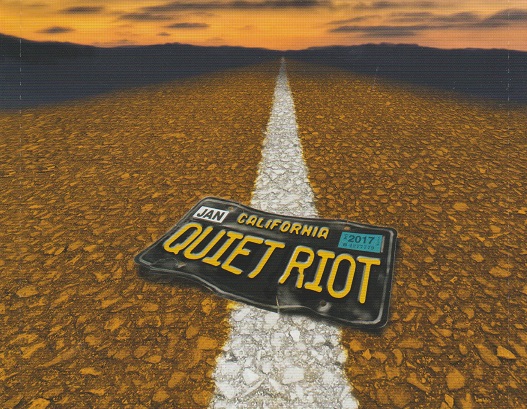
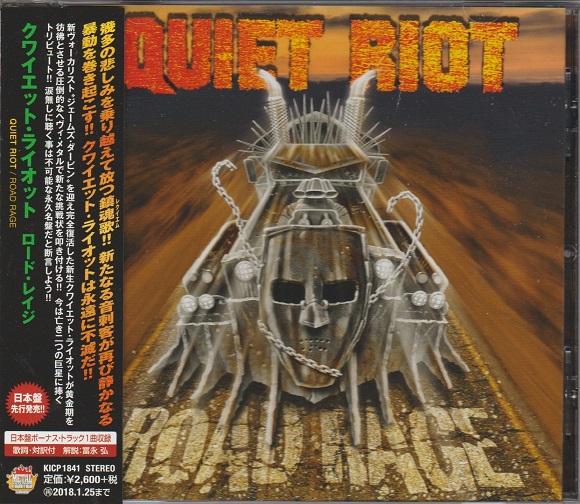
QUIET RIOT – Road Rage (2017 Frontiers Japanese version)

We’ve always been honest but truthful Quiet Riot fans here at LeBrain HQ.Β  We’ve been banging our heads for almost 35 years now, and they included some ups and some downs.Β  The death of Kevin DuBrow was heartbreaking.Β  Some of our Quiet Riot reviews haven’t been the most popular, but we have always maintained an open mind.Β  Frankie Banali’s resurrected Quiet Riot with no original members left a bad taste in the mouth, especially after managementΒ attempted to re-write the band’s history on Wikipedia.Β  Pages were edited to indicate that the Metal Health album was Quiet Riot’s debut, seemingly in order to qualify Banali as an original member.Β  Ugly and undignified; but music talks and bullshit walks.Β  Quiet Riot’s first post-DuBrow always was 2014’s 10, with Love/Hate singer Jizzy Pearl taking over as the band’s sixth lead singer.Β  It wasn’t that good and it’s conceivable that the band know it.Β  No physical edition was ever released, and you can’t even buy a download anymore.

So, it’s delightful to be able to say that the new 2017 Quiet Riot album called Road Rage is…not bad at all!Β  Actually quite good!

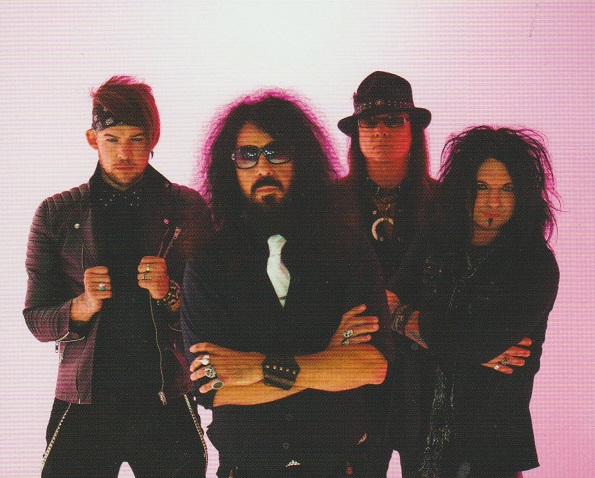
It’s even been rocky since 10.Β  Jizzy Pearl left amicably, to be replaced by ex-Steven Adler singer Seann Nichols.Β  They recorded a new album, even released one full song online…and then suddenly Nichols was out!Β  American Idol alumnus James Durbin was hired in short order, and re-wrote and re-recorded the entire album.

Skeptics, be silent.Β  Our fair and balanced take on Quiet Riot in the past should speak volumes for the review you are about to read.Β  It would be far easier to mock Quiet Riot for their choice of a TV show contestant as a frontman, but it would be grossly inaccurate.

Durbin’s youthful enthusiasm will either win you over, or leave you complaining that he’s “not enough like DuBrow” and it “doesn’t sound like Quiet Riot”.Β  Here’s the truth — that’s good.Β  We’ve endured one soundalike singer after another.Β  Durbin has a fresh spin, and there’s little question the guy is just pleased as hell to be fronting this band!Β  he gives it all on “Can’t Get Enough”, a new uptempo Quiet Riot party tune.Β  Co-writer Neil Citron must have written the riff with a classic Quiet Riot vibe in mind.

Then it’s down weird street a little bit with the Indian-flavoured intro to “Get Away”.Β  It takes a moment, but once you realize “Hey, this isn’t the same old Quiet Riot”, you will be able to realize that “Get Away” is a damn good song.Β  It’s actually quite melodic rock, but with a Zeppelin groove.Β  Then it’s the pro-weed “Roll This Joint”, which has a seriously decent Zep vibe too.Β  The lyrics are pretty cheesey (“I’m with Cheech and Chong and Willie and Marley!”) but you gotta cut Durbin some slack.Β  He’s young and it’ll connect with some of that crowd.

The thing is, you just can’t dislike Durbin.Β  He wins you over, especially on the lead single “Freak Flag”.Β  This is the most Quiet Riot sounding track of the disc, but with Durbin it’s no carbon copy.Β  “Freak Flag” kicks ass and you can imagine it working great live.Β  Same with “Wasted”.Β  That chorus (“Take a shot!”) grows fast.Β  Even the ballad “The Road” doesn’t suck.Β  Through the 11 tracks, it’s clear who the star on this album is.Β  The new frontman rose to the challenge.Β  In the back, Frankie Banali’s providing the Quiet Riot backbeat; the linkage between past and present.Β  Guitarist Alex Grossi also turns in a worthy performance, and Chuck Wright (bass) has a co-write on the slippy-slidey “Still Wild”.Β  Despite the circumstances in the making of the album, Quiet Riot sound more focused than they have in decades.

Frankie’s revival of Quiet Riot has been going seven years straight, through five singers before getting James Durbin on board.Β  Only the singer has changed; Grossi and Wright have stood by through thick and thin.Β  No matter what, Quiet Riot will continue.Β  Fans should be advise that the first album with Durbin has turned out great, and let’s hope this is a long-term lineup.Β  He’s got the necessary range to sing vintage DuBrow, but in his own voice.Β  And that voice is growing quite compelling.Β  Not every song is killer, but the majority of the album gets the job done.Β  Enough to justify putting your money down.

The Japanese version of Road Rage has an exclusive bonus track.Β  It is an acoustic version of “Make A Way”, one of the heavy album tracks.Β  This isn’t a crappy remix, but an entirely new recording of the song in acoustic arrangement.Β  It’s different enough that it actually seems like a new song.Β  Bonus track:Β  win!*Β Β 

As Durbin sings, “Take a shot!”Β  Give Road Rage a road test.Β  Just don’t “Knock ‘Em Down”, or you will have to “Get Away”.Β  The quality of this album in terms of sound and songs gives the new Quiet Riot a level of credibility they didn’t have before.Β  Easily their best album since 1993’s TerrifiedΒ or even before.Β  Let your “Freak Flag” fly, James Durbin!

3.75/5 stars

*Β  Former singer Seann Nichols made a comment in an interview that implied the version of Road Rage with his vocals was released in Japan; this is unfortunately not the case.Β  If you have any Seann Nichols versions of the Road Rage songs, please contact us here.Β  We are dying to review them in contrast to the final album!


REVIEW: Vinnie Vincent Invasion – All Systems Go (1988)

TheΒ KISS RE-REVIEW SERIESΒ Part 35:Β Vinnie Vincent solo #2.

VINNIE VINCENT INVASION – All Systems GoΒ (1988 Chysalis)

Ex-Β guitarist Vinnie Vincent could have made it big as a solo artist.Β  He had the talent, and the songwriting ability.Β  What he didn’t have was self control.Β  It’s too bad, because his second album was far more accessible than the first.Β  With a movie tie-in with the lucrative Nightmare on Elm St. movie series, the Invasion was primed and ready….

And then the band split.

According to singer Mark Slaughter (on an instalment of the Eddie Trunk show), Vinnie told Mark that was going to fire bassist Dana Strum.Β  “Where does your loyalty lie?” he asked the vocalist.Β  Mark told him if Dana was going, he’d rather go with Dana.Β  So that’s what happened. Mark and Dana formed the successful Slaughter, while drummer Bobby Rock joined another huge band called Nelson.

This all came as a bit of a shock to fans, who expected the Invasion’s second album All Systems Go to take off.Β  It spawned two singles/videos that were right in sync with popular rock at the time.Β  Vinnie toned down his guitar excesses from the first album, and Mark Slaughter was obviously the kind of frontman born to rock.Β  A damn shame.

All Systems Go wasn’t a skimpy album:Β  11 tracks plus two CD-only instrumentals.Β  Vinnie took sole writing credit on every track, including the drum solo.Β  For extra fun, the tracks are not listed in order on the back cover and the instrumentals are unlisted.Β  This is a throwback to the way records were sometimes released in the 60s and 70s.Β  The tracks (including the instrumentals) are listed in the correct order on the CD itself.Β  This kinda sucks when you are actually listening to it and want to know which song is playing.

This is the album that lived up to what Vinnie was capable of, although he stated a preference for the first “uncompromised” first album.Β  “I should never have changed singers,” he said without mentioning Mark by name.Β  Mark’s sassy vocalizin’ dominates the album, which might have pissed off Vinnie.Β  His charisma and talent is immediately obvious on the sleazy groove rocker “Ashes to Ashes”.Β  A tight song with a good riff and a great chorus is all you need.Β  Vinnie’s solo is no less impressive, but much more innovative and suiting to the song.Β  Guitar heroism in the making…almost.

“Dirty Rhythm” brings more sleaze: faster, more cowbell and more Sunset Strip.Β  The Invasion had more talent than the average glam rock band of the day, and so this is pretty exceptional stuff for the genre.Β  Where they really succeeded was with the radio friendly stuff.Β  The Freddy Krueger crossover ballad “Love Kills” should have been massive. We the benefit of hindsight, we can see that Mark Slaughter was born to be a star. He was absolutely the right singer for these songs.

Goofy title aside, “Naughty Naughty” is a decent return to sleazy glam, and “Burn” rocks similarly.Β  “Heavy Pettin'” is an even worse title, concealing another good glam rocker.Β  Perhaps lyrics weren’t Vinnie’s greatest talent, but there’s not much else wrong with it.Β Β Guitar heroism returned on “The Star-Spangled Banner”, played by an orchestra of electric guitars!Β  It’s an apt intro for “Let Freedom Rock”.Β  It’s over the top fun, and the guitar solo would make Yngwie pee his leather pants.

The other single “That Time of Year” was just as good as “Love Kills”, if not better just because it’s not as dark. Its midtempo rock pseudo-ballad stylings were instantly likable.Β  It’s easy to imagine it as a hit, despite a glut of soundalike bands in 1988.Β  Vinnie’s solo verges of majestic.Β  It’s really hard to imagine was he didn’t like about this album.Β  It’s not a bad thing that the songs dominate over the solos; the solos are more impressive when they serve the song.

Had the band not split, and if they released a third single, it could have been “Ecstasy”.Β  Don’t forget, Vinnie wrote “Tears” which was a pop hit for John Waite, and even recorded by Peter Criss.Β Β “Ecstasy” is its spiritual sequel.Β  “Deeper and Deeper” also has pop qualities, but is clearly a rocker.Β  The point is this:Β  don’t underestimate Vinnie Vincent.

Out of the blue, the LP/cassette version of the album ended on heavy shred metal.Β  “Breakout” kicks ass.Β  If fans felt at any point that the album was going soft, then “Breakout” would have redeemed it for them.Β  The only real issue is a problem on many of the songs on this album: the production.Β  It’s thin, and the backing vocals tend to be shrill.Β  “Breakout” could be rib-busting with more crunch.

On CD, there are two instrumentals to close.Β  “The Meltdown” is a messy cacophony of drums and electronics.Β  You’ll be thankful it’s over.Β  Stick around for Vinnie’s acoustic tune “‘Ya Know’ – I’m Pretty Shot”.Β  What a diverse and schooled player he is.Β  From classical fingerpicking to blues and traditionals, is there anything he couldn’t do with just six strings?Β  Years from now, this is what Vinnie should be remembered for.Β  This one acoustic instrumental should establish him as a genius on the same level as Randy Rhoads and Yngwie Malmsteen.

Potential was almost fully realized here.Β  If the sound was thicker and the disc was trimmed for length, All Systems Go would be fully classic.

3.5/5 stars

RE-REVIEW: KISS – The Ritz, NYC 12/08/1988

TheΒ KISS RE-REVIEW SERIESΒ Part 34:Β 

 – The Ritz, NYC, 12th August 1988Β (from 4 CD setΒ Radio Waves 1974-1988) (2015 American Icons broadcast release)

At last, we are at the end of the Crazy Nights era.Β  Radio broadcasts are the next best thing to a bootleg. Β Actually, strike that. Β Radio broadcast CDs are often better than bootlegs. Β The audio is usually decent because it’s a professionally recorded broadcast. Β They are almost always cheaper than an equivalent bootleg CD too. Β Broadcast discs are easily found on various Amazon sites and all over Ebay. Β Thanks to their abundance, sometimes you can even choose from multiple releases of the same concerts.

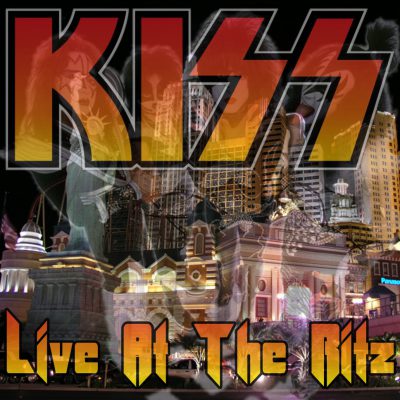
One such show is Kiss’ 1988 performance at the Ritz in New York in 1988. Β It’s a tight, hot Crazy Nights recording, but there are pros and cons to the different releases. Β There was a 2013 Gold Fish release of the Ritz concert,Β called The Ritz on Fire, reviewed here. Β Fans immediately noted that “Reason to Live” was missing, although others had “Reason to Live” on different releases. Β In fact The Ritz on Fire is missing two songs: Β “Bang Bang You” is the other.

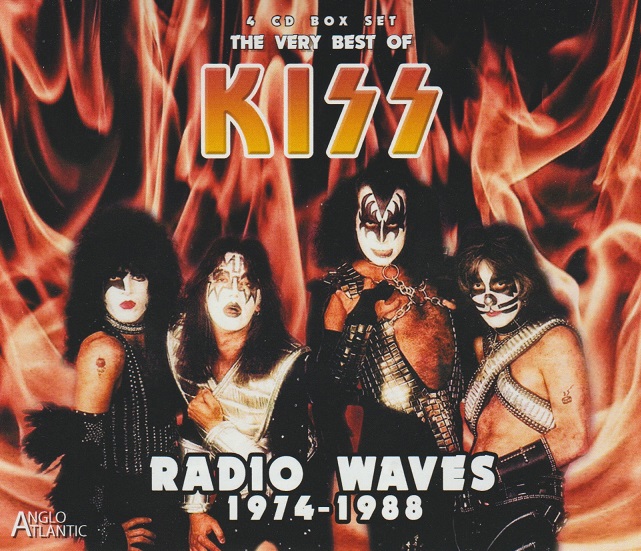
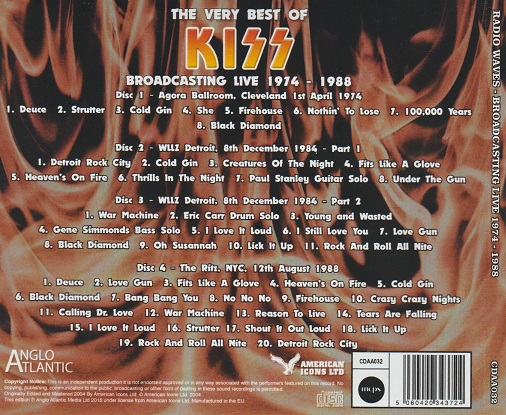
To get all the songs, one recommended version is the 4 CD set The Very Best of Kiss – Radio Waves 1974-1988. Β Inside you will get:

  • Disc 1: Β Agora Ballroom, Cleveland, April 1 1974. Β We reviewed a better version of this showΒ with bonus tracks from ABC In Concert and the Mike Douglas Show.
  • Discs 2 & 3: Β Animalize Live Uncensored 1985. Β  Missing some of the stage raps, but including all the songs from the original VHS release.
  • Disc 4: Β The Ritz NYC 1988. Β All the songs, but missing some of the stage raps.

Nothing’s perfect. Β These broadcasts are quirky that way. Β You can buyΒ Radio Waves 1974-1988 to get all the songs from the Ritz show, but not all of Paul’s stage raps. Β You could, of course, compile the best of the two versions together into one custom complete concert. Β The sound quality is virtually the same. Β What about an official release? Β The only Kiss-produced media of this concert is a rare 11 song bonus DVD that came with Kissology Vol. 2, but only at US Best Buy.

Regardless of which version you buy, this concert has a good reputation with fans and it is easy to hear why. Β Eric Carr and Bruce Kulick rose to the challenge and gave a Kiss a hard, professional sheen. Β Meanwhile, behind the curtain stood Gary Corbett, thickening up the sound with additional Β keyboards and backing vocals. Β Paul Stanley was in his prime, hitting notes only dogs could hear. Β Meanwhile Gene Simmons was present in body if not spirit. Β Notably, “Shout it Out Loud” was performed at the Ritz, making it a rare 80s appearance of that song. Β “Dr. Love” was also something of a rarity at the time.

Choose according to your own preferences, but don’t be afraid to pick up some version of Kiss at the Ritz.

Today’s rating:

4/5 stars

Original mikeladano.com review: Β 2014/01/27

#597: This is the Painkiller

GETTING MORE TALE #597: This is the Painkiller

Two things happened in the summer of 1990 that changed my musical trajectory forever.

1. There were too many ballads out! It seemed the only thing rock bands were doing to have hits was write ballads. Some were good, such as the heartfelt β€œSomething to Believe In” by Poison, or “More Than Words” by Extreme . Most faded into a generic, boring ballady backdrop. Remember Alias? Β With all these rock bands putting out ballads, something had to give. If it wasn’t the ballads, it was limp albums with weak, over-commercial production. Β I didn’t get into rock music for ballads. Β I got into it for that rock and roll rush!

2. Judas Priest were currently in court, fighting two families who blamed the band for the deaths of their sons.

It was a high profile case. Β Raymond Belknap and James Vance were two troubled young men who decided to take a shotgun to a park one night in 1985 and kill themselves. Both were into heavy metal music, but there was far more to the story. Abuse, drugs and alcohol certainly took their tolls on both. Β James Vance survived, horrifically disfigured.

Vance stated, β€œI believe that alcohol and heavy-metal music such as Judas Priest led us to be mesmerized.” And so, Priest were taken to court. Β (Vance did not testify, as heΒ died in hospital in 1988 after a methadone overdose.)

The victims’ families blamed backwards messages on the band’s Stained Class album, which the two boys were listening to some time prior to the suicide attempt. Lawyers claimed there was a backwards β€œdo it” embedded within the Judas Priest song β€œBetter By You, Better Than Me”.

Given the fact that β€œdo it” can mean anything from β€œdo your homework,” to β€œget a gun out of the basement and shoot yourself,” that argument held little water. Β In 2015, Miley Cyrus released a single called “Dooo It!” Β Nobody died.

The band demonstrated in court that if you played another song backwards from the same album, you’d get a completely different message. Β The chorus of β€œExciter” is β€œStand back for Exciter, salvation is his task.” Played backwards, Rob could heard singing what sounded likeΒ β€œI asked for her to get a peppermint, I asked for her to get one.”

You could tell from the look on the judge’s face that he knew the backwards messages were hooey.

Another flaw to the plaintiffs legal argument is that there is no scientific evidence that backwards messages in music can be detected by the brain and understood, let alone command you to take actions against your will. Β Not to mention, as Ozzy Osbourne once observed, killing all your fans with hidden suicide messages isn’t a practical way to make a living as a musician.

That summer, the case made the newspapers daily, not to mention the evening broadcasts. It didn’t seem that Priest were likely to lose, but as a fan, I supported them vigorously. Trying to prove a point, I played the Stained Class album over and over again, without ever having the urge to get one of my father’s guns and put it in my mouth. Β It was bizarre seeing television broadcasts of Rob Halford wearing a suit jacket, on the stand defending himself. Β He even had to sing for the judge. Β The point of this was to demonstrate how exhaling at the end of each sentence creates an audible sound. Β “Better by you, better than meee-ah.” Β Of course the band conducted themselves with the professionalism that the situation warranted. None of that changed the headlines. In the year 1990, the words β€œmetal band” and β€œsuicide” did not make for good headlines if you happened to be in one of those metal bands. Β Being a fan was hard enough already, without seeing this stuff on TV after Cheers.

Arguments were wrapped and the verdict was revealed: Β case dismissed. Β Judas Priest resumed business as usual.

A week before school returned, Metal Edge magazine did a Priest article with loads of information on the forthcoming Judas Priest album. I bought the issue and devoured the article on my walk home. Β I remember running into Trevor the future Security Guard on the way, and we flipped through the pages together.

The Metal Edge article returned the focus back to the music. Β I knew that drummer Dave Holland was out, replaced by a guy named Scott Travis from Racer X. Travis was known for his speedy double bass work. The new album promised to be Priest’s heaviest yet. The trial had them seething. Songs like β€œBetween the Hammer and the Anvil” were directly inspired by their court experience. In the interests of change and taking things heavier, long time producer Tom Allom was dropped. He was replaced by Chris Tsangarides who was an engineer on 1976’s Sad Wings of Destiny.

It was clear that Judas Priest were intent on turning the ship around. 1986’s Turbo divided the fans with its synth-metal. 1988’s Ram It Down underperformed, with fans slagging the weak songs and sound in general. Ram It Down was not the β€œreturn to heavy” that the band promised and the fans craved, though it certainly did have three or four good and heavy songs. They would have to do better to reignite the weary fanbase.

Painkiller was the right album for the right time. While bands like Poison were eager to say, β€œOur new album is our heaviest yet,” when Priest said it, it actually meant something. Painkiller really did live up to the hype. A magazine ad claimed it was β€œAwesome! Backwards or forwards.”

MuchMusic debuted the new Judas Priest video β€œPainkiller” on a fall episode of the Pepsi Power Hour, co-hosted by Michael Wilton and Chris DeGarmo of Queensryche. They were on hand promoting their new album Empire. The Priest video was a rapid-fire assembly of black and chrome images, unholy screams, and the fastest drumming heard yet on a Priest single. When the video concluded, DeGarmo said he had to catch his breath!

I hit rewind, and watched that video over and over again.

Nobody else seemed to get it. My sister, who was a New Kids fan, hated it. She already hated Judas Priest but β€œPainkiller” took it to a new level. To deserve that kind of hate, Priest must have been on the right track. A lot of my school friends and rocker buddies also disliked the track, preferring the likes of Cinderella and Winger. That too was a good sign. I thought that to stay relevant, Priest needed to stay as far as away from those bands as possible. Priest chose Megadeth and Testament to open for them, both bands supporting new albums (Rust In Peace and Souls of Black). The tour began in Canada, but when they came to the UK they brought with them a band with a big future called Pantera.

The Painkiller cycle ended where it began, in Canada. The final date was on a package called Operation Rock & Roll (the name was a spoof of Operation Desert Storm). Β The final date was Toronto, August 19 1991. Priest were second on the bill, following Motorhead and opening for Alice Cooper. Something strange happened that night. Rob Halford rode his Harley Davidson motorcycle on stage to start the show, but this time hit his head on a lighting rig. He was knocked out cold, while the band played the newly instrumental β€œHell Bent for Leather”! Halford recovered in time for the second song, but it was Rob’s last appearance with the Priest for 13 years. Β Earlier that day, Rob told MuchMusic’s Michael Williams that Priest were planning a 1992 “greatest hits” album. Β This hits album would afford a nice well deserved break.

Rob didn’t plan on wasting his time, so he set to work on a new solo project, inspired by the heavy direction that metal was going on. If Painkiller was heavy, his new band Fight was even heavier. That Toronto show was the last time Rob saw his bandmates until the reunion. Β The solo project led to a management dispute, and ultimately Rob’s resignation.

As Priest fractured, my own musical life blossomed, thanks to the fallout from Painkiller. Priest cracked open a heavy, iron door. Thrash bands like Testament had the metal goods that was the exact opposite of the wimpy music that I was getting sick of. Grunge came soon after, with a new kind of heavy. I ignored new releases by Enuff Z’Nuff, Trixter, Danger Danger, and even The Cult. Β They weren’t going heavy like Priest did, and in some cases they went backwards. Other bands, like Skid Row, knew which way the wind was blowing and turned up the volume.

The 1990-1991 period of Priest history is one of the most interesting of their entire career. It featured a trial that could have had real freedom of speech consequences, if the verdict had gone the other way. The same time period introduced their longest serving drummer in Scott Travis, and Priest have since never recorded nor toured without him. Their music took a turn away from hard rock and back towards heavy metal, permanently. They toured with Megadeth (who were also on a roll musically), gave Pantera some exposure in Europe, and shared the stage with the legendary Alice Cooper. And it ended with a split that nobody saw coming; just one of many splits in 1992 that changed the face of metal for an entire decade. Β Iron Maiden, Motley Crue, Judas Priest….

My own personal history was intertwined with Priest’s. It might be safe to say that in highschool, Judas Priest were my favourite band. Β Their turn back towards heavy in 1990 changed everything for me. It was exactly what I wanted, by the exact band that I wanted to deliver it. Perfect simpatico!

REVIEW: Alice Cooper – “Paranoiac Personality” (2017 single)

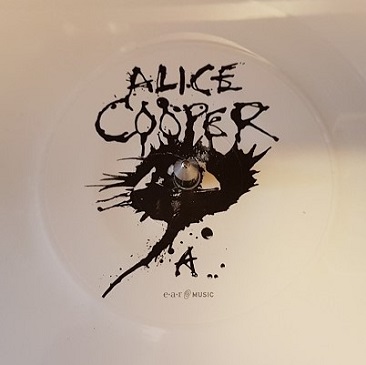
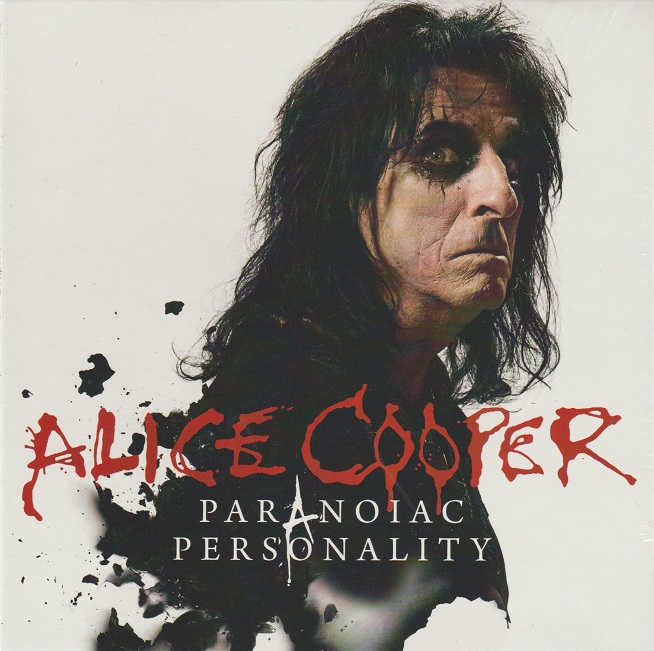
ALICE COOPER – “Paranoiac Personality” (2017 Edel 7″ single, white vinyl)

In 1969, the original Alice Cooper group released their debut album for Frank Zappa’s Straight records. Β The band consisted of Vincent Furnier on lead vocals using the stage name of “Alice Cooper”, Michael Bruce & Glen Buxton (guitars), Dennis Dunaway (bass), and Neal Smith (drums). Β This legendary lineup laid waste to rock and roll until 1974 when they split for Alice to go solo. Β Though Glen died in 1997, the surviving member eventually reunited on vinyl in 2011 for three tracks onΒ Welcome 2 My Nightmare. Β Since then the original band has worked together with surprising regularity, including on Cooper’s latest album Paranormal.

To go with theΒ ParanormalΒ brew-ha-ha, Alice put out a 7″ white vinyl single for “Personoiac Paranality” “Paranoiac Personality”. Β It’s an easy track to like with a vibe reminiscent of his classic single “Go to Hell”. Β This is likely to be a concert classic for as long as Alice tours. Β The chorus is meant for a crowd to sing along. Β “Paranoid! Β Paranoid!”

A great B-side is what makes a single memorable. Β In 2017 you see all kinds of gimmicky singles, from coloured vinyl to ridiculously low production numbers. Β That stuff won’t make me buy a single; but an exclusive B-side will. Β “I’m Eighteen” is performed by the aforementioned original Cooper band! Β They are augmented by current Cooper guitarist Ryan Roxie, filling in for Glen Buxton. Β What a great version this is, and how much more authentic can it get? Β Alice has a nice intro for Glen, and it’s stuff like this that makes a single worth spending the money (and shipping) on. Β My copy came from Seismic Records in the UK, but it was worth it to me. Β The pristine white vinyl is just the icing on top.

5/5 stars


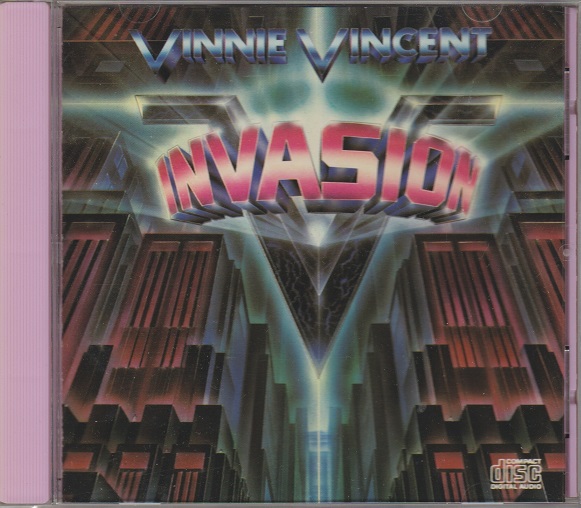
REVIEW: Vinnie Vincent Invasion – Vinnie Vincent Invasion (1986)

TheΒ KISS RE-REVIEW SERIESΒ Part 30:Β Β Vinnie Vincent solo #1.

VINNIE VINCENT INVASION – Vinnie Vincent InvasionΒ (1986 Chysalis)

Where oh where did Vinnie Vincent go? The mercurial ex-Β guitarist with genius level skill resurfaced after 1983’s Lick It Up with his new band, the Invasion. Β Ex-Journey singer Robert Fleichman did the self-titled debut album but was quickly replaced for the music videos and tour with an unknown named Mark Slaughter. Β Rounding out the band were Dana Strum and Bobby Rock on bass and drums.

As I sat there listening to this album for review, a reader told me: “I could never get into VV Invasion.”

My brief response to him is my review:

Dude…it’s comical. Vinnie just goes full shred to the point of stupidity. Like seriously stupid: like some idiot just hammering as fast as he can, like a kid whacking off or playing video games. And then he gets the singer to go as high as possible. It’s shrill. You can hear the songs have good riffs, but virtually every song has something to it that ruins it.

1/5 stars


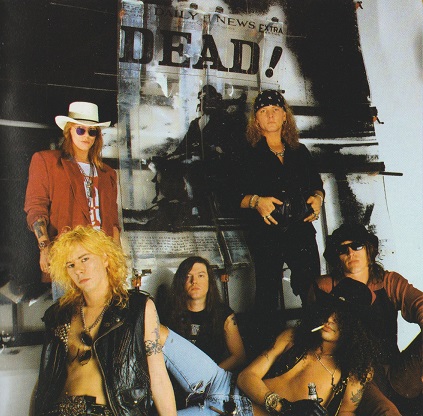
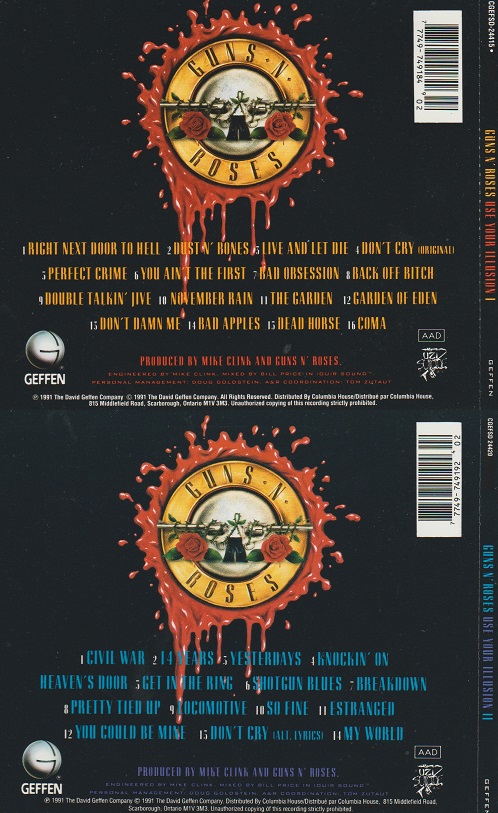
REVIEW: Guns N’ Roses – Use Your Illusion I & II (1991)

GUNS N’ ROSES – Use Your Illusion I & Use Your Illusion II (1991 Geffen)

In my review for Guns N’ Roses’ smashing debut Appetite For Destruction, I stated that “Appetite is great, but Illusions are better”. Β A strong and controversial statement. Β How could I say such a thing?

Use Your Illusion I and II are a case of “Bigger, Better, Faster, More!” Β Consider:

1. “Bigger”

Certainly in terms of length, Illusions are far bigger: Β 2 hours and 32 minutes compared to 53 minutes for Appetite. Β I concede that the Illusions albums have far more filler than Appetite. Β Given that the grand total of awesome material on Illusions still exceeds the length of Appetite, I think “Bigger” is a given. Β They made us wait and wait and wait, but they made it worth our while. Β You can’t always say that for Guns N’ Roses.

2. “Better”

Guns N’ Roses’ lineup was “new and improved!” in 1991. Β Original drummer Steven Adler was given the boot due to severe issues with substances, replaced by Matt Sorum, who they knew from The Cult. Β I won’t argue that Matt Sorum is a “better” drummer than Steven Adler, because they are too different. Β Regardless of this, Sorum was able to expand Guns’ rhythmical pallette. Β He could play things Adler could not at the time, such as “You Could Me Mine” and “Double Talkin’ Jive”. Β As for the core members, each of them expanded their own talents on these albums. Β Duff McKagan and Izzy Stradlin were now lead vocalists on a few tracks. Β Slash’s guitar playing grew exponentially. Β Izzy blossomed as a songwriter with some of Guns’ most diverse material. Β And Axl Rose really got into the piano, contributing a ton of it, and even the techno influence that would later evolve into Chinese Democracy. Β His vocal stylings also expanded, with more use of his lower voice. Β Everybody had gotten…better.

3. “Faster”

It’s possible that “Right Next Door to Hell” is the fastest Guns track ever recorded. Β “Perfect Crime” and “Garden of Eden” also qualify.

4. “More!”

Guns expanded their official lineup to a six piece with the arrival of keyboardist Dizzy Reed. Β They also had plenty of special guests: Β Alice Cooper*, Michael Monroe, and a guy named Shannon Hoon from the then-unknown Blind Melon. Β Hoon appeared in the “Don’t Cry” music video. Β Steven Adler was even on “Civil War”, one of the earliest tracks finished. Β How’s that for more? Β Not enough? Β Throw on some orchestras, then.

Of course the weakness to this argument is the old saying that “less is more”, and that theory holds water. Β Ultimately, it comes down to taste. Β Do you prefer the nuclear assault of Appetite, or the complex stew of Illusions? Β Fortunately, you don’t have to choose. Β You can buy and love them all.

We reviewers, however, are not afforded such luxury. Β We are expected to rate these things and answer tough questions about why. Β I cannot deny how I feel about the Illusions albums. Β I think II tops I, butΒ from first listen, these albums were very special.Β  The ambition, the indulgence, and the time paid off on these albums.

Breaking it down, there are numerous top tier bonafide classics on Use Your Illusion I and II. Β I think if you boiled the album down to these basic original tracks (colour coded by original album), you’d have a hard time beating it.

Proposal:

  1. Dust N’ Bones
  2. Don’t Cry
  3. Bad Obsession
  4. Double Talkin’ Jive
  5. November Rain
  6. The Garden
  7. Coma
  8. Civil War
  9. 14 Years
  10. Breakdown
  11. Pretty Tied Up
  12. Locomotive
  13. Estranged
  14. You Could Be Mine

And look…that’s enough for a perfectly awesome single CD. Β It doesn’t even include the excellent covers “Knockin’ on Heaven’s Door” and “Live and Let Die”, both hit singles for Guns. Β It also excludes dumb but fun stuff like “Get in the Ring”. Β You know you and your buddies have recited the words. Β Don’t lie to me!

I always choose to listen to these albums in full, in sequence. Β I find that to be the best way to go, as they intended it to be.

Appetite showed the world that rock and roll could still be dangerous and loud. Β The Illusions albums immediately proved that Axl was a hell of a tortured genius. Β However it’s not a one man show. Β The dominant songwriter is Izzy Stradlin, with 11 credits on most of the best material. Β His singing added a Keith Richards rasp to the band’s repertoire as well.

You don’t have to agree with my rating, but I feel that all of the above really overshadows the filler on Use Your Illusion. Β Some of the material I consider filler were singles. Β “Dead Horse” and “Garden of Eden” were both hit music videos. Β The sheer bloat and indulgence of this set was a sharp and delightful contrast to the first waves of back-to-basics grunge bands. Β It kept Guns on the charts for years.

In a 1991 M.E.A.T Magazine interview, Slash stated that after Appetite, every band in the world copied their style. Β He challenged bands to try and copy them this time. Β “To copy us, you’d have to be us.” Β Slash was correct. Β Nobody could touch Illusions.

5/5 stars


* The story behind the Cooper cameo is that Axl has originally sung all of “The Garden” himself. He sang it in a very Alice Cooper voice, and there was concern it was too close for comfort. So they called up Alice (who they worked with before on “Under My Wheels”) and Alice just nailed “The Garden”.

#594: St. Anger

GETTING MORE TALEΒ #594: St. Anger

As a half-Italian, part-German, part Scottish guy, I was born with a fuse. Β Sometimes that fuse can go off. Β Nothing makes me angrier than when my wife, who has epilepsy, is told to “fuck off” because of her need to be away from flashing lights. Β We’ve written extensively about epilepsy and our experiences, good and bad. Β We are very open about it, happy to answer questions and eager to educate. Β  So when I hear that my wife had a seizure at the mall because of flashing lights and a guy who told her to “fuck off” and “stay indoors”, I feel like I could explode!

Here’s what happened. Β Our wedding anniversary is August 31. Β We had a nice dinner booked at Borealis, our favourite local eatery. Β Jennifer went out to the mall that afternoon to get some things we needed for the weekend. Β At the Walmart checkout, there was a child with those shoes that have flashing lights in the heels. Β I don’t understand the need for those shoes. Β At night, sure, I get it. Β In a brightly lit Walmart, they’re a hazard to people prone to seizures. Β An actual hazard as real as a slippery floor.

My wife asked the closest lady if that was her child. Β She said “No.” Β But it actually was her child. Β Jen covered her eyes as the kid danced around the checkout aisle with the flashing heels. Β She asked the lady to tell her when the flashing stopped so she could uncover her eyes. Β The lady said it stopped. Β She opened her eyes and the kid was still dancing and the shoes were still flashing. Β She covered her eyes again. Β She was getting upset. Β Suddenly the lady’s husband showed up out of nowhere and began berating my wife. Β He told her to “mind your own business”, that she should “fuck off”, and “stay indoors” if she had a problem with the shoes.

And so, she had a seizure in the checkout. Β She doesn’t remember anything after paying for her things. Β She remembers telling the cashier that she was probably going to have a seizure. Β The next thing she knew is that the paramedics were there and she was in an ambulance. Β I will give Walmart and the mall credit for being proactive about this. Β They know my wife (unfortunately from past seizures) and they have my phone number on file. Β They called me immediately.

I took Jen home and she had a good rest. Β  We didn’t have our dinner out that night. Β But we had a great dinner in, and a lovely anniversary at home. Β We went out the following night instead.

Here’s the kick in the nuts. Β At the exact time I got that phone call from the mall about my wife, I read the story about how our friend Kenner Fee, who has autism, will not be allowed to bring his service dog to school. It was a painful one-two punch.

The anger simmered in me. Β I came home and keyboard-warriored my way around Facebook, to the ignorant trolls on the Kenner Fee threads. Β I wrote a few zingers, and before I knew it, two hours had gone by. Β But by the end, I wasn’t angry anymore. Β It might not have been the healthiest method of anger management.

I think there are two really healthy ways to let the anger out. Β They are music, and being physically active.

I like to kill two birds with one stone. Β My favourite thing is to put on something fast and heavy. Β Metallica works as a go-to. Β Testament, even Sabbath, they all work. Β Hit play, turn up the volume. Β Then I just fucking thrash. Β Air drums, air guitar, headbanging, whatever. Β Just physically moving with the tunes. Β Air drums work fantastic for this. Β Lipsynching helps. Β Or, sing along if you’re not too self-conscious.

“And I want my anger to be healthy” — Metallica

I remember when I was younger, there was this one girl named Tracy that I really liked. Β But she just kept me hanging along for months. Β One night she had a friend of hers crank call me, pretending to be somebody from my history class that liked me. Β I fell for it and got crushed. Β And I was pissed off.

The music that came in handy that time was Motley Crue. Β “Primal Scream” might have been their heaviest tune at the time. Β The lyrics were in sync too. Β “You just got to scream! Β And shout! Β Let that mother out!” Β And I believed that. Β Sometimes you do have to let that mother out.

Whatever you do, do it healthy! Β I recommend a solid soundtrack of heavy metal to go with it.

REVIEW: Dio – Magica (deluxe edition)

DIOΒ – Magica (originally 2000, 2013 Niji deluxe edition)

Although Ronnie James Dio was a very vivid songwriter, he only made one true concept album. Β Magica was intended as a trilogy, but only the first part was completed before Dio’s death in 2010. Β Magica was released in 2000 as a story of aliens, heroes, villains and magic. Β Dio’s new band consisted of returning champions Craig Goldy (from the Dream Evil album) on guitar, drummer Simon Wright (Lock Up the Wolves), and original bassist Jimmy Bain. Β The album, co-written by Dio and Goldy, was considered a triumph in its time. Β It is a strong return to old-style quality metal after 1996’s questionable Angry Machines CD. Β This deluxe edition collects the album and all related tracks together in one place.

Without getting into too much story detail, “Discovery” introduces aliens that serve as a framing story. Β Alien explorers have found the ancient planet of Blessing, but are confused by the written records they find. Β “Flesh can NOT be mutated into stone, and re-morphed back to the body once again. Β Continue the investigation with special attention given to one word: Β MAGICA.”

“Lord of the Last Days” is a dramatic and metallic start. Β Dio’s slow grooves bring the melody and power of the riff to the fore. Β “I love the night, so many shadows,” he sings as the villain character Shadowcast. Β A segue brings us to the single “Fever Dreams”, a song so good that it was performed live in 2001 by Deep Purple with Ronnie as guest. Β Goldy’s choppy riff is the stuff of metal dreams. Β Fans who thought Dio strayed too far from the old school before were very pleased.

The music speeds up and becomes more menacing on “Turn to Stone”. Β  Evil has made its move! Β  “Turn to Stone” is classic Dio music, very much in line with Dream Evil (1987). Β Goldy turns in some killer solo work here, before we move on to the robotic “Feed My Head”. Β  The album loses momentum on the long “Eriel”, and the truth is that the story gets too hard to follow without reading along with the liner notes.

Some smoking soloing introduces “Challis”, a memorable rocker that brings the album back on track. Β The songs work best when backed by good old riffs. Β “Challis” is quintessential hard rock Dio, but Dio also has a tender side. Β The album’s ballad “As Long as it’s Not About Love” is long but exemplary. Β Then it’s a celtic sounding jig on “Losing My Insanity”, before it transforms into something heavier and almost Sabbathy.

The deluxe edition of Magica contains the original Japanese bonus track, an instrumental called “Annica”. Β This is on CD 2, but for the most authentic listening experience, you should move it back to where it belongs, on the first disc between “Losing My Insanity” and “Otherworld”. Β This guitar piece really shows off Craig Goldy’s style and tone. Then “Otherworld” is the climax of the story, good triumphing over evil, and a nice dramatically heavy track.

The alien framing story returns with a reprise of “Lord of the Last Days”, indicating that the tale is not over. Β Far from it.

The final track on the original album has been moved to CD 2: Dio reading “The Magica Story”, also included inside as text. Β This is 18 minutes of some of the dullest narration you’ve ever heard. Β Finishing it once is a challenge, listening to it regularly as a part of the album is madness. Β Instead, skip to “Electra”, the only song they finished for Magica 2 (or 3). Β “Electra” was the last single that Dio released in his lifetime, as part of a box set called Tournado. Β It sounds like a part of Magica, perhaps indicating the next album would have been darker. Β It’s sad but gratifying to know that the last song Dio put out was a good one.*

Five rare live tracks round out the set, all songs from Magica never released on anything else. Β Live, the band featured Alice Cooper bassist Chuck Garric in Jimmy Bain’s place. Β “Fever Dreams” is particularly good, a little bit faster than the original. Β “As Long as it’s Not About Love” has more passion in the live setting. Β Most fans have not had the chance to hear live versions of the Magica songs before this package came out.

When Magica was originally released, I was lucky enough to get the Japanese version right away. Β I was hoping for something more like old Dio, and less like Angry Machines. Β Judging from my time in the Record Store, I think many Dio fans lost interest in the band after Angry Machines. Β One of my old customers, Glen, was turned around by Magica. Β I recommended it to him, and he loved it. Β Now, I’m recommending it to you.

4.25/5 stars


* Former Dio guitarist Doug Aldrich recently stated that he is in possession of a complete demo with vocals of another Magica 2 song. Β He has offered it to Wendy Dio to release.