remixes

REVIEW: Fight – Mutations (1994)

Part 2 of a miniseries on Rob Halford’s solo career!  If you missed Part 1, War of Words, then click here.

FIGHT – Mutations (1994 Epic collector’s edition, 2008 Metal God Entertainment reissue)

Released in late 1994, Mutations (subtitled “collector’s edition“, which really means nothing) was a live/remix CD to follow War of Words.  I seem to remember this being marketed as some sort of “extended EP” or some kind of not-album, which again is kind of meaningless.  The original release was 45 minutes, a full length album by most measures.

Live Fight!  Shame it was only four songs, as they absolutely kick ass.  Rob Halford was still in peak voice in 1994, and every high scream is present on opener “Into the Pit”.  Fight as a live band were less stiff than on the first album.  They were no less precise, and each song is just as ferocious as its album counterpart.  On “Nailed to the Gun”, bassist Jay Jay does the low death metal growls while Rob howls like a mad dog.

I was surprised that Rob put “Freewheel Burning” on the album, as he seemed to be trying to distance himself from his past at this time.  Its the only Priest song and I don’t think they played many Priest songs on the tour at all (but I know they did cover Sabbath’s “Sweet Leaf”).  Surprisingly it’s here that Rob’s voice falters, struggling with the demanding song.  He redeems himself on the bluesy single “Little Crazy”.

I enjoy hearing live recordings from bands with two distinct lead guitar players trading off.  Russ Parrish and Brian Tilse were both very different stylistically, and the contrast is awesome.    The pace is aggressive, and these guys keep chugging on.  (Note:  Russ Parrish is not credited on this album.  He had left the band by the time of release, but there is no question that he did play on all these tracks.  Why he was not credited is a mystery, but he does appear on the remastered version cover art.)

FIGHT_0008I believe I am well on record as not being a fan of remixes in general.  There are exceptions but so many remixes add techno-crapola that often serves to reduce the songs to repetitive mockeries of themselves.  On a track like “War of Words” , they remove Scott Travis’ drums from sections, and replace him electronic beats.  At the time I thought, “Why would you want to replace Scott Travis with a drum machine?”  Today, it still bugs me.  But hey, those who doubted the sincerity of Rob’s industrial work with Trent Reznor in Two should remember these remixes!

FIGHT_0006I’ll be honest, I struggle getting through the remix side in one sitting.  There are some cool moments, such as the chance to hear isolated instruments and solos.  “Vicious” is an example of a remix that works for me.  It’s weird, it has an opera singer and dance beats added, but it’s pretty heavy and cool.   But in general, the Fight songs were simple and repetitive to begin with.  Making them simpler and more repetitive didn’t work for me.  Sure, I own some Nine Inch Nails albums, but this sound isn’t where my heart lies.

Goodie-goodie-gosh, Mutations was reissued as part of the Into the Pit box set, with two bonus tracks.  And these bonus tracks are (you guessed it) remixes.   More versions of “Kill It” and “War of Words”.  At least the “Culture of Corruption Mix” of “War of Words” is about half as long as the regular “Bloody Tongue Mix”.

Incidentally, why do remixes always have cliche sounding names?  “Bloody Tongue Mix”!  Raahhrr!  Why not…”Toothpaste Mix”.  Something original.  I think remixers should strive to be more original in the naming of their work.  Something nobody’s used yet.  “I’m Rob Halford and I Endorsed This Mix Mix”.

2/5 stars

REVIEW: Fight – War of Words (1993)

Click here to check out the LeBrain Facebook page!

Part 1 of a miniseries on Rob Halford’s solo career!

FIGHT_0002

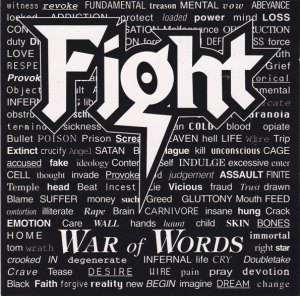
FIGHT – War of Words (1993 Sony)

I was devastated when Rob Halford left Priest.  I was so heavily invested emotionally in the excellent Painkiller album, I couldn’t believe it was over!  Last I had heard, the band were going to be working on two new songs for a greatest hits album (Metal Works) and then Rob would take a break to do a solo album.  Instead, the band split completely!  Halford and drummer extraordinaire Scott Travis formed Fight with guitarists Russ Parish and Brian Tilse, and the bass player from hell, Jay Jay.   (Today, Parish goes by the name “Satchel” when he plays with Steel Panther!)  Regarding Jay Jay, Halford says that he did a number of Rob’s own tattoos.  Rob figured if he could play bass as well he he tattooed, he was in.  Jay Jay also does the grunt-metal backing vocals.

The resulting album, War of Words, is a Pantera-esque thrash-fest, one of the heaviest things Rob had ever done (until Halford’s Crucible album), undeniable brutal, scream-laden, and punishing from start to finish.  Halford had cleverly assembled two shredding guitar players with differing styles too:  Tilse specialized in the noisy speedy solos, while Parrish played the more melodic and traditional speedy solos!  War of Words is solo nirvana for fans of Rob and Priest.  And Rob wrote every single song by himself.

The twin openers, “Into the Pit” and “Nailed to the Gun”, are two of a kind:  they are rip-yer-head-off thrashers with Rob’s patented glass-breaking screams.  The song structures on War of Words are simpler than what we heard with Priest, no doubt since Rob composed the songs by himself.  This simplicity serves to make the album feel even heavier and more relentless.

The lyrics, just as simple and aggressive.  “Into the Pit” doesn’t feature much in the way of poetry:

Conspiring, for sation
Malfeasance, on high
Obstruction, of duty
Disorder, will rise

Rob takes the pace back a bit on the third track, “Life in Black” which I don’t think you can fairly call a ballad, to me it’s more Dio-era Sabbath with a very vintage-Dio sounding solo.  (Rob had just helped out Sabbath live after Dio left, singing lead for two shows while opening for Ozzy Osbourne.)  Meanwhile “Immortal Sin” bears a slow groove with a melodic chorus, downtuned but a bright spot in the proceedings.

The title track opens with the American First Amendment (Rob was living in Phoenix).  It’s another aural assault with Rob keeping his vocals in the upper register.  Travis’ incredible drumming punctuates every venomous word.  Considering that less than three years prior, Rob (with Priest) was in court defending his band during the infamous “suicide trial”, the words are apt.

Dream Deceivers, directed by David Van Taylor, the excellent documentary on the Judas Priest trial

It’s back to dark haunting territory next:  “Laid to Rest” ended the first side of the album.  I find this one to contain one of Rob’s best vocal performances of the album.  It’s reminiscent of “A Touch of Evil” by Priest, but downtuned and slightly exotic.

Side Two’s opener, “For All Eternity” is really the final reprieve.  It is most definitely a power ballad in vintage Priest vibe, but again with the modern downtuned guitars.  A song like this really proved Rob’s songwriting chops.  He’s capable of writing emotive, catchy powerful music completely on his own, and the song is an achievement.  The bridge around 2:25 is just awesomeness, but Tilse’s guitar solo completes the picture.  As if that wasn’t enough, Rob returns to full on scream mode for the end.

“Little Crazy” was a critically acclaimed heavy metal blues, and the second single/video.  I’m struggling to describe it beyond “heavy metal blues”, but this song is definitely a highlight.  Rob puts everything he has into the slinky lead vocal, while band fuse the blues feel with heavy metal’s precision.  I recall reviews of the time saying, “If Rob wanted to drop metal and go full-on blues, he could.”  Now that would be interesting.

The rest of the album is no-holds-barred.  The triple threat of “Contortion”, “Kill It”, and “Vicious” is almost too much.  Each song strips everything down to the basics:  simple riffs, violent words, relentless drums, without much in terms of melody.  This is the most difficult part of the album to penetrate.  In time the three songs grow.  “Contortion” protests what we are doing to the Earth with angry frustration.  “Kill It” is about TV preachers (whom I’m sure had their opinions on Priest during the trial).  “Vicious” was always my favourite of the trio:

You cheating, lying, mother-fucking son of a bitch..

Vicious, vicious,
Fucker, fucker!

I was going through an angry phase at the time!

Rob saved the best track for last.  “Reality: A New Beginning” is a weighty epic, a perfect closer, slightly exotic and successfully combining Fight’s heavy side with Rob’s ability to write great melodies.  This is simply an incredible song, a jewel in Halford’s crown, and a song which definitely deserves another look.  The lyrics seem to be autobiographical:

This time, when I’m leaving,
Who cares where I’ll go?

There was a hidden CD bonus track (not on cassette) after a five minute silence, a jokey song called “Jesus Saves”.  Rob’s voice is electronically manipulated to sound…well, not sure what he’s supposed to sound like.  An angry elf, I guess.

4.75/5 stars

There are some supplementary releases available:

1. This one is on my wishlist, I don’t own a physical copy:  In 1994 Fight released a Christmas CD single called “Christmas Ride” with a message from Rob!  They later reissued this as a free download from Rob’s site, but that is no longer around.

2. The live/remix EP, Mutations (next up in this series of reviews).

3. In 2007, a demo album called K5: The War of Words Demos was released.  This featured demo versions of most of the album, plus five more.  These include four new songs, and “Psycho Suicide” which was later remade for the second Fight album, A Small Deadly Space.   The demos reveal that a much more conventional-sounding metal album was initially planned.  (“The Beast Denies” is a very different version of “Reality: A New Beginning”.)

4. The 2008 Fight box set Into the Pit contains remixed versions of War of Words (again without “Jesus Saves”) and A Small Deadly Space.  But the cool thing it contains is a DVD, Fight Live In Phoenix.  The band rips through the entire album, in sequence (no “Jesus Saves”!) and then Rob’s solo track, “Light Comes Out of Black” (from the Buffy the Vampire Slayer movie soundtrack).

5. Buffy the Vampire Slayer original motion picture soundtrack.  This is the only place you can get the studio version of “Light Comes Out of Black”, featuring his backing band…Pantera.  All of Pantera.

I like “Light Comes Out of Black”, but it’s a lot easier to swallow than Fight is on first listen.  I remember a M.E.A.T Magazine interview with Glenn Tipton and KK Downing, where they trashed it.  “If it were on Painkiller, it would be one of the weaker songs, if not the weakest,” said KK.

KK might have been right about that to a certain extent, but only because Painkiller consists of 10 awesome songs!

REVIEW: Whitesnake – Good to Be Bad (2 CD & Japanese versions)

Here’s my second review from the The Toronto Musical Collectibles Record & CD Sale! It was Japanese import Heaven!

For the last installment of this series, click here.

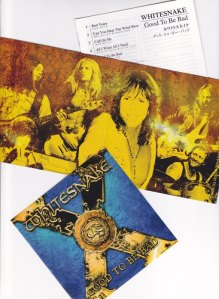
WHITESNAKE  – Good to Be Bad (2008 Warner/SPV)

Whitesnake disbanded in 1990.  Coverdale did his album with Jimmy Page, but that didn’t prove to last either.  Although they’d started writing for a second album, the affair ended and David Coverdale assembled a new Whitesnake for a Greatest Hits tour in 1994.  This reformation eventually led to an album in 1997 called Restless Heart (billed as “David Coverdale and Whitesnake”.  This R&B flavoured album, a personal favourite, did not resonate with some fans of 80’s ‘Snake.

After another hiatus, and a solo album (2000’s Into the Light), David once again formed a new group of ‘Snakes, a mixture of old and new members.  After several years of touring (and lineup changes), the long awaited new Whitesnake album, Good to Be Bad, hit the shelves in 2008.  Former Dio guitarist Doug Aldrich and Winger’s Reb Beach had been a formidable guitar duo since 2002.

GOOD TO BE BAD_0003

Similarly to his partnership with Adrian Vandenberg, David has retained his writing style of co-writing with just one co-writer; in this case, Aldrich. It seems to be evident that the guys have gone for a John Sykes guitar sound and style.  You can certainly hear a lot of trademark sounds and tricks that Sykes used to do, that gave the 1987 album such a cool sound.  This isn’t to say that they don’t play plenty of their own style too, but the retro stuff is frequent.

So similar is the direction of this album to 1987, that you can play “name that tune” with all the new songs:
“Can You Hear The Wind Blow” for example directly references moments on 1987, right down to those flares that Sykes used to do.  “All I Want, All I Need” equals “Is This Love” Part Deux.  Basically, every song on Good To Be Bad is a mash-up of songs from Coverdale Page1987 and Slip Of The Tongue, and you can hear the references quite distinctly. “A Fool in Love” is “Crying in the Rain”.  “Lay Down Your Love” is “Shake My Tree”, without Jimmy Page.  Throw in a little “Kashmir” during “‘Til The End Of Time” (which seems to be based off “Till The Day I Die” from Come An’ Get It) too.

Having said that, despite the lack of originality, Good To Be Bad is still a very enjoyable listen, and a very welcome return. A world without David Coverdale’s voice is like a world without crème brûlée.  That voice is in fine form, perhaps even stronger than it was on 1997’s Restless Heart. The album has a lot more life to it than Restless Heart, although it does lack that album’s subtlety and R&B moments. The band play great, kicking it on every tune, even the ballads. The melodies are strong and memorable.  It’s just…too contrived.

The bonus live disc is the the Canadian special edition is highlights from Live: In The Shadow Of The Blues. No big deal.  It’s nice to hear Whitesnake playing “Burn/Stormbringer” from David’s Deep Purple days, and cool to hear the old 70’s classics.

The real cool version to have is the Japanese release with two bonus tracks.  And a sticker!  Can’t forget the sticker.  The bonus tracks are both remixes (a “Doug solo” version of “All For Love”, and a stripped down version of the lovely “Summer Rain”).  For $20, I wasn’t complaining.

3.5/5 stars

REVIEW: Psycho Circus – Scarred (1993)

This was one of the first, if not the first, discs I bought with my staff discount at the record store!

SCARRED

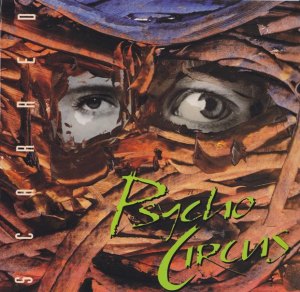
PSYCHO CIRCUS – Scarred (Anthem 1993)

20 years ago, Psycho Circus were one of the bands hyped as the “next big thing” out of Canada. They originated in Mississauga, Ontario, just west of Toronto.  They signed with SRO management (Rush, Van Halen, King’s X, Extreme) and producer Terry Brown (also Rush) and released a trendy but still unique goth-rap-funk-metal album called Scarred.  They also released a music video for the excellent “Pulsate”.

These guys were hanging out with old dudes way before Our Lady Peace.

The problem with Psycho Circus is their split personality.  On one hand (roughly half the album) they inhabit this cool, dark land I call Diet Faith No More.  Singer Vince Franchi has the lungs and range to emulate Patton’s style on The Real Thing.  Their cool use of keyboards also reminds me of that band, but without the dementia.  On the other hand, there’s a goofy rap-funk side, which does not appeal to me in the least.  I think funk metal got stale very quickly, and the juvenile lyrics render the rapping limp.  “Acid Monkey Junk”, a song about the testing of cosmetics on animals, is painful at time.  “Monkeys in the ocean and fishes in the trees?”

A M.E.A.T Magazine interview by Karen Bliss, from 1993, reveals that the band had already dropped even more irritating material from their live set.  They name a discarded song called “Picky Purple People” as being particularly notable for its silliness.  Glad I didn’t have to hear that one.


I prefer the Diet Faith No More side of the band: hard, melodic and dark songs like “Thru the Backbone” (which also features rapping in a non-annoying way).  “Pulsate” is easily the best song on the album, demonstrating Franchi’s impressive vocal range and power.  I’m also fond of the angry “I Know”, the haunting “Leave Me Alone”, and the closer “Goodbye”.  The rest of the album is unfortunately skip-worthy and occasionally irritating to me.

There was also a CD single made for “I Know” featuring an exclusive “Psylicone Mix”.  Although I don’t enjoy the remix as much as the album version, it’s notable for being remixed by Brown and the band, not some outsider.  I happened upon this single within my first year at the record store, and it surely must be one of the rarest discs I have.

For half a good album:

2.5/5 stars

M.E.A.T Magazine

REVIEW: Ratt – Ratt (EP)

Here’s the first review from the The Toronto Musical Collectibles Record & CD Sale! I promised I’d show you more of the stuff I scored. Here’s one!
RATT

RATT – Ratt (1984 remixed EP, Time Coast)

My understanding is that this EP, much like Twisted Sister’s Under the Blade, was remixed and re-released.  It is the remixed version that I got in Mississauga at the Toronto Musical Collectibles Record Show.  I’ve wanted this EP for a long time, but for some reason it’s only now that I finally picked it up.  I was pleased to find it an enjoyable listen, easily on a par with Out of the Cellar, possibly Ratt’s best album.

Europe got 7 tracks on their version of the original mix (wishlist!), but this remixed version only has six.  Missing is “You’re In Trouble” which in re-recorded version was also on Out of the Cellar.  6 songs is a good length, too much Ratt can sound like razorblades coming at your ears, some times!  This self-titled debut keeps things brief, each of its songs more or less delivering the goods.

RATT LABELThe opener “Sweet Cheater” and “U Got It” are the faster side of Ratt.  I love Bobby “Da Blotz” Blotzer’s simple but gleeful drum intro.  (Can’t believe this guy was in Tateryche.)  Both songs have decent riffs, once again keeping things simple.  Pearcy’s trademark vocal snark is in fine form.  Ratt are not a great rock n’ roll band, but they certainly satisfy my cravings when I need some spandex-wrapped non-wimpy LA hard rock.  No ballads.  They had their own sound, largely due to Pearcy’s one-of-a-kind voice.

The closest thing to a ballad would be “Back For More”, which is to say, it has some acoustic guitars before Pearcy yelps, “You turn him away, you tell him you’re mine, You make him believe you’re but one of a kind.”  Meaningless but cocky.  Which maybe sums up the whole Ratt experience.  This is an early version of the hit song from Out of the Cellar, a bit longer, needing some of the fat trimmed.

“Walkin’ the Dog” is a Rufus Thomas cover via Aerosmith.  Aerosmith were in no danger of being dethroned by Ratt’s version, but it’s fun.  It suits their sound, it’s heavy, they throw their own attitude into it, and I’m sure there were youngsters of the 1980’s who assumed it was their own original tune.  The guitar solo is great.

The best song is the single “You Think You’re Tough”.  If Ratt has two sides (fast, and mid-tempo) then this is the mid-tempo side.  The riff is one of their best, the chorus and bridges are great, and the video had both Ozzy and Motley Crue in it.  Cool.

That’s Tawny Kitaen on the cover.  Pre-Coverdale.  She was dating Robbin Crosby at the time!

4/5 stars

Side A:

  1. “Sweet Cheater”
  2. “You Think You’re Tough”
  3. “U Got It”

Side B:

  1. “Tell the World”
  2. “Back for More”
  3. “Walkin’ the Dog”

REVIEW: Marillion – Radiation 2013

RADIATION 2013 FRONT

MARILLION – Radiation 2013 (Madfish)

Radiation (stylized as Radiat10n, Marillion’s 10th studio album) was another controversial Marillion album. Much like This Strange Engine and marillion.com, Radiation did not have that universal fan appeal that magical albums like Brave seemed to have.  It confused some of the staunchest of Steve Hogarth followers. It is unlike any previous album, but still rooted in the progressive experimentation that Marillion are known for.  Just had that modern twist to it…just enough weird stuff with samples going on to turn off the fans who felt like they were just hanging along for the ride after This Strange Engine.

I remember Tom saying to me, “This Strange Engine…was that the one that sounds like Hootie and the Blowfish?”

Perhaps in reaction to that, Radiation had a heavier, noise-saturated mix.  The band always said it didn’t come out the way they initially heard it, and always had hopes to remix it one day.  Now 15 years after its release, Radiation 2013 is a revisit to the original album with that fresh remix the band had always talked about.  It is packed in a handsome Madfish box, all the original artwork contained within, housed within a brand new cover by the same guy who did the original.

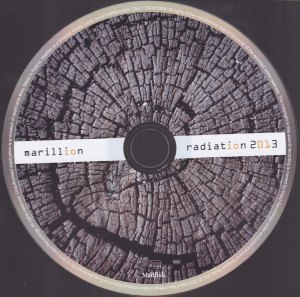
RADIATION CD

The original album itself has always appealed to me.  I tend to like the underdogs.  Born Again, after all, is my favourite Black Sabbath record.  My favourite Motorhead is Another Perfect Day….

Let’s start by talking about the original album.

Opening with a cacophony of orchestra noise, a campy distorted melody follows. Hogarth is warning us of global warming, a topic he visited 9 years earlier on “Seasons End”. “Under The Sun” follows this intro, with lyrics such as “It used to rain, dreary and grey, most every day but not anymore!” Looking at the bright side of global warming from the British point of view! A haunting ghostlike keyboard melody underscores this aggressive yet sparse tune.

This is followed by the pounding of “The Answering Machine”, a classic that is often performed unplugged these days.  The original album version is completely different, and I hear so much joy in Ian Mosely’s drums to just be sheerly having at it.

“Three Minute Boy” is supposed to be about Liam Gallagher.  It is another great song, and this one in a slower tempo.  It also has a haunting quality, and Steve Hogarth sings his ass off.

The very quiet “Now She’ll Never Know” is next. It’s a little simpler than the earlier tracks, partly because bassist Pete Trewavas is on guitar this time. Hogarth sings like a spectre of himself, fragile and weak, hiding.  It’s an awesome performance.  Then, sampled strings introduce the single “These Chains”, a late-Beatles-y ballad with a dramatic chorus.

The next track is the very Floydian “Born To Run”, regarding the “people of the north”. Never has Steve Rothery sounded so David Gilmour. Yet another classic guitar solo to add to his list of many, a showcase piece. “Born To Run” is a slow track, mournful yet also hopeful.   Ian Mosely used the subtlety he is known for and classes the song up several knotches.

Suddenly, the gothic keyboard crashes of “Cathedral Walls” assail the unguarded listener. Hogarth, his voice reduced to an echo, whimpers the lyrics. It sounds as if pain and anguish are wracking his body. The choruses are dense and powerful. This is by far the heaviest moment on the album, yet unexpectedly punctuated by quieter breaks.

The final song on the album is the 10 minute epic “A Few Words For The Dead”. It is very minimalist to start, but builds up to a barrage of vocal melodies by the time your trip is done. It is not an easy track to swallow but is worth the effort.

(The original Canadian CD had two bonus tracks: the incredible “Big Beat Mix” of “Memory of Water”, from the last album, and an unplugged rendition of “Estonia”.  These two bonus tracks are not on this version of Radiation.  I only mention it in case you were wondering. The “Big Beat Mix” was also available on the single for “These Chains”, along with an incredible cover of Radiohead’s “Fake Plastic Trees”.

RADIATION 2013 CDAs for the Radiation 2013 remixes?  There is no way, absolutely no way, that they can compete with my feelings for the original album that I know and love.  I spent 15 years with this album.  There is no way any remix could ever compete with that, in terms of love, familiarity, and meaning.  Having said that I also think the original, noisy mix is perfectly suited to these songs, and plenty awesome at that.  I love it.  It’s different.  Here’s some thoughts and memorable moments regarding the remixed versions.

“Under the Sun” – Cool guitar solos, more guitars.  More keyboards too, and a full, complex mix.  Lusher, more audible harmonies.  The song drags on a bit too long though.

“The Answering Machine” – Just as heavy and massive, but clearer.  Still features that distorted lead vocal.  Also goes on longer, with previously unheard lyrics.

“Three Minute Boy” – Additional keyboards, not drastically different.

“Now She’ll Never Known” – Possibly the best of the remixes so far.  Sounds as if, “Ahh, this is what it was meant to be like!” Makes the original sound muffled under a blanket.

“These Chains” – Very natural sounding, possibly the least messed with.  You can hear a guitar part at the end that mirrors the main melodies in a very Beatles-esque way.

“Born to Run” is completely different, a whole new vibe.  Now, instead of being a mysterious, a sunset-stained blues, it is a slow dance.  I definitely prefer the original version of “Born to Run”.  This is nice as an alternate take on a truly great song, but the original just has so much vibe.  The guitar solo is still chilling, though.  Spine-tingling.

“Cathedral Walls” is also inferior to the original.  It has lost its other-worldliness in favour of sonic clarity, an uneven trade.  There is also no “These Chains” reprise before going into “A Few Words for the Dead”.

“A Few Words for the Dead” remains hypnotic, has some more depth to it.  But the original mix was already really interesting and good.  I don’t think much was gained from the remix.

There are a few other associated albums related to this one, if you like it, that you can get from marillion.com:

Unplugged At The Walls. A double live unplugged CD, recorded in a restaurant during the mixing of Radiation. It features live versions of tracks like “Now She’ll Never Know”. It’s also where the “Fake Plastic Trees” B-side was lifted from.

Fallout: The Making of Radiation. A 2 CD compilation of song sketches, unfollowed directions, unfinished and finished ideas.  One disc is a complete album demo, the other, snippets of sketches.  Its cover art is featured inside Radiation 2013 as well.

Radiation will always be a favourite of mine.  It’s nice to finally have the remix of the album, instead of just wondering what it would be like.  Now I know.  And honestly?  Curiosity has been quenched.  Now that I’m not curious anymore, I know it will only be played a fraction of the times I will still play the original.

Radiation:  5/5 stars

Radiation 2013:  3.5/5 stars for the remix, 5/5 stars for packaging and album quality

REVIEW: Thin Lizzy – Johnny The Fox (deluxe edition)

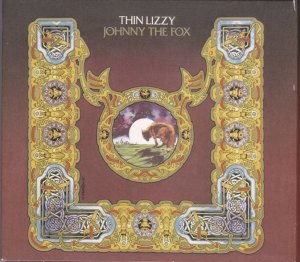
JOHNNY FRONTTHIN LIZZY – Johnny the Fox (2011 deluxe edition)

When my copy of Johnny The Fox had arrived, it was the last of the initial three Lizzy deluxe editions that I required. For some reason, it took two months to arrive. The wait over, I eagerly devoured this new remastered edition.

As always with these deluxe editions, the packaging is impressive. The cover art looks great, there are liner notes galore, and a bunch of pictures. The remastering was crisp and clear. Job well done. Where this deluxe edition falls short is on the bonus material. I found the bonus material a bit tedious this time out, with some tracks being mere curiosities and nothing you’d really care to listen to more than a couple times.

Johnny The Fox, as an album, is one of my Lizzy favourites. It features the classic lineup of Lynott, Downey, Gorham and Robertson and has some of the best lesser-known Lizzy album cuts. “Massacre” is a Maiden-eque stomp through some bloody history (Maiden covered it later). “Fools Gold” is some fantastic mid-tempo storytelling. I absolutely love this song, emotional and strong. My favourite song, “Borderline”, is a ballad with a slight twang and Phil hitting all the right notes with a beautiful bassline. This is just a very well rounded rock album, with lots of great songs like “Johnny” and “Boogie Woogie Dance” that just jump out at you.

And let’s not forget “Don’t Believe A Word”, one of the best known Lizzy classics.  Great song, absolutely timeless.  Not to be outshone are classics such as the tough “Rocky” and the cool funk of “Johnny the Fox Meets Jimmy the Weed”.  This album was Lizzy at their peak, the classic lineup, and a record equally as powerful as the slightly better known Jailbreak.

Even the lyrics are Lynott at his prime!  Check out “Johnny the Fox Meets Jimmy the Weed”:

In the back of a black Cadillac,
The voodoo music travels,
Down Skid Row only black men can go,
The shady deal unravels

See how Lynott also gave a shout-out to his old band, Skid Row, with Gary Moore?

Listening to Johnny The Fox now, I hear no weak songs.  “Old Flame” is a pretty ballad with the dual guitar thing going on,  a ballad as only Lizzy could do it.  Only the slow “Sweet Marie” is as close as you get to a dud.

JOHNNY INSIDE

The bonus disc starts off with two Joe Elliot remixes (“Don’t Believe A Word” and “Johnny”). Once again, Elliot has beefed up the sound while maintaining the integrity of the track. I know that they took great pains to fix every out of tune note, but you honestly don’t really detect it. I’m sure you could if you tried, but just enjoying the tracks, it doesn’t sound too messed with.

There are some good BBC Sessions up next, all very tight and sounding not too dissimilar for the album tracks. Unfortunately by now you have heard “Don’t Believe A Word” and “Johnny” three times each. You’re also about to hear “Johnny the Fox Meets Jimmy the Weed” a third time, this one a lo-fi instrumental take. There are four of these instrumental rehearsals in total, and honestly they’re extraneous. This kind of stuff, while interesting to listen to on an analytical level, were never meant for public consumption. Fortunately, this disc ends with a neat rough demo called “Scott’s Tune” that is a previously unknown musical idea by Scott Gorham. Nice find.

On the whole, I don’t regret this purchase, I’m glad to have the complete set of Lizzy deluxe editions. The packaging is very nice and the Joe Elliot remixes are strong. Some material I’ll be itching to skip over next time. It’s not the best deluxe edition ever.

4.5 /5 stars. (5 stars for album/4 for reissue)

REVIEW: Deep Purple – Machine Head (40th Anniversary Deluxe Edition, vinyl, In Concert ’72 vinyl)

More Purple at mikeladano.com:

Live at Inglewood 1968Deep Purple (1969), Machine Head (40th Anniversary Deluxe Edition + vinyl + In Concert ’72 vinyl), Perks and Tit (Live in San Diego 1974), Stormbringer (35th Anniversary Edition), Come Taste the Band (35th Anniversary edition), Power House (1977), The Battle Rages On (1993), Shades 1968-1998, Collector’s Edition: The Bootleg Series 1984-2000 (12 CD), Listen, Learn, Read On (6 CD), Rapture of the Deep (2 CD Special Edition), “All the Time in the World” (2013 CD single), NOW What?! (2013) Record Store Tales Part 32: Live In Japan, STEVE MORSE BAND – StressFest (1996), ROCK AID ARMENIA – Smoke on the Water: The Metropolis Sessions.

DEEP PURPLE – Machine Head (EMI 40th Anniversary Deluxe Edition, vinyl, In Concert ’72 vinyl)

BLACKMORE 2_0002

For the record, Machine Head is not the perfect Deep Purple album.  I find both In Rock and Fireball to be superior.  Machine Head is, however, the best known Deep Purple album, and I guess that’s why it’s gotten such a grand reissue while the other two have to be content with simple single-disc reissues from the 1990’s.

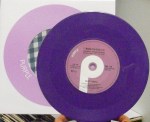
For the 40th anniversary, there have been a number of reissues made available.  First, there is the lovely 180 gram vinyl reissue, which includes a lyric sheet and a bonus 7″ of the first single, “Never Before” / “When A Blind Man Cries”.  Then, Peter Mew remixed the 1980 release In Concert ’72 at Abbey Road, which was re-released on purple vinyl.  This too came with a bonus 7″ single (also purple), “Lucille” and an unreleased rehearsal of “Maybe I’m A Leo”.

Finally, the crown jewel release is the five disc 40th Anniversary box set.  This includes all the stuff you got with the previous 1997 25th Anniversary edition, and more.  Packed inside is a lush 64 page hardbound booklet (including Roger Glover’s 1997 liner notes).  As an added surprise, even the CDs are printed in purple plastic.  I hope this is the last time I ever need to buy Machine Head!
SAM_2347

Disc One:  the 2012 remaster

Hey, I found the 1997 remaster just fine to my ears.  Is this one better?  Marginally, yes.  I imagine this sounds closer to the way it originally sounded if you bought a brand-new vinyl copy back in 1972.

Machine Head is a mere seven tracks, but almost all are winners.  The album kicks off with the adrenalized “Highway Star” (written and often performed during the Fireball tour), which is one of my personal favourites.  I still marvel today at Jon and Ritchie’s unison solos, like something out of a rock n’ roll speed race.  Gillan screams that nobody’s gonna take his car, and you believe him.  “Highway Star” is Deep Purple the way I often think of them:  fast, intricate, with banshee screams.

“Maybe I’m A Leo” takes the pace to a groove, with Ian Paice and Roger Glover holding it down.  This track is quite unlike anything from the previous two Deep Purple albums (except maybe “No No No”), featuring a more relaxed, comfortable band.   It is radio-ready hit material, and a concert staple.  But in case you too were getting comfortable, Ian Paice’s pounding intro to “Pictures Of Home” will wake you up.  This is clearly the most “heavy metal” of all the new songs, and that drum intro is reminiscent of Ian’s work on “Fireball”.  Gillan’s lyrics describe the “eagles and snow” of the Swiss scenery in which they recorded the album.

SAM_2352

In case you didn’t know, Machine Head was recorded at a hotel in Switzerland, by the Rolling Stones Mobile and Martin Birch.  The band occupied several suites, and managed to extract an incredible sonic quality from them.  According to the liner notes, it was simply too much work for the band members to walk through the various suites (needing to go outside onto balconies to do so, due to blocked doorways) down to the mobile to hear playback.  Instead, the band simply plowed through without hearing many of the playbacks, and the result is a spontaneous sounding album.

The first single “Never Before” is next, closing side one.  This is the one predicted to be the hit, only it wasn’t.  It’s not particularly a standout Purple track.  It’s short, simple and sweet but not nearly as powerful or memorable as the other six album tracks.SAM_2369
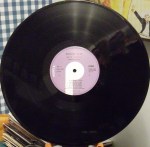
Side two opened with a track thought to be a mere throwaway, “Smoke on the Water”.  Completed after the infamous Frank Zappa gig at the local casino which resulted in the place burning down, Glover coined the title.  The rest of the band initially balked:  “Sounds like a drug song.”  Of course we know the song and title were the perfect match for each other.  This riff is the riff, the mother of all guitar riffs, never to be topped nor equaled by anybody, including Deep Purple.

“Lazy” was the band’s jam song, a sprawling seven minute stretch, greatly expanded upon live.  It begins with Jon Lord and Ritchie Blackmore playing off each other, a fun blues, until Gillan enters.  Ritchie’s solos are sublime, not to understate the greatness of Jon’s.

Side two closed with “Space Truckin'”, another song which was greatly extended live.  This is not one of my personal favourite album songs, but one cannot deny its importance.  It is an extended concert staple, but in its studio version it isn’t even a full 5 minutes long.

The disc ends with a bonus track, the sublime B-side “When A Blind Man Cries”.  This is a slow, mournful blues featuring some of Ritchie’s incredible six-string feel.  You can see why it wasn’t included on the album proper, as it is unlike anything else on Machine Head.  Restored to the CD as a bonus track, it is now a highlight.  Ian Gillan deserves special praise for his emotive delivery.

SAM_2348Disc two:  the 1997 Roger Glover remix

For the 25th Anniversary CD, Roger went back into the studio with the master tapes and built an alternate, remixed Machine Head.  This was done to provide added value, since no outtakes from the album existed.  This remix is not radically different.  What it is, is a fresh take on an album that I (and perhaps you) have played hundreds of times.  Glover incorporated alternate solos and unheard takes into the songs, making them sound new again.  In fact, this is my “go-to” version of “Smoke on the Water”, with my preferred alternate guitar solo and Ian’s “Break a leg, Frank!” restored to the end.  I tire of the original; this version sounds fresh to me.

Like the 1997 issued version, this also includes Roger’s remix of the B-side “When A Blind Man Cries”.  Missing are the Quad mixes of “Lazy” and “Maybe I’m A Leo” from the ’97 version, but they are included on another disc in the 40th Anniversary version.

SAM_2349Disc three:  Quad SQ stereo mix

Like many hit albums in the 1970’s, Machine Head was mixed in quadraphonic and released on a special LP.  Of course, nobody really has a quad setup at home anymore.  The interesting thing about many quad mixes, Machine Head included, is that it featured a very different mix, including alternate solos.  This version of the album has been mixed down to stereo and included for the sake of completion and historical value.

There are two bonus tracks on this CD, single edits of “Lazy” from a Japanese 7″, and a US edit of “Smoke on the Water”.  The Japanese reduced “Lazy” from almost 7 minutes to a mere 2:30!  I believe both single edits have been made available on box sets and compilations before, but they are included here to make this version of Machine Head the most complete ever assembled.
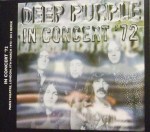
SAM_2350Disc four:  In Concert ’72, the 2012 remix

This album was previously available on CD, in a compilation that included BBC sessions from 1970 and 1972.  This set collects and remixes the 1972 recordings, complete, and restored to the correct running order.  Previously, “Smoke on the Water” was pushed to second-last in light of its later success.

This is a stunning live album, with clear sonic quality, and a powerful band playing almost all of Machine Head a month before its release!  “Pictures Of Home” is excluded, a song Ritchie did not want to perform live, and it is replaced by “Strange Kind of Woman”.
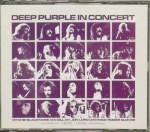
SAM_2372

Highlights for me include the aforementioned “Strange Kind of Woman”, complete with Ian and Ritchie’s interplay.  Lazy is quite a tour-de-force, and “Space Truckin'” is over 20 minutes long.  It is the full jam that folks would later come to know and love, with ample guitar, keyboard and drum solos.

The band were known to close their sets with Little Richard’s “Lucille” at the time, and it closes this BBC session as well.  There are a few versions of “Lucille” out there, this one is tame by comparison with some of them.  That’s not to say it’s inferior, as Ritchie’s solos are incredible, almost out-of-control, and Ian’s screams as powerful as ever.
SAM_2364

As I mentioned, the vinyl version of In Concert ’72 includes a bonus 7″ single.  This single is the only place you can get the previously unreleased “Maybe I’m A Leo” rehearsal.  It fades in on what seems like a bum note on Jon’s keys, and is a bit more laid back than the one that they played during the proper set.  Ian noticeably takes it a bit easier on the vocal, presumably saving his voice.  Ritchie plays a different solo.

For me, speaking as a collector, having this one rare track on such a cool looking colour single made it worth re-buying In Concert ’72 on vinyl like this.
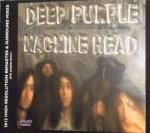
SAM_2351Disc five:  Original quad mix, 96/24 LPCM stereo version, bonus 5.1 mixes

For a lot of people, this DVD is the main reason to buy this box set.  For audiophiles, there’s a high resolution version of the stereo mix.  For completists and history buffs like myself, you can finally hear the quad mix like people heard it in the 1970’s.  The album has been converted to 4.1 surround so you can play it on your home theatre system.   I very much enjoyed hearing the album in this way, as opposed to the stereo version available on disc three.  The cool thing is, Peter Mew did the original 1972 quad mix, and here he helmed its transfer to 4.1!

The quad is interesting not only because it differs noticeably from the original, but also because of the instrument separation.  You obviously can’t judge a mix like this and compare it to a 5.1 mix of today.  It’s not as full, or powerful.  But it’s also an historical piece.

It’s cool to hear the quad version’s guitar solo on “Highway Star”, Blackmore making his guitar rev like an engine through the front speakers.  I like the way Gillan’s voice multiplies in the mix during “Maybe I’m A Leo”, and the alternate guitar solo on the same song is also cool.  Jon’s keys come from behind, a bit gimmicky by today’s standard, but probably astounding back then.  “Pictures of Home” features Ritchie’s guitar tracks split between different corners, allowing one to hear the separate parts clearly.  The separation of instruments on “Lazy” allow you to hear clearly each member’s playing as well.

As an added bonus, they remixed three songs in 5.1:  “When A Blind Man Cries”, “Maybe I’m A Leo”, and “Lazy”.  I’m sure a lot of people will complain that they didn’t do the entire album in 5.1.  Me, I’m sure they’ll save it for the 50th anniversary.  “Blind Man” is absolutely stunning; it shimmers.  New nuances can be detected.  “Maybe I’m a Leo” shakes the Earth with stomp, its clarity outstanding.  Blackmore’s solo sounds as if he is in the room.  Finally, “Lazy” is spacious and warm.  The different tones of Lord’s organ are incredible.

Conclusion:

I’m very satisfied with this box set.  As if all that music wasn’t enough, the booklet will keep you going for hours with its full-colour photos, liner notes and essays.  Yes, it can be a bit much, having four versions of one album in a single box set.  However, twice I listened to the whole thing in order, and didn’t find myself bored.  You know why?

It’s because Machine Head is a great album.

5/5 (highway) stars

R.I.P. Jon.