TRAPEZE – You Are the Music…We’re Just the Band (1972 Threshold)
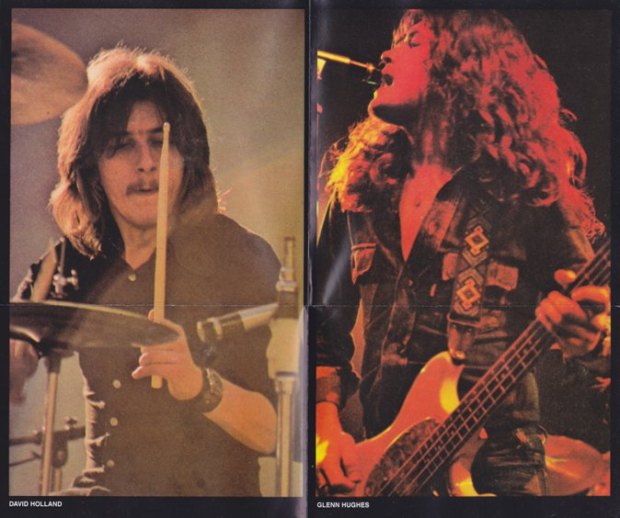
Trapeze in ’72 was:
Glenn Hughes (future Deep Purple) – bass & vocals
Mel Galley (future Whitesnake) – guitar
Dave Holland (future Judas Priest) – drums
Due to the fame that this trio found fame separately elsewhere, Trapeze will be on interest to fans of classic British 70’s rock. Trapeze are a funky soul rock band — picture some of the funkier moments that Deep Purple were into when Tommy Bolin was in the band, and you are in the general ballpark. The very first track “Keepin’ Time” easily could have been on Purple’s Come Taste the Band. Not only is a high quality funk-rock song, but Mel Galley has some serious chops going on!
Personal highlights on this CD for me are the ferocious funk of “Way Back To The Bone”, the soul of “What Is a Woman’s Role”, and the solid rock of “Feelin’ So Much Better Now”. I also need to single out the track “Loser” as a great little lost funk rock gem. One thing is clear to anyone upon first listen: These guys could PLAY. Particularly with Holland and Galley, what they did later really was only the tip of the iceberg that is Trapeze. Hughes is in fabulous voice, at the very peak of his vocal powers, and this is essential listening for fans of the man that the Japanese call “The God of Voice”.
3.5/5 stars. A pleasantly perfect example of great 70’s soul/funk/rock!
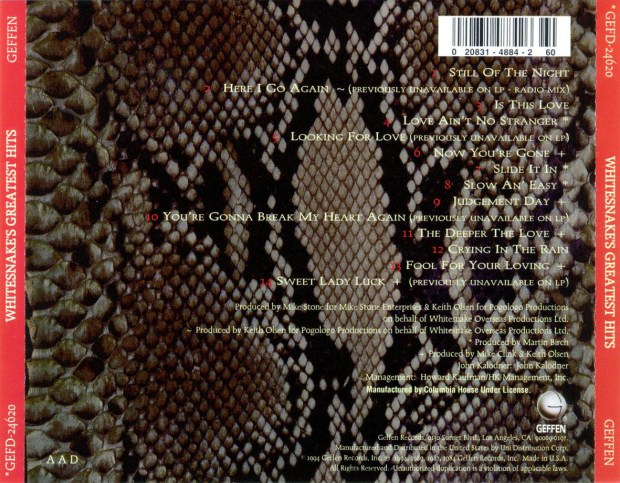
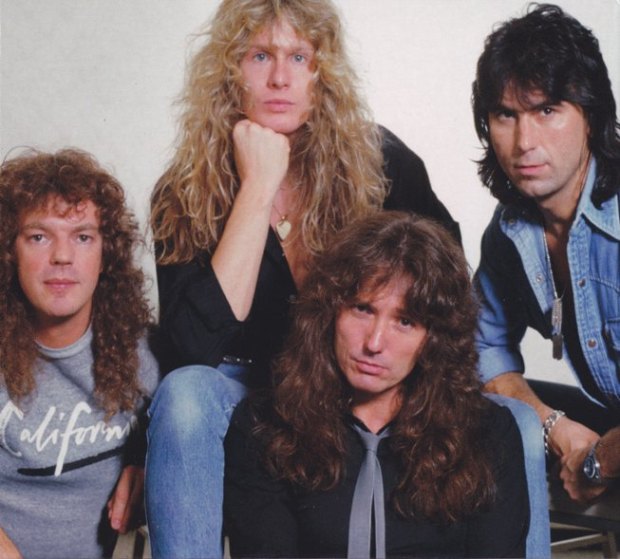
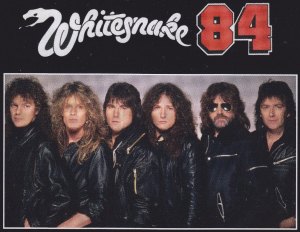
I don’t own this CD. Never have, actually. I gave it enough in-store play (only while working alone!) that I have no problem reviewing it. This Greatest Hits CD dates back to 1994, the year I first started working at the Record Store. As such, it was the first ever official Whitesnake Greatest Hits CD, the first of many. The band had been broken up for about four years at that point. Even by 1994 standards, it was only an OK release. It did contain some rare tracks, but was limited to Whitesnake’s 1984-1989 Geffen output only. For budget-priced collections, I would recommend the cheaper 20th Century Masters – The Millennium Collection because it still has all the hit singles from that period at a lower price. For fans who need more, the much better Whitesnake Gold or Silver Anniversary Collection make a more complete picture with more rarities and deep album cuts. These of course weren’t available in 1994. Today music buyers have a lot more to choose from.
One inclusion that some listeners may not enjoy about Greatest Hits is the version of “Here I Go Again” chosen. This is not the well-known album version that most people have heard. This is the “single remix” with different guitar solos (by guest Dan Huff) and more keyboards. Some radio stations do play it from time to time, but I think most casual buyers would listen to this and say, “I don’t like it as much”. And nor do I, but it is a rarity.
Otherwise, this album (like 20th Century Masters) contains every hit single from the period, and nothing from the blues-based records before. It does feature some other cool rarities: the B-side “Sweet Lady Luck” featuring Steve Vai, “Looking For Love”, and “You’re Gonna Break My Heart Again”. However, with the many compilations and remasters released since 1994, these songs are no longer hard to find. “Sweet Lady Luck” was even released on a Steve Vai boxed set!
Rounding out this selection of hits and rare tracks are deeper album cuts. These are include the glossy Kashmir-esque “Judgement Day”, “Crying in the Rain ’87”, “Slow Poke Music” and the wicked “Slide It In”. They help balance out the ballad-y hits that Whitesnake were adept at writing.
Interestingly, when this album was released, David Coverdale assembled a new, shortlived Whitesnake and toured for it. That version of Whitesnake included former members Rudy Sarzo and Adrian Vandenberg, both of the 1987-1990 version of the band. It also included drummer Denny Carmassi (Coverdale-Page) and guitarist Warren DeMartini (Ratt). Shame that no live recordings from this version of the band have never been released. The band disolved for several year again after this, only to reform in 1997 with a new lineup including Carmassi and Vandenberg.
This album is only mildly better than 20th Century Masters, but is inferior to the more recent, more comprehensive compilations I have mentioned. Buy at a sensible price point.
It’s Purple Week at mikeladano.com! It’s all Deep Purple and Deep Purple alumni, all week. This is Part 4…and once again we’re going Epic Review Time. It’s Deep Purple Mk III’s lead throat, David Coverdale & Whitesnake! This is almost a new release; it’s about four months old.
WHITESNAKE – Live in ’84 – Back to the Bone (2014 Frontiers Deluxe edition DVD/CD)
David Coverdale has been pretty good to the fans, in terms of giving them live archival releases from the periods they care about. In addition to cranking out studio and live releases with the current Whitesnake lineup, David has issued deluxe editions of certain albums along with the long awaited 3 disc set Live at Donnington 1990. Now it’s the 30th anniversary of the Slide It In album, so David has issued a live retrospective set from that period too. A CD and DVD set documenting the John Sykes years is almost a guaranteed slam dunk in itself, but how does it stack up when we break it down? Let us take a look at the DVD and CD portions in detail.
Super-Rock Japan ’84
The main program of the release is on the DVD, and the main focus of the DVD is Super-Rock Japan ’84. It is an 11 song set taken from Japanese television. This is the legendary four-piece lineup: David Coverdale, John Sykes, Cozy Powell, and Neil Murray. There is no doubt that even though the band had been trimmed down, they sounded powerful. I just really hate when an interview is inserted right between the first and second song. There’s no reason to ever interrupt a song on a live video, but editors do it all the time! It’s interesting seeing Whitesnake in a single-guitar lineup, but there is obviously a backstage keyboard player (Richard Bailey). The chops of John Sykes are such a welcome addition to the Whitesnake sound. He has a “chug” that few other guitar players have. Cozy Powell is as on-point as ever, but David Coverdale’s young lungs are remarkable. At peak power, David prowls the stage and humps the microphone in complete control.
The highlight of this portion of the set is “Crying in the Rain”, almost but not quite like it would be performed on Whitesnake 1987. I also enjoyed Sykes’ guitar solo. Sykes makes some of the best guitar faces in rock, and he resembles a young David St. Hubbins with his shaggy mane. “Soldier of Fortune” (an abridged version) was a pleasant surprise. On the other hand, Cozy’s looong overblown drum solo would be more appropriate to his time in E.L.P. (Emerson Lake & Powell). David must have been taking care of business backstage.
The video quality here is very good for an 80’s television broadcast. Sound quality, also good. David states in the liner notes that they weren’t able to find the master audio tapes, so this hasn’t been touched up too much. I’m satisfied; in 1984 we didn’t have 1080p TVs in widescreen.
Only three songs from this were included on the CD: “Love Ain’t No Stranger”, “Ready An’ Willing”, and “Slow An’ Easy”. That’s too bad. I would have paid a little more to get a 3 disc version with a full CD of this show. Just sayin’.
Jon Lord’s Final Whitesnake Performance
The passing of Jon Lord has been the biggest loss in rock, in recent memory. This truly is a treasure. From Swedish television and shot with multiple cameras, this looks even better than the Japan footage. Shame it’s only four songs. To have Jon there raises the bar several notches. It’s a five-piece lineup, although the cameras spend so little time on Jon that you’d wonder if the keyboardist is offstage again! (Jon’s wearing a white shirt in a black-topped band; he should be easy to spot but he’s not.) “Gambler” goes directly into “Guilty of Love”, and it’s so strange to hear it with only one guitar. With guys like Sykes and Powell in the band, they are very active on stage and the energy is plentiful. “Love Ain’t No Stranger” is so much better with Jon than without. You cannot understate how much difference that big bad Hammon organ makes. Then David tells the audience that they are “Ready An’ Willing” for some sweet satisfaction! From this brief four song set, I can at least conclude that Swedish television in the 80’s was better than Canadian television. Strangely, on the CD, it is included as one solid 16 minute track with no breaks.
Slide It In Slide Show
This is actually a cooler feature than you might think. These contain some snippets of writing demos for Slide It In. In some, David’s talking to someone, and there’s a single guitar. In others there is a full band, but the lyrics are not there yet. You can hear some of the classic riffs taking shape. The rest of the audio has vintage interviews with David and live music. Unfortunately at times the “slideshow” portion of this turns into little more than a lyric video, defeating the purpose of having a photo slideshow. The real treasure here is a live version of the B-side, “Need Your Love So Bad”, with just David and Jon. I am disappointed that it is not on the CD. Something that rare really should be.
Snakeskin Boots: The Best of the Bootlegs
The main feature on the CD consists of bootleg and soundboard tapes. I love bootleg recordings, and who can fault a band for beating the bootleggers and releasing the tapes officially? Tapes were cleaned up as much as possible to make them listenable (David suggests the car as a good setting). These songs were sort of arranged in the order of a live concert, so it still begins with “Gambler” and “Guilty of Love” like all the other sections. “Gambler” sounds pretty good, only slightly muffled but with a hard pulse. Sykes’ solo on “Guilty of Love” sends electric chills up the spine. It’s great to hear the band so young and ferocious!
Cheeky David tells the crowd that the Slide It In album title does not refer to a banana! “Love Ain’t No Stranger” is always a pleasure to hear, especially sung by a young David, and Sykes is shreddin’. Then another cheeky intro: “I’d like to give you a toast. If it’s in deep, and if it’s in long, and if it’s in hard…it’s indecent!” That has to mean “Slow An’ Easy” is up next. I will never tire of this excellent song. “Walking in the Shadow of the Blues” is a nice surprise, but “Ready An’ Willing” is overplayed.
Sykes is given a couple minutes on his own to introduce “Crying in the Rain” with some bluesy soloing. As great as this song is, this long version makes it clear why Whitesnake is a two guitar band. They sound very bare when John again takes a long solo in the middle, and Neil Murray is left to fill the space. David always wanted two guitar players, while John would have preferred not to share the spotlight. “Soldier of Fortune” closes this portion of the CD, a nice version of the old Deep Purple classic.
The rest of the CD is dedicated to the three tunes from Super-Rock Japan that they chose to include, and the four songs from Jon Lord’s final Whitesnake show. If you have a look at the tracklist you’ll notice that this means there’s a lot of repeat.
In closing
None of Coverdale’s archival releases or deluxe editions have been perfect. Live in ’84 – Back to the Bone is probably the best of them yet.
Deep Purple were the proverbial candle that was burned at both ends. Their first four studio albums (plus a friggin’ concerto!) were cranked out in a mere two years. Management and record labels pushed the band to stay on the road, only taking precious breaks to write and record new music. Sometimes the pressure worked (Machine Head) and sometimes it didn’t (Who Do We Think We Are). Ian Gillan’s resignation signaled the end of the celebrated Deep Purple Mk II lineup. Though the band successfully carried on with David Coverdale & Glenn Hughes, even those lineups imploded and by 1976, Deep Purple officially ceased to exist.
The absence of Purple created a void that was filled by greatest hits records, live albums, and well-known side projects such as Ritchie Blackmore’s Rainbow, Gillan, and Whitesnake. Still, there was such a demand for Deep Purple itself that original singer Rod Evans put together his own bogus “Deep Purple” and played several shows in 1980! In his band were a couple guys from Iron Butterfly, but no other former Purple alumni. Just Rod. The guy who didn’t sing “Highway Star”, “Smoke on the Water”, or “Lazy”. Needless to say, Rod Evans’ bogus “Deep Purple” did not last as soon as word got out. The lawyers for the other former Deep Purple members ensured that by running ads in the local papers. “The following members will not be appearing with the band called Deep Purple at [such and such a date and venue] : Ritchie Blackmore, Ian Gillan, Ian Paice, Jon Lord, Roger Glover, Glenn Hughes, David Coverdale.” A show in Montreal was particularly horrid, and reportedly the band’s stage act involved one of the members bringing out a chain saw to cut stuff up. They were hit with lawsuits galore and quickly packed it in, but not before recording two new songs for a projected new “Deep Purple” studio album. The two songs, “Blood Blister” and “Brum Doogie”, are thankfully lost. A video of “Smoke on the Water” live in Mexico remains, to remind us why this was not a good idea. [For more on the bogus “Deep Purple”, click here.]
Clearly, lots of profits were to made if the real Deep Purple were ever to reunite. They tried earlier on, but were hung up when Ian Gillan joined Black Sabbath. When Ian’s Sabbath commitments were finished a year later, it finally happened. Jon Lord had freed himself of Whitesnake, and Ritchie, Roger Glover and Ian Paice were all ready willing and able. The reunion was on, for real this time.
The band quickly agreed on creating new music (otherwise, what’s the point of it?), and decided that there had to be a level of quality that served the name Deep Purple. They retreated to the gorgeous Stowe, Vermont and found themselves to be in great spirits and full of ideas. Another wise decision was the use of bassist Glover to produce. After his first stint in Purple, he became quite successful as a producer. He recorded some of the best Nazareth albums, a Judas Priest record (Sin After Sin) , Rainbow, David Coverdale, and countless more. It only made sense to keep production of the new album within the band when you have a guy like Roger in the band!
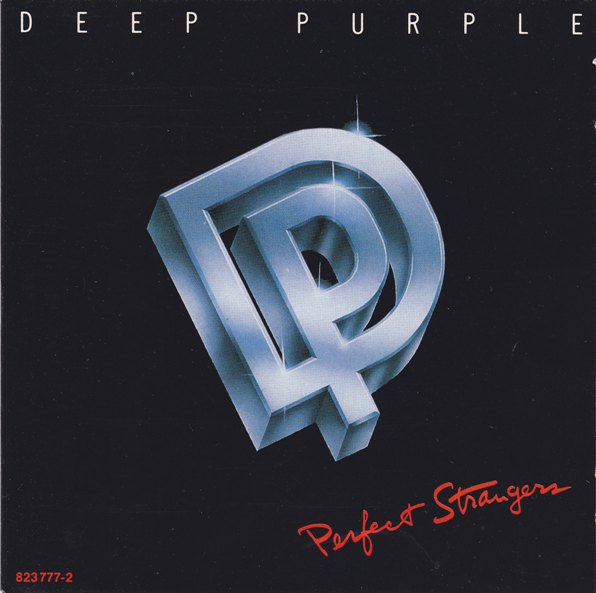
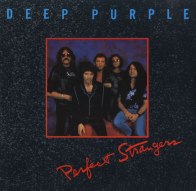
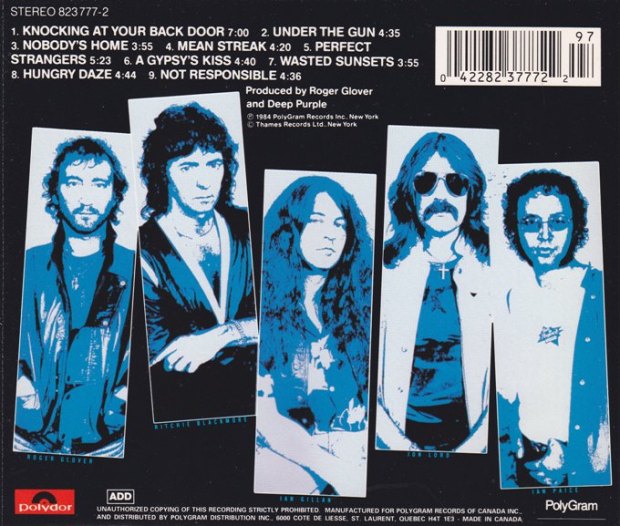
The album that resulted, Perfect Strangers, was more modern but unmistakably Deep Purple. Taking advantage of modern recording studios resulted in an album with rich instrumental tones. As great as classic Deep Purple albums were sonically, Perfect Strangers has a new richness and clarity. Jon’s organ is deep and gorgeous, but Ian Paice’s drum sound is monstrous.
The opening track “Knocking at Your Back Door” (hah hah hah) commences with ominous keys from Jon, sounding at first like the pipes of doom. Then Roger begins a quick pulse, and Paice crashes that cymbal, and my God, Deep Purple is back! Ritchie and Ian join them for the first Deep Purple epic of the album — and on the first track, no less! “Knocking at Your Back Door” may be a joke lyrically, but it’s dead serious musically. It’s Deep Purple, but streamlined. Extraneous things have been discarded; others are sleeker. The only disappointment about the song is actually the guitar solo, which just slightly does not fit. Glover once said about this album that Ritchie struggles with solos in the studio more so than live. Something about when the red light goes on, he gets cold feet. There’s some incredible playing in this guitar solo, but parts of it feel out of place and overdone.
That one minor complaint is probably the only quibble you’ll read here about Perfect Strangers. The album continues to impress as it plays. “Under the Gun” is a song that would sound so great live today; shame that it hasn’t been played live in 30 years. I can’t imagine why. “Under the Gun” demonstrates the streamlined groove that Purple were going for in the 80’s. Listen to Paicey’s drums. They are relentless and powerful, but he’s also playing it simpler than he used to. This is intentional. When I say “streamlined”, that doesn’t mean there aren’t long solos, because Ritchie’s here is over a minute long (in a 4:34 song)!
“Nobody’s Home” gives Jon Lord a change to stretch out a bit on the synths, but it’s just a feint. This track re-writes “Black Night” for 1984, and ties it all up with a little bow in under four minutes. “Your lights are burnin’ bright, but nobody’s home!” sings Ian, for once not speaking of Blackmore! Jon takes the spotlight with a nice quick solo on the Hammond, a sound not often heard in ’84.
Side one was closed by the nasty little “Mean Streak”. It has one of those quirky Gillan lyrics that I like so much. “She came home last night, rockin’ rollin’ drunk. She talk no sense but she sound good so she thunk.” It’s a cool rock track with a chugging riff; always a deadly combination when wielded by Deep Purple. It boasts one of Ritchie’s coolest solos on the album.
I will never forget seeing this video on MuchMusic, introduced by Bruce Dickinson. Of Deep Purple he said, “Well, they’re very good. But not as good at football as they appear. No. They’re not.” The VJ (Erica Ehm) asked, “Why not?” Dickinson simply responded, “Because they’re not! What a silly question.”
Of all the songs on Perfect Strangers, only one has been consistently played live every tour: the title track. This epic, like its side one counterpart “Knocking at Your Back Door”, opens with Jon’s ominous keys. This time it’s the old trusty Hammond, and then the band crash in with the riff to kill all riffs. I think in some respects, this song has become Deep Purple’s “Kashmir”, especially when played in concert. It has evolved to become more exotic since it was first recorded, though it does contain those flavors here. The lyrics are ambiguously beautiful. Back in the Record Store days, I talked to a guy once who thought the lyrics were about God. I’ll leave it up to you. Blackmore called it his favourite Deep Purple song. It’s a tough call, but Top Five for sure. I cannot survive without this song in my life, period.
Then WHAM! “A Gypsy’s Kiss,” right in the kisser. If any doubters had thoughts that Purple had lost anything in the past decade, this song proved them dead wrong. Blazing pace, blazing Paice, the whole place is ablaze! Again, Ian’s lyrics are awesome, and I love the self-referencing. “Space truckers free and high, Teamsters get ya by and by.” I also really like this verse, because, hey. John Wayne, man.
John Wayne, the Alamo, Crazy Horse, Geronimo, I’ll smoke a piece with you. Mind, Body, Heart and Soul, We got Rock and Roll, And there’s nothing they can do.
A good Deep Purple album rarely has a slow blues buried deep within. “Wasted Sunsets” is the album’s heavy blues track, like “When a Blind Man Cries” was to Machine Head (though it was relegated to a mere B-side). Jon’s organ sets the mood stunningly, and Ritchie absolutely nails it. I get the feeling that Ian is baring his soul in the lyrics, although he doesn’t seem too regretful of all those one night stands.
For self referencing, no lyric on the album beats out “Hungry Daze”:
The mountain’s getting cold and lonely, The trees are bare, We all came out to Montreux, But that’s another song, you’ve heard it all before!
Regrets? Hell no. “Different girls, laughing girls, forever girls and it was loud!” Gillan has a talent for making cheeky lyrics like this work with serious music. “Hungry Daze” has that modern Purple groove with the same kind of chugging exotic riff that powers “Perfect Strangers” — but faster! There’s even backwards tapes (Jon’s organ), a sound unheard on a Deep Purple album since 1969, but back in style in 1984.
Lucky cassette and compact disc buyers got a bonus track: “Not Responsible”. When I first got the album (on cassette) I wondered, “Why is this song a bonus track? It’s one of the best songs!” Good question! (Perhaps because it’s the only song on which Gillan dropped an f-bomb.) I think it closes the album even better than “Hungry Daze” does. Lyrically it’s more drinking and debauchery. “So I’ll raise a glass to you, the foot is on the other shoe.” I consider “Not Responsible” to be of equal value to any of the better tracks on the album proper, so if you only own this on LP, consider getting this song (legally) to complete the picture.
Want more? There’s one more, but you’ll have to do a little research to get it in full. “Son of Aleric” is a killer slow groove 10 minute instrumental, with all the flavor of the album. It was released on the B-side of “Perfect Strangers”. If you bought the 7″ single, you got the 5:28 edit version. If you bought the 12″ single, you got the full Monty at 10:03. The full version was rarely issued on CD. I have it on a compilation CD with the cumbersome title of Knocking at Your Back Door: The Best of Deep Purple in the 80’s. But “Son of Aleric” is only on the UK version! (Other territories just got a live version of “Child in Time” from the live album Nobody’s Perfect. Bummer.) This is the kind of open Deep Purple jam that you just want to melt into. It’s magic.
If you like Deep Purple, but do not own Perfect Strangers, then I advise that you remedy that situation at your earliest convenience. I am no stranger to this album; I have played it hundreds of times, often more than once in the same day. I have never grown tired of it. For that reason, and many more, Perfect Strangers earns the coveted:
RECORD STORE TALES MkII: Getting More Tale #358: The Personal Impact of Led Zeppelin
Christmas 1990 was another major turning point in my musical life. I know others who can say the same thing for the same reason. Led Zeppelin had released their first box set, a 4 CD collection of 54 essential tracks, remastered by Jimmy Page himself. This was the impetus I needed to finally take the Zeppelin plunge.
Prior to this, I had stayed away from Zeppelin. I only knew a couple live videos from MuchMusic, which didn’t appeal to me at all. A rock band wearing sandals? The fuck was this? I couldn’t wrap my head around the violin bow solo, nor the band. I remember watching the old live “Dazed and Confused” video with my friend Bob. “You can tell that guy’s on drugs,” he said of Jimmy Page.
That was in the 1980’s. By the turn of the decade, I was starting to tire of plastic sounding pop rock bands. I was craving authenticity, and I know I wasn’t the only one. Bands like Warrant were wracked by controversy, when it was revealed that they employed two guitar teachers to write their guitar solos and teach the members how to play them. Too much fakery for me — at that point I decided to stop listening to them. I sold my Warrant tapes. Warrant in turn accused Poison, the band they were opening for, of using backing tapes live. All kinds of bands were accused of using backing tapes. Sebastian Bach was quoted as saying, “The only band out there that doesn’t use backing tapes live today is Metallica, and that’s a fact.” (I am fairly certain Iron Maiden are above such tom foolery as well.)
The old “Dazed and Confused” video that Much used to play
I didn’t want backing tapes, I wanted authentic pure rock music. There was a bustle in my hedgerow. I wasn’t satisfied with the new releases coming out either. A lot of groups that I really liked released disappointing albums in 1990. From Dio to Iron Maiden to Winger, there were too many bands that failed to impress that year. A band like Zeppelin seemed to have not only authenticity, but solid consistently. They were hailed as the greatest rock band of all time by just about every rock group I heard of!
I received the box set from my parents on Christmas day 1990. The following day, Boxing day, I had set aside to listen to the entire box set from start to finish – about five and a half hours of listening. I took a brief lunch break between discs 2 and 3. I emerged from my room that afternoon, dazed, but not confused at all. There were some songs that I didn’t care too much for – “Poor Tom”, “Wearing and Tearing”, “Ozone Baby” – mostly songs from Coda. They were vastly outnumbered by the songs that absolutely blew me away, even though I had never heard of them before: “Your Time Is Gonna Come”, “Immigrant Song”, “Ramble On”, “The Ocean”, “All My Love”…I could not believe the sheer quality of the music.
Sure, Led Zeppelin’s songs weren’t produced as slick as I was used to. They were a far cry from Whitesnake. Jimmy Page wasn’t a shredder like Steve Vai, but I felt a personal shift. I thought bands like Whitesnake and Cinderella had been exhibiting the epitome of integrity, with the ace players and incredible musicianship. Like athletes, musicians only seemed to achieve loftier heights over the decades with their playing. This was exemplified by a guy like Steve Vai who pushed guitar into entirely new frontiers. Cinderella, on the other hand, had even worked with Zeppelin’s John Paul Jones, who provided strings to their bluesy Heartbreak Station LP. I thought Cinderella were the blues! But now, my eyes were really opening. It was like Obi-Wan Kenobi had prophesized: “You’ve just taken your first step, in a larger world.”
Led Zeppelin (and also ZZ Top) were talking about blues artists I never heard of. Muddy Waters? Lightning Hopkins? Robert Johnson? Who were these people that were so influential that Zeppelin were known to lift entire songs from them?
I had a thought: “From this moment on, I will never be able to listen to rock bands the same way again. I used to think Cinderella were authentic blues. How can I ever go back to listening to Cinderella with the same feeling of passion? How can I play bands like Slaughter and Judas Priest, and think for a second that these guys are any better than the old guys like Zep?”
Fortunately I found that eventually Cinderella, Whitesnake and Led Zeppelin could co-exist in my collection. Liking one does not mean you can’t like the others. Even though Led Zeppelin raised the bar to extraordinary heights, I found it wasn’t too hard to “lower my standards” sometimes and enjoy a little “Slow An’ Easy” with David Coverdale. Zeppelin simply opened my eyes: that there was an entire history of blues that I hadn’t really been aware of before. My musical life journey was about to expand exponentially.
“I’m letting them pick what songs they wanna do in the way they wanna do it.” Wendy Dio
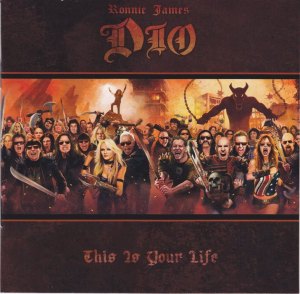
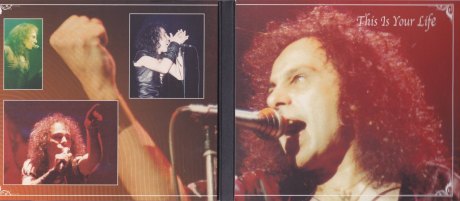
VARIOUS ARTISTS: Ronnie James Dio – THIS IS YOUR LIFE (2014 tribute CD)
No preable from me: we all know how great Dio was. Let’s get to the tracks.
Anthrax kick off the festivities with a slamming “Neon Nights”. The storming opener couldn’t have been in a better slot. Not only is Charlie Benate heavy as shit, but the guitar solos are mental. Joe Belladonna handles the powerful vocal ably. Rob Caggiano is still in the lineup indicating this isn’t brand new. I suspect it was recorded at the same time as last year’s Anthems EP.
The guys that never get respect, Tenacious D, tackle the difficult second slot. No worries there; they chose “The Last In Line” which Jack Black sings with no difficulty. Uncle Meat has said it before: Jack Black is one of the best singers he’s seen live. “The Last In Line” proves his pipes, although some may not like his exaggerated, humorous vocal enunciation. Kyle Gass plays a cute recorder solo in lieu of guitar, but there’s not enough K.G. on this track. Brooks Wackerman kicks the drums in the ass.
And speaking of drums, Mike Portnoy is next with Adrenaline Mob. They demolish “Mob Rules”, although singer Russell Allen is certainly no Dio. He is completely overshadowed by Portnoy and the shredding of Mike Orlando.
Corey Taylor, Satchel (Russ Parish) and friends chose “Rainbow In the Dark” as their tribute to Ronnie. This has always been such a fan favourite, and a personal one as well. It is difficult to imagine anyone but Ronnie singing it. While Corey Taylor is not at all like Ronnie James Dio, you can tell he loves this song. It bleeds out of his performance. He does it in his own rasp, and it works.
The incredible Lzzy Hale and Halestorm are up next with another Dio classic, “Straight Through the Heart”. There is no denying the talents of Lzzy Hale, but her powerful pipes are almost too much. Perhaps she overpowers the song, rather than simply fueling it. Halestorm fans will love it, but I think Lzzy maybe should have reeled it in a bit. Or, maybe I just need to get used to it. “Straight From the Heart” does sound better after a few listens.
Biff Byford (Saxon) joins Motorhead on lead vocals for Rainbow’s “Starstruck”. There’s a bit of that Motor-slam in it, but if I didn’t know who it was, I never would have guessed Motorhead. You can hear Lemmy on backing vocals, but weirdly, he’s not credited on bass. Nobody is, but you can hear the bass clearly and it sounds like Lem.
I’m a little sick of the Scorpions doing ballads, but I admit that “Temple of the King” (another Rainbow classic) is stunningly good. One might almost mistake it for a Scorpions original. It has that regal Scorpions bombast to is, but Matthias Jabs’ lead work is just sublime. He’s an underrated player, absolutely. You can tell he’s a Blackmore fan.
An oldie from 1999, Doro’s cover of “Egypt (The Chains are On)” is excellent. It’s cool to hear female singers like Doro and Lzzy Hale sing Dio. Doro’s impressive pipes have always been astounding. Her version of “Egypt” is a little over the top compared to Dio’s, but that’s cool by me.
Killswitch Engage…hmm. “Holy Diver” starts great, super heavy, with some perfectly acceptable, melodic vocals. Then it all goes down the toilet at the bridge. That’s when it turns into hardcore shouting and blast beats…sorry, not on this song, thanks. I can listen to that stuff in moderation, but don’t sully “Holy Diver” with it. Fortunately the guitar solos are great, sounding like an Iron Maiden outtake from Powerslave. Shame about the growling and shouting. Skip.
“Catch the Rainbow” is a great song, and Craig Goldy plays guitar on this cover. He’s ex-Dio himself, and he’s backed by his former Dio-mates Rudy Sarzo, Scott Warren and Simon Wright. (Hey, that’s also 1/3 of Tateryche!) Glenn Hughes sings, but this song sounds out of his scope. His bluesy slant doesn’t work for me. Sorry Glenn, you’re still awesome!
I find it strange that two more ex-Dio members (Jimmy Bain and Rowan Robertson) chose to cover Black Sabbath. But who cares! They covered “I”, perhaps the greatest song from Dehumanizer (1992)! On drums is Brian Tichy, with Oni Logan (Lynch Mob, Dio Disciples) singing. It’s a perfectly authentic version and I love it. It’s absolutely thunderous, and I love Jimmy Bain’s bass sound. Always have. Of all the vocalists on This Is Your Life, it is Oni Logan that comes closest to nailing Dio’s vibe. Considering he’s in Dio Diciples, I shouldn’t have been surprised. I didn’t expect it though, based on what I knew of Logan from Lynch Mob. He fits “I” like a glove!
I was disappointed in Rob Halford’s version of “Man On the Silver Mountain”. It’s true that Halford did replace Dio in Black Sabbath for two shows in 1992. However, having owned a bootleg video of that show since that time, I knew that Halford’s and Dio’s styles didn’t really mesh. This is no different; I don’t think his voice works with the song and it unfortunately shows off the places where Rob’s voice has weakened. What is cool though is that the band (all ex-Dio: Doug Aldrich, Vinnie Appice, Jeff Pilson and Scott Warren) take it to a swampy bluesy Whitesnake-y place for the intro. You can definitely hear Pilson covering the high notes in the chorus.
Finally we arrive at the mighty Metallica. Snicker if you like. If Metallica do one thing really well, it’s covers. If they do two right, it’s covers and medleys. The “Ronnie Rising Medley” is entirely made up of parts of Rainbow songs. “A Light In the Black” bleeds into “Tarot Woman,” where the vocals begin. It’s safe to say if you don’t like Metallica, you won’t like this. If the opposite is true, I think you’re in for a treat. Metallica do these classics in their own style, just as they have in the past when covering Maiden, or Mercyful Fate, or Thin Lizzy. Simply add Lars’ thuds, James’ growl, and some standard Metalli-licks, and you’ve got a medley that is enjoyable through its near-10 minute run time. Having said that, the weak point is definitely “Stargazer”, which is gutted of all its majesty. They do much better with “Kill the King” which is fucking perfect. They include the entire song in their medley!
Fittingly, the album ends on a ballad: Dio’s own somber “This Is Your Life”, performed by the man himself in 1996. I did not like the Angry Machines album, but if there was one song I would have picked as a highlight it would be “This Is Your Life”. Performed only by Dio and Scott Warren on piano, it is unlike anything else in Dio’s canon. The lyrics speak of mortality:
This is your life This is your time What if the flame Won’t last forever?
This is your here This is your now Let it be magical
What a way to end a great album. As much as you can “miss” a person you have never met, I do miss Ronnie James Dio. In many ways he’s been my friend for 30 years.
4.5/5 stars
As a nice added touch, the liner notes include photos of just about every performer on this CD with Ronnie!
Of note: the Japanese edition has a bonus track by Dio Diciples: “Stand Up and Shout.” It also has Stryper’s version of “Heaven and Hell” from their 2011 album The Covering, which I reviewed here.
TWISTED SISTER – Love Is For Suckers (1987 Atlantic, Spitfire reissue)
If the year was 1987, I would have given this CD 5/5 stars easily. When it came out in the summer of ’87 I was really into it. My best friend Bob and I used to play it all the time during that long hot summer, we had all the lyrics memorized. Unfortunately this album has not aged well, certainly not compared to their classic early albums.
One problem with the record is that it’s not actually by the band Twisted Sister! Even as a kid I wondered why people with names like “Reb Beach” or “Kip Winger” were listed in the credits. That’s because Love is For Suckers was written and recorded as the first Dee Snider solo album. Record company pressure forced Dee to release this as the next Twisted Sister album, even though no Twisted members appear on it (aside from new drummer Joey Franco). This only hastened the breakup of Twisted Sister in October of that year.
The album is produced by Beau Hill, a guy also known for Warrant and Winger albums (that’s why Reb and Kip are on here). Beau Hill is one of my least favourite metal producers of all time. He over-produces, uses too many samples, and glosses everything up. As such I find most of his albums pretty hard to listen to today. On Love is For Suckers, all the drums are samples and you sure can tell by that awkward gated sound, and identical snare hits.
Like when we used to climb the rope in gym class
As an 80’s glam metal album, the songs are not that bad. “Wake Up (The Sleeping Giant)” could have been a Twisted Sister song with its themes of rebellion and youth angst. “Hot Love”, the first single, was the song that got me to buy this album. A catchy pop-rocker with irrestible guitars courtesy of maestro Reb Beach, “Hot Love” was as commercial as it gets. Other standout songs included “Me And the Boys”, which was our theme song that summer. “I Want This Night (To Last Forever)” was a Van Hagar sounding pop-rocker with another great chorus. I think, if anything, Love is For Suckers sounds mostly like 5150-era Van Hagar, but with gang vocals and way more glossed up.
Love is For Suckers was reissued a while ago with 4 bonus tracks, demos from these sessions that fit right into the sound of the album. They’re just not as good. “Statuatory Date” for example suffers from extremely bad lyrics. One of them, “If That’s What You Want” is an early version of an album song, in this case “Me And the Boys”. Consider looking into these 4 bonus tracks when you’re choosing to purchase Love is For Suckers.
As an added little “insult to injury” following this album’s failure, producer Beau Hill took Dee Snider’s scream from one song, “I Want This Night (To Last Forever)”, and used it as the opening scream on Warrant’s smash hit album Cherry Pie. Uncredited! I’m sure 99.9% of Warrant fans assume it’s Jani Lane.
If this album description sounds good to you, check it out. You may enjoy it as much as I did all those years ago. For me, the years have not been kind.
WHITESNAKE – Slip of the Tongue (1989, deluxe edition)
Normally I go crazy for these deluxe editions. Many are great! The Whitesnake deluxe editions have not been great. This is the third and last one in my Whitesnake deluxe edition series of reviews.
Once again, instead of two CDs, you get an expanded CD and a brief DVD. The lack of decent bonus material really frustrates me because there is more in the vaults. You know there has to be more in the vaults. In fact in the liner notes, David tells us that there is more. He name-drops several unfinished songs that didn’t make the cut, but fans would kill to hear.
Slip Of The Tongue was not the best Whitesnake album (not by a long stretch), but with 20/20 hindsight and the presence of Steve Vai, it’s fun to listen to. Yes, it’s too glossy, and yes, Vai was not the right guy to be in Whitesnake, but the result is one of those strange one-off’s like Black Sabbath’s Born Again, or Motorhead’s Another Perfect Day. It’s an album that doesn’t quite fit with the back catalogue, but has become a cult favourite. I have long been a fan of it, simply because Steve Vai is jaw-dropping even when playing pedestrian hard rock.
For Vai fans, he plays it pretty straight here, not a lot of craziness. There’s a broken string on one song, and some cool solos, but nothing bizarre like you’ll find on a Vai solo album. If you want to hear him just do some serious hard rock and balladeering without the crazy stuff, this is the CD for you. Within the scope of Whitesnake, Vai sets the album on fire; throwing in notes where you didn’t know they could fit, making sounds you didn’t know a guitar could make, and overdubbing a mountain of fills. Just check out opening track “Slip Of The Tongue” for some serious burning, via a 7-string Ibanez guitar through an Eventide harmonizer.
Song-wise, this is mostly hard rock and very little blues. The slick remake of “Fool For Your Loving” (originally from Ready An’ Willing), which Coverdale’s liner notes reveal he didn’t want to do, is inferior to the bluesier, groovier original. “The Deeper The Love”, purportedly a soul song, is actually just a great hard rock ballad with some wonderful Vai licks. The best songs are the epic Zeppelin-esque “Judgement Day”, the aggresive “Wings Of The Storm”, the hit rocker “Now You’re Gone” and the signature Coverdale album closer “Sailing Ships” which has become one of his philosophical classics.
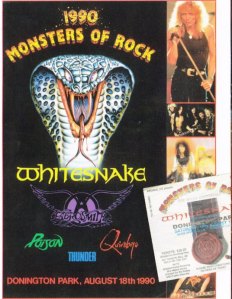
Among the sparse bonus tracks: the B-side “Sweet Lady Luck”, which is available many times elsewhere now, on both Whitesnake and Steve Vai compilations. Also, the US single mix (by Chris Lord-Alge) of “Now You’re Gone” is included but many fans would be hard pressed to tell the difference. The promo-only “Vai Voltage Mix” of “Fool For Your Loving” predictably throws in a lot more guitar. (I already had this on a promo single that I acquired for $2, but this is good for fans to have.) There are two tracks from the 1990 Donington Festival, which would have been a real treat, because these songs (unlike the other bonus tracks) had never been released before. This was the first ever official release of Whitesnake live stuff with Vai. But it was also just a sneak preview of an actual 2 CD/1 DVD release of the full Donington show. Double dipping sucks!
Then, just like on previous deluxe editions…another live track by a more current edition of Whitesnake! Honestly, this ticks me off for two reasons. One, you can get the new live Whitesnake albums with no difficulty and two, it’s from 15 years later and has nothing to do with Slip Of The Tongue. Yet these new live versions pop up on all these Whitesnake reissues. Why?
The DVD is brief and hardly as satisfying as another CD would be. You get the three original music videos, the two Donington live songs, and then another bunch of unrelated live stuff. Two live tunes from 1997’s Starkers In Tokyo acoustic show, and yet another live track from a more recent Whitesnake live DVD, which is available on its own. Again, I feel this is a bit of a ripoff. It’s nice to have these Starkers tunes on a DVD, but why not release an entire separate DVD of that show? It has nothing to do with Slip Of The Tongue, except that Coverdale played a couple of these songs live.
The booklet by Coverdale is a real treat, revealing much previously unknown tidbits to tease your friends with. I had no idea that Adrian Vandenberg for example managed to play a little bit of backing guitar on the album. Previous issues of the CD stated that Vai handled all guitar duties, but that has turned out to be false. Also, Coverdale talks a bit about Glenn Hughes, and why you can barely hear him sing on this CD, even though he’s credited on backing vocals.
Frustratingly though, Coverdale also mentioned all those unfinished and unreleased songs from these sessions: “Kill For The Cut”, “Burning Heart”, “Parking Ticket”, and so on. These were all titles that I read about 25 years ago in Hit Parader magazine, and wondered why they didn’t show up on album B-sides. The booklet reveals that they were never finished, but that is no excuse — they should have been presented here as bonus tracks instead of this unrelated live stuff. The Sabbath deluxe editions have tons of unfinished songs on them. So do some of the reissues of the early Whitesnake albums, such as Come An’ Get It. This CD should have been the same. Unless David is hanging onto these songs for some kind of anthology box set in the future, I can’t figure out how they arrived at the selections for this reissue CD! It’s maddening. Do it right, or not at all.
Decent album, great liner notes, top notch and generous packaging, and great remastering job. Crap bonus material.
Following the demise of Whitesnake and the failure of Zeppelin to mount a 1991 tour in support of their first box set, it was almost inevitable what happened next. It was something that many Zeppelin fans feared. Lead Snake David Coverdale, who was once derided as “David Coverversion” by Robert Plant, joined Plant’s erstwhile bandmate Jimmy Page in a new supergroup. Geffen’s John Kalodner (John Kalodner) helped facilitate this move which should have generated sales over 10 million units. Unfortunately another thing also happened in 1991: grunge.
The shame of it is that Coverdale-Page is a stunning rock album. For years it haunted my bargain bins, simply because of the hard rock stigma that permeated the 1990’s. Many fans refused to listen to it, others simply chose to mock superficial elements of it, such as Coverdale’s man-shrieks. The fact that Page was looking and sounding great should be enough to warrant multiple listens by any serious rock fan. He hadn’t released any new material since 1988’s Outrider. As for Coverdale, it was a chance to get back to his bluesy rock roots, something he expressed a desire to do shortly after Whitesnake’s dissolution.
The studio band weren’t hacks either. Ricky Phillips had played bass with Neal Schon and Jonathan Cain in Bad English, and he’s been in Styx for ages now. Drummer Denny Carmassi was in Montrose (that’s him on the cover of the classic 1973 self-titled record) among many stellar bands, and he later did a stint in Whitesnake itself. Coverdale and Page co-produced the album with veteran Mike Fraser.
Finally, the most important elements were also in place: the songs. 11 songs, most in the 5-6 minute range, make up Coverdale-Page. Those expecting or even hoping for a Zeppelin album were bound to be disappointed. Despite the “Coverversion” nickname, Cov the Gov is his own person and persona. Singing over Pagey’s classic Zeppish riffs does not a Zeppelin make. Rather, Page and Coverdale comingle over their common ground, and naturally there are elements that have a Whitesnake aura. To expect otherwise would be folly.
“Shake My Tree” was the perfect opener. Pagey’s tricky little licks have that familiar sound, immediately. Then the great lothario Cov the Gov starts howlin’…the stage was set within the first minute of the album. The closest comparison I can think of would be “Slow An’ Easy” in terms of overall vibe. Just replace Moody’ slide guitar with Jimmy’s intricate chicken pickin’. David’s lyrics were as naughty as ever. It must have burned Robert Plant’s ass to have to sing it when he reunited with Jimmy later on himself. He seemed to be freestyling it quite a bit with David’s lyrics, barely sticking to the words at all!
“Waiting On You” would have been a radio-ready single. It has that kind of smoking hard rock riff, a killer of a chorus, and great vocals. Coverdale’s no poet, but I dig his words. “Ever since I started drinkin’, my ship’s been slowly sinkin’, so tell me what a man’s supposed to do.” Well, let me tell you David. 1) Drinking and boating is against the law, just like drinking and driving. 2) Put on your goddamn life vest!
I hesitate to call “Take Me A Little While” a ballad. I mean, it is a ballad, but it’s also a pretty good bluesy workout for David. It’s a little classier than the average “power ballad”, because hey…it’s Jimmy Page. It doesn’t sound like other ballads by other bands, because not too many bands have Jimmy Page. His playing and writing are unlike anyone else’s, he is one of the most recognizable musicians in rock and roll.
“Pride And Joy” was the first single, and what a single it was. It starts off swampy and acoustic, before Jimmy’s big Les Paul announces its presence with some big chords. Then David’s back in lothario-land, seducing “daddy’s little princess, Momma’s pride and joy.” Despite the lyrics, the song’s still a stunner. “Over Now” is also cool; a thinly veiled attack on Tawny Kitaen.
You told me of your innocence, An’ I believed it all, But your best friend is your vanity, And the mirror on the wall.
It doesn’t get any nicer from there, but musically this is one of the most Zeppelin-ish songs. While you can’t compare it to any specific song in the Zeppelin oeuvre, but it’s there in that slow relentless drum beat, the orchestration, and Pagey’s unorthodox guitar.
The closest thing to filler on Coverdale-Page is “Feeling Hot”. It’s not outstanding, but it does show off the faster side of Jimmy’s playing. It’s akin to “Wearing and Tearing” but with naughtier lyrics. Once again it is Jimmy’s playing that I’m tuned in to. That continues with “Easy Does It” which begins acoustically. Like most acoustic moments on the album (and like Zeppelin), Jimmy’s guitar is recorded in layers, giving it real heft. This all changes halfway through the song, when Jimmy’s Les Paul once again takes center stage. Then it transforms into a bluesy prowl.
Possibly the most commercial song is “Take A Look At Yourself”. Not a bad song, but definitely the most “pop rock”. It’s probably closest to a Whitesnake song such as “The Deeper The Love”. Had the year been 1990 or even 1991, “Take A Look At Yourself” would have been a top charting single everywhere. David seems to have cheered up with new found love here. However the heartbreak is not over. “Don’t Leave Me This Way” is about as earnest as it gets. At 8 minutes, it’s also the most ambitious song. It’s the centerpiece of the album. It sounds at once like it’s the most sincere song, showcasing some of Jimmy Page’s best post-Zeppelin guitar work. As for David, he’s never sung better.
“Absolution Blues” begins similarly to “In The Evening”. Fading in are layers of atmospheric guitars as only Jimmy plays them. These give way to the fastest, heaviest song on the album. It’s also one of my favourites. You you can hear the elements of Jimmy and David separately, but working together. The song goes through numerous changes before returning to that riff. If you thought Jimmy Page had already written every great riff in Led Zeppelin, think again. It’s “Black Dog” sped up to ludicrous speed.
Album closer “Whisper A Prayer For the Dying” is as cheerful and uplifting as the title alludes. It’s has an epic quality and length like “Don’t Leave Me This Way”, but this time the lyrics are less personal and more topical. David laments the innocent casualties of modern warfare, and refers to politicians as “bodyguards of lies”. While certainly not profound, it’s refreshing to hear Coverdale change the bloody subject away from the female of the species every now and again. Profound or not, I’m certain that it was heartfelt, and musically it kicks ass. It’s also a perfect album closer for a dark and brooding record like this. So there.
Hugh Syme (Rush) did the artwork. Say what you will about the bland cover itself, but I like the way he used the “merge” sign much like the “object” was in the artwork for Presence. And like many Zeppelin albums, there are no pictures of the artists anywhere.
The year 1993 was not a kind one to singers of Coverdale’s ilk. Most of his competition had been replaced by Chris Cornell, Eddie Vedder, and Kurt Cobain. One way or the other, the Coverdale-Page tour was not doing enough business and the plug was pulled. David has since mentioned that he and Page had more songs, enough to get started on a second album. He’s also expressed a desire to release those songs on some kind of deluxe edition reissue. I hope that happens. I’d buy Coverdale-Page again. It would only be the third time.
ALCATRAZZ – Disturbing the Peace (1985 EMI, 2001 Light Without Heat)
Released as part of Steve Vai’s The Secret Jewel Box
This is the only Alcatrazz album I own. The reason I own it is Steve Vai. I’m a Steve Vai fan before I’m a Graham Bonnet or Yngwie Malmsteen fan. Plus, this album was reissued exclusively in Steve’s stunning looking Secret Jewel Box (2001) as CD 2. The collector in me wanted that box set and I was glad Steve was so thorough as to include collaborative efforts like this one in his box set. According to Steve’s 2001 liner notes, Alcatrazz was one of his favourite band experiences and I think you can hear that.
Disturbing the Peace, Alaztrazz’s second LP, is very idea-heavy. It’s dense musically and conceptually while still being straight-ahead rock music. It’s the same trick Steve pulled on David Lee Roth’s universally acclaimed Eat ‘Em and Smile record. Vai is credited as a co-writer on every track, except the instrumental “Lighter Shade of Green” on which he has sole credit. Clearly, his input on the album is tremendous as it is literally covered with his fingerprints. His style is all but fully formed (he had already recorded and released his experimental first solo album, Flex-able). His guitar sound was certainly well on its way, and the way it shimmers with multiple layers is omnipresent on Disturbing the Peace. Hell, Vai even recycles melodies from Flex-able, which he would recycle yet again on Passion & Warfare!
(Note: I’m referring to the melody from Steve’s “Answers” from Passion and Warfare, which is also in “Wire and Wood” on Disturbing the Peace and “Little Green Men” on Flex-able. While this is strictly conjecture, I assume this melody to be among the many that Steve “heard” in his lucid dreams that inspired the Passion and Warfare album. Another such melody is “Liberty”, which was based on recollections of a lucid dream.)
There are some really great songs on Disturbing the Peace. “God Blessed Video” (which had its own great video that featured Steve extensively) is a great example of the kind of powerful, melodic hard rock Graham Bonnet can produce. It superficially resembles Rainbow’s “Death Valley Driver” (surely a coincidence) and has the same relentless drum stomp and chugging riff. This is all left in the dust by Steve who anticipates his role as the “Devil’s Guitarist” from the movie Crossroads by stewing up an unconventionally wicked guitar solo.
The more straightforward metal of “Mercy” is credited to the whole band, also including Gary Shea (bass), Jan Uvena (drums) and Jimmy Waldo (keyboards). That’s probably why it’s much more standard in construction. Bonnet’s pipes get quite a workout, and Steve’s solo is jaw dropping. The solo section here absolutely sounds like a prototype for Passion and Warfare. “Will You Be Home Tonight” is steamy, a bit more laid back and heavy with atmosphere. None of this prevents Bonnet from wailing, nor Vai for throwing down some space-age bluesy licks. This kind of thing would come in handy for Whitesnake, later on.
The aforementioned “Wire and Wood” is actually the most Rainbow-like of the songs. At times it almost sounds like a leftover from Down to Earth, but then Vai reminds us that this it was now 1985 and there’s a new kid on the block. Side one closed with “Desert Diamond”, Steve Vai on Choral sitar this time. This time I’m reminded of a similar gimmick on “My Little Man”, which Steve co-wrote for Ozzy’s Ozzmosis album.
“Stripper” is pretty far from lyrically sophisticated. While “A dark and crowded room / Warm beer that’s stale” does set the scene, it’s not really a story that needed telling, I suppose. Similarly, “Painted Lover” could not misconstrued as poetry. “She just wants that hard stash, hot from your pocket.” I’m sure, Graham.
It’s kind of weird hearing trashy lyrics like this sung over Steve’s schooled and intricate melodies and tricks. It’s like the smartest kid in class helping out a less talented classmate or something. Nothing against Graham of course, he’s had more hits than I have, so what do I know?
“Skyfire”
Steve’s “Lighter Shade of Green” solo is a brief intro to “Sons and Lovers”, one of the most accessible hard rock songs. It has a grand chorus, courtesy of Graham, the kind of thing he’s very good at. “Skyfire” (surely named after the 1985 Transformers character, right?) is a very 1980’s sounding groove. I like the fast chuggy parts, the strong melodies, and Steve’s guitar bits. I also like that I’m going to start a rumor that it’s named after the Transformers character. (It’s actually about a UFO that Graham sighted.)
The only song I kinda don’t like is the last one, “Breaking the Heart of the City”. It’s here that I feel the Vai/Bonnet experiment fails somewhat. It sounds like it wants to be dark, heavy, and ominous, but Steve is whimsical at times, space-y and too smart. Meanwhile I’m feeling that the song needs something gritty, some more chug, a little bit of grind, you know?
After revisiting Disturbing the Peace, I now feel an urge to get No Parole From Rock ‘n’ Roll and compare. Steve Vai and Yngwie Malmsteen are polar opposites stylistically and it’ll be interesting to hear Yngwie’s version of Alcatrazz.
4/5 stars
Interestingly, Disturbing the Peace was produced by Eddie Kramer!
 TRAPEZE – You Are the Music…We’re Just the Band (1972 Threshold)














 mikeladano.com