‘Twas the Pepsi Power Hour in 1987, and Erica Ehm asked Michael Schenker a question about fast guitar players. In just a minute and 15 seconds, he responded with a remarkable amount of wisdom. From MuchMusic.
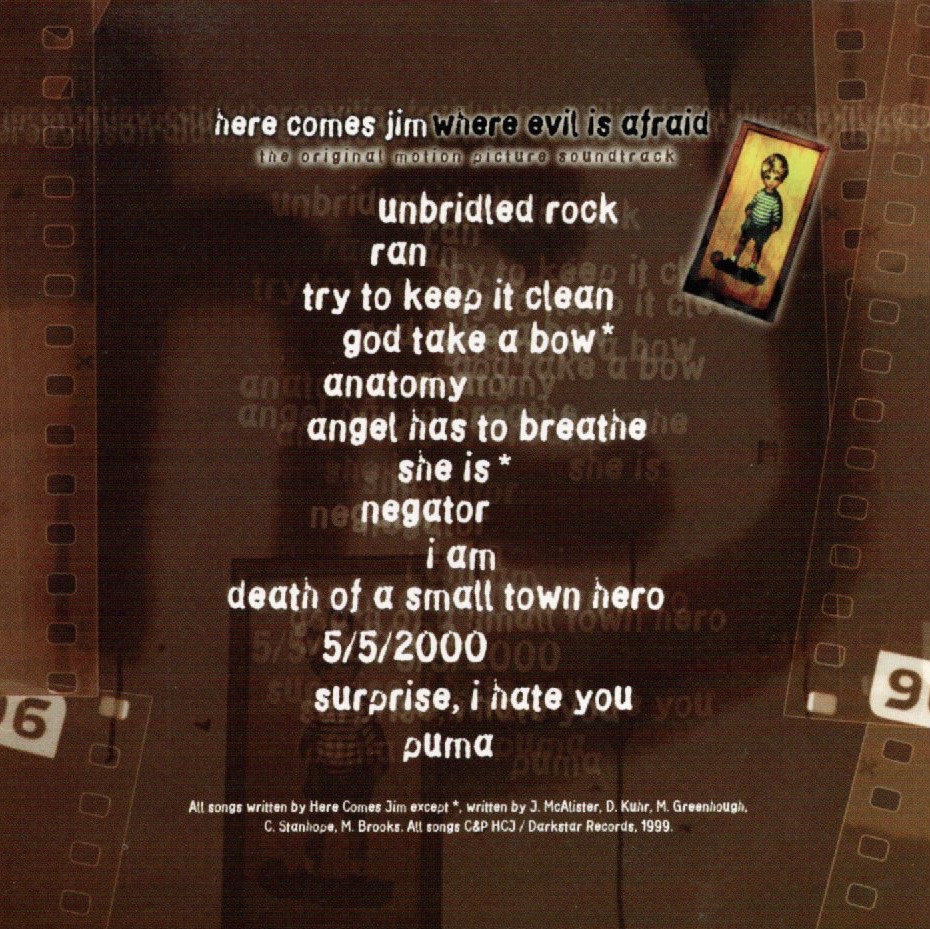
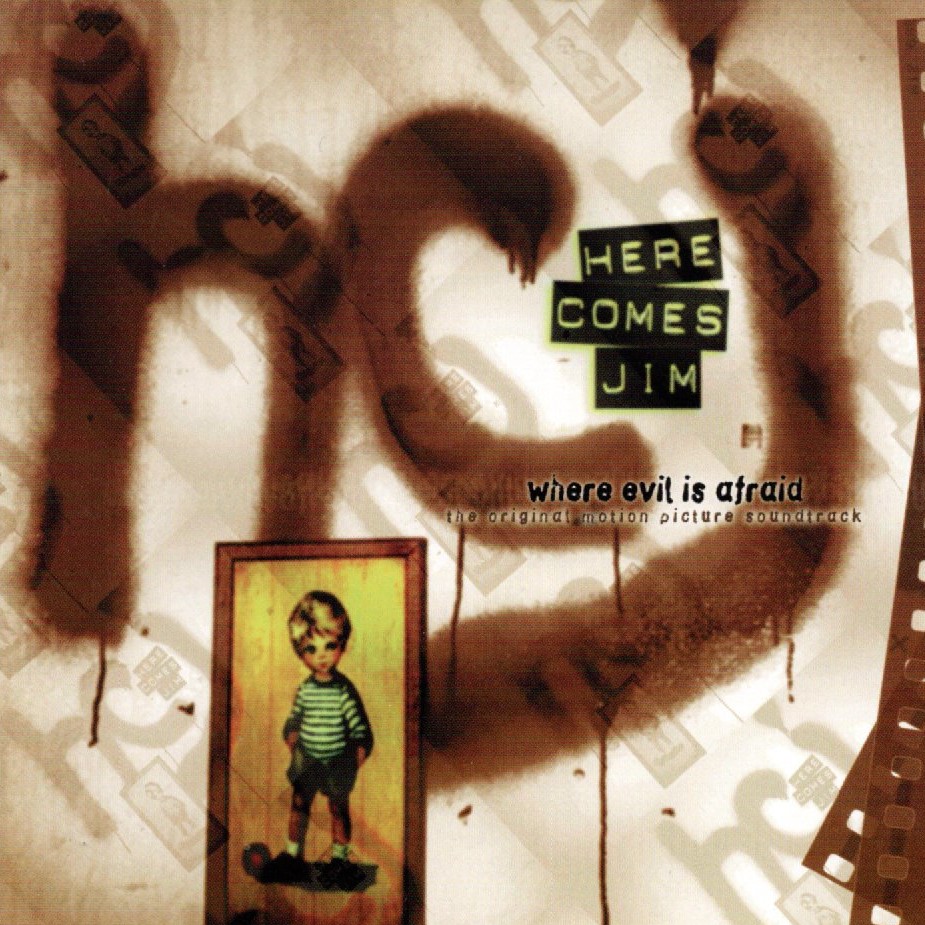
HERE COMES JIM – Where Evil is Afraid – The Original Motion Picture Soundtrack (1999 Dark Star)
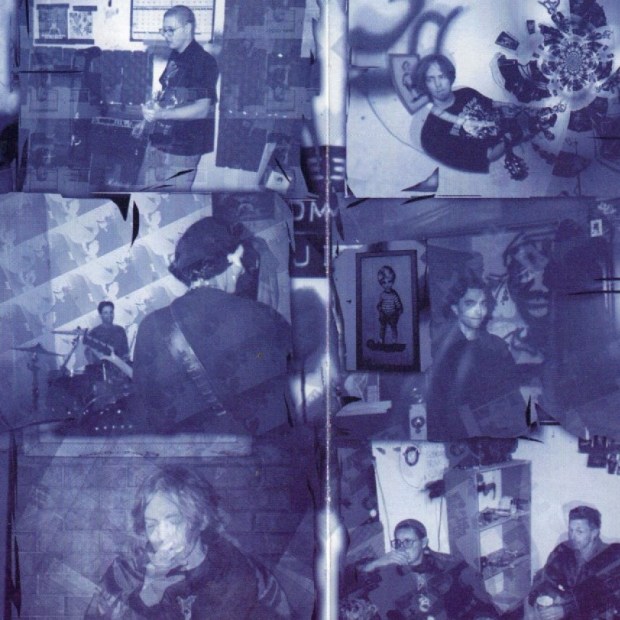
Full disclosure: I used to know this quartet from Cambridge, Ontario Canada. They were great. When I first encountered Matt Greenhough and company, Faith No More had broken up and I was looking for something to replace them in my life. Something heavy, non-mainstream and with bonkers lead vocals. Here Comes Jim both terrified and delivered! I wore their T-shirt, I played the CD in store, I flew the flag. I loved this band.
That was 21 years ago. I’m no longer the angry young man. I wonder how this album sounds today?
It’s still sounds fucking great! It’s noisy — lots of guitars fucking around. “Unbridled Rock” meanders around but comes in to focus on the chorus. The cowbell is a nice touch. As remembered, the vocals really range from quiet sombering to full-on rage. “Ran” combines a melodic sensibility with a noisy guitar drowning. It’s a brilliant and unafraid mix of ingredients.
All the songs come flooding back even though I haven’t played this album in almost 20 years. “Try to Keep it Clean” was always a favourite. Melodic guitars and vocals against a cloudy backdrop. Matty G (that’s what we called him) did the clean and shouty vocals equally well but he’s especially good when he’s singing clean. He has a good handle on melody, but then at other times he just doesn’t give a shit about melody. Sometimes it’s about volume, sometimes about atmosphere. Many of the songs…float. “Angel Has to Breathe” is one such song, hanging uncomfortably over you. That is until the powerful chorus of “Who will save my soul? Who will take my shit and go?”
One of my biggest favourites 20 years ago was the slamming “She Is”, perfect for thrashing out on air guitar. The verses turn quiet and melodic, before the crash of distorted guitars return for an amazing chorus. Then the next track negates all that with “Negator”, an absolutely insane thrash-o-matic scream-fest…with a drum solo!
“Negator” sample
Fun fact: the feedback-laden instrumental track “5/5/2000” refers to an old book from the 1980s that claimed the world would end on that date, due to an alignment of the planets. All I could think was, “Shit…we have to survive Y2k and then yet another doomsday scenario in May? Come on! Who comes up with this?” The song is far more entertaining than the book from which it took its name.
I may not be an angry young man anymore but I get what I liked about Here Comes Jim beyond the friendship. They wrote good, stabbingly aggressive, intelligent rock far off the beaten path. I remember putting tracks like “She Is” and “Negator” on mix tapes and (later) CDs. There are no songs that suck. Only songs that rock. Listening to Here Comes Jim is like going into the ring for 10 rounds and coming out with a concussion.
4/5 stars
A sequel to Getting More Tale #795: A Case for Security
GETTING MORE TALE #874: Impossible to Display
Shoplifting accounts for over a third of inventory shrinkage in retail.* At the Record Store we had numerous strategies to combat this, as discussed in prior chapters. An alert staff can stop a staggering amount of theft, but the last line of defence for us was a magnetic security tag system. Trying to lift a de-tagged item would set off alarms at the store.
Cassettes, one of of our lower-cost items compared with CDs and box sets, were protected with a single magnetic strip hidden on the seam on the shrink wrap. These had to be de-tagged magnetically with a device — they were single use only and the tag left the store with the product after being disarmed. Each tag cost five cents, and that added up. Higher-cost box sets were protected with multiple tags hidden on the edges of the packaging. CDs, which also carried significant cost but were the majority of our store, were protected by a double-edged sword. They were housed in an unbreakable and re-usable plastic longbox, with the magnetic tag stuck to an inner edge. These tags never had to be disarmed. You just removed the security case with a special key and set it aside for re-use on fresh inventory.
Cassettes were checked weekly to re-secure loose tags. We kept a close eye on everything and everyone. Combined with good practices, the security gate at the front of the store prevented a lot of theft. Still, there were certain items that were unfortunately hard to both a) protect properly and b) display properly at the same time. Unusual packaging made some albums difficult to stock on the shelves with the rest of the catalogue.
December 6, 1994: Pearl Jam – Vitalogy compact disc
Although we weren’t equipped to display records, we had no problems when Vitalogy was released on vinyl November 22, 1994. We sold the five copies we stocked on the first day. It was the CD release two weeks later that caused us grief because we ordered those en masse.
The CD release of Vitalogy came ensconced in a miniature cardboard book-shaped package. It had the same dimensions as a normal CD case, just flipped upright on its short side. You could put them in a CD security box no problem, but T-Rev discovered a weakness in its design. Because it was thinner and more flexible than a standcard CD case, you could with a little effort force it out of the security box without unlocking it. This meant we couldn’t safely stock it out on the shelves.
Instead, the boss man set up a small box under close watchful eye at the front counter. He placed the Vitalogy CDs in it, with every fifth copy turned 45 degrees so he could easily count how many were in there at any given time. If he knew that he had 20 copies in the box, but suddenly only counted 19, then he would see if anyone in the store was carrying one around to purchase it. Eventually we just put it back in the security cases, assuming nobody would be as inventive as T-Rev in trying to get one out.
May 29, 1995: Pink Floyd – p·u·l·s·e compact disc with flashing light diode.
The original CD release of Pink Floyd’s p·u·l·s·e had a unique gimmick. The oversized cardboard shell contained the 2 CD album in a book-style case, plus a flashing light gimmick powered by two AA batteries in a hidden compartment. When the CD was reissued without the light and space-consuming batteries, it could fit in a standard size CD security box. However the full-on, limited edition original was too large to be stored in our shelving. Once again we had to put them at the front counter, this time stacked in a pile.
What I remember most about the “pile of p·u·l·s·e” is that flashing light. However many copies were in that heap at the front counter, the lights flashed incessantly. You could not turn them off. Once you purchased the CD, you could remove the batteries from the inside. Safe in their shrinkwrap on our countertop, they just flashed and flashed away. Never in synch. No two copies were ever in synch. I guess it might have depended on how much juice was still in those batteries. Copies of p·u·l·s·e flashed for years without a battery change.
June 20, 1995: Michael Jackson – HIStory double cassette in cardboard sleeve
Although cassettes were being slowly phased out, we still had to carry certain big releases on the format. In 1995, Michael Jackson still sold impressive numbers. Enough that we carried one cassette copy, which once again, was packaged in such a way that we couldn’t display it on our cassette shelves. Unlike other doubles, which sometimes came in a “fat” double cassette case (like Phantom of the Opera) or two normal cases packed together (like The Song Remains the Same), Michael Jackson’s HIStory came with the two tapes face up, side by side, in a cardboard box. It was dimensioned like no tape shelving system known to man.
Too cumbersome to take up valuable front counter space, HIStory was deigned be displayed without fanfare on a shelf behind the desk. To buy a copy of HIStory on cassette from us, there were only two paths to a sale:
My solution was clever. I had just acquired a computer program that enabled me to create perfectly formatted cassette J-cards for my tape collection. I used it to print a sleeve that said “MICHAEL JACKSON – HISTORY – 2 CASSETTE SET – ASK AT COUNTER”. I put that in an empty tape case, and filed it with the rest of the Michael Jackson cassettes. It took forever but it must have sold eventually! I don’t know if I was responsible because it didn’t happen on my shift.
We had a cramped little space and we made the best of it. Given that we were constantly battling for every square inch, any time an artist came out with something that was impossible to display, it created a unique little headache for us!
* The other 2/3rds are largely staff theft and errors.
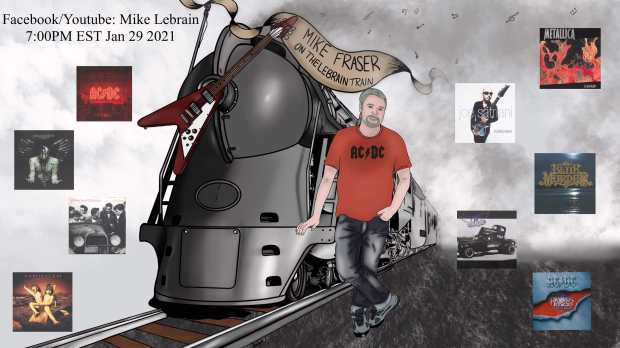
Dude!! What a show that was! Technical difficulties aside, another excellent Nigel Tufnel Top Ten. Hottest Riffs of the 1970s was the topic at hand. The lists went far and wide and everybody came out of it with huge smiles on their faces. Rush, Van Halen and Black Sabbath received a lot of extra love tonight, but you’ll have to watch to find out!
Your panel:
It was a tremendous amount of fun to actually hear some of these riffs instead of just talking about them. A huge thanks to Mike for doing this with us. And he will be back when we talk about the 80s.
The less said about this show, the better, because who wants spoilers? Not you, trust me!
To jump straight to the lists without all the preamble and introductions, go to 0:21:00 and enjoy!
The LeBrain Train: 2000 Words or More with Mike Ladano
Episode 47
In October 2020, we did one of my favourite LeBrain Train episodes: Van Halen deep cuts. Shortly after, I was contacted by guitarist Mike Slayen about how much he enjoyed the lists. He asked me if there was any way he could participate and I “sure DUDE!” See, Dude is the title of his excellent instrumental acoustic CD. But Mike knows not just acoustic, but also the sweet siren song of a fully electrified six-string. Why not talk about Top Riffs?
Kevin, Aaron, and Uncle Meat were interested. But it was quickly obvious that the scope was too large, so we decided to break it down by decade. In the future, we’ll reconvene to talk about riffs of the 80s and 90s, but tonight, we talk about the greatest time ever (perhaps) for guitar riffs: the molten 1970s.
Tonight’s panel will be five:
Mike Slayen is a guitar teacher, so what I am hoping is that he can demonstrate how some of these riffs are played. This is going to be a fun night with plenty of great picks for you (and I) to check out. See you tonight, and please share with your music buddies!
JIM CREAN – The Book of Cryptids Volume II (2020 Dark Night Records)
Jim Crean, hard rock singer extraordinaire from Buffalo, New York, has issued another covers album called The Book of Cryptids Volume II. Many will shy away at the thought of a covers album, but Crean always picks interesting covers off the beaten track. The Book of Cryptids Volume II works because A) these are not songs you typically hear covered, and B) Jim kicks ass on them all.
It’s a varied album. “Medusa” by Anthrax opens heavily and melodically. You might wonder how a hard rock singer like Crean tackles Anthrax. Without difficulty! Jim has a bit more rasp, but where Joey Belladonna gets aggressive, Jim pays more attention to the notes. It’s a fine trade-off. Second in line is the seldom-covered Aerosmith classic “Kings and Queens”, which is right up Jim’s alley. Sounds like a banjo is thrown in for texture during the verses. For an even deeper cut, check out the flawless version of Def Leppard’s “Mirror Mirror”. It ticks all the boxes from dual guitars to throbbing bass. Old raspy Def Leppard is well suited to Jim, who wrenches some panache from the chorus. An ace performance.
Gowan’s “A Criminal Mind” is definitely an unexpected cover. The only band known for covering it is Styx — featuring Lawrence Gowan. Jim Crean could be the only other singer to dare tackle it? This song might be a bit of a sacred cow in some quarters, but Jim does an admirable job of it. Not vastly different, but with its own unique vocal colours.
Keeping with a synthy 80s plot twist, “Silent Running (On Dangerous Ground)” is the old Mike + the Mechanics hit. Cool guitar solo on this track that stays pretty true to the original. Then “Cry For Freedom”, the White Lion slow burner from 1989, is another surprise. Crean has covered White Lion before, but “Cry For Freedom” is a special song. Not a ballad yet not a rocker, it leans heavily on the beat and the vocal. Then it has a guitar burn-up near the end, and this one sounds exactly like Vito Bratta.
A keyboardy piano ballad called “Love Is” (Vanessa Williams) …well, let’s just say it takes balls of steel to put it on the same album as an Anthrax song. Fortunately Jim makes it cool, but not as cool as the earlier “Criminal Mind”. But then it’s a whole different ball park: Mother Love Bone, and “Star Dog Champion”. Again, a song that might be considered sacred in some quarters. Jim’s voice is well suited to it, and this “Champion” is fully enjoyable.
We begin to draw to a close on the Scorpions early dark ballad, “When the Smoke is Going Down”. It’s another song that Crean is capable of bending to his will. Brilliant vocal on this one, especially considering that Klaus Meine has to be a top-five metal singer. Coming down from that climax, the final denoument is surprisingly authentic to the original: the Stones’ “Gimme Shelter”. This is one of those mountainous peaks that only fools dare to climb. Yet Crean’s winning streak continues unabated. The sonics are so close to the Stones, and everything sounds completely natural. How the hell do you replicate Charlie Watts’ drums on “Gimme Shelter”? Dunno, but it sounds really good!
All this said, you’re still skeptical, right? Covering “A Criminal Mind” and “Gimme Shelter”? A healthy dose of skepticism is warranted when reading a glowing review of a covers album. To me, covers are worth listening to when you enjoy the spin that another artist puts on the song. In this case it’s Jim’s voice, a classic hard rock voice that I like a lot. So I’m cool with hearing “A Criminal Mind”, because I like the way Jim sings.
Consider this. We’re 10 months into a worldwide pandemic and gigs have dried up. Some artists, like Jim Crean, are recording and releasing music, and we should be supporting that. He gives you good value for the money. This copy came signed, with a custom Jim Crean guitar pick and signed photo. Not to mention some quality covers of great songs off the beaten track. The Book of Cryptids Volume II comes with cool artwork of various cryptozoological specimens including a kraken, Bigfoot, some sirens and an alien. You can buy this package direct from the artist, so you know the money goes to the right people. Check it out — guaranteed a few of these tracks will put a smile on your face.
4/5 stars
There have been a lot of anniversaries lately. On January 4, I celebrated (but not did not post about) 15 years of freedom from the Record Store. (Why beat a dead horse?) But today I choked up a bit when I saw the photo.
I say it was the happiest day of my life. It was the day I brought Jen home from the hospital after finishing her cancer surgery. The photo says it all. Look at that face. The glow. Just looking at her, reminds me of how worried I was. How much I missed her. How happy I was to be able to drive her home that day.
It was not a pleasant time when she was in hospital. It was a harsh winter. The drive to London and back was hell. I wasn’t eating. Finishing an apple was an ordeal. Meanwhile poor Jen was dealing with that nauseating hospital food. She started a game called “Guess the Grossness” where she would post pictures of her meals and people had to guess what they were. She was so strong at that time.
Little did we know that her mom, who was supporting us through all this, had less than nine months left to live. I can tell a secret now. The night that Jen had her surgery, her mom collapsed at the hospital. She hit the ground and bruised her face. She brushed it off and complained about a loose rug, and refused to be seen. Deep inside, I knew that she was hiding something. She didn’t tell us. I’ll never hold that against her — she did what she thought was right to support Jen, and I truly don’t know if we could have handled more stress at that time. So she quietly fought her own battle as Jen was dealing with hers. But that’s what happened. On the night my wife was recovering from her surgery, my beloved mother-in-law was dying of cancer that we didn’t even know about. But I could not have made it through all this without her support.
I dedicate this writing to Jen’s mom, who was with us side-by-side through it all, until she was unable to be. She was just as happy to have Jen home as I was. The picture says it all — the face of an angel aglow with life.
The final episode of the Pepsi Power Hour aired at the end of the summer of 1991. The man with the sad honour of signing off was veteran Michael Williams. Off and on, Williams hosted the Power Hour since 1986 if not earlier. It was filmed at a welding shop in Calgary, Alberta. Because metal? (Bad, bad idea! Audio engineers, your thoughts on this setting?)
Williams played Metallica’s “One”, and “Hunger Strike” by Temple of the Dog. The shape of things to come.
The episode also features an interview with a new band called The Scream, featuring an up-and-comer named John Corabi. A couple years later, and Corabi would be the new singer in Motley Crue.
The very last band ever played on the Pepsi Power Hour was Van Halen. It was a big interview by Kim Clarke Champniss regarding the new album For Unlawful Carnal Knowledge. The very last song ever played was “Runaround”.
The Power Hour was supplanted by the inferior Power 30. It was a significant change. I rarely missed a Power Hour. The Power 30 was rarely worth catching. However, look for the ad for a promising new Saturday show called Start Me Up – three hours of rock!
YouTube has forced me to butcher this video to get it up, so there are no music videos. The Van Halen interview is mutilated. There are some ads and all the talking. It’s history!
Speaking of history: 100 VHS Archives! And counting! I started posting these in 2019 and I still have plenty of files left to upload, and a few more tapes to play. I’ve been taking it easy lately because the software is user-unfriendly and my VCR is making odd noises. But we’re not done. Not by a long shot.
Click here to check out all the VHS Archives!
Use Your Illusion wasn’t even out yet, but Guns N’ Roses were two solid weeks into a tour chock full of new and old music. MuchMusic’s Dan Gallagher talked with Duff McKagan and new member Matt Sorum before their show on June 7 in Toronto. Was there an album really coming?
MuchMusic was into adding strange visual effects to their videos in the early 90s. That choppy visual is not mine. That is from the source broadcast.
Axl Rose had hurt his ankle and was giving the injury a stretch, riding around backstage on a bike. Stay tuned to the end! I hope that was gum.
Topics discussed:
VHS Archives proclaimed that video #43, Blackie Lawless’ 1989 Power Hour show, was the best interview with the man that you’ll ever see.
Every hit deserves a sequel.*
Unfortunately by 1992, when Blackie returned with new album The Crimson Idol, MuchMusic cancelled the Pepsi Power Hour and replaced it with the half-hour Power 30. No more hour-long in-depth shows with an artist like Blackie. This shorter talk is from midday in the summer of ’92.
Erica and Blackie joke around, but still get serious. They maintain their excellent rapport from the prior encounter. Topics discussed:
Once again well done to Erica Ehm who did the best with the limited time at hand.
* Kevin does not agree.