Reviews

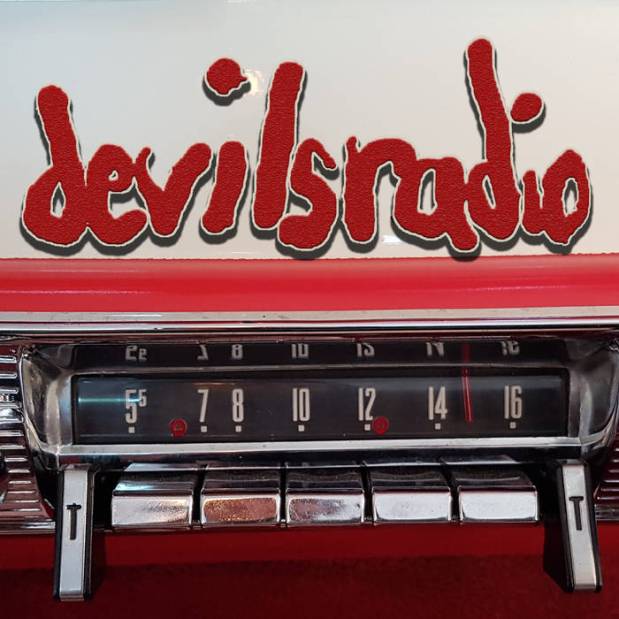
REVIEW: Devilsradio – The EP (2019)

DEVILSRADIO – The EP (2019)

Here’s a new Canadian three-piece with some hard rock for your ears!  Their new three track EP has potential.  They’ve kept the songwriting short and to the point.  There’s a distinct 90s groove to the EP, without resorting to direct references or ripoffs.  When we say “90s groove” we’re referring to rhythm front-and-center, and a singer who does it from the guts.

Opener “Fear the Monster” has a pretty immediate chug, perhaps from the Stone Temple Playbook.  This track is the clear winner of the three.  As soon as it hit, my right hand started doing the air guitar motion.  Chug chug — the riff is the key.  Good song, and probably really good live.

“Lost in the Dark” and “Great Day” make up the rest of the EP, good songs both.  The edge is on the dark side, these are not party songs but good ones for those angsty days.  They could use some guitar embellishment, but the grooves crush.  Get your headbangin’ on.

The EP sounds like a good first outing for DevilsRadio.  There’s room to grow but they have a solid foundation from which to build.  I’d like to hear them write more songs and add more to their sound, be it backing vocals or instrumental flourishes.  There is good material here and “Fear the Monster” should get you movin’.

3.25/5 stars

1. “Fear the Monster”  2:57
2. “Lost in the Dark”  4:43
3. “Great Day”  3:37


Check out the EP here!

REVIEW: Max the Axe – Trillion Dollar Threats (2010)

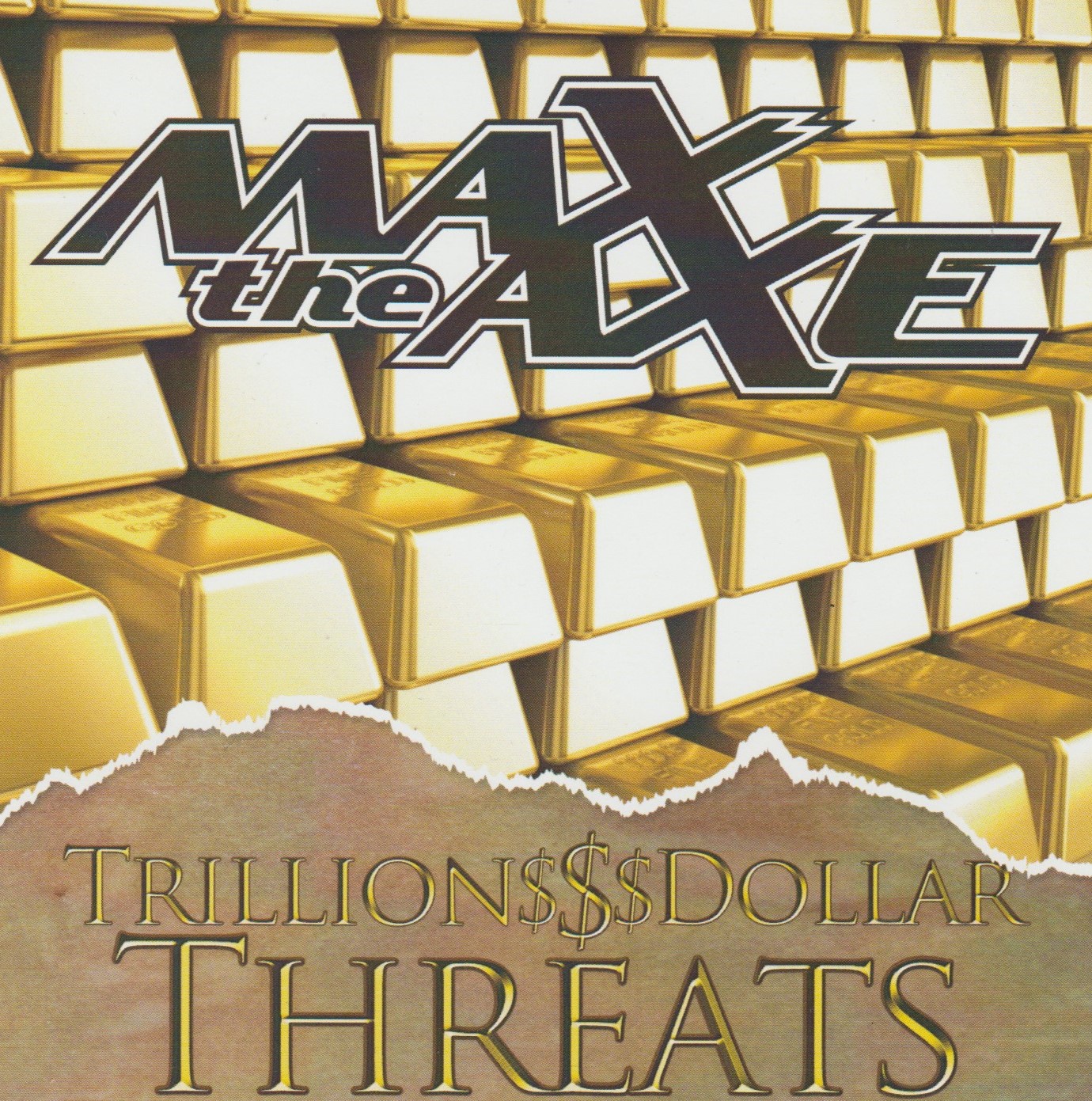
MAX THE AXE – Trillion Dollar Threats (2010 Mutant Music)

Max the Axe’s stellar new album Status Electric didn’t pop out of thin air.  Before he nailed it with that CD, Max had five prior releases.  Status Electric included a couple songs from the previous album Trillion Dollar Threats.  “River Grand” was vastly improved with Eric “Uncle Meat” Litwiller’s vocals.  Though it’s no Status ElectricTrillion Dollar Threats is still an entertaining slab of rock.

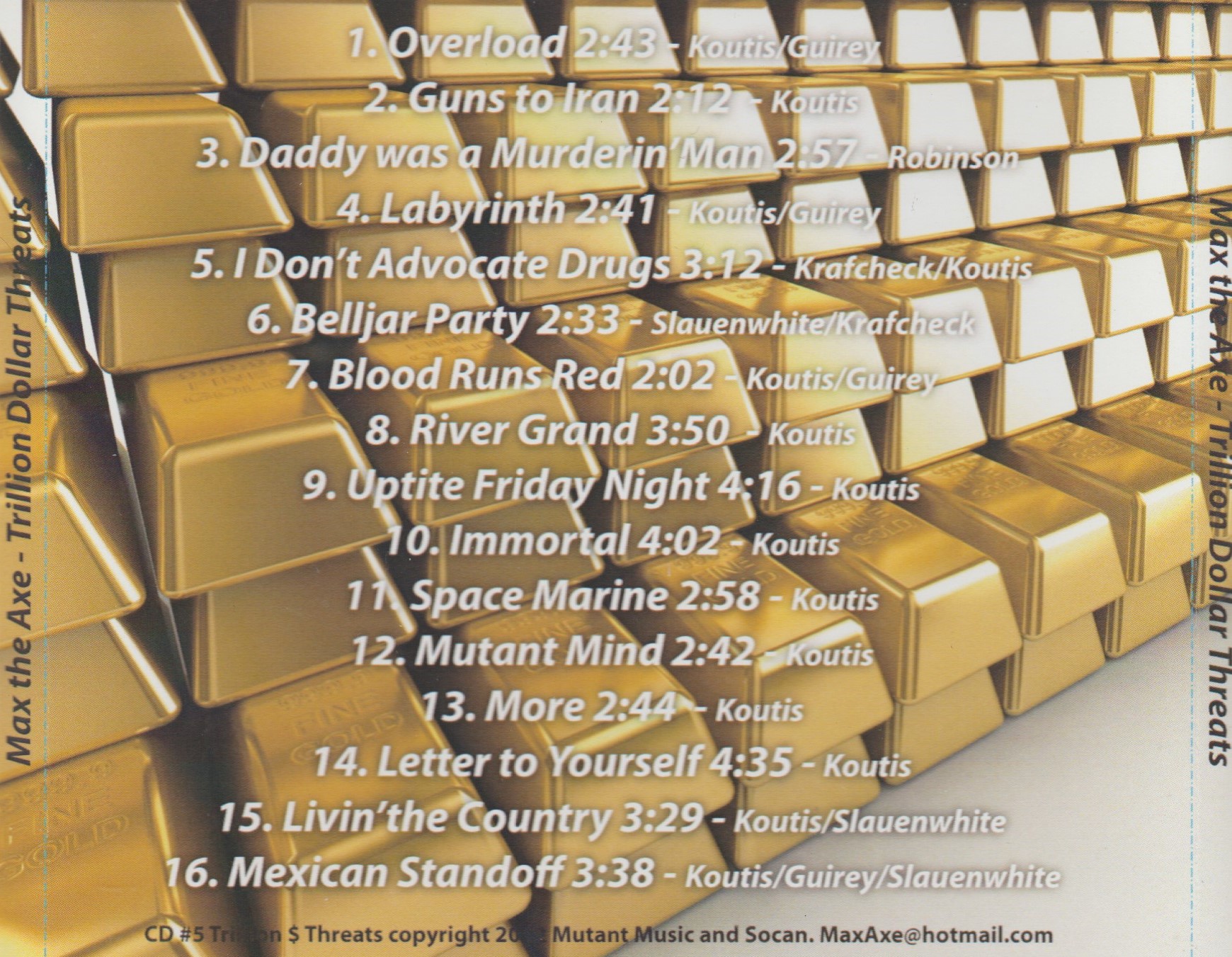
Trillion Dollar Threats features a variety of players.  There are several singers:  Geoff Dyke, Ted Moore, John Kelly, Mickey Straight, Ted Guirey, and Eric Litwiller.  That’s almost enough singers to staff the entire career of Black Sabbath!  Over the 16 tracks, there’s not a lot of cohesiveness, but there is a lot of rock.

“Overload” is a heavy-as-fuck opener, 80s thrash metal through and through.  It’s all about that chug, but the vocals seem like an afterthought.  “Guns to Iran” takes a spoken word approach, over a heavy riff, but when the singer (Geoff Dyke) attempts to sing…it ain’t good.  Mickey Straight improves things immediately on “Daddy Was a Murderin’ Man”.  There’s some punk rock in Max the Axe and this is where it comes out (guitar solo notwithstanding).  Maybe a little Faster Pussycat or LA Guns too.

Max is the master of the chugging heavy metal guitar.  “Labyrinth” has that, before meandering around a few different bits.  It’s a good groove that could use some editing.  “I Don’t Advocate Drugs” has a good riff coupled with entertaining lyrics.  For more amusement, there’s “Belljar Party”, the story of stuff going missing after a party.  “Whoever it was, they took my Walkman too.”  Other cool tracks include the spacey “Mutant Mind”, “Livin’ the Country”, and “Mexican Standoff”.

According to Litwiller, “Uptite Friday Night” is the exact same version as the one on Status Electric.  That’s OK because the sloppy drunk vibe is perfect.  The original “River Grand”  has Terry Guirey singing, but although this is the blueprint the Litwiller version is clearly better.  He took it in a more grungy Alice in Chains direction.

Look at Trillion Dollar Threats as a stepping stone to Status Electric.  All the band members (Max, Eric, Dave Haslam and Mike Mitchell) are there on one track or another.  Status Electric couldn’t be as great as it is without Trillion Dollar Threats laying the groundwork.  It needed to be cut down from 16 tracks (way too much for most albums), and some of the tracks need some tightening, but there is some decent rock on Trillion Dollar Threats.  If you like metal in the retro style, there will be plenty of riffs here for you to digest.

3/5 stars

REVIEW: Whitesnake – 1987 (30th Anniversary Edition box set)

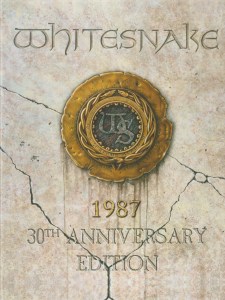
WHITESNAKE – 1987 (30th Anniversary Edition Rhino box set)

Back when I reviewed the original “Deluxe” edition of Whitesnake’s 1987, I said, “Great album, but this reissue could have been so much better.”  And so here we are.

Let’s get right down to it.  You already know the story of Whitesnake 1987 or you wouldn’t be here.

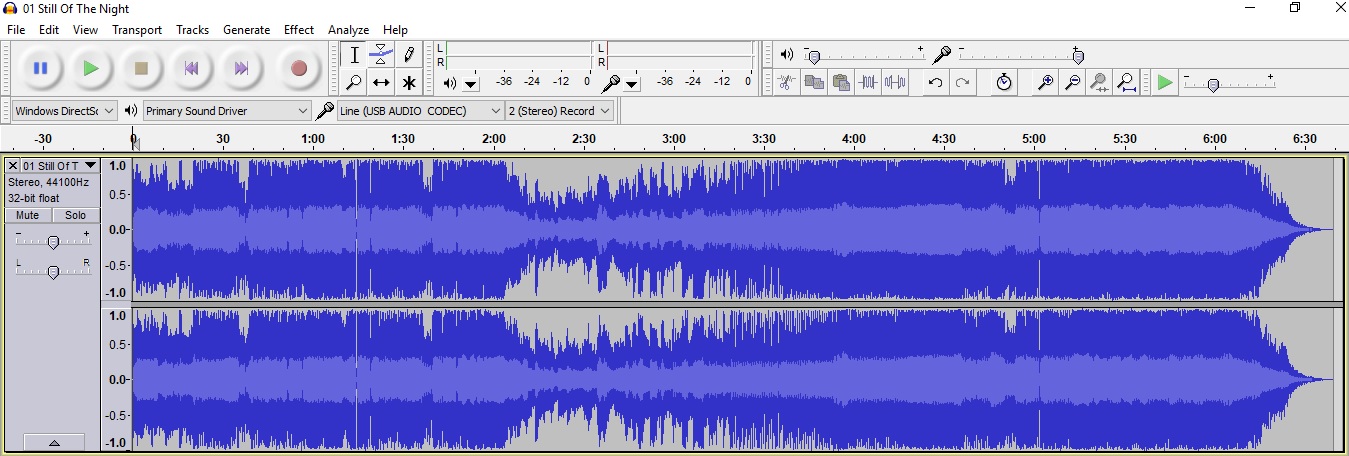
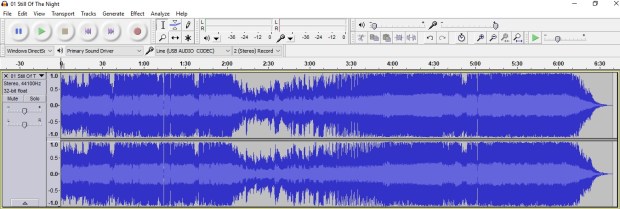
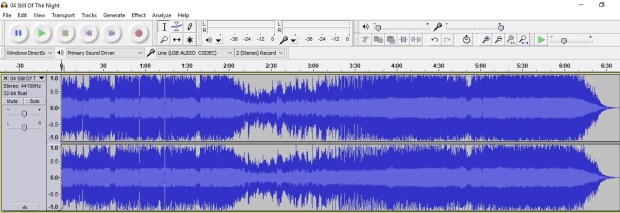
The main feature is the 2017 remaster of 1987, which actually sounds pretty great.  In this day and age, if you’re seeking the warmth of a vintage vinyl experience, you can go and have that experience for far less money than this box set costs.  For a compact disc, this might be as good as we’ve gotten so far.  If you look at the Audacity waveforms below, you can see the 2017 remaster (top) has roughly the same levels as a previous one from Whitesnake Gold.
I’m still hanging on to my original UK version of 1987, but for compact disc, this is probably it.


David Coverdale wanted to adapt Whitesnake to the 1980s with this album, and this lineup with John Sykes, Neil Murray, and new drummer Aynsley Dunbar was certainly able to deliver.  The album was always loud, especially compared to their 70s output.  Sykes provided the squeals that the kids wanted.  David was back in top voice.  The album they delivered is legendary for how it changed Whitesnake’s fortunes.

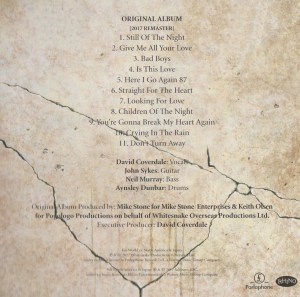
The running order on this box set is not the original UK or US, but the combined running order as used on the previous 20th anniversary edition.

“Still of the Night” blows the doors in, a tornado in the night, mighty and sexy too.  Whitesnake had never been this aggressive before, but “Give Me All Your Love” lulls the listener back to something easier to digest on first listen.  “Give Me All Your Love” was a successful single because it’s melodic pop rock with guitars.  But then the band scorch again with “Bad Boys”, top speed right into your daughter’s headphones!  Whether it was Aynsley Dunbar or just the songs that they wrote, the pace is high gear.

“Is This Love”, a song that David was writing with Tina Turner in mind, was another massive hit.   John Kolodner (John Kolodner) insisted that they keep it for themselves, and he was right as he often was.  For a big 80s ballad, “Is This Love” really was perfect.  It tends to work better in a stripped back arrangement, since the original is so specifically tailored to that era.  Still, Sykes’ solo on it has to be one of his best.

Speaking of hits, “Here I Go Again” is the one that Sykes didn’t want to do, and look what happened.  That humble pie probably tasted no good to Sykes when he found himself fired by Coverdale after the album was completed.  His replacement, Adrian Vandenberg (Vandenberg) actually played the guitar solo, so dissatisfied was Coverdale with the one Sykes produced.  “Here I Go Again” was of course a minor hit from Saints & Sinners, but deserving of a second shot in America with production more suited to their tastes.  Don Airey on keyboards; though Whitesnake did without an official keyboardist this time.

“Straight For the Heart” is a great also-ran that perhaps could have been another single if they kept trottin’ them out instead of stopping at four.  High speed but with incredible hooks, it’s impossible not to like.  “Looking For Love” is the second ballad, but actually originally unreleased in the US.  It’s toned down from the style of “Is This Love”, and Neil Murray’s bass is pronounced.  He was a huge part of the groove on this album, if you really settle in and listen to the rhythm section.  His bass has a certain “bop” to it.  “Children of the Night” returns the tempo to allegro and the lyrics to dirty.  I can’t imagine too many fathers of the 80s wanted their daughters to go to the Whitesnake concert if they heard David cooing, “Don’t run for cover, I’m gonna show you what I’ve learned, just come a little closer, come on an’ get your fingers burned.” Another UK exclusive, “You’re Gonna Break My Heart Again” cools it down slightly, but that Sykes riff is hot like a torch!

“Crying in the Rain” is held back to second-last in this running order, even though it opened the US album.  Another re-recording, “Crying in the Rain” was suggested by Kolodner because he knew Sykes could give it that massive blues rock sound that it had in the live setting.  Again, he was right.  “Crying in the Rain” is massive — perhaps the most sheerly heavy piece of rock that Whitesnake ever dug up.  Finally the CD closes with the last ballad, “Don’t Turn Away”, which closed the US version.  It’s a fine song indeed, and a really good vibe on which to end Whitesnake 1987.

The second CD in this set is called Snakeskin Boots:  Live on Tour 1987-1988.  Presumably, these are recordings from throughout the tour, assembled into a CD-length running order.  The “boots” in the title implies bootleg quality, but it certainly sounds better than that.  Soundboards maybe?

The studio lineup of Whitesnake dissolved and David got Vandenberg in, followed by Vivian Campbell (Dio) and the rhythm section of Rudy Sarzo and Tommy Aldridge (Ozzy Osbourne).  This new lineup was not based in the whiskey blues of the old band(s), but in the flashy stylings of the 1980s.  Vivian and Vandenberg were both capable of shredding your brain.  That’s generally how they do it on these recordings.  Opening with “Bad Boys”, the manic tempo is maintained while the guitars reach for the stratosphere.

Sounds like it was a hell of a show, rolling into the groove of “Slide it In” and “Slow An’ Easy”, and the good news is the 1987 band can play the 1984 songs too.  David Coverdale is the ringmaster, the veteran, confident and in prime voice.  All the songs are from either 1987 or Slide it In, with only one exception:  the slow blues “Ain’t No Love in the Heart of the City” from the original 1978 Snakebite EP.  Sounds like Vivian Campbell accompanying David on this slow, classy blues.  No Deep Purple in the set; but my old pal Rob Vuckovich once said he went to the Toronto show on this tour bearing a flag that said “PLAY PURPLE”.  He also claimed David acknowledged it by saying, “We’re not playing any of that!”

“Here I Go Again” comes early on the CD, fourth in line, and it’s excellent.  “Guilty of Love” is a nice surprise, and “Love Ain’t No Stranger” is more than welcome at the party.  “Is This Love” is well received, and works well in the live setting without too much extra production.  Adrian can’t top the Sykes solo, though he gets within very close range.  Vivian and Adrian get a feature solo with a keyboard backdrop, and it’s quite good — more like an instrumental than just a solo.  It leads into a brutally heavy “Crying in the Rain”; Tommy Aldridge literally beats the shit out of it!  The CD closes on “Give Me All Your Love” with David substituting the word “baby” in the opening line with “Tawny”!

There’s little question.  For most fans, the major draw of this box set will be this live CD.  If that is you, you will not be disappointed by Snakeskin Boots.


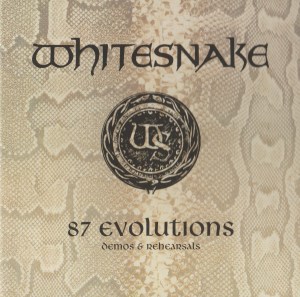
Disc three in this monolith of a box set is the 87 Evolutions.  This is an interesting concept but not one that you will be craving to have a listen regularly.  This disc is intended for deeper study.  These tracks are the album’s songs in various stage of demoing.  “Still of the Night” for example starts as a living room demo, with David slapping his knees for drums, and only the most basic of lyrics.  Then this demo fades seamlessly into a more advanced full band arrangement, with the lyrics still unfinished.  There’s a funky middle solo section here that is more jam than song, but a blast to hear.

That is the kind of thing you can expect to hear on 87 Evolutions.  No need to spoil what you should enjoy discovering yourself.  This is for the hardcore of hardcore fans, those that want every squeal that ever came from Sykes’ axe.  You are gonna get it.  Incidentally, I think I prefer David’s original, rough slow bluesy version of “Give Me All Your Love” to the glossy pop song it became.

This disc ends with a “Ruff Mix” of the completed “Crying in the Rain” from Little Mountain studios.  All the parts are in place, the mix just needed that modern bombast that David was aiming for.


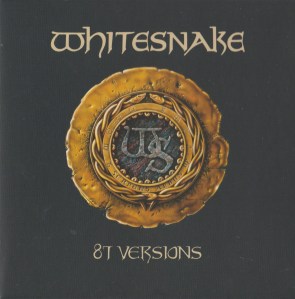
The fourth and final CD, 87 Versions, is a collection of alternate remixes released on various singles, and brand new remixes as well.  These are really cool bonuses.  The 2017 mix of “Still of the Night” has a really dry sound, allowing you to really hear the spaces between the instruments.  A lot of these remixes have a different balance of instruments, so you will hear different things yourself.  There are two remixes of “Give Me All Your Love” on this CD:  the 2017 with the original Sykes solo, and the highly coveted alternate with “new” solo by Vivian Campbell.  There are also two remixes of “Here I Go Again”, including the old “Radio Mix” with a completely different group of musicians and a much more pop arrangement.

Among these remixes is something called the 1987 Versions:  Japan Mini-Album, proving that Japan always get the best stuff.  This apparent EP contains the B-sides and bonus tracks that you couldn’t get on the album.  “Standing in the Shadows” was another song re-recorded for 1987, though left as a B-side.  “Looking For Love” and “You’re Gonna Break My Heart Again” are also included, since back then you could only get them in the UK.  “Need Your Love So Bad” was a previous Whitesnake B-side, remixed in 1987 for a new B-side!  It’s an absolutely stunning ballad, quiet with only keyboard accompaniment.

With all these tracks included, pretty much every track associated with the 1987 album and singles is covered.

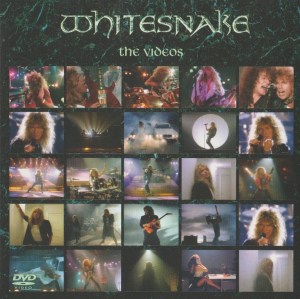
Whitesnake: The Videos is the fifth disc, a DVD.  It’s really just an add-on, nothing substantial (like a 5.1 mix).  First on the menu:  “More Fourplay”, the classic MTV videos that set the world on fire in 1987.  Some behind the scenes footage too.  MTV was a huge part of this band’s success (hopefully Tawny gets paid a royalty from this reissue?).  These glossy videos are…well, they didn’t age as well as the album did.  Why does Rudy always lick his bass?  You just gotta laugh at “Here I Go Again”; the pretentious image of the three guys (Viv, Adrian, Rudy) playing keyboards passionately side by side…utterly silly.  But yet iconic.  “Is This Love” has the band playing on evening rooftops, Rudy wielding a double-neck bass.  Why?  Doesn’t matter; in 1987 we thought it was awesome.  “Give Me All Your Love” is a notable video, being a “live on stage” type, but also with the brand new guitar solo cut by Vivian.  For his solo, Viv chose to play on the wang bar a bit too much, but at least David let him do one.  It remains Vivian’s only studio appearance with Whitesnake, ever.  Unannounced but cool just the same, “Love Ain’t No Stranger” (from Slide It In) is used in whole as the end credit song for the “More Fourplay” segment.

Next up is a 28 minute documentary about the making of the album.  David has clear recollections and is always a delight to listen to. (Some vintage Coverdale interview footage is actually from a MuchMusic piece with Denise Donlon.) Interestingly, he claims that the “Still of the Night” riff is one that he found in his mother’s attic, that he wrote back in the tail of Deep Purple.  “Still of the Night” could have been a Purple song, but it took John Sykes to make it what it became.  We then move on to the assembly of the touring lineup, dubbed the “United Nations of Rock”.  Tommy and Rudy are also interviewed in vintage clips, with Tommy proudly proclaiming that they want to bring musicality back to rock and roll.

The “Purplesnake Video Jam” (whut?) video of “Here I Go Again” is basically a brand new music video using alternate footage from the time.  The mix is similar to the old single mix, but spruced up.  Finally there is the “’87 Tour Bootleg”, and woah!  It’s pro-shot multi-camera footage.  You only get half of “Crying in the Rain”, and all of “Still of the Night”.  Why not more?  Is this a tease for some kind of upcoming DVD?  The footage reveals a band of their time, but a good band.  Not the best Whitesnake lineup ever (Sykes gets that), but a good lineup with something special together.  They were tight, they could all play their nuts off, and present a high energy 80s stageshow, especially Rudy.  By the end of “Still of the Night”, David is actually dodging panties being thrown at his head.  I kid you not.


As per usual, any box set worth its own respect is packed with added stuff usually made of paper.  In this case, a nice hard cover booklet, a smaller softcover lyric book, and a poster.  Posters have to be the biggest waste of money in a set like this.  Who’s going to hang it?  I’m probably never even to unfold mine once.

Now that you have all the details, you should be able to decide if this box set needs to be in your collection.  It needed to be in mine.  And guess what — Slide it In is next!

5/5 stars

REVIEW: Joe Satriani, Eric Johnson, Steve Vai – G3 Live in Concert (1997)

JOE SATRIANI, ERIC JOHNSON, STEVE VAI – G3 Live in Concert (1997 Epic)

It took me 21 years to finally buy this CD.  Why?  It was hard to get excited about three live Satch songs, three live Vai songs, and so on.  But a collector needs to catch ’em all, and it’s actually a pretty fabulous listen throughout.

Joe Satriani opens the set with “Cool No. 9” from his self-titled blues album.  Blues to Joe Satriani is a different kind of animal.  It’s trick-laden and thick with notes, although this doesn’t mean light on feel.  His landmark classic “Flying in a Blue Dream” is more what people expect from Joe.  I like to describe his albums as regular vocal rock records, just with the lead guitar singing the melody instead of a person.  I think I stole that description from Joe himself.  You can’t really call “Flying” a ballad but it sure is epic.  Finally it’s “Summer Song”, Joe’s big 1992 hit from The Extemist.  It doesn’t get more accessible for instrumental guitar rock.  Joe’s actually the perfect artist to open this CD for that reason.  His music, more than most instrumentalists, is door-opening for listeners.

The sublime Eric Johnson is in the middle position.  “Zap” is a tour-de-force of instrumental prowess, built into the framework of a nice shuffle.  Though you can certainly bop along if you like, the musicianship here is not for the timid.  “Camel’s Night Out” is a busy groover.  One of Johnson’s best tunes ever has to be “Manhattan”, which goes down unbelievably smooth live.  The playing is lyrical and warm.

Steve Vai’s threesome includes “Answers” and “For the Love of God” from Passion & Warfare.  “Answers” is one of Vai’s more challenging songs, fast and funky with weird tones and melodies.  This is probably the most blistering song on the whole disc, including a solo that isn’t in the studio version.  For all that, “For the Love of God” is the most awe-inspiring.  This ballad puts the passion in Passion and Warfare.  This is the one with Steve’s soul in it, every bend and every beat.  “The Attitude Song” is an oldie from the first Vai album Flex-able, just a solid rocker with some shredding.  Live it is much heavier than the tinny studio cut.

Finally, there is a trio of tunes with the three maestros playing together, as is the G3 tradition.  The blues standard “Going Down” is a typical jam, with Joe on vocals.  Then a tribute to Steve’s mentor, Frank Zappa, on “My Guitar Wants to Kill Your Mama” with everyone singing…and shredding.  Finally, Jimi Hendrix’s “Red House” finishes the CD with Eric Johnson on lead vocals.  Of these three tracks, “My Guitar Wants to Kill Your Mama” smokes the other two.

May as well pick up the original G3 CD if you find it in the wild.  It’s good stuff.

3.5/5 stars

Sunday Chuckle: A Snotty Pile

When heavy gauge steel is formed, coolant is used because of the tremendous force and friction is involved.  At work, we have green coolant.  It is now very cold outside, so when we move the material out, any leftover coolant freezes just like water.

The other day, conditions were perfect for a green “snot-sickle” to form on the edge of a piece of piling.  We thought it was funny enough to snap a picture.


REVIEW: Jim Crean – Greatest Hits (2018)

In a surprising turn of events, Jim Crean has been named the new singer for Vinnie Vincent! So it is a perfect time to review Jim Crean’s Greatest Hits.

JIM CREAN – Greatest Hits (2018 Visionary Noise)

Buffalo’s Jim Crean has four solo albums under his belt.   That’s a good minimum before you release a greatest hits.  There is enough material here for a solid listen, including two new songs from Crean’s forthcoming fifth album.

Several of the best tracks are hard rockers from Crean’s Insatiable. “Touch” remains a standout, a great song any rock songwriter would be envious of.  Not to mention Crean’s power-pipes lay waste to the chorus.  Check out the metal riffing on “Follow Your Heart”, too.  These taffy-sweet tracks claw into your cranium via your ear canal.  All you can do is surrender to it.

Crean’s also capable of standout ballads.  “Make It” and “Can’t Find My Way” (a duet with Mike Tramp) are fantastic.  Then he goes vintage Aerosmith on “She Goes Down”, a song that could have fit nicely on an album like Toys in the Attic.

There are a handful of covers on the 16 track album, and interesting choices too.  “Caught in the Middle” is, of course, Dio, performed with Jimmy Bain and Vinny Appice.  “Over the Edge” is early 90s L.A. Guns, an excellent groove.  Crean also covered fellow Buffalo band the Goo Goo Dolls with the acoustic “Cuz You’re Gone”, one of the Goo’s finest ballads.

What about the new songs?  “Scream Taker” sounds like a Ronnie Dio tribute, with the lyrics cut and pasted from Rainbow, Black Sabbath and Dio songs.  “Scream Taker” indicates that Crean has gone heavier on his fifth record.  The other new song, “Conflicted” has a strong traditional metal riffy vibe.  (Is that Billy Sheehan on bass?)  Both these new songs hint at a great album to come.  Guitarist Steph Honde, who plays on both new songs says that while the new Crean album will be a bit heavier, there will also be some great ballads.

Don’t have any Jim Crean yet?  Pick up his Greatest Hits to catch up.

4.5/5 stars

REVIEW: Queensrÿche – Condition Hüman (2015 vinyl box set version)

As we gear up for this year’s release of the next Queensryche album The Verdict, let’s look back at a different edition of their last album Condition Hüman.  For our original 2015 review of Condition Hüman, click here!

QUEENSRŸCHE – Condition Hüman (2015 Century Media 2 LP, + 7″ single coloured vinyl box set)

It is almost customary now.  When a band comes out with a new album, there has to be a crazy deluxe edition with vinyl and CD.  The best of these editions are the ones that include exclusive music.  In the end, all the posters and booklets in the world add up to only paper.  Exclusive music is the thing of real value.

Queensryche did well with their Condition Hüman deluxe.  It was available in a variety of colours.  This one is yellow, number 659/1000.  There’s a cool turntable mat inside, and a double sided poster.  For music, the album is split onto two coloured 180 gram vinyl records, including the Japanese bonus track “Espiritu Muerto” on Side D.   (The D-side is also etched with the Queensryche logo in the empty space.)  For your convenience, the entire album including Japanese bonus track is duplicated on the CD inside.  Then for the diehards comes the true exclusive:  two more songs on a 7″ single, not on any other version of the album.  This is the real reward for spending the extra money on the deluxe.

“Espiritu Muerto” chugs heavily along, punishing the skulls of unbelievers.   On the 7″ record, the two exclusive songs are fairly non-descript. “46° North” is B-side-ish, like a leftover written for Empire but dropped in favour of something more commercial.  “Mercury Rising” is on the other side, with a vaguely psychedelic metal vibe and science fiction lyrics.

Condition Hüman itself is a strong metallic album, though with hindsight perhaps too “metal” for its own good.  There was a time, not so long ago, when fans would have begged and pleaded with Queensryche to write just one new song in the vein of Condition Hüman.  Now that we have two albums solidly back in the metal genre, it would be nice to hear real diversity in Queensryche again.

That said, Condition Hüman is a damn fine album for what it is.  The Queensryche of today, fronted by Todd La Torre, has been determined to retain trademark elements from Queensryche’s 80s heyday.  That includes strong riffs, dual harmony solos, and screamin’ vocals.  These are all delivered with gravy on top.

The vinyl experience of Condition Hüman is actually superior to that of CD.  It was always a long album, with the standard edition being 53 minutes of pretty relentless stomping.  On vinyl, you’re forced to pause and flip the record three times before even getting to the single.  These brief respites allow you to breath and absorb.  What I’ve absorbed is that Condition Hüman is still a damn fine collection of songs, if a bit too single-minded.  One gets the impression from this album that, though good, Queensryche can still do better.

4/5 stars

LP-A1 Arrow Of Time
LP-A2 Guardian
LP-A3 Hellfire
LP-A4 Toxic Remedy

LP-B1 Selfish Lives
LP-B2 Eye 9
LP-B3 Bulletproof
LP-B4 Hourglass

LP-C1 Just Us
LP-C2 All There Was
LP-C3 The Aftermath
LP-C4 Condition Hüman

LP-D1 Espiritu Muerto

7″-A 46° North
7″-B Mercury Rising

DVD REVIEW: The Orville – The Complete First Season (2018)

THE ORVILLE – The Complete First Season (2018 20th Century Fox 2 DVD set)

We like Star Trek: Discovery, we really do.  At the same time, we wonder, “Why do studios insist the only way to do Star Trek today is to modernise it into a gritty action drama?”  Does it have to be so?  Is Roddenberry’s utopian vision of the future somehow outdated?

Though CBS Paramount seem terrified of anything “too Trekky”, others have not been timid.  Sensing the wide-open void for something styled in the old spirit of Trek, Seth MacFarlane (of all people) made his move with The Orville.

Before you scoff, let’s not forget that MacFarlane clearly knows his Star Trek.  1) Patrick Stewart regularly appears on his shows.  2) He reunited the entire Next Generation cast for the first time on an episode of Family Guy.  3) He cast Michael Dorn in Ted 2 and dressed him up as Worf.  It should surprise no one that The Orville is closest in spirit to Star Trek:  The Next Generation.  In fact, not even Deep Space Nine or Voyager are this close.  From the gentle pastel sets including conference rooms, hallways and holodecks, to the techno-babble, to the minimal use of violence, The Orville is the NEXT Next Generation.  It is the Enterprise D, but if Captain Picard allowed the crew to crack wise when opportunity knocked.

It would take only the slightest nudge to turn The Orville into Trek canon.  Change some names and terminology, tone down the humour slightly, and you’re there.  Humour on a starship?  Yes, of course, but The Orville is not a comedy.  It is first and foremost science fiction, and indeed some of the best science fiction on television since Star Trek: Enterprise was cancelled.  The episodes are generally commentary on modern society, much like Star Trek has always been.  Change the setting to outer space and suddenly it’s parable.  Topics covered include the “court of public opinion” seen in social media today, gender reassignment, underachievers, religion in society, and making the most difficult decisions.  The biggest difference between the voyages of the Orville and the Enterprise isn’t even that big:  on the Orville, there are no transporter beams.

The crew of The Orville is obsessed with Earth culture circa 1980-present, but that is to be expected given Seth MacFarlane’s own interests.  References to movies and TV shows of today are rampant.  Jokes are toned down from the usual modern fare, but the pilot episode sets up a comedic premise.  Captain Ed Mercer (MacFarlane) catches his wife, Commander Kelly Grayson, in bed with a blue alien (Rob Lowe).  When Grayson is assigned as his first officer on the Union ship the Orville, the entire crew learns of their marriage issues.  Captain Mercer’s best friend (and best pilot in the fleet) is Lt. Gordon Malloy played by Scott Grimes of American Dad.  Seth’s buddy Norm MacDonald also shows up as Lt. Yaphit, a gelatinous yellow blob based on Odo from Deep Space Nine, but played for comedy relief.

Too much science fiction today has flimsy barely-there characters.  The Orville’s crew are more fully formed than the usual, with a few receiving interesting story arcs.  They are all new versions of classic archetypes.  The robot Isaac (Mark Jackson) is the twist on Data.  He is still immensely curious about humans, but knows he is vastly superior and considers everyone on the Orville his inferior.  Bortus (Peter Macon) is your “Worf”, a deep voiced, strong alien species with head ridges.  His unique trait is that his race is single-gendered, and much of his character development is in tandem with his partner Klyden (Chad L. Coleman).  Halston Sage plays the inexperienced security chief Alara Kitan, a young alien from a planet with such high gravity, that their species have evolved tremendous physical strength.  Though small she can easily throw a punch to send Bortus flying, or re-shape a cube of titanium with her hands!  Yet she lacks the confidence that her crewmates have in her.

More casting genius:  Penny Johnson Jerald, Deep Space Nine‘s Kassidy Yates, as ship’s doctor Claire Finn.  In cameos or recurring roles are Ron Canada (Next Generation), Charlize Theron and Liam Neeson (A Million Ways to Die in the West), Victor Garber (Titanic), Mike Henry (Family Guy), Robert Picardo (Voyager‘s Doctor), and Jeffrey Tambor (Arrested Development).  One has to respect both the sheer talent involved, and the willingness of Star Trek actors to participate.

As the show grows during its first season, comedy takes a back seat to science fiction.  In the bonus features, MacFarlane states that he paid attention to fan feedback, and he noted that fans were discussing the legitimate characters and science fiction tales.  Episodes feature a new twist on classic sci-fi (and even Star Trek) themes:  living in a simulation, a space zoo, Flatland, a civilisation living in a generation ship without its own knowledge, interference with space-time and developing cultures, and many planets with Earth-like societies that act as a mirror for us to view our own.  Ray guns are rarely used, and monsters are usually misunderstood.

It’s remarkable but not untrue to say that The Orville is Star Trek, but without infringing any copyrights.  Dig a little further in the credits and you’ll have a better understanding of how they managed to play The Orville so close to classic Trek.  In the director’s chair:  Jonathan Frakes, AKA Riker, and director of Trek on both TV and in cinemas.  Also directing:  Robert Duncan McNeill, AKA Tom Paris and also director of many Voyager episodes.  Behind the scenes is Brannon Braga, a producer on The Next Generation, Voyager, Enterprise, Cosmos…and The Orville.  Jon Favreau even directed the pilot episode.  With a team like this in place, MacFarlane and friends were more than capable of making a show truly within the optimistic Roddenberry philosophy.  Guys like Braga, Frakes and McNeill spent years living in that universe.

The DVD includes your traditional special features, the best of which is a Q&A session with the cast and creators of the show.  Another interesting featurette is about the physical model of the Orville spaceship, used for those slow “beauty shots”.

The Orville is the show that Trek fans have wanted for years now, at least since JJ Abrams brought it back to movie screens.  The true Trek on TV is not Discovery.  It’s not Short Treks.  It is The Orville.  If that pisses off CBS Paramount, then too bad.  If they won’t make the Trek that fans want, then someone else will — and did.

5/5 stars

REVIEW: The Buddy Holly Story – Original Motion Picture Soundtrack (1978)

THE BUDDY HOLLY STORY – Original Motion Picture Soundtrack (1978 Epic)

The Buddy Holly Story was a remarkable movie, not because it was terribly accurate (it wasn’t).  Some of the best music biopics, like The Buddy Holly Story, feature the movie cast doing the singing and playing.  In a rare stroke of fortune, Gary Busey was cast as the perfect Buddy Holly.  He could sing enough like the rock and roll legend, and with some curly hair and glasses, Busey fit the bill.

The “Clear Lake Medley” is made up of Buddy’s greatest hits like “Peggy Sue”, “That’ll Be the Day”, “Oh Boy”, “Maybe Baby”, and “Not Fade Away”.  They’re amped-up, made to sound like the live concert experience.  Busey’s more manic in this setting than the old familiar studio versions.

The most interesting track, possibly, is the a-Capella “I’m Gonna Love You Too”, with just Gary Busey’s voice.  You can’t fake it in that setting.  The guy managed to sound enough like Buddy Holly through this whole soundtrack that you often drift away and forget that’s what it is.  The suspension of disbelief is complete.

All this and you’ll get a collection of some pretty amazing songs too.  You’ll know most of ’em, including “Everyday” and “Whole Lotta Shakin’ Goin’ On”.  As seen in the film, “Everyday” is a slow, ballady version.  That is certainly compensated for by the “Roller Rink Medley”, another adrenaline-pumped live set.

Truly a great soundtrack and a worthy addition for Buddy Holly fans.

4.5/5 stars


REVIEW: Chickenfoot – “Divine Termination” (2017 single)

CHICKENFOOT – “Divine Termination” (2017 Edel coloured 7″ single)

For a band with only two albums, Chickenfoot sure do milk it.  After a single debut album, they did a live DVD called Get Your Buzz On.  Two albums in came a live album called Chickenfoot LV.  (Get it?  LV can mean both “live” and “55”, Sammy’s notable hit.)  Then another package called Best + Live, mixing the “greatest hits” with a new song and an audio release of Get Your Buzz On — which, by the way, was mined for five songs already on the previous LV album!

It’s all too much.  We like Chickenfoot here; really we do, but enough is enough.  Instead of buying all that stuff, we decided to just go for a 7″ single for the one “new” song called “Divine Termination”.  That seemed the most logical purchasing option, all things considered.  It’s a nicely packaged 45, on clear pink coloured vinyl.  The side A label depicts Sammy Hagar and Michael Anthony.  Side B has Joe Satriani and Chad Smith.  It feels nice and heavy in hand.

Unfortunately, it’s not all rose-coloured.  These guys had five years to come up with one good new song.  “Divine Termination” is not it.  Although it does have a neat, vintage sounding Deep Purple riff, the Chickenfoot hooks and harmonies are missing.  The chorus has no meat.  “Divine Termination” is forgettable even though Joe Satriani plays as brilliantly as ever.

On the flipside is another release of “Highway Star”, the Deep Purple cover.  It’s available on Best + Live, but its first issue was on Re-Machined, the Deep Purple tribute album.  Too bad the B-side isn’t something exclusive, but it does blow away the A-side.  Listen to Joe somehow make his guitar resemble Jon Lord’s Hammond Organ.

Maybe Chickenfoot were too creatively spent after years of solo and other projects to come up with a memorable new song.  There’s talk of a third Chickenfoot album in the future.  If so, it has to be better than “Divine Termination”.

2/5 stars