GETTING MORE TALE #615: “Shhhh, be quiet, we’re recording!”
Kids today have it easy! Want a song? Just copy and paste a file. There’s no skill in it. Not like we had to do it when we were really young.
My old Sanyo tape deck didn’t have audio in and audio out jacks. It didn’t have a dual tape deck. It had a headphone plug and that was it. You couldn’t record anything except with the built-in microphone.
Like kids of the 80s always would, we improvised and did the best with the equipment we had. Recording back then required planning and discipline for pretty shoddy results.
How did we do it? In the most primitive way imaginable.
Step one: Phone a friend who also had a tape deck.
No dual tape deck? No problem, all you needed was a friend who also had something to play music on. Come on over!
Step two: Shhhhhh! Be quiet!
We’d find a space in the house without a lot of commotion. In our house, that was the basement. We’d set up two tape decks, facing each other, about three or four feet apart. One for playing, one for recording.
We’d tell all parents and younger siblings to “be quiet” and “stay out”! Once this message was received we could begin recording. Press “record” on one tape deck and “play” on the other. Then, very very quietly, step out of the room let the tapes run until the whole side was recorded, open air style, in glorious mono.
The end product was usually awful, but as pre-teens we didn’t know any better. You could usually hear us whispering at the start or stop.
This is how I first got Styx’s song “Mr. Roboto”. It’s how I made copies of my Quiet Riot Metal Health tape for my friends. I sold them for $1 per copy. I thought I was some kind of entrepreneur! I even recorded the audio of Star Wars off the TV so I could listen to it, before we had a VCR.
Hard to imagine this was the best we could do, but for years we made it work!
Who doesn’t love lists of musical firsts? I’ve done my own, but here’s a record that I forgot to include.
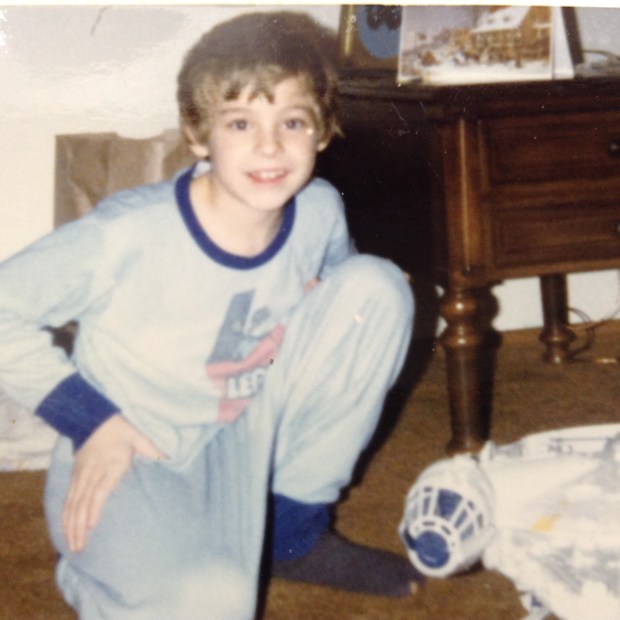
It wasn’t my first record. As a kid, I had read-along story records: Star Wars, E.T., The Black Hole, and more. The E.T. record was cool because it was read by Drew Barrymore. I also had John Williams’ music soundtracks, like Indiana Jones.
My first “metal” album was Quiet Riot’s Metal Health. I had it on cassette. It changed my life. Going back even further, Styx’s Kilroy Was Here was the first rock album that I ever bought, but technically it wasn’t my first “rock” record. Technically. It all depends on how you define “rock”, but for the purposes of this article we’ll include soft rock under the umbrella.
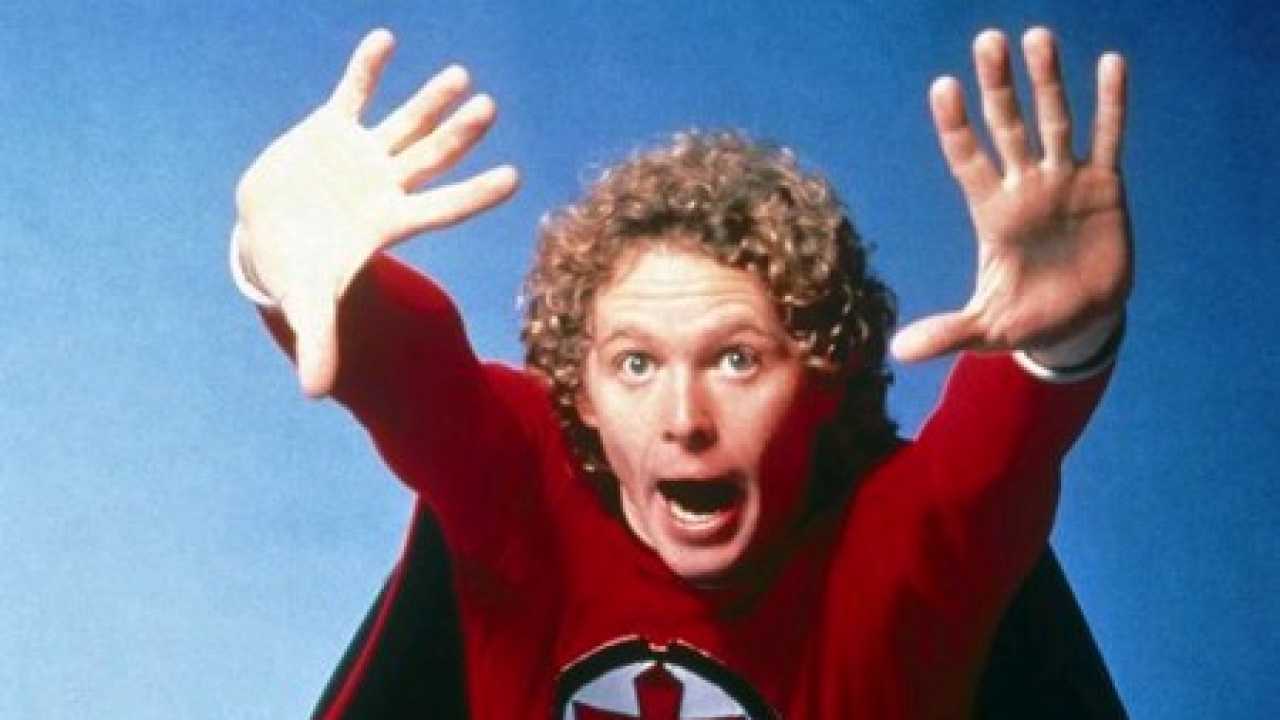
In 1981 there was a new TV show that, by all signs, looked like it was going to be awesome. It was about a goofy superhero. He couldn’t fly straight, and he looked silly with his blonde curly hair in a red skintight outfit. His landings were always crash landings, and what kid doesn’t find a grown man falling down absolutely hilarious? The premise was that aliens gave the protagonist this super-suit, but he lost the manual and doesn’t know how it’s supposed to work. Funny, right?
Sadly, the program called The Greatest American Hero never lived up to the premise or the TV ads. We kids swiftly lost interest in it. Magnum P.I. occupied our TV time, and The A-Team and Knight Rider were only a couple years away. The Greatest American Hero was quickly forgotten, except for one minor detail.
The Greatest American Hero had a terrific theme song. Theme songs are important. I can hum the themes for the A-Team, Knight Rider and Magnum P.I. Can you? The Greatest American Hero had an even more memorable theme song: “Believe It Or Not”.
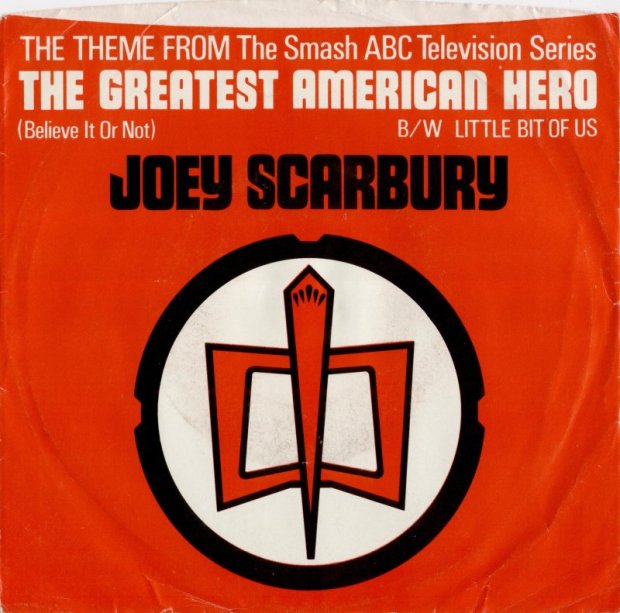
I didn’t know the name of the guy who sang it, I just knew I liked the song. I told everyone it was my favourite song. So one day, my Aunt from Calgary came for a visit and gave me a copy of the single. I was elated! The singer was somebody I never heard of called Joey Scarbury, and now I had the record and I could play it any time I wanted! I did, over and over.
The names meant nothing to me then, but “Believe It Or Not” was written by Mike Post, who also wrote – surprise surprise! – Magnum P.I. and the A-Team! Though Mike Post is mostly known as a TV composer (The Who have a song called “Mike Post Theme”), he even produced Van Halen III! “Believe It Or Not” must be one of his most well remembered songs. It didn’t hurt when it was spoofed on Seinfeld back in the 90s. Remember George’s answering machine? “Believe it or not, George isn’t at home…” Since then, it’s been used and re-used again in TV shows and commercials.
I remember as a kid, flipping over the record to listen to the B-side, which I immediately hated. The ballad “Little Bit of Us” was not for me. I tried playing it at different speeds to see if it would make the song any better. It didn’t and I never played it again.
I don’t actually know what happened to the record. I know I lost the sleeve (it wasn’t a picture sleeve, just a plain white one) and filed the record in with another 45. From there, it disappeared.
I may have outgrown “Believe It Or Not” but playing it today still brings a smile to my face. Not enough to try and re-watch an episode of the Greatest American Hero, and definitely not enough to track down more Joey Scarbury music. Just enough for some nostalgic rememberings.
Writer’s block? I’ve got it. Can’t tell? That’s because I have built up a backlog of posts ready to fill the gap when needed. It’s called planning ahead. Being prepared for the inevitable. Writer’s block strikes when it wants to.
Staring at giant piles of CDs…over 3000 of them aching to be listened to, reviewed, discussed, and appreciated.
“I can’t find anything I wanna listen to.”
Collecting music for over 30 years. Selling it to the public for 12. Managing a Record Store for 10.
“I can’t think of any good stories to talk about.”
Fuck you, writer’s block! Can’t be inspired to write about anything? Then I’ll write about you, writer’s block! Take that, you asshole.
There are ways around just about anything – especially when the only thing stopping you is you.
It’s absolutely incredible that I can be sitting here with over 3000 of my favourite pieces of music and can’t be arsed to put two thoughts together. What’s the deal? Well, I’m distracted. Distracted by real life, by loved ones who are more important than words, and by sheer exhaustion.
Take a break? I am on a break! See above note about backlog and try to keep up!
Writing is one of my great joys. Music is another. Combine the two together and I have the most enjoyable, rewarding creative endeavour. It’s work, but it doesn’t pay very well, so in reality it’s pleasure.
It’s a pain in the ass when my brain refuses to be inspired. That’s life. It could get worse before it gets better. Sometimes, the heart lies elsewhere. Family comes first, as it should. Life happens whether you like it or not.
I love putting an article or review together. The process of polishing and finishing one is actually even more enjoyable than the writing. Coming up with accompanying photos, replacing old tired words with better ones – it’s all fun and invigorating. Seeing the finished published product and reading the comments are all things that bring me great happiness.
Even though I currently “can’t find anything to listen to,” I have no intention of stopping. I’ve slowed down in the past – 2016 had fewer posts than 2017 – but this is far too much fun.
Fuck you, writer’s block. Writing about music isn’t a chore, it’s just the opposite. I won’t let you stop me.
Bon Jovi wrote “While My Guitar Lies Bleeding in My Arms” about writer’s block
At the the 11th hour of the 11th day of the 11th month in 1918, the Armistice was signed, ending the fighting in the Great War. At least, they called it the Great War, or “The War to End All Wars”. Today we just call it World War I, because even greater horrors followed.
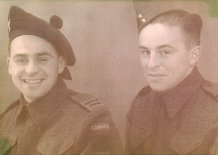
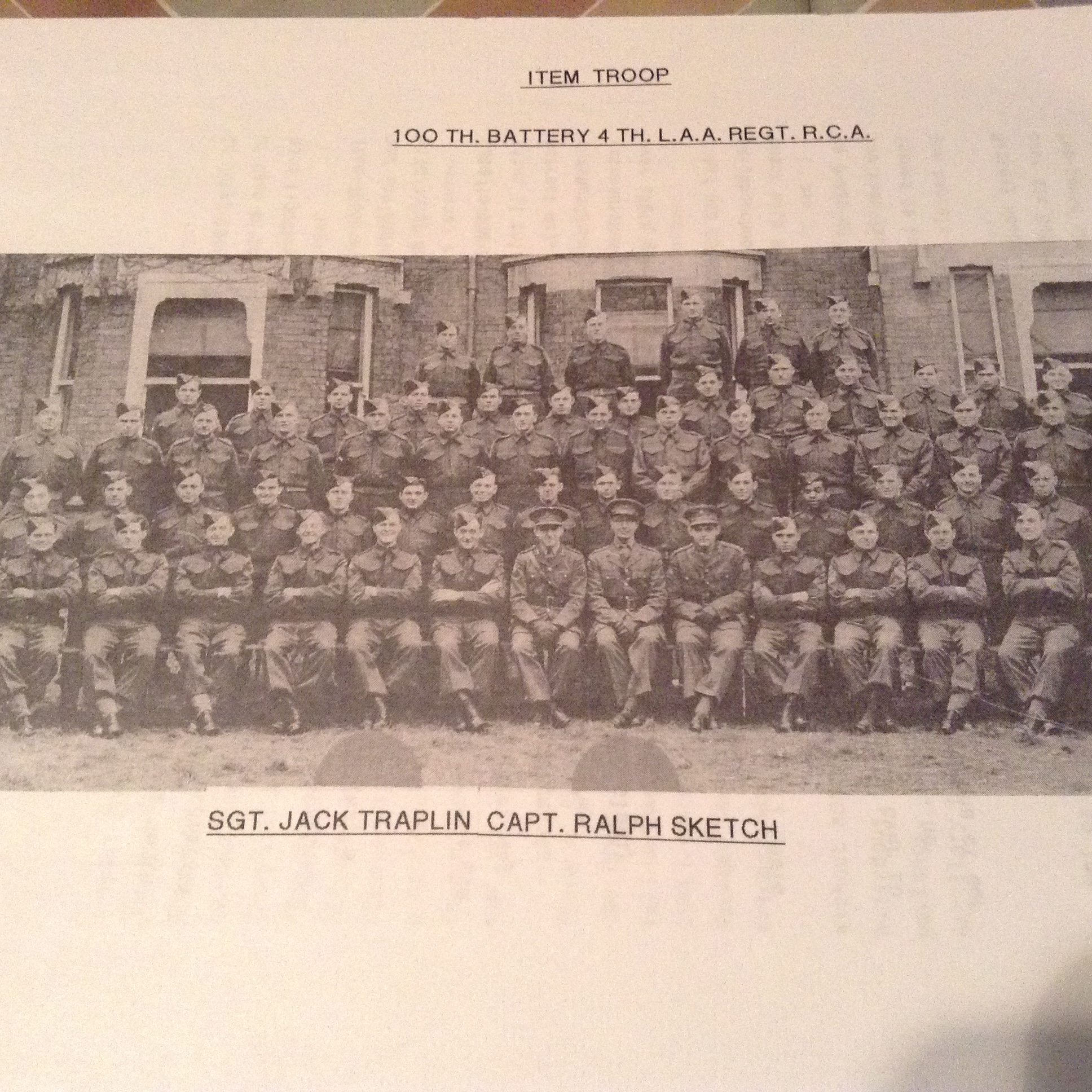
My grandfather “Sam” (Crawford) fought in World War II, helping bring an end to the evil of Hitler and Nazi Germany. I think my grandfather would be disgusted today to see Nazis being referred to as “very fine people”. What did he fight for, if we are to casually welcome that evil back to the streets?
“Gar” and “Sam” Winter
We can never forget the sacrifices those soldiers made. My grandfather survived and came home to raise a family with my grandmother. His brother wasn’t so lucky. He lived, but was injured in the trenches and he never walked right again.
I tend to think of the veterans and the soldiers of the present year round. My wife goes out of her way to thank veterans any time she sees one in uniform. I think of them every time I am free to write whatever I want to, in this great land of Canada. Had the Nazis won, there would be no freedom here. On November 11, at 11am, we have a moment of silence to honour all the soldiers from every war in which they fought and died for our freedom. That is an important tradition to keep. But I think we should think of them more often.
“Sam”
My grandfather rarely told war stories around the kids, but I do remember one night when he told my dad about looking up and seeing a Panzer tank coming. “I shit my pants,” he said and I think he was being truthful. Imagine those young guys — kids, really — in a country far from home, running from a tank. The bravery is awesome. I can’t even imagine.
My grandfather died (cancer) when I was too young to appreciate what he did. I knew he fought, and I got to watch him lay a wreath at the cenotaph every November 11. I didn’t understand the significance of what it means to be a soldier until I was older. If I were a little older, I would have tried to get him to tell me about it.
Bryan Adams’ 1987 album Into the Fire has the best song about Remembrance Day that I know. This very special track was made into an emotional music video. In 2014, The Trews came out with something almost as good: a song called “Highway of Heroes”. The Highway of Heroes is an actual highway (the 401), given this nickname for the stretch of road on which the bodies of fallen soldiers are brought home. The Trews’ song is a touching tribute.
Check out these two songs and remember why you’re even able to listen to them. Because of the Heroes.
1989: A clean and sober Motley Crue take over the world. Dr. Feelgood climbs to #1 and the band rivals Bon Jovi and Def Leppard in the popularity stakes.
1990: Motley continue to tour and rock them all, while announcing their next album will be a “greatest hits”.
1991:Decade of Decadence is released, keeping Motley on the charts. The new single “Primal Scream” is well received.
1992: In a shock announcement, Vince Neil is fired from the band. Unfortunately Motley are not the only rock band to lose their singer at the beginning of the 90s.
1993: Vince Neil’s solo debut Exposed is greeted by warm reviews. Motley continue to toil in the studio with new singer John Corabi.
1994: Five years after Dr. Feelgood, the re-imagined Motley finally return with the self-titled Motley Crue. Corabi blows ’em away, but the album fails to sell. Motley is forced to do a scaled down tour while the CD dropped off the charts.
This was the state of the Crue in the mid 90s. They had released an incredible album. Today, many fans rate it in the top three, or even at the #1 spot. My near-legendary Record Store cohort T-Rev agrees. “To me, they sounded more like a hard rock band than a hair metal band, because of that album.”
Absolutely true. They stepped far beyond the preconceived notions of Motley Crue. Guitars were detuned, lyrics were topical or personal. Tracks like “Smoke the Sky” might have passed for Soundgarden. On the other side of the coin, “Misunderstood” was an epic power ballad featuring an orchestra and Glenn fucking Hughes. There wasn’t a weak track in the bunch, but plenty of variety.
Most fans didn’t embrace it at the time, and instead moved on to current bands. Back then, nobody was interested. No Vince, no Motley? No way. Corabi was absolutely the right guy at the right time. Motley added his rhythm guitars and songwriting abilities, not to mention far more aggressive singing. The band had only gotten better. But by recording an uncompromising album with an unknown singer, they were indeed taking a chance. It didn’t pay off. When I was working at the Record Store, there was a giant pile of unsold Motley Crue CDs taking up space. They sat next to an equally tall pile of David Lee Roth’s Your Filthy Little Mouth. All the kings seemed to have been usurped.
At the Record Store, I first befriended the aforementioned T-Rev. The fact that both of us loved the Motley album didn’t hurt. T-Rev was the only person I knew who appreciated what they did. He loved that huge overproduced drum sound. Back in 1989, everybody had a Motley Crue T-shirt in the highschool halls. In 1994, we couldn’t get anyone to listen.
Through 1995 and 1996, magazines reported that Motley were back in the studio, working on a followup with Corabi. Bob Rock was back in the producer’s chair and the band wrote new songs such as “Personality #9”, “Let Us Prey”, “La Dolce Vita” and “The Year I Lived In A Day”. Things seemed to be going well, but record company pressure was intense. Bob Rock’s style was now passé and he was fired. Engineer Scott Humphrey was promoted to producer, and electronics began to dominate.
The pressure was not only on Motley Crue, but focused directly on John Corabi. Elektra records were eager to get Vince Neil back, a true “star”. John was getting frustrated in the studio while this was going on. Nothing he sang seemed to be good enough for Motley Crue anymore. He was asked to sing like Oasis or the Sisters of Mercy. John suggested that he just play rhythm guitar while they get Vince Neil to sing. Somehow, this made its way into the rumour mill. Before John Corabi was eventually fired, T-Rev and I had heard that Motley were considering this very same five-piece lineup. What a glorious sounding thing that could have been.
Ultimately the band fired John and got Vince back. They attempted to piece together the album that they’d been recording and re-recording and re-re-recording again. Mick Mars was frustrated as well, as his guitar parts kept getting rejected and remixed. In particular, Mars did not function well with Scott Humphrey.
Personally speaking, I lay these problems at the hands of Scott Humphrey. I read the book The Dirt, and that’s certainly where the band lay most of the blame. Have a look at Humphrey’s credits though. Lots of records loaded with electronics, like Rob Zombie’s Hellbilly Deluxe and Tommy Lee’s solo stuff. Humphrey started out as a keyboard player and programmer, and I think that high-tech style does not work with Motley Crue. That’s my personal opinion, never having met Scott Humphrey. I did, however, have a customer at the Record Store who knew Scott Humphrey, who is actually from Kitchener Ontario.* “Motley Crue were the problem,” he told me. “They were messed up on drugs.” They were also unfocused musically.
On January 27 1997, the reunited original Motley Crue performed on the American Music Awards. Mere months after being teased by a similar Van Halen reunion on the MTV Awards, I was relieved that Motley were playing a song rather than just standing there. But what the hell song was it?! Some strange, techno-y version of “Shout at the Devil”? It was strange, unexpected and underwhelming. Hey, cool, it was a fresh spin on an old classic. But…why?
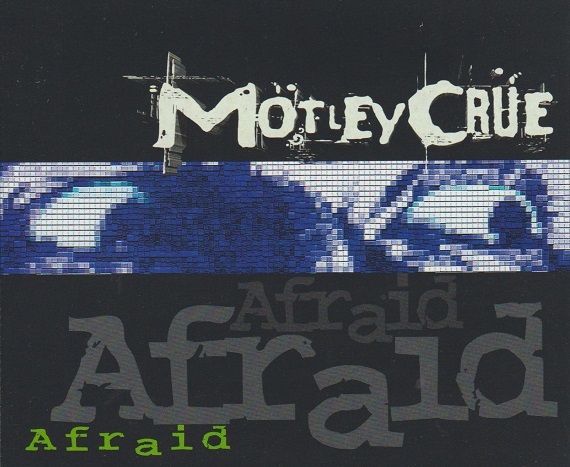
We soon found out. The album Generation Swine came out on June 24 1997. As usual, T-Rev and I got it a few days in advance. “It sucks!” he warned me. Of the first single “Afraid”, he said “It sounds more like Def Leppard than Motley Crue.”
“Afraid” is the best song on the album, which does frankly suck. In a single stroke Motley went from one of their best albums, to one of their very worst. It was astounding how desperate they sounded, trying to incorporate these influences that have nothing to do with Motley Crue. The loops and samples and effects ruined many of the songs, but some just weren’t that good to begin with. This considered, it was an even bigger surprise that Nikki Sixx and Tommy Lee were singing lead vocals too. Sixx’s silly opener “Find Myself” was a nauseating faux-punk novelty song. Generation Swine was also unfocused in the extreme, and the muddying effects didn’t help. The electronic treatments on the drums rendered them limp, compared to the massive sound of 94’s Motley Crue. Absolutely everything on Generation Swine was inferior to Motley Crue.
Three CD singles were released for “Afraid”, which was remixed so many times trying to get it right, that they used some of the various versions as bonus tracks. The album version is fine enough, and in this one instance, the electronics enhance the song. I’d rather hear “Afraid” with the effects than without.
What did other fans think? When Generation Swine was new, one of my customers wanted to hear it before buying. “I saw that Vince Neil is back. Have you heard it?” he asked me, and I told him the truth. He was sceptical of my review, but changed his mind upon hearing it. “It doesn’t sound like them,” he said, and he’s right. I then cajoled him into listening to the 1994 album. He didn’t want to, because it didn’t have Vince Neil, but agreed to give it a shot.
Guess which album he bought? Motley ’94.
At least there’s some redemption, if only temporarily. During the Christmas season of 1998, T-Rev once again called me up to tell me about Motley Crue. There was a new compilation out, called Greate$t Hit$ [review coming tomorrow]. This time, there were two new songs: “Enslaved” and “Bitter Pill”. Both were produced by Bob Rock.
“The new songs aren’t bad,” said T-Rev. “A lot better than Generation Swine. Not as good as ‘Primal Scream'”
Right again, T-Rev. Not bad. An improvement, but not as good as what they did the first time out. That was enough for me to buy the CD. Not for Trevor, though.
I think Motley Crue were on the right track with “Enslaved” and “Bitter Pill” after the failure of Generation Swine. They obviously knew that album didn’t work, so they went back to the last thing that did. Both songs are growers, and still raise a smile to hear. Unfortunately Motley Crue blew it again. Tommy Lee and Vince Neil had a dust-up at an airport, and Lee split. He was replaced by former Ozzy Osbourne drummer, Randy Castillo.**
Fans like T-Rev and myself always supported the 1994 album, and today we’ve been justified. More and more fans have realised the quality of that CD, and increasingly hold it in high esteem. There’s something about that CD, and I’m afraid that Motley Crue never came close to touching it since.
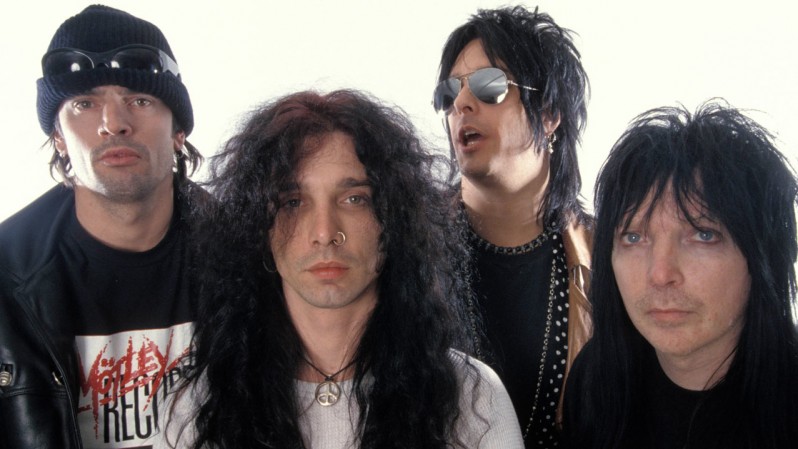
Tommy Lee, John Corabi, Nikki Sixx & Mick Mars
* Fun fact! T-Rev’s mom dated Scott Humphrey!
** In a very sad turn of events, Castillo never got to tour with Motley Crue. He became ill and died of cancer on March 26, 2002 at age 51. His replacement, Hole’s Samantha Maloney, did the tour and resultant live video.
GETTING MORE TALE #610: 25 Years Ago – Digital Compact Cassettes
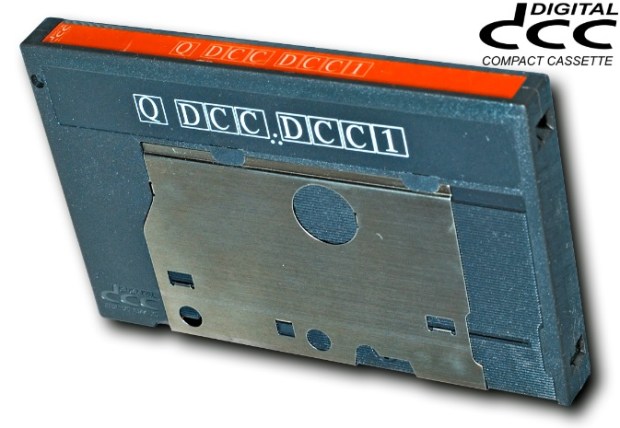
Every once in a while, you stumble upon some old obsolete media format that you never knew existed in the first place. 25 years ago, the Digital Compact Cassette was announced by Philips and Matsushita. Philips and Sony launched the CD together, but this time Philips sought a new partner for its Digital Compact Cassettes. It was designed to replace the standard audio cassette in a way that CD hadn’t yet: it was recordable. It was a direct rival to the Minidisc and DAT tape, neither of which caught traction.
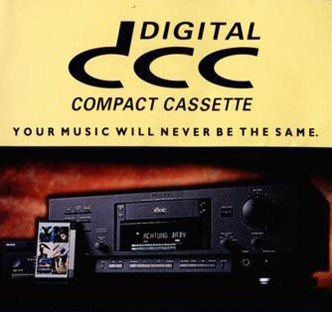
The 1992 Digital Compact Cassette player had one benefit that the other formats lacked. Players were backwards compatible. You could play all your old tapes on them as well as the new DCC tapes. The tapes themselves looked much like cassettes but with spool holes on one side only. An added feature was a sliding metal guard, similar to those on floppy discs, to protect the tape inside. Different players were marketed, including components for your home system, portable Walkman-like devices, and car tape decks. Signalling the shape of things to come, there was even one player that could connect to a desktop PC.
Another benefit to the new format was that players used fixed magneto-resistive heads, which didn’t require any demagnetizing. They were more resistant to wear and tear. Cleaning was something you still needed to do with these players, and more frequently. Unfortunately for DCC, there was already a lot of competition on the market, and the Sony Minidisc appeared to be winning.
The new Digital Compact Cassettes were not a huge technological step ahead. The cassettes ran at the exact same speed as a standard audio tape, and were the same width. The tape used was the same grade as VHS tapes. They could hold a maximum of 120 minutes, about the same as the max for an audio cassette tape, though no 120 minute DCC tapes were ever made. By comparison, a DAT tape could hold three hours, and a Minidisc 80 minutes (same as an audio CD).
Each DCC tape had 18 tracks, or nine per side. The main eight tracks held the audio information, while the ninth could be encoded with the metadata: track names, numbers, lengths and so on. This allowed the player to be able to find any spot on the tape that you wish. There was even copy protection available. If a tape was encoded as a “protected original”, in theory you couldn’t make a copy.
Ultimately, the desire for a digital but recordable audio format was fulfilled by CD itself. A DCC player could range from $600 to $1700, and with so many people still buying CD players, that wasn’t a viable price. Recordable CDs fit the bill, once they came down in price in the late 1990s (formerly about $200 per single CD-R). The cassette format died its well-deserved death. Digital Compact Cassettes are barely a footnote, but the magneto-resistive heads have since become a crucial component of PC hard disc drives. Even rejected tech can often lead to another.
There’s one final footnote to the story of the Digital Compact Cassette. The film covering of those new innovative tape heads found usage in an unlikely place: brewery filters. The microscopic holes in the material turned out to be perfect for nice clean and clear beer. And you have old obsolete cassette tech to thank!
My first real job at age 17 was packing groceries. I worked at Zehrs, the big grocery store in town. It was hard work, but a good job to have. They paid well and you could make a career there if you wanted to. Several people had been there 10 years or more, had security, and were making decent money. The neat thing for me was the Zehrs store was in the same mall that I later worked in at the first Record Store! My dad worked there at the bank. Best friend Bob worked in the Zehrs bakery. The mall was like a second home.
The grocery store had a dress code. No running shoes, just plain black shoes. No jeans, just brown pants and white shirts. A brown clip-on tie and apron with box cutter in the pocket was issued to us upon hiring.
Facial hair grooming was strict. I was there when one guy showed up looking unsatisfactory, was written up and sent home to shave. No stubble allowed. No beards, no sideburns.
The only facial hair we were allowed to have was…
A moustache.
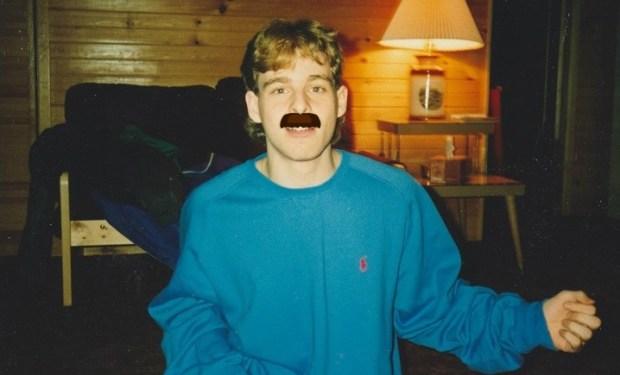
So many guys there had moustaches. The guy who trained me had one. One of the managers, and even a few of the guys my age had moustaches. I am not a fan of moustaches, but given the lack of options, one day I showed up with a stupid little blonde growth on my upper lip.
“Is that…are you…growing a moustache?” asked the girl I liked. Her name was Kathleen. Kathleen Fitzpatrick. She was really nice, but every guy there liked her. Guys with higher seniority would work on her lane, kicking me off. They’d stick me with one of the older ladies. Everybody preferred to pack for Kathleen and I was low man on the totem pole.
I wore that moustache once. One day. Truth be told, I never felt comfortable in a moustache, but imagine this scenario: what would have happened if Kathleen liked my moustache? How history could have turned out differently. I could have been a moustache guy all this time! I’d probably drive a Camero and listen to a lot of April Wine.
I’m glad it didn’t go that way. Wherever you are Kathleen, I think I owe you a debt of gratitude. Maybe.
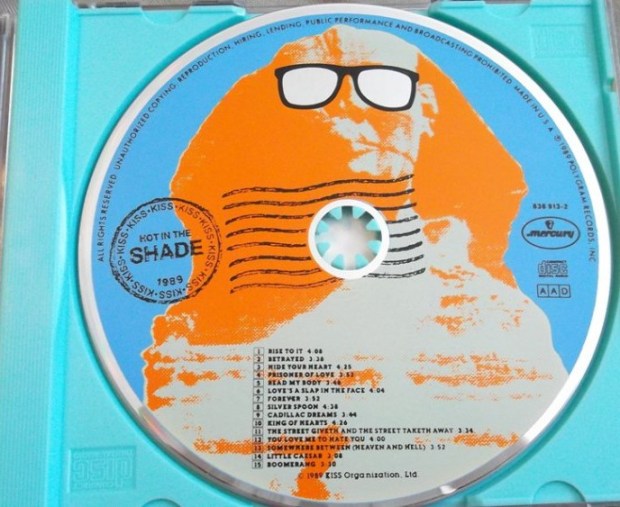
November of 1989 was an historic moment in time. Three events collided in one day that I distinctly remember unusually well. Based on historical records, I almost can nail down the exact time I first heard Kiss’ then-new Hot in the Shade album that year. I can remember being on a bus for a school trip, sitting next to a German kid, as the news of the Berlin Wall coming down became the top story of the day. It was probably the 10th of November, a Friday.
It was huge news. I grew up in the tail end of the Cold War, and hope was finally on the horizon. I can remember in 1983, kids in the school yard talking about the Korean passenger liner that the Soviets shot down. “There’s gonna be a war,” one kid said, and it sure did seem like it. Every other year, it seemed like it. November of 1989 was a different kind of time, when fears suddenly melted away albeit briefly. Sitting next to that German kid on the bus, Mark, was the best place for me to absorb the greater meaning of it.
What were we doing sitting on that bus? We were on the way to Pickering, to visit the nuclear plant. Our names had to be submitted weeks in advance to get the clearances, but we were inside an operational nuclear facility! It wasn’t even my first tour of a nuclear plant, though it was the first time being inside one. When I was a youngster, the family took a tour of Bruce Nuclear’s grounds and visitor center on summer vacation one year. I remember being really small, and asked to try and lift some depleted rods of uranium. I couldn’t; it was far too heavy! This demonstration indicated the density of the nuclear fuel. “Did you have your Wheaties today?” asked the tour guide to the chuckles of the group. But in Pickering, we got to look right inside.
The Pickering plant was impressive. We had helmets on to go with our visitor badges. There were checkpoints everywhere, where you had to put your hands and feet in a scanner to make sure you didn’t pick up any radioactive dust. Once you were cleared, you could go into the next area. We saw the big rooms where the spent fuel is kept. Not surprisingly, everything was immaculately clean. Every surface gleamed, and all the equipment appeared new and in top condition. We were told that amount of radiation we were exposed to was about the same as an X-ray at the dentist. The trip was optional, and at least one kid opted out because he didn’t want to get zapped.
There was a more intensive scan at the end of the trip before we were allowed to leave. You had to pass a full body scan; if not they had to confiscate your clothes and send you home in paper hospital gowns. I had a brief moment of terror when my scanner refused to give me the green light. “Come closer” the damn machine kept saying to me. “I’m as close as I can get!” I retorted to the infernal contraption. A guide helped me get standing correctly and thankfully I passed the scan! No hospital gowns for me, which is especially good because the next stop on the trip was Pickering Town Center for lunch.
I ate a sandwich for lunch that my mom packed for me. She always made sure I had a lunch every day! We had time to kill at the mall so Mark and I hit up a record store. It was probably A&A Records and Tapes, though it certainly could have been an HMV. Either way, they had two new releases that I had my eyeballs on: Trouble Walkin’ by Ace Frehley, and Hot in the Shade by Kiss. I only had enough money for one, and Kiss had to take priority of solo Ace. I remember having a conversation with the guy at the counter about how Anton Fig was back playing drums for Ace. (And that right there is a lesson about customer service. That guy made an impression on me that lasted 28 years, just by mentioning Anton Fig on the off chance that I’d know who he was.)
So I walked out of there with Hot in the Shade in my Walkman, and I had a chance to hear the new Kiss album for the first time. I always enjoyed a first listen. I’d look at the song titles and try to guess which were Paul’s and which were Gene’s. I really liked the acoustic slide guitar that opened “Rise to It”. Bruce Kulick was proving his awesomeness, though I didn’t enjoy his tone on Hot in the Shade. It was only later that I learned Hot in the Shade was essentially a set of demos that were polished and finished for album release. That might explain why I felt the tone was so…flat.
Mark also encouraged me to listen to one of his tapes, a group called Trooper. “I bet you haven’t heard of Trooper,” he said, and I hadn’t, which was odd because they were Canadian. Trooper didn’t make any lasting impressions other than remembering that Mark was rabid for them. One thing I remember about Mark: he hated long songs. He liked songs in the three to four minute range, and that’s pretty much all of Trooper’s hits.
Our final stop was Lakeview Station, a huge and now defunct coal fire plant in Mississauga. “Don’t touch anything,” the teacher warned us before going in. “This place is covered in black coal dust. If you touch any, you’re going to get it all over the next thing you touch which will probably be your clothes.” And he was right. Every surface had coal dust on it. The tour was noisier and far grimier than the nuclear tour. This was intended to make an unsubtle point about the differences between the two.
We were all glad to get out of Lakeview and back on the highway home. I flipped sides on my Kiss tape and tried to get into the album. I was struggling with it. Some songs were really good, like the ballad “Forever” which was immediately discernible from the pack. Others made it seem like putting out an album with 15 new songs might have been a better idea on paper.
I listened to the album on my boombox when I got back home. I listened intently and tried to figure out what sounded “off”, and the only thing I could figure was the guitarist. “I don’t think Bruce Kulick’s tone is right,” I said with a twinge in my gut. Of this, I’m glad he proved me wrong by the next album Revenge.
What a memorable day that was. I’m just glad I didn’t come home radioactive and hot in the shade!
GETTING MORE TALE #607: Every Picture Tells a Story
If you’re like me, you probably look at childhood photos and are immediately flooded with a million memories. Music, pictures and memories…they all go together don’t they? One triggers another and all three merge together in your grey matter. With that in mind, put on something nostalgic and join me with some short stories about some old pictures. If you can’t think of something to listen to, here’s Bryan Adams doing “Summer of ’69”!
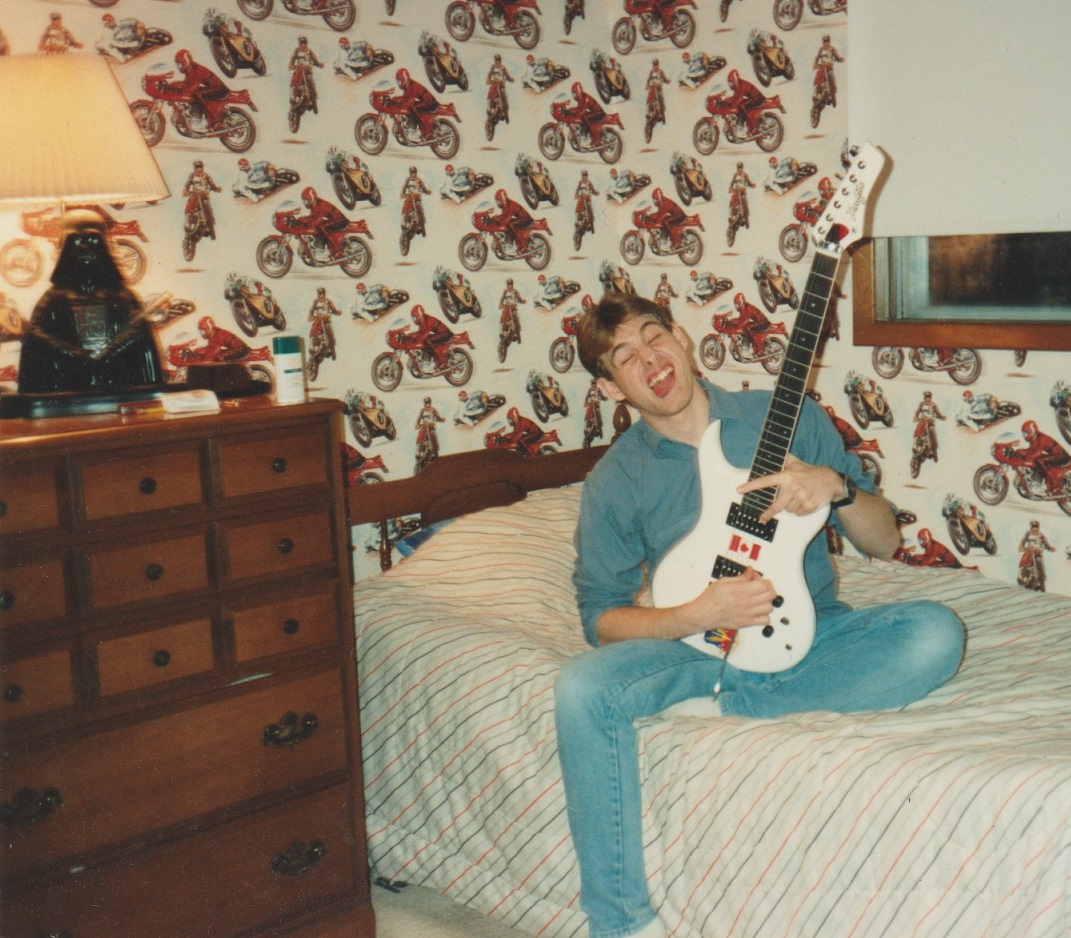
I can tell by my hair that this picture is winter of 1989-1990. On the far left, you’ll notice my Darth Vader lamp, hand made by my mom a long time ago (though not very far away). Darth is priceless to me, and I still have him on that very same dresser today. Next to Darth, I notice that I didn’t think to remove the Speed Stick before taking a photo.
That was my first guitar. I just had to have a whammy bar. That thing would simply not stay in tune. In the 80s, you had to have a whammy bar, although Slash was slowly causing them to go out of fashion. My mom found a guitar teacher, a really nice guy named Gary Mertz. He was teaching my sister, myself and my best friend Bob all in one shot. He came to the house, and did 30 minute lesson with my sister on keyboards first. Then 30 minutes with me and 30 with Bob on guitar. I just wasn’t any good at it. I just don’t have the coordination. How my sister got to be such a great musician, I really couldn’t tell you. I got the shitty genes.
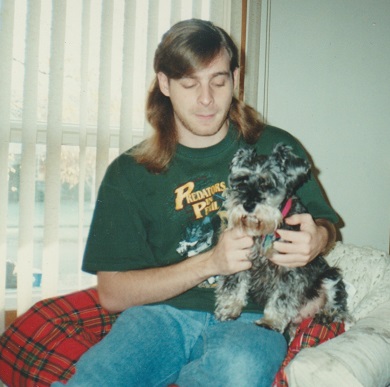
A year and a half later, and look at that hair. Sleek?
Second guitar. A flying V I bought off a guy from work. He was a huge Eddie Van Halen fan, and he customised the V with different pickups to try to emulate Eddie’s brown sound. I still had to have a whammy bar. Constantly diving for it made it sound like I was playing something other than random notes. I was pretty useless on guitar.
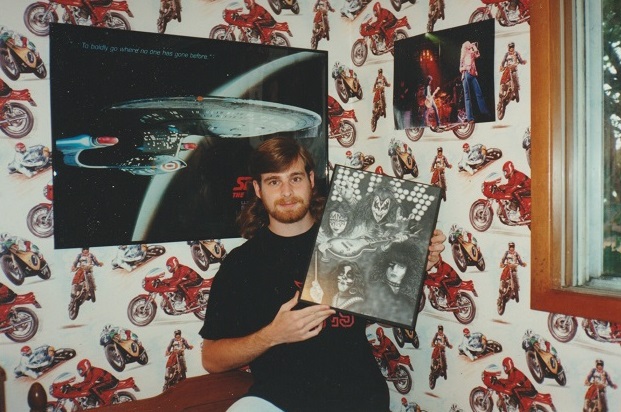
A little older now, this is about 1993 and that’s my first beard! Zeppelin and the USS Enterprise (NCC-1701 D) on the same walls as before. The Enterprise and the Kiss sketch I’m holding were both birthday gifts from my buddy Peter. I still have that Kiss sketch on my wall right behind where I work at LeBrain HQ.
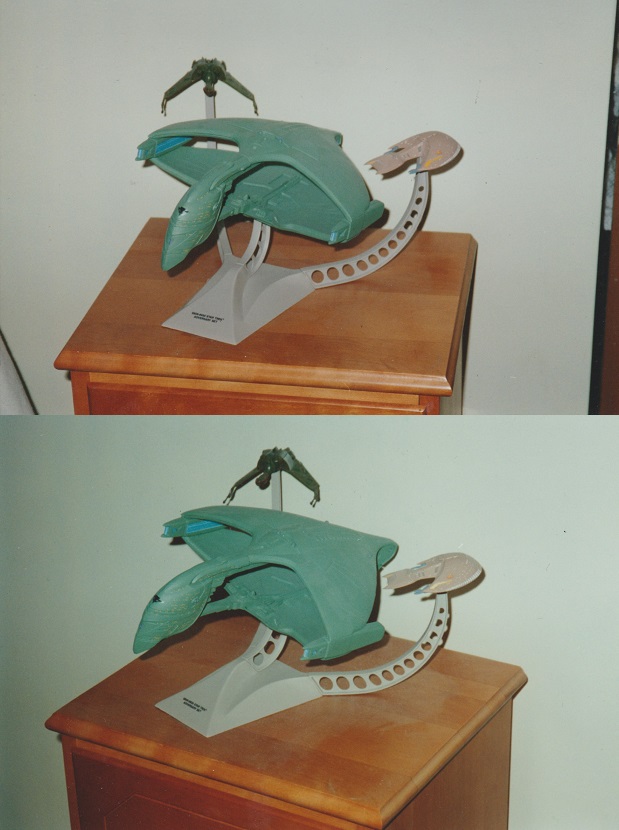
Check out this model kit I build. That’s a Klingon Bird of Prey, a Romulan Warbird and a Ferengi ship. I bought it for the Warbird, truly a beautiful ship design. If you look close enough, you can see where I painted in little yellow windows on the forward section, just like the show. I did the same on the Ferengi craft, which actually turned out the best of the three.
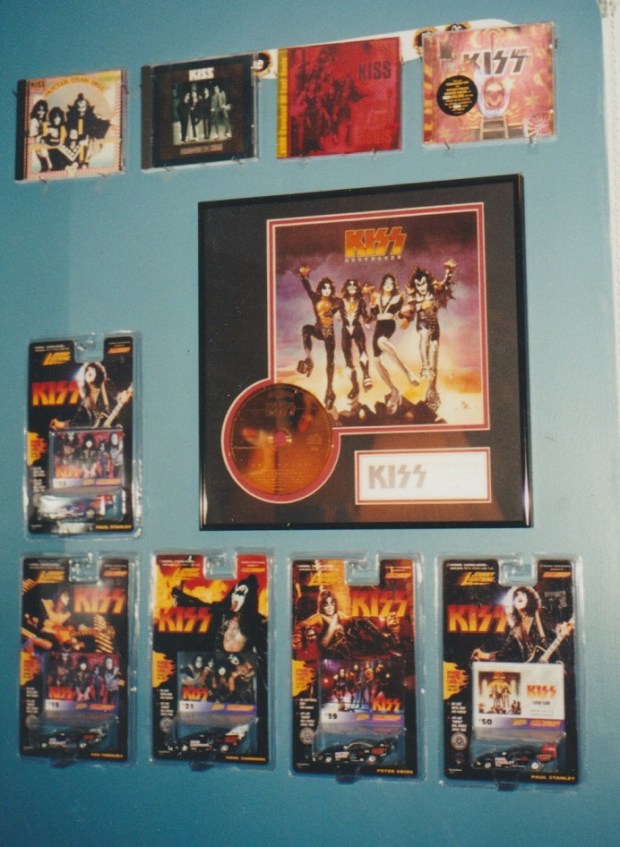
And finally, I don’t know what compelled me to take pictures of all my stuff. Here it is, and all laid out specifically just so. Why? Couldn’t tell you. But there’s some cool stuff there!
With the exception of the cassette tapes, I still own most of this stuff. Some CDs have been replaced by expanded editions. The vinyl didn’t go anywhere though, and I definitely hung on to those Star Trek figures.
My collections for each of these bands has expanded so much that I couldn’t fit them all into a single photo anymore. It’s funny to look back and think, “Wow, that’s all I had!?”
GETTING MORE TALE #606: Why Roger Smith is the Greatest Character on Television
Roger Smith from American Dad is an alien. He’s grey, squat, with a big bulbous head and no visible nose. He thinks he looks like Lena Dunham. “It’s nice to see someone with my exact body type succeed.” But he has several amazing abilities that allow him to blend in with modern society. Some of these abilities are musical. If you want to know how an alien can impact the world we live in, even musically, then check out some of Roger’s amazing traits and accomplishments below.
Parker Peters
1.Master of Disguise
Roger can disguise himself as anyone. Even his own family can’t recognise him in certain outfits. A wig and some clothes are all that’s necessary. In disguise as Kevin Bacon, he even successfully framed the actor for a car accident when the real Bacon was 2000 miles away. “I didn’t think I did it,” said the real Kevin, “but it’s clearly me on the tape!”
Some of Roger’s most incredible disguises include “alien hunter” Parker Peters, and his mentally handicapped bodybuilder persona, Arnold Schwarzenegger.
Max Jets
2.Incredible Speed
Using his ability to move really fast when he wants to, Roger can appear to be in multiple places simultaneously. This has allowed him to live multiple lives under different personas. As wedding planner Jeanie Gold, he raised a family. As Roslyn Jenkins, he has been married for eight years to business mogul Ax Jenkins, in a long running plot to trick Ax into breaking his pre-nup agreement. It is revealed that even though he lives “full time” with the Smith family, he also seemingly lives with dozens of other families all at the same time. Meanwhile, his old man millionaire persona Max Jets languishes away in jail. Roger’s ability to manage these multiple lives simultaneously is unparalleled in television.
Kripsy Kreme McDonalds
3.Musical Ability
Roger is also drummer Krispy Kream McDonalds, percussionist for Steve and the Ass-Tones. Because he has no bones, his drumming ability is unparalleled. That’s not all. As hipster guitar player Donald, he acquired his great skill due to a deal with a devil. When he makes a bet with another guitarist, the stakes being “the cost of his lessons”, Donald wins and passes the soul debt on to the loser. He is also known as country singer Cuss Mustard, and even seduced Ricky Martin and stole his shirt.
Roger can be heard singing a number of original songs on the show. His best include “The Confi-dance” and “You’ve Got a Kink”. Roger is naturally drawn to artists such as Barbra Streisand and Celine Dion. In order to watch the Barbra Does Celine pay-per-view TV special, Roger disguises himself as a Viet Cong and kidnaps Stan in a makeshift POW camp, all for the pay-per-view password.
Roger even “invented” Disco music. In a time travel snafu, Stan Smith left a Best of Disco cassette in the 1970s. The tape is found by Roger, who strikes it mega-rich, until Disco is declared dead in 1981.
The Prophecy
4.He is Somehow Connected to the End of Days
Early in season one, Roger reveals he can poop out jewel-encrusted golden turds. As the series unfolds, one of his turds inspires great evil and murderous cover-ups over the years, moving all the way up to the White House. In the season 14 opener, it is revealed that Pope Francis and all the world’s religious leaders are aware of a secret prophecy involving the discovery of the golden turd. Ancient Egyptian hieroglyphics show that the only way to destroy the golden turd is to return it to its source – Roger’s anus.
Chex LeMeneux
5.He Impacted History in Remarkable and Unexpected Ways
Roger the Alien is responsible for many historical events that you didn’t know about. Yes, he “invented” Disco. How about Jar Jar Binks? Also invented by Roger. The killing of the Notorious B.I.G.? Caused by his driver Roger aka MC Raw G, when he went all road-rage on another vehicle. “No one cuts off Biggie Smalls!” Whoops. He also got a sober George W. Bush back on the booze, and helped the US hockey team win the gold in the 1980 “Miracle on Ice”. He did this on steroids as his hockey player persona, Chex LeMeneux.
As if all this wasn’t enough, he can fart toxic gas! Just feed him okra. He is fireproof and can float. Stan Smith used him as a floatation device when stranded on a desert island.
If these reasons are not enough to convince you that Roger Smith is the greatest television character of the modern era, then nothing will. My advice is to just watch American Dad and see for yourself.








 mikeladano.com