How rock and roll are shoes? Not very. But certainly some rock bands have had some exceptional footwear over the years. The wild, multi coloured cowboy boots of Poison, Cinderella, Bon Jovi, and the gang…remember those?
In a world where image matters, you needed a cool pair of shoes to complete the look. Glam rock bands went with cowboy boots, while thrashers and punks tended to go for skate shoes. But who has the best shoes in rock?
Robert Plant
Robert Plant? For reals? Yes, for reals! Robert is about the only rock star to make sandals cool. Sandals are about as un-rock as shoes can get. But if you’re Robert Plant, it matters not. A bare-chested long-haired blonde blues screamer in sandals is still rock and roll. The sheer un-rock-ness of sandals combined with Robert Plant makes them infinitely rock and roll.
Lady Gaga
You might not consider her very rock, but she did perform with Metallica. Her outrageous footwear hasn’t caused her any broken ankles…yet. Hiking in high heels? Why not. She’s done that. In a Gaga world, anything goes.
Elton John
Before there was Kiss, there was Elton John. People remember the outfits, wigs and glasses, but don’t forget the silver platform kicks!
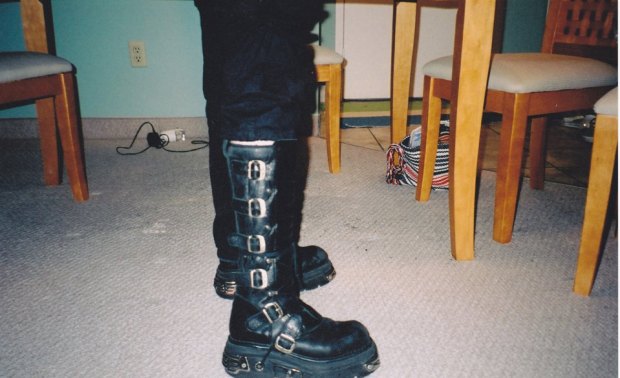
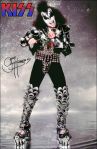
I had my own pair of goth platform boots in the Record Store days. I remember I had them delivered right to the store, because I was never home to receive packages. When they arrived one of the bosses asked “Where do you think you’re going to wear those?!” Fuck you, that’s where! The boots were the centerpiece of my Paul Stanley costume.
At work, running shoes were the most comfortable. We were not allowed to sit, so you had to stand for your whole seven hour shift. The first time, it takes a little getting used to. After that you’re golden, but comfy kicks are the key. Lady Gaga could not work a shift at the Record Store.
When I was hit with a 12 hour shift, which was more frequent than you might imagine, I discovered that changing your shoes halfway through the shift helped. I’d bring a spare pair with me and change at the middle point of the day. It helped with the pain and felt like a fresh burst of energy.
Today I have a pair of heavy steel-toed boots at work and they’re great for the leg muscles. They are nice heavy shoes. Walk around in those all day and you will build some pretty awesome leg muscles. Not very rock and roll, but definitely heavy metal.
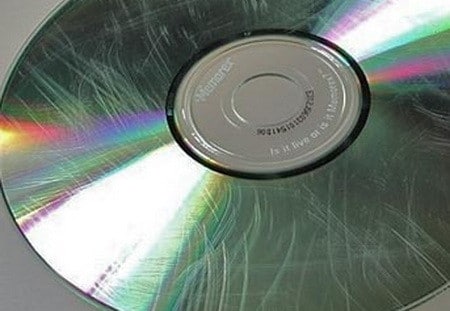
Fixing CDs is a delicate business. You need a steady hand, the right tools, and patience. A buffing wheel with the right textured attachment works, and you also need an abrasive to gradually smooth out the scratched plastic of a disc. We used to use a special wax but found that regular hand soap and water worked better. That’s all the abrasive you need.
In short: Yes! You can fix some scratched CDs. There are two factors that might make a CD impossible to fix, however: deep scratches, and top scratches. A deep scratch that you can feel with your fingernail probably won’t be fixed. It’s just too deep. A top scratch happens on the top layer of the CD and goes into the aluminum, destroying the data encoded in it. Pinholes weren’t usually a problem.
The best way to fix a surface scratched CD
I spent a lot of time talking to the guys we contracted out to fix our CDs. We used one Toronto-based company for a few years, until one of our guys cracked the secret of fixing discs. Once he had a method, he went into business fixing discs himself. This gentleman (now actually a Sausagefest attendee himself) shared a lot of interesting info about fixing discs.
One thing I learned was that if you had a bunch of scratches close to the outer edge of the disc, and you went too deep trying to buff them out, you could lose the ability to play the last songs on the CD. The information would still be on the disc in the aluminum layer, but your laser can’t read it due to the excessive buffing of the plastic. The plastic layer would be no longer perfectly flat, and your laser won’t read through it. When playing, it sounds like the music fades into static and then disappears. The end effect is that it sounds like the last few tracks have been erased. This happened rarely, but it could and did happen.
Customers could come to us to have their CDs fixed. We charged them a fee and their CD would be back in a week or two. One of my regulars named “Kitchener Rangers Al” had one of his discs fixed. Unfortunately it was buffed too deeply on the edge and he couldn’t play the last tracks. It didn’t skip anymore, but you couldn’t play it to the end either.
I remember when Al came in with his CD after it was buffed. He was helped by the supervisor that I refer to as the “Bully”. Other people used other words that are not as nice, but she could be very difficult to deal with. That went for staff and customers both. Unfortunately Al was treated like a liar when he came back with his CD.
“Bully” heard his story: He brought the CD in to be fixed, it no longer skips, but it also now won’t play to the end. He said “I think the last songs were erased. That’s what it sounds like.”
The “Bully” dismissed Al’s complaint. “It’s impossible to erase a CD,” she said. I heard all this and kept my mouth shut. I learned from experience that correcting her, especially in front of other people, was as dumb as kicking one’s own ass. I didn’t feel like dying that day. She sent Al home with his useless CD that he paid to fix, that we failed to fix. She didn’t even listen to it to test it. She just insisted, mockingly, that he was wrong and sent him away. Quite frankly, she treated the customer like he was either an idiot or a liar trying to scam us, and he didn’t deserve that. I thought to myself, “If she caught me talking to a customer that way, she’d really let me have it.”
I chose to stay out of it, because I learned from the past. This “Bully” was a vindictive bully and it would have been a no-win situation with her again. I didn’t want to spend another three weeks of her abuse, as was par for the course when she exploded on me. Roughly three weeks. I just minded my own business, even though I absolutely knew 110% that she was wrong.
Al wasn’t stupid, and he came back when “Bully” wasn’t in. Al had dealt with her before. He told me the story directly, and I explained to him how the end of a CD can come to be “erased” due to buffing. I refunded him the fixing fee, and he was happy. He said he’d come in and buy another copy if we saw one. Customer retained.
I’ve been criticized by other former employees for not speaking up. That’s fair and all I can say to them is, if you walked in my shoes all those years, let’s see how willing you’d be to jump into the lion’s den. I don’t know what it was about us, but she had an evil place in her soul reserved just for me. Other people had felt her sting before, but nobody I have asked ever experienced the brutal treatment I got. She’d explode on me periodically, year after year after year, right to the end, when I removed myself from the circle permanently.
No thanks to “Bully”, Al got his refund and kept coming back. He had been there since Day One, and I hope he still shops there today. As for me, nobody knows the role I played in keeping that customer. At least they didn’t until now! You can, technically “erase” the songs at the end of a CD, or at least make them unreadable. Not exactly the same as erasing, but the end result is a wrecked disc no matter how you look at it.
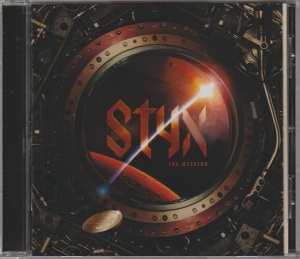
Did anyone in 2017 expect Styx to come out with one of the best albums of the year? Even though Styx have successfully carried on with Lawrence (But You Can Call Me Larry) Gowan on keys and vocals, nobody really predicted this! Yet here it is: The Mission, surely one of the best albums of the year so far,* and the best Styx in decades.
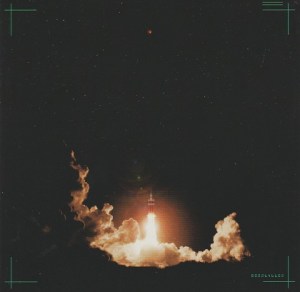
Here’s another unexpected twist: The Mission is a concept album about colonizing Mars! It has a coherent story and recurring hooks. In many ways The Mission sounds like a lost album from Styx’s progressive rock heyday. But you wouldn’t guess that if you only heard the Gowan-sung lead single “Gone Gone Gone”. Although it’s about a rocket launch, you might not catch that on first listen. The year is 2033. “Light it up, let’s get this show on the road!” This hard rocker came out of nowhere as one of the big surprises this summer.
“Hundred Million Miles From Home” (vocals by Tommy Shaw) has a funkier 70s groove.** When the band harmonizes together, it sounds like vintage Styx. “Hundred Million Miles” is a great song and also fairly accurate. Mars was 100 million miles away from Earth as recently as the 2012 opposition. Problems happen on “Trouble at the Big Show” (vocals by James “JY” Young), a slower groove with killer bluesy guitar work. This moves into the ballad “Locomotive”, about the brave pilot of the ship Khedive. Shaw pours passion into it, as he does the next one “Radio Silence”. Just as interesting as the actual music is the spacey backing sounds. It certainly adds atmosphere to an excellent vintage sounding song. “Radio Silence” recalls some of Shaw’s 70s hits like “Boat on a River” at times.
Gowan returns to the microphone on the lovely piano ballad “The Greater Good”. It sounds like quintessential Styx; hit quality material with soul. Things start to get upbeat again on “Time May Bend” (another Gowan vocal). If you’re not familiar with Lawrence Gowan, he is not a Dennis DeYoung clone, sounding closer to Steve Hogarth of Marillion. (He even looks a little like “H”.) Listen for a subtle musical “S.O.S.” signal in the backing track.
There are musical segues and radio voices between some tracks, but “Red Storm” is the next full song. It’s a very progressive song with all the trimmings. It’s based on Tommy Shaw’s excellent acoustic work, and it paints a picture. The crew of the Khedive must brave a dust storm on the surface of Mars. “Carry what you can, there’s no turning back, gonna make it to the mothership.” There are avante-garde flashes of guitar noise that emulates the squeals of a radio, or perhaps metal on metal. Then a rocking riff and solo…”Red Storm” has it all.
Gowan absolutely proves his mettle on the piano opus “Khedive”. The blur of piano recalls classical compositions, and the guitar solo is pure Queen. The minimal vocals continue the story: “Onwards! Onwards!” Then we revisit the sounds of the 80s on “The Outpost”, the triumphant conclusion to the story. The 80s synth and beats remind of the classic “Mr. Roboto” period of Styx, but it rocks solidly too. Listen for a reprise of the “Overture” music from the start for the album. Finally “Mission to Mars” is the denouement, a bright and lively end.
The Mission is brilliant for a number of reasons. First and foremost — great songs. You will play The Mission over and over, simply because it has great songs, as good as the days of old. Second, although Lawrence Gowan has his stamp all over the album, it sounds like Styx and nobody else. Having Gowan more involved is a good thing. He has a 40 year career in Canada, and he didn’t have enough time on the Cyclorama (2003) album. But this sounds way more like Styx than Cyclorama did. Finally, this album is loaded with incredible playing by all the members. This is easily the best lineup Styx have had since Kilroy Was Here (1983).*** Fans of the guitar (both electric and acoustic) will find many moments of musical ecstasy.
For Styx, this is mission accomplished!
5/5 stars
* One of the best album covers too. Is that a port hole, or a turntable? You decide.
** Bassist Chuck Panozzo plays the funky bass on “Hundred Million Miles From Home”, his only appearance. Chuck, the other original member besides JY, is only able to make sporadic appearances with Styx due to his battle with AIDS. Ricky Phillips plays the rest of the bass parts, meaning Styx have two official bassists!
*** Lawrence Gowan (piano/vocals), Tommy Shaw (guitar/vocals), James “JY” Young (guitar/vocals), Todd Sucherman (drums), Ricky Phillips & Chuck Panozzo (bass)
GETTING MORE TALE #581: Attention Walmart Shoppers
On June 10 2017, Mrs. LeBrain was at the Walmart at Fairview Mall looking for Transformers for her husband (me). She came home with an injury so bad she was immobile for the rest of the night.
She already has mobility issues due to numerous falls and fractures, but June 10 she aggravated her sciatica. Some idiot was there with two kids, but too busy texting to notice what was about to transpire. The baby was seated in a shopping cart, and a young boy had control of the cart. Mother was deep in texting. You can see it about to happen can’t you? Kid hits my wife in the leg with the cart, then does it again.
Jen says to the lady, “Would you mind watching your kids?”
The lady responded with the very typical, “Why don’t you mind your own business.”
“It is my business! Your kid hit me in the leg with your shopping cart, twice!”
There’s a baby in this shopping cart, remember!
The lady then said to the kid, “Stop that.” She didn’t offer an apology.
When Jen got home that’s when the nerve pain really kicked in. We managed the pain the best we could through a very sleepless night and went to the doctor (emergency appointment) the following day (a Sunday). All that because some kid wasn’t being minded by his distracted mother.
People, we’ve bitched about Walmart shoppers here before, but Walmart’s not to blame. It’s the idiot parents, and this is nothing new. Back in Record Store Tales Part 29, we recalled the dad who didn’t care about his kid that just demolished the country section. People, watch your kids. It’s not hard, and if you do such a poor job that your kids cause injury to someone else, maybe you should have got your shit together before having kids.
“I’ve been drunk from nine o’clock in the morning, ’til nine o’clock in the morning, because you’ve all been buying me drinks. You are sensational!” — Ian Gillan to the audience in Oslo
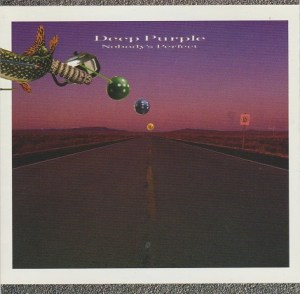
DEEP PURPLE – Nobody’s Perfect (originally 1988, 1999 Mercury 2 CD reissue)
Deep Purple are more than just a band, they are a legend. And as such we must judge them a little more stringently than the average band.
In 1988 Deep Purple were celebrating their 20th anniversary, but they were actually broken up for eight of those 20 years. And as it turns out, they celebrated their 20th by firing lead singer Ian Gillan! They also released this live album, which failed to excite the general public. Nobody’s Perfect is little more than a sub-Made in Japan.
It’s important to note, if you’re going to buy Nobody’s Perfect, there is no point in getting anything other than the 1999 2CD Mercury reissue. Originally, in order to get all the tracks, you had to buy the album on LP and cassette. The cassette had one exclusive track, “Dead or Alive”, a rarity from The House of Blue Light. The double LP had its own exclusive, “Bad Attitude”, another rarity from the same album. Meanwhile the single disc CD release was missing both these tracks and “Space Truckin'” as well. In other words, definitely do not buy the original single CD release which is the most incomplete of them all.
The big critique levelled at Nobody’s Perfect, then and now, is that the setlist was too safe and a repeat of stuff already released in live form. Ian Gillan himself was one who voiced that opinion. The cassette and LP bonus tracks go a long way to add value, since those songs were dropped after this tour. The only other place you can find live versions of “Bad Attitude” and “Dead or Alive” is the very expensive and out of print Bootleg Series 1984-2000. Otherwise, Nobody’s Perfect consists of all the same songs as Made in Japan minus “The Mule” and with a small handful of newer songs. The album is also sourced from many concerts around the world and completely lacks the flow that Made in Japan had (even though it was taken from three concerts itself).
The Deep Purple of 1987-1988 may have had the same members, but they still sounded very different from the Purple of 1972. Ian Gillan’s voice aged as all human voices do, and is the most notably different. Just as importantly though, Deep Purple had drastically cut down the soloing. That’s not a bad thing, but a lot of the shorter jams and solos sounded by rote in the 80s. One new highlight though is a bit of “Jesus Christ Superstar” in the middle of the “Strange Kind of Woman” solo section. Gillan was, of course, the original Jesus on the Jesus Christ Superstar album.
Whatever negatives may be applicable, when they rock they rock and when they roll they roll. “Dead Or Alive”, a new song, smokes the stage. “Child in Time” is probably the last decent version of the song released. “Perfect Strangers” and “Knocking at Your Back Door” were fresh and haven’t worn out their welcomes.
Finally there is a “Hush”, a re-recording of Deep Purple’s original 1968 single, captured live in a jam. This reimagining of the track has been dismissed as unnecessary but that is an unfair assessment. Ian Gillan and Roger Glover didn’t play on the original, so it’s actually cool to get a nice version with them. “Hush” in 1988 was a heavier track than “Hush” in 1968, but it’s still playful rock and roll.
As Purple approaches their 50th, Nobody’s Perfect has faded into the backdrop. As an official live album, it has its place in the discography. With so many superior official and semi-official live releases since, it is hardly an essential listen.
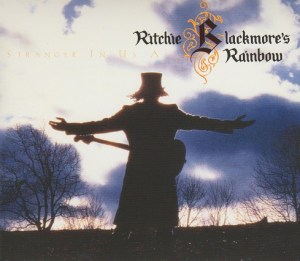
RITCHIE BLACKMORE’S RAINBOW – Stranger In Us All (originally 1995, 2017 Sony expanded edition)
Blackmore said “adios” to Deep Purple for the second and final time in 1993. He beat them to the punch with new music, in the form of a resurrected Rainbow…sort of. As he is prone to do, Blackmore assembled an all-new Rainbow of unknowns. The only familiar face was bassist Greg Smith who happened to be in Alice Cooper’s band when Wayne’s World was filmed. The new singer was the smooth-voiced Scot, Mr. Doogie White. White’s career almost broke in a completely different direction earlier, when he was one of two finalists in the running to replace Bruce Dickinson in Iron Maiden. It went to Blaze Bayley. Signifying new beginnings, Blackmore reverted the band’s name to Ritchie Blackmore’s Rainbow once again.
Back in 1995, my impressions of Stranger In Us All, the new album by Blackmore’s Rainbow, were significantly underwhelming. It has taken its time, but over the years the album slowly penetrated my stubborn refusal to accept it as legitimate. By now I think we know all Rainbow needs is the Man in Black. And there he stands on the front cover, pilgrim-hatted again, gloriously silhouetted against a cloudy sky.
The only serious weakness in Stranger In Us All has nothing to do with the lineup. The production (by Pat Regan and Blackmore) sounds low budget and the drums sound muddy. Blackmore’s guitar tone is thankfully impeccable and his neo-classical leanings on the first track “Wolf to the Moon” were refreshing. “Wolf to the Moon” is one song that has stood the test of time. It is thoroughly still enjoyable today, and Blackmore is unleashed. And the singer? It is true that Doogie White stands in the shadows of some great lead vocalists. I’ll resist ranking and comparing. White has a very smooth voice with impressive power and range, and he doesn’t sound like any of his predecessors. Where White really impresses is in live renditions. He is an entertaining and amicable frontman.
Track two brings a slower grind to Rainbow, and White slinks along with him, adapting perfectly to every vibe. Going slower still, “Hunting Humans (Insatiable)” really prowls. It is spare, dark and sweaty. Moving on to inspirational hard rock, Rainbow brings the harmonica-inflected “Stand and Fight”. What is not to like?
Rainbow ended the first side in typically epic fashion. “Ariel” was quite a track, featuring backing vocals from the lady who is now Ritchie’s wife, Mrs. Candice Night. She co-wrote a number of the album’s tracks including “Ariel”. This kind of thing is Ritchie’s bread and butter, he’s been writing epics like this since “Child in Time” back in 1970. As an added bonus, the extended edition of Stranger In Us All has the single edit of “Ariel”, trimming it to a tidy format-friendly 4:00. This is more like a re-edit, moving parts around and making it more compact.
They step on the gas again for “Too Late for Tears”. Side two has a couple “stock” rockers — “Too Late for Tears” and “Silence”. Good blood-pumping tracks, nothing to save for your greatest hits album, but decent enough. “Black Masquerade” is better, as it has a dark neo-classical edge. Thing go kind of goofy when they cover Grieg’s “Hall of the Mountain King” and add lyrics. They also have another go at the Yardbirds’ “Still I’m Sad”, this being the second time. The first Rainbow version was an instrumental. This one has vocals, and it’s pretty good. Just like with lead singers, I don’t think it’s worth comparing this version to the 1975 one. It’s unique enough that it’s almost two different things.
Back in 2013 I found the Japanese edition of Stranger In Us All at the 2013 Toronto Musical Collectibles Record & CD Sale for $15. Instant no-brain purchase right? Now that this expanded edition is out, I no longer need it in my ever-expanding collection. I am passing it on to massive Rainbow fan Brian over at Boppinsblog. Now that CDs are worth nothing, I like to pay it forward with my retired music. The expanded edition contains the Japanese bonus track, “Emotional Crime”. It has a cool, “smoove” groove and a bluesy feel. Think Purple’s 1988 remake of “Hush” in terms of vibe. The other extra tracks are the aforementioned “Ariel” edit, and a live take of the old Rainbow classic “Temple of the King”. This is and the “Ariel” edit are taken from the old out of print CD single. “Temple of the King” was recorded in Stockholm October 2 1995, meaning it is not the same as the one on the double live CD Black Masquerade. That was recorded exactly a week later in Germany. (Thanks to Scott the Heavy Metal Overlord for pointing this out.) It’s a brilliant arrangement giving Candice Night and Doogie White a chance to harmonize over a very quiet backdrop. The Man in Black whips out a solo that surely must be considered one of his most passionate.
That’s how this version of Rainbow succeeds — by a putting a fresh spin on it. You avoid trying to compare to other versions of the band and just enjoy. Ritchie reveals in the extensive liner notes that he wanted to call the band Rainbow Moon. And speaking of the liner notes, there are also recollections from Doogie White. In short this expanded edition is worth every penny, even if you’ve bought it before.
Coming home from TFCon, traffic was typical Toronto congestion. Stop and go, stop and go. Change lanes, stop. Change lanes, go! I had to pee real bad.
When we got back to my place, Jay stepped out of the truck for a smoke. Jen came out to visit, and I still really had to pee bad. I did the easiest thing possible: I snuck behind his truck and took a leak. There was nobody around who could see me.
But then I heard a woman’s voice, and close by! I looked to the left, to the right, and back again. I kept hearing the woman’s voice and couldn’t figure out where she was, so I decided to cut myself off mid-stream. Nobody likes doing that. Not the greatest feeling in the world.
I heard the woman’s voice again, and then figured it out. It was my cell phone. I had butt-dialed my own voicemail and that was the automated voicemail talking to me. At least I didn’t get busted peeing outside!
* The photo above was taken during the summer of 1990 and is just a water balloon!
What are “WTF Search Terms”, you ask? Simply, they are phrases that people typed into a search engine to wind up at mikeladano.com. They’re sometimes weird, sometimes wonderful, and always amusing. I hope you enjoy this 37th instalment of WTF Search Terms!
First please welcome “Nature Boy” Ric Flair to the WTF Search Term family! The 16 time world wrestling champion was immortalized in the Legendary Klopeks song “Ric Flair” from their album Straight to Hell. Someone googled the lyrics:
i wanna do a chop i wanna do a woo i wanna be like ric flair cause he’s so fucking cool
I love that somebody heard that lyric and had to google it. Next up:
does anyone like the 2002 version of blizzard of ozz
The answer is yes: Sharon does. But next is a band that Sharon does not like.
This next person mixed up two bands, but it also could be autocarrot. Funny either way:
deep leppard heartbreak
Then a grouping of searches for Snake the Tattoo Man. But people need to decide where he’s from. (It’s London).
snake from brantford tattoo guy guy named snake in london, on the man called snake, london, on
I got a chuckle from this next one:
fankie banali sucks
Well, let’s be fair. Frankie Banali is an awesome drummer. I’d never say he sucks. I never have. But his current version of Quiet Riot does kinda suck. Unlike the following album:
No preaching, no lectures. Just personal feelings, regarding another sad rock and roll suicide.
I wasn’t a Linkin Park fan, though I do own the Stone Temple Pilots EP. That’s all irrelevant. I’m a human being, and as a human being, I grieve the loss of one of our own. I don’t know the personal battles that Chester Bennington fought. Nor do I have to. It’s none of my business.
Taking care of your mental health is just as important as taking care of your physical body. You need both your mind and your body to survive. Injuries and damage to your mental health can be hard to see, even for the one experiencing it. There are resources out there, and there are people to talk to who can help. It’s not necessarily easy to access all the help available and you may need help and guidance to navigate the system. There are other human beings out there who love you. Who need you. There are even strangers willing to help. People who have been through it and understand the pain you may be feeling.
We don’t live in an easy world, or even a friendly one. It is easy to believe you are alone. You are not. You are never alone. Chester Bennington was not alone, but whatever was killing him inside probably made him feel isolated and helpless.
As we mourn yet another great who went long before his time, please try to focus on your own well being. There are other ways to deal with the hurt. Chester Bennington was younger than I am, but he had enough. Many people out there have had enough and don’t think they can take any more. We are all human. We have a tremendous ability to absorb pain but eventually it must be dealt with. There is no shame in it. You are not weak. You are stronger than anyone who hasn’t dealt with what you deal with. The stigma must end. People who suffer from depression and other mental illnesses are not different or abnormal. They are regular human beings just like you. Maybe even more normal than you know.
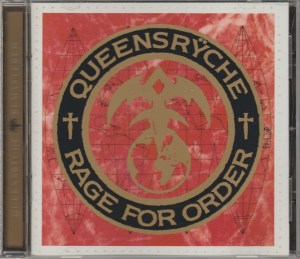
QUEENSRYCHE – Rage For Order (originally 1986, 2003 EMI remastered edition)
Every fan has their favourite Queensryche album. Whether it be The Warning, Mindcrime, Promised Land or Empire, there are plenty of great albums in their back catalogue. I used to seek the warm high of Promised Land when looking to chill with my favourite Queensryche. Now I look for refuge in the cold, technological sheen of their 1986 album Rage For Order.
Rage For Order was a challenging album in its time and today it is still complex. In 1986, fans questioned the gothy makeup and hair, not to mention the excessive samples and synths. Today you can look back and almost call Rage For Order the first progressive industrial metal album. It certainly has qualities from all three of those genres. Geoff Tate beat Trent Reznor to the punch by years. Rage seems to have a vague futuristic concept about a world of technology, revolution, and disconnection.
Although Rage For Order is certainly not an immediate listen, certain key tracks are commercial enough to keep you coming back. The first is “Walk in the Shadows”, one of the few songs to be played live fairly consistently over the years. “Walk in the Shadows” could pass as a hard rocking hit. For the first time Queensryche really proved they were more than a simple metal band. The slick production was completely different from their first two records, with the edge taken off the guitars and instead given to the computers and sequencers. They give the whole album a precise, punchy tech sound that is its own form of heavy. No wonder: Dave “Rave” Ogilvie was an engineer.
A dense ballad called “I Dream in Infrared” has sorrow, but flowing through the veins of a computer. Geoff Tate blows minds with his incredible voice and singing ability, layered for maximum effect. In 1991 it was remixed acoustically for a single B-side, and that version is a bonus track on the remastered edition. The original was perfect for what it was, but the acoustic mix is more accessible to outsiders. It ends suddenly and the metallic guitars of “The Whisper” enter, accompanied by clock-like percussion. Rage For Order has many songs with layered, overlapping vocals and you can hear that on the chorus. It is a cold, sterile but powerful track.
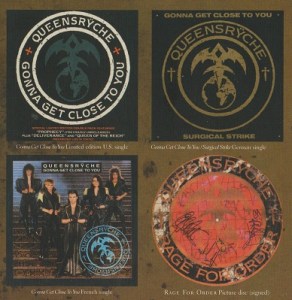
The strangest song was actually the lead single, “Gonna Get Close to You”. It was the only cover Queensryche ever put on one of their studio albums, a track by Canadian songstress Lisa DalBello. In the hands of Geoff Tate, it becomes a creepy song of a stalker with a strangely rousing pre-chorus. “You think I’m a fool or maybe some kind of lunatic? You say I’m wasting my time but I know what to do with it. It’s as plain as black and white. I’m gonna get close to you.” Cree-hee-eepy! Which is the point. The bizarre samples and synths only deepen the macabre. DalBello’s original is perhaps even creepier, but Tate’s pompous bravado adds its own slant. “If you knew my infinite charm, there’d be no reason to be so alarmed…”
As an added bonus, a 12″ extended version of “Gonna Get Close to You” is included in the bonus tracks, but like most extended versions from the 1980s, it’s very choppy and awkward.
Along with the technology, there is a theme of loneliness on Rage For Order, and “Gonna Get Close to You” plays into that. “The Killing Words” contains more heartbreak on the album’s second ballad (third if you count “Gonna Get Close to You”). Tate’s voice is drenched in pain. A 1994 acoustic version from the “Bridge” CD single is included as a bonus track.
“Surgical Strike” is a brilliant track, fast and heavy, and working with the technology. The lyrics are brilliant and quite prescient.
It’s lonely in the field, that we send our fighters to wander. They leave with minds of steel, It’s their training solution. We’ve programmed the way, It leads us to Order. There’s no turning back.
A Surgical Strike. We’ve taught them not to feel. performance is their task, A Surgical Strike, Its time is arriving now for you.
The plan for the day, will be swift as the lightning they harness. The atom display, It’s not mindless illusion, At master control, assessment will not, Be by humans. There’s no turning back…
It feels like this future is not very far off.
One of the most techy tracks is “Neue Regel”. Clockwork percussion, strangely computerized lead vocals, and intelligently used samples paint a scene of a future battlefield, complete with bomb-like drum sounds. The multi-layered chorus is one of Queensryche’s most perfect. Respect to Geoff Tate. When the man was at his peak, nobody could touch him, both vocally and as a songwriter. Of course one must also remember the other side of the equation, which was guitarist Chris DeGarmo. He has more songwriting credits on this album than Geoff Tate, including two solo credits (“The Whisper” and “I Will Remember”).
The future continues to look cold and dark on “Chemical Youth (We Are Rebellion)”. “Our religion is technology” is one line, and if only Tate knew how right he was! There is a still a spark of hope and that is the young. “Chemical Youth” is one of the heaviest tracks on the album, and sonically very interesting too. The next ballad “London” fades in with a synthy bass line. Loneliness returns. “There’s some things in life I could never face. The worst is being alone.”
The technology slant hits its peak on the brilliant “Screaming in Digital”. Describing this song can do it no justice. It is like listening to Queensryche within the gleaming sterile walls of the dystopian sci-fi classic THX-1138. There is far too much going on underneath it all to absorb in just a few listens. You will hear new sounds you never noticed before even 30 years later. Artificial intelligence has never rocked so heavy.
I am the beat of your pulse, The computer word made flesh, We are one you and I, We are versions of the same, When you can see what I feel, Don’t turn your back on me, Or you might find that your dreams, Are only program cards.
Fucking chilling!
“Screaming in Digital” must be counted on any list of Queensryche’s best music. It is sheer genius, far beyond what their hard rock peers were peddling. It was also years ahead of its time. By crossing digital techniques with heavy metal in such an intelligent way, Queensryche truly were breaking new ground.
“I Will Remember” is the final song, a ballad that seems to tie it all together. It has the feel of a lonely ballad, while lyrically tying up the technology concept. “And we wonder how machines can steal each other’s dreams.” Another Queensryche classic, including a genius DeGarmo acoustic guitar solo. Shades of the future “Silent Lucidity” too (also written by DeGarmo).
There are four bonus tracks including the three discussed above. The last one is a 1991 live version of “Walk in the Shadows”, which appears to be a mix of two different performances judging by the credits. Whatever the case may be, it’s cool to get a live version of this incredible song as a coda to the album.
Queensryche took the conceptual approach to its logical apex next time out with Operation: Mindcrime. They ditched the technology and went back to guitars and even added an orchestra. For that reason, Rage For Order is very unique in the collection. It was a sound they have never repeated. Operation: Mindcrime had a sequel, but Rage For Order never will.



 2. Chris Cornell
 1. Gene Simmons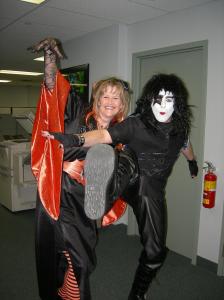
























 mikeladano.com