RECORD STORE TALES #1149: Eddie’s Story – The Narrative of Derek Riggs’ Iron Maiden Art
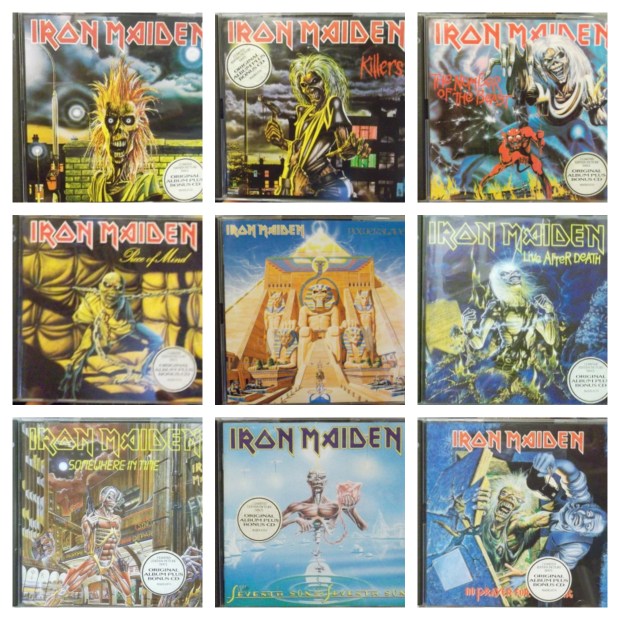
Edward T. Head, better known as “Eddie”, has been Iron Maiden’s mascot since the late 1970s. He was just a mask then, made by roadie Dave Lights, to hang on the band’s live backdrop. Why “Eddie”? Because the mask was essentially just a head, or “‘ead” in British slang. Therefore: Eddie the Head! When Iron Maiden were signed to Capitol Records, manager Rod Smallwood wisely surmised that the band would do well with an identifiable “stamp”…like a mascot. He contacted artist Derek Riggs, and before too long, Eddie made his painted debut on the cover of Iron Maiden’s 1980 single “Running Free”.
Eddie’s impact cannot be overstated. He is more recognizable than any single member of the band. He is seen on T-shirts worn by diehards, casual fans, and even those who have never heard an Iron Maiden song in their lives. He is ubiquitous. Needless to say, Rod Smallwood was very wise, and Derek Riggs very talented. Riggs did the cover art for every Maiden album from 1980 to 1990, and almost every single and EP in the same time frame.
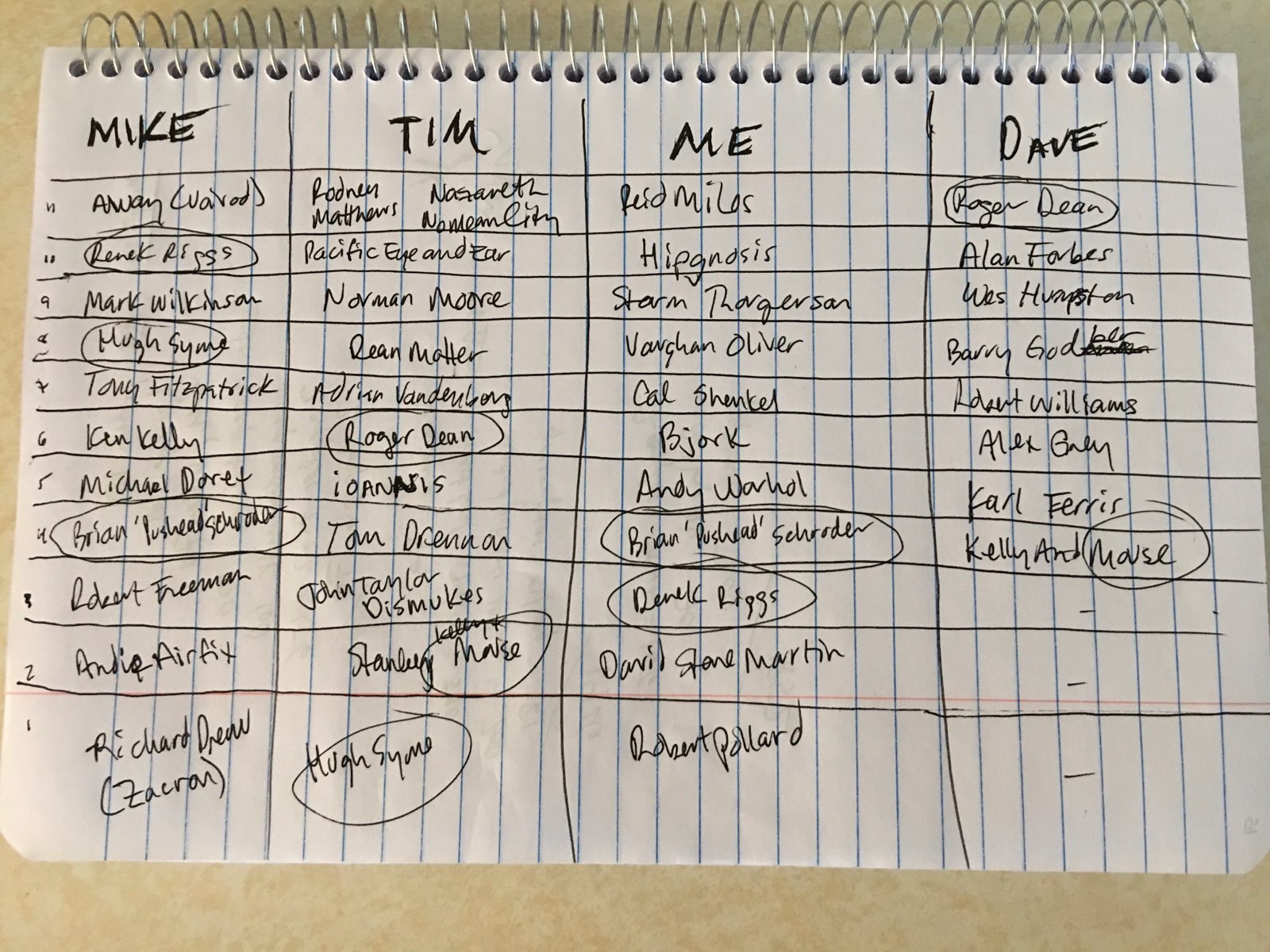
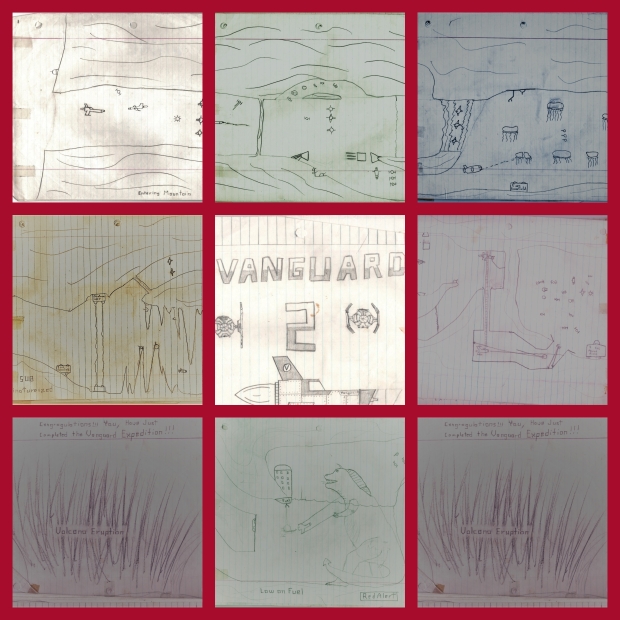
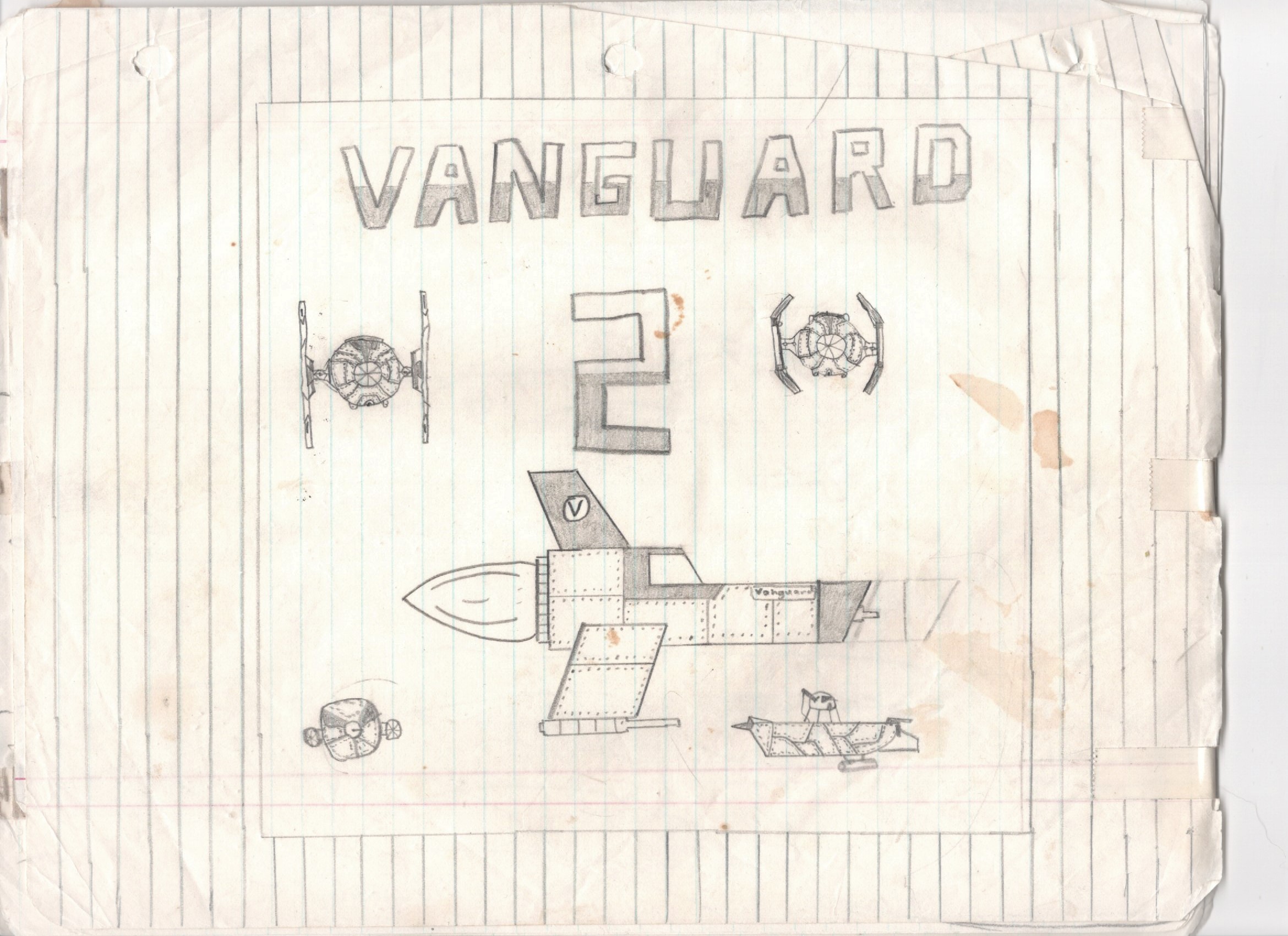
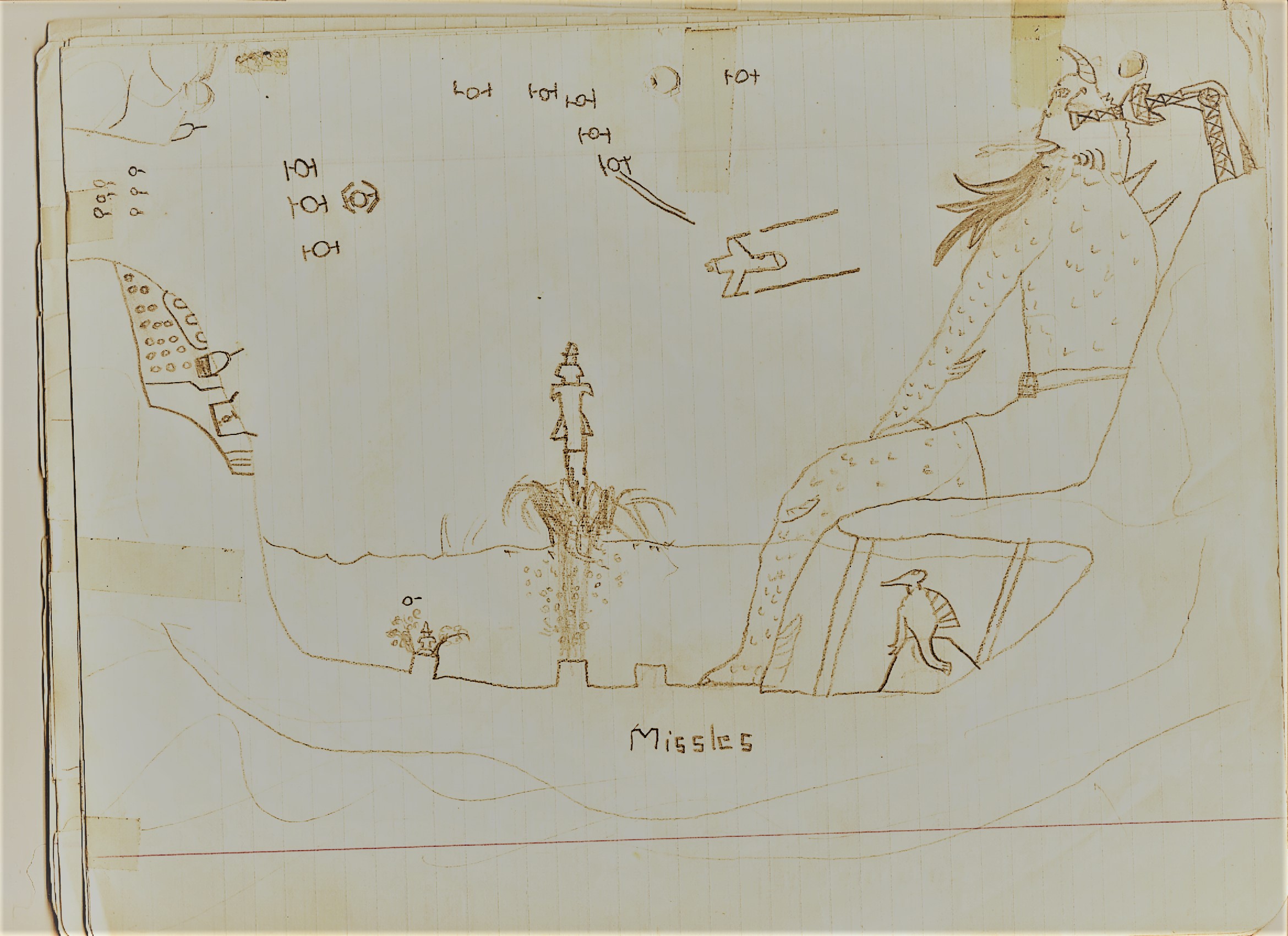
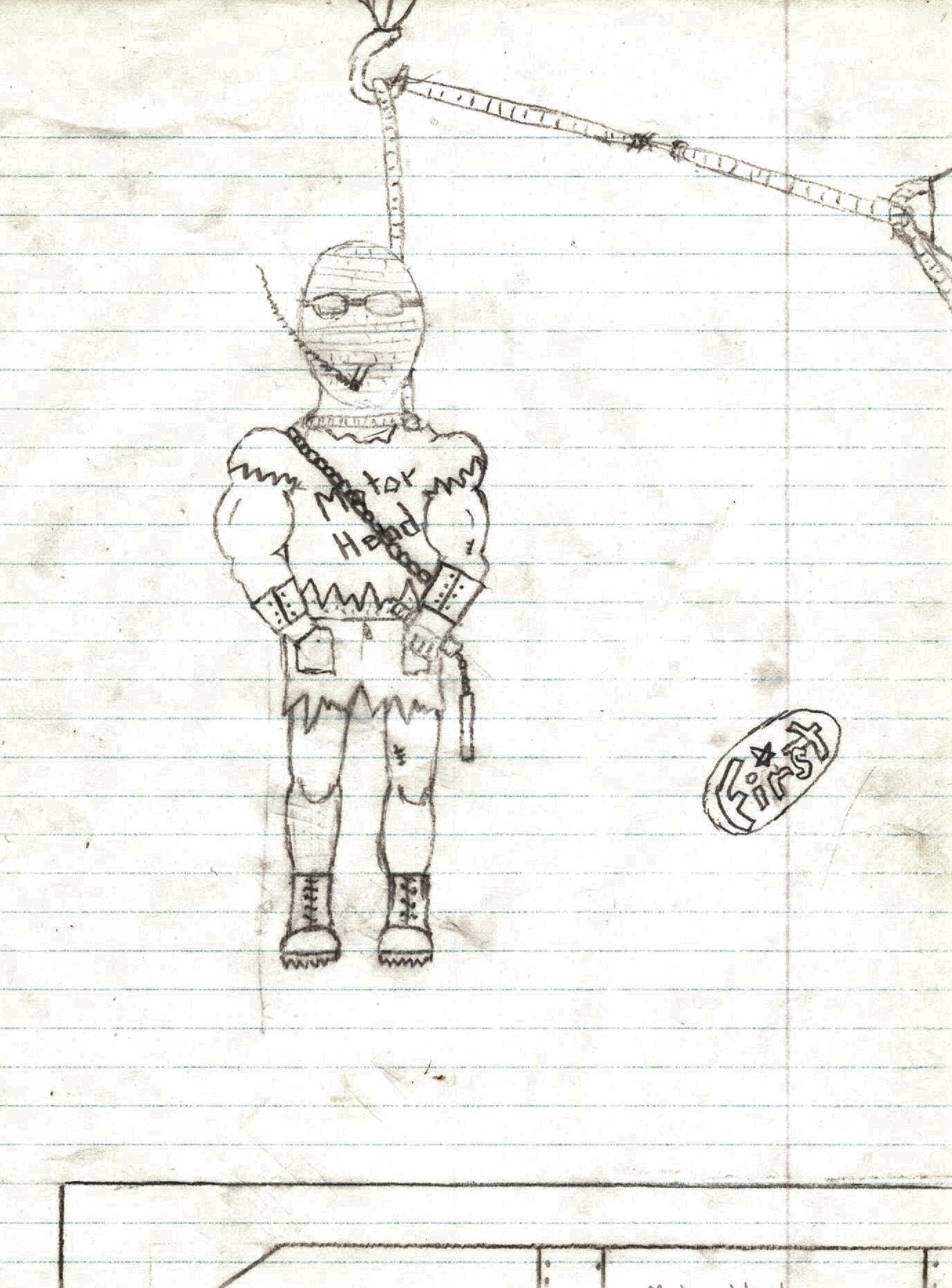
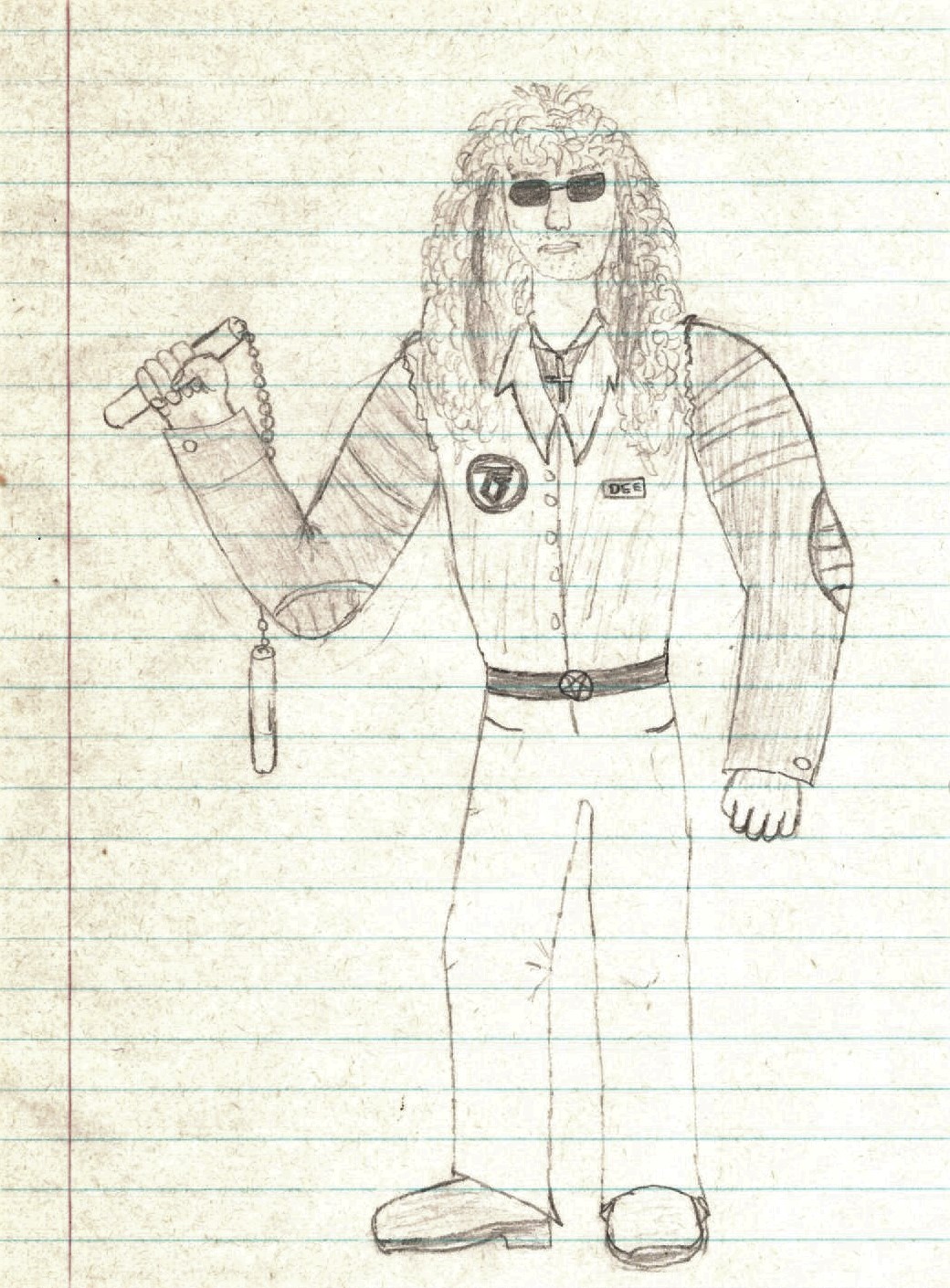
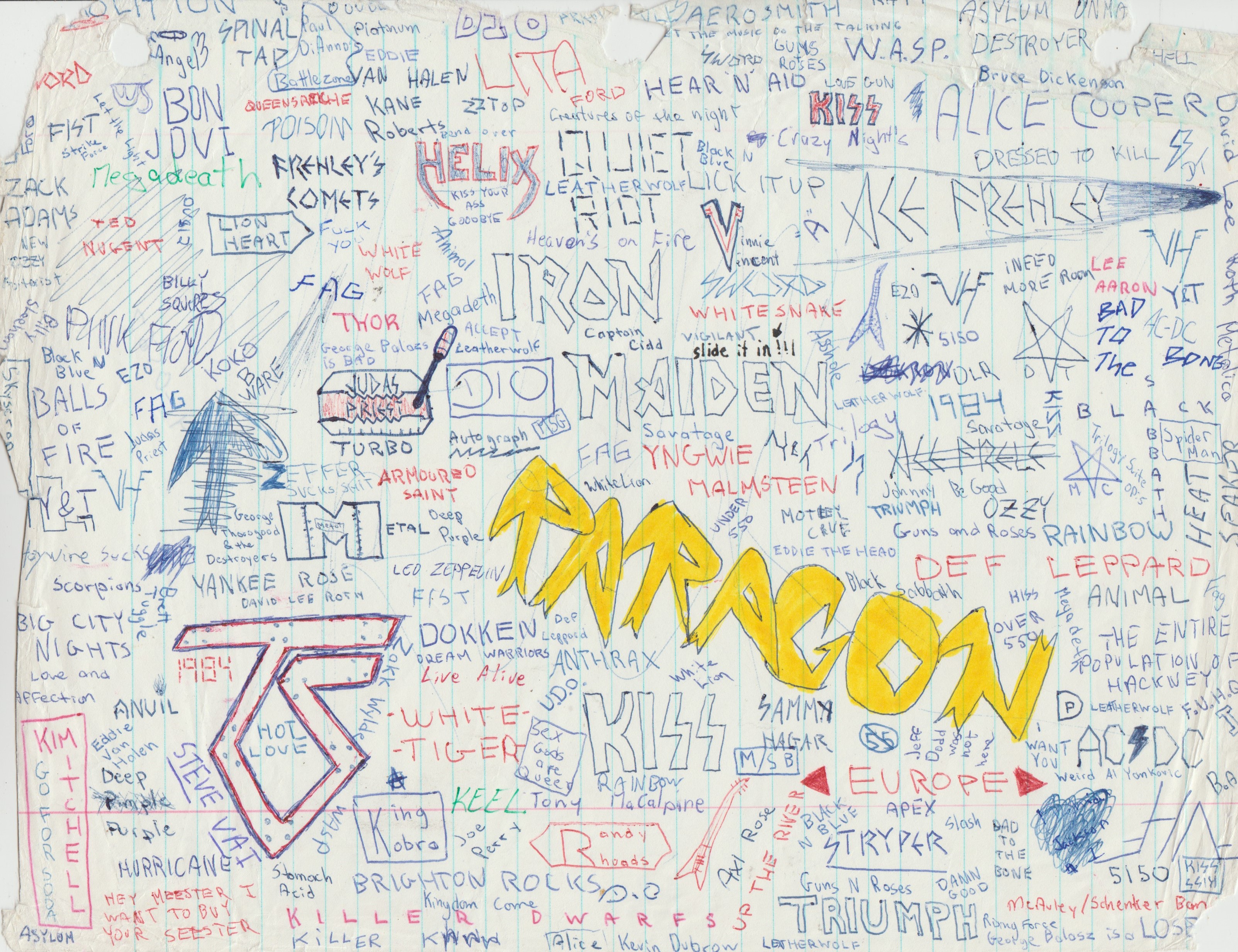
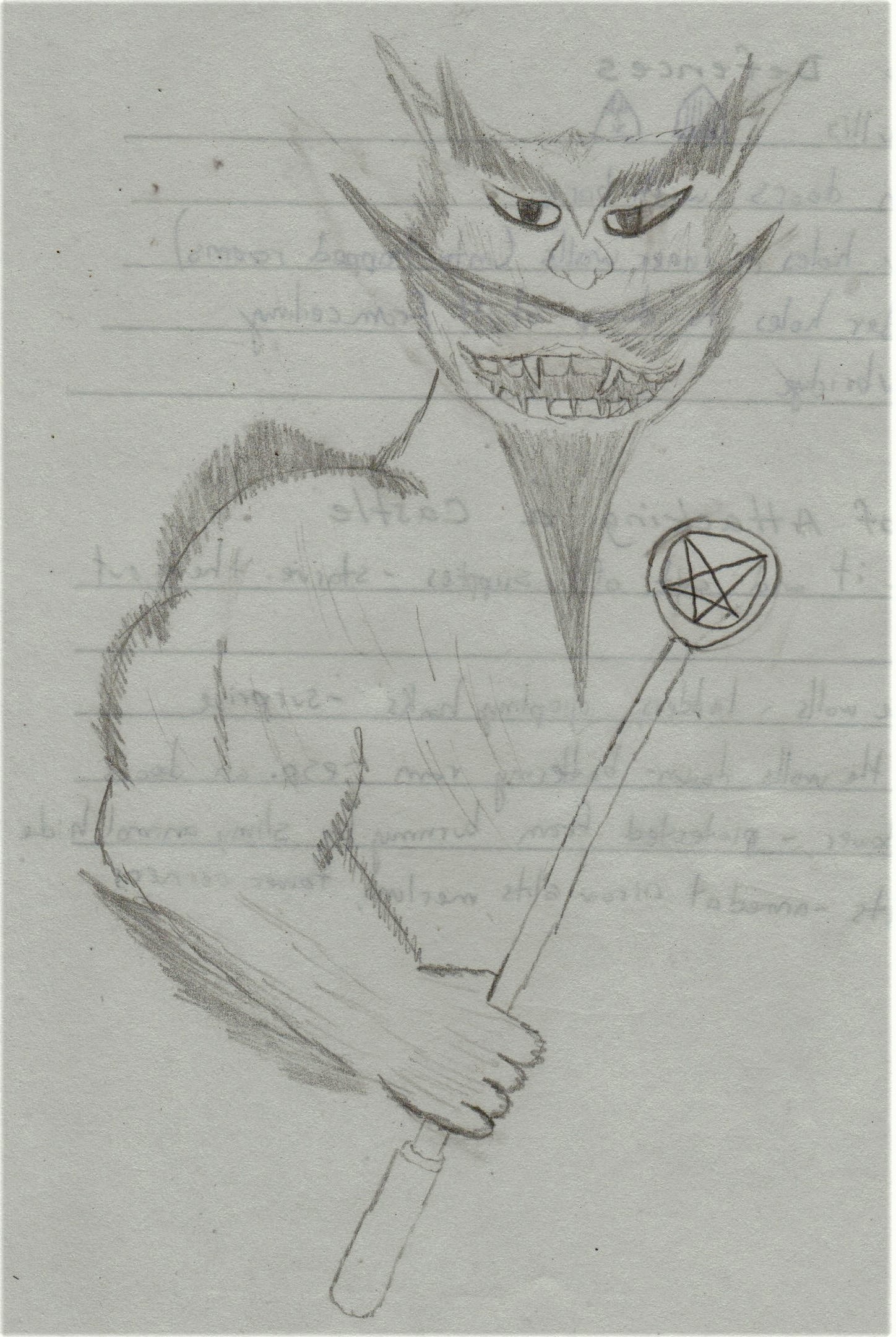
As young impressionable kids growing up in suburban Ontario, we certainly knew who Eddie was. My friends and I collected not just the albums and singles, but also the buttons. We were intimately familiar with Eddie, his different outfits, settings, and crimes! We attempted to draw our own Eddies. I took a shot at a single cover for “The Duelists”, a favourite song. It featured Eddie and the Devil fencing at the edge of a cliff. The Devil was a foe of Eddie’s going back to the “Purgatory” single cover. Derek Riggs eventually built an extensive mythology for Eddie and associated characters. He focused on “Easter Eggs”, hiding characters and symbols within the artwork. Powerslave and Somewhere In Time were chock full of such goodies. References to the bars Maiden played, the Reaper, and even a TARDIS can be found on those albums. One of the great pleasures of being an Iron Maiden fan was opening up an album and looking for all the secret images and messages while you played the records.
By 1986, some of us had noticed that the album covers, not including the singles, seemed to a tell a continuing story. There was a continuity to the cover art, and Eddie in particular, that made us think there was an actual story unfolding with each album release. This story seemed to run through Derek Riggs’ entire tenure as Iron Maiden’s cover artist, from 1980 to 1990. While I am certain that this is entirely something made up in our heads, it does seem to hold water.
Let’s have a look at the album covers, and the story they may tell.
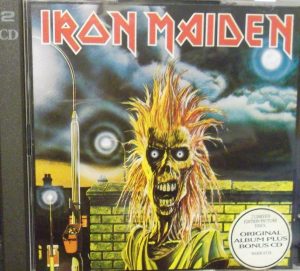 IRON MAIDEN -1980
Just an introduction to the character. Eddie is a street punk, in a loose T-shirt, standing on a London street at night. Behind him is a lit doorway, and a window with a red light – a reference to “Charlotte the Harlot”. You can also see two of the streetlamps behind Eddie form an arc, with the moon. Eddie’s eyes are just black sockets with light behind. Later artists would change Eddie’s eyes, but Riggs always painted them black with some kind of illumination. Eddie’s skin appears yellowed and stretched, like that of a mummy. His hair is pure punk rock.
The story has yet to begin, but Eddie is clearly someone you don’t want to mess with on a London street at night.
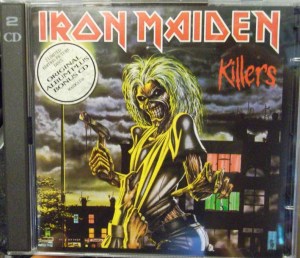 KILLERS – 1981
Eddie appears much more refined in this image. You get a better look at the character, including a belt and blue jeans. The punk rock hair is gone, though Eddie remains on the streets. It could be the same neighborhood as the first album. The black clouds in the sky are similar. This time, Eddie has a bloody hatchet in hand, while his victim grips his shirt in dying desperation. Eddie seems to have no mercy. He even seems to relish killing. Fitting, for an album called Killers. Our interpreted story begins here, with a murder.
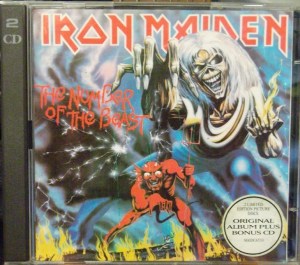 THE NUMBER OF THE BEAST – 1982
The plot thickens. In Riggs’ best album art to date, Eddie appears a giant over a scorched, hellish background. The rear cover had more of this scenery, indicating we were indeed in hell. Eddie’s eyes are now lit by flames, matching the ground below. He also has a fire in his hand, a reference perhaps to Montrose’s “I’ve Got the Fire” which was an earlier B-side. The most striking feature here though is the appearance of the red Devil himself! Eddie appears in control, manipulating the evil one with green puppet strings.
This was the first cover that really had us squinting at the details, on our little cassette J-cards. For if you look closer, you will see Eddie is not in control at all. Satan himself has his own puppet, and it is Eddie! Our minds were boggled. What could this mean? We began pulling together the threads that seemed to be telling a story. Derek Riggs had outdone himself, but he was only getting started.
 PIECE OF MIND – 1983
Imprisoned! Captured, chained in an asylum, and lobotomized to boot! Now bald, Eddie bore a scar across his head! He had been cut open like an egg, and this scar would remain for the next several album covers. Two more details were added: a stream of blood going down his nose (always his right side), and a metal bracket holding his head together. The screws in the bracket would always be in the same orientation.
Clearly, Eddie was in trouble. We saw this as the punishment for his crime of murder. The Devil came to take his due, and now Eddie is stuck in a cell. Would he escape? The next album told us no.
Of course, the real life inspiration for the artwork was the title Piece of Mind. On the inner sleeve, the band members are preparing to dine upon a brain! It doesn’t look tasty, and Adrian Smith in particular doesn’t look hungry. In our childhood fantasy world, the Devil had served up a particularly brutal punishment for our favourite Metal mascot.
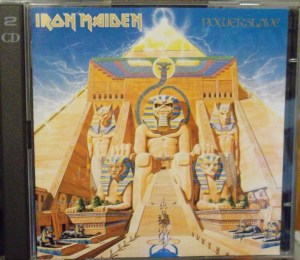 POWERSLAVE – 1984
It appears that Eddie did not survive his brain surgery and imprisonment, for here he was being laid to rest in an ancient Egyptian setting. In Riggs’ best artwork to date (again), a multitude of Easter eggs were hidden on the front, back and inner sleeves. The Great Pyramid appears as it once did in antiquity, smooth and topped by a golden capstone. Eddie’s sarcophagus can be seen, carried up the stairs, to his eternal resting place.
Or was it?
It seems pre-destined that Maiden’s next album would be called Live After Death. It was really at this point that we started to put together that there was a story unfolding here. Live After Death, and Eddie was buried on the previous album? It all made sense!
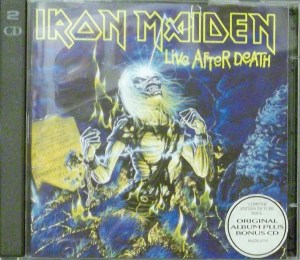 LIVE AFTER DEATH – 1985
Now this was an album that simply had to be owned on vinyl. There was text to be read on the tombstones (“Let It RIP”), and so many Easter eggs on the back cover, including a black cat, the Reaper, and a visible “Edward T. H…” on his tombstone. For many of us, this was the first indication that Eddie did have a last name!
With a bolt of lightning re-animating the already dead corpse, Eddie was back! Still wearing his chains from the Piece of Mind album cover, Eddie’s hair had grown back while his T-shirt has seen better days. Flames can be seen bursting from the ground, hinting at his hellish past. On the rear cover, a city can be seen, surrounding the pyramid from the last album. The continuity seemed clear. The only issue here was that on the prior album, Eddie was laid to rest inside the pyramid. Here, he is seen bursting out of a normal grave. It would seem that Eddie’s remains were re-located between albums. A minor issue easily explained away.
The city on the back cover calls to Eddie! He was back, and up to his old ways again…
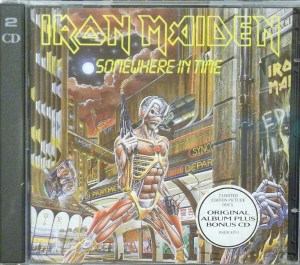 SOMEWHERE IN TIME – 1986
Riggs outdid himself again, with the Blade Runner inspired Somewhere In Time. Owning this album on vinyl is simply a must, for there is so much going on.
Still lobotomized, but bearing a new brain of circuitry, Eddie was technologically enhanced. The blood, scar and bolts holding his head together are still visible despite the modifications. On his chest, Derek Riggs’ signature emblem can be seen clearly. It was always hidden somewhere on his albums, but here it was plainly visible. A poster that reads “EDDIE LIVES” can be seen on the right, with the dying hand of a victim that he has just exterminated. Back to his old killing ways from the Killers album! Instead of a blade, Eddie now wields a pair of blasters. Eddie seems to have arrived in a “Spinner” vehicle, similar to Blade Runner.
The same familiar moon from previous albums blazes behind, but there is so much on the back cover to discover too. A reaper, red-lighted windows, and the names of things important to Iron Maiden’s lore are present. As far as our story went, we imagined that Eddie emerged from his tomb centuries in the future. This time, the Devil would not stop him! But despite the cybernetic enhancements he underwent, his body was not whole…and soon it would be time to be reborn.
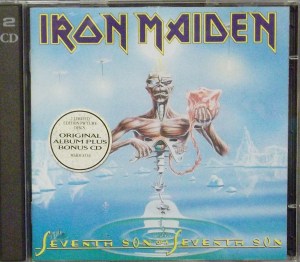 SEVENTH SON OF A SEVENTH SON – 1988
This is where things got weird. Really weird. Not content to keep drawing Eddies with axes through people’s heads, Riggs went abstract on Seventh Son of a Seventh Son. Eddie was now little more than a torso, with his skull ripped open and aflame! The scar, bolts and blood are still present (though the blood would be replaced by a mustard-like substance on the single cover for “Can I Play With Madness”). The remnants of his cybernetic enhancements are still present, with one eye replaced by a robotic one. He also still has a metal throat. An apple can be seen within his ribcage, but most striking is the Eddie-infant he’s holding in some kind of embryonic sac! This sac is attached to his ribcage with an umbilical cord. An arc of lamps recalls the first album. A “book of life” is present on the back cover, tying into the album’s concept. There are also ice statues of past Eddies on the back cover, for a total of seven Eddies.
Look closely and you can see that the surface below is both solid and liquid, and the icebergs do not touch the surface. In our story, this represented Eddie on another plane, as he gave birth to his successor – a new Eddie.
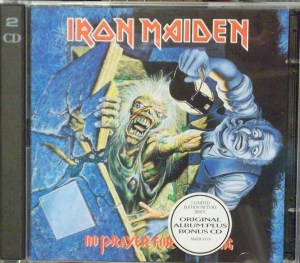 NO PRAYER FOR THE DYING – 1990
For the first time, we felt disappointed by an Iron Maiden cover. Gone were the layers of Easter eggs. The art felt unfinished, and indeed, Derek Riggs would remake it for a 90s reissue. The album was sonically a “back to basics” affair for Iron Maiden, with simpler lyrics and shorter, harder songs. The artwork reflected this, with a simple Eddie just back to killing again.
Reborn, and without scars, bolts or lobotomies, Eddie emerges from a stone coffin. Because why not? The undead should surely be reborn in a grave! Grasping the poor gravekeeper by the throat, Eddie is seconds away from his first killing in his new body! Looking at his coffin, the name plate is unfinished, with no clever names or puns. The fragments of the shattered coffin don’t even fit together properly. The blue and yellow colour scheme definitely links the album to Seventh Son, Live After Death, Powerslave and The Number of the Beast, but there is far less to keep you looking at the cover.
And this is the end of our Eddie story, for Derek Riggs would not do another Maiden cover for years, and by then there was no point in any continuity. The next time we see Eddie, he has red bug-eyes and is half-tree.
Iron Maiden would continue to produce fascinating album covers in the future, always featuring Eddie in some way. Notable artists included Mark Wilkinson, Melvyn Grant, and Hugh Syme. For most fans, the original run of Derek Riggs covers will remain the pinnacle of Maiden artwork, primarily the period of 1981 to 1988.
Did Riggs have a story that he was telling with his covers? Probably not; he probably just liked keeping Eddie consistent from cover to cover. He would probably appreciate the fact that a bunch of Canadian kids in the suburbs had interpreted this entire saga from his artwork. I think he’d like that a lot.





























 mikeladano.com