hard rock

REVIEW: House of Lords – Sahara (1990)


By request of reader WARDY!

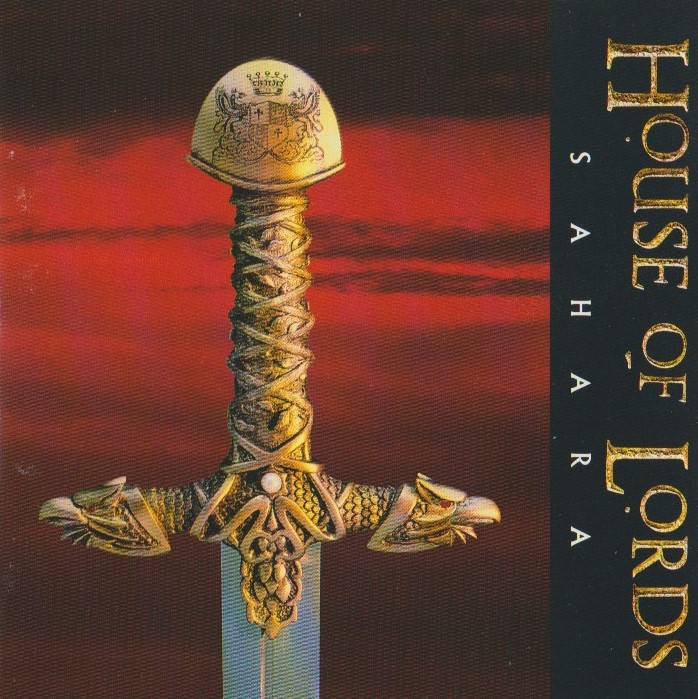
scan_20161010HOUSE OF LORDS – Sahara (1990 BMG)

House of Lords put out an impressive debut but didn’t sell a lot of copies.  When the second album rolled out in 1990, their guitarist Lanny Cordola was gone and in was new guy Michael Guy.  Although Guy is credited on guitar, in reality the album was recorded with Doug Aldrich and a number of guests.  Weirdly, thanked in the credits for “additional inspiration” is Nick Simmons, who was one year old at the time.  Sahara was of course on Simmons Records.

It’s a different sounding House, less regal but with more hooks per acre.  The opening number “Shoot” draws liberally from the wells of both Led Zeppelin and Motley Crue.  “Chains of Love” is Coverdale-lite, with singer James Christian pouring on as much sass as possible, but without Coverdale’s sly nods and winks.  Whoever is playing the guitar solo on “Chains of Love” laid down a killer.

The acoustic cover “Can’t Find My Way Home” (Blind Faith) is pretty true to the original minus the falsetto, and would have to be one of the better power ballads from a rock band in 1990.  House of Lords turn a serious corner on “Heart on the Line”, which sounds like a title for a ballad.  This however is a speed racer, a chugging riff powering a rock-corker, which turns Cheap Trick on the chorus.  Unsurprisingly, it was written by Rick Neilsen.  Brilliant playing and soloing on this one.  Then they rip off a song title from Coverdale himself, “Laydown Staydown”.  Winger-esque sleeze rock is all this is, not even touching the brilliance of the Deep Purple song that inspired the title.

A much more impressive track opens side two, “Sahara”.  This is progressive hard rock, with drummer Ken Mary layering a tribal drum effect that would have been very ahead of its time in 1990.  This too degenerates into something more Winger-like as well, but it jumps from that back into more progressive sections, keeping things balanced and interesting.  The second slot on side two is predictably another ballad, a good one called “It Ain’t Love”.  Not just the title, but the gang chorus reminds of Dokken.  Some fine soloing resides here to sink your fangs into.

The lead single was another power ballad, “Remember My Name”, which the band did not write.  As an impressionable youth in 1990, I hated this single.  “Never lead with a ballad,” was my thinking.  I had been looking forward to new House of Lords since the debut slayed me in ’88.  I didn’t want the first song to be a ballad they didn’t write.  I still don’t think it’s a very good track.  And surely a mistake to include it on the CD right before another ballad.  “American Babylon” redeems it, coming back with a strong push.  “Kiss of Fire” nails it with the knockout punch at the end, a blazing smoker with powerful keyboards that remind us of vintage Deep Purple.  Finally it seems House of Lords nailed a song that lived up to their inspirations.

Perhaps it was the rotating cast of characters on guitar, but Sahara drifts further from the sound that made House of Lords unique in 1988. The danger of grasping for hits while taking their sound deeper in the mainstream was real. Though it is still an entertaining listen, Sahara is very uneven which makes it a bumpy ride.

3/5 stars

scan_20161010-3

REVIEW: The Cult – Hidden City (2016)

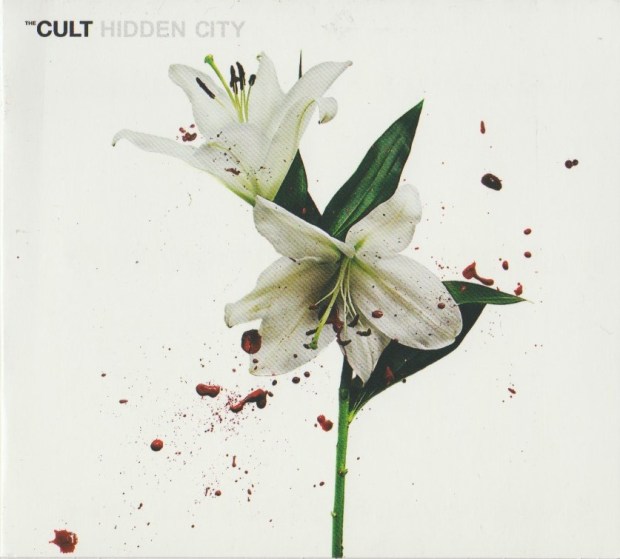
scan_20161008THE CULT – Hidden City (2016 Dine Alone)

There have been a few times in Cult history when it seemed unlikely they would be making any more albums.  Thankfully, these fears were unfounded.  Thankfully, because The Cult are so damn great at making albums.

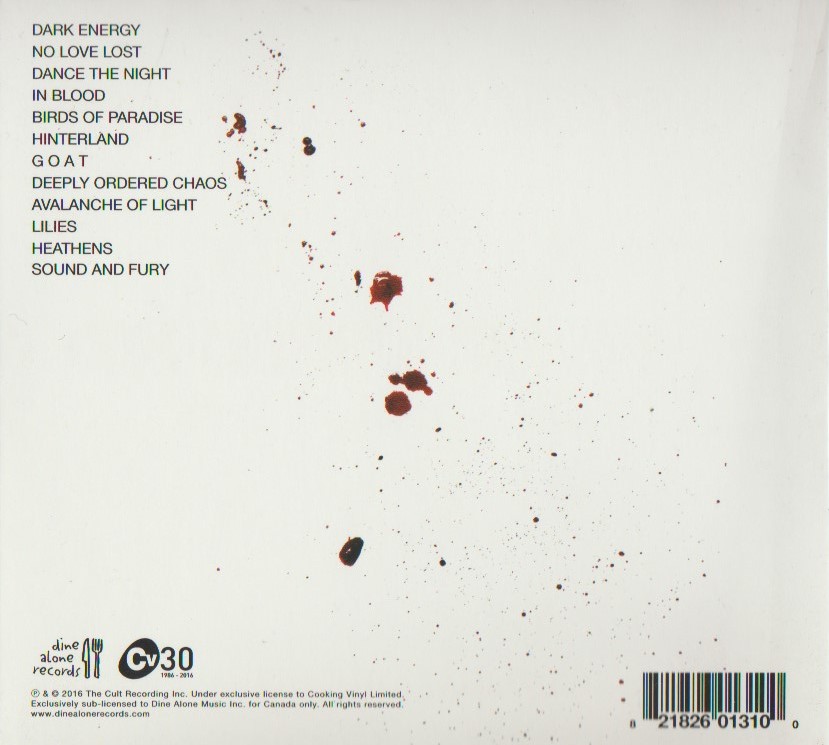
Their latest is Hidden City, and it continues their upwards trajectory.  Teamed up once again with Bob Rock, the band created a powerful recording, very Cult-like and loud.  It is a cohesive and impressive collection of songs that tend to defy individual description.  It is easy to pick our favourites such as “No Love Lost”, “Birds of Paradise” or “Hinterland” (my personal fave), but Hidden City is more than the sum of its parts.  Its components are strong compositions that highlight the strengths of the band:  Ian Astbury’s powerful and unique voice, and Billy Duffy’s unmistakable riff stylings.  Hidden City collects the light and shade and presents them as a multi-coloured hue.

Its grooves are huge but textured.  The songs reveal more hooks the more you listen.  The Cult’s performances are top notch.  The album is electrifying.  Hidden City must be considered a latter-day high water mark, an album that builds on the last few records and continues pushing forward.  The Cult rule again.

5/5 stars

This is a 200 word review in the tradition of the #200wordchallenge

scan_20161008-3

REVIEW: Union – Union (1998, 1999 reissue with bonus track)

The third and final Kulick review from our Kulick week at mikeladano.com!

Tuesday: Blackjack – Blackjack (1979)
Wednesday: Blackjack – Worlds Apart (1980)

scan_20160928UNION – Union (1998, 1999 Spitfire reissue)

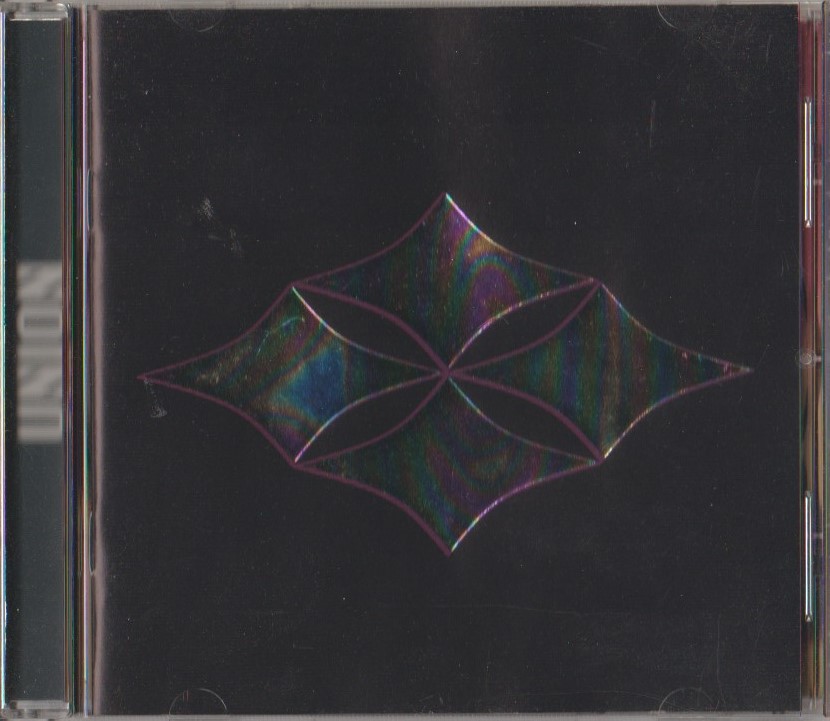
A mighty Union was formed from the ashes of two classic bands’ lesser-known lineups.  First up is Bruce Kulick, formerly of Kiss and now in Grand Funk.  Kulick had been taking an increasingly important role within Kiss, leading to the Carnival of Souls LP which Bruce was instrumental in writing and recording.  With him was John Corabi who had just been booted from Motley Crue after making (arguably) their best album (or one of).  Corabi was in a bit of a state.  His confidence in himself was shaken after the Motley experience, who seemed impossible to please when their album tanked.  John told Bruce that he didn’t want to sing anymore, he just wanted to play guitar.  Bruce’s response was “Dude, you’re fuckin’ high!”

And so it was that Bruce and John teamed up (with Brent Fitz and Jamie Hunting) in the aptly named Union.

You wouldn’t call Union a supergroup, but they did create a fine album.  It is in the mold of the last albums these guys made separately (Motley ’94 and Carnival).  Union turned out as an angry, dark rock record, very much a child of the 1990’s.  With Kulick on guitar, Union was more than a 90’s alt-grunge retread.  The 90’s are omnipresent in the droning riffs and staggered rhythms, but then Bruce dumped out his tackle box of guitar tricks.  Bruce evolved over the years from a guy who played really fast on 80’s Kiss albums to a serious player interested in pushing his own limits.  Where he used to be content to play flurries of notes, on Union he goes for maximum gut impact.  It’s less about playing the notes than bending them to his will.

It’s also quite clear how much writing Bruce and John did in their respective bands, judging by the sound of this.  “Around Again” bears groovy similarities to tracks like “Jungle” by Kiss and “Uncle Jack” by Motley.  There’s a pissed-off attitude, and musicianship that would make Nikki Sixx crap his pants.  Thankfully Union have a good batch of songs backing them.  Much like the previous Kiss and Crue records, Union is not instant love.  It takes about three good listens to penetrate its metal-grunge (with a touch of Beatles) hybrid sound.  Union usually seem to go for the guts rather than singalong melodies.

One of the exceptions to this rule is the pure fun “Love (I Don’t Need it Anymore)”.  This is the one that hooks you on the first round.  With a funky little riff and a chorus that sinks right in, it slays.  The ballad “October Morning Wind” is another catchy track, an acoustic number a-la Zeppelin.  Think of a track like “Loveshine” from the Motley album for the right ballpark.  Stealing a Zeppelin title, Union’s song “Tangerine” is a groove rock tune like a heavier Aerosmith.

On the other side of the spectrum:  psychedelic rock.  “Let It Flow” is a trippy song broken up into sections called “The Invitation”, “The Journey” and “The Celebration”.  I think John was smoking something green when he wrote the lyrics, but Bruce’s sitar-like guitar is the perfect complement.  “Empty Soul” has similar scope, being a pretty huge song with musical goodness coming out the wazoo.

Adding the Beatles cover “Oh Darlin'” to a reissued version of the album is a little greedy, but fortunately worth it.  As it turned out this band only made two studio albums, so more Union is good Union.  If you recall the original song, Paul McCartney gave it his best rasp screams.  Up to bat is John Corabi who can sing that way in his sleep.  It’s a perfect match and “Oh Darlin'” is a nice little extra on which to end an exceptional album.  The only issue I have with “Oh Darlin” is actually its placement as the last song.  Previously, the solo-written Corabi acoustic ballad “Robin’s Song” was the closer, much like “Driftaway” was on the Motley album.  You become accustomed to “Robin’s Song” as a closer, because it has that quality to it.  “Oh Darlin'” is not a closer.  It would have worked better earlier in the track list, so feel free to shuffle as you choose.

Whatever version you acquire, any fan of Kulick and/or Corabi would be foolhardy to live without this CD.  It ranks as one of the best albums by either.

4.5/5 stars

Gallery: HELIX guitar picks

These.  Are.  COOL.

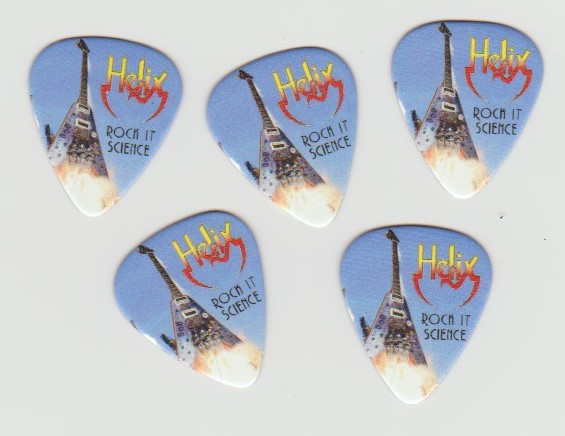
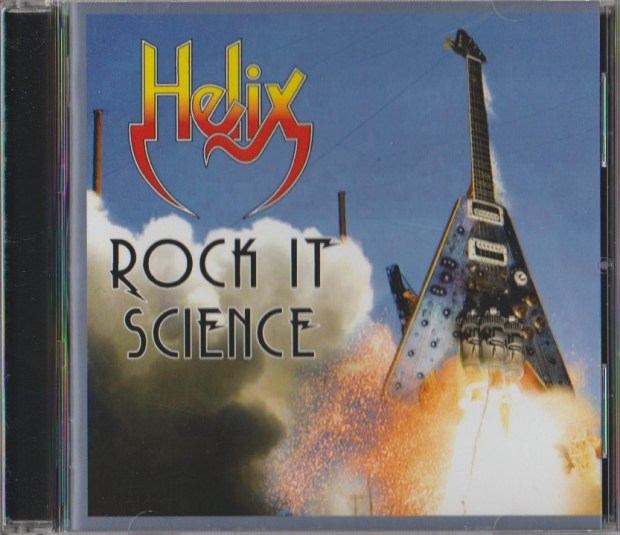
To promote their new album Rock It Science, Helix released this set of five custom guitar picks.  It is available at their site for only $10, and they feature the excellent album art (by Brent Doerner) on the front.  On the back, each pick has a photo of a band member:  Brian Vollmer, Daryl Gray, Greg “Fritz” Hinz, Kaleb “Duckman” Duck and Chris Julke.

Guitar picks are great to collect and here at LeBrain HQ, we can always appreciate a cool set of custom plectrums.  They’re fun, they don’t take up a lot of space (I’ll be storing mine inside the CD case) and they just look cool.  Feast your eyes upon these beauties and if you decide to go for a set, don’t forget to order the Rock It Science CD to go with ’em!

REVIEW: Helix – Rock It Science (2016)

NEW RELEASE


scan_20160930HELIX – Rock It Science (2016 Perris)

Helix just don’t stop!  Never have, never will.  They have been an ongoing property since 1974, steadily releasing albums with only minor gaps between.  They keep playing live, year after year.  They keep recording new music, ensuring there is always fresh product for fans to pick up at one of their unflagging shows.  The latest is a new “greatest hits” CD called Rock It Science, featuring a smattering of tracks from all over their career and one new song.

Bands and record labels are often guilty of exploiting their fans for one or two new tracks and a whole bunch of stuff they already own.  Helix fans generally don’t feel that way.  They want to support the band (“the hardest working band in Canada”), and it’s worth noting that most past Helix “hits” CDs are out of print now, and there is very little overlap in songs.  What overlap exists is usually limited to the “big hits” – songs like “Rock You” and “Heavy Metal Love”.  Incidentally, the hits from the Capitol years included here are the re-recorded versions from Best Of 1983-2012.  Fear not, they are very authentic remakes.  You gotta do what you gotta do to get paid!

Brian Vollmer has been good about including deeper cuts on his compilations.  “Billy Oxygen” and “You’re a Woman Now” from the first album are brilliant.  These are two of their best songs, period, and they commence Rock It Science brilliantly.  Any Helix CD that includes “Billy Oxygen” is better for it.  This jazzy little rocker is one of their more complex arrangements, written and sung by the “Doctor” Brent Doerner.  Speaking of Brent, he designed the artwork for the CD and directed the music video for “(Gene Simmons Says) Rock is Dead“.  That’s the new track on this CD (click the link for a review of the song) and a damn fine one it is.  Brian co-wrote it with his partner in crime, Sean Kelly, a brilliant musician in his own right.

A few other treasures worth mentioning are the lava-hot “Get Up!” from 2006, and the ballad “Good to the Last Drop” from 1990.  This is the single remix version of the song, which tips the scales as the slightly superior (and more rare) mix.  “Shock City Psycho Rock” (1998) is a pleasant surprise.  This is a track written by bassist Mike Uzelac in the early 1980’s but not recorded until the 90’s.  (When they recorded it, Uzelac was actually a missing person.  He has since returned to the land of the living, but I can remember meeting his brother back in the Record Store days and that is when I first heard the story that Mike hadn’t been seen by family or friends in years.)  Mike Uzelac was a talented writer and contributed lots of material to Helix.  “Shock City” is one of the fastest and most destructive tracks in their catalogue.  Finally, “Even Jesus (Wasn’t Loved in His Home Town)” is a favourite, notable for its biting lyrics and brain-searing chorus.

So go ahead and give them an R.  The band is like an institution, a hard working gang of rockers that aim to please each and every time.  Buy the CD direct from the band and you’ll get a signed copy with some great liner notes detailing some rare band history.  Rock It Science would make a fine first Helix album for any collection.

4/5 stars

REVIEW: The Four Horsemen – Left For Dead (1988-1992) (CD/DVD set)

“You know, Sean Connery was the best Roger Moore they ever had.” — Frank C. Starr

THE FOUR HORSEMEN – Left For Dead (1988-1992) (2005 CD/DVD set)

“Nobody said it was easy…and they were fucking right!”

The final review in this Four Horsemen series is a valuable live album/DVD set.  The CD was put together from “a box of old tapes”, all from 1992 gigs (one of which was Toronto), and there are ample liner notes discussing the band’s history and the songs herein.  It’s a brilliant live set, loaded with energy and Frank C. Starr’s unmistakable charisma.  Every track sweats whiskey.  With an opening one-two punch of “’75 Again” and “Moonshine”, you know you’re in for an action packed ride.  “Moonshine” is particularly cool, because the album version featured an authentic over-the-phone lead vocal, but the live one is full-on.  Throwing in a couple extra screams, Frankie added the icing on the cake.  Man, we so miss Frank C. Starr.

It’s a noisy affair, which actually suits this band just fine.  It’s appropriate that a Four Horsemen live album isn’t an overdubbed and glossed collection.  What it sounds like is a live band in a tiny club.  All three of the Horsemen’s singles are included in live form.  The slide-drenched “Tired Wings” goes down a treat.  “Nobody Said it Was Easy” and “Rockin’ is Ma Business” are both electrifying; the latter especially so.  You don’t hear a singer with a voice like Frank’s very often.  He had the grit, the power and the ability, wrapped up in a rock star-sized bottle of Jack.  Frank Starr has to be one of the greatest unsung losses in modern rock.

And what a band behind him!  There is a constant and very hard-hitting beat at the back, courtesy of the man-mountain Ken “Dimwit” Montgomery.  According to the liner notes, Dimwit was a psychiatric nurse in addition to being a hell of a punk rock drummer.  The name Dimwit was clearly a joke, but there is a dark side.  The rigors of his work and the amount of care and emotion that went into it may have contributed to the depression and substance abuse that eventually took his life.  It’s sad really, but thankfully these live recordings exist.

One non-album cut is included in this set, a slow raunchy one called “Can’t Get Next To You”.  The AC/DC influences are obvious as this one is clearly in the musical mode of “The Jack”.   The fans wouldn’t have known this song, but Frank wants to see how many people know the album.  Introducing “Hot Head” he announces, “Let’s see if some of you fuckers actually went out and bought this shit!”…right before an equipment breakdown!  And it’s all there, documented for history.  Leaving in things like amp troubles makes for a more authentic listening experience.

All told, only two songs from the legendary first Four Horsemen record are not on the live CD:  “Can’t Stop Rockin'” and “Homesick Blues”.  Although unlisted, “I Need a Thrill” does contain the “Something Good” coda, just like the album.  It’s even longer, with some absolutely consummate playing from lead guitarist Dave Lizmi.  The low grade sound quality perhaps enhances the overall experience.  This was a dirty rock and roll band and that’s how the live CD sounds.  That seems right.  With almost the entire first album plus an unreleased song, any Horsemen fan worth his or her salt should probably get their ears on this.  But there is still the DVD to feast our eyes upon!

img_20160924_061452

Interspersed with rare footage and interviews, you get all the original Horsemen music videos, starting with “Rockin’ is Ma Business”.   The stark music video for “Nobody Said it Was Easy” is a previously unseen version with some risque shots.  An interesting clip from MTV has the band mistakenly called “Four Horseman”.  (Apparently it was Riki Rachtman’s first show.  But then MTV got the name wrong on a later episode too!  MuchMusic got it right though.)  A rare live bootleg of “Hard Lovin’ Man” is audio garbage but video gold.  “High School Rock and Roller” is a blast to watch, especially the moving mountain that was Dimwit on drums.  There is big stage action from October ’91, opening for Lynyrd Skynyrd (“’75 Again” and “Rockin’ in Ma Business”).   Perhaps most interesting are some rejected music videos that didn’t see the light of day.  An early version of “Tired Wings” (with a pre-fame Kate Moss) is pretty crap and rightfully hated by the band.  Better than this is a rare “Mexican version” of “Nobody Said it Was Easy”.  The intro borrows liberally from “The Old Man Down the Road” by John Fogerty, but it’s cool watching the band mime in a hot dusty town in Mexico.  Then there is a never before seen $2000 budget video for “Welfare Boogie” from the original EP.  This video was rejected by MTV because the band were “too ugly”.

DVD special features are sparse but cool.  There is an exclusive acoustic demo version of “Tired Wings”.  What a different spin this is!  In demo form it was a slow acoustic drawl, laid back with angelic band harmonies.  The lyrics and melodies are identical but the arrangement is completely different.  This is set to a nostalgic slide show of rare band photos.  There is also a band commentary track for the main feature (Haggis, Dave Lizmi and Ben Pape). Lots of laughs, memories and anecdotes.  And making fun of “Dave Lizmo’s” hockey stick-style guitar neck.   Mostly they poke fun of each other’s clothes.  It’s a lot of fun to hang out with the Horsemen.  The audio commentary track is a highly recommended shambles.

The CD/DVD set can be ordered straight from the band, and it comes autographed.  I think mine is signed by Haggis but I cannot be sure!

4/5 stars

REVIEW: The Four Horsemen – Welfare Boogie (21st Anniversary Edition)

scan_20160918THE FOUR HORSEMEN – Welfare Boogie (originally 1990, 2009 Anniversary Edition with bonus tracks)

It feels right to review this re-released EP only after we have already discussed Nobody Said it Was Easy and Gettin’ Pretty Good at Barely Gettin’ By.  Until I met T-Rev at the old Record Store, I didn’t even know such an EP existed.  But he had it; an original copy purchased somewhere in the States before we met.  He taped it for me (same songs both sides) and that was the first I heard of the Horsemen’s 1990 debut EP.  I hunted high and low for another CD copy, but failed until this 2009 reissue.  Originally and simply titled The Four Horsemen, the reissued EP sports the new title Welfare Boogie, and five bonus tracks.

According to the liner notes, the band didn’t mind if they sounded a bit like AC/DC since “nobody is doing AC/DC anymore, not even AC/DC”.  The EP has the same raw and rough vibe of Powerage-era Bon Scott, but with a guy who can also scream like Brian Johnson.  “Welfare Boogie” itself works as an example.  It’s a basic riff, a rawk vibe, a shout-along chorus and a charismatic shrieker (Frank C. Starr).  This track and the laid-back rock and roll “Shelly” were both written solely by drummer Ken “Dimwit” Montgomery.  Dave Lizmi’s guitar solo is equal parts Angus Young and Ace Frehley.  The date might say 1990, but it sounds more like 1978.  “High School Rock N’ Roller” was written by founding member, Haggis (aka Kid Chaos aka Stephen Harris), who had finished a world tour with the Cult.  Once again, it’s easy to point at early AC/DC as the prime influence.  The one track that sounds more like punk rock (Dimwit was from D.O.A.) than AC/DC is “Hard Lovin’ Man”.  Starr might not have written it, but it’s clearly about him.  I have heard him reference his tattooed weiner before in a RIP Magazine interview.  (“It has eyes!” he seemed to beam with pride.)  The lyrics:

“I got heart of stone,
And a hand of steel,
Got a tattooed pecker,
And a Batmobile.”

“I”m a hard lovin’ man,” he boasts, before inviting “come here baby and see how hard I am.”  All this to the rock and roll blitzkrieg of a song so fast that it doesn’t even break the 2 1/2 minute mark.  The four tracks combined make for a grand little EP, not even 13 minutes long!  In and out, mission accomplished.  Thankfully the bonus tracks extend the experience for those wanting a little bit more action.

A cassette demo of “Rockin’ is Ma Business” demonstrates a work in progress as the band fiddled with the arrangement.  Comparing the final track to the demo, it sounds like it ingested a steady diet of coffee and gin before cranking it up to 11.  Always interesting to hear these early works in progress.  The bones are there but the meat is only being added.  “The Needle” is an unreleased song, a menacing night prowler with teeth flashing in the gloom.

“Born to Boogie” transformed completely between this demo and a later demo included on Nobody Said it Was Easy.  According to the liner notes here, this song eventually mutated again into “Can’t Stop Rockin'” from the album.  This track however is just a good time boogie with a bouncy riff lifted from “New York Groove” by Ace Frehley.  Then there is “Ain’t Telling Me”, a purely AC/DC stomp with a hint of Guns N’ Roses on top like a cherry.  Finally, a fun track called “Bring On the Girls” goes down like a round of tequila.  You can hear that the chords here later became “Moonshine” on the LP.  Even the bass line is identical, but this is a more party-hearty version of a fondly remembered deep cut.

This collection of songs was never meant to be more than a warm-up.  The main course was always intended to be the LP.  When a band is as good as The Four Horsemen were, the EP still impresses more than a thousand other bands’ proper albums.

3.5/5 stars


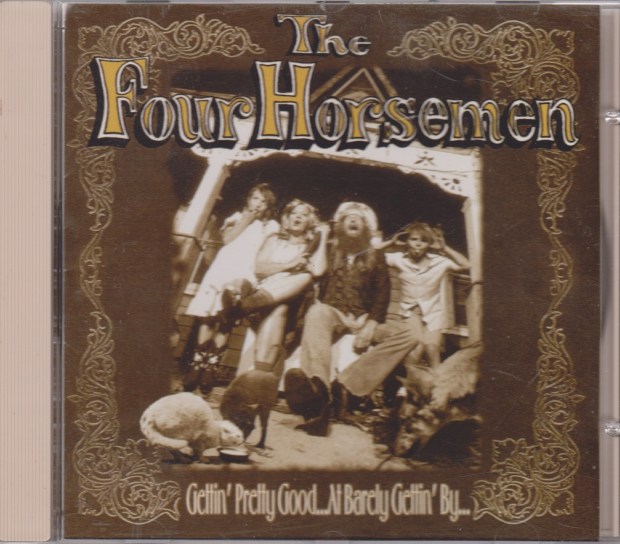
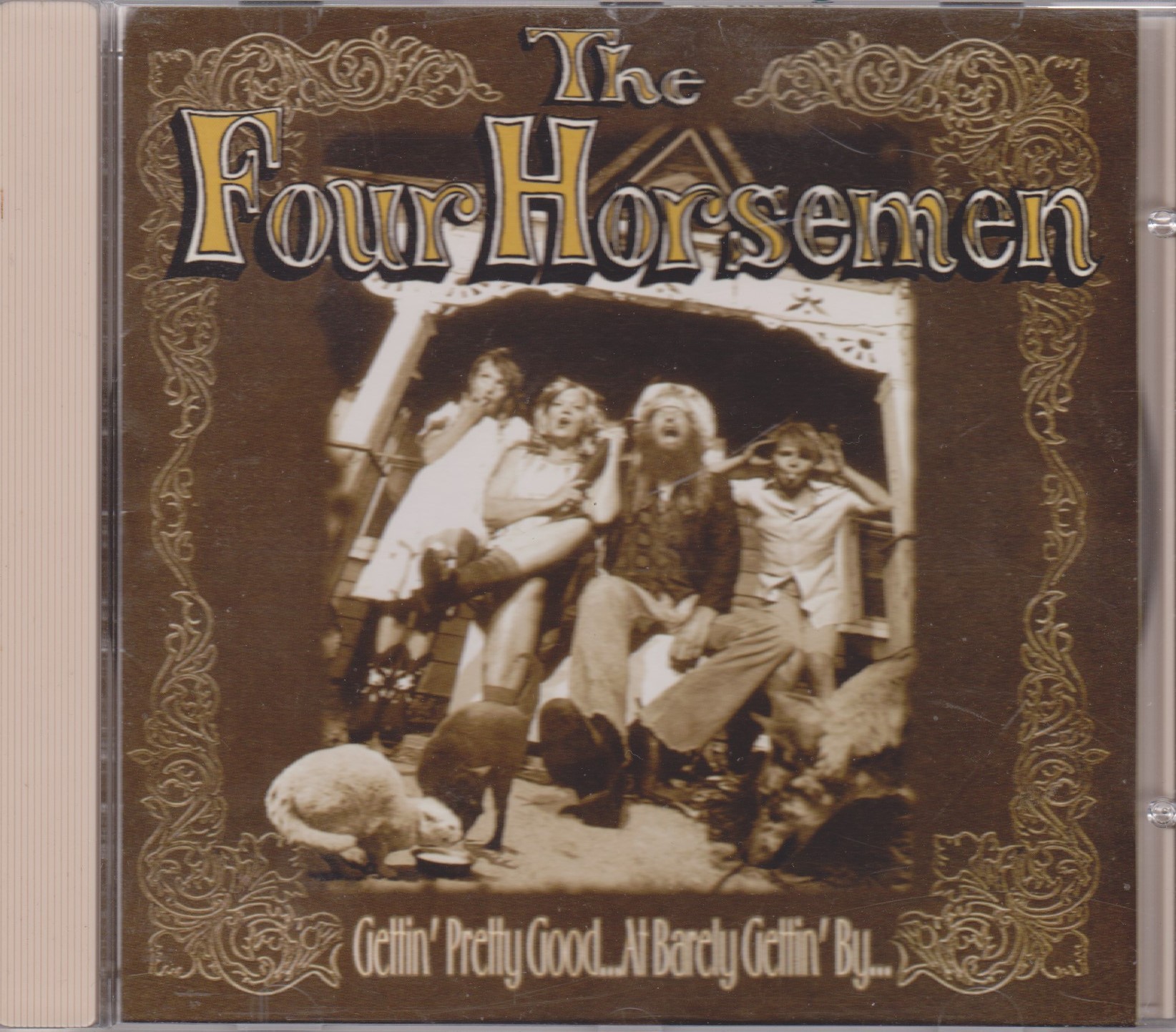
REVIEW: The Four Horsemen – Gettin’ Pretty Good…at Barely Gettin’ By (1996)

scan_20160908THE FOUR HORSEMEN – Gettin’ Pretty Good…at Barely Gettin’ By (1996 Magnetic Air)

The Four Horsemen seemed to burn the candle at both ends.  Before really even getting off the ground, they imploded, but not before dropping one of the greatest unsung records of the decade:  Nobody Said it Was Easy.  They had Rick Rubin, they had Def American, they had a guy that was in the Cult and another from D.O.A., and they had tours with the Black Crowes and Lynyrd Skynyrd.  They also had a volatile frontman who drove the band nuts and ended up in jail, and they just couldn’t make it last.

Founding member Haggis tried to give it another shot.  He reformed the band with a new singer named Tim Beattie, but ultimately the album was shelved.  It sounded like a completely different band, a southern soul band with nothing hard or heavy.  That’s not a bad thing:  the album Daylight Again was finally released in 2009, and it’s incredible (and we’ll get there soon).  Instead they folded again, but not for long.  Dave Lizmi and Frank C. Starr formed a new Four Horsemen, with Canadians Pharoah (bass) and drummer extraordinaire Randy Cooke.  With another Canadian, producer Rich Chycki, they forged a rare followup:  one as good as the original.

Slimmed down to a single guitar band, the new Horsemen sounded leaner and less AC/DC.  Frankie’s voice had changed and he was no longer screaming, and that also lessened similarities to AC/DC.  He had also become more expressive, while losing none of his power or character.  They opened the album with a southern flavoured “Still Alive and Well”, a Rick Derringer cover.  Considering the five year gap between albums, they couldn’t have picked a better opener.

The title track “Gettin’ Pretty Good at Barely Gettin’ By” goes deeper into the swamps of the south.  Lizmi takes out the slide, and who doesn’t love some greasy slide guitars?  This is an uplifting hard rocker, stating the Horsemen’s modus operandi:  “Well well, oh my my, what have we here?  Some good old fashioned music, lots of whiskey and beer.”  Lizmi wrote the lyrics for this album, but the words sound like Frankie’s.  It’s a celebration of rock and roll, proudly and loudly.

The third song in a killer triple threat of openers is “Drunk Again”, which sounds exactly like you hope it does: fast, upbeat, cocked and loaded.  Gotta love the female backing vocals, giving it a kick of soul.  The performance sounds live and authentic.  At one point, it sounds like Frankie cracks up chuckling right in the middle of a line.  “It’s been 40 days since I looked at my face…ah shit…”  This is the kind of music everybody needs for a serious rock and roll party.

scan_20160908-3

There are few more standout songs that have to be discussed.  First is “Song for Absent Friends”, one of the most emotionally bare tracks you’ll ever find from a band of this ilk.  Original drummer Ken “Dimwit” Montgomery, a Canadian punk legend, died in 1994 of a drug overdose.  “Song for Absent Friends” sends legitimate tingles up the spine.  You can feel the hurt.  But it’s not a funeral, it’s as much a celebration of Dimwit as the rest of the album is a celebration of life.

“And I know that you all are out there somewhere,
On a leave of absence from this place,
And I still have a place for you all,
A place around near me,
And your glasses will always be full.”

Then we have the blazingly fast drag race of “Hot Rod”, featuring the lyric “I got the hottest rod around,” ha ha. It’s that slippery fast guitar lick that knocks you out. But if you want a song that’ll knock some teeth out, with some biting lyrics, look no further than “Back in Business Again”. Frank sounds pissed!

“And we were headed for the top babe,
Way back in ’91,
Some record business scumbags took it from us,
Well they forgot my gun.
Well now we’re back in business folks,
I’ve come to claim what’s mine,
See we’re the Four fucking Horsemen,
Back for a second time!”

That’s nothing. Clearly, they were still ticked that they got dropped by the label in 1992. I don’t think Frank or Dave thought much of the latest wave of bands that were topping the charts in the early part of the 1990’s. Exhibit A:

“Now pay attention,
I got a little story here to tell ya,
It kinda goes like this.
You know I had a couple years off there babe,
To kinda take some time,
And I heard a bunch of whining, little wussy rock n rollers,
Complaining about how fame and fortune’s got them down.
I say we gather up all these little bastards,
Shove them back to their little nowhere town,
See I was born on this stage,
And I plan to stick around!”

Frank didn’t get that chance, either.

Before Gettin’ Pretty Good…at Barely Gettin’ By was even released (by the Canadian label Magnetic Air), Frank was hit by a drunk driver while riding a motorcyle. He suffered massive brain trauma. He never woke from coma, and died four years later.

It’s almost absurd how much hardship fell upon this band, almost as if the fates decided that nothing would stand in the way of grunge. The Horsemen tended to end their albums with emotional epics, and this album ends with “What the Hell Went Wrong”. It’s a complicated question with many answers, but the bottom line is that the success the Four Horsemen had was inversely proportional to their talent.

In one of the strangest twists of an already twisty story, the masses finally heard the Four Horsemen when “Back in Business Again” was used in the movie G.I. Joe: Retaliation.  Completely out of context, but who cares.  The movie starring Dwayne “The Rock” Johnson made $375.7 million.  That’s a lot of people who got to hear a kick ass Four Horsemen track with theater quality sound!

Rest in peace, Frankie.  Rest in peace, Dimwit.

5/5 stars


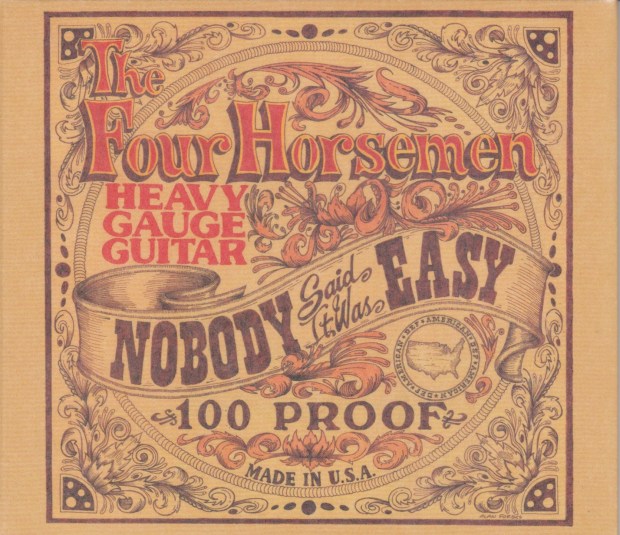
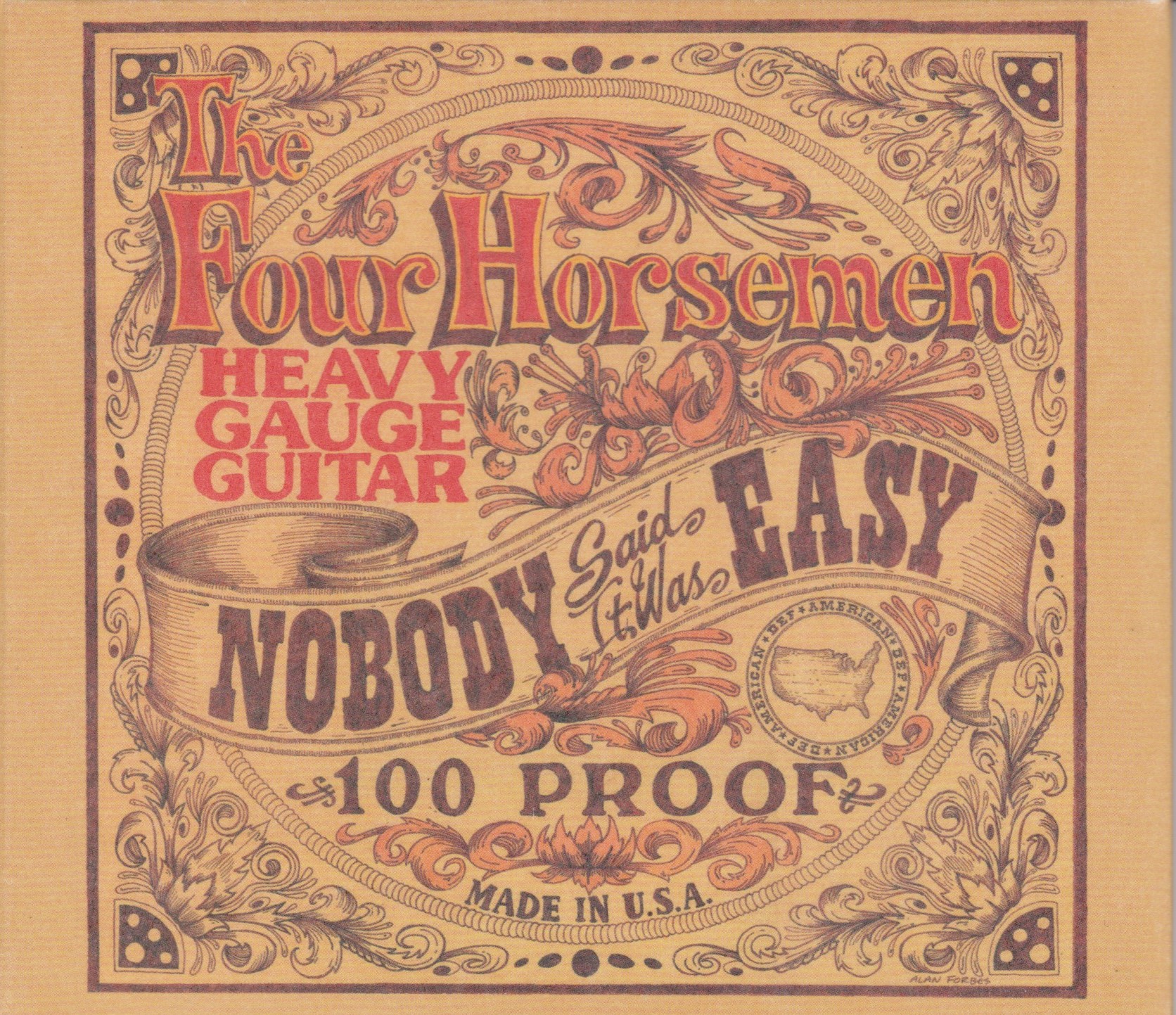
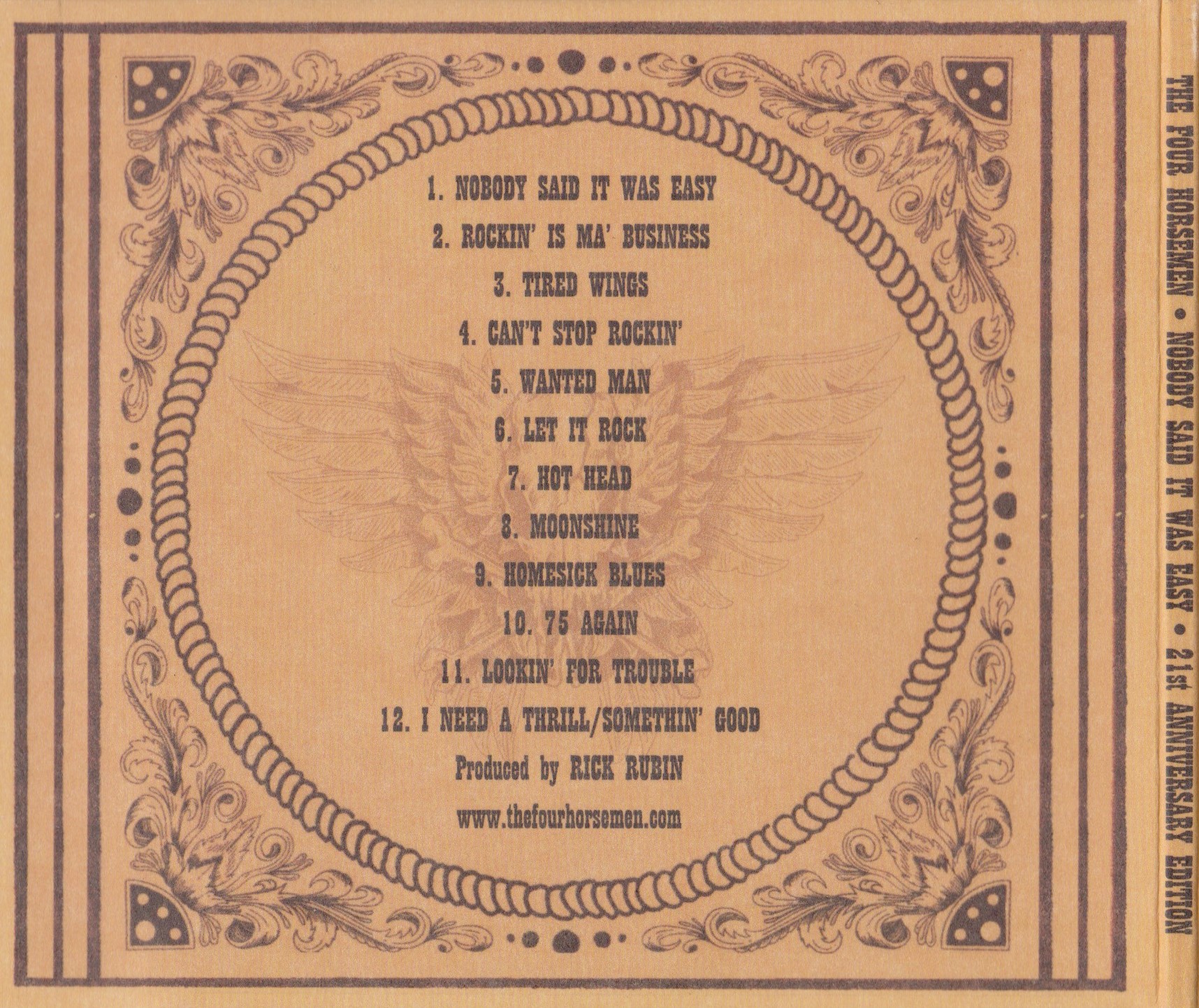
REVIEW: The Four Horsemen – Nobody Said it Was Easy (21st Anniversary Edition)

Giddy up! Part one of a five part Four Horsemen series this week at mikeladano.com!


scan_20160907THE FOUR HORSEMEN – Nobody Said it Was Easy (originally 1991 Def American, 2009 Anniversary Edition with bonus tracks)

1991’s Nobody Said it Was Easy was one of the greatest rock albums to ever come from the grunge decade that you’ve never heard of.  The Four Horsemen were a multinational band, with Rick Rubin at the helm at the legendary Sound City studios, and one of the greatest rock star frontmen to ever grace the stage:  the late Frank C. Starr.

There could only be one Frankie.  But there was so much more to this band than just the singer.

There was Haggis, on rhythm guitar (ex-The Cult, formerly known as Kid Chaos).  He lent the album an AC/DC edge with simple rock and roll riffs.  Then there was Dave Lizmi, an uber-talented guitarist with a knack for classic tube-amp driven solos.  On bass was Ben Pape who provided the album with interesting and melodic basslines.  Finally, on drums, the man the myth the legend:  Kenneth “Dimwit” Montgomery.  A Canadian native as big as the mountains that spawned him, Dimwit was an absolute beast on the skins.  His brother Charles Montgomery would change his name to Chuck Biscuits and join Danzig.  Both brothers would spend time in the legendary Canadian punk band D.O.A.  Sadly, Dimwit succumbed to drugs and died in 1995.  What a gargantuan loss.  (He later inspired the Horsemen track “Song for Absent Friends” from their second CD.)
This album was preceded by an impossible-to-find four song EP (since reissued), so when it was released on Def American, it was the first time most of us heard the Horsemen.  And it was instant.  With three unforgettable singles, the Horsemen kicked out the jams.

“Nobody Said it Was Easy” was a hell of an introduction.  With a riff similar to those peddled by the Black Crowes a year before, but with a much harder edge, the track kicked every ass in the room.  Get into the groove and enjoy, because the party is just starting.  Frankie had a rock n’ roll voice, but when he let loose with his screaming, that’s when we knew he was special.  Able to sing with a Brian Johnson shred, the Horsemen really had an ace in their pocket with him.  Frankie was something else.  He took no prisoners and without him, the Horsemen just didn’t sound like the Horsemen.

There aren’t breaks between the songs, so “Nobody Said it Was Easy” goes right into “Rockin’ is Ma Business”, the heavier second single.  Louder, groovier and weightier, “Rockin’ is Ma Business” proves its point.  “And if it’s so good why am I still fuckin’ broke?” asks Frankie before Lizmi rips into another solo.  (That would be a question for the accountants, Frankie!)

The third (and some say the best) single was the slide-drenched “Tired Wings”.  With a southern Skynyrd vibe, “Tired Wings” is simply awesome.  I’m a sucker for a slide guitar, and there’s enough here to drown a cat. Haggis makes sure there is plenty to go around.

There could have been more singles, but the band hit the rocks when Frank was arrested and jailed for a year on drug charges. They were dropped by the record label, who stopped promoting the record. That effectively put the band on ice for several years, but that’s another tale for another review (or two).

T-Rev always pointed out the strength of the closing track, essentially two songs over eight minutes long, “I Need a Thrill/Somethin’ Good”.  The song reeks of cigarettes, booze and tired hotel rooms.  With organ and loads of Lizmi licks, it’s an epic track soaked in feeling.   T-Rev pointed out that the Horsemen seemed to like closing their albums with slow bluesy epics like this.  The next CD, Gettin’ Pretty Good…at Barely Gettin’ By has a similar track called “What the Hell Went Wrong”.  Their long lost second album (finally available today) called Daylight Again closes with an 11 minute version of “Amazing Grace”.  That’s the kind of track this is.  It could only be an album closer.

This CD reissue has three bonus cuts from the original demo tapes.  I didn’t really want to trade up my old original CD copy of this album, but these bonus tracks made it worth while.  “She’s Got It” was written by Dimwit, and has a pure AC/DC riff like they used to write when Bon Scott was alive.  “Born to Boogie” is a rare Starr co-write (with Haggis).  This is a completely different song from the same-titled demo that was included on the EP reissue (Welfare Boogie).  It has a completely different riff, which is good because the original one basically sounded like “New York Groove” by Ace Frehley.  I prefer this version, the faster and more fun of the two.  Finally there is a different version of “Homesick Blues”, featuring a harmonica part by Tim Beattie.  The funny thing here is that Beattie later joined a reformed Horsemen as their lead singer!  It is he that recorded Daylight Again, before yet another version of the band would form and start recording with Frankie up in Canada….

But again, that’s another story for another review.  If you are one of the many rock fans who missed the Four Horsemen during their brief heyday, then this CD reissue makes the album easy to acquire.  The important thing is to get it!*

5/5 stars

scan_20160907-2

* But beware!  I know of at least one customer, Freddy, who purchased a defective copy of the original CD with Dwight Yoakam instead of the Four Horsemen! (Record Store Tales Part 224: Rockin’ is Ma Business)

For a review by 1537, click here  (It’s Dirty, It’s a Pity).


REVIEW: Kingdom Come – 20th Century Masters – The Millennium Collection

KINGDOM COME – 20th Century Masters – The Millennium Collection (2003 Universal)

Kingdom Come are a German/American band that rose from the ashes of Stone Fury.  For those who may not remember, Kingdom Come were quite infamous in their day.  Gary Moore wrote a song called “Led Clones” (with Ozzy singing lead) about Kingdom Come and bands of their ilk who were seen to be milking the now defunct Zeppelin cow.  The “Led Clones” riff directly aped “Kasmir” by Zeppelin, as did Kingdom Come’s lead single “Get It On”.  A little Zeppelin influence is fine, but Kingdom Come enraged Jimmy Page himself when one of their guitarists claimed he’d never heard a Led Zeppelin album.

The Zeppelin angle was one direction that Kingdom Come exploited in their early days, and though they grew out of it by their second album, the damage had been done. Their nickname became “Kingdom Clone”, the punchline of many jokes. This is why a simple 20th Century Masters compilation may be all the Kingdom Come you actually need.  Herein you will find all but one of their hits, and a fair few tracks from their first three studio albums.  Two guys from this band ended up in Warrant:  Rick Steier and James Kottak, who is also the longest-serving drummer that the Scorpions have ever employed.  By the third album, the original lineup had completely dissolved leaving singer Lenny Wolf the sole original member.

The one missing hit is a track called “Loving You” from the first LP, an acoustic ballad, sort of a sub-“Battle of Evermore”.  The other hits are here:

  • “Get It On”, the single that made them famous, which wears its Zep influences on its sleeves.
  • “What Love Can Be”, essentially Lenny Wolf’s transparent rewrite of “Since I’ve Been Loving You”.
  • “Do You Like It”, the first single from sophomore album In Your Face.

Lenny could have gotten away with some of the Zeppelin references if he didn’t try to sing so many Plant-isms.  You can only ma-ma-ma so much before you sound like Robert Plant, and Lenny could have tried to be his own singer instead.  You have to lay some of that at the feet of producer Bob Rock, who could have said, “Cut that shit out.”

The second album was a move away from that.  Keith Olsen got a sharper, more vibrant sound than Bob Rock did (though Rock really got a great drum sound for James Kottak).  Reportedly, some stores refused to stock the second LP because they thought the band’s name was Kingdom, and the album called Come In Your Face.  Too bad, because the incendiary “Do You Like It” was critically acclaimed for its drive.  The other In Your Face tracks included here absolutely represent a move away from Zeppelin and towards a more mainstream, slightly European rock sound.  Good songs, especially the mid-tempo “Gotta Go (Can’t Wage a War)”.

The third album, Hands of Time, came and went without a sound and Lenny was dropped from the label.  Reviews suggested it was soft and ballad oriented, but there are two decent slow rockers here from that album.  “Should I” has a slow grind topped by a passionate vocal.  The one included ballad, “You’re Not the Only…I Know” has a weird title but a great melody.

The great thing about the 20th Century Masters series is the ability to get key hits for a low price from bands that you may not want albums from.  The 11 tracks on the Kingdom Come edition are all worth owning, no duds in the bunch.  That makes this CD an easy one to pull the trigger on.

4/5 stars

scan_20160913-3