heavy metal

MOVIE REVIEW: Mystique – Standing On the Firing Line (2022)

Note:  This review is of the new 96 minute cut of Mystique – Standing On the Firing Line. 

A collaboration with Jex!  For Jex Russell’s review, click here!

MYSTIQUE: STANDING ON THE FIRING LINE (2022, 2023 edition)

Directed by Marco D’Auria

“EPIC METAL” – Martin Popoff

They had the raw talent to make it.  They just needed a break.  They didn’t get it, but what they achieved instead was a legendary status with a handful of priceless releases left behind.  They were Mystique, a progressive heavy metal band from Hamilton Ontario.

Standing On the Firing Line is a 2022 documentary film by Marco D’Auria, finally shedding light on the history and music of this lesser-known band.  They always deserved more attention, and hopefully the film brings them that.  From the first shots of the band, the music of “No Return” assaults the senses with chopping riffs and unholy screams.  Why didn’t they make it?

The main driving force of Mystique from their beginnings to their demise were opera-trained singer Ray D’Auria (originally from Naples Italy), and perfectionist drummer John Davies, who had spent time in a few hard rock bands before Mystique.  Many other talented members joined and enhanced them along the way, but it was Ray and John who were there ’til the end.  The two met up when John auditioned for Ray’s band, Orion.  A friendship was formed, but the band wasn’t paying them the money they were owed.  They split as a pair and didn’t waste time starting their own thing.  15 year old Dave Dragos was a shredder – rated 2nd best in Canada at the time – and was first on board.  He introduced them to bassist Mark Arbour (a mixture of Geddy Lee and Chris Squire), and a solid band was formed.  A 1984 basement tape of “Black Rider” shows the nameless band had the goods.  It was Ray who blurted out “Mystique”, which felt right.

They found a rehearsal space, and added keyboardist Victor Barreiro.  The band practiced hard, and pushed each other to improve as musicians.  Davies tended to handle the business side, but they were attracting attention to themselves.  They found a manager (Ted Smirnios), money was borrowed, and songs were improved upon, until they were finally in shape to record.  Primitive but technically inventive tracks were recorded on 1/2″ tape, on a 16-track desk.  Not the best for sound quality, but good enough to get the songs down.  They went as far as to butcher a classic Leslie speaker to get a driving keyboard sound.

A stoned viewing of the animated Lord of the Rings movie captured John Davies, and inspired the song “Black Rider”.  The band had a sort of gothic bent in the mid-80s, but Ray D’Auria’s voice was appropriate for this progressive style of metal.  Journalist Martin Popoff remarks that the keyboards brought them into that progressive world.  Melodic guitar/keyboard solos took time to work out.  They were unafraid to play ballads, which Martin compares to a vintage Judas Priest dirge.  Mystique were a serious band!  The Black Rider EP impressed their peers for the playing if not the sound.  Popoff heard a strong Maiden influence, but compares more to Armored Saint and Odin with elements of power metal.  1000 copies were sold, an impressive amount.  Their manager got it as far away as Greece, and even accidentally set himself on fire as part of their stage show!

The band were doing well but dreams were not exceeded, and eventually members left for greener pastures, leaving Ray and John to rebuild.  Bizarrely, they met a talented French guitarist named Eric Nicolas in Jackson Square, and went to France to record their next demo:  1987’s I Am the King.  They struggled with the language barrier, and were recording digitally for the first time.  Ray blew everyone away with the “God note” that he held in “I Am the King”.  They were offered a record contract with Elektra in France, which didn’t pan out.  They brought the tapes home to Canada for release.

They added a new bassist, Les Wheeler, and evolved from metal to “hair”.  “The explosion in the costume factory look,” as described by Popoff, of their new extreme look that didn’t match their music.  “It looked good, from a distance,” jokes Ray.  Teenage girls loved their posters though!  Unfortunately having a guitar playing living in France was a barrier.  Wheeler broke his wrist in an accident.  A new lineup formed.  They felt forced to go more commercial, which resulted in the 1988 Poison-esque single “Rock and Roll Party Tonight”.  It was vastly different from “Black Rider”, but they went straight from that to recording a proper album, funded by EMI.  They taped 11 to 12 songs…but the album was never released and is partly lost today.  The masters tapes were sold and erased.  There were some good songs on that tape.  Ray, however, looks back at their change of direction as a mistake.  More shuffles in band members caused long breaks in activity, and the writing was on the wall.  Ray no longer identified with the music, and was the one to leave.  By 1989, their music was out of date anyway.

Manager Ted Smirnios is given a tremendous amount of credit for making Mystique happen.  It’s a touching part of the film.  The band members went their separate and sometimes surprising ways, but the story never really ends so long as people keep discovering the music.  Their releases are now valuable collectables today, worth a small fortune on the second-hand market.

Rare live clips and candid photos really bring an intimate look at Mystique.  You feel like you get to know the personalities.  This new edit of the film cut a substantial amount of footage, mostly interview footage with people who were there at the time.  The movie gains better pacing from this, as it just flies by in no time.  A new ending to the film brings us to the present day, and the movie’s theatrical premiere in front of a cheering audience.  The original cut might be considered for more hard-core viewers who want that “feels like being there” experience, but the current 96 minute edit is better for the enjoyment of Mystique.  It’s a much tighter and more direct story.  There is still plenty of unreleased music and vintage images.

Stay tuned for the mid-credit scene!

4.5/5 stars

REVIEW: Guns N’ Roses – “Perhaps” / “The General” (2023 single)

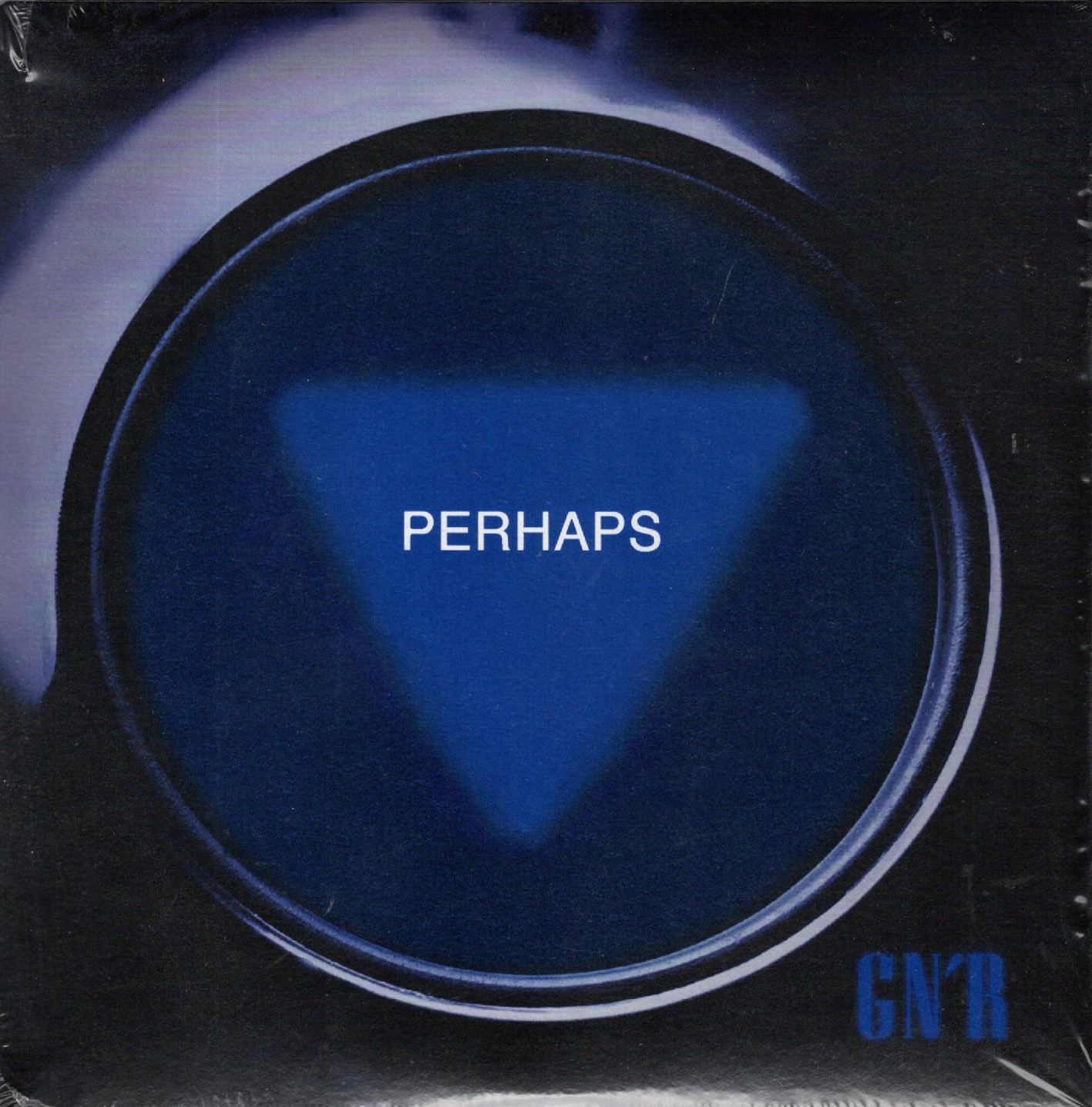
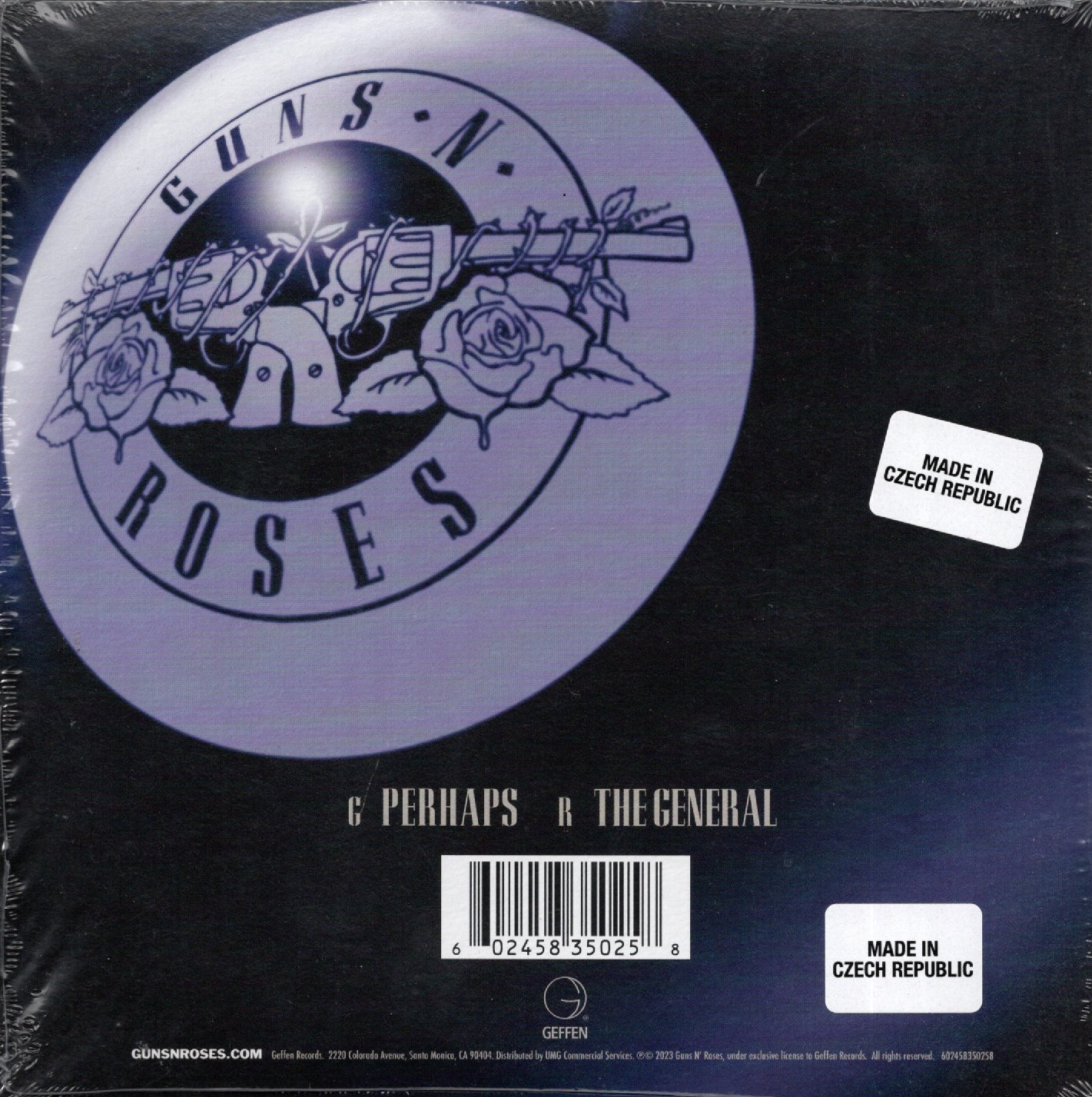
GUNS N’ ROSES – “Perhaps” / “The General” (2023 Geffen 7″ single)

The band that once took 15 years to release a new album hasn’t been doing too shabby of late with new releases.  “Perhaps” we should say new/old releases (see what I did there?) because all four of the new songs released by Guns N’ Roses since Chinese Democracy have been re-worked outtakes from that era.  Since Duff McKagan and Slash have returned to Guns, we’ve had four new tracks:  “ABSUЯD” & “Hard Skool” were released on a previous single, and now we have “Perhaps” and “The General” to go with them.

The “G” side of this new single contains “Perhaps”, which is immediately reminiscent of Use Your Illusion era Guns, via the prominent piano line.  Of any song released since, “Perhaps” sounds the most like a song that would have come out on a new GN’R album in 1995.  Slash’s guitar solo sounds perfectly vintage, but it’s Dizzy Reed on piano, whose flourishes recall “November Rain”, that brings it all back to the glory days.  “Perhaps” wouldn’t have been a big hit in the 90s, but it certainly would have been a solid album cut.

On the “R” side is “The General”, a song we’ve heard whispers about from those in Axl’s inner circle.  This track is the most disappointing, without any notable hooks.  It sounds more of the Chinese Democracy era, and is purely B-side material.  It has a haunting quality that might come from Axl’s love of Alice Cooper, but it’s anything but memorable and the technical flourishes don’t do it any favours, except to obscure the lack of catchy melody or riff.

One good song, one throwaway.  That makes the score pretty clear.

2.5/5 stars

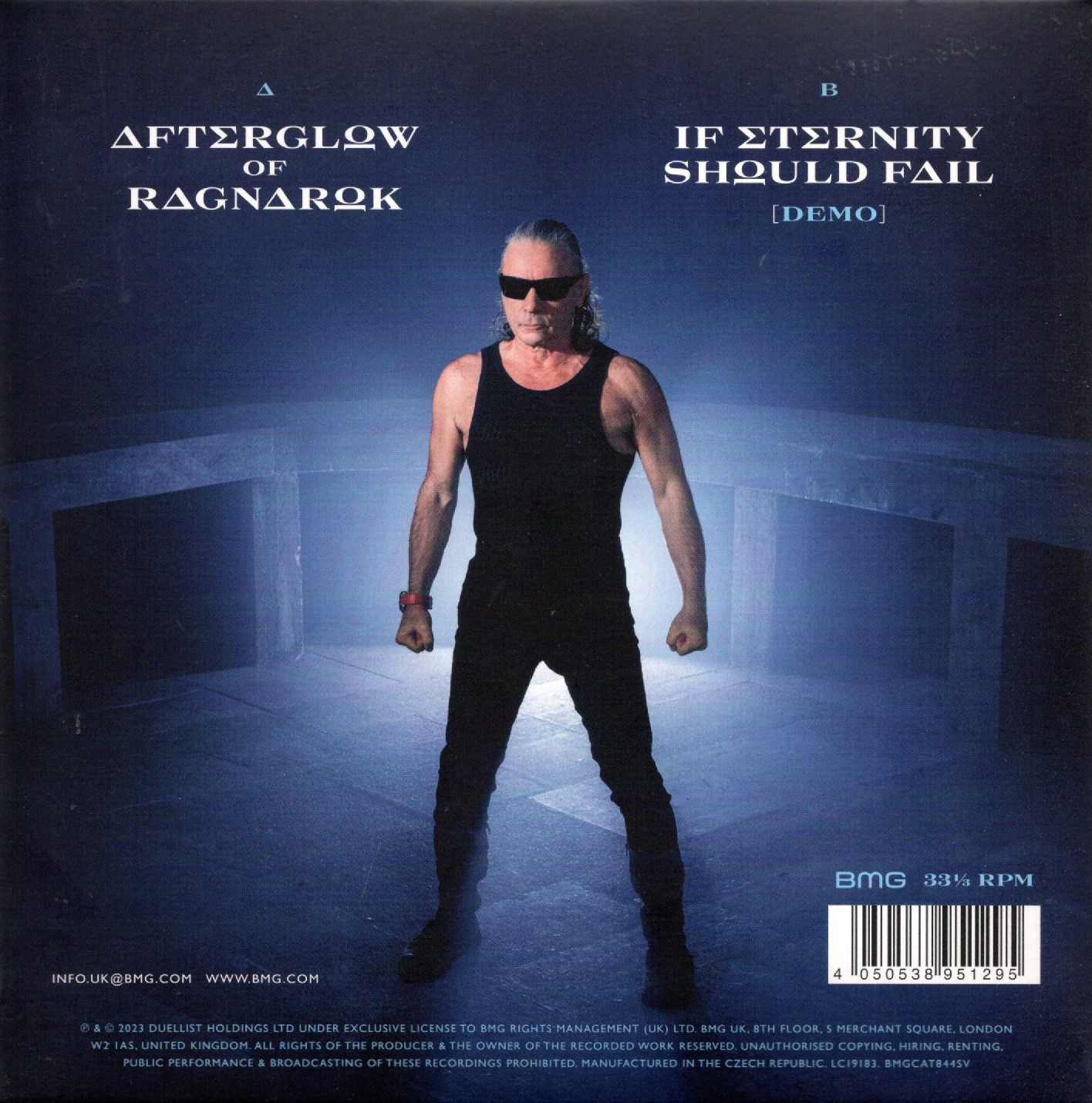
REVIEW: Bruce Dickinson – “Afterglow of Ragnarok” (2023 single)

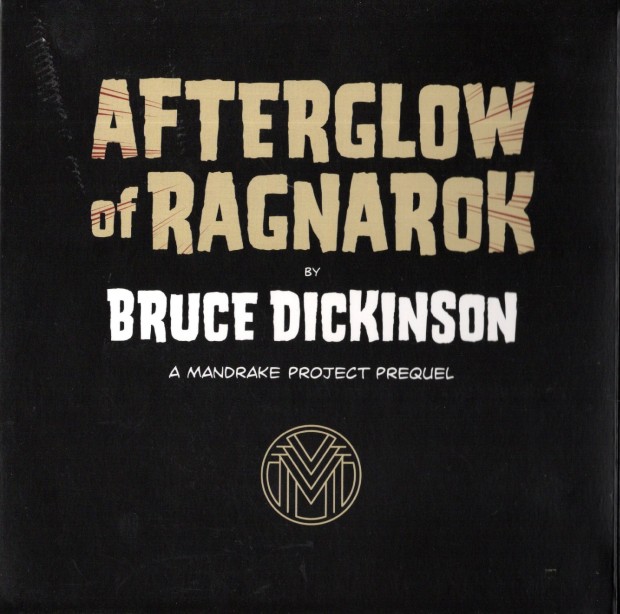
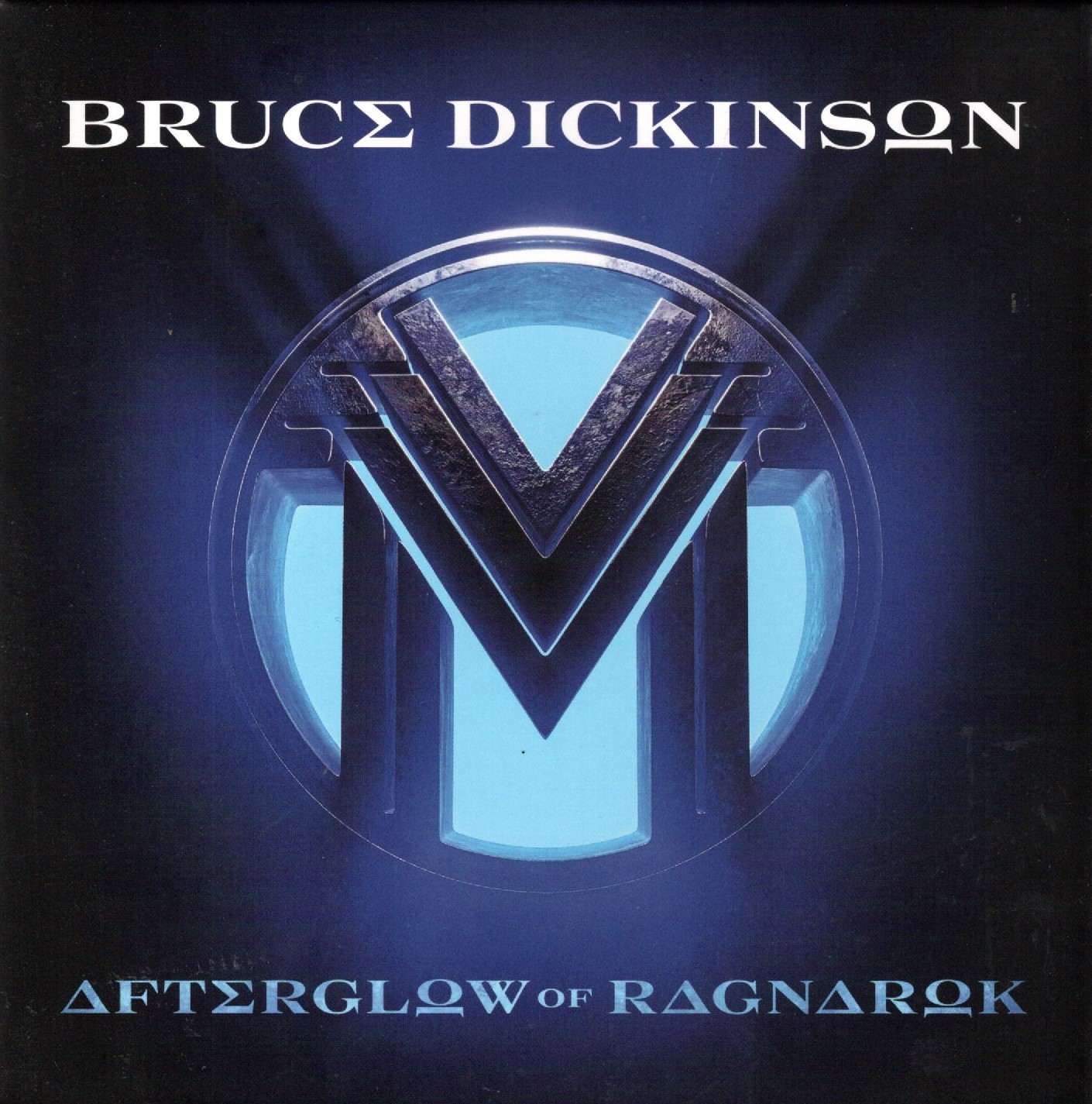
BRUCE DICKINSON – “Afterglow of Ragnarok” (2023 BMG 7″ single)

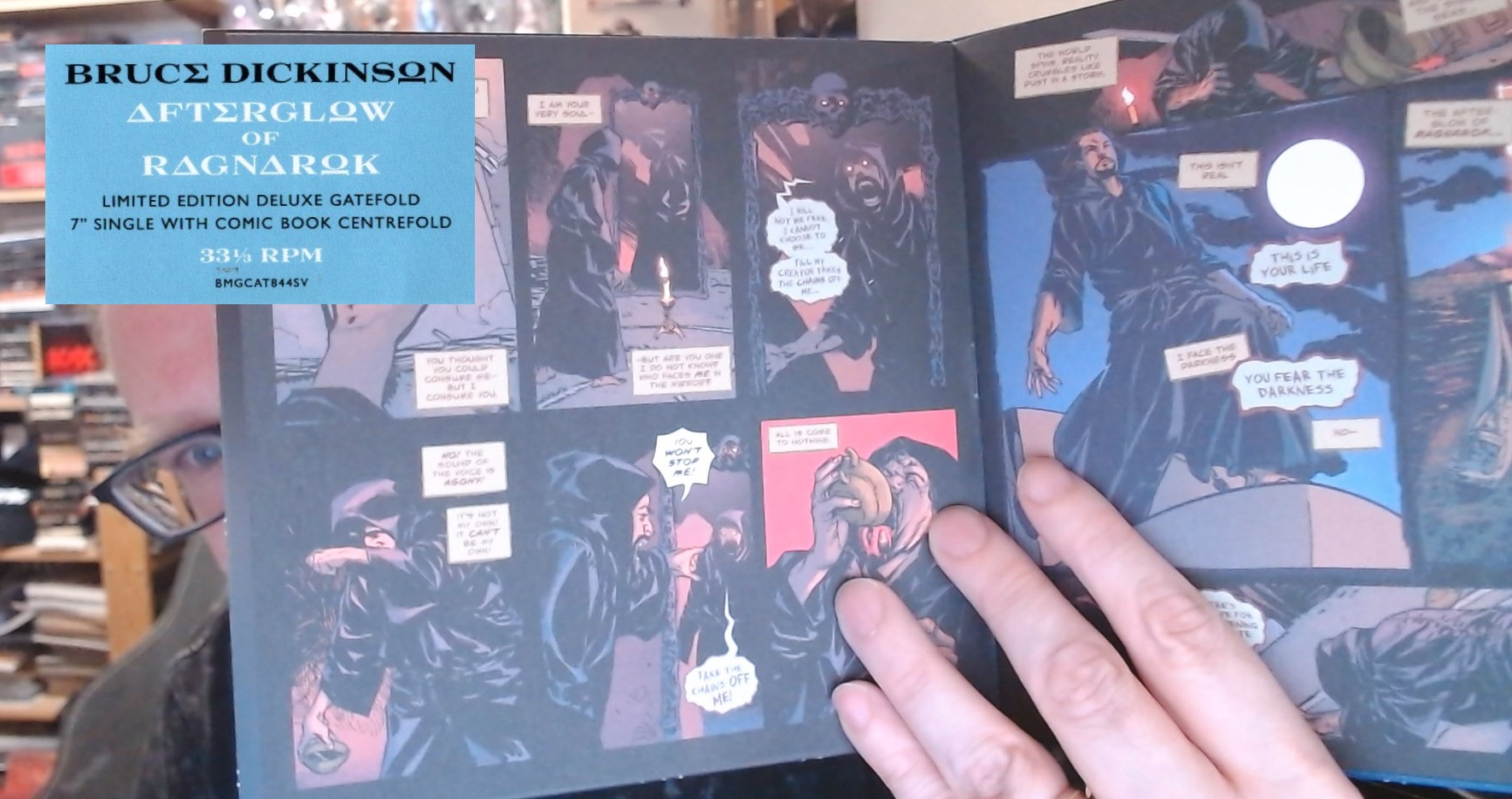
In 2024 we will be graced by a new Bruce Dickinson platter, his first solo album since Tyranny of Souls in 2005.  He’s back with Roy Z, and a forthcoming concept album called The Mandrake Project.  This single is billed as a “prequel”.  It comes with a beautiful, full colour comic book insert, installed in the middle of the gatefold.  The story will be fully revealed next year, but this is a project that Bruce has been working on a long long time…

Witness:  The B-side “If Eternity Should Fail”, a demo version of a song that Iron Maiden re-recorded on The Book of Souls.  It’s not the first time Maiden have lifted a song from Bruce’s solo compositions!  He remarks in the liner notes that the song is radically re-imagined on the final Mandrake Project album, but that the keyboards on this demo actually made it to the Maiden version!  Bruce on keys, Roy Z on bass and guitar.  It’s really not that different at all!  The drums are most noticeable.  Presumably this is a drum machine.  Roy’s bass work is pretty cool too.  It introduces the character of Necropolis, who will feature on the album.

The A-side, “Afterglow of Ragnarok”, is promising.  Drums thunder, in cavernous hugeness. Downtuned guitars provide a metallic gutpunch, with a riff that is as solid as any in Bruce and Roy’s impressive history.  The chorus is another demonstration of power and melody.  A Bruce classic, this will be.

Looking forward to The Mandrake Project, we are.  Bruce’s solo work has often rivalled Maiden in quality, not to set expectations too high.  This single is a positive omen.

4.5/5 stars

REVIEW: Extreme – Extragraffitti (1990 Japanese EP)

EXTREME – Extragraffitti (1990 A&M Japan EP)

This little EP, exclusive to Japan, is almost like a miniature “greatest hits” for Extreme.  Of the six songs, five were singles.  You might say “It’s not a greatest hits if it doesn’t have ‘More Than Words’ on it, and that would be a valid point, but that breakthrough ballad hadn’t been released as a single yet in November 1990.

Opening with the current single “Get the Funk Out”, we are off to a good start.  This track works most excellently as an opener.  That bass rolls in, before the guitar riff starts to rip.  Once the horns kick in, your face is thoroughly melted.  This EP focuses on fun.  There’s nothing here that’s a drag.

An edit version of “Decadence Dance” is unblunted.  It’s mostly just the intro stuff that’s missing anyway, and that belonged on the concept album from which it came.  The bonus here is you get Paul Geary’s cymbal count-in instead, which you can’t hear on the Pornograffitti album.  So dance to the beat of the decadent drummer, and get rocked.  This is one of Extreme’s best bangers, a full-on Van Halen romp with hooks and flash…as you like it.

Back to the self-titled 1988 debut album for the next three tracks.  A remix of “Mutha (Don’t Wanna Go to School Today)” may have more bass, edge and clarity.  It’s not a radical remix.  Nuno’s guitar fills jump out nicely.  The first Extreme album was a mixed bag of material, with none of it reaching the upper echelons like the second record.  That said, “Mutha” was probably the best track of the bunch, and the most like what came later.

“Little Girls” only loses about 20 seconds, so you’re fine with this version.  Again, it’s the opening missing.  This song is notable for some remarkable harmonica playing by Rapheal May.  Really impressive stuff here, just as superb as Nuno’s guitar work.  The lyrics, however, can’t be saved.  They were never good, even by 1988 standards.  “Incestual blood is thicker than water,” has to be the worst words that Gary Cherone has ever penned to paper.  Roll up your windows if you intend to sing along to this song.  Shame the band is so hot.

The album version of “Kid Ego” is here unaltered, it’s just not that interesting of a song.  The groove plods along in a lazy, 1980s way that every single band was doing.  It sounds like every band had their metronome set to the same time.

The B-side “Nice Place to Visit” has been released in a number of places, such as the “More Than Words” single in 1991, but first it was the B-side to “Little Girls”.  As an outtake from the so-so first album, this song is also so-so.

The final track, and the only one exclusive to this CD, is a message from Extreme!  These messages from band members were fairly common on Japanese EPs and singles by Western bands.  It is geared specifically for the Japanese fans, and it’s adorable hearing their deep Boston accents.  This message is fairly light.  Nuno talks about their goals as a band, and Gary assures the fans that they will see them real soon.  Apparently, the Japanese fans also sent the neatest, tidiest mail.

Good EP for its time.  There’s even a sticker inside.

3.5/5 stars


REVIEW: Sven Gali – Bombs and Battlescars (2023)

SVEN GALI –  Bombs and Battlescars (2023 Music In Motion Entertainment)

Look at me, in the eyes! When I say “Sven Gali is back,” I’m meaning it! The Canadian Quintet revitalised themselves with the 3 EP in 2020, and took their time with their next full-length (their first since 1995).  They recruited Coney Hatch bassist/singer Andy Curran for some of the production duties, picked a Triumph song to cover, and hit the road playing well-received shows in 2023.  Bombs and Battlescars is the name of the record.  Of note, the late Dee Cernile is credited with co-writing several tracks, and the album includes some unreleased demos from the before-fore times.  Let’s have a listen.

One thing for certain:  don’t expect Sven Gali to suddenly revert back to the sound of their self-titled debut.  This is a much heavier, more pounding and frankly more satisfying Sven Gali.  Opener “One Gun” slams with a more viscous brutality, but singer Dave Wanless is still the same.  If I wanted to hear the sound of ’92 again, I’d play the original purple platter by Sven (recently reissued on coloured vinyl).  I want the sound that satisfies the “me” of today – and I’m as frustrated as Sven Gali sound on “One Gun”.  The snaky guitar solo is just icing on the cake.  “I’m losin’ faith!” proclaims Wanless, and I believe him.

A steady chunky groove introduces “Coming Home”, a headbanger with a dark Metallica vibe.  Dan Fila and Shawn Minden lay down this beat that just boils.  The lead guitars are like liquid adamantium, but beneath it all churns a volcanic pressure cooker.  This is possibly the highlight of the new songs, a memorable track that demands to be cranked.  Car test it for good measure.  (The band is rounded out by guitarists Andy Frank and Sean Williamson.)

The Triumph cover is, appropriately, third in line.  “Spellbound” suits Sven Gali surprisingly well, but they don’t play it straight.  They’ve thrown the track into the darkest night, but let the chorus light the way.  Guitar textures are added.  This song should make the longtime fans very happy.  It’s Triumph, but presented as heavy as possible.  Listen to Fila annihilate his drums!

Darkness dominates on “Life Inside”, a dusky dirge with some pretty cool guitar work.  The atmospheric “Monster” resists being called a “ballad” but it’s the slowest moment in the journey thus far.  “Monster” just kills, not straightforward or easy to categorize.  It’s moody and doesn’t let up.

“Hang Me Out” is the first of the unreleased demos, and there’s something nostalgic about that.  You can hear an audible shift in sound, and “Hang Me Out” definitely has a mid-90s vibe.  There are twists and turns in the music that bring you right back.  Then the wah-wah pedal comes out for the relentless guitars on “Hogs”.  The funky groove here definitely brews nostalgia, but this track should have been released long ago!  By the end of it, you’ll be shoutin’ “HOGS!”  The 8th track “All” goes for speed and groove while the guitars ring in chaotic perfection.

Finally, a record needle drops and the acoustic guitars come out for the closing ballad and classic in the making:  “Nothing New”.  As much as Sven are known for rocking, some of their big hits were ballads (like “Love Don’t Live Here Anymore”).  “Nothing New” is a lovely, stripped down ballad with sweet melodies and the purity of acoustic music.

Ultimately the demos are just as entertaining as the rest of the album.  They make you wish they’d come out ages ago.

Well done to Sven Gali on Bombs & Battlescars, a blazing comeback with a surprisingly tender ending.

4/5 stars

Get your copy on vinyl & CD, plain or signed!


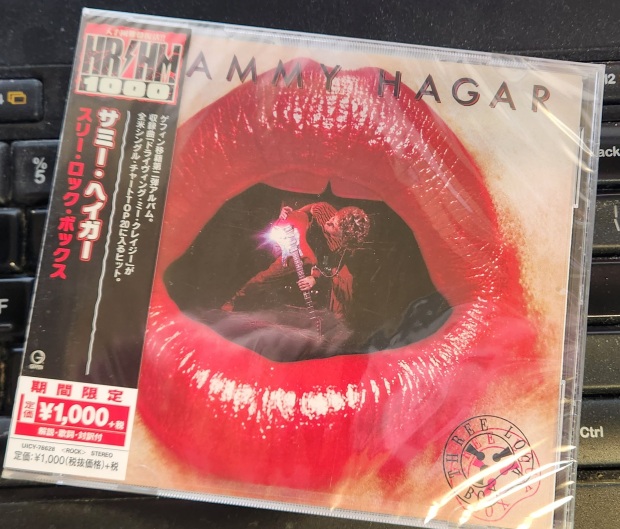
REVIEW: Sammy Hagar – Three Lock Box (1982)

SAMMY HAGAR – Three Lock Box (1982 Geffen)

Sometimes it is fun to review an album on its first listen, so that’s what we’re doing today with Hagar’s Three Lock Box.  I only know a handful of tunes so this will be mostly brand new to me.  Released December 6, 1982, Three Lock Box was Sammy’s seventh solo album.  Jon Cain (Journey) and Mike Reno (Loverboy) make guest appearances, and it contains Sammy’s biggest charting solo hit.  Let’s give it a spin, on this fancy Japanese CD pressing.

The title track is familiar, with its slightly funky riff and rich organ backing.  I don’t know why, but that refrain of “One, two, three lock box!” reminds me of the kind of melody and simplicity of a children’s song.  But child’s play this is not!  A couple minutes in, and the gears shift to full blown hard rockin’.  This is a catchy and rhythmically clever little tune.

“Remote Love” might have a bit too much keyboard in the mix, but this is a cool laid back rock ballad.  It sounds like something from a past age perhaps.  Loud keyboards aside, there’s something purely classic about it, especially when you get to the soulful chorus.

Cain and Reno appear on “Remember the Heroes” (co-written by Cain).  Very Journey-esque, but Mike Reno sounds absolutely brilliant!  What a powerhouse singer, and when he and Sammy team up on the chorus, it’s mighty great!  You could easily imagine Journey doing this song, and perhaps they should have.

“Your Love Is Driving Me Crazy” (#13 on Billboard’s Mainstream Rock songs) is clearly hit material.  It’s all melody, smooth and polished.  The production has the bells and whistles and the track is just really hard to resist.

A haunting tone enters on “In the Room”, a completely different vibe.  It almost sounds like a lost Alice Cooper number from the same time period.  “I’ve been caught in the room, that moment of sleep when you think you’re awake.”  The lyrics match the music perfectly.  This is one of those must-have deep cuts, a song that absolutely deserves more attention.  It’s so different for Sammy.  “Rise of the Animal” follows with spooky sounds, and then a synth pulse.  “I just came out from the room…” sings Sammy, continuing his thoughts from the prior song.  “I saw the rising of the moon.  This ain’t no ordinary night!  Look to my left, look to my right.”  It starts slow and picks up the pace, and ends with some brilliantly frantic soloing from Sam.

Another great deep cut is the pop rocker “I Wouldn’t Change A Thing”.  A radio-ready corker, it could have been a hit in an alternate universe.  Let’s call it the Sammyverse.  A universe where everything is bright, colourful and shiny.  I wouldn’t mind hanging out in the Sammyverse, and “I Wouldn’t Change A Thing” could be its anthem.  Wave your red flags high!

“Growing Up” has a highschool-tough sound, while Sammy sings of the girls in their summer clothes.  The Sammyverse only has short skirts and high heels.  It’s probably the filler track of the album, as it doesn’t seem to have the hooks of previous tracks.  Fortunately “Never Give Up” is all hooks.  Another pop rocker with memorably melodies and smooth guitars, it’s just a fun song.  Easy singalong in the car.  Speaking of cars, the Sammyverse is fond of ’em, and the closing track “I Don’t Need Love” races like one of Sammy’s Ferraris.  It’s a brilliant rocker and probably the heaviest track on an otherwise pretty mainstream rock album.

Sammy Hagar albums don’t have a lot of pyrotechnics.  They are often meat and potatoes, workmanlike and easily accessible.  Three Lock Box has its strengths not in the production or flashy performance, but in the songs and the singing.  It’s a satisfying listen and I understand why it is so well liked.  It may not have a lot of edge, but it’s a fun, feel-good listen.

4/5 stars

Top Ten SAVATAGE Tracks Ranked – A Collaboration with the 80sMetalMan

SAVATAGE!  This Florida metal band reigned from 1979 to 2002, and is now back ready to unleash a new album called Curtain Call!  They never received the recognition they deserved over the course of 12 mostly excellent albums.  Let’s fix that here and now!

This list is part of a collaborative effort with 80sMetalMan!  You can check his list here.


10. “Handful of Rain” from Handful of Rain (1994)

We begin our story with tragedy, but also triumph.  Lead guitarist Criss Oliva was killed by a drunk driver, almost ending the band permanently, and shattering the soul of his brother Jon.  Jon Oliva was not even a member of the band anymore, having abdicated the mountain king throne to new singer Zack Stevens a year prior.  Undaunted, Oliva wrote and recorded almost all the instruments on the next Savatage album Handful of Rain.  Even though bassist Johnny Lee Middleton and drummer Steve “Doc” Wacholz are pictured inside, they did not play.  Jon did.  Joining him on lead guitar was former Testament master-shredder Alex Skolnick.  An immensely powerful team up.  They produced a somber album, but not without power and thrills.  The title track, available as a 5:25 extended edition or the standard 5:02 version, boasts acoustic verses and a powerful chorus that will stay with you for days.


9. “Morphine Child” from Poets and Madmen (2001)

The final Savatage epic from the final Savatage album.  Jon Oliva was back on lead vocals.  Zack Stevens departed to form his own band, Circle II Circle.  This song utilizes a powerful, relentless riff and a host of backing singers taking care of a complicated vocal counterpoint.  Different lyrics and melodies all overlap to form a cohesive and weighty segment of an already powerful song.  With piano and guitars intertwined with equal emphasis, Savatage may have taken their new operatic metal style to its peak here.  Though a comeback is planned, the band has remaining largely inactive ever since.  Regardless, at least they finished their first life in style, and with masterful progressive metal music.


8. “Warriors” from Power of the Night (1985)

Though this song commences with a corny keyboard bit and a ballady melody, it is far from that!  The battle grunts of the “warriors” soon join in with a sharp metal riff.  An alloy of iron and titanium, “Warriors” boasts a relentless chorus.  The verses are fun too.  “Armed to attack!  The soldiers react!”  Not poetry, but it matters not when Oliva screams.  This is simply heavy metal, down to the basics, and executed with youth and naivete.  The thing is:  it’s really good and catchy!


7. “Sirens” from Sirens (1983)

A shorty, at under four minutes.  The tempered steel of Criss Oliva’s riff is the main hook.  Much would improve later on, such as Jon’s lyrics and the band’s writing skills, but they had everything they needed from the get-go.  There’s a slower breakdown in the middle that only serves to re-ignite the powerful riff later on.  Oliva’s shrieking was already in place, fully formed and under his complete control.  Because the song is so short, you just have to go back and play it one more time.


6. “Strange Wings” from Hall of the Mountain King (1987)

Producer/manager Paul O’Neill was working with a little band called Badlands in 1989, featuring former Black Sabbath singer Ray Gillen on lead vocals.  He made a hell of an impression before Badlands as a backing vocalist on “Strange Wings” by Savatage!  This song, which boasts a powerfully simple riff, contains one of Savatage’s mightiest choruses!  A melancholy metal song with oodles of power, “Strange Wings” is one of Savatage’s top deep cuts.  There are many to choose from, but Ray’s singing on this one sets it apart.  His voice, mixed with Jon Oliva’s, offers a rare metal duet of stainless steel.


5. “Hall of the Mountain King” from Hall of the Mountain King (1987)

A classic Criss Oliva riff, backed by the haunting screams of brother Jon!  This song introduced Savatage to the metal masses.  Few songs can top the power of its mighty riff, or the unholy notes that Oliva hits on the chorus.  Not overly complex, but neither is it simple.  After Criss’ solo, Jon simply lets loose with the howls of a banshee gone mad!  Many would rank this song much higher than #5.   Perhaps the Metal Man is one.  It is extremely difficult, since Savatage have so many songs of different flavours.  Of their era of pure metal majesty, this song is tops.


4. “The Wake of Magellan” from The Wake of Magellan (1999)

Savatage have utilized counterpoint vocals numerous times on their albums from Handful of Rain to Poets and Madmen.  It is arguable that “The Wake of Magellan” is their most effective use of the technique.  Multiple vocal parts and lyrics overlap over each other, with uncountable Zacks singing complementary parts over each other.  Fortunately, the melodies are strong enough to stand out in the storm!  While the band and orchestra cooks behind, Zack Stevens sings all the parts, overdubbed for simultaneous power.  The first layer:  “Don’t see the storms are forming, don’t see or heed the warning, don’t hear the sound of tyrants, surrounded by the silence.”  Then a second Zack joins, singing the same.  A third Zack emerges overtop, singing the extremely fast and challenging lines:  “Columbus and Magellan and De Gama sailed upon the ocean in a world of ignorance with thoughts so primitive.  That men were killed with no more will than that they simply had the notion, but in this world of heartless men this thing they never did.”  Imagine singing that live, which the band had to do, at machine gun speed!  Another Zack doubles those lines.  Then a fifth Zack joins:  “Don’t hear it, don’t hear it…”  Then another Zack:  “Got to keep it underground, pretend you never heard a sound.”  More Zacks join with the lines “If they find it, kill it, blind it,” and “Lord tell me what is to be,” until all the voices coalesce together in the line “They whisper, and I…”  Has there ever been a more epic song in any genre?


3. “Edge of Thorns” from Edge of Thorns (1993)

New singer.  New lease on life.  Zack Stevens was sometimes compared to Geoff Tate when he first debuted in 1993 on Edge of Thorns.  The first single from the first album of a new era, combining the metal of Savatage’s early years and the piano epics of the previous two records.  The brilliant title track from Stevens’ debut still raises goosebumps on the arms.  An apex of this style of metal, “Edge of Thorns” has no dull surfaces.  Every edge cuts deep, the scarlet blood stains lingering in your heart forever.  “I have seen you on the edge of dawn, felt you here before you were born.  Balance your dreams upon the edge of thorns…but I don’t think about you anymore.”  Yet he clearly does.  This theme recurs through the album on songs like “Conversation Piece”.  Another genius Criss Oliva guitar solo is the cherry on top.  Few bands can meld their different styles from separate eras together like Savatage did on “Edge of Thorns”.  A masterpiece of a song.


2. “Gutter Ballet” from Gutter Ballet (1989)

I’ll never forget hearing that opening piano figure.  Loosely, Jon Oliva plays:  “ding, ding, ding…”  Then as he plays the notes become stronger and the tempo more steady.  Suddenly the band crashes forth and “Gutter Ballet” careens through your stereo, into your soul.  Savatage had never incorporated piano like this before, and by breaking new ground they broke down walls.  No longer were they a simple heavy metal band.  The doors to a whole new world of concept and drama had opened.  Welcome to the Gutter Ballet.  This track combines an epic piano melody with incendiary guitar riffs, an orchestra, and street-smart Oliva/O’Neill lyrics about the nasty gutters of New York City.  “Balanced on their knives, little parts of lives, such a strange reality.  Kill the unicorn, just to have its horn, soon he’s just a fantasy…”  And the Criss Oliva guitar solo!  A composition unto itself, backed by strings.  Power, emotion, skill and fire combined together into one incredible song.  An epic song that few bands could top.  Few…except Savatage.


1. “Believe” from Streets: A Rock Opera (1991)

Within the context of the Streets story, the main character D.T. Jesus witnesses a luminous spirit emerge from a dying homeless man, that he follows up several flights of stairs to a roof of a building.  D.T. opens his heart, and hears the voice of God.  “Believe” is the perfect ending to an epic emotional journey.  With all the power that Savatage can muster — overblown, dramatic, and pompous — “Believe” ends the rock opera (and this list) properly.  Interestingly, it retains an epic section that was lifted directly from “When the Crowds are Gone”, as the two albums share a genesis.  So epic is this segment, that Savatage had to re-use it.  Then later, on the Savatage album Handful of Rain, part of it was re-used again, along with other parts of “Believe”.  “Believe” ends this album on the bright up-note that you want a story to end with, your soul awash with light and musically uplifted.  “I’ll be right there, I’ll never leave, and all I ask is believe”

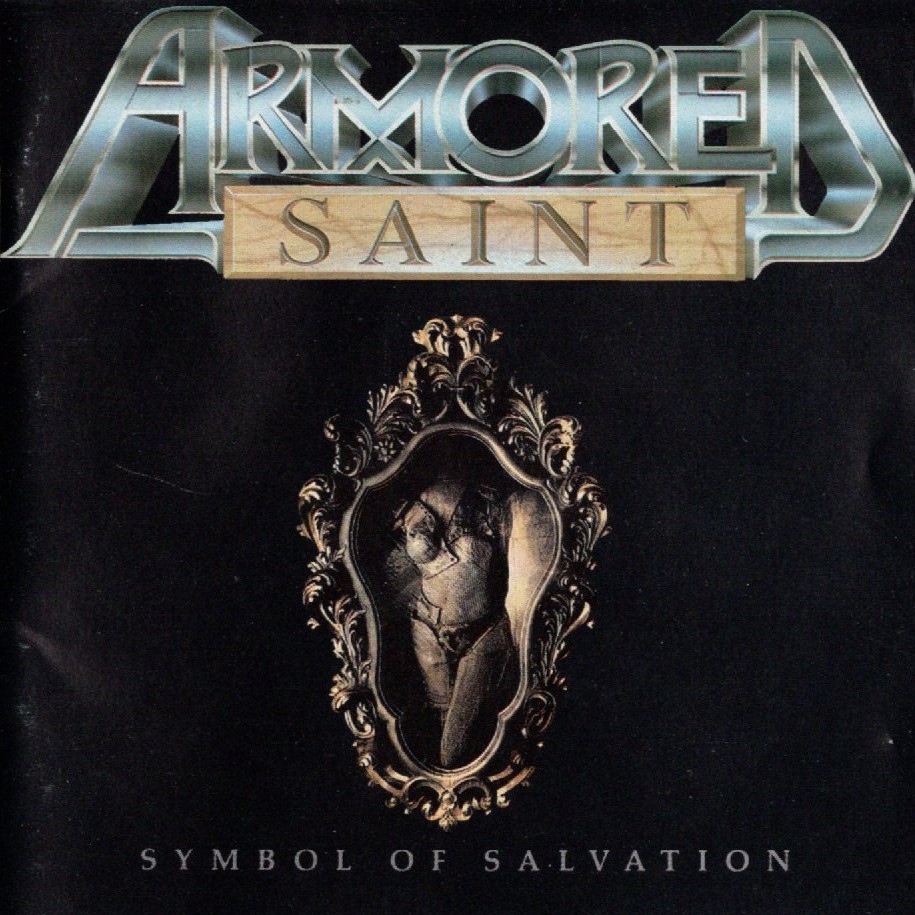
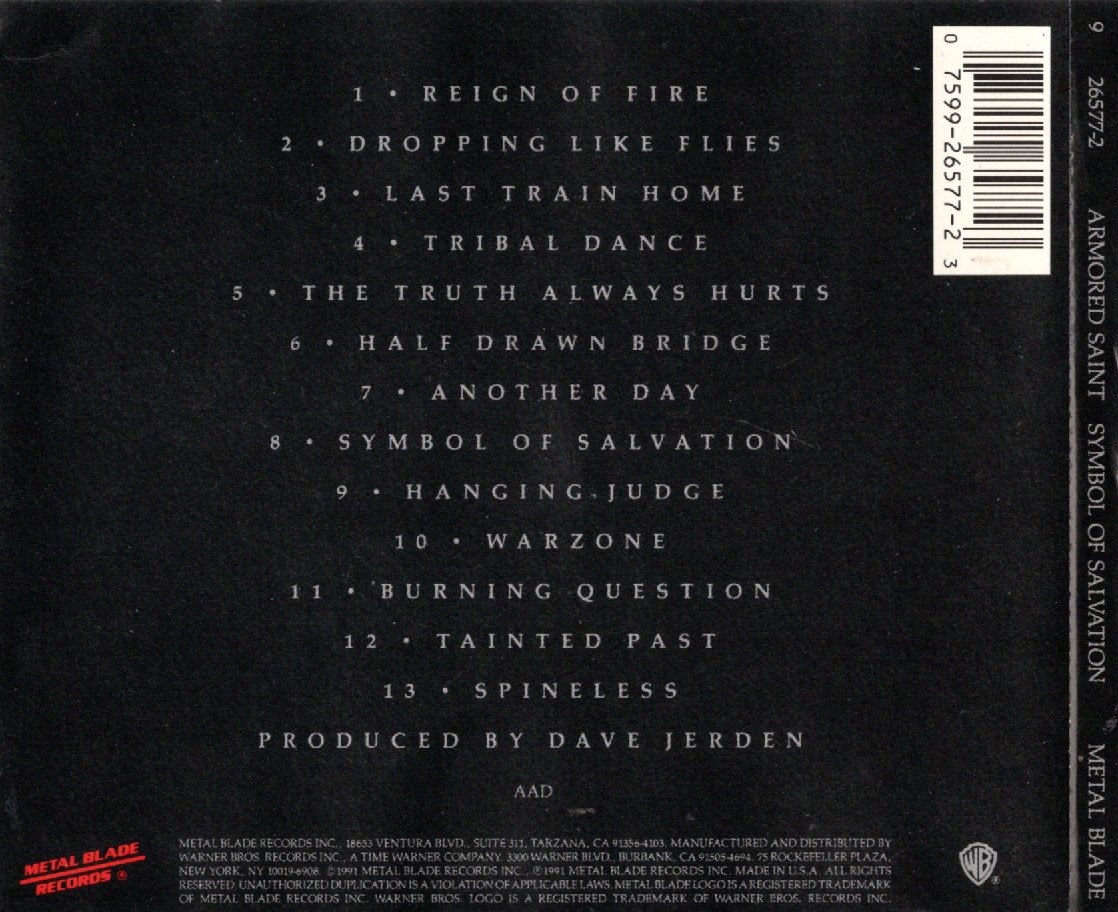
REVIEW: Armored Saint – Symbol of Salvation (1991)

ARMORED SAINT – Symbol of Salvation (1991 Metal Blade)

In 1991, an hour-long album was becoming standard.  In Armored Saint’s case, it’s all killer no filler.

It wasn’t an easy time for the metal pioneers.  Founding guitarist and songwriter Dave Prichard died of leukemia far too young.  He left behind a handful of songs on a 4-track demo.  All but seamlessly, Jeff Duncan of Odin filled his spot, while original guitarist (and brother of drummer Gonzo) Phil Sandoval returned to the band.  With lead vocalist John Bush, and bassist Joey Vera, this lineup is still current today…although the band obviously broke up when John joined Anthrax for Sound of White Noise!

Although Symbol of Salvation was a triumph and a fine tribute to Prichard, the band did split afterwards.  It was 1991, and there was little future for a band like Armored Saint.  Fortunately they made this one count.

Symbol of Salvation is unrepentantly heavy.  Opener (and lead single) “Reign of Fire” is notable for a number for things.  1) Its incredible heavy chug (written by Prichard).  2) John Bush’s voice, straining at the leash every time he screams. 3) Incredibly crisp and heavy production by Dave Jerden.  4) The very evil looking music video.  5) An awesome chorus!  The album would be worth buying for this one song, but fortunately the other 12 are also great.

No less massive, “Dropping Like Flies” is melodic viciousness.  Without the speed of “Reign of Fire”, it still retains that screamin’ heaviness.  Another highlight is the more mainstream “Last Train Home”, an emotional and strong track that acted as second single.  The indelible chorus is impossible to forget.  This leads into the heavy “Tribal Dance”, spotlighting the percussion of Gonzo.  Joey Vera’s bass work is also impressive here (as it always is).  This is jungle metal, perhaps, a stomping romp through the bush with blades unsheathed.

One of the more divisive songs might have been “The Truth Always Hurts”.  To these ears, the riff (P. Sandoval/J. Duncan) sounds like sleaze metal from two years prior.  You could imagine Poison writing a song around it, though obviously not as heavy!  Make no mistake, “The Truth Always Hurts” is heavy, but there are elements here that could work in other genres if stripped of the crunch.

Backwards guitar introduces “Half Drawn Bridge”, an ominous and progressive instrumental which introduces the ballad “Another Day”.  It is unfortunate that this song never had a chance like Metallica ballads soon would.  It is reminiscent of some of the ballads that Testament were known to do.  In case you were worried, it picks up when it’s time for the solos!

The title track “Symbol of Salvation” is a riff monster.  Perhaps Hetfield wishes he wrote a reptillian riff as lethal as this one.  Brilliant heavy track; Bush at peak scream.  Then, there’s a chugging guitar like “Street Justice” by Twisted Sister, which soon breaks loose into the main riff of “Hanging Judge”.  Another riff, another chorus, another metal should-be classic.  That is nothing compared to “Warzone”, like Iron Maiden on anabolic steroids.  That is to say, it has the delicacy of some of Maiden’s work, but with the beefy pummelling of a boxing glove.  “Warzone” could be the highlight deep cut – what soloing too!

There is still plenty of metal to go.  In an earlier age, Symbol of Salvation would have been a double album (or at least a 3-sider!) but its length is not a weakness.  “Burning Question” brings back the speed.  It leaps and bounds, once again with brilliant solo work by Duncan/Sandoval.  Yet it’s the riff you’ll keep coming back to (if not the chorus).

Perhaps the most impressive song from a technical point of view is “Tainted Past”, the only song with a Dave Prichard guitar solo.  They painstakingly pulled his haunting and emotional solo from a demo cassette, and seamlessly used it in this track that Joey Vera wrote.  It’s jazzy and progressive to start, before Gonzo’s rock beats begin.  It’s definitely unusual and unlike any other song on the album.  You could say it’s album epic, which suits, since it’s over seven minutes long.

An album like this deserves a memorable closer.  That would be “Spineless”, a thrashing good time, and probably the fastest song on the album.  Bookending the album with the fastest tunes, “Reign of Fire” and “Spineless”, was a cool move.  It’s a neckbreaker for sure.  “Spineless!  That’s what you are!”

Every metal fan owes it to themselves to check this album out at least once.  Do it.

4.5/5 stars


Don’t forget to check out John Clauser’s excellent album battle episode – Symbol of Salvation vs. Sound of White Noise!


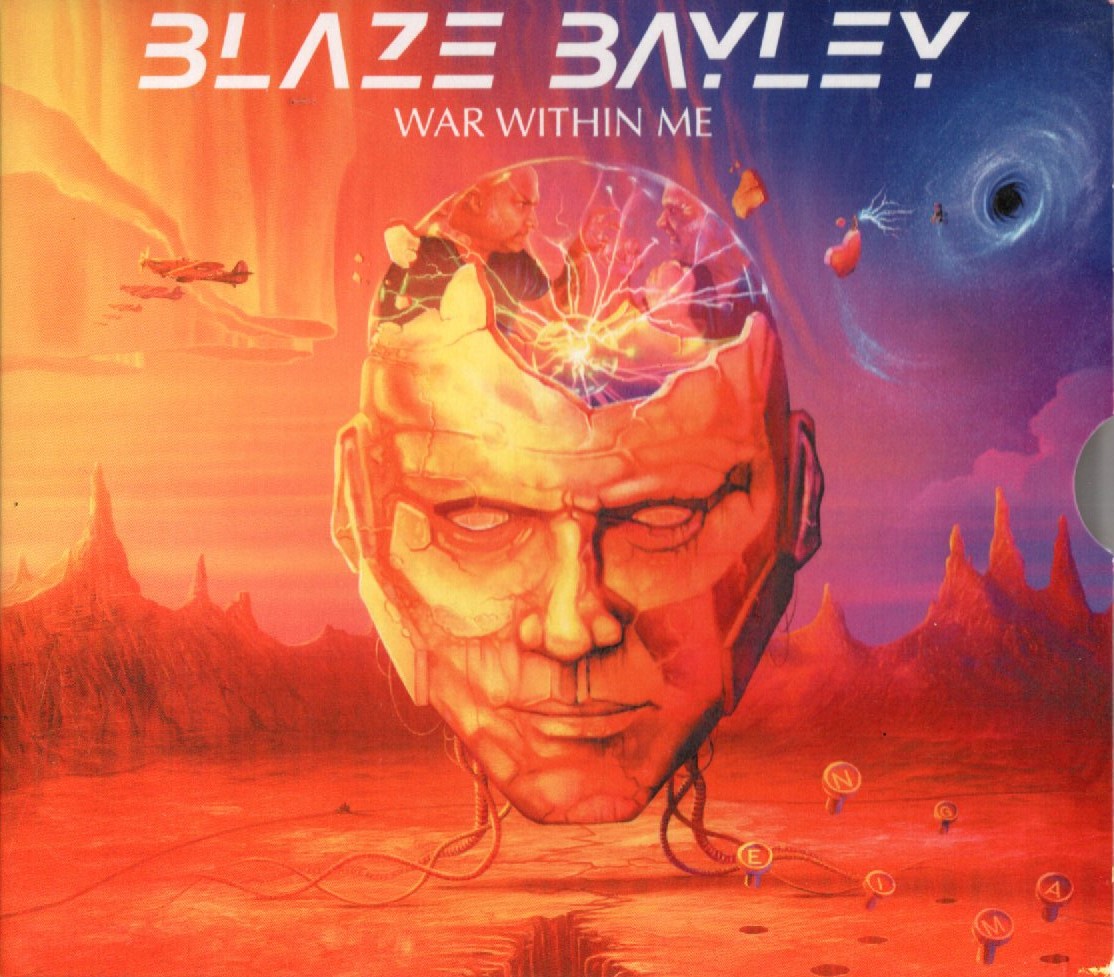
REVIEW: Blaze Bayley – War Within Me (2021)

BLAZE BAYLEY – War Within Me (2021

In 2021, Blaze Bayley released one of his finest solo albums, War Within Me.  It was his 10th studio album and somehow it was also his best, rivaling his work with the inimitable Iron Maiden.  It is also his most Maiden-esque, though heavier.  Blaze fails to fall into lyrical cliches and presents a series of cutting riffs, elevating this album to apex predator status.

Opening with a blitzkrieg of battering drums and lightning fast riffing, the title track “War Within Me” is exactly what it sounds like.  It is a battle for the mind!  “Never give up, I won’t back down!” howls Blaze, singing as strongly as he did 30 years ago.  “War within me, every day I fight!”  What an opening!  A mission statement from Blaze, with ribbons of guitars ensnared with cannon-blasts of beats.

Blaze takes us from the battle of the mind to the Battle of Britain of World War II.  The RAF No. 303 squadron is the subject of “303”.  Of course, this is a subject Blaze is familiar with, since Iron Maiden targeted the Battle of Britain with their own “Aces High”, one of Blaze’s top ten Maiden songs that he didn’t sing on.  Like the opening track, this one too blasts forth with the throttle locked on full.  Importantly, Blaze maintains a firm lock on vocal melodies and guitar harmonies.  It’s very Maiden-esque, but cranked.

Blaze wisely slows things down on the third track, “Warrior”, one of the man’s very best songs of his whole career, before he speeds up once again.  The guitar breaks are very Maiden-esque, perhaps even more like Bruce Dickinson’s latter-day solo work with Roy Z.  This is tasty metal, sprinkled with explosive guitar spark.  “I can be a warrior, with courage to rise up again!” growls Blaze like he means it.  Along similar inspirational lines is “Pull Yourself Up”, a grinder that takes the tempo back a notch or two.  The chorus on this one will eventually work its way into your skull like a drill.  One of the riffs is very much like present day Maiden.  The lyrics are obviously very personal to Blaze, with lines like “They said I could not sing.”  This is something you see from those who don’t know.

Stop doubting yourself,
Questioning yourself,
Stop hating yourself,
To believe in yourself.
Control my own thoughts,
Control my own mind,
They said I could not sing,
Come and sing with me!

“Witches Night” is one that takes a few listens to sink in.  Once it does, the chorus sticks.  The acoustic guitar segments add texture to the album, and again there’s a late Maiden quality to it.  Then, “18 Nights” also takes a listen or three to hit properly.  This is a simple tale of a South American tour – flights and earthquakes, oh my!  “Evacuate to higher ground!” warns Blaze.  “Stop the show!”  A blazing winner – pardon the pun.

War Within Me has a semi-conceptual segment that I call the “scientist trilogy”.  There are three parts:  “The Dream of Alan Turing” about AI, “The Power of Nikola Tesla” about free energy, and “The Unstoppable Stephen Hawking” regarding his survival against the odds.  “They only gave him three years to live, but Hawking defied them!”  This track is all about not listening to those who say there is no hope.  “They don’t know everything!” bellows Blaze.  All three songs are excellent, each one different, but all three possessing a mighty Maiden-esque strength, heavier than that band but with similar flavours.  Brilliant choruses on all three.

Appropriately, the album concludes with a ballad called “Every Storm Ends”.  It’s about overcoming, which Blaze has certainly done.  With War Within Me, Blaze has topped everything he released before under his own name.  Not bad after 35 years making music.

4.5/5 stars

REVIEW: Rainbow – Down To Earth Tour 1979 (2015 box set)

RAINBOW – Down To Earth Tour 1979 (2015 Purple Pyramid box set)

On the surface, this is quite a deluxe box set.  It’s larger than than a typical CD case by an inch on either side, and it’s almost an inch deep.  It has a beautiful hologram-style finish, shining and shimmery.  There are three discs inside, one from each of three shows on the 1979 Rainbow tour:  Denver, Long Island, and Chicago.  Each CD comes in its own full colour sleeve, and there are other goodies packed inside, such as the obligatory booklet.  It’s a loaded booklet, with loads of photos and text.

You might look at the track listing on the back and ask why there are only seven tracks per show (five for Chicago).  Rainbow were only an opening act (for Blue Oyster Cult) on this tour, a source of frustration for the band.  Also, the track listing is deceiving because “Lost In Hollywood” is a long bomber, over 20 minutes long on each disc, and contains lengthy solos and detours.

There are issues.  First and foremost:  the audio.    It’s not great.  None of the discs are particularly outstanding.  They’re all different sounding; just a different variety of bad!  People who buy bootlegs won’t mind so much, but when you look at a set this deluxe on the store shelves, you might be expecting more sonically.  A lot more.  That’s just the nature of these kinds of releases.  They’re fine to play, but some people will dismiss them.

The other issue with the music would be that the tracks are repeated from show to show.  The variety comes from the playing, not the setlist.

Speaking of playing, even though the band were tired of the opening slot, they don’t show it.  The lineup was one of Rainbow’s best:  Graham Bonnet on lead vocals, Don Airey on keyboards, Deep Purple alumnus Roger Glover on bass, the legendary Cozy Powell on drums, and of course the man in black Ritchie Blackmore on guitar.  Everyone knows what to expect from a Blackmore guitar solo, but a Don Airey keyboard solo is less familiar territory.  It’s part Doctor Who and part rock and roll.  And Cozy, of course, slams.  You only wish he were better recorded.

Rainbow were playing loads of new material on this tour, with only a handful of Dio-era classics.  “Eyes of the World” is an interesting choice for opener, not an obvious selection.  It causes the show to open with an electronic pulse, all atmospheric and sci-fi.  It’s a change from the usual hit-em-hard kind of opener.  Of course, the song does rock, but the intro is over a minute long.  A second new song, the slower blues “Love’s No Friend” follows, another interesting choice.  It’s rife with brilliant guitar work from Blackmore, and Airey compliments him perfectly.  Continuing with new material, “Since You Been Gone” was the familiar single written by Russ Ballard, which closes with a load of solos from Blackmore and Airey, and the “Over the Rainbow” segment as well.  “All Night Long” (which opened the Down to Earth album) works well to regain focus after all that meandering.  I like how Graham changes the lyrics.  He clearly sings “I need a girl who can give me head, all night long,” instead of “keep her head”!  Unsubtle.  The fifth and last of the new songs is the aforementioned scorcher “Lost In Hollywood”, bloated to 22 to 26 minutes from show to show.  This is the track for the musicians in the audience, and for everyone else to take a pee.  Fortunately for those who love great drum solos, Cozy has a spotlight moment.  Unfortunately, not everyone loves drum solos.

The set closes with two Dio classics:  “Man on the Silver Mountain” (long solo opening, and a bit of “Lazy”), and “Long Live Rock and Roll”.  It’s hard for any singer to do Dio and here they sound like a Graham songs.  I prefer Graham’s version of “Silver Mountain” to Joe Lynn Turner’s.  Really, these are pretty good interpretations, as long as you can forget the mighty elf’s versions for a few moments.  Graham had no issue with the range or power, just that he’s a completely different vocalist from Ronnie James Dio.

The Chicago set is missing “Since You’ve Been Gone” and “Silver Mountain”, which were not played that night.

The liner notes are excellent, except when printed in black ink over a blue background, rendering them extremely hard to read.  It’s 28 pages with rare photos and ads.  The set also includes a heavy metal bottle opener that you’ll never use, a Richie Blackmore guitar pick that you’ll never use, and a Rainbow button & patch that you won’t put on any jacket that you own.

This set is for diehards only; those that need as many Rainbow shows from as many lineups as they can get.  For everyone else, it’s pure overkill.

I’m a diehard.  This is my score.

3/5 stars