psycho circus

REVIEW: Gene Simmons – The Vault – Disk 10 (2018)

Previous Reading: 

Record Store Tales #600:  The Vault
Disk 1 Review
Disk 2 Review
Disk 3 Review
Disk 4 Review
Disk 5 Review
Disk 6 Review
Disk 7 Review
Disk 8 Review
Disk 9 Review


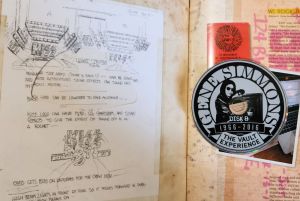
For those keeping score at home, this CD contains tracks 136-150 in the Vault box set.  This time we foray into genres far and wide, from disco to reggae.


GENE SIMMONS – The Vault – Disk 10 (2018 Rhino)

“Take It Like a Man #2” originated with a riff written on bass, and then intended for Psycho-Circus.  Tommy Thayer and Eric Singer play on this demo.  It was intended that Ace, Peter, Paul and Gene each take a line, and Gene does his little imitations of the members where he wanted them to sing.  This song may have had been better than “You Wanted the Best” which had the same idea.  It’s heavier and sounds pretty good in this demo form.  Though it came later, it has a Creatures vibe.  3.5/5

“Take It Like a Man #1” is the original bass lick from which the song was later written.  This is included to show how Gene would “hear” a full song in his head when coming up with the riff on bass.  It also demonstrates he’s a better bassist than he gets credit for.  This unfinished idea is just that: unfinished.  Yet you can hear he was onto something, as demonstrated by “#2”.  2.5/5

“Have Mercy, Baby” is a Simmon / Kulick composition with Bruce playing guitar.  This is a fully-fleshed out demo, at first recorded to four-track and then upgraded to 24-track for overdubs.  It sounds like a Crazy Nights or Hot in the Shade era tune.  That said, it wouldn’t have been album worthy.  Though Bruce Kulick always offers intelligent and tasteful solo work, the song itself only has one or two solid hooks.  2.5/5

Gene gushes over Eric Carr as a human being in the liner notes.  “We Won’t Take It Anymore” is a song that originated in the same session as “My Babe”, next on the box set.  Written by Gene and Eric, this is a hard rocker with a cool chorus.  It really is a shame that Eric wasn’t nurtured as a songwriter in Kiss the way he could have been.  This has a strong “All Hell’s Breakin’ Loose” kind of vibe, and the chorus really would have worked well with Kiss.  3.5/5

“My Babe” is completely different!  This fast, almost pop-punk!  It almost throws back to Dressed to Kill-era Kiss, with that kind of simplicity and basic rock and roll arrangement.  What it is, is a hybrid of many things and all of them sound good to me.  It’s understandable why Kiss didn’t want to do this kind of song in the Carr era, but they really should have.  3.5/5

“Eat Your Heart Out” is not the same song that was later used on Monster (though the chorus really is similar).  This is a late 70s demo of an idea that originated with “Rotten to the Core”.  It’s a tangled web since so many ideas appear in multiple forms on this box set.  This is a menacing little rock song that would have worked on any Kiss album from that period, but probably just wasn’t good enough.  There are some cool melodies on the pre-chorus especially.  3/5  

“Nine Lives” is a cool late-80s idea with Bruce Kulick on guitar.  Again, not quite good enough to replace one of the album songs, but there is promise here too.  It has a slow, slinky vibe.  Kulick shows of some cool whammy work, followed by two-handed tapping.  His technique seems to date it to Crazy Nights3/5

Back to the 70s, “Howling for Your Love” has Katey Sagal and the girls on backing vocals.  It’s very similar to “Bad Bad Lovin'”, also known as “Dr. Love”, and the tangled web of songs becomes even more so.  It’s pretty good and, once again, had Kiss made more albums, this would have been on one of them.  3/5

“I Ain’t Coming Back” is the song that “Never Gonna Leave You” from Disk 7 became.  This is a four track demo with a dancey beat, but it’s no better than the other version.  One of the poorer tracks on this set, with a chorus that should have never hit the recycle bin.  Just trash it.  1/5

The riff to…ahem…“Granny Takes A Trip” sounds similar to “Weapons of Mass Destruction”.  The title here was taken from a store in New York that sold platform boots.  It’s very metal, but not very good.  It’s very alterna-grunge.  Probably intended for Carnival.  Very noisy.  Not worth exploring further.  1/5

Former Journey and Vinnie Vincent Invasion singer Robert Fleichmann co-wrote “Piece of the Rock” (not the King Kobra/Kick Axe song).  This has a dark 80s vibe but sounds unfinished.  There’s a compelling guitar part with good verses and a decent chorus, but the bridge that connects them should be excised.  The song just needed something else to go in that section, and it would be pretty good.  2.5/5

Gene says “Rock It” was inspired by Fine Young Cannibals.  I also hear Love and Rockets.  Judging by the vocal track, this sounds like it was recorded much later.  It’s not bad.  There’s something cool going on here, especially with those 80s drum programs.  3/5

“Sticky Goo” is a cool reggae-based idea.  It also has a “New York Groove” vibe.  It could be finished into something cool.  Cool, but different.  There’s no denying that some of these songs would simply not work with Kiss and would have to go on solo albums.  But, then again, they did do “Torpedo Girl”, so who’s to say what’s ultimately outside the Kiss wheelhouse?  Gene is sure to lay down crunchy rhythm guitars here to ground it in rock.  Still hearing lots of “New York Groove” though.  3/5

“Love Came To Me” is Gene’s answer to “I Was Made For Lovin’ You”, but it also re-uses certain melodies from “Love Is Blind”.  (This is not mentioned in the book, but I’m telling you with my ears.)  Gene concedes that he doesn’t know as much about dance music as Paul Stanley, but this isn’t a bad stab at the genre.  It’s not as fast and infectious, but the bassline is a lot of fun, as is the beat.  You could dance to it.  3/5

“Roar of the Greasepaint” is the original idea that later became “Journey of 1,000 Years” on Psycho-Circus.  He later added chords from the earlier “You’re My Reason for Living 4 Track” (Disk 4) to create the final version.  That version is superior for many reasons, including the heavy orchestration and progressive vibes.  “Roar of the Greasepaint” has a cooler title though.  It really ties into the Kiss image and should have been left as-is.  This was the closing song on Psycho-Circus, and would have been the closing song on this 150 song box set…if Gene didn’t include an 11th bonus disc!  3.5/5

Average score by song:   2.76/5 stars


Disk 10 Track length and songwriters (from Wikipedia)

1. Take It Like a Man #2 (2:38) Simmons
2. Take It Like a Man #1 (2:44) Simmons
3. Have Mercy, Baby (4:04) Simmons / Kulick
4. We Won’t Take It Anymore (3:03) Simmons / Carr
5. My Babe (1:51) Simmons / Carr
6. Eat Your Heart Out (2:22) Simmons
7. Nine Lives (3:33) Simmons / Sigerson
8. Howling for Your Love (2:47) Simmons
9. I Ain’t Coming Back (3:02) Simmons
10. Granny Takes a Trip (1:55) Simmons
11. Piece of the Rock (3:48) Simmons / Fleischman
12. Rock It (2:23) Simmons
13. Sticky Goo (3:05) Simmons
14. Love Came to Me (3:25) Simmons
15. Roar of the Greasepaint (3:07) Simmons

REVIEW: Gene Simmons – The Vault – Disk 8 (2018)

Previous Reading: 

Record Store Tales #600:  The Vault
Disk 1 Review
Disk 2 Review
Disk 3 Review
Disk 4 Review
Disk 5 Review
Disk 6 Review
Disk 7 Review


Onto Sonic Boom and some other albums.  For those keeping score at home, this CD contains tracks 106-120 in the Vault box set.


GENE SIMMONS – The Vault – Disk 8 (2018 Rhino)

“We Rocked It All Night” is an autobiographical song written for the Sonic Boom album.  Though modern sounding, it also has a throwback vibe.  It would have fit well on Sonic Boom and you could make an argument for its inclusion.  It has a cool old-time rock and roll vibe while remaining modern Kiss.  Gene can’t help referencing back to “Rock and Roll all Nite” in the lyrics, and it’s alright by me.  4/5

“She’s Rotten to the Core” is a Gene Simmons / Bruce Kulick composition not to be confused with “Rotten to the Core”.  They are two different songs.  It can get very confusing going through these demos!  Gene likes to re-use titles and lyrics.  This also has a vintage Kiss sound to it.  Catchy chorus, circa Rock and Roll Over.   “She’s rotten to the core, and I don’t care!”  Really good tune that would have worked well on a number of Kiss albums.  4/5

“S&M Love” is the same musical idea as “Sweet & Dirty Love”, recorded with Tommy Thayer.  These originate with an old Gene song called “Jelly Roll”.  This version of the song has lots of tasty slide guitar action and sounds pretty much ready for an album.  It’s better than the version on Asshole.  It’s more rock and roll.  4/5

“Sweet & Dirty Love #2” with Tommy Thayer and Eric Singer is a dirtier demo of the same song.  It’s a lot rougher sonically but with just as much slide.  Good, fast & heavy.  Too much it doesn’t sound as good.  3.5/5

“Jelly Roll” is the original idea.  You can hear the riff there, and suddenly a younger Gene Simmons is singing the same melody that we just heard.  There’s a certain AC/DC vibe here without the slide guitar.  Perhaps it was too fast and straight-ahead for Kiss, who knows?  A song like this easily could have been on Love Gun3.5/5

In this Vault, we often hear later versions before we hear the originals.  “Just Gimme Love #2” is a Thayer & Singer update of a song we’ll hear later on.  It has a cool “Kickstart My Heart” beat and tempo.  Lo and behold, this song later became “You Wanted the Best” on Psycho-Circus.  The chorus is different, and maybe a little more Kiss-like.  Thayer’s solo is in the Ace ballpark.  Regardless, it’s not quite the song that the final version would be, though it’s pretty good.  3.5/5

“You Wanted the Best” is of course the re-written version considered for Psycho-Circus.  Gene explains in the liner notes that Ace and Peter were largely absent from the sessions not because they were underskilled as we were told before.  Now Gene says it’s because the two wanted to renegotiate their contracts last minute, so they were forced to start working with Thayer on the album.  This song was intended to be sung by all four members and ultimately that’s exactly what happened when Ace and Peter “came to their senses”.   There are some cool lines here that didn’t make it into the final version here such as “Yeah, we’re back baby!”  3.5/5

“Just Gimme Love #1” is now, finally the original 1970s version of everything we’ve just heard.  It is from the same recording session that yielded “Love Is Blind” and other songs.  It’s kind of crazy how Gene wrote this music for his band and they didn’t get around to it for 20 years.  This original idea is less breakneck and more in the vibe of old school Kiss, but the chorus doesn’t have the right vibe yet.  It’s a little clunky, but Kiss obviously would have made more more their style.  Since the idea here is a little more primitive, the rating is lower.  3/5

You gotta love Gene’s titles sometimes.  “Hit the Ground (Put Your Money Where Your Mouth Is)” is a Singer / Thayer demo with improvised lyrics just to get the musical idea down.  It originally came to Gene while in a car so he sang into into a cell phone to record it.  There’s something cool here, but it’s just a fragment of a song, not a complete idea.  2.5/5

Pete Townsend inspired the big chords on “Who Said So”.  It definitely sounds like a Who outtake, and Eric Singer sounds like he’s going for a Keith Moon vibe on some of his fills.  Tommy Thayer is on guitar as Gene counts out the sections to the band.  “Bridge, two, four!”  They are literally hashing out the song live in the studio.  There could have been something here.  As it is, it’s just the basis of an idea.  2.5/5

“Bad Bad Lovin'” is crazy.  We already heard another version of “Bad Bad Lovin'” that became “Dr. Love” on Disk 4.  Now Gene revisits the idea in 1978 and sounds more like Alice Cooper or Lou Reed in a sing-talk voice.  There’s a saxophone.  This is cool.  Some of the words later became “Good Girl Gone Bad” on Crazy Nights, but largely this sounds like “Charisma” on Dynasty.  Gene doesn’t say so, but this can be considered a prototype for “Charisma”.  4.5/5

Jumping ahead to Revenge, “I’m Paralyzed” eventually ended up on that album.  Bob Ezrin has a writing credit and joins on the chorus.  It’s a very cool demo, but the chorus is not the final one.  It doesn’t quite fit, but of course they would fix that later.  Drums are programmed and Gene played the guitar with a coin a-la Brian May, to a get a certain chug chug sound.  Not bad stuff.  3/5

“Chrome Heart” is a Bruce Kulick / Gene Simmons demo from a post-Crazy Nights era where Kiss needed to rock a little more.  This song smokes!  Bruce Kulick always brings a certain level of quality.  This is better than most of Gene’s songs that made it onto Hot in the Shade.  How do songs like this get lost?   Yet another song that should have been released on an album.  It does sound like some parts turned up elsewhere.  4/5

Gene really likes these big Mountain chords that inspired “Goin’ Blind”.  “‘Til the End of Time” is a similar idea, mostly instrumental with Gene scatting improvised lyrics.  There was potential here to create a similar slow, determined and emotional song of heavy construction.  3.5/5

This disc closes on a pretty clean demo of “Thou Shalt Not” from the Revenge album.  All the music is there, but none of the lyrics aside from the title.  There are empty spots that Gene intended to fill with words.  It’s kind of funny to hear that.  Good idea with a final song that was album-worthy.  3/5

Average score by song:   3.46/5 stars


Disk 8 Track length and songwriters (from Wikipedia)

1. We Rocked It All Night (3:25) Simmons
2. She’s Rotten to the Core (3:33) Simmons / Kulick
3. S&M Love (2:40) Simmons
4. Sweet & Dirty Love #2 (3:24) Simmons
5. Jelly Roll (1:54) Simmons
6. Just Gimme Love #2 (3:40) Simmons
7. You Wanted the Best (3:41) Simmons
8. Just Gimme Love #1 (3:34) Simmons
9. Hit the Ground (2:10) Simmons
10. Who Said So (1:55) Simmons
11. Bad Bad Lovin’ (3:15) Simmons
12. I’m Paralyzed (3:40) Simmons / Ezrin
13. Chrome Heart (3:36) Simmons / Kulick
14. Till the End of Time (3:15) Simmons
15. Thou Shalt Not (3:07) Simmons / Damon

REVIEW: Gene Simmons – The Vault – Disk 5 (2018)

Previous Reading: 

Record Store Tales #600:  The Vault
Disk 1 Review
Disk 2 Review
Disk 3 Review
Disk 4 Review


Another “Holy Grail” for Kiss collectors:  the famous (or infamous) Bob Dylan writing sessions.  Let’s take a dive!  For those keeping score at home, this CD contains tracks 61-75 in the Vault box set.


GENE SIMMONS – The Vault – Disk 5 (2018 Rhino)

With these Vault songs, sometimes the liner notes can be revealing, and sometimes less so.  The notes for one of Gene’s prettiest songs, “See You Tonite” answers an age-old question:  “What exactly is the “it” that Gene is singing about?  “I know it’s around.”  “I’ll see you get it tonight”.  “It” means nothing.  It’s whatever you want it to mean.  Inspired by the Beatles, Gene felt like the lyrics didn’t have to be anything specific.  Who is the “Walrus?”  That kind of idea.  This old demo is more Beatles-y than his solo album version.  The tune dates back to the Wicked Lester days and was written in half an hour.  Unfortunately the notes don’t offer much information about who is playing on the track or when it was recorded.  The guitar work is very Byrds/Beatles.  Time to get Julian Gill’s Vault book.  4/5 

According to a scribble in the book, 1976’s “You’re My Reason #2” was previously released on the Japanese version of Asshole as a bonus track.  Gene plays everything on the demo:  bass, acoustic and electric guitars, and piano.  It’s a very pretty song and Gene is proud of it.  He sounds disappointed in the liner notes that Kiss didn’t find it appropriate for the band.    It could have been something.  3.5/5 

“Always Near You” was, of course, completed on Gene’s solo album with an additional title, “Nowhere to Hide”, tacked on.  This early demo is just Gene on guitar, piano and drums.  No bass!  Like “See You Tonite”, it is very Beatles-y.  It needed all the drama that the album version has with all that pompousness of the full arrangement.  This is a pretty good rough outline.  3/5

When Gene said that he arranged this box set according to “feel”, he was not lying.  “Once More Chance” is another very Beatles-esque song that wound up on Gene’s solo album.  (The Beatles influence is repeatedly acknowledged in the notes.)  This song ended up as “Mr. Make Believe”, yet another pretty Gene ballad that needed more orchestration.  The album version is impeccable, but this earlier version is about 75% of the way there.  There’s a nice section of Gene harmonizing with himself that gets lost on the album, so it has its own appeal.  It’s a little more electric.  4/5

“Now That You’re Gone #2 Synth”  originated in the late 1970s, and working with Bob Kulick.  This song should be familiar to those who own the Asshole album.  It’s remarkable similar.  Unfortunately it never was one of Gene’s best songs, though he seems to like it a lot.  It has a lot of personal meaning, regarding his absentee father.  This is not the last we’ll hear of “Now That You’re Gone” in this Vault.  2/5

“You’re My Reason for Living Synth” is a version of the song with Silent Rage.  Gene changed a verse and some chords, and the synth is a haunting touch.  In this guise, it reminds of some of David Coverdale’s keyboard-oriented ballads.  It gets heavier as it goes.  Each version of this song has different flavours.  That’s what makes this box an interesting listen, for those interested in the art of songwriting and arranging.  3.5/5

According to Gene, “Dreamer” was written into 1975 and eventually morphed into multiple songs.  It’s not particularly good.  It’s based on acoustic, with some piano highlights.  Whatever came from this song was doubtless better.  1/5

And now, we get to the Bob Dylan music.  “Na, Na, Na, Na” is an early version of “Waiting For the Morning Light”, as Gene played around with the chords that Dylan wrote.  The singing is improvised, but the song was starting to come together.  This version might better highlight how nice the music actually is.  Gene sings some nice falsetto.  It’s a very well recorded demo with some really nice organ coming through loud and clear.  It just needed words.  3/5

“Mr. Make Believe” is an electric demo of the song, recorded on a day off in 1977.  The verse melody is completely different, and uninspiring.  It’s crazy that a great song came from this crap.  It’s meandering sub-Beatles pablum until the chorus comes in.  2/5

Not content and continuing to beat a dead horse, “Now That You’re Gone #3” was recorded with Tommy Thayer and Kevin Valentine, which might place it in the Psycho-Circus writing sessions.  It’s more grungey but still doesn’t really go anywhere.  It’s a completely different delivery, but the problem is the song might not be good enough.  2.5/5

Of course, we can’t be complete without the original “Now That You’re Gone #1” demo, recorded in 2000 with (I kid you not) some guys he heard on the radio doing a “Garth Brooks does Kiss” spoof.  Though Gene re-wrote some lyrics to be more personal, the horse is dead.  How can a demo recorded in 2000 sound so crappy?  2/5

Gene reveals that “You’re My Reason for Living 4 Track” eventually evolved into “Journey of 1,000 Years” on Psycho-Circus, and other songs as well.  I would never have picked up on that.  This is a very basic demo without drums, just a programmed beat.   It’s underwhelming for that reason.  There are some cool twangy sounds on the chorus, but otherwise there are better versions of this song.  2.5/5

“We Are One” has always been one of the more unusual songs on Psycho-Circus.  This is a Silent Rage demo that Kiss (or, Simmons Stanley Thayer & Valentine) re-recorded in the studio.  This version has folksy 10,000 Maniacs verses and a bombastic Kiss chorus.  Gene cites Lennon as an influence and you can hear that.  Pretty decent demo.  The words aren’t all the way there yet.  “We Are One” was released as a Kiss single in 1998.  3/5 

“Everybody Wants Somebody” is another rendition of “Na, Na, Na, Na” and what would become “Waiting for the Morning Light”.  This was recorded with Tommy Thayer.  It is largely its own song, but you can hear some of the same guitar and vocal melody in its construction.  The lyrics are improvised.  We’re still not there yet; the song still needed a lot more work.  3/5

The 15 minute “Bob Dylan and Gene Simmons Writing Session” is the holy grail.  Imagine being a fly on the wall as the two talk and jam.  Bob advises Gene not to go “too outside” the Kiss thing with this session.  This is just a snippet of a six hour session.  Bob is inquisitive, asking Gene about how he writes songs.  Gene reciprocates and wants to know how Bob works.  I repeat:  You will get to hear, in Bob Dylan’s own words, how he writes songs.  Bob’s picking is delectable, and he coaches Gene a bit with trying to find a lyric.  Eventually, Bob wrings out the chords that Gene responds to, and a song is begun.  Because this 15 minute track is mostly spoken word, I will not give is a grade, and instead we will calculate the disc average with only the previous 14 songs.  Rest assured, this is a fasctinating treasure for music geeks.

Average score by song:   2.78/5 stars


Disk 5 Track length and songwriters (from Wikipedia)

1. See You Tonite (2:31) Simmons
2. You’re My Reason #2 (3:28) Simmons
3. Always Near You (2:32) Simmons
4. One More Chance (3:14) Simmons
5. Now That You’re Gone #2 Synth (3:38) Simmons / Kulick
6. You’re My Reason for Living Synth (4:20) Simmons
7. Dreamer (3:04) Simmons
8. Na, Na, Na, Na (2:48) Dylan / Simmons
9. Mr. Make Believe (2:28) Simmons
10. Now That You’re Gone #3 (3:54) Simmons / Kulick
11. Now That You’re Gone #1 (3:51) Simmons / Kulick
12. You’re My Reason for Living 4 Track (3:47) Simmons
13. We Are One (3:03) Simmons
14. Everybody Wants Somebody (3:28) Dylan / Simmons
15. Bob Dylan and Gene Simmons Writing Session (15:48)

REVIEW: Psycho Circus – Psycho Circus (1992 cassette)

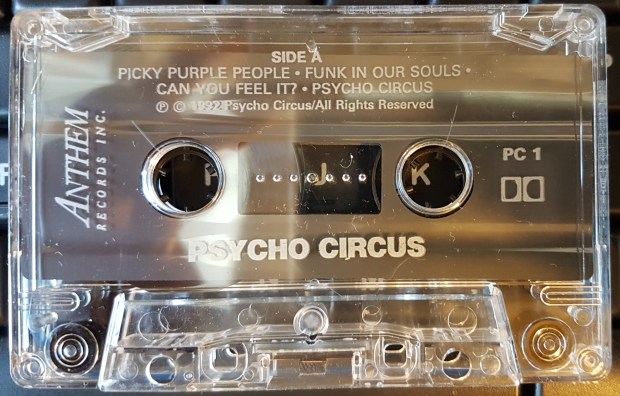
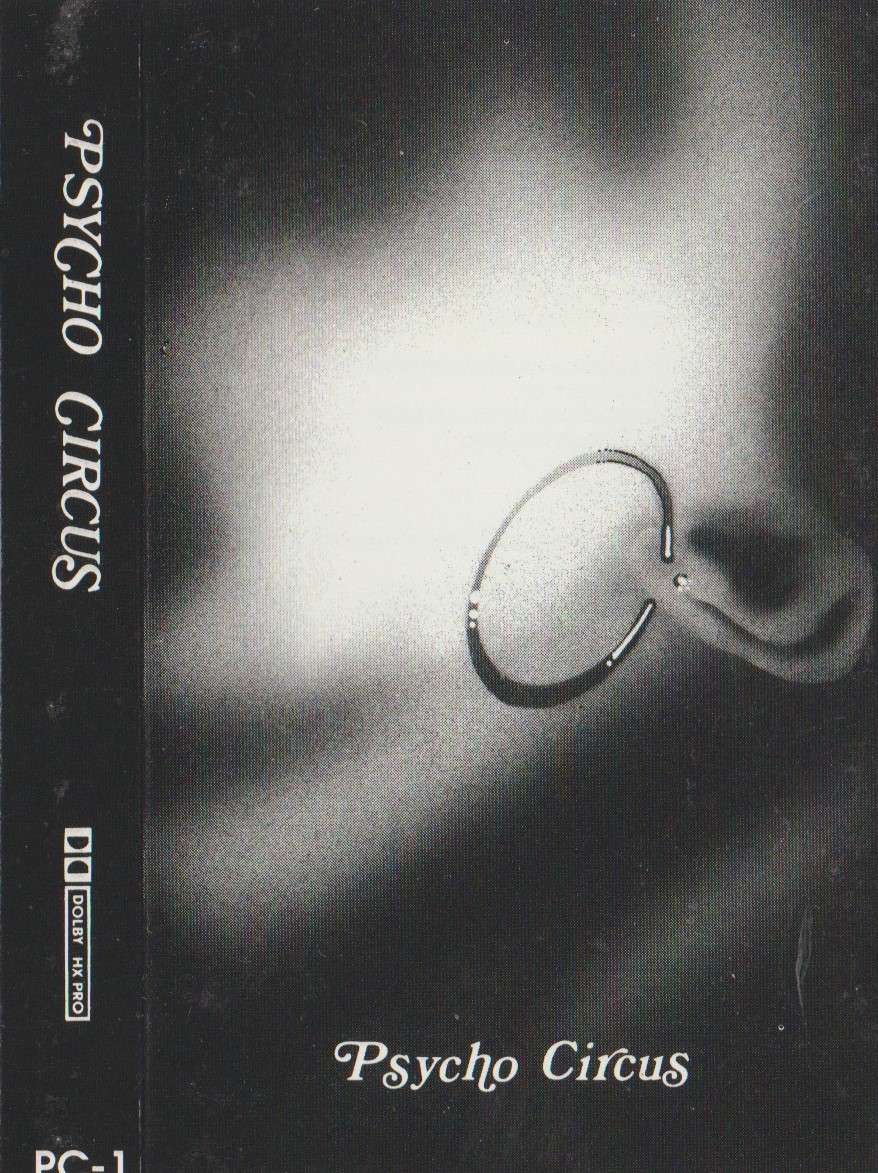
PSYCHO CIRCUS – Psycho Circus (1992 indi cassette EP)

Psycho Circus put out their one and only album in 1993.  They were a talented band who avoided grunge cliches and instead dove into funk-metal and a darker Faith No More sound circa The Real Thing.  The album was split down the middle between the two sides.  Decades later I found an earlier indi cassette, released after they signed with SRO Management, the team behind Rush.

It’s quite clear this band had musical chops.  Opening track “Picky Purple People” is killer.  Faux-horns, massive bass and busy drums are relentless.  This is a goofier side of the band, but well executed.  If the Chili Peppers and Faith No More had a baby, it would sound like “Picky Purple People”.  Next is “Funk in Our Souls”, a track that was re-recorded for the album later.  The cassette version sounds more bass heavy.  It’s more enjoyable for that reason, not to mention the smoking guitar solo.  “Can You Feel It?” was also re-recorded for the album, but this is one of those darker songs that eschew the funk.  Singer Vince Franchi hits unreal notes.  His voice is versatile.  It’s Faith No More without the twisted mind.

The final track didn’t make it onto the CD.  “Psycho Circus” opens with traditional circus music, a full six years before Kiss did the same thing with their own song called “Psycho Circus”.  Maybe they should try suing Kiss?  It would be fun to see!  That’s the only similarity.  This is another funky track, and though the circus music is a bit silly, the chorus rocks.

The tape comes with a nice J-card and full lyrics.  In a way it’s a better listen than the album.  It doesn’t have as many great songs, but it also has less filler.

3/5 stars

#430: Album Art – Where can it go?

Scan_20150826

RECORD STORE TALES MkII: Getting More Tale
#430: Album Art – Where can it go?

How important is album artwork today?  Still important, I’d argue, though not as much as it was in the 60’s, 70’s and 80’s.  You can tell that artwork is still important, because every major artist produces “cover art” any time they release a single, even if there is no physical product for it to be applied to.  Artists will commission art or pose for expensive new pictures to accompany the new music.

Columbia Records kicked off the era of album artwork in 1938, a full decade before the birth of the LP.  Columbia’s art director Alex Steinweiss is generally credited with the introduction of packaging art.  Before him, 78’s used to come in plain sleeves with very little printing on them.  Some sleeves would have large holes in the middle, through which you could read the label on the record.  After the dawn of the LP, the rest of the record manufacturers in the world had caught up and were using artwork on their LPs in the 1950’s.  The standard size was 12 – 3/8”.

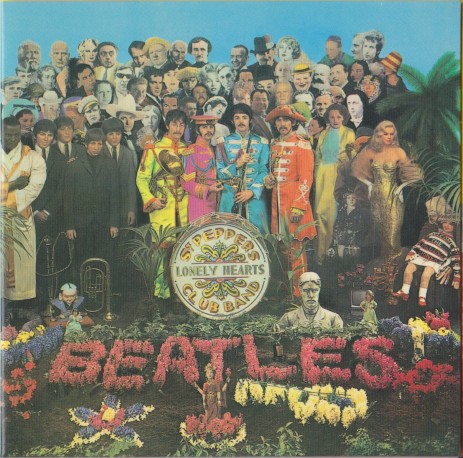
When you think of Sgt. Pepper’s Lonely Hearts Club Band today, you inevitably picture that incredible album artwork as well as the songs.  That cover, with its 57 different distinct figures pictured, became a high water mark.  They also included cardboard cutouts inside, a gimmick that Kiss were eager to copy and make their own.  Sgt. Pepper’s artwork cost 60 times more to create than the average album cover in 1967!  It took a band with the success of the Beatles to push the limits in this way.

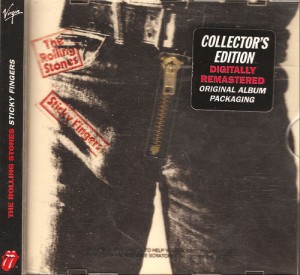
The Rolling Stones included postcards in their Exile on Main Street (another unforgettable album cover), but they also brought album artwork into three dimensions.  Sticky Fingers featured a working metal zipper, with which you could open the jeans on the front cover, to reveal briefs inside.  It was a level of interactivity previously unseen.  The zipper tended to cause damage to the records and packaging in shipment, but pioneering is a process of trial and error!

Early 90's CD reissue of Sticky Fingers with zipper

Early 90’s CD reissue of Sticky Fingers with zipper

Perhaps Led Zeppelin took LP artwork to its end point, with 1979’s In Through the Out Door.  The record was concealed in a sealed, stamped paper bag that looked like a cheap bootleg, but inside would be one of six different album covers.  You would not know which you got until you tore it open.  The Grammy award winning packaging also included an inner sleeve that one could paint on, just by adding water!  If you wet a paintbrush (or anything, for that matter), you could dissolve paint embedded in it and colour it yourself.  Finding an original unpainted inner sleeve is the goal of a true collector.

Historically speaking, album artwork like this had several purposes.  The first and most obvious would be to identify the product inside (something Led Zeppelin messed with by not including their name on Led Zeppelin IV).  The second purpose was to attract the eye, in the crowded shelves of the record store.  It was noted by many that a brown cover just melted into the background.  Something striking would jump out, and be hard to miss in the racks.  Another job of the cover art was to tie together all the related marketing for the LP.  The artwork could appear in magazine ads, posters, and later on, in music videos.

The purpose of cover art that Kiss embraced was to give value for the money.  Not only did you get killer artwork with loud rock and roll inside, but you also got a cardboard Love Gun, or even masks you could cut out and wear.  Fans drooled over these extras.  For a while, any time Kiss put out an album, you knew that the packaging would be special.  For albums such as Destroyer and The Elder, they even used gatefold sleeves – an added, unnecessary expense for single LP packages.

Album artwork suffered in the 80’s and 90’s.  With cassettes and ultimately CDs replacing the 12.375” width of an album cover, the pictures were smaller and less striking.  You could not pack as much information onto a 4.75” CD sleeve.  Iron Maiden’s artist Derek Riggs was known for hiding secret messages and logos in his album covers, including a mischievous “Indiana Jones was here” and “Wot, no Guinness?” inside Powerslave.  These touches are lost on smaller CD covers.

There is no question that the majority of cover art suffered in the 90’s.  Some bands and labels still strove to give the buyer some extra value, but the canvas was now teeny tiny.  Tool are an example of a band who took advantage of the CD age.  Their AEnema CD had lenticular, “moving” cover art, thanks to a special jewel case that enabled 3D images.  You could even swap images by folding the booklet differently, and get a different moving scene.  Kiss copied this, less successfully, for Psycho-Circus in 1998.  Coloured plastic jewel cases were another way to get some attention on the CD racks.  Bands such as Alice in Chains and Collective Soul used coloured jewel cases for their self-titled albums in 1995, but these were fragile and prone to scratching.  The cardboard digipack was another method to enhance CD cover art, but they were not popular with everyone.  Some consumers complained that the covers wouldn’t fit properly into their CD towers, and would scratch up the discs if poorly designed.  And then of course, we had artists such as Garth Brooks who decided to milk the fans by releasing the same album with different cover art, encouraging them to “collect them all!”  His Double Live had no less than seven covers to collect.  That would come to well over $150 total for the collector who had to have each one.

LPs are currently having a second surge of popularity.  Will it last?  No.  Before you cry “heresy!”, remember that in today’s society, convenience is king.  That means portability.  Vinyl LPs are meant to be enjoyed at home.  The future will remain digital, although LPs will probably never die completely.  The advent of digital music has reduced the importance of cover art yet again.  You don’t need a cover, obviously, to enclose something that does not physically exist.  Yet, cover art is still being made.

Some have chosen to take cover art in the digital age to minimalist extremes.  U2’s Songs of Innocence was initially released digitally, with a very plain photo of a white LP sleeve with “U2” stamped on it.  Kanye West embraced minimalism on Yeesus, releasing the CD with no packaging to speak of at all.  A CD housed in a clear jewel case, sealed by a strip of orange tape, and a sticker with some credits – that’s all Yeesus gave us, surprising many by not going completely over the top with it.  It’s still an artistic statement, but is it the kind of art that a fan will embrace and cherish?

I feel that album artwork is currently in a state of flux.  LPs are having their moment again, and with them, lavish packaging that one can handle and enjoy.  On the other hand, simple digital pictures are all kids need today, to be attached to their mp3 files.  I hope that some enterprising, artistic individual, a modern day Alex Steinweiss, will innovate and bring back cover art in a lasting way.  I sure hope, because I do like cover artwork to accompany my music.

YEESUS

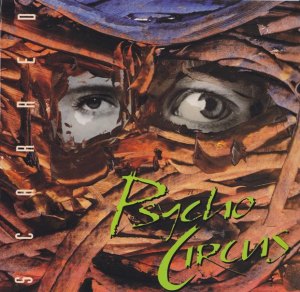
REVIEW: Psycho Circus – Scarred (1993)

This was one of the first, if not the first, discs I bought with my staff discount at the record store!

SCARRED

PSYCHO CIRCUS – Scarred (Anthem 1993)

20 years ago, Psycho Circus were one of the bands hyped as the “next big thing” out of Canada. They originated in Mississauga, Ontario, just west of Toronto.  They signed with SRO management (Rush, Van Halen, King’s X, Extreme) and producer Terry Brown (also Rush) and released a trendy but still unique goth-rap-funk-metal album called Scarred.  They also released a music video for the excellent “Pulsate”.

These guys were hanging out with old dudes way before Our Lady Peace.

The problem with Psycho Circus is their split personality.  On one hand (roughly half the album) they inhabit this cool, dark land I call Diet Faith No More.  Singer Vince Franchi has the lungs and range to emulate Patton’s style on The Real Thing.  Their cool use of keyboards also reminds me of that band, but without the dementia.  On the other hand, there’s a goofy rap-funk side, which does not appeal to me in the least.  I think funk metal got stale very quickly, and the juvenile lyrics render the rapping limp.  “Acid Monkey Junk”, a song about the testing of cosmetics on animals, is painful at time.  “Monkeys in the ocean and fishes in the trees?”

A M.E.A.T Magazine interview by Karen Bliss, from 1993, reveals that the band had already dropped even more irritating material from their live set.  They name a discarded song called “Picky Purple People” as being particularly notable for its silliness.  Glad I didn’t have to hear that one.


I prefer the Diet Faith No More side of the band: hard, melodic and dark songs like “Thru the Backbone” (which also features rapping in a non-annoying way).  “Pulsate” is easily the best song on the album, demonstrating Franchi’s impressive vocal range and power.  I’m also fond of the angry “I Know”, the haunting “Leave Me Alone”, and the closer “Goodbye”.  The rest of the album is unfortunately skip-worthy and occasionally irritating to me.

There was also a CD single made for “I Know” featuring an exclusive “Psylicone Mix”.  Although I don’t enjoy the remix as much as the album version, it’s notable for being remixed by Brown and the band, not some outsider.  I happened upon this single within my first year at the record store, and it surely must be one of the rarest discs I have.

For half a good album:

2.5/5 stars

M.E.A.T Magazine

Part 153: Russian Imports

SAM_1771

RECORD STORE TALES Part 153:  Russian Imports

One of the weirder items that we used to see regularly were these Russian import discs.  Their status as official releases was very questionable, the quality was cheap at best, and the guy that sold them wanted top dollar for them all.

His name was Serge, and he was a Russian model.  Seriously.  He gave me his business card one time.  He was a model, and he had the perfect Fabio hair and everything.  On the side, he’d bring CD’s over to Canada from Russia. They would usually come without jewel cases, just the CD and the paper cover art, so he could transport more of them.  The discs often ended up terribly scratched because of this.  He’d bring over “greatest hits” releases from everybody.  Springsteen, Abba, Bon Jovi, even bands that didn’t have greatest hits releases like AC/DC.  Often the Russians would throw on “bonus tracks” from live or solo albums.

The guy was a real pain to deal with, and most of the stuff he brought over was obscure European dance, trance, techno stuff that nobody had heard of over here.  He’d assume he was going to get a lot of money for them, because they were big in Europe.  But if nobody had heard of them in Canada, and they sat on my shelf for a year, no, I’m not paying top dollar for it.   So, eventually Serge stopped coming in.

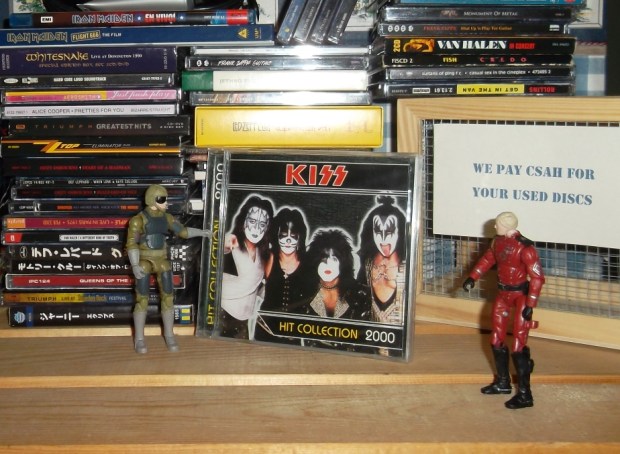
I bought two albums from him that I’ve never played, but bought just “for the collection”.  One is a Kiss disc called Hit Collection 2000, the other by Europe, called Best Ballads.

Hit Collection 2000 is on a label called “DJ’s Club”.  It does not have the official Kiss logo, just a poor attempt to copy it.  There are some spelling errors on the back — I don’t know where “Detrot Rock City”  is.  The tracklist itself is pretty weird, containing newer songs like “Psycho Circus” and “I Finally Found My Way”, along with one track from each of the four Kiss solo albums.  There are three songs from Dynasty, and three rare live cuts from the Psycho Circus Live Australian disc.  This one came sealed but I didn’t even bother to open it.  Even Serge’s sealed discs often ended up scratched to pieces, I don’t know how that happens because these are clearly factory sealed.

The Europe album, Best Ballads, is notable for not depicting keyboardist Mic Michaeli on the front cover, even though he plays on the majority of songs.  The album contains ballads from Europe’s first monumental self-titled disc through to 1991’s Prisoners In Paradise.  The Russians picked some cool songs this time:  “Words of Wisdom” and “The King Will Return”, from the first album, “Dreamer” from Wings of Tomorrow, and “Coast To Coast” from Out of This World.  As usual there are three “bonus tracks”; “Under the Influence”, “Lord of the Manor”, and “Elsewhere” from Joey Tempest’s 1995 solo album A Place to Call Home.   Not that you would know this from the liner notes, since there are none.  Just a paper sleeve.

In the end I don’t think we missed Serge when he decided not to deal with us anymore.  A lot of his product sat on the shelves.  In fact I tried selling my Kiss Hit Collection CD back to the store last year, and they refused to take it.  Lesson learned!

REVIEW: KISS – Psycho Circus (1998, Japanese and Australian versions)

Part 38 of my series of Kiss reviews, leading up to the release of Monster


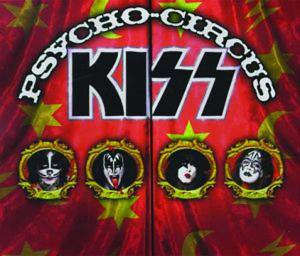
PSYCHOKISS – Psycho Circus (1998)

I have a really hard time rating Psycho-Circus.  I played it every day when it came out, but I like it a lot less now than I did in 1998. Once I got over the novelty of “finally, a new album by the original Kiss,” I stopped listening to it.  I think a lot of that has to do with the fact that Gene and Paul are essentially the only members of the original Kiss on most of it.  That’s the biggest problem.

On all but one song, drums are by Kevin Valentine (ex-Cinderella), a good studio drummer.  Guitars are handled by Tommy Thayer (who fits into the story later) on all but two songs.

The other problem is it’s way too overproduced and I lay that blame at the feet of Bruce Fairbairn, rest his soul.

Fairbairn was a great producer for Bon Jovi and especially Aerosmith in the 80’s, but he was the wrong guy to produce Kiss. I think he wanted to make a dense, lush album as if it were 1998’s version of Destroyer, and he failed miserably. Paul wanted Bob Ezrin to produce…oh, the album that might have been.  Paul and Fairbairn clashed in the studio regularly over the direction of the album.

The title track, though is amazing!   Vintage, anthemic Paul Stanley. The solo is great, also very vintage…but it’s Tommy. I don’t mind Fairbairn’s production here, the circus noises suit the song, however the drums sound way too plastic.  This is the case with almost the entire album.  The drums sound like samples throughout.

Gene’s “Within” follows, which I believe was a Carnival Of Souls outtake. (Two other COS/Psycho-Circus outtakes, “Sweet & Dirty Love” and “Carnival Of Souls” itself ended up on Gene’s solo album.) “Within” is a slow dirgey ditty.  It’s a good song with lots of atmosphere, but it has nothing to do sound-wise with the rest of this album.  It would have been more suited to Creatures or Carnival, but not so much this album.

The cumbersome Paul title, “I Pledge Allegiance To The State Of Rock & Roll” is next. I hate this song. It’s a fast one, nothing special, a little stock, and to me is nothing but pure filler.

Then there’s finally a real Kiss song with all four members playing: Ace’s “Into the Void”. It is definitely one of the best songs on the album, with a riff that only Ace could play and the drums sound a lot better here.  It’s quintessential Kiss.  When I think of Kiss, I thik of songs that sound like “Into the Void”.

“We Are One” is a Gene song, and it sounds a lot like his 1978 solo album. It’s a nice song, I think it’s a tad slow, but it’s got that late 70’s vibe.  Maybe like a “Great Expectations” too.

The second side of the album starts with “You Wanted The Best” which was clearly written by Gene as a Kiss “comeback” song. It’s neat in that all four members sing lead for the first time ever, but really that’s its only selling point. Fairbairn overproduced once again, and the guitars sound a lot more processed than they should. The solo is definitely Ace, though. I think “You Wanted The Best” is another one of those Gene songs that had been presented to the band and rejected from previous albums like “Within” was.

Paul Stanley takes the next track with “Raise Your Glasses”, which is yet again overproduced and also a bit too pop sounding. It sounds like something from Hot In the Shade or that general era.  Paul sings some nice harmonies with himself in the middle, but the demo version of this is better (from the “Psycho Circus” CD single pictured below).

Since Peter Criss’ material was allegedly deemed too poor for this album, Paul and Ezrin wrote I “Finally Found My Way” for him to sing. It was meant to be the next “Beth” but I don’t need to tell you what happened there (nothing). It’s a piano ballad (that’s Ezrin on Fender Rhodes) and it’s a nice song, maybe it is was for Neil Diamond to sing. It’s just too darn soft, and Peter’s voice lacks the rasp.  The rasp would have given it some edge like Kiss ballads of yore.  He sounds great harmonizing with Paul on the bridge though.

Paul and Bruce Kulick wrote the next song, “Dreamin'”, which was ripped off of “I’m Eighteen” by Alice Cooper. It is basically the same song, and I believe Alice beat them in court too.

The most interesting song was saved for last, Gene Simmons’ epic “Journey Of 1,000 Years”. I don’t know what this could be compared to.  Although it wasn’t popular with the Kiss fans I know, I think it’s the best song here. Overproducing worked on this song. It is loaded with strings and who-knows-what, and Gene’s chorus is just mindblowing. “Can you hear me calling, can you hear the sound? Can you hear me calling, or is the voice of the crowd?” If this song was on The Elder, it would have fit in better.  It’s majestic and I think a good example of what Gene is capable of when he sets his mind to it.

Japan got a bonus track written by Gene called “In Your Face”. He wrote it for Ace to sing, so it has become a little bit of special song, a lost Kiss gem. The production is a little more sparse and though it is not a great Kiss song, Ace’s vocal sets it apart a bit. Worth having.

I have a couple versions of this album.  I bought the Japanese version first, for the bonus track, and it was not cheap!  The packaging here is cumbersome, but superior to the fragile lenticular jewel case that North America got. It is a digipack whose front cover opens like doors to reveal the Psycho Circus “clown” inside in 3D. Typical gradiose Kiss and I love it.

Australia got a 1999 reissue with a 6 song bonus disc called Kiss Live.  It contains 3 classics and 3 newbies.  So, in other words, you can get versions of these songs played by the original lineup.  This is worth having.  Track list:  “Psycho Circus”, “Let Me Go, Rock and Roll”, “Into the Void” (with guitar solo), “Within” (with drum solo), “100,000 Years”, and “Black Diamond”.

When you hear Psycho Circus, you can’t help but think that Kiss blew a monumental opportunity to create history. In the end, it’s “just another Kiss album”, and not a particularly great one. It certainly inferior to the first 7 studio albums at best.  It has a leg up on some of the 80’s records, but it just doesn’t rock hard enough!  The right producer could have made this sound like Kiss, not Aerojovi.

3/5 stars

Part 77: Psycho-Circus

RECORD STORE TALES Part 77:  Psycho-Circus

If you think back to the late 90’s, the hype surrounding Kiss was enormous.  They’d just completed their successful reunion tour to rave reviews, what was left but an album?

I was excited too, but not as excited as “Kiss Man”….

I don’t remember his name and I never heard from him again, so heartbroken was he.  My staff had a habit of telling annoying customers, “Hey, if you really want to talk about Kiss (or insert-band-name-here) then you should call back and talk to this guy Mike.  He loves Kiss.”

One time, they told a lady I was interested in buying her original Whitesnake cover art painting.  Which I wasn’t.  Anyway, back to Kiss.

This guy had come in talking about Kiss with somebody, and they told him to call me.  So he did.  With two of my bosses standing in front of me, I blindly anwered the phone.  To the best of my recollection, this was the conversation.  Imagine two of my bosses standing in front me alternating between glances and glares.

Kiss Man:  Hi, is this Mike?

Mike:  Yes, speaking.

Kiss Man:  Oh hi, I was speaking with (insert whoever’s name it was) a couple days ago, and they told me you were a massive Kiss fan?

Mike:  Yes, yes I am…

Kiss Man:  Like really big Kiss fan?  Like they said you have the dolls.

Mike:  Yes…I do have some action figures… (the bosses both looking at me now)

Kiss Man:  Are they the vintage ones?

Mike:  Uh, pardon?

Kiss Man:  Are they the vintage ones from the 1970’s.

Mike:  Oh, no.  They’re just the MacFarlanes.

Kiss Man:  Cool, still.  So do you know anything about the new Kiss album coming out called Psycho-Circus?

Mike:  (thinking he was now asking when it was out, how much we’ll be selling it for, etc)  Well, it’s out in a couple weeks, and there’s some kind of special edition cover, and we’ll be trying to get that one in. 

Kiss Man:  So how many times did you see them live?

Mike:  Uhh, just once…I don’t really go to a lot of concerts…

Kiss Man:  Just once?  Like on this tour?

Mike:  No…just once.  I wanted to see them on the Revenge tour though.

Kiss Man:  Have you heard the new single, “Psycho Circus”?

Mike:  No, I haven’t yet.

Kiss Man:  On Q107?  No?

Mike:  No, I…

Kiss Man:  Wow, and they said you were a big Kiss fan.

That one hurt, admittedly.

I eventually brought the conversation to a close, got shit for taking a “personal” call, explained to my bosses that I really didn’t have a clue who that was, and then later interrogated the staff to find up who set me up with the Space Ace.

When I found out, they were disappointed that the conversation didn’t go well, as if they were trying to set with up with a new buddy.  “He’s probably really sad now,” they said.

“Yeah.  He’s probably never going to come back into the store again, because of you,” they helpfully added.

Yeah, well.  It was a lose-lose situation and I definitely lost that time!

Part 12: The Pepsi Power Hour

RECORD STORE TALES Part 12:  The Pepsi Power Hour

I’m going to take you back in time a bit.  Back to a time before the record store….

I remember back to the 80’s and early 90’s when MuchMusic was king. Back when there was no Jersey Shore and they played actual music videos.  There was no internet at that time, so you had to go to the store to buy your music (more often than not, on cassette). To hear new bands, you watched videos on Much and listened to the radio. There was no YouTube.

There was this frickin’ awesome show on Much back in the day — you remember it. It was originally only on once a week (Thursdays at 4 if I recall) and was hosted by one John “J.D.” Roberts. Yeah, the CNN guy. After he left, the hosting slot rotated between Michael Williams, Steve Anthony, Erica Ehm and Laurie Brown and then finally the late Dan Gallagher. Despite his long hair, Dan didn’t know a lot about metal — he didn’t know how to pronounce “Anthrax” and had never heard of Ratt. But that show was by far the best way to hear new metal back in the day.

That show was THE POWER HOUR.

It was so popular that they eventually had two a week, Tuesdays and Thursdays at 4, which was awesome for me since by 1989 I was working every Thursday at Zehrs.  I could still catch one a week, usually.

I remember tuning in, VCR at the ready to check out all the new videos and catch onto the newest bands. There was this band called Leatherwolf that I found via Hit Parader magazine and first heard on the Power Hour. I loved that band. There was another band called Sword from Montreal. Psycho Circus. Faith No More. Skid Row. Armored Saint. Testament. You could always count on the Power Hour to have Helix on. That show rocked.

They had some of the best interviews as well.  Usually they’d have someone come in and co-host for an hour.  They had everybody from Gene Simmons to Brian Vollmer to Lemmy.  In depth stuff too, at times.

Then in 1990 something else cool happened. I discovered a magazine called M.E.A.T (the periods were for no reason at all, just to look cool like W.A.S.P. but eventually they decided it stood for “Metal Events Around Toronto”). M.E.A.T was awesome because it was monthly, free, and had in depth articles clearly written by knowledgable fans. There was no magazine with that kind of deep coverage. Even Slash loved M.E.A.T, at a time when Guns hated rock magazines! I loved M.E.A.T so much I eventually sent them $10 to subscribe to a free magazine.  I did this on a yearly basis.

I discovered a whole bunch of great bands via that magazine. I Mother Earth, Slash Puppet, Russian Blue, Jesus Christ, not to mention they were way ahead of the curve on alternative. They had a Nirvana concert review back in 1989. They got behind Soundgarden way before they were cool. And you could count on them hanging onto the oldies. They’d put an indi band from Toronto on the cover one month, and put Black Sabbath on the cover the next month.  Next issue they’d have an in-depth interview with Kim Mitchell.  They’d talk about bands that nobody else did.

Their CD reviews were my bible! My music hunting was probably 90% based on their reviews, especially since by then the Power Hour had changed into the 5 day weekly Power 30 hosted by Teresa Roncon, and sucked.  The started playing too much thrash and grunge and never gave the old bands a shot anymore.

Things have changed so much now. I never get into new bands anymore, back then I used to just eat them up. I guess new bands just don’t interest me anymore. I like my old time rock and roll. I did buy the new Sheepdogs, twice.  The last new band I got totally and 100% excited about was The Darkness, and that was, what…2003?

Yet I can’t get into these new metal bands. The music sounds so sterile to my aging ears. The rock has lost its balls. The album I have been most excited about in 2012 was the new Van Halen — a band that is approaching 40 years old. But my God does it rock.  Kiss and Black Sabbath both have new records coming out, and I’m excited about them, but I could two shits about the new Nickelback.

In a lot of ways, it’s a better time for music now.  With eBay and Amazon I’ve managed to fill nearly every gap in my music collection.  There are some bands that I now have complete sets of, and others that I am achingly close.  I’m missing 4 Maiden EP’s and 1 Deep Purple import, for example.  Back in the 80’s you didn’t have access to this.  You didn’t even have access to an accurate and complete discography.  It wasn’t until the internet that this kind of information was even available.

Aside from that, today kind of sucks for music.  Sure, it’s easier to find new bands now, but we did OK in the 80’s.  M.E.A.T turned me on to lots of bands, and they were always giving away sampler cassettes.  Much played all the new videos by all the  metal bands at least once, basically.  You had to work a little harder, but we only appreciated the music more.  It wasn’t disposable.

And there were a lot more new bands around that just plain rocked!