Sony

REVIEW: Ritchie Blackmore’s Rainbow – Stranger In Us All (expanded edition)

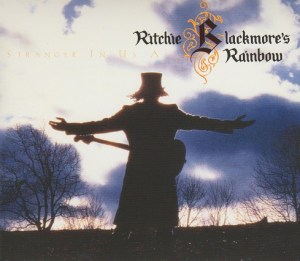
RITCHIE BLACKMORE’S RAINBOW – Stranger In Us All (originally 1995, 2017 Sony expanded edition)

Blackmore said “adios” to Deep Purple for the second and final time in 1993.  He beat them to the punch with new music, in the form of a resurrected Rainbow…sort of.  As he is prone to do, Blackmore assembled an all-new Rainbow of unknowns.  The only familiar face was bassist Greg Smith who happened to be in Alice Cooper’s band when Wayne’s World was filmed.  The new singer was the smooth-voiced Scot, Mr. Doogie White.  White’s career almost broke in a completely different direction earlier, when he was one of two finalists in the running to replace Bruce Dickinson in Iron Maiden.  It went to Blaze Bayley.  Signifying new beginnings, Blackmore reverted the band’s name to Ritchie Blackmore’s Rainbow once again.

Back in 1995, my impressions of Stranger In Us All, the new album by Blackmore’s Rainbow, were significantly underwhelming.  It has taken its time, but over the years the album slowly penetrated my stubborn refusal to accept it as legitimate.  By now I think we know all Rainbow needs is the Man in Black.  And there he stands on the front cover, pilgrim-hatted again, gloriously silhouetted against a cloudy sky.

The only serious weakness in Stranger In Us All has nothing to do with the lineup.  The production (by Pat Regan and Blackmore) sounds low budget and the drums sound muddy.  Blackmore’s guitar tone is thankfully impeccable and his neo-classical leanings on the first track “Wolf to the Moon” were refreshing.  “Wolf to the Moon” is one song that has stood the test of time.  It is thoroughly still enjoyable today, and Blackmore is unleashed.  And the singer?  It is true that Doogie White stands in the shadows of some great lead vocalists.  I’ll resist ranking and comparing.  White has a very smooth voice with impressive power and range, and he doesn’t sound like any of his predecessors.  Where White really impresses is in live renditions.  He is an entertaining and amicable frontman.

Track two brings a slower grind to Rainbow, and White slinks along with him, adapting perfectly to every vibe.  Going slower still, “Hunting Humans (Insatiable)” really prowls.  It is spare, dark and sweaty.  Moving on to inspirational hard rock, Rainbow brings the harmonica-inflected “Stand and Fight”.  What is not to like?

Rainbow ended the first side in typically epic fashion.  “Ariel” was quite a track, featuring backing vocals from the lady who is now Ritchie’s wife, Mrs. Candice Night.  She co-wrote a number of the album’s tracks including “Ariel”.  This kind of thing is Ritchie’s bread and butter, he’s been writing epics like this since “Child in Time” back in 1970.  As an added bonus, the extended edition of Stranger In Us All has the single edit of “Ariel”, trimming it to a tidy format-friendly 4:00.  This is more like a re-edit, moving parts around and making it more compact.

They step on the gas again for “Too Late for Tears”.  Side two has a couple “stock” rockers — “Too Late for Tears” and “Silence”.  Good blood-pumping tracks, nothing to save for your greatest hits album, but decent enough.  “Black Masquerade” is better, as it has a dark neo-classical edge.  Thing go kind of goofy when they cover Grieg’s “Hall of the Mountain King” and add lyrics.  They also have another go at the Yardbirds’ “Still I’m Sad”, this being the second time.  The first Rainbow version was an instrumental.  This one has vocals, and it’s pretty good.  Just like with lead singers, I don’t think it’s worth comparing this version to the 1975 one.  It’s unique enough that it’s almost two different things.

Back in 2013 I found the Japanese edition of Stranger In Us All at the 2013 Toronto Musical Collectibles Record & CD Sale for $15.  Instant no-brain purchase right?  Now that this expanded edition is out, I no longer need it in my ever-expanding collection.  I am passing it on to massive Rainbow fan Brian over at Boppinsblog.  Now that CDs are worth nothing, I like to pay it forward with my retired music.  The expanded edition contains the Japanese bonus track, “Emotional Crime”.  It has a cool, “smoove” groove and a bluesy feel.  Think Purple’s 1988 remake of “Hush” in terms of vibe.  The other extra tracks are the aforementioned “Ariel” edit, and a live take of the old Rainbow classic “Temple of the King”.  This is and the “Ariel” edit are taken from the old out of print CD single.  “Temple of the King” was recorded in Stockholm October 2 1995, meaning it is not the same as the one on the double live CD Black Masquerade.  That was recorded exactly a week later in Germany.  (Thanks to Scott the Heavy Metal Overlord for pointing this out.)  It’s a brilliant arrangement giving Candice Night and Doogie White a chance to harmonize over a very quiet backdrop.  The Man in Black whips out a solo that surely must be considered one of his most passionate.

That’s how this version of Rainbow succeeds — by a putting a fresh spin on it.  You avoid trying to compare to other versions of the band and just enjoy.  Ritchie reveals in the extensive liner notes that he wanted to call the band Rainbow Moon.  And speaking of the liner notes, there are also recollections from Doogie White.  In short this expanded edition is worth every penny, even if you’ve bought it before.

3.75/5 stars

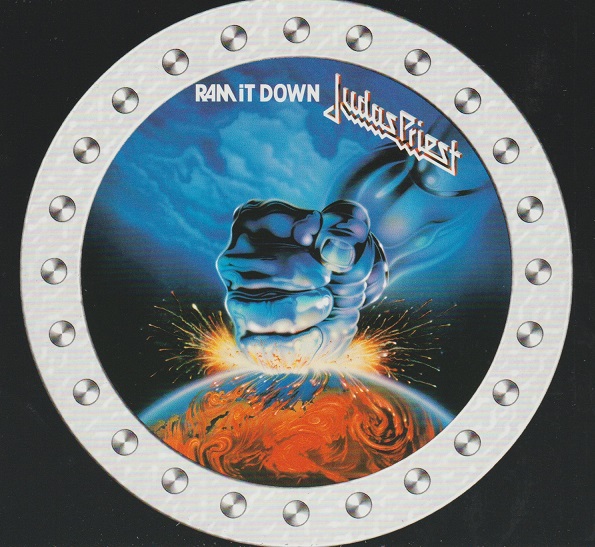
REVIEW: Judas Priest – Ram It Down (Remastered)

JUDAS PRIEST – Ram It Down (Originally 1988, 2001 Sony remaster)

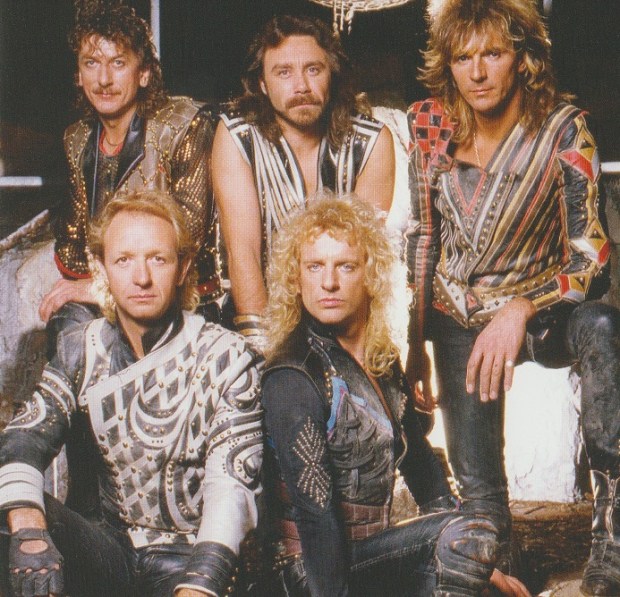
Judas Priest seemed pretty lost in the late 80s.  They were bigger than ever, but they lost focus of their musical direction.  Producer Tom Allom had cursed them with a robotic plod, far removed from the lively firepower of yesteryear.  When they released Turbo in 1986, they had gone as far down those roads as possible.  It was am ambitious departure, but 100% a product of the 1980s.

For Turbo, Priest had written enough songs for a double album.  Twin Turbos, as it was to be called, was supposed to reflect all facets of metal, but the record comany got cold feet and a single disc was issued.  It contained the most techno-commercial tracks, while Priest held onto the rest for another day.  That day came in 1988 when Priest (again with producer Tom Allom) released Ram It Down, largely made up of Turbo outtakes.  The album was hyped as a return to the heavy Priest of yore, and this was at least partly true, but fans were unconvinced by it.  In comparison with Turbo, yes, Ram It Down was heavier.  But Priest had gone as far as they could with Allom.  Ram It Down was too sterile and bogged down with filler.

Certainly the title track opens Ram It Down on a thrash-like note.  As if to silence to critics, it was a proud metal statement with an opening Rob Halford scream that curdles the brain.  The weakness is drummer Dave Holland on his final Priest outing.  Only when Scott Travis joined Priest in 1990 did they acquire a drummer who could play the kind of beats at the speed they needed.  On Ram It Down, Priest were held back by the drummer and clunky production, two mistakes they fixed on 1990’s Painkiller.  The lyrics also seem dumbed-down for the 80s.  “Thousands of cars, and a million guitars, screaming with power in the air,” is cool but cliche.

“Heavy Metal” is more of the same lyrically, an ode to the power and glory of power chords.  Rob Halford’s performance is fantastic, and the man has rarely sounded as fantastic as he does on Ram It Down.  You can’t say the same for the words, the highschool equivalent of poetry.  On the music front, Priest were now following rather than leading.  They were on the same clunky metal trip as bands such as Scorpions at the same time.  There audible Kiss and Whitesnake influences on the album, with Rob sometimes sounding like he was trying to write a Gene Simmons tune.  “Love You to Death” on side two sounds right out of the Demon’s closet.  The embarrassingly terrible  “Love Zone” and “Come and Get It” both sound as if Coverdale co-wrote them on the sly.  Whether Priest were consciously copying other bands or just lost, who knows.  (“Love Zone” is one of the few songs that Halford almost seemed to write gender specific.  “With your razor nails and painted smile” are not specifically referring to a female, but certainly that was the general assumption.)

There are definitely a few cool tracks that deserve mention.  The first is “Hard as Iron” which had to be one of the fastest Priest songs to date.  It’s still held back by the production, but has some serious energy to it.  Like metal espresso injected right into the brain!  The other standout is “Blood Red Skies”, a forgotten highlight of this album and indeed of the Priest catalog in general.  (I actually used “Blood Red Skies” in a poetry project for school.  A girl liked it so much she asked for a copy of the lyrics.)  Using the synth effectively, “Blood Red Skies” paints a Terminator-like future with humans hunted by beings with “pneumatic fingers”, “laser eyes” and “computer sights”.  Halford  pours power and anguish into it, as a human freedom fighter.  “As I die, a legend will be born!”  Cheesey?  Absolutely.  Priest perfection?  Yes indeed!

There are also two mis-steps on Ram It Down that must be addressed.  The first and most obvious is “Johnny B. Goode”, from the 1988 movie Johnny Be Good starring Anthony Michael Hall and some guy named Robert Downey Something.  This track should have been kept off the album.  As a novelty single, sure, you can dig it.  It’s a stereotypical cliche-ridden metal cover, and that’s fun for a goof.  As a Priest album track, it only serves to completely destroy any momentum that Ram It Down managed to build.  Then there is “Monsters of Rock”.  This awful excuse for a song is only 5:31 long, but seems twice that.  It is the prototype for the even more awful “Loch Ness” from Angel of Retribution.  Most buyers probably didn’t finish listening to the album because of this bloated and aimless track.

The Priest Re-masters collection had two bonus tracks per studio album.  Ram It Down provides two completely unrelated but great tracks:  live versions of “Bloodstone” and “Night Comes Down”.  The liner notes don’t state when they were recorded, but live versions of either are always welcome in any Priest collection.  It’s interesting that bonus tracks from these actual sessions, such as “Red, White and Blue”, were used on other CDs but not Ram It Down.

Priest may have known Ram It Down wasn’t the metal album they hoped to make.  They cleared house afterwards.  Dave Holland and Tom Allom were done, and there is no question that Painkiller was superior to Ram It Down because of that.

2/5 stars


REVIEW: Judas Priest – Turbo 30 (2017 deluxe 3 CD set)

JUDAS PRIEST – Turbo 30 (2017 Sony Legacy 3 CD set)

It is sheer delight to see Judas Priest’s once maligned Turbo to finally see some vindication.  There was a time this album was shied away from completely.  They played no tracks from it on the 1990-91 Painkiller tour.  In 1990, Priest finally pulled themselves out of a slide into dangerously commercial territory.  For a long time, Turbo was considered a musical detour that did more harm than good.  However the frost thawed quickly and Priest began to put the title track back into the set around 2001 for their Demolition tour with Tim “Ripper” Owens.  Today there is no longer any shame in cranking Turbo while hoisting a tall cool one.

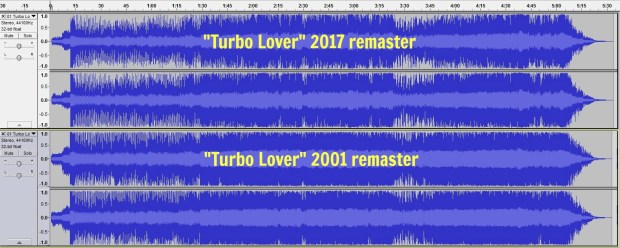
The 30th anniversary edition of Turbo contains a freshly remastered edition and two live discs.  The sound is greatly improved from the 2001 version from the Priest Re-masters series.  As you can see by the waveform below, the 2001 version at bottom was a victim of the “loudness wars”, and much of the dynamic range was lost by pushing it to overdrive.  The 2017 version at top has more peaks and valleys.  The new version wins for overall for having more warmth.

What the 2017 version does not have are the two bonus tracks included on the Priest Re-masters version.  They were a live version of “Locked In” (which would be somewhat redundant here) and an unreleased studio track called “All Fired Up” which sounds like a Ram It Down outtake.  For a complete review of Turbo and these bonus tracks, please refer to our review of the Turbo 2001 CD edition.  The rest of this review will focus on the two live CDs inside Turbo 30.

The Fuel For Life tour that followed Turbo was one of Priest’s biggest.  Their stage featured a riser that “transformed” from a race car to a robot that would lift Glenn Tipton and KK Downing in the air with its claws.  It was commemorated by an album (Priest…Live!) and a separate home video from a concert in Dallas, Texas.  This new double live comes from a show in Kansas on May 22 1986.  It is 100% superior to Priest…Live! by every measure and could supplant that 30 year old album in your collection.

The set list varies a little from Priest…Live! but hits the same key tracks.  The ballsy synth ballad “Out of the Cold” still opens the set, a brave move even in 1986.  It is certainly the most unexpected of all Priest’s openers, so bravo.  “Locked In” is restored to its spot in the set; it was not on Priest…Live!  A version from an unknown concert (the liner notes are vague) was on the prior edition of Turbo as a bonus track.  “Locked In” isn’t a major track but still important due to its place as part of the “Turbo Lover” music video duology.  This live version is the best yet, loaded heavy with plenty of guitar thrills not present on the studio original.  From there it’s on to “Heading Out to the Highway”, nicely in the pocket.  Rob Halford’s screams are ferocious.  Next is the march of the “Metal Gods”, another version far more lively than the one on Priest…Live!  Seems there is much less mucking around with the recordings this time.

“Breaking the what?  Breaking the what?  Breaking the what?”  It’s that silly yet tried and true song intro.  Post-British Steel, you just can’t have a Priest live concert without “Breaking the Law”.  But always remember, that in the dead of night, “Love Bites”.  From 1984’s Defenders of the Faith, “Love Bites” was very different for Priest but still a set highlight.  (Incidentally, British Steel and Defenders of the Faith are the other Priest albums that had recent triple disc deluxe editions with live albums.)  Then more from Defenders:  Two killers in a row, “Some Heads are Gonna Roll” and “The Sentinel”.  Two songs that fans never tire of, and some credit must be given to the mighty guitar duo of Tipton and Downing.  Their trade-offs are sublime, and Halford curdles the blood.

Back into new material, “Private Property” was one of Priest’s more obvious grasps for a hit.  It’s far from a must-have, but better at least than the version on Priest…Live!  A mere five minutes later you will be transported to the “Desert Plains”, a Point of Entry deep cut that was excluded from Priest…Live!  It is far faster live and stay tuned for a long voice-shredding breakdown by Halford.  (Rob was clean at this point in his life.  Rob Halford recommends vocal rest between shows, menthol eucalyptus gum, and herbal tea to maintain a strong voice.)  A frantic “Rock You All Around the World” from Turbo ends the first disc with a filler track that is again better here than on the prior live album.

Screaming for Vengeance brings the fury for disc two, “The Hellion” (taped intro) and “Electric Eye” bring the focus clearly back to heavy metal, just in time to go for a spin with “Turbo Lover”.  This song is now a beloved classic, finally appreciated for its sharp songwriting and adventurous production.  Downing and Tipton pushed synths into heavy metal in a big way, but with integrity and ingenuity.  Better run for cover indeed, and fast…for next is “Freewheel Burning”, a natural for keeping with the theme of turbos and the like.

As the disc roars to its close, we are treated to some serious historic Priest.  The oldest track is “Victim of Changes”, from the immortal Sad Wings of Destiny (1976).  This most dramatic of Priest compositions is always welcome in the set, yet was not on Priest…Live! probably to avoid overlap with 1979’s Unleashed in the East live album.  This one boasts a blazing hot guitar solo and some of Rob’s most impassioned wailing.  This stretches out for nearly nine minutes of pure metal brilliance at its most vintage.  But the vintage metal gift-giving is not over, because “The Green Manalishi” (1979’s Hell Bent for Leather, via Peter Green’s Fleetwood Mac) delivers the greatest of all riffs.

It’s nothing but the hits from there:  “Living After Midnight”, “You’ve Got Another Thing Coming”, and “Hell Bent for Leather”, the standards that everyone knows.  “Another Thing Coming” is stretched out with Rob’s annoying back-and-forth with the crowd, but it is what it is.  “Heavy metal communication”, he calls it.  Nobody is buying this CD for another version of that song anyway.

“You don’t know what it’s like!”  So get this package, the triple CD set, and you will!

5/5 stars
 

REVIEW: Dust – Hard Attack / Dust (1972/1971)

The KISS RE-REVIEW SERIES Supplemental:  Kerner and Wise.

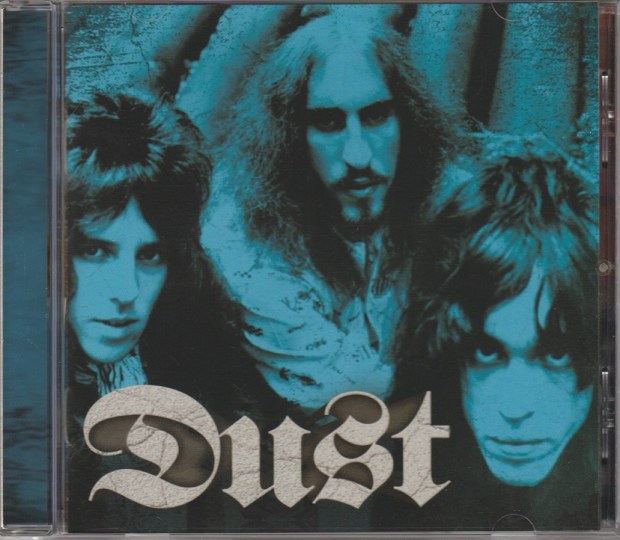
DUST – Hard Attack (1972) / Dust (1971) (2013 Sony Legacy)

fans know the names of Richie Wise and Kenny Kerner.  This production team laid down the first two Kiss records, and although their production was not the best, they were the first.  But where did they come from?  A little trio called Dust.  Wise was the singer and guitar player.  Kerner was the manager, co-producer and co-writer.  They released two records as Dust, also featuring legendary Derringer bassist Kenny Aaronson and drummer Mark Bell.  These two albums, Hard Attack and Dust, were remastered and compiled as one CD by Sony in 2013 (presented in reverse order).

The cool thing is the Dust albums actually sound better than the Kiss albums.

Dust were a hard rockin’ band, distinguished by having loads of slide and pedal steel guitars (handled by Aaronson).  Dust were travelling the same roads as other bands such as Aerosmith, Cream, Free or Zeppelin, but with less of an identity.  The songs were good.  “Stone Woman” is slippery slick blues rock, while “Goin’ Easy” is a laid back southern acoustic blues.  And they could get heavy.  “Love Me Hard” is the kind of proto-metal that Budgie, Sabbath and Purple were doing on the other side of the Atlantic.

3.5/5 stars
This was a 200 word review in the tradition of the #200wordchallenge.


REVIEW: Joe Satriani – Shockwave Supernova (2015)

Purchased at BMV for $7.99 during Toronto Record Store Excursion 2016.

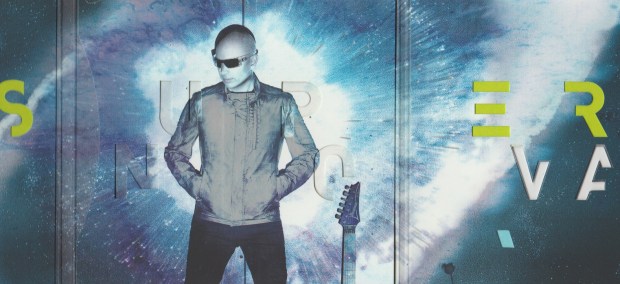
scan_20161217JOE SATRIANI – Shockwave Supernova (2015 Sony)

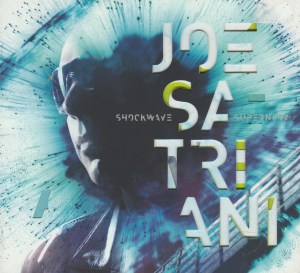
Like a manic version of “Puttin’ on the Ritz”, the title track from Joe Satriani’s latest Shockwave Supernova will render you mute as you pick your jaw up from the floor.  Syncopated guitars and drums unite before Joe focuses everything on the melody.  Joe’s brand of instrumental rock usually features the lead guitar in a melodic position where a lead singer would normally deliver the hooks.  That’s Joe’s job and he has done it consistently well.

New age-y guitar twinkles highlight the ballad “Lost in a Memory”, which pulses with understated rhythms.  It is only appropriate that this spacey music was recorded at Skywalker Sound.  What atmosphere and what power.  Things take a turn down Weird Street on “Crazy Joey”, a showcase for sounds you didn’t know a guitar could make, but still with a cool melody to remember.  Unbelievable accuracy and dexterity here.  “In My Pocket” brings back Joe’s bluesy harmonica work (often overlooked) with a stripped basic track.  Then we fly “On Peregrine Wings”, but the song itself is heavy as granite.  An unorthodox guitar hook reminds us that Joe isn’t a typical songwriter or player.  Thunder returns on “Cataclysmic” which moves along with the grace of a herd of rhinos.

Joe hops in his Tardis for a trip back in time to the early 60s on “San Francisco Blue”, but of course with his own space age sound.  He just has to “Keep On Movin'”, but it’s still a surprise when the piano shares the spotlight.  There is no shortage of string majesty, but the piano is a nice touch.  Things cool down on “All of My Life”, a gentle song with breezy congas and unexpected twists.  “A Phase I’m Going Through”, track 10, is the point at which the listener begins to get a little bit of ear fatigue.  15 songs might be normal for a Joe album, but 10 songs might be the ideal length for the average listener.

Take a break if you have to because there are still great moments ahead.  “Scarborough Stomp” is an apt title for the snare-heavy 11th track.  It’s all about that uncomplicated beat, but there is a cool baroque section in the middle that sounds as if lifted from Joe’s brief stint in Deep Purple (1994).  A tender ballad (“Butterfly and Zebra”) is a transitional song leading to the ominous backwards guitar intro to “If There is No Heaven”.  This song is reminiscent of past Joe blasters like “One Big Rush”. Then you will see the “Stars Race Across the Sky” on one of Joe’s more atmospheric tracks. A “Goodbye Supernova” sends us off in dramatic fashion with heavy keyboard accents by veteran Mike Keneally.

Very few Satriani albums will let you down.  Though some might argue “if you have one Joe, you have them all”, his fans will appreciate the differences.

3.5/5 stars
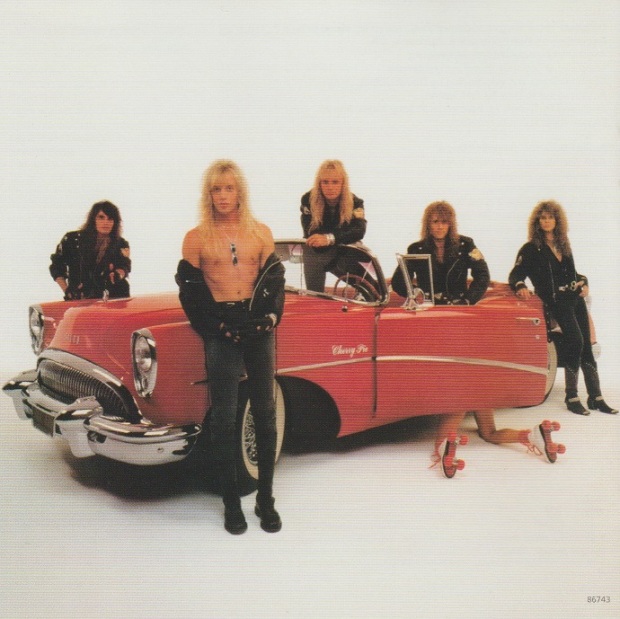
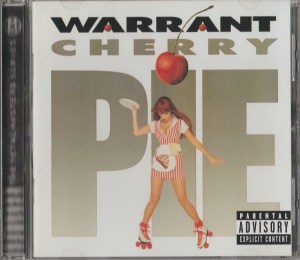
REVIEW: Warrant – Cherry Pie (1990, remastered)

scan_20161207WARRANT – Cherry Pie (1990, 2004 Sony remaster)

It was bands like Warrant, and albums like Cherry Pie, that made the 1991 grunge onslaught inevitable.

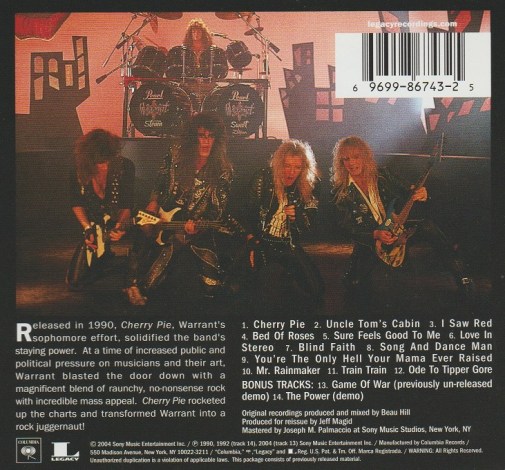
If Motley Crue were the poor man’s Kiss, and Poison were the poorer man’s Motley Crue, then Warrant are the pauper’s Poison.  Heck, Poison’s C.C. Deville even shows up on guest lead guitar on Cherry Pie‘s title track.  Think about that a moment.  How bad do a band have to be to warrant (no pun intended) a C.C. Deville guest guitar solo?  Guitarists Joey Allen and Erik Turner even confessed to having guitar tutors in the studio helping them come up with their own lead work.

Cherry Pie was an improvement in some regards over the prior album Dirty Rotten Filthy Stinking Rich.  The second single, “Uncle Tom’s Cabin”, remains a high point for this band.  Swampy bluesy guitars and a kick ass melody?  Who cares if that’s not Warrant playing on the acoustic intro (it’s singer Jani Lane’s brother Eric Oswald), and so what if that’s not Warrant on the banjo (that’s producer Beau Hill)?  “Uncle Tom’s Cabin” is one of those rare Warrant songs that you just have to get.  Instead of singing about girls, Jani chose to write a story about a murder and a coverup.  It’s far more entertaining than “She’s my cherry pie, put a smile on your face ten miles wide.”

Speaking of “Cherry Pie”, as embarrassing as it is, did you notice that’s not Jani Lane on the opening scream?  It’s an uncredited Dee Snider, sampled from Twisted Sister’s song “I Want This Night (To Last Forever)”.  Guess who produced both albums?  Beau Hill.   Rather, he overproduced the hell out of both albums. Rather misleading.

Warrant’s biggest hit was a ballad, and so Cherry Pie has more.  “I Saw Red” was glossy and enhanced with piano, but the acoustic version that was later released as a B-side was better.  The second ballad, “Blind Faith” had more heft, though it is little more than a rewrite of “Heaven”.  Another acoustic track called “Thin Disguise” was even better than either of these songs, but was relegated to a B-side.  Too bad.  This album could have used it.

Warrant are better when just rocking out.  There are a couple indispensable Warrant rockers on Cherry Pie.  “Mr. Rainmaker” is remarkably powerful with dark clouds.  It’s in the same mold as “Uncle Tom’s Cabin”, with a chorus that is still memorable today.  “Bed of Roses” and “Song and Dance Man” are strong also-rans.  There are other notable songs (“Sure Feels Good to Me” set speed records for this band) but on the whole they are a harsh blend of sound-alikes.

Buyers should be aware there are two versions out there of Cherry Pie, “clean” and “dirty”.  The “clean” version is missing the track “Ode to Tipper Gore”, and has a naughty word beeped at the start of the Blackfoot cover “Train Train” (1979).  How unexpected it was to hear that beep, and how ripped off did we feel since it was not advertised as a censored version?  A beep in a rock song is a rare thing indeed.  If you get the uncensored version, you’ll hear the “All a-fuckin’ board!” intro correctly, which is important since “Train Train” absolutely smokes.  “All a-BEEPin’ board!” just didn’t cut it.  Covering “Train Train” was one of the best decisions Warrant made on this album.  Warrant transforms it from a hard southern rocker to a plain old hard rocker, but the transformation works and the groove is the only solid one on Cherry Pie.

As for “Ode to Tipper Gore”, it is just a joke track made up of naughty outtakes from Warrant concerts spliced together into one stream of “fuck”.  (Tipper Gore was behind the PMRC, the scourge of 1980s censorship.)  It is included on the 2004 Sony remastered edition, along with two bonus tracks.  Strangely enough the two bonus tracks have nothing to do with this album.  “Game of War” is the long-sought 1988 demo that garnered Warrant attention at the labels.  It’s unpolished but you can hear how an A&R person looking for the next Poison would have signed this band.  Finally there is a track called “The Power” from a 1992 Cuba Gooding Jr. movie called “Gladiator”.  It is the only song on the CD not produced by Beau Hill.  Erwin Musper gave the band a less cluttered sound, and the song has a corny stadium-ready stomp like “Rock and Roll, Part 2”.

Although you don’t need the remastered version if you just want to check out Cherry Pie, you do need to at least seek out the uncensored version with “Ode to Tipper Gore”.  That way you won’t have to listen to the beep in “Train Train”, which is a song worth having.

2.5/5 stars

scan_20161207-3

REVIEW: Journey – Time3 (1992 box set)

scan_20161015-2JOURNEY – Time3 (1992 Sony 3 CD box set)

Very few box sets satisfy the way that Journey’s Time3 satisfies.  When it was released in 1992, Journey wasn’t even a functioning entity anymore.  Sony’s box set still represents the kind of care and attention to detail that makes for an extraordinary listen.  It is arranged (mostly) chronologically with ample rare and unreleased material.  What is most remarkable is how great this rare and unreleased material is.  Aerosmith did a similar looking box set in 1992 as well (Pandora’s Box), but their set isn’t as steady a listen as Time3 is.  Time3‘s ample wealth of worthwhile rarities rank it easily as the superior set.

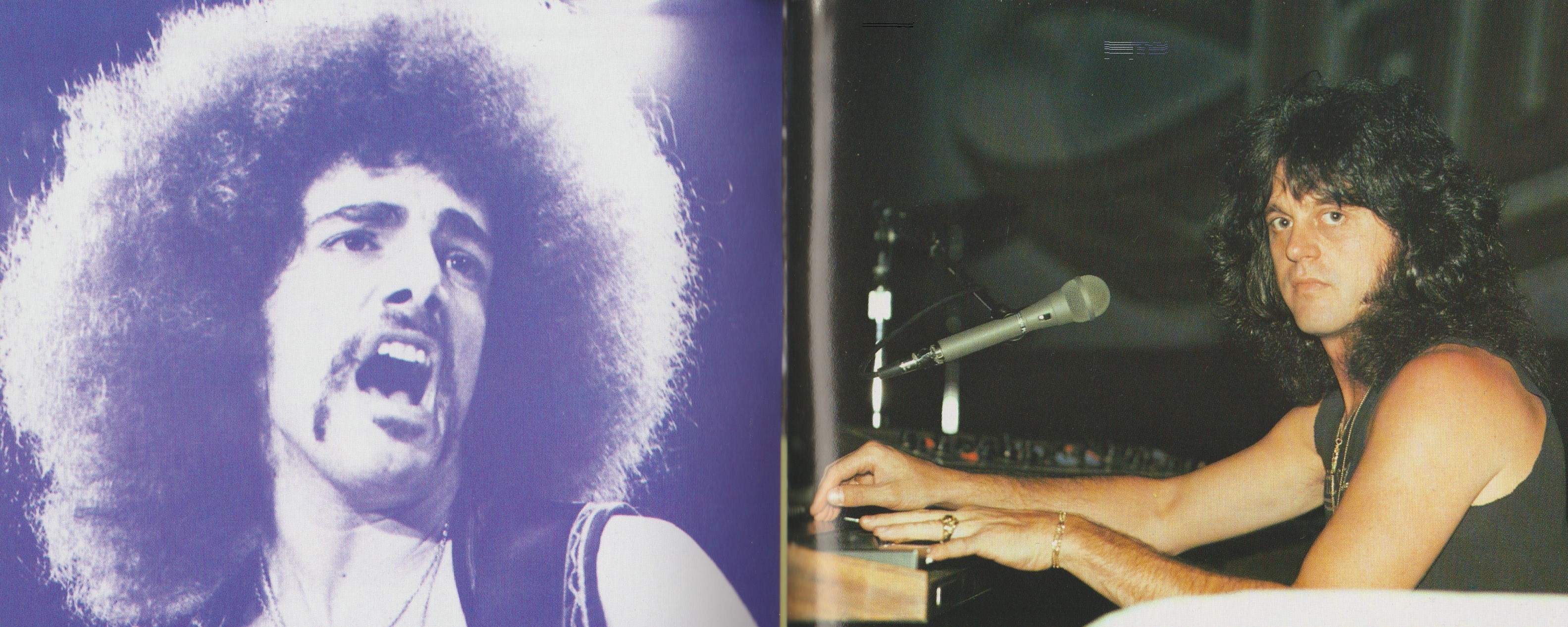
From start to bitter 80’s breakup, every Journey member from 1975 to 1986 is included.  George Tickner, Aynsley Dunbar, Robert Fleischman, Randy Jackson, Mike Baird and anybody else you may not have known were in Journey are represented in this box.  There are ample liner notes and photos explaining the roots and branches.  (Humorously the notes claim the early Journey instrumental “Nickel & Dime” may have been the prototype that Rush ripped off for “Tom Sawyer”.)  Valuable early rarities include the unreleased jazz rock number “Cookie Duster” and an excellent vocal track called “For You” recorded  with Robert Fleischman singing.  Fleischman might be best known as the original singer for Vinnie Vincent’s Invasion a decade later, but in Journey he turned in a pretty powerful pop rock song.  This was just before Steve Perry joined the band as its first full-time lead singer.  Keyboardist Gregg Rolie took care of the vocals before Perry joined, in addition to performing several smoking organ solos included herein.

There is a distinct change between the early progressive jam rock tracks and “For You”.  When they hired on a lead singer, it was with the intention to get a big break, and Steve Perry was the final ingredient.  With Perry they recorded brilliant classics such as “Patiently”, “Anytime” and the unforgettable “Wheel in the Sky”, which unfortunately is only included here as a live version.  Indeed, the Journey box set’s only weakness is a substitution of (non-rare) live versions for studio originals.  “Lights” is another such substitution.

Just as the band were making this prog-to-pop transition, drummer Aynsley Dunbar left.  His style was more progressive and frankly too highbrow for the direction Journey were going.  He was replaced by another total pro, the feel-oriented Steve Smith, a jazzbo at heart who can play R&B like nobody’s business.  “Too Late” from 1979’s Evolution is a perfect example of what he did to the Journey sound, as things simplified.

scan_20161015-4

With Smith behind the kit, the hits kept pouring in.  “Lovin’ Touchin’ Squeezin'” (also included live), “Any Way You Want It”, “Line of Fire” and many more burned up speakers across America.  The band very quickly went from “point A” to “point B”, but also with several exceptional looks backward.  Some of these lesser known gems include “Little Girl” from a rare Journey soundtrack album called Dream, After Dream done for the Japanese market.  There is also the live “Dixie Highway” from Captured that shows off some serious instrumental chops.  A rare highlight is the soulful and unreleased cover of “Good Times”, with full-on horn section, from 1978.  It’s one of the songs that make it worth buying a box set like this.

Rolie left after Dream, After Dream and did not appear on the one new Journey song on Captured:  “The Party’s Over (Hopelessly in Love)”.  This brilliant pop rocker pointed the way towards the next era of Journey.  From The Babys came new keyboardist (and sometimes guitarist and singer) Jonathan Cain.  Cain forever brought Journey into the 1980’s, with modern keyboard accompaniment and serious writing abilities.  He has since become an indisposable member of the band, as important as founding guitarist Neal Schon himself.  Jon Cain’s first was the Escape album, which has sold nine million copies to date.  Not a bad little debut.  With “Don’t Stop Believin'” , “Stone in Love” and the smash ballad “Open Arms”, Journey ascended to the top of the mountain.  These tracks are all included as their studio originals.

There are a number of notable and great rarities from this period included in Time3.  “Natural Thing” was the soul-laden B-side to “Don’t Stop Believin'”, but feast your ears upon “La Raza Del Sol”, which snuck out as the progressive flipside of “Still They Ride”.  This blazingly recalls the arrangements of the early years with an unusually contemoplative lyric.  Check out Schon’s flamenco guitar solo.  There is the understated and brilliant rocker “Only Solutions”, from the 1982 Tron soundtrack.  These are valuable songs, that any Journey fan should enjoy completely.  Moving forward, “All That Really Matters” is a synthy demo with Jon Cain on lead vocals.  It doesn’t sound like Journey, but Cain fans will find it interesting.  Two more soundtrack songs are indispensable:  “Only the Young” from Vision Quest, and “Ask the Lonely” from Two of a Kind (both 1983).  Each song was significant enough to include on 1988’s Greatest Hits, so fans are well acquainted with both.  It’s incredible to think that Journey had songs of this quality to give to soundtracks.

scan_20161015-5

Towards the end, as bands often do, Journey began falling apart.  Steve Perry had a hit solo debut Street Talk (1984) and he returned to Journey more confident, imposing a soul/R&B direction upon the band.  Steve Smith and founding bassist Ross Valory were out.  Randy Jackson and Mike Baird were in.  Raised on Radio took forever to record and underwhelmed fans upon reception.  A live version of “I’ll Be Alright Without You” with the new members indicates that Journey had sanded off the rough edges.

Even at the end, there were still interesting happenings.  The liner notes reveal that even as the band was ending, they were winning awards.  Journey performed at the 1987 Bay Area Music Awards with a different singer — Michael Bolton.  One has to wonder where that could have gone.  The last music on this set chronologically comes in the shape of two unreleased instrumentals called “With a Tear” and “Into Your Arms”.  They were recorded in 1986 but not used for Raised on Radio, and so they were finished in 1992 by Schon and Cain for this box set.  Sadly these instrumentals are better than most of the tracks on Raised on Radio.  One is a ballad, and one is a rocker, but both are exceptional.  Journey started life with instrumentals, and so it’s fitting that Schon and Cain polished off the box set with a couple as well.

scan_20161015

This box set was reissued a number of times, but for the money you can’t beat the original 1992 printing with the long box and large booklet.  The liner notes are ample but the rare photos may even top them.  From the earliest days there are pictures of the band with original guitarist George Tickner and drummer Prairie Prince.  Prince was invited to join permanently, but chose to join the Tubes instead, a band he found more creative.  He was replaced by Aynsley Dunbar who recorded the first LP.  Also pictured within are some truly impressive hair styles, clothes, and moustaches.

With tracks this strong from start to finish, great packaging, and such a wealth of rare material, it seems Time3 should be an easy 5/5 stars.  However, that niggling issue of live tracks (particularly “Wheel in the Sky”) replacing studio cuts is really devious.  It’s unnecessary.  It all but forces casual buyers to also own Greatest Hits for the studio versions.  It seems very calculated.

Otherwise, proceed.

4.5/5 stars
scan_20161015-3


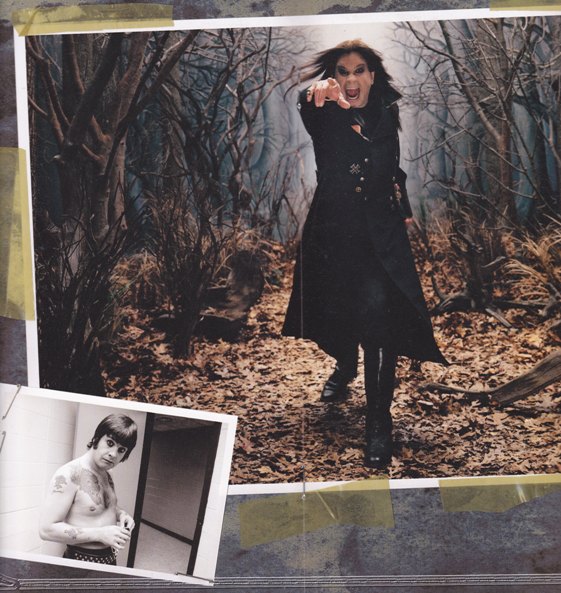
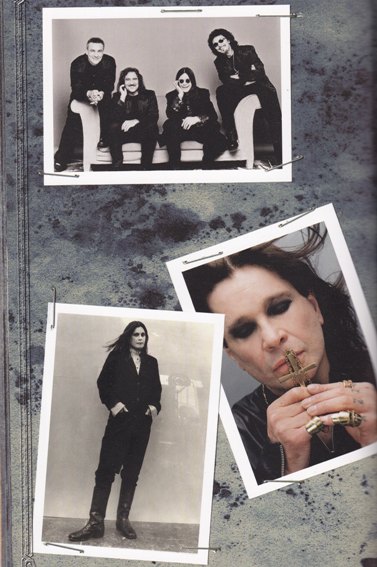
REVIEW: Ozzy Osbourne – Ozzmosis (1995, remastered)

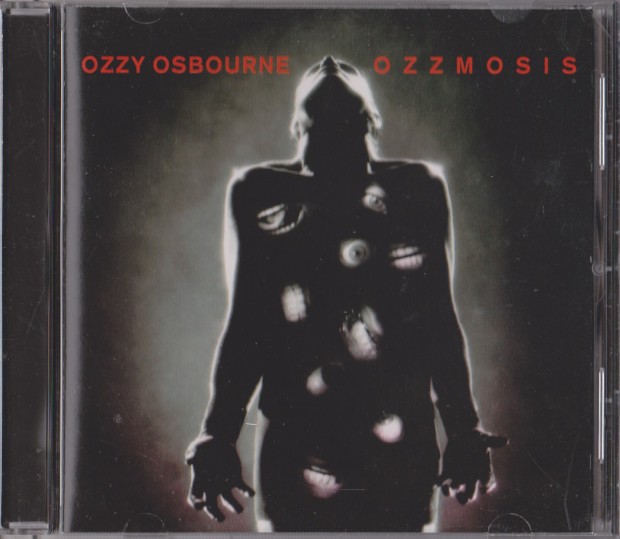
Scan_20160727OZZY OSBOURNE – Ozzmosis (1995, 2002 Sony remaster)

It is fair to say that Ozzy’s solo recording career post-No More Tears is not considered as classic as the music from before. Admittedly it was a confusing time. Ozzy finished his “No More Tours” tour while all the talk was about a Sabbath reunion that never happened. Retirement wasn’t in the cards, so Ozzy re-teamed with a few former members of his band: Zakk Wylde on guitar, and Geezer Butler on bass. Joining the band behind the drums was a pre-Journey Deen Castronovo. Ozzy sat down to write with a number of talents including Steve Vai, and eventually produced the “post retirement” album Ozzmosis.

Ozzmosis was considered by some fans to be inferior to No More Tears, although song for song, No More Tears isn’t as great as people seem to remember it.  Ozzmosis has a heavier, more bass-centric sound and certainly boasts at least four Ozzy classics in its grooves.  Osbourne has gone on record as preferring the demo versions of some songs better than the album tracks, but Ozzmosis boasts a hell of a heavy sound.

Ozzy was also struggling with his public image.  He didn’t want to be seen at the bat-biting madman anymore.  I suppose that’s why we see songs like “Perry Mason” on Ozzmosis.  Not a bad track, it was chosen as lead single.  But the subject matter?  Not sure why, but:

“Who can we get on this case?
We need Perry Mason,
Someone to put you in place,
Calling Perry Mason.”

Certainly a far cry lyrically from “Bark at the Moon”, but musically it’s still Ozzy prowling in the shadows, warning you of the dangers.  It’s delightful to hear Geezer’s trademark slinky bass all over it.  (I have often said that Ozzy’s best solo band, post-Randy, had Geezer and Zakk.)  Ozzy was sufering from some vocal issues at the time, but “Perry Mason” isn’t one of the songs you can tell this from.  Only Ozzy Osbourne & Co. could make a song about Perry Mason this cool.

“Perry Mason” would be one of the four album classics.  Also up there is “I Just Want You”, which he wrote with Canadian songsmith Jim Vallance.  Ozzy was rightfully proud of this heavy ballad.  Rick Wakeman provided keys, classy and absolutely perfect.  At times he’s playing synth parts that sound like mellotron, at others like a big fat Hammond organ (bigger than Orlando Bloom’s wang).  At all times, it is awesome.  Zakk Wylde plays an effects-laden solo that sounds underwater, but in a good way.  It’s haunting and not robbed of its power.  He utilises this “watery” sound on a number of tracks on Ozzmosis.

Standing with these songs is “See You on the Other Side”, another fab ballad from the dark side.  Ozzy’s preferred demo version (with sax solo) can be found on his Prince of Darkness box set.  There’s nothing wrong with this version though, haunting as it is.   It was written by Ozzy, Zakk, and Lemmy Kilmister, who helped Ozzy out with the words.

The fourth and final classic is the album closer, “Old L.A. Tonight”.  As one of Ozzy’s piano ballads, it has been largely forgotten over the years.  The piano and Zakk’s very emotive playing only amplify what Ozzy’s singing.  Zakk’s solo is one of his finest.  Why some things become hits and not others, I don’t always understand.  “Old L.A. Tonight” is superior in almost every way to a track like “Mama I’m Coming Home”, or “So Tired”.   This is one of the tracks that does reveal cracks in the Ozzman’s voice, as he reaches for very high notes and quavers.  I can’t hit the notes he’s hitting, though.

You’ll notice that of the four album classics, three are ballads, and that’s a problem.  Yes, even as far back as “Changes” or “Planet Caravan”, Ozzy has been a master of the art of the heavy ballad.  His core audience tends to buy albums for his heavy metal songs, and the heavy material on Ozzmosis is lacking.  Few of those songs really congeal into something solidly memorable.  The album sounds heavy on effects, and while that strategy worked on the four classics, it tends to choke and strangle the other songs, inhibiting Ozzy’s voice with a nasal muffler.  It’s surprising how much time he spends singing higher than what sounds comfortable, and that too is a weakness.

Sony tacked on two bonus tracks for this 2002 reissue — a rip off, and I’ll explain why.  The album includes two B-sides:  “The Whole World’s Falling Down” and “Aimee”.  (That makes two songs about Ozzy’s kids on this CD, including “My Little Man” about Jack.)   There were however four B-sides released for this album, and two are not included for no good reason.  Missing are “Living With the Enemy” and “Voodoo Dancer”, but fear not.  None of Ozzy’s B-sides this time out were really keepers.  “Aimee” isn’t bad, but Ozzy has done much better stuff for his B-sides in the past.  Songs like “You Said It All”, “Don’t Blame Me”, and “Liar”.

Zakk Wylde didn’t do the tour for this album, even though he co-wrote and played on it.  Zakk seemed to be trying to establish himself separate from Ozzy at the time, and so Ozzy toured with Joe Holmes who had finished up a stint with David Lee Roth.  (Though Ozzy stuck with Holmes for five years, I never thought he sounded right playing the Ozzy or Sabbath material.)  After a brief leg, Ozzy fired Deen Castronovo and re-hired his previous drummer Randy Castillo.  Ozzy made a backhanded statement about Castronovo being a talented session drummer, and that’s what he should continue to do.  Ouch.

It’s a mixed bag, but when you hit a gem in the grooves of Ozzmosis, it is worth the price of purchase. Shame about the stinky cover art.

3.25/5 stars

REVIEW: Judas Priest – Greatest Hits (2008 Sony Steel Box)


Welcome back to GREATEST HITS WEEK! This week we are looking at different, interesting hits albums from various bands. Today we re- visit the Mighty Priest, for the second of a Priest double-shot!

Monday:  EXTREME – The Best of Extreme: An Accidental Collication of Atoms? (1997)
Tuesday: JUDAS PRIEST – The Best of Judas Priest (1978/2000 Insight Series)


JUDAS PRIEST – Greatest Hits (2008 Sony/BMG Steel Box Collection)

Ever buy a CD for no real good reason?  I have all these songs, because I already own every song Priest has ever released.  I saw this Judas Priest compilation, from the “Sony Steel Box” collection, at my local Best Buy for a few measly dollars.  There are a few artists who have hits albums in this collection, such as Aerosmith.  I just wanted one of the steel boxes, so I chose Priest.  I chose Priest because of the brief, but interesting track listing.  There are some odd choices for a greatest hits disc:  “Rock Hard Ride Free”, and “Rock You All Around the World”, for example, instead of “Heading Out to the Highway”, “A Touch of Evil”, “Painkiller”,  or other better know singles.  Hell, where’s “You’ve Got Another Thing Comin'” or any song from Screaming?  You do get two “new” songs from Angel of Retribution.  Needless to say, for a 10-track hits CD, it was an interesting selection of songs, so I chose this one.  I have only played it once, so it’s time to revisit and assign a rating.

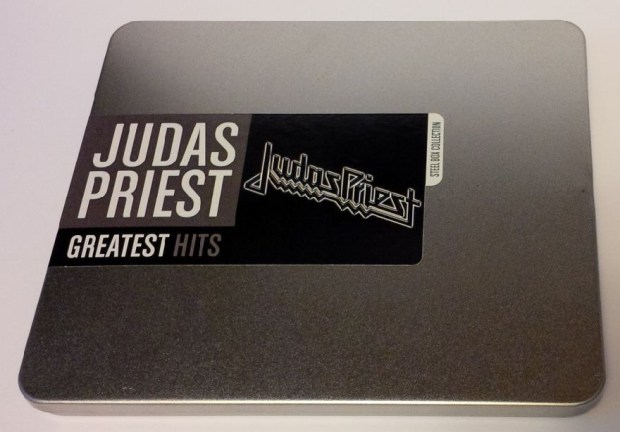
This is where we run into the flaw with these Sony steel boxes — the front cover and back cover art is just a sticker, that wraps around the case.  When you open the case, it damages the sticker where it covers the hinge, digging huge creases all over the spine.  I’ve opened my copy a couple of times and see what it looks like already?  That’s me being careful.

IMG_20150809_081711

“Breaking the Law” has always worked well in the opening position.  Off with a bang (literally; the first sound is a snare drum), we are now off to the races.  This Greatest Hits concentrates almost entirely on material from British Steel and after, collecting a lot of Priest music from their simple, straightforward metal period of the 1980’s.  There is nothing wrong with that of course, but it lacks the balance that earlier more complex tracks like “Victim of Changes” would have brought to the table.  “Breaking the Law” and “Living After Midnight”, both classics culled from British Steel, get the job done on a hit laden note.  The sound is fine, as it appears these were lifted from the Priest remasters.

I’m not sure the logic in choosing “Out of the Cold”, a synth-laden slow crawler from Turbo.  There is nothing wrong with it of course, it was and remains a stormy fan classic.  That’s just it though, it’s a fan classic, not a well known hit that the band play in concert.  On a 10 song CD, it seems an odd choice, but it leads well into the dark “Love Bites”.  I went through a period of about three days in grade 8 of being completely obsessed with this song.  The things I liked about it, such as the choppy rhythms and hypnotic vocals, are still striking today.  It also flows perfectly into “Rock You All Around the World”, which unfortunately is pretty much just filler that should have been donated to the Scorpions.

I still think it terms of albums having “sides”, and I wonder if whoever sequenced this CD had the same thought?  “Rock You All Around the World” is a great side closer, as it filled that slot on Turbo.  Then the next track is the very different “Diamonds and Rust” (live version from Unleashed in the East).  It’s as if you have started a new side.  Another track from Defenders of the Faith (“Rock Hard Ride Free”) brings the listener back to the 80’s.  Although it was not a single, it was good enough to be one.  Back to the Turbo album for the third time, “Turbo Lover” is a song that still gets occasional radio airplay.  It’s funny how this robotic and very dated song is still loved today.  I wouldn’t have predicted that.
“Turbo Lover” is the last of the golden oldies, since the last two tracks are off Angel of Retribution, Priest’s glorious reunion album with Rob Halford after a long solo career.  Strange though that the single “Revolution” is not one of these tracks.  “Deal With the Devil” was an OK tune, a good heavy album tune that was of the same quality as similar songs from Painkiller.  “Worth Fighting For” was excellent – a midtempo quiet rocker that almost borders on ballad territory.  This song was a triumph, a really excellent song worth of the Priest canon.  Unfortunately in this case, a quiet midtempo near-ballad does not work to close a Priest compilation.  It works as a song to build into another song, but here it just leaves you hanging.  Sloppy sequencing.

Rating the steel book CD is not a reflection on the songs or the band, just the CD itself.  There are too many serious omissions (“Metal Gods:, “Freewheel Burning”, hello!) for it to rate highly.  The flawed packaging design is the final nail in the steel box.

2/5 stars

JUDAS PRIEST GREATEST HITS 2008Thanks to Geoff over at the 1001 Albums in 10 Years for the “Excel”lent inspiration!


REVIEW: Ozzy Osbourne – Prince of Darkness (2005 Sony box set)

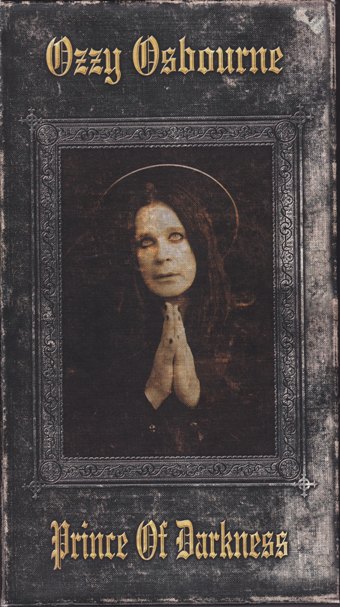
PRINCE OF DARKNESS_0001OZZY OSBOURNE – Prince of Darkness (2005 Sony)

Let’s pretend that you’re involved with Ozzy Osbourne’s management or record label.  When it comes time to release that first “definitive” box set, I’m sure you’d have your own ideas for making it the best box that Ozzy could release.  Ozzy Osbourne in 2005 had eight mostly great studio albums, numerous live records, and more rarities than you could shake a stick at.  They certainly had a lot of music to choose from.  I greeted the eventual release of Prince of Darkness with great excitement at these rarities…but tremendous disappointment at the overall listening experience.

A 4-CD box set is a lot of listening and in order to keep it riveting from end to end, you have to pick the right tracks and sequence them for maximum firepower.  Somebody at Sony’s box set department didn’t get my memos on that, obviously, because Prince of Darkness is one of the most annoying box sets to listen to in its entirety.   They decided to do two discs “anthology” style, with live and rare tracks mixed in.  The third disc is a questionable collection of Ozzy collaborations.  The final CD is the worst of all:  covers that Ozzy recorded and later released on their own album, Under Cover!  A CD that was released only months after Prince of Darkness itself — with additional bonus tracks to milk it further, forcing the completist to buy it again!

PRINCE OF DARKNESS_0004I have so many complaints about this set that I felt it best to list them all off in point form.

1. Never, ever start your box set off with a live track.  Even if that live track is “I Don’t Know” from Randy Rhoads Tribute.

2. Because this set was released in 2005, you are hearing the re-recorded bass and drums on all the songs from Blizzard and Diary…not the classic original versions.

3. Same with the tunes from Bark at the Moon.  These are the remixed versions found on the 2002 reissue of that album.  There are only two songs from that album anyway.  “Bark” itself is an unreleased live version.

4. Two CDs is not enough space to represent Ozzy’s album output in a box set, especially when you include the studio albums, live albums and rare tracks too.  The early Randy Rhoads material makes up the bulk of disc one, leaving the Jake E. Lee years under represented.  There are no songs from The Ultimate Sin at all, only the three live tracks originally for the Ultimate Live Ozzy EP.

5.  There are a few baffling exclusions, such as “Miracle Man” (first single with Zakk) and “I Just Want You”, in favour of also-rans such as “Spiders”.

6. The collaborations disc is a total mess.  “Purple Haze” is just a Hendrix cover from the No Rest For the Wicked era, by Ozzy’s band.  It’s not a collaboration, just a cover they did for the Make A Difference Foundation CD called Stairway To Heaven/Highway To Hell.  It’s a real challenge to listen to this whole CD in one sitting.  One moment you’re rocking out to a killer version of “N.I.B.” with Primus, the next you’re barfing through a piece of crap with Tony Iommi and Wu-Tang Clan.  From Was Not Was to Miss Piggy, at least the CD is diverse, and it does collect a lot of Ozzy’s singing from albums I don’t have.  I already had the Miss Piggy track but not the cover of “Stayin’ Alive” by Dweezil Zappa! Nor did I have “I Ain’t No Nice Guy” by Motörhead, from the mediocre March ör Die.  This disc is too jokey and not at all consistent.

PRINCE OF DARKNESS_0005

7. Even though the third disc collects a variety of tracks from a number of CDs, I am certain that Ozzy fans who buy this kind of box set already had some of them.  Including “Psycho Man” by Black Sabbath (not even a single remix version) from the Reunion CD (2008) is odd.  Many Ozzy and Sabbath collectors already have the Nativity in Black CDs, where the Primus and Therapy? tracks come from.

8. “Nowhere to Run (Vapor Trail)” by DMX, Ozzy Osbourne, Ol’ Dirty Bastard, The Crystal Method and Fuzzbubble is edited!  This track was from the South Park album and still features Isaac Hayes’ introduction, as “Chef”.  For reasons I cannot explain at all, the swearing and “n” words are blanked, and there were a lot of them.   It’s also missing ODB’s rant at the end, which itself was edited off later versions of the South Park CD.  (I have an earlier version with the rant intact.)

9. The packaging leaves a hell of a lot to be desired.  Inside the box which is just book-style, you will find a nice big booklet that just sits loose inside.  There is no way to secure it in, so it’ll fall out any time you pick it up!

10. Speaking of that booklet, the liner notes suck.  Ozzy has a brief note about each song, but not necessarily any useful information.  For example, regarding that South Park track, all we’re told is that Ozzy bit the head off Kenny.  Nothing about how that random assortment of artists was assembled.  The book is padded out with lyrics and shoddy credits that aren’t very accurate.  “Bark at the Moon” live for example was recorded in 1982-1983 according to the notes.  Come on, guys!  Not good enough for a box set.

11.  The entire fouth CD sucks.  You can read my review of the expanded Under Cover version of it here.  (Long story short: 1/5 stars.)  The only difference is that the box set includes Kelly Osbourne’s duet with daddy, on “Changes”.  This song was only included on the Japanese version of Under Cover but not the regular domestic.

Fortunately, Prince of Darkness is not a total bust.  Some of the unreleased tracks are real treasures, such as the demo of “S.I.N.” called “Won’t Be Coming Home”.  I prefer this to the album version from No More Tears by a long shot, as I do the twangier “I Don’t Want to Change the World”.  I also love the demo for the emotional ballad “See You On the Other Side”, which features previously unheard saxophone accompaniment.  I appreciated that they included the live version of “Perry Mason” from the Ozzfest 1 CD, which enabled me to sell off that pretty crappy album.

It’s easy to bitch and complain (don’t I know it?) but if I were to make a 4 CD Ozzy box from the same period, I would have done it very differently.  The covers CD would be axed completely and the rarities set aside to a disc all their own.  The first two “anthology” discs would be strictly studio versions, and original studio versions at that, with only a sprinkle of tracks from Randy Rhoads Tribute.  I would try to squeeze in more rare tracks from B-sides and EPs, and I would definitely try to mix them in with the collaborations so that you’re not left listening to so many of those novelty tunes in a row.

Buyer beware — Prince of Darkness is not the feast you were hoping for. This is a poorly executed package. When you have an artist like Ozzy Osbourne, you really gotta screw up bad to put out a set that is this hard to listen to. Prince of Darkness is going back on the shelf, for a good long while.

2/5 stars