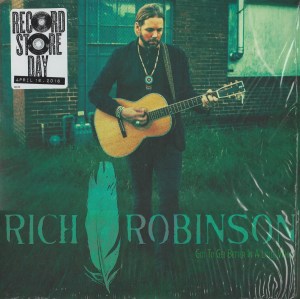
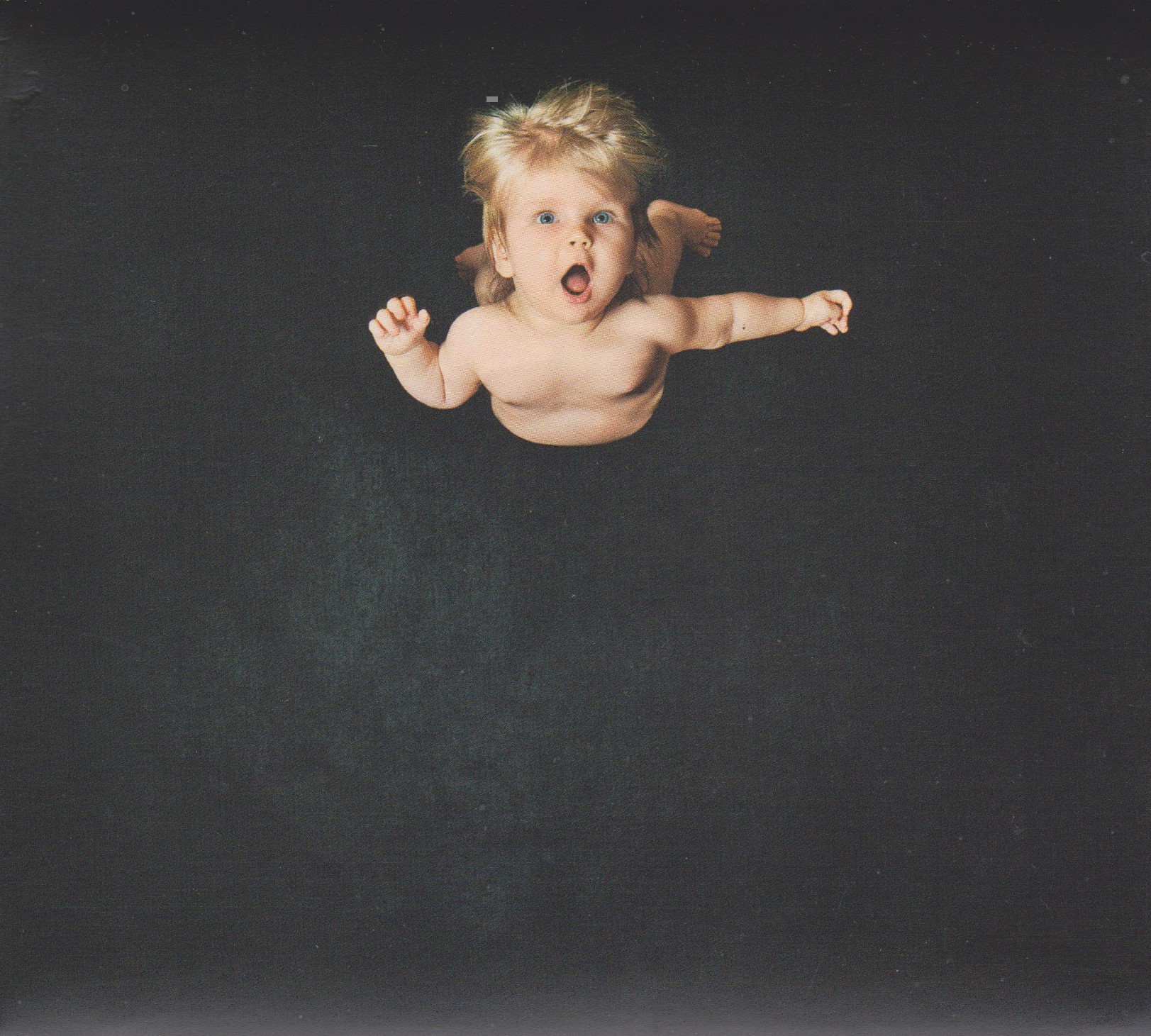
RICH ROBINSON – Got to Get Better in a Little While (2016 Universal 10″ clear single for Record Store Day)
This really pretty record (a single or an EP, who cares?) was found on the Taranna 2016 expedition with Mr. Books. It’s apparently a Record Store Day exclusive from April 2016, although I had no problem getting this one for $16.99 in October. This my first purchase of anything by Rich without his brother Chris. Knowing the Black Crowes, I was fairly certain it wouldn’t suck. I was still surprise to see on the back, an ad for not one not two not three but FOUR Rich Robinson “Expanded Editions” on CD and LP! Who knew? Not this guy!
“Got to Get Better in a Little While” is a Derek and the Dominoes cover, apparently one that Crowes used to do regularly, as does Rich. You have to hear this if you like bluesy rock that produces pure smoke from sheer musical chemistry. Yes, Clapton is God and the original can’t be touched, but a real jackass could easily make this song sound like shit. Rich does the opposite, and it sounds as part of his musical being. There’s some deep bass that just cuts through, and this goes on for eight and a half minutes of jam session heaven. Just bop along.
The second side has two Rich originals. Greasy late night blues is on the menu. “Look Through My Window” sets a scene of steamy Tennessee dusk. Brilliant stuff for any fan of slippery slidey guitars. Then an acoustic/electric tune called “Falling Away” closes on a first light of a quiet dawn. Great tunes, both, making up a tidy little 16 minute EP. Or single. Whatever!
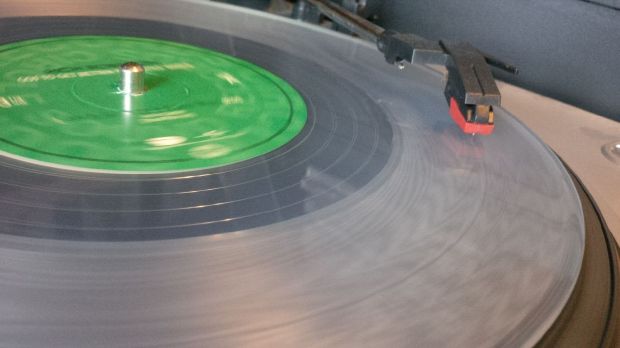
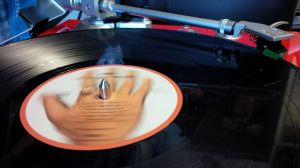
The vinyl itself is clear and thick. The package doesn’t say anything about clear vinyl, but you almost expect clear or coloured when you buy these limited editions. It looks lovely spinning with its green label. Great little EP, reasonably priced for the collector and fan.
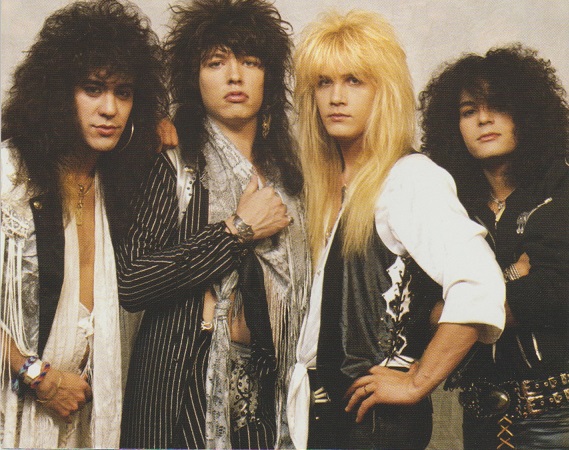
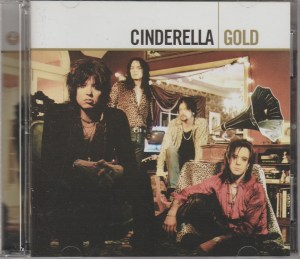
When a band like Cinderella, who only have four studio albums, get a double CD “best of” compilation, it had better be good. Fortunately Cinderella’s edition of the Gold series offers value for the money and unreleased live tracks to boot.
All the Cinderella albums are represented, including the criminally underrated Still Climbing album from 1994. Cinderella did not “go grunge” as so many others did. As “Bad Attitude Shuffle” indicates, they simply doubled down on their own brand of bluesy hard rock with bite. From the same album, “Free Wheelin'” and “Talk is Cheap” both show fearless commitment to the genre. Then the ballad “Through the Rain” also from Still Climbing provides the balance. Cinderella have successfully employed ballads since day one, because they happen to be quite good at them.
Among their greatest ballads: “Don’t Know What You Got (‘Til It’s Gone)”, “Heartbreak Station”, “Coming Home”, “Wind of Change”, and “Nobody’s Fool”. Each one of these tracks is worthy to be on this compilation. Some of their slower material either bordered on blues, or were just flat-out blues songs. Some are here: “Long Cold Winter”, “Dead Man’s Road”, and “Sick For the Cure”. Then there is the soulful “Shelter Me” that is harder to categorize. But of course Cinderella are best known as a hard rock band, and most of the material falls into that vast category. Many of these tunes are truly awesome. “Shake Me” was first to gain attention, with some noting similarities to AC/DC. “Hot and Bothered”, originally from the Wayne’s World soundtrack, combines the blues and rock in a tasty confection. “Second Wind” from Long Cold Winter kicks ass, and “Gypsy Road” is here too, albeit in live form.
The live tracks are all credited to a Japanese promo CD called Last Train to Heartbreak Station, which appears to be a completely different thing from their Japanese EP called Live Train to Heartbreak Station. Rarities are always welcome on a compilation, but one has to wish that the great single “Gypsy Road” was also included in its studio version. It’s a good enough tune that it wouldn’t be a crime to have two versions on the same CD.
Because of their feminine name and some really bad wardrobe choices, Cinderella was written off by many people without hearing any of their rocking material. While that is a real shame, Cinderella hasn’t made a new album in 23 years so this would be a good one-stop-shop to get much of their best material. Augment this baby with a copy of their classic Long Cold Winter CD and you will have enough Cinderella to have a good representation of their best stuff.
DIO – The Last in Line (originally 1984, 2010 Universal deluxe edition)
Ronnie James Dio used to consider the second albums he did as inferior to the first ones. Second Rainbow wasn’t as good as the first; same with the second Sabbath, according to Ronnie. Is that also true for The Last in Line compared to the legendary Holy Diver?
Comparing the two is much like splitting hairs. The two albums are so close in style and quality that it really doesn’t even matter.
A better opener than “We Rock” is hard to find. The blitz of drums and riff was custom made for bangin’ on the stage. It’s unusual to hear a song where the drums are a major hook, but Vinny Appice has a way of doing just that. He gives you the urge to air-drum every time he throws down a fill.
Dio had an interesting pattern for his albums in the early days, up to Dream Evil (1987). The albums always began with something fast. In the song two position: always the title track! (The title track of each album always had a few lines of lyrics printed in the album sleeve too!) And so it is with “The Last in Line”. The soft and ballad-y opening lures one into that “safe place”…before Dio lets it loose. One of his best and most memorable music videos went with “The Last in Line”, absolutely one of the legendary man’s most notable songs. Its reputation is well earned, as all the pieces are in the right and you never get tired of hearing it.
We’ll know for the first time, if we’re evil or divine, we’re the last in line!
With the first two tracks being so legendary to Dio fandom, it’s easy to understand how the next batch often get lost in the shuffle. “Breathless” lacks for nothing. Vivian Campbell’s solo spot is blazing stuff, and the song is memorable enough for head banging. Accelerating into “I Speed at Night”, hooks are sacrificed for tempo. It’s quintessential 80s heavy metal when speed was such an important thing. Not a bad tune, but one with only a single purpose — banging thine head.
“One Night in the City” takes the time to allow the hooks to percolate through. Vinny and bassist Jimmy Bain lock into a mid-paced groove while Ronnie lays down one of his typically emotive melodies. Though it simmers on a back burner, “One Night in the City” is hot just the same. “Evil Eyes” is also a high quality tune, and if it’s familiar that might be because an earlier version was a B-side, included on the Holy Diver deluxe edition. Naturally, the album version is more polished, but as for which is better, that’s up to the listener. Then there is “Mystery”, arguably Dio’s most “pop” single. Not such a bad thing, after all Ronnie James Dio also did right by “Love is All” from the Butterfly Ball.
We are lightning, we are flame, and we burn at the touch of a spark.
“Eat Your Heart Out” is the only stumble, but it’s soon paid back with “Egypt (The Chains are On)”, a Dio epic in true metal fashion. Who doesn’t love a good plodding metal epic about Egyptian legends? It’s a second or third tier metal motif! Ronnie brings his own metal melodrama to the fore.
The Last in Line is already a great album, certainly up to the quality of Holy Diver with equally memorable material. This carries over to the bonus CD included in the deluxe edition. Four single B-sides from the era are included. They are live versions of “Eat Your Heart Out”, with “Don’t Talk to Strangers”, “Holy Diver” and “Rainbow in the Dark” (all originally from Holy Diver). The only two B-sides missing are “Stand Up and Shout” and “Straight Through the Heart” live at Donington 1983, from “The Last in Line” 12″ single. These tracks however can be found on the 2010 CD release, At Donington UK: Live 1983 & 1987 .
Finally we have Dio’s entire set from the 1984 Pink Pop festival. Naturally there is some overlap with the previous live tracks: “Holy Diver”, “Rainbow in the Dark” and “Don’t Talk to Strangers”. This is offset by a smattering of Rainbow and Black Sabbath classics: “Stargazer”, “Man on the Silver Mountain” and “Heaven and Hell”. The audio is quite good and Jimmy Bain’s bass has a nice full thump to it. The Last in Line is one deluxe you’ll want to add to your collection
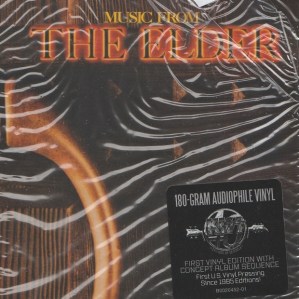
– Music From the Elder (1981 Casablanca, 1997 Mercury remaster, 2014 Universal vinyl)
Kiss had gone as far as they could go in the pop direction that they travelled on Unmasked. The band’s stature was in jeopardy. The image was outweighing the music and they suffered their first member defection. As discussed in chapter 18, Peter Criss was out, but he was replaced by an energetic young drummer henceforth known as Eric Carr. His abilities put sounds in reach that the band weren’t able to do with Peter Criss. The smartest move, albeit the safest, would be a return to the band’s hard rocking roots. Songs were written and demoed, including “Don’t Run” (Frehley/Anton Fig), “Every Little Bit of My Heart” (Stanley), “Deadly Weapons” (Stanley/Simmons), “Nowhere to Run” (Stanley), “Feel Like Heaven” (Simmons) and an instrumental called “Kix Are For Kids”.
Based on what we know of these songs today, Kiss easily could have turned them into a classic sounding album. Whether it be ego, fear, ambition or sheer hubris, Kiss scrapped the demos and aimed instead to shoot in another direction. That is, Paul Stanley, Gene Simmons and manager Bill Aucoin changed direction at the protest of Ace Frehley. Eric Carr had no say, being an employee. Playing on the strengths of Kiss’ larger than life comic book image, Gene concocted a fantasy story that they wanted to turn into a concept album. If that was successful, they could spin the album off into sequels, a tour and a movie. And who else would be better to produce a concept album than Bob Ezrin?
The addition of Ezrin was another grievance for Ace Frehley. It was Bob Ezrin who replaced him on 1976’s Destroyer album with Dick Wagner on “Sweet Pain”.
So a fractured Kiss went into separate studios to record the concept album. Ace stayed in his new home studio in Connecticut and recorded his guitar parts there, painstakingly taking his time to get just the right crunch. Much to his chagrin, Bob Ezrin used only bits and pieces of what he was sent. Bob was dealing with a severe drug problem, and had isolated himself so that the only lines of communication regarding the album were Kiss and Bill Aucoin. Nobody outside of the circle heard a note until they were done. There was talk of a double album, but it made sense to do it one at a time…just in case it didn’t sell. Hence the title, Music From the Elder. Like Star Wars, this was meant to be only a part of the whole story.
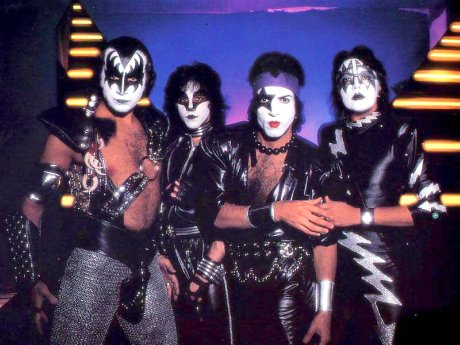
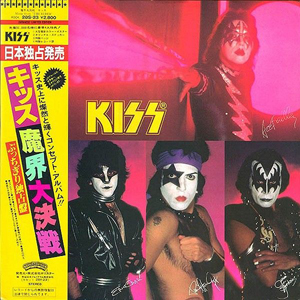
A word about the running order. When Music From the Elder was first released in North America, the story didn’t make much sense. It was supposed to begin with the instrumental “fanfare” and then the acoustic strumming of “Just a Boy”. Instead the record company shuffled the song order to start with something heavier: “The Oath”. But the concept never made any sense. In 1997, Mercury released the Kiss remastered series, and restored the original intended track order. They even restored a snippet of “lost” music, a Gregorian chant bit between the first two tracks. The original Japanese pressing came with the tracks in the right order, but was missing one overall (“Escape From the Island”). The Japanese version also came with a neat full cover obi with pictures of the band — something fans missed out on with the normal release. (When fans did finally see pictures of the 1981 Kiss, they were taken aback by the modern hair and image.) The current 2014 LP edition on 180 gram vinyl also has the restored track order.
The album begins quietly (and pretentiously) with strings and woodwinds of “fanfare“, credited to Ezrin and Stanley, and based on the melody of second track “Just a Boy”. “Who steers the ship through the stormy seas? If hope is lost then so are we. While some eyes search for one to guide us, some are staring at me.” The Elder is the tale of a reluctant hero known only as “the boy”. He is the archetypal “chosen one” selected by the mysterious and powerful Council of the Elder. “When the Earth was young, they were already old,” reads the liner notes. He must face the evil Blackwell, but he can’t believe there is anything special about him.
Although “Just a Boy” is a deep cut loved only by those with Kiss infecting their blood, you can hear its charm. It sounds nothing at all like Kiss, and its soft acoustics don’t even sound like a rock band. Paul sings the chorus in an insane falsetto, which he also utilizes elsewhere on the album. The powerful guitar solo is all his, and one struggles to hear Ace Frehley on the track at all. “Just a Boy” is a good song, with structure and dynamics and thoughtful composition. It isn’t something that could be performed well on stage, and the production leaves a muddy haze over the lead vocals. It’s hard to hear 50% of Paul’s lyrics. Fortunately, the 2014 vinyl reissue comes with something the 1997 CD did not: a lyric sheet. With that in hand, you can follow the story.
In fact, it must be recommended to listen to The Elder on vinyl at least once to fully appreciate the album. Something about sitting there with a gatefold jacket open and following a story on a record sleeve works as a sort of time machine. It’s truly an experience that you cannot feel with CD alone, and the only way to do that with the songs in the proper order is with the 2014 vinyl reissue.
Kiss have thrown obscure covers on their albums before, but it’s strange to see such a thing on a concept album. “Odyssey” by Tony Powers fit the story at this moment, although nothing could sound less like Kiss. It is a fully orchestrated song and it doesn’t even have Eric Carr on it. Ezrin didn’t think he was getting the right vibe so he brought in Allan Schwartzberg who also played on Gene’s solo album. “Odyssey” is as overblown and pretentious as a song can get, as if Kiss suddenly became the Beatles and this was their “Hey Jude” moment. This many soft, un-Kiss like songs right off the bat is a good way to throw listeners, so the record label ended up moving it to side two. Paul Stanley has disowned the song, but what Paul failed to appreciate is that though campy, “Odyssey” is also incredibly fun. It has no place in the Kiss canon, but there it is, and it’s hard to forget that delightfully pompous orchestra.
The first appearance of the mighty demon Gene Simmons is “Only You”, a choppy and spare guitar number that is the first rock moment on the album. It’s an attempt to be progressive and rock, and it more or less works. It’s simple and blocky, but it shifts into a few different sections including a reprise of the “Just a Boy” theme. Paul also guests on a verse as the boy character, questioning his destiny: “I can’t believe this is true, why do I listen to you? And if I am all that you say, why am I still so afraid?” The Elder respond, “In every age, in every time, a hero is born as if by a grand design.” In an interesting twist, Doro Pesche later covered this song with completely different lyrics.
According to their self-written Kisstory (volume 1) tome, Eric Carr expressed some doubt as to the band’s current direction. In response Gene challenged him to come up with something of his own, so Eric provided the beginnings of “Under the Rose”, on which he also plays acoustic guitar. “Under the Rose” became his first writing credit on a Kiss album, with Gene Simmons. “Under the Rose” is soft/heavy, soft/heavy, and features an ominous choir on the chorus. But through this, Ace Frehley’s presence cannot be felt. Such an important part of the Kiss sound before, now relegated to the sidelines. Ace had only one lead vocal on The Elder, a song based on a riff written by Anton Fig. Their “Don’t Run” demo was re-written by Gene Simmons and Lou Reed, yes Lou Reed, to become “Dark Light”. In context of the story, “Dark Light” warns of coming evil. Ace’s presence is welcome, providing some much needed rock foundation and a brilliant guitar solo. Unfortunately “Dark Light” is probably his weakest in his Kiss career, a disappointing followup to prior classics like “Talk to Me”, “Save Your Love” and “Shock Me”.
Lou Reed co-wrote the lyrics to the single “A World Without Heroes”, which originated as a Paul Stanley ballad called “Every Little Bit of My Heart”. Reed came up with phrases like “a world without heroes is like a world without sun.” These clicked with Gene and Bob Ezrin who completed the song. Paul plays lead guitar on a somber single that, again, sounds little like Kiss. Kiss had done ballads before and even had hits with them, but nothing like “A World Without Heroes”, one of their darkest songs. Strangely, it ended up being covered by Cher.
At this point of the story, the boy agrees to fulfill his destiny and become the hero. This happens on the most heavy metal song on the album, “The Oath”. This is the track that opened the original released running order of the album, completely destroying any comprehensible plot. You can still understand why they did this. Its metal riff and impressive drums are the intro that the album really needed. Paul sings in falsetto again: “Now inside the fire of the ancient burns, a boy goes in and suddenly a man returns.” The song was performed live once in 1982 on a TV show called Fridays. Although the performance seemed sloppy and awkward, Ace burned up a couple wild guitar solos. If this is the kind of material that Bob Ezrin cut from the album, it was a big mistake.
So the boy has taken the oath, and it’s time to meet the evil one. Gene and Lou Reed wrote “Mr. Blackwell” about the character, who doesn’t seem to be too worried about the discovery of the chosen one. “Here’s to the kid, a real man among men,” mocks Blackwell in the lyrics. (The song also contains the phrase “rotten to the core”, which was a song title Gene had been batting around since the mid-70s.) Musically, “Blackwell” is spare and revolves around the words. A bumping and thumping bass is the main feature of a song that is more words than music.
At the exact moment that you need Ace Frehley to come back and save the album, he does with the instrumental “Escape from the Island”. Co-written with Eric Carr and Bob Ezrin, “Island” delivers the thrills and action-packed guitar action. Because it’s an instrumental it’s hard to determine exactly how it fits the story, except it sounds like an action scene. Perhaps Blackwell launched a preemptive strike on the boy, who escaped. Ace’s guitar attacks the surroundings, chopping them down with fatally loud riffs.
The final song (on all versions of the album) is the single “I”. Gene and Paul split lead vocals on this Simmons/Ezrin song, but once again Eric Carr was secretly replaced on the recording by Allan Schwartzberg. The story is wrapped up with the boy now proclaiming he believes in himself and is ready to take on the evil. The end of the album, yes, but clearly intended as only the first chapter of something bigger. Gene spoke of a heavier sequel album called War of the Gods which would depict the conflict. Instead, “I” serves as the ending, and at least it’s a kicker. Like vintage Kiss, the riff and chorus meld into one fist of rock. The lyrics are suitably uplifting. “I believe in something more than you can understand, yes I believe in me!” That’s pure Kiss in a nutshell right there.
A short hidden track following “I” provides the only dialogue on the album (over a reprise of “fanfare“), although more was recorded. The hidden coda reaffirms that the Elder have found the right kid. “He’s got the light in his eyes, and the look of a champion. A real champion!”
There are two ways to listen to The Elder. If you want the whole enchilada and would like to hear the story in its correct order, pick up a remastered edition of the album either on CD or vinyl. If you’d like a more even listening experience that is the same as that of fans who dropped the needle on the album in 1981, then go for the original CD or vinyl release. But if you’re a Kiss maniac, you simply must do it both ways.
Music From the Elder is a flawed album, mostly marred by sonic muddiness. It has an uncharacteristic quantity of ballads and un-Kiss-like songs, so fans stayed away in droves. What they missed was a decent concept album for Kiss, a band that never should have attempted a concept album in the first place. Because the album failed to sell, Kiss’ ambitious tour plans were scrapped and the band stayed home. Aside from the three songs played on the Fridays TV show (“The Oath”, “A World Without Heroes” and “I”), Kiss never played any songs from The Elder live until their 1995 acoustic Konvention tour. The lack of a tour meant Kiss’ momentum was all but halted. The new drummer that fans barely knew only ever played one show in North America!
A bigger problem was brewing, and that was a bitter and disenfranchised Ace Frehley. Once again, fans were not aware of the problems brewing in Kiss, but The Elder was the last album Kiss Ace played on until 1998. It was a repeat of the Peter Criss situation only two years prior.
If Kiss had stuck to their plan of recording a hard rock album again, perhaps things would have played out completely differently. We’ll have a chance to check out some of the songs they were working on in upcoming chapters for they would not stay buried long.
Today’s rating:
3.5/5 stars
Uncle Meat’s rating:
2/5 steaks
Meat’s slice: Some of my favorite records ever have been “concept” records. Operation: Mindcrime, Misplaced Childhood, 2112, Metropolis Pt 2: Scenes From a Memory, El Corazon; to name just a few of many. When it comes to The Elder, my one sentence review of this album would simply be: Some bands should not make concept albums. Bob Ezrin came straight from The Wall to record this mess. I read somewhere recently, and it may even have been in the comments here perhaps, but Ace Frehley hates this album. Which completely makes sense considering he had been on such a roll until it halted with this record. It’s kind of a hard album to break down individually, but some quick notes:
“The Oath” – Very chuggy heavy song. I think the [domestic] album starts off with the best song. Song begins as if it’s Manowar meets Kiss. More reminiscent of Creatures of the Night than this record. Perhaps some bombastic Tenacious D-like moments.
“Just A Boy” – Starts off like early ELP and first reaction is that Paul Stanley could never come close to singing this song again. Solid song. Overall I get a Wishbone Ash feel.
“Dark Light” – As mentioned earlier, Ace’s roll slows down with a dull track. I do like the guitar solo over the bongos though.
“Only You” – An even duller track that starts with Gene singing, and morphs into Stanley singing with some stupid effect on his voice. Right producer, wrong band. (That could be another one sentence review of The Elder)
“Under the Rose” – This clunker doesn’t flow for me. Gregorian Monks? Bah….
“A World Without Heroes” – I thought it was lame then and it’s only slightly less lame to me now. Could have used more Lou Reed.
“Mr. Blackwell” – Funky novel track. Dancy and quirky but one of the strongest songs on The Elder for me. One of the only songs for me that has a great hook to it. Unmasked this album is not.
“Escape From the Island” – Good solid rocker. Great drumming. This would have been a great live jammer, but I’m doubting they have ever played this live. LeBrain? [Nope]
“Odyssey” – WTF? Was this Paul’s tryout demo for Phantom of the Opera? This song alone is an unforgivable sin, and just another reason why this album should have been aborted in the womb.
Favorite Tracks” “The Oath”, “Mr. Blackwell”, “Escape From the Island”
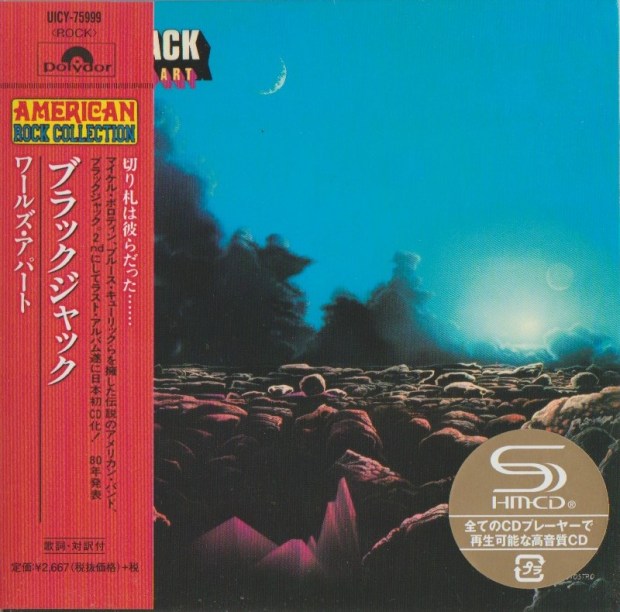
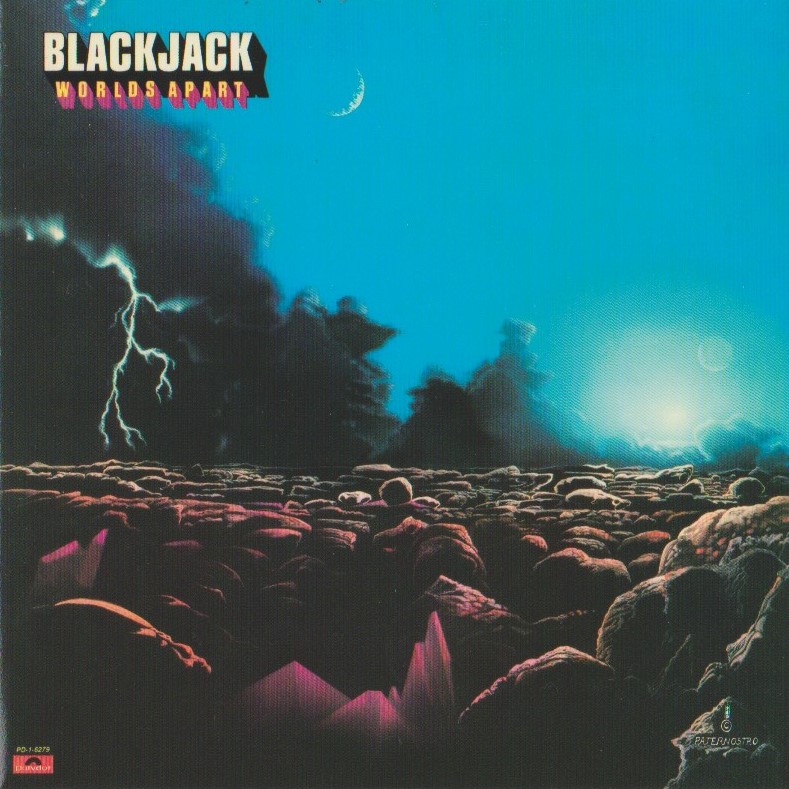
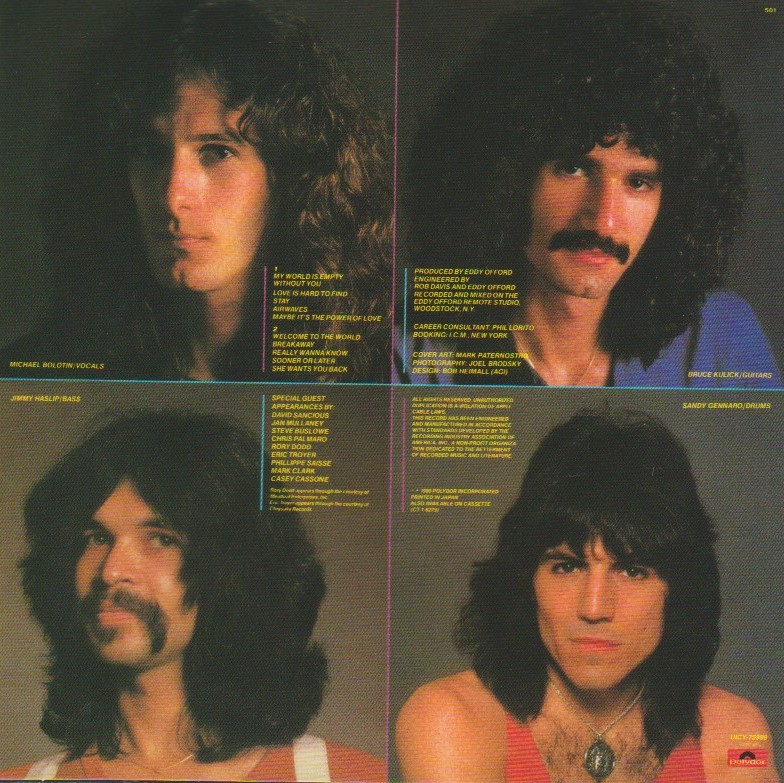
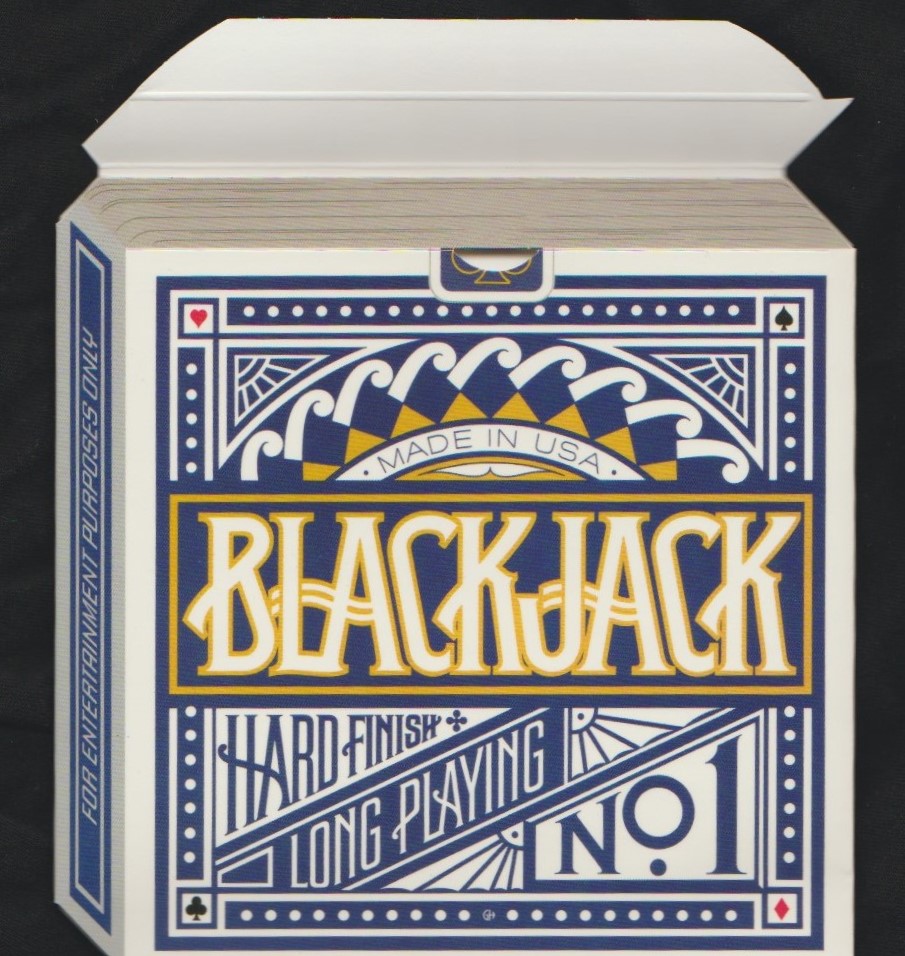
BLACKJACK – Worlds Apart(1980 Polydor, Universal Japan reissue)
Blackjack (Bruce Kulick, Jimmy Haslip, Sandy Gennero and some unknown guy named Michael Bolton) made a grand total of two albums before splitting. Michael went on to a fairly successful solo career (two Grammy awards), and a few years later Bruce joined Kiss. Neither guy is really sweating the fact that Blackjack had no impact. The albums are long out of print, except in Japan.
Their second album, unfortunately, lacks the memorable hooks of the first one. Starting off with a cover is rarely a good sign. The Supremes’ “My World is Empty Without You” is as ham-fisted as you can imagine, with heavy handed bass forced into what is usually a fine soul song. Bolton oversings. It’s a misstep from the get-go, and it’s not a good sign that this is one of the better tracks on the album which is otherwise mostly written by Bolton and Kulick.
“Love is Hard to Find” works well as an early-80’s Bon Jovi blueprint. The ballad “Stay” certainly sounds like Michael Bolton, or more accurately, it sounds like Michael covering an over-dramatic Rod Stewart ballad. “Airwaves” passes as a rock song, but it certainly is a weak one even compared to similar bands from the era such as Journey. Ironically what it needs is Michael to let loose with those pipes, the way he does on the ballads. Even a title like “Maybe It’s the Power of Love” lacks the kind of vocal power you want (though Bruce does get a tasty little solo with a dual harmony part).
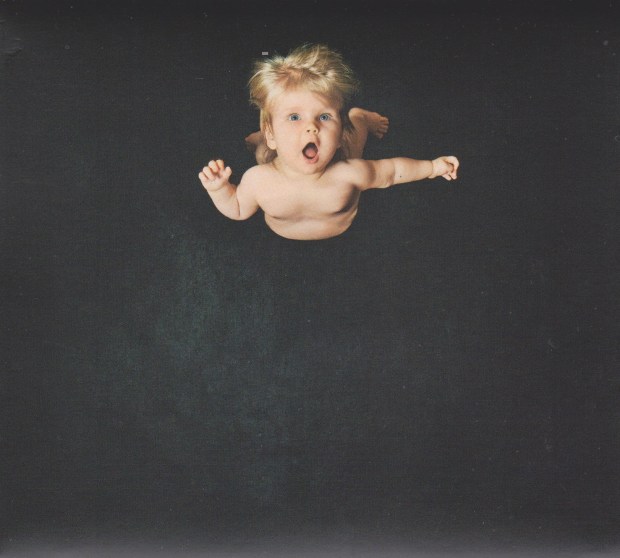
The hardest rocker of the album is the side two opener, “Welcome to the World”, which bizarrely opens with an actual recorded baby birth. That aside, it’s a pretty solid rocker with more of those Kulick harmony licks. Strangely, Kulick had nothing to do with its writing. This works into the very 80’s sounding “Breakaway” with its programmed keyboards and soft-rockisms, and among the worst tracks on the album. “Really Wanna Know” is almost as bad, so cheesy you can smell it coming by the opening synths. “Sooner or Later” works better, again perhaps a precursor to early Bon Jovi. Good track, and Michael lets the voice rip like you want to hear it. And then the album craps its own pants with the closer, “She Wants You Back”, lighter than light rock. There’s a lick that borrows from Steve Miller’s “Swingtown”, but the Miller song is better.
The second Blackjack album has no surprises, no progression and little impact Even though the second LP is a soundalike to the first, it’s weak. And so they split. Bruce Kulick’s brief foray into “moustache rock” ended and he was on to other things. Blackjack and Worlds Apart are interesting mostly to Kiss fans and collectors. As for Bolton fans, I know he still has many, but I think only these two fellas would buy Worlds Apart (they celebrate the guy’s entire catalogue).
It’s Bruce Kulick week here at mikeladano.com! Check in for some cool releases featuring the extremely talented former KISS guitarist.
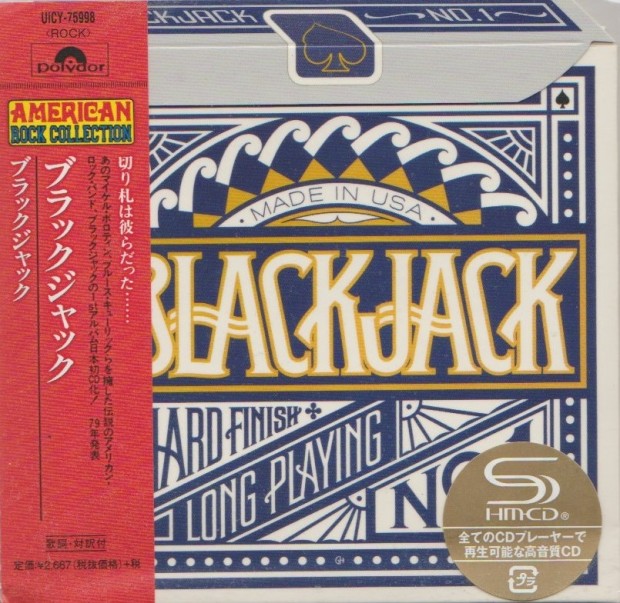
BLACKJACK – Blackjack (1979 Polydor, Universal Japan reissue)
The Kiss family tree is a fascinating tangle of disparate roots and branches. One of the most intriguing branches is that of Bruce Kulick (Kiss guitarist 1984-1996) who has played with a number of fantastic artists over the years. After completing a tour with Meat Loaf, Bruce was invited to form a new band with a hot young rock singer out of New Haven, Connecticut. This singer was a powerhouse with a Seger-like rasp, mixing soul and rock in equal measure, and able to write songs too. In fact today, this singer has sold 75 million albums with his name on them. Or at least the shortened version of his name. Back in 1979, his last name was spelled “Bolotin”. Today, he’s known as Michael Bolton.
Today, Bolton is probably best known for covers (“When a Man Loves a Woman”), but in 1979 he co-wrote every song on Blackjack’s debut. Both Kulick brothers (Bruce and Bob) have credits on a number of songs. And shockingly, they are generally pretty good! Fair warning though, this isn’t hard rock or heavy metal. Look at Bruce’s moustache. This is 1979 moustache music. It actually sounds bang-on in tune with the 1978 Kiss solo albums.
Bolton’s blue-eyed soul had a remarkable youthful energy. Check out the powerhouse chorus on the lead track “Love Me Tonight”. It’s hard to recognize the chops of Kulick, who was just beginning his evolution. The focus is undoubtedly on the singer, who impresses on every song. Second in line is “Heart of Stone”, a dusky soul-funk-rock number with some unbelievable singing. Unfortunately the ballads are less interesting then the rockers. “The Night has Me Calling for You” lacks the focus of the prior two songs. Following it with “Southern Ballad” makes it seem like we’re listening to a Peter Criss solo album at times. The side resumes to rocking with “Fallin'”, a great little tune that again sounds like it could have fit on one of the Kiss solo albums.
They even made a music video!
Although this is a remastered Japanese HM-CD, the second side of the original LP would have commenced on “Without Your Love”, a catchy and hit-worthy rock song a-la Journey (the members of whom helped out Bolton on his hit 1987 album The Hunger). Although “Countin’ On You” counts as a ballad, it’s better than the two on side one. It bears a strong chorus with urgency, and some cool finger picking by Bruce. The chorus of “I’m Aware of Your Love” is awkward but also catchy. I mean, who says “I’m aware of your love”? Is that a thing people say? If it works for you, sing along with Michael!
For soul ballads, “For You” is quite good, and Kulick complements it well. Finally the album ends with energy courtesy of “Heart of Mine” another strong soul-rocker with some powerful Bolton pipes. This is good stuff, horribly dated but if you like the cheesier side of late 70’s rock, then dig in. Who knew that Michael Bolton could rock? Kiss fans, that’s who. Because of Kulick, fans have been aware for years that Michael Bolton did rock at one time. Now with both Blackjack albums re-released in Japan on super high quality CDs with LP style packaging, you can get in on the fun too.
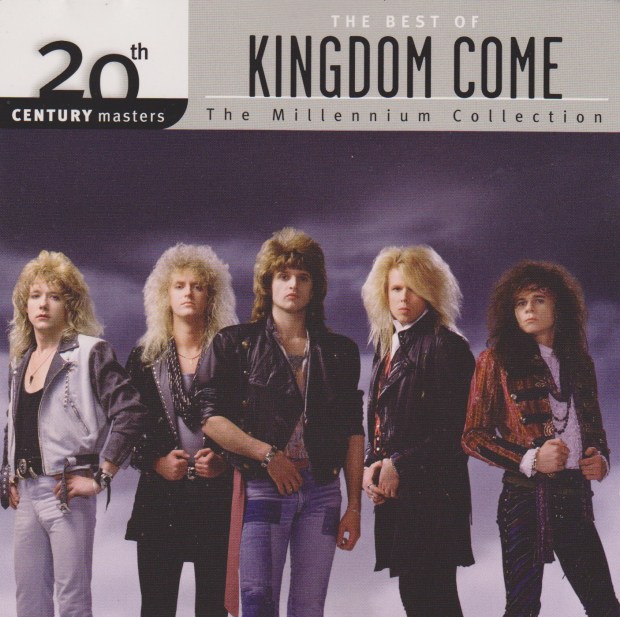
KINGDOM COME – 20th Century Masters– The Millennium Collection (2003 Universal)
Kingdom Come are a German/American band that rose from the ashes of Stone Fury. For those who may not remember, Kingdom Come were quite infamous in their day. Gary Moore wrote a song called “Led Clones” (with Ozzy singing lead) about Kingdom Come and bands of their ilk who were seen to be milking the now defunct Zeppelin cow. The “Led Clones” riff directly aped “Kasmir” by Zeppelin, as did Kingdom Come’s lead single “Get It On”. A little Zeppelin influence is fine, but Kingdom Come enraged Jimmy Page himself when one of their guitarists claimed he’d never heard a Led Zeppelin album.
The Zeppelin angle was one direction that Kingdom Come exploited in their early days, and though they grew out of it by their second album, the damage had been done. Their nickname became “Kingdom Clone”, the punchline of many jokes. This is why a simple 20th Century Masters compilation may be all the Kingdom Come you actually need. Herein you will find all but one of their hits, and a fair few tracks from their first three studio albums. Two guys from this band ended up in Warrant: Rick Steier and James Kottak, who is also the longest-serving drummer that the Scorpions have ever employed. By the third album, the original lineup had completely dissolved leaving singer Lenny Wolf the sole original member.
The one missing hit is a track called “Loving You” from the first LP, an acoustic ballad, sort of a sub-“Battle of Evermore”. The other hits are here:
“Get It On”, the single that made them famous, which wears its Zep influences on its sleeves.
“What Love Can Be”, essentially Lenny Wolf’s transparent rewrite of “Since I’ve Been Loving You”.
“Do You Like It”, the first single from sophomore album In Your Face.
Lenny could have gotten away with some of the Zeppelin references if he didn’t try to sing so many Plant-isms. You can only ma-ma-ma so much before you sound like Robert Plant, and Lenny could have tried to be his own singer instead. You have to lay some of that at the feet of producer Bob Rock, who could have said, “Cut that shit out.”
The second album was a move away from that. Keith Olsen got a sharper, more vibrant sound than Bob Rock did (though Rock really got a great drum sound for James Kottak). Reportedly, some stores refused to stock the second LP because they thought the band’s name was Kingdom, and the album called Come In Your Face. Too bad, because the incendiary “Do You Like It” was critically acclaimed for its drive. The other In Your Face tracks included here absolutely represent a move away from Zeppelin and towards a more mainstream, slightly European rock sound. Good songs, especially the mid-tempo “Gotta Go (Can’t Wage a War)”.
The third album, Hands of Time, came and went without a sound and Lenny was dropped from the label. Reviews suggested it was soft and ballad oriented, but there are two decent slow rockers here from that album. “Should I” has a slow grind topped by a passionate vocal. The one included ballad, “You’re Not the Only…I Know” has a weird title but a great melody.
The great thing about the 20th Century Masters series is the ability to get key hits for a low price from bands that you may not want albums from. The 11 tracks on the Kingdom Come edition are all worth owning, no duds in the bunch. That makes this CD an easy one to pull the trigger on.
O BROTHER, WHERE ART THOU? – Music from a film by Joel Coen and Ethan Coen (2000 Universal)
Hot damn! It’s the Soggy Bottom Boys!
Even if you hated the film (have a doctor check to see if you still have taste left), you can’t deny the fun and authentic roots music on its soundtrack.
A bizarre re-telling of Homer’s The Odyssey set in the 1930’s depression-era south, O Brother was nothing if not unique. It mixes a liberal interpretation of Greek mythology, with Americana and the mythology of the blues era. Some people don’t get it, some people do but don’t like it, and others have long been swept away by its charms. Those with an allergy to George Clooney, fear not: he does not actually sing on this soundtrack, although his co-star Tim Blake Nelson certainly does (on “I’m in the Jailhouse Now”). Dan Tyminski from Alison Krauss & Union Station sings for Clooney’s character Ulysses Everett McGill on the signature hit, “Man of Constant Sorrow” though many people assume it’s George.
The soundtrack CD is a mixture of light and dark. The first two songs are the perfect example: “Po Lazarus” is a chain-gang work song, just before Ulysses Everett McGill and his two companions break free and embark on their Odyssey. It’s followed by a 1928 recording by Harry McClintock, “The Big Rock Candy Mountain”, a joyful nonsense song about a hobo finding paradise on the rails.
“Where the boxcars all are empty, And the sun shines every day, On the birds and the bees, And the cigarette trees, The lemonade springs, Where the bluebird sings, In the Big Rock Candy Mountains.”
The composite of light and dark reflects the movie itself, but makes for a fairly inconsistent listen. The soundtrack follows the progress of the film, but without the story backing it up, it’s harder to go with the flow from song to song. The a capella “O Death” (Ralph Stanley) for example is squeezed between the popular songs “Man of Constant Sorrow” and “I’m in the Jailhouse Now”, so most people will typically skip it.
I look at this soundtrack CD as a great “starter kit” for exploring more genres of music. The dominant ones are folk and bluegrass, but there are also blues tracks and hymns. Norman Blake’s “You Are My Sunshine” sounds wonderful sitting in the shade on a summer day. Immediately after that, you get the velvet tones of Alison Krauss, from the baptism scene with “Down to the River to Pray”. You have never heard a more perfect version, serene, still and deep as the water. And, yes, the Soggy Bottom Boys! In the film, Ulysses Everett McGill and his companions Pete, Delmar and Tommy Johnson (loosely based on Robert) wind up cutting a record. There are four versions of “I Am a Man of Constant Sorrow” on the album. The first is the acoustic track shown being recorded in the film. The version that became a hit single in the real world is from the climax, a fully augmented mix with fiddles and slides. That is included closer to the end of the disc. There is an instrumental version on acoustic guitar by Norman Blake, a fine take indeed. The fourth is an instrumental version on fiddle by John Hartford, barely recognisable. All four are quite different but valuable.
Blues singer and guitarist Chris Thomas King was cast in the film as Tommy Johnson, and his solo track “Hard Time Killing Floor Blues” is a fine example of acoustic blues. There is plenty of sunny and gleeful folk, such as “Keep on the Sunny Side”, “I’ll Fly Away”, “In the Highways” and of course “In the Jailhouse Now”. Tim Blake Nelson is certainly a multi-talented guy, but the yodelling part is not performed by John Turturro as it appears in the film. Still Pat Enright’s yodel part is one of the highlights of the entire album. It’s important to note that producer T Bone Burnett captured authetic sounding performances here. Close your eyes, mix some scratchy vinyl sounds over it, and you can imagine these are vintage recordings from the 1930’s.
Emmylou Harris, Gillian Welch, the Fairfield Four, the Cox Family and more…this CD is a great way to both enjoy an hour of music from the film, and kickstart a collection of folk, bluegrass and more. Dig in!
4.5/5 stars
Final bonus: Sh*t LeBrain’s Grandma Says!
I love my grandma with all my heart, but sometimes she gets the names of movies wrong. We took her to the theater to see “There’s Mail Waiting for You” (You’ve Got Mail), and she also really enjoyed this movie, which she calls “Brother Can You Spare a Dime?”
THE TRAGICALLY HIP – Man Machine Poem (2016 Universal)
The title Man Machine Poem reveals something about the new Tragically Hip. The first song is entitled “Man”, and the last one “Machine”. This album is an epic poem — the “Man Machine” poem. It has a flow like a singular body of work, even though it is made up of individual songs. Like most Hip albums of late, it is a brooding work thick with power in its quiet grooves.
Sounding a bit like like classic Radiohead, “Man” opens the CD on a suitably weird note. Droning piano, strange echoey vocals…and I’m hypnotised immediately. Granted, the subconscious mind keeps trying to find meaning in the music. Now we all know the terrible news. That in mind, we’re not going to treat this album like a funeral. Brain cancer be damned, Gord Downie is doing that final tour, you know the one? The one that nobody has been able to buy tickets for except on StubHub for many times their original value. In other words, it’s a heavy atmosphere and you keep searching for hints and clues that are not there. “Man” is a brilliant track, showing that the Hip were continuing to push their own limits.
Just about every track on Man Machine Poem is brilliant. The first single “In A World Possessed by the Human Mind” sounds like something Bono wishes he had written. The fuse smoulders, but the song blasts open brightly on the chorus. Each song has its own character, but hard to define. “What Blue” is simply lovely, a summery track that is hard to forget. “In Sarnia” sounds more like “in the country”, but friends from back that way say that’s not too far from the mark. Passion turned up to 10, Gord lets it all out. The song is slow and quiet; all but Gord.
The days of “Little Bones” and “New Orleans is Sinking” are long behind now. The Hip don’t write albums like that anymore, but what they do create still has innate power. Listen to the acoustics and the slides blending with the electric guitars and steady beat of Johnny Fay. The Hip run like a well oiled…gotta say it…Man Machine. The older, wiser, and less loud Tragically Hip still rock, cranking it up when necessary. “Here, in the Dark” is a fine example of placing the explosive charges in the exact right spots. So is the growling “Hot Mic.” The energy is palpable. Even on a song called “Tired as Fuck”, there is energy in the air.
Man Machine Poem has an epic feel to it, from the strange start to the drawn out dramatic ending. It’s temping to say something like “best Hip album in years!” but they’ve never stopped making great albums.
What happens when you let a bunch of now-grown Star Trek nerds from the 80’s make a movie? Apparently, they make Ted. If you let ’em do it twice, you get Ted 2.
I really don’t know how this works, but Ted 2 provides ample proof of its own Trek-nerdiness. Forget the fact that the climax takes place at New York Comic-Con. Do you realize how many Trek actors appear in Ted 2?
Patrick Stewart (Jean-Luc Picard), as he was in the first Ted, is the narrator. (Don’t forget he is also currently CIA Deputy Director Bulloch on Seth McFarlane’s American Dad! )
Nana Visitor, better known as Major Kira Nerys on Star Trek: Deep Space Nine, is an underrated performer with a good role here. She still looks amazing.
LeVar Burton (Geordie LaForge) appears in a brief clip from Roots as Kunta Kinte, but I’m still counting it.
Pushing it here, but Ron Canada (from Canada!), who plays the judge in Ted 2, did guest shots on three different Star Trek series.
Best of all is Michael Dorn (Lt. Worf) as Rick; gay lover to Patrick Warburton’s Guy. Took me a while to pick up on the fact that it was Michael Dorn. Only when he showed up in uniform at Comic-Con did it sink in!
Dorn and Warburton as…well, you know who.
So: McFarlane likes Star Trek. That’s obvious. He likes a lot of stuff, and Ted 2 is less a story than a running series of references to other movies. From Jurassic Park to the cheesy ending to Contact, these characters walk and talk quoting movies all the friggin’ time. It’s all they do! One thing you will see and hear less of going forward: Star Wars in any McFarlane production. According to the audio commentary, the friendly relationship that Seth used to have with Lucasfilm has vanished since they were sold, and Disney have made it pretty clear that further collaborations will not be happening. So you can kiss the idea of a Family Guy: The Force Awakens goodbye.
Unfortunately, characters that quote stuff is as deep as it gets. Mark Wahlberg’s Johnny has divorced Mila Kunis, because she was trying to change him too much. Well, yeah…that was the whole plot of Ted 1. Wahlberg wanted to grow up and marry Mila. Now he decides that’s actually not what he wanted, after fighting for it so hard in the first movie. In Ted 2, we see Marky Mark hanging around with Ted a lot, and we see him getting into plenty of hijacks, but Mark Wahlberg is little more than a non-character sidekick in this one. Ted is Ted; a foul-mouthed Peter Griffin who gets away with it by being a teddy bear. Newcomer Amanda Seyfried steals the movie with her likeable lawyer character, Sam L. Jackson. And yes, she has not heard of the actor Samuel L. Jackson, nor does she pick up on any of Ted and Johnny’s movie quotes, and that’s the driving force of the trio’s interactions. Seyfried is a wonderfully talented actress with a very expressive face, and she easily outclasses everyone she’s in a scene with (except obviously Morgan Freeman). To her credit she’s a good sport about her famous large blue eyes. They are the butt of a few jokes in the movie — the best ones actually. Seyfried is obviously a good shit and I bet she’s fun to have a beer with. She also gets to sing, and that award-winning voice performs the original theme song “Mean Ol’ Moon”.
The plot, such as it is, was inspired by the Star Trek: The Next Generation episode “The Measure of a Man”; I shit you not. This is even acknowledged by McFarlane in the commentary. Ted and Tami-Lynn (Jessica Barth) have been married a while but it’s not working out. So, they do what every struggling couple in America does to heal their relationship: have a kid. At first, you think the movie will be about Ted and Marky Mark getting into hijinks and capers, trying to steal donor sperm from demigods like Tom Brady. Then it awkwardly shifts to a legal slant, with Ted having to prove he is a person and not property in a court, just like Lt. Data did in Star Trek. Data had Captain Picard to defend him, and McFarlane says that Amanda Seyfriend’s opening comments in the courtroom scene were inspired by Picard’s.
In Star Trek, if Data were declared to be property, then Starfleet could have cut him open to mass produce intelligent androids to serve as a working class. In Ted 2, Giovanni Ribisi’s evil Donny wants to do something similar. He convinces Hasbro that they can take Ted, and cut him open to see what makes him tick, and repeat the magic. Billions of dollars would be made. All this hinges on him being declared property in court. There would be few repercussions for Hasbro to steal a teddy bear, compared to a person, to dissect it!
You have to give McFarlane credit for a great Mel Brooks-inspired opening musical number, and a brawl finale. You have to admire Amanda Seyfried’s abilities, and Pantene Pro V-perfect hair. Otherwise Ted 2 is a lazy retread. I don’t mean “lazy” in the sense that it wasn’t hard work. It clearly was hard work making this movie, doing the perfect CG bear and motion capture. The reason we don’t talk about the bear much is that he seems perfectly real at all times. No, I mean “lazy” in the writing. There are plenty of funny jokes, situations, and lines. There are no characters we care or even know much about. How did Seyfried’s Sam, age 26, become a lawyer who can play guitar and sing better than 95% of the ladies currently in the top 40, all while suffering debilitating migraines that require her to constantly smoke marijuana? How??? It’s hard to get involved in the characters when they’re so obviously not human, and I’m not referring to Ted! How does Marky Mark support himself? Does he still have a job? We never see him at work.
Best gag: A Liam Neeson cameo. Stay tuned for the post credit scene.
Special features: Unrated version of the movie, audio commentary, gag real, deleted scenes (mostly alternate lines from scenes in the movie), and plenty of making-of featurettes. The “Creating Comic-Con” feature was interesting, from a Trek nerd point of view. Check out how they made that giant starship Enterprise that hangs from the ceiling. It’s just based on a model that McFarlane had on his desk!
Blu-ray annoyance: These text info-boxes advertising other movies pop up on every menu, unless you specifically look for the setting that turns them off. That’s…mildly vexatious.
Stupid infobox.
Joke tagline: Ted 2 – more of the same, but now with Seyfried! Whose last name I can now pronounce correctly, thanks to the commentary.
 RICH ROBINSON – Got to Get Better in a Little While (2016 Universal 10″ clear single for Record Store Day)

















 mikeladano.com