Guest Post

INVESTIGATIVE REPORT & REVIEW: Spastic Phono Band – “Wings Under Japan” 7″ single – What’s the story behind this band?

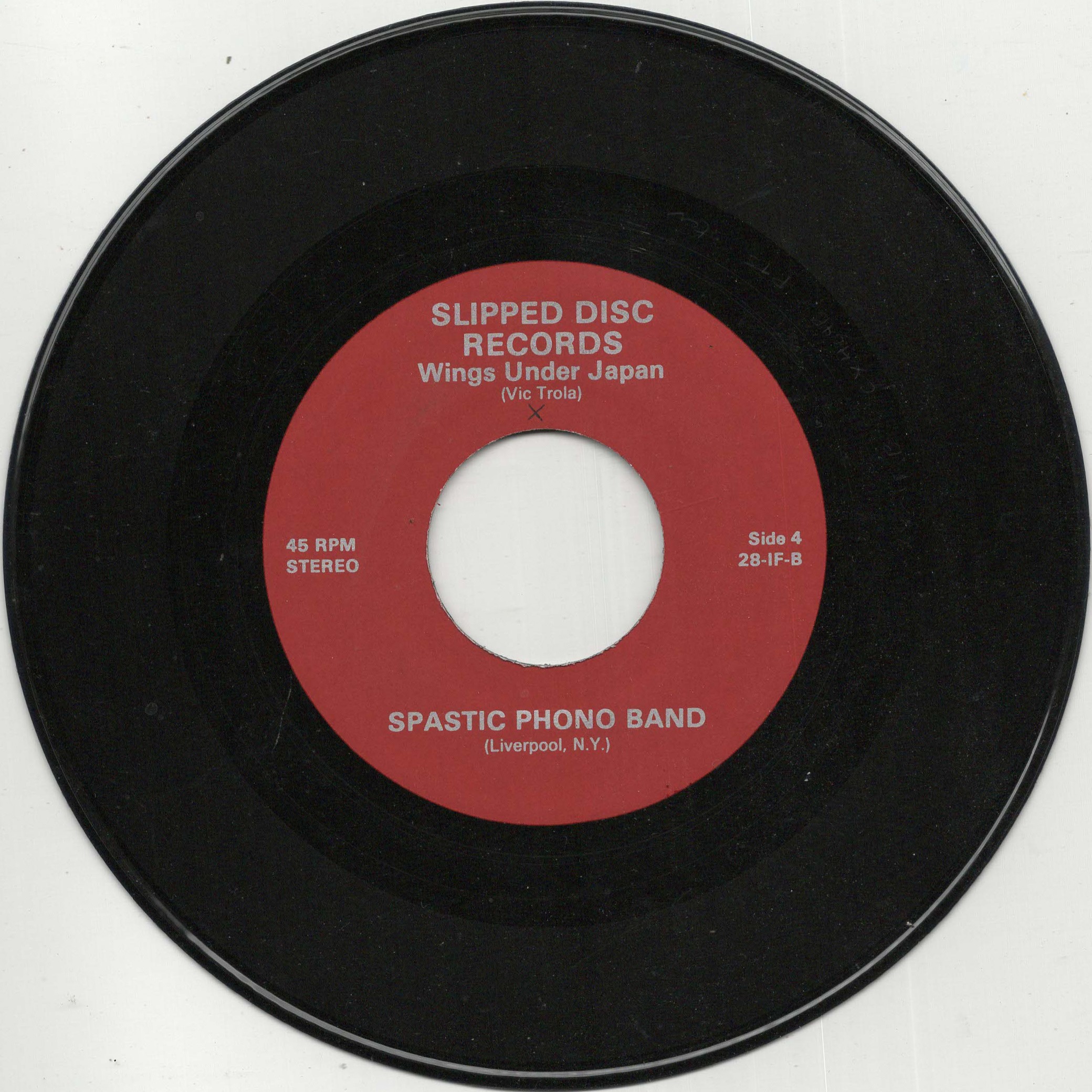
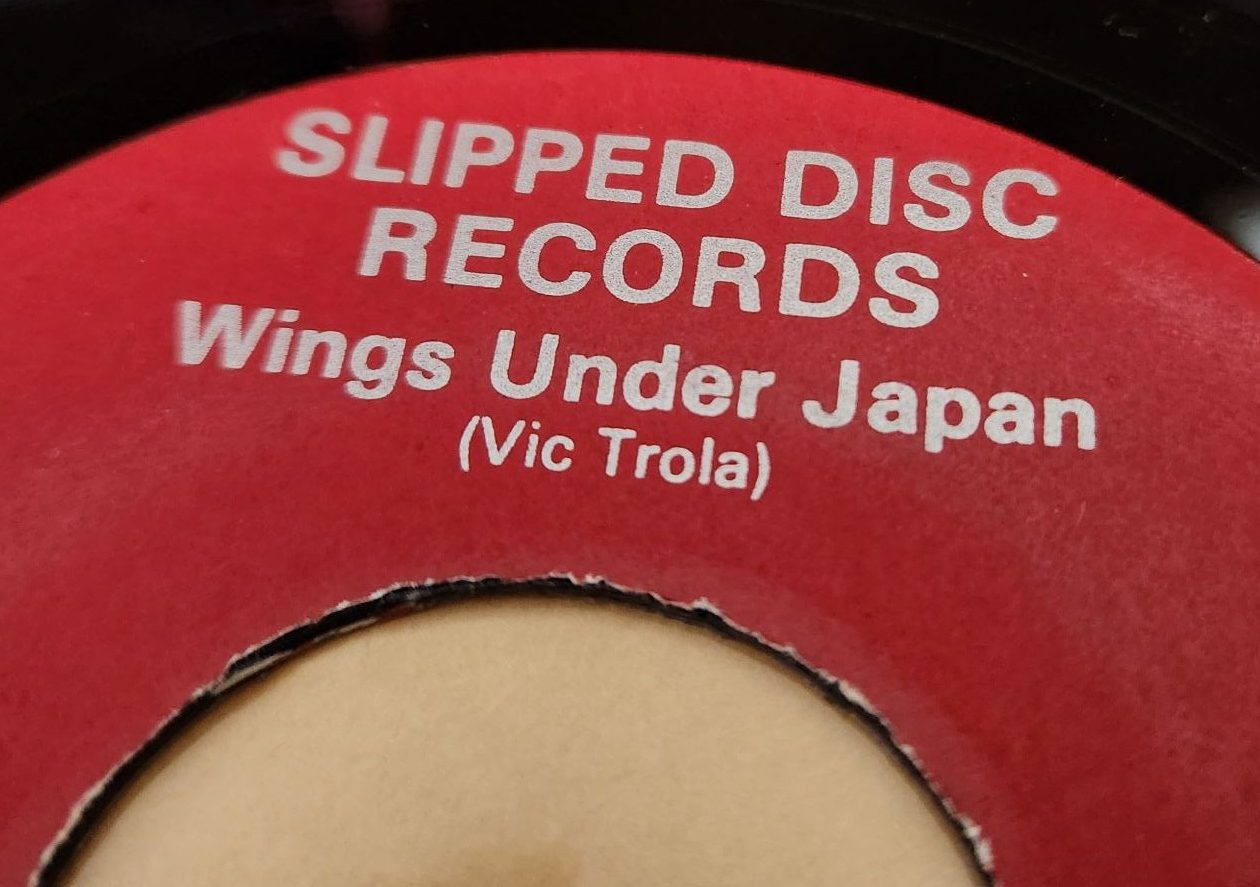
SPASTIC PHONO BAND – “Wings Under Japan” (1980 7″ single, Slipped Disc Records)

INVESTIGATIVE REPORT – 45 years ago…

[Editor’s note:  the authors of this report have asked to retain their anonymity.] 


The year:  The harsh winter of 1980, remembered for its deep cold and snow.   In the realm of popular music, all four Beatles were still alive, even though the band had been broken up for a decade.  One of the Beatles soon found themselves in a wee bit of trouble.  This trouble would spill all over the world news, causing rippling effects and ramifications far beyond the shores of England, for that winter in New York State, a band would go on to record a song….

The Beatle in trouble was the still-babyfaced Paul McCartney.  It was no secret that he was already known for enjoying the green leaf.   Back in 1972, McCartney was arrested in Sweden for possession of Lady Ganja.  He was released without charges at that time, but his reputation was now cemented.  McCartney wanted to book a Japanese tour in the mid-70s, but the country was very strict about illegal substances and refused Paul permission to play.  The fans in Japan would have to do without.

Finally, in 1980, Japan had a change of heart and granted permission for Paul McCartney and Wings to tour in the Land of the Rising Sun.

He just needed to make sure he packed appropriately for the trip.

Paul McCartney is an undisputed musical genius.  His songs will last 100 years.  That does not mean that Paul always used his head.  Despite the scrutiny he was bound to experience upon entering Japan, he decided to bring a stash with him.  He was arrested upon discovery at the Narita Airport with 220 grams of Hawaiian green.  Reportedly, he didn’t even attempt to hide the electric lettuce, just packing it in his carry-on bag with his clothing.  Paul subsequently spent 10 days in the keiji shisetsu (刑務施設); actually the Tokyo Metropolitan Police Department.  Teenage girls numbering about 50 serenaded the station during Prisoner 22’s incarceration.

Unfortunately for Paul, the nature of this arrest and jailing far away from home meant headlines all over the world.  “PAUL IN CHAINS” and “EX-BEATLE ARRESTED IN JAPAN” went the articles, along with a photo of McCartney being escorted by Japanese officials.  It was huge news, especially in the UK where it became a bit of a media circus.
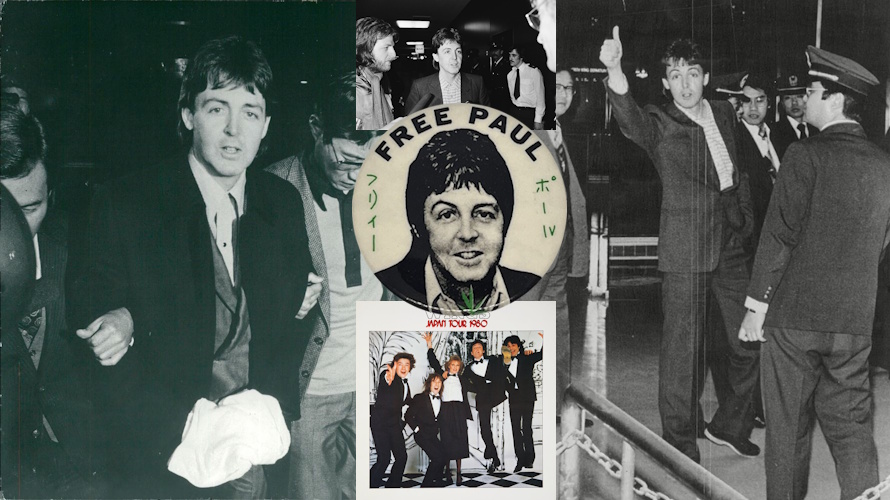
The judge in the case determined that McCartney brought the drugs for personal use and not trafficking, and decided that Paul had spent enough time in jail.  He was taken to the airport, and flown to Holland, where he was (perhaps surprisingly) refused entry.  He still had time for a chat with the press.

“How did you get out?” asked the reporter.

“Walking on foot,” answered Paul in typical cheeky Beatle humour.

The experience was “a drag” for Paul.  “I was woken up at six in the morning, then had to sit cross-legged for a roll-call. It was like Bridge on the River Kwai. They shouted out ’22’ in Japanese, and I had to shout back, ‘Hai!'”

The 11 date Japanese tour was cancelled at the cost of 2.5 million dollars and 90,000 tickets.

Did he learn from his experience?

“Now I have made up my mind never to touch the stuff again. From now on, all I’m going to smoke is straightforward [cigarettes]. No more pot.”  He later acknowledged his own stupidity.  “Well, to this day I have no idea what made me do it. I don’t know if it was just arrogance or what. Maybe I thought that they wouldn’t open my suitcase.  I can’t put myself back into that mindset now…to this day I have no idea what made me do it.”

Over in America, shortly after shoveling out from a massive dumping of overnight snow, a young songwriter named “Vic Trola” was inspired to write a song.  At least that’s how the credits read on the actual record.  A recent online theory postulated that “Vic Trola” was indeed a pseudonym, but these writings are mostly found in conspiracy theory discussions.  A fringe group that splintered off the main conspiracy theory group added that “Vic” was short for “Victoria”, not “Victor” as previously assumed.   These theories are largely dismissed by the other groups.  Our own extensive research has failed to unearth any other compositions written by Trola; just the one that you are reading about today.  We do know, thanks to documents obtained in the process of researching this article, that after catching their breath from shoveling the drive on that cold winter day, Trola went inside and began writing.  The surviving notes from Vic Trola’s respirologist confirm these facts.
Vic Trola’s song, as it evolved into its final form, was the product of on-stage gigging by the mysterious Spastic Phono Band, and that is where our story really begins.  Though their names are now lost to time, and their relationship to Vic Trola is clouded, we do know that they consisted of a tight rhythm section.  Both the drummer and bassist were exceptional.  They boasted a dual guitar configuration, and multiple lead singers including one female vocalist who appears prominently on their sole recording called “Wings Under Japan”.

The Spastic Phono Band had experience.  They had already been working on a set of originals and comedic covers.  Favourite hits by Santana and the Might Zep were endowed with new witty words, and they found an audience who shared their sense of musical comicality.  Encouraged by the audience reception to these songs, the Spastic Phono Band turned their attention to the hot news of the day:  Paul’s arrest in Japan.  Presumably with Vic Trola’s lyrical input, they started playing bits of his Beatles and Wings hits in a medley.  Egged on by the crowd, and adding throwaway lyrics here and there, the song “sort of wrote itself”, according to a maraca player who claims to have been there at the time (and requested complete anonymity).  It took only three or four shows for the song to come together as we know it today.  The Paul medley became an instant live hit.  The crowds ate it up.  They learned the words, sang along and shouted for more!  Clearly, the song needed to be recorded in a studio, and put out on a record.

Unfortunately for the band and Vic Trola, who were based out of Liverpool (New York, pop. 2400), there were few studios around within the reasonable driving distance of a beaten-up touring van.  Their studio of choice would be unavailable for three weeks, and time was of the essence.  The Paul story was hot now, not later!  Even if they recorded the song immediately, it would have to be mastered and pressed at a record plant, meaning they had to act immediately.  The scarcity of nearby studios presented a challenge.  Would these young musical minds be able to publish their Paul pastiche in time?

As they used to say, the Spastic Phono Band let their fingers do the walking:  They picked up the phone and eventually connected to something that somehow passed as a recording studio.  The old schoolhouse that they booked was certainly was not conceived as a studio when it was built in the last decade of the 1800s.  The top floor housed the recording space, but in a decidedly inconvenient design and safety choice, it was only accessible via an outdoor fire escape.  All the band’s equipment had to be hauled up the emergency exit:  drum after drum after drum, followed by amp after amp.  Bags were passed from vehicle to musician and up the fire escape, which wobbled with every tentative step.  Also, it was winter.  Members of the band were not sure if they were going to survive the combination of snow and ice, metal steps, and gravity.   To our great fortune, they did.

The studio owner was also the engineer, and his soul still lived in the 1950s.  He didn’t grasp the nuance, or understand the Spastic Phono Band’s particular brand of humour.  He did, however, have a friendly personality and got along with the band.  A good sounding record began to take shape on tape.  The band nicknamed the engineer “Eddie”, a reference to a classic Leave It To Beaver character, Eddie Haskell.  Eddie’s studio had all the necessary equipment (minus an elevator).  He even had an ARP synthesizer which can be heard on two segments of the recording: “Silly Drug Laws and “Banned in Japan”.  Though the band did not have the budget to spend more time in the studio to do some further work on the guitars, the band climbed down the fire escape holding in their mittens a reel-to-reel tape of their hard-earned work.  Physicists specializing in the behaviour of water at low temperatures speculate that the tape was almost dropped once on the way down, but saved from an icy fate in the snow.

The schoolhouse was demolished in 2025 at 131 years old.

Though recorded, the song still had to be mastered and cut to vinyl.  With time slipping away, and Paul McCartney finally starting to experience a decline in the media frenzy over his Japanese vacation in the big house, the Spastic Phono Band were in an ever-increasing time crunch.  Their song, heavily dependent on McCartney’s imprint in the public consciousness, had to make its way to a physical record that you could buy.  Their preferred manufacturer was fully booked and the band could not wait any longer.  The track was complete, mixed and ready to be mastered…but where?

Through furious searching and some tense bidding on eBay, we have obtained some of the logs, unfortunately anonymous, detailing the following sequence of events of the recording:

Monday.

Tempus is fugiting.  Much to our dismay, the cute Beatle’s troubles in the Far East are rapidly becoming old news.  Also with windchill, it is about four degrees today.

The Paul story was soon displaced by other current events.  The Iranian Revolution made fresh headlines, and soon came the hostage crisis.  Front pages were dominated by the tense 444 day crisis, during which 66 Americans were held hostage at the US Embassy in Tehran.  As it happens, another band in the same area as the Spastic Phono Band, a trio, were working on a song referencing these events.  One of the songs in their regular set, popular in some of the local Irish venues around the area, was Jerry Jeff Walker’s “London Homesick Blues”.  It featured the unique chorus of “I wanna go home with the armadillo.”  (Who wouldn’t?)   This was easily adapted into “I’ve had enough of the Ayatollah”.  The clever lyrical substitute worked, and the band approached the club owners documented only as “The Brothers Three”.  The Brothers actually owned three clubs, which seemed poetic.  The Brothers Three liked the song, feeling that it tapped into the sentiment of the day.  The reached into their pockets and financed a studio recording of the Walker cover.  They were now in the record business.

The Spastic Phono Band, who were familiar with the trio in question, learned of this.  Realizing it was a good idea, they decided to make their own pitch to the Brothers Three.

Wednesday.

They went for it.  Sure, they argued a bit and the oldest one may have smacked the youngest one, but we did get a unanimous decision.  The Brothers Three are going to allow us to use the disc maker where they pressed the Ayatollah record.  

The record would be made in a little postage-stamp sized record plant (if you could call it that) in Connecticut.

Tuesday. 

One of the Brothers Three picked me up in his MG convertible today.  We took the tape to a dumpy little record pressing company.  Mission accomplished.  We ordered 300 copies to be made.   Then headed home, but my companion driving the convertible decided to put the top down.  It may be February thaw, but it was so cold I still don’t have feeling back in my nose.  Considering calling an otolaryngologist.

Frozen noses aside, when the boxes containing 300 copies of “Wings Under Japan” finally arrived, the McCartney story was equally cold.

Friday.

Believe it or not, there isn’t a lot of demand for a record by a band that nobody’s heard of.

The records were delivered to stores, who tried their best to push it, but were fighting an uphill battle. The record was not a hit.  The 300 copies did eventually end up in the hands of the public.  There are no documents detailing any sales, so we do not know if the band sold them at shows, or by mail order, or any of the other quaint methods available in 1980.   Mr. McCartney never stumbled upon the record, as far as the evidence suggests.  At least, we know he hasn’t sued.  But could he even locate the Spastic Phono Band if he wanted to?  We could not.  Vic Trola has pulled a DB Cooper:  Taken the money (if any) and flown.

Though only the original 300 copies were made, we were able to track one down for this article.  It was clearly loved in its previous home.

Housed in a yellow-brown sleeve (the original?), the 45 has a nice maroon label, stating this is on Slipped Disc Records.  Charmingly, the song “Wings Under Japan” is split over the two sides…sides 3 and 4.  (It has been suggested that this release, with sides 3 and 4 instead of 1 and 2), gave George Lucas the idea to number The Empire Strikes Back as Episode V instead of Episode II as expected.  With that film releasing in May 1980, we cannot completely dismiss the claim.)

The track is just over seven minutes combined.

Leavin’ on a Japanese roadtrip,
Headin’ down a London runway,
Paul said ‘I need to bring along some good weed,
Because it helps me relax when I play.’

Guffaw!  The song begins with a spoof of “The Ballad of John and Yoko”, now called “The Ballad of Paul and Linda”, with a similar structure, but words about Paul.  “The way things are gooooin’, they’re gonna scrutinize me!”  And they did…but not long enough for the Spastic Phono Band.  The song continues.

Staring at the man with the baggie.
Paul said, ‘Maybe I’m amazed!
It only amounts to less than half an ounce,
Why do you have to get so carried away?’

In perhaps the most obvious yet fun twist, the song then goes into Wings’ “Hi Hi Hi”…but re-written as “High High High”.  This is funny because it’s so obvious, it had to be done.  It’s amazing nobody else did it.  Incidentally the harmony vocals in this section are rich and excellent.

Next up in the Paul medley is “Silly Love Songs”, redone as “Silly Drug Laws”.  “What’s wrong with drugs, I’d like to know, ’cause here I go again!  I’m in jail…”  Another example of great singing by the Spastic Phono Band, but listen to that 1970s groove and the dexterous bassline!  This is some serious playing.

Side “3” ends, and so we flip to side “4”.  Fortunately in the modern era, we can use our digital capture software to seamlessly edit the two into one track!  Next is “Band On the Run”, revised as “Banned In Japan”.  In this case, the original song is almost a medley of different sections itself.  The Spastic Phono Band do several of them here.  “Stuck inside these stone walls, might be here forever!”  There is a poignant moment coming here, frozen in time.  Little did they know that John Lennon had only months to live, for in December of 1980, he would be murdered in New York.  So to hear the line, “I’ll join with Ringo, and George and John and we’ll put the reunion on,” reminds us that finite period of time when such a thing was indeed possible.

A brief pause and then, just like on Abbey Road, wait for a Beatles-y coda.

“Wings Under Japan” is, quite frankly, one of the best parody medley songs (or however you want to describe it) you’ll ever find, for three reasons.

  1. The mystery.  Who are the Spastic Phono Band anyway?  We may never know.  (Or, more accurately…we may never tell.)
  2. The musical prowess.  There is some serious playing and singing on this brief single, and your life would be richer if you heard it.
  3. Though depicting events before some of you were born, the lyrics are still hilarious due to the timeless nature of weed jokes.

5/5 stars.


GUEST REVIEW: Twisted Sister – Love Is For Suckers (1987) by Tommy Morais (and remembering A.J. Pero)

My old friend and collaborator Tommy Morais passed away in 2024, but miraculously, I found this 2015 email from him.  It contained a complete review of Twisted Sister’s Love Is For Suckers album that we never published, and a memorial for Twisted Sister drummer A.J. Pero, who had recently died.  I am please to finally publish this final review that Tommy sent me to post.  Rest in peace Tommy.

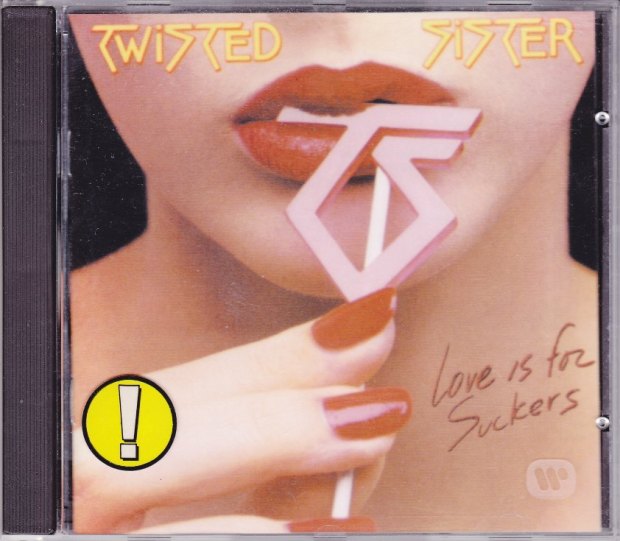
TWISTED SISTER – Love Is For Suckers (1987 Atlantic)
by Tommy Morais – written March 28, 2015
“The ‘Soft & Filler’ album…”  Bought in 2012 in France for something like 17 euros!

Twisted Sister’s fifth and final studio album Love Is For Suckers (unless you count the band’s 2004 Still Hungry, a collection of re-recordings of Stay Hungry) is one that tends to divide people. Some hardcore fans dismiss it as too pop and lacking much substance, while others have a soft spot for it and thought it was an enjoyable release at the time. There’s some claims to be made about both opinions. The main problem with with Love Is For Suckers is that it really isn’t a Twisted Sister album. “Wake Up The Sleeping Giant” is deceiving in that it almost sounds like classic TS. Yet only Dee Snider as an original member remains, and then there’s Joey “Seven” Franco who was in the current lineup on drums. It really should have been a Dee Snider solo album which is what it was intended as and truly was, but instead the record company pressured this to be released as a Twisted Sister album.

Then it is plagued by a few big issues, besides the absence of the classic lineup. Did you ever see Reb Beach and Kip Winger receiving credits on a Twisted Sister album? Well, they played on this. Probably not a happy thought for most Twisted Sister fans, as it ended up taking an ultimately softer and a more pop direction. Then you have to consider that it may have been competitive and cutting edge in 1987, but Love ls For Suckers has not held up well with time. Also for an album title that claims love “sucks”, it’s ironic that most of these songs are well… love songs.

What’s with the drum sound?! The songs are wimpy but with a thunderous, big drum sound which leads to question that maybe Joey was a good drummer who ended up playing on the wrong album. The production by Beau Hill is about what you’d expect, very “1987” and time has not been too kind to its sound.

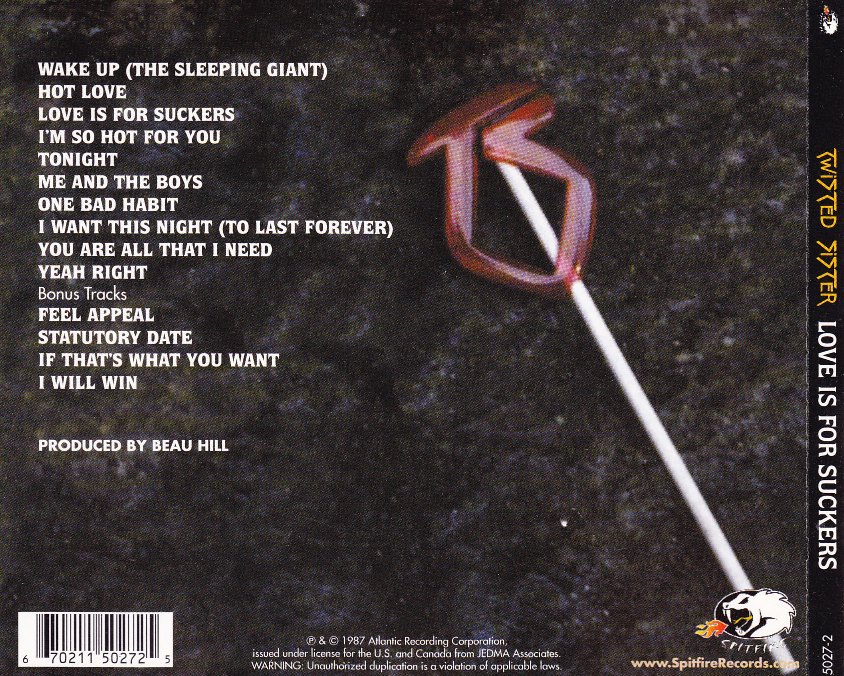
Opener “Wake Up The Sleeping Giant” is misleading. 1) It sounds like Twisted Sister and 2) It’s the best song on the album, and it leads you to think (and hope) the rest may be up to this standard. “Hot Love” was and is a great candy rock piece tailored for 1987; cheesy but fun and a good overall choice of single. It’s one of the most memorable songs (remember the video that went along?). The title track is actually not a bad rocker at all, it’s consistent as Snider does a good vocal performance and it’s somewhat catchy. This is where the album takes a slide in the quality department with “l’m So Hot For You” and “Me And The Boys” (this one especially is embarrassing) being generic filler tracks that halt any momentum the album had going for it. Sandwiched in between those songs is the slightly better rocker “Tonight” which showcases some aggression; not a bad tune at all. “One Bad Habit” is more filler material. “I Want This Night To Last Forever” has a Van Hagar feel to it, especially during the chorus but is nothing to write home about either. “You’re All That l Need” tried to be a big power ballad but it failed during the chorus, even though it had a nice build up. The keyboards prevent it from being a strong ballad like “The Price”, and as a result it sounds a little too soft and thin. The closing “Yeah Right” ends thing on a more positive note. It’s a solid upbeat rocker and one of the heaviest songs on an album that could’ve used more songs of this calibre.

I own the remastered version with four extra songs. “Statuary Date” is the worst of the bunch. “Feel Appeal” is better than some of the songs that made it onto the actual album, it’s more straight up rock and a little catchier. “I Will Win” is rocking but the chorus doesn’t get it right; close but no cigar. “If That’s What You Want” became “Me And The Boys” although it’s earlier incarnation was stronger and had better lyrics. If you ask me this version should’ve made the album instead!

There you have it. Any way you slice it, Love Is For Suckers is definitely, without a doubt, the worst Twisted Sister album. It suffers from the production, is full of fillers and it doesn’t feature Jay Jay French, Eddie Ojeda, Mark Mendoza, A.J Pero (who left before this was released), even though the liner notes say they were a part of it (minus Pero, replaced by Joey Franco). The first two songs, and the album cover, are the only things that are truly memorable about LIFS. The rest is really unfocused and sub-par. Twisted Sister’s decline had already begun with their previous effort, 1985’s Come Out And Play which would show cracks of the band’s implosion, but this one was a commercial disappointment failing to reach gold status or chart successfully. Simply put, Twisted Sister was no longer a band at this point and the album did nothing to stop them from breaking up and was quite frankly just not very good.

2/5 stars

Mike liked this album slightly more.  Click here for his review.

REMEMBERING A.J. PERO by Tommy Morais

It was grade six.  I was 11 years old, and it was the Friday before a holiday, which meant the whole class got to do nothing but chill and watch a movie. For the rest of the day our teachers let us hang out and do nothing. We each brought pop, chips or both to share. One of my friends Maxime brought one of his dad’s CDs. That CD? Twisted Sister’s greatest hits. He asked the teacher if he could play it for us, and the rest is history. I was introduced to my first taste of Hard Rock and Metal. I distinctively remember telling one of my friends “this is not bad huh?”, to which he agreed. I glanced at the album cover. It said “Twisted Sister Big Hits & Nasty Cuts“. Then l proceeded to tell Maxime that this (ugly) “girl band” was pretty good. I wasn’t familiar with Glam/Hair/80’s metal at that point and even less so with the look. Truth is l had been exposed to some AC/DC, Loverboy and Metallica prior to that but this was the first time it really clicked.  Maybe it was just just the right age, the right time. There you have it, Twisted Sister was the first band I recall really taking a liking to. From then on l discovered my dad and his brother’s LPs and played them on the turntable (I remember digging the first Van Halen a lot).  I definitely have a soft spot for Twisted Sister.
It is with sadness that I learned of longtime drummer and classic lineup member A.J. Pero’s unfortunate passing. Pero was a crucial part of the band and its sound, and a great drummer too. I approached Mike about maybe doing something Twisted Sister related on his blog to which he was very enthusiastic. I wanted to review something AJ played on, like Come Out And Play as l plan to review all of TS’s material in the upcoming days, but with time restraints l had to settle for my (still brand new) Love ls For Suckers. The band has said that were to make some big announcement next week. One can only assume that it is regarding Twisted Sister’s future as a band. Jay Jay said on social media that they were already thinking about hanging it up prior to Pero’s passing. Then Dee Snider said it would be profitable to the Pero family if the band kept playing and that they were thinking about winding down in 2016 for the band’s 40th anniversary. I’m not against them continuing performing live and going out on a final tour to honour AJ and the anniversary of the band just as l am not opposed to the band calling it quits. I have a feeling they’ll at least play a few more shows and maybe do one last concert CD/DVD (that would be cool). Rest in peace A.J., the rock world lost a great drummer.


#1199: The Springsteen Fan that Couldn’t Math (from guest Robert Lawson)

Robert Lawson is a friend and author Solidarity Forever:  The Art and Soul of Stevie Van Zandt.*  He recently posted this hilarious story on social media and I asked if I could use it. It is good to know there are still new Record Store Tales to be told!

RECORD STORE TALES#1199: The Springsteen Fan that Couldn’t Math 

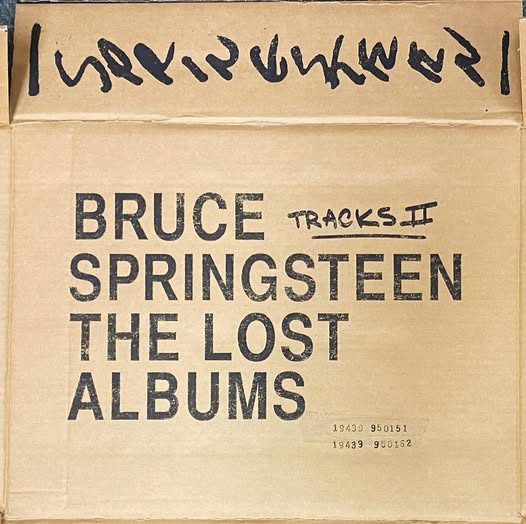
Bruce Springsteen recently released the second instalment of his Tracks box sets, called Tracks II: The Lost Albums.  It contains seven albums’ worth of unreleased Bruce Springsteen, and has received critical and fan acclaim for the quality of its songs.  Robert recently had an interested customer.

CUSTOMER: “How much is the new Springsteen boxed set, like $200?”

R: “Actually double that.”

CUSTOMER: “It’s $600???”

R: …sigh…


* Solidarity Forever is the definitive account of the musical journey of the music legend of Disciples of Soul, Bruce Springsteen’s E Street Band, and anti-apartheid project Sun City fame, Little Steven Van Zandt. Following Van Zandt’s unforgettable sixty-year (and counting!) career from his beginnings with the Asbury Jukes and Springsteen to leading the Disciples of Soul, from touring, arranging, and producing timeless music to playing an onscreen gangster in The Sopranos and Lilyhammer, Solidarity Forever is packed with a level of detail that will impress devotees and enchant new fans.

Every song, every album, every single, live shows; bootlegs, production credits, covers, activism-everything is covered here and presented alongside fascinating interviews of over forty past and present band members and Van Zandt himself. A stunning work of music journalism and love letter to rock ‘n’ roll, Solidarity Forever delivers Little Steven’s story and the timeless messages of his music like never before.

“This is no time to be fighting each other
What we need, what we need is solidarity.”


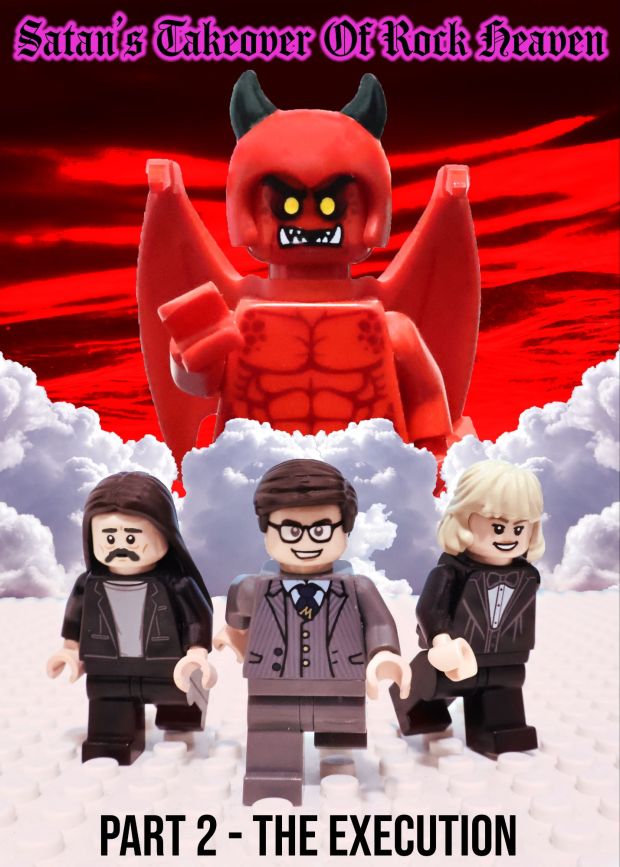
Takeover of Rock Heaven (Part 2) – A Northern Lights Multiverse Story (By 80sMetalMan)

Takeover of Rock Heaven

Part 2: The Execution

A Northern Lights Multiverse Story

By 80sMetalMan

See also:


“The superheroes have taken the bait, we move now!” Satan commanded his legions.

Satan didn’t have a large force for his planned attack, he didn’t need it. Thanks to his mole, he would have complete surprise. Standing by the secret door, he proudly watched as Hell’s minions marched up and took their postions. When they were all up, Satan knocked on what appeared to be the wall. Suddenly, a door magically appeared and began to open.

“Follow me!” Satan rushed through the open door with his forces filing in behind him. Once inside, his minions began to fill the large reception room and began rounding up citizens of Rock Heaven who were unfortunate to be there at the time, with magic lassos. Keith Emerson and Greg Lake were two of the unfortunates.

“Quickly, check all passages and rooms,” Satan ordered. “Find Elvis, Buddy Holly, Ritchie Valens and the Big Bopper. Those last three were the original citizens of this place. Make sure you also get Ronnie James Dio and Lemmy. Oh, just get everyone!”

The minions obeyed, they rushed through the corridors and rooms of Rock Heaven, capturing deceased rock stars with their magic lassos and freeing the disciples of Mr. Suplee from their cells. Elvis was soon captured as was Bon Scott soon after. One of Satan’s lieutenants had to tell his troops to control their lusts at the capture of female rock stars. Maybe Wendy O. Williams kicking a few of them in the nuts might have had something to do with it. Still, the lieutenant promised, “There will be plenty of time for that when we get them to Hell.”

All of the captured rock stars were brought to the main reception room where Satan’s secretary ticked them off on his list. It was when they saw the singer, standing by the devil, they knew they had been betrayed.

“Johnny Cash, how could you do this to us? I thought we were friends,” Elvis tearfully inquired.

“It’s nothing personal,” Johnny reassured his old friend. “Back in 1955, I made a deal with the devil, my soul for stardom.”

“You could have made it on your own, you had the talent,” Elvis pointed out.

“Yeah, but this way was easier.”

Meanwhile, Satan was distracted by another of his lieutenants who reported, “We got most of them sir, we’re just mopping up.”

“That’s not enough!” Satan viciously growled. “There are still some key people missing. I don’t see Buddy Holly, Ronnie James Dio or Lemmy.”

“We’ll get them, sir.”

It took three minions and two lassos to subdue Lemmy. Even then, he fought back every step of the way screaming, “I’m gonna kill you mother fuckers!”

The time it took to capture Lemmy, gave Ronnie James Dio and Buddy Holly time to organize a delay action. Ronnie grabbed a mic stand and when the minions approached, the stand let out a blast which sent two minions flying backwards, hitting a wall and knocking them out cold. He blasted four more before numbers took its toll. Ronnie was soon surrounded and captured.

Ronnie’s actions gave Buddy Holly and those who were still free a chance to make a final stand or escape. Producing three guitars, he handed one to Jeff Beck and another to Jimi Hendrix. “Each note sends a blast to its intended target. We’ll make a stand at this t-junction in the corridor and hold as long as we can.”

They didn’t have to wait long. Satan’s hordes came charging down the corridor towards the three guitarists. Buddy fired first, his blast sent three of them flying backwards. Jimi and Jeff followed suit, their blasts sending more minions flying backwards and clogging the corridor. Jimi even ricocheted a blast off the wall, sending five more into the opposite one.

Still, the enemy kept pouring in.

“Buddy, you need to go, we’ll hold as long as we can,” Jeff Beck stated.

After one more successful blast from his guitar, Buddy got up, “You’re right.” He beckoned up one of the other corridors and led twelve uncaptured rock stars away. They followed Buddy down one corridor and then down a less familiar one. Suddenly, Buddy stopped and struck a note on his guitar. To everyone’s awe, a door magically appeared and then opened.

“We figured something like this might happen so we were prepared,” Buddy explained. “No go!”

He watched as the first ten stepped through the door but he held up the last two. “I’m putting the both of you in charge. The door is a portal which will take you to the Metalman. You must make sure everyone gets to him, He’s the only one who can help us, now go.”

“What about you?” one of them asked.

“If I go, they will know something’s up and they will definitely try to search for me and that will stop any plan to take back Rock Heaven,” Buddy explained.

Frank Zappa and Neil Peart nodded their understanding and stepped through the door. Once they were gone, the door slammed shut and just as magically, disappeared. It was like no door had ever been there. Buddy rushed back to where Jimi and Jeff had made their stand but not surprised to see they had been overrun. It didn’t matter, they had done their job, so, the first minions he saw, Buddy raised his hands and surrendered.

All of the captured citizens of Rock Heaven sat in the large reception room awaiting their fate. Mixed feelings permeated the room, some were pessimistically gloomy while others like Lemmy, who whenever a minion came by, called them a “fucking wanker” remained defiant. To add further insult, Dave Holland walked among the heavy metal contingent taunting them, especially Ronnie James Dio. “You wouldn’t let me in here so now you’re going to pay.” Elvis, on the other hand, wallowed in self pity, not being able to grasp how his good friend, Johnny Cash, could betray him.

“Twelve are still unaccounted for,” Satan’s secretary informed his boss.

Turning to one of his lieutenants,, he inquired, “Have you looked everywhere?”

“Yes, sir, it seems like they just disappeared.” Then pointing at Buddy Holly, the lieutenant pointed out, “Maybe he can help.”

Buddy Holly was brought before the Prince of Evil. “Do you know where the others are hiding? Telling me now might make things easier for you when you get to Hell.”

“Not, hiding, escaped. They went through a portal even you can’t open.”

Satan stomped about angrily and bellowed, “Then it will be worse for you, Holly! I shoved pineapples up Hitler and Saddam’s asses but I’m gonna shove watermelons up yours!” Then turning to his secretary, asked, “Who’s missing?”

“Neil Peart, Christime McVie, Christian Fagg, Warrell Dane, Paul Kantner, Sandy Pearman, Muddy Waters, Glenn Frey, Alec John Such, Keth Moon, Jill Janus and Frank Zappa.”

“Drat! I wanted Zappa,” Satan barked angrily. “I remember his portrayal of me in that song, ‘Titties and Beer,’ I was going to make him hold his pickle for enternity.”


Intermission.

The Metalman looked at his cherished copy of Nazereth’s “Hair of the Dog” album. He was ever so grateful the superheroes were able to get it back for him and put Suplee in Hell where he belonged. When they parted company, the Metalman expressed his hearty thanks and wished the superheroes well in their retirement.

A sudden but familiar noise briefly startled him. Someone from Rock Heaven was paying him a visit. At first, he wondered if it was Cliff Burton as it was he who visted the most, making sure the Metalman got his rock historical facts correct. He watched, wondering who it might be and he wasn’t surprised to see Jill Janus as she had vistied before. However, he was rather surprised to see Christine McVie. More rock stars materialized in his living room, some he knew of, others he didn’t. When the sixth person, a man wearing a baseball cap, who the Metalman recognised as producer, Sandy Pearlman materialized, he wondered just how many were coming. He felt particuarly honoured when Keith Moon materialized and then Neil Peart, remembering he brought Neil to the superheroes’ Christmas party. But it was the twelfth and final person to arrive which made his jaw hit the floor. He never thought he’d get a visit from Frank Zappa.

“Why are you all here? What happened?” the Metalman asked, so nervous that his two questions nearly merged as one.

Appointed spokesperson, Frank Zappa, grimly replied, “Satan has taken over Rock Heaven. The rock stars there have been rounded up and are on their way to Hell, we twelve were the only ones to escape.”

“How did it happen?”

“It was an inside job, Satan had a mole in Rock Heaven, Johnny Cash, whom no one would have suspected. Buddy Holly opened up the portal to take us here. He said you would be able to help us.”

“Can you?” Neil Peart pleaded. “I understand the superheroes have retired.”

“They have retired, although they did come briefly out of retirement to get back my “Hair of the Dog” album which Suplee stole. He must have escaped from Rock Heaven.”

“He did,” Frank explained. “He must have had some help, probably from Cash.”

“What shall we do?” Christine McVie wondered out loud.

“There is a new group of superheroes,” the Metalman explained. “They’re called the Northern Lights and we need to contact them immediately.

To be continued…


THE ADVENTURES OF TEE BONE MAN:  PHASE ONE – THE SQUIRREL SAGA 

THE ADVENTURES OF TEE BONE MAN:  PHASE TWO – THE MULTIVERSE SAGA

THE ADVENTURES OF THE NORTHERN LIGHTS:  PHASE THREE – THE UNICRON SAGA


SPINOFFS AND SIDE QUESTS


THE COMPLETE ADVENTURES OF EDIE VAN HEELIN’

THE WRITER’S ROOM

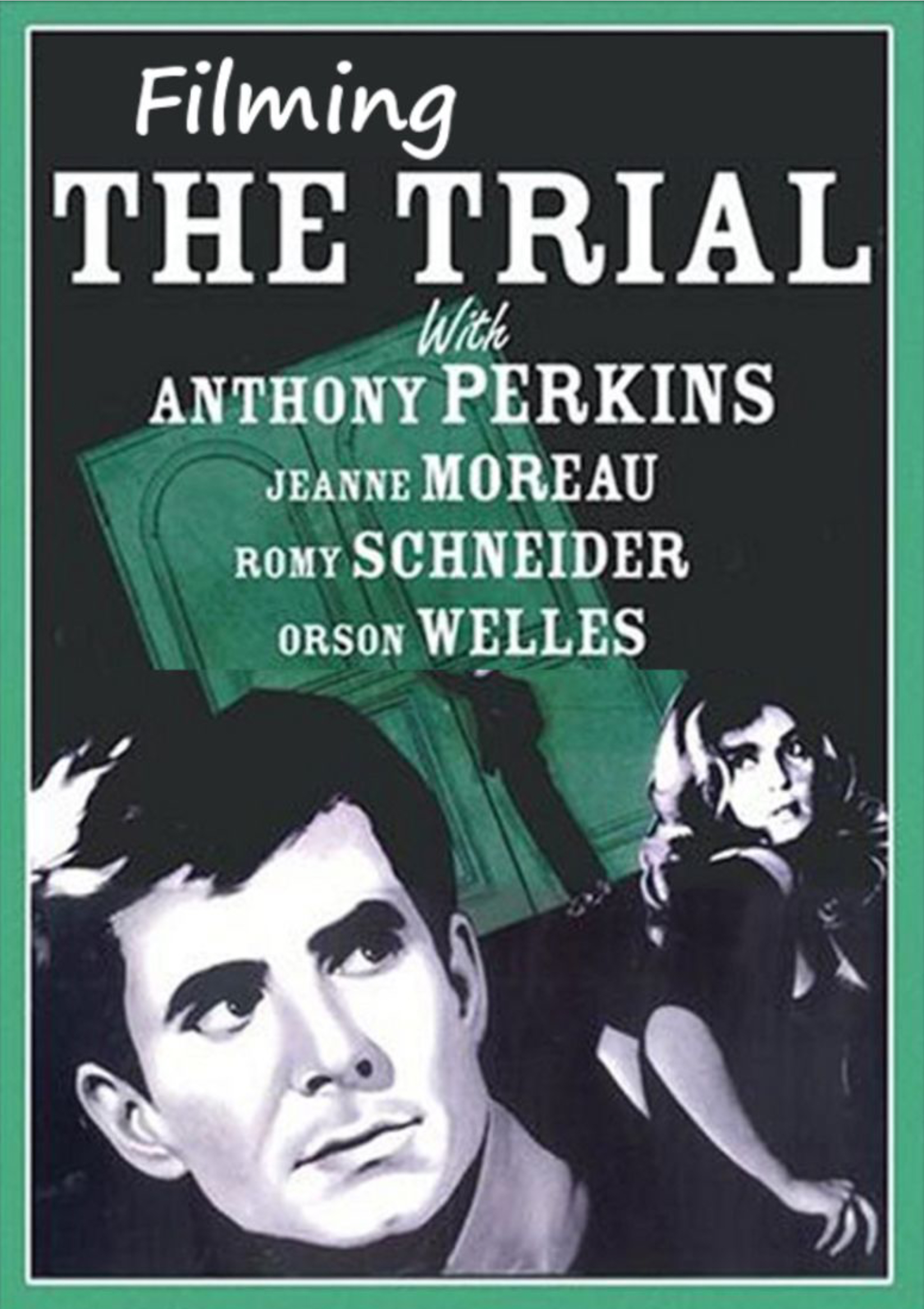
GUEST FILM REVIEW: The Trial (1962) by Holen

THE TRIAL (1962 Astor Pictures)

Directed by Orson Welles

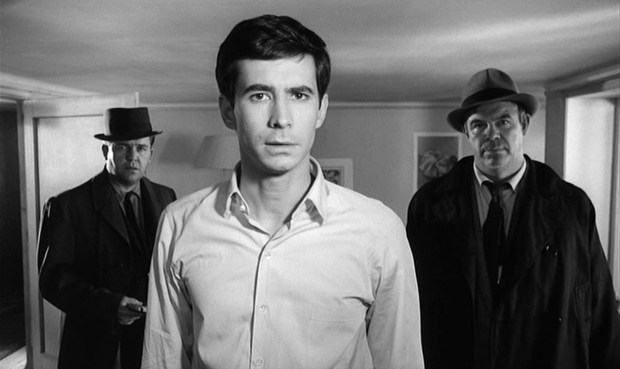
In some ways, it’s a shame that Orson Welles made Citizen Kane, and made it as his first picture. It seems to enable general audiences to ignorantly overlook an extensive and mostly excellent body of work. One of my favorites, and a film Welles himself once referred to as “the best film I have ever made,” is 1962’s The Trial. Welles tackles the Kafka novel of the same name with a masterful understanding of its source.

The tale is a surreal examination of a corrupt justice system in a vaguely dystopian society. Welles brings Kafka’s surrealism to screen in what might be the most strikingly acute representation of dream logic ever filmed. Certainly closer in feeling to my dreams than anything Buñuel or David Lynch ever made, great as their work remains. In The Trial, The tension is brought to a slow boil, as opposed to any cheap scenes of outright horror. The film has been compared to a nightmare, and too often cinematic portrayals of nightmares defer to sensationalized moments of screeching noise and hellish imagery, neglecting that ineffable feeling of dread that accompanies true nightmares in the moment. That feeling of fear and not being entirely sure what it is triggering the state of alarm.

A story like this could easily come off as cold, but the narrative focuses on the man himself over the system oppressing him, grounding the story through his point of view. Anthony Perkins plays the accused, only he and the audience are never told what crime he allegedly committed to warrant the persecution. It feeds into the dreamlike fear of not having all the pieces, a fear of the unknown, and ultimately a lack of control. It’s a powerlessness in dreams that parallels the powerlessness many feel at the hands of a cold and impersonal judicial system, and the marriage makes for one of the most emotionally compelling movies of this type.

The more confused we get, the more helpless we feel along with the accused. But the film never goes so off the rails that we’re lost completely. It gives the feeling of drowning while being so close to the surface. We can almost piece it together, but it’s murky. The feeling of disorientation doubling as a way to generate fear, and further represent how many must feel being subjected to the complexities of the legal system.

The visual language of the film is anchored by a bleak but soft black and white. Welles impresses with his typically inventive shots and images, many left off kilter in the slightest of ways, making extensive use of shadows, auras, and ambiguity. Rooms lead where it’s not possible to go, settings feel strange, and the extras make no noise. They’re strange and bizarre placeholders in the background, silent and faceless observers.

In spite of the narrative inducing the sensation of lacking control, it’s clear we’re in the hands of a director in total control of every aspect of his film. The cohesiveness of the story, visual style, and, mood give us something to hang onto as we’re thrust through this nightmarish tale. Every piece works in tandem to create an overlooked masterpiece from one of cinema’s geniuses, spawn from a novel by one of literature’s very same.

5/5

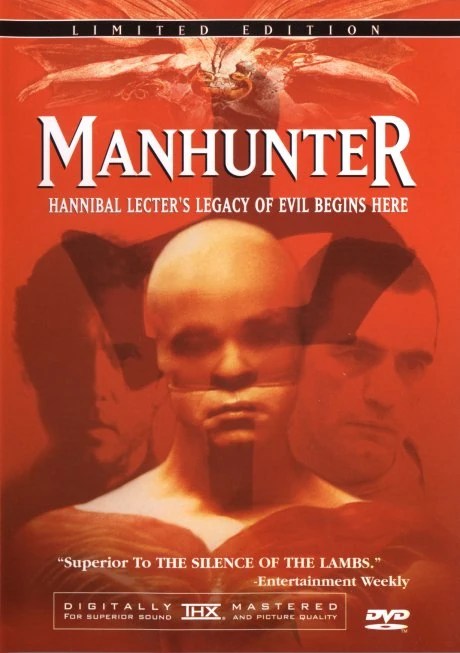
GUEST FILM REVIEW: Manhunter (1986) by Holen

MANHUNTER (1986 De Laurentis Entertainment)

Directed by Michael Mann

Did you think Silence of the Lambs was the first film to feature Hannibal Lecter? You were wrong! Brian Cox brought the character to life in Michael Mann’s Manhunter five years prior. It’s the first film adaptation of Thomas Harris’ novel Red Dragon. Despite under-performing big time at the box office, the film has has been reappraised in recent years and given more of the credit it deserves as pioneering influence on the crime genre.

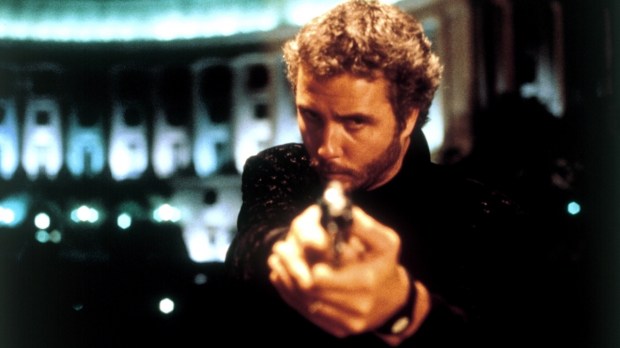
The story follows retired FBI agent Will Graham (William Peterson) being pulled back into the fold by his old boss to catch the latest crazed serial killer known as the Tooth Fairy (Tom Noonan). Graham was responsible for catching Lecter years prior (spelled Lecktor in this movie) although the process left him physically and mentally scarred. Graham’s skill set allows him to adorn the point of view of the killer a process that drains him mentally and leaves him on the cusp of insanity, but makes him remarkably effective in solving cases.

Being pulled from retirement and forced to consult with his assailant Lecter, Graham begins to deteriorate faster than before. Fresh out of one of my favorite films, To Live and Die in L.A., Peterson nails the role, appearing increasingly haggard and desperate throughout the movie. You can see his story in the lines of his sleep deprived face. Brian Cox’s portrayal of Lecter is more grounded, cunning, and disturbing than the uber theatrical Hopkins version. The two don’t share much screen time, but their link is felt throughout the film, particularly when Lecter vicariously finds a way to torment Graham from his cell through clandestine messages to the Tooth Fairy.

Given that this is a Michael Mann film, the whole thing is an aesthetic masterpiece with the “style” knob cranked to eleven. It exudes an aura of cool detachment complimentary to the chilly atmosphere of violent mental depravity. There’s also an emphasis on forensics and detective work many thrillers skip over for the more sensational moments. Here we see the cracks in between, Graham being forced to watch tapes of the Tooth Fairy stalking families before he murders them, trying to piece together a motive.

If you’re any kind of a fan of Michael Mann’s work or crime thrillers in general, there’s no reason I could see this wouldn’t be up your alley. It’s one of his most overlooked works, despite the small renaissance it’s been enjoying recently. Manhunter is smart, stylish, and lying ever in wait for you to discover its assets. Also, Joan Allen is in it, and she’s a total babe.

4/5

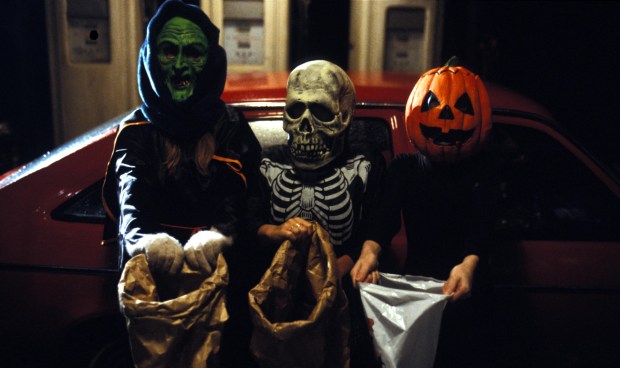
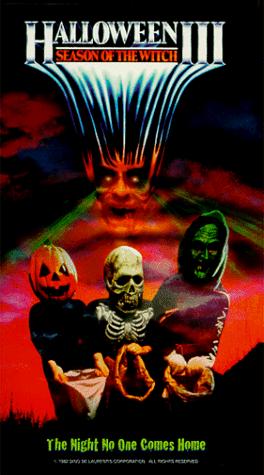
GUEST FILM REVIEW: Halloween III: Season of the Witch (1982) – Holen’s Halloween Extravaganza 2024 part 5

HALLOWEEN III:  SEASON OF THE WITCH (1982 Universal)

Directed by Tommy Lee Wallace

I’m sure most of you know by now that Halloween was supposed to be an anthology series, but the first film proved so popular the studio wanted Michael Meyers back for the sequel, and got him. This third entry was supposed to right the ship with a whole new story, but after two films with Michael, fans just couldn’t accept this and the movie was critically and commercially panned at release. Philistines!

Decades later the movie has had a bit of a resurgence, with plenty of loyal fans flocking to it every autumn. If you go into it thinking of it as Season of the Witch as opposed to Halloween III, it might help you appreciate the many merits of this film. It may make me a horror pariah, but it’s my favorite in the series. I’ve never been crazy about the original. I think Bob Clark did the same concept better years earlier in Black Christmas. The other Halloween sequels range from fine to shit to fucking shit.

Absolute legend Tom Atkins takes over for Jamie Lee Curtis as protagonist in this outing, playing an alcoholic doctor who’s also a licentious Lothario. There’s nary a woman in this movie he doesn’t or hasn’t previously screwed. Age, race, relationship status matter not to this man. He’s an equal opportunity womanizer, and that’s why we love him.

The mystery begins when a crazed man being chased runs into his hospital spouting incoherent nonsense, only to be assassinated by a man who blows himself up to avoid further questioning. His buxom young daughter shows up to investigate, and Tom abandons his kids on Halloween and ignores his estranged wife to get to the bottom of this young… I mean… the bottom of the mystery.

Signs point toward an Irish Halloween mask company. Spooky witchcraft, sacrificial rites, and robots abound in honor of Samhain. I always liked that this took the series in a new direction of horror. A kind of mystery thriller instead of a slasher, with a healthy dose of ‘80s camp. Even with the camp, the villainous old man from Robocop’s plan is remarkably sinister. I don’t remember Michael being willing to kill kids; this guy’s taking out thousands of those little fucks.

I find it hard to articulate why I get a kick out of this one so much. I suppose I have a weak spot for older, overweight, alcoholic, grizzled guy protagonists being incredibly politically incorrect by today’s standards. See also Nick Nolte in 48 Hours and George C. Scott in just about everything. Tom Atkins’ character is in that studied tradition, although a steady influx of vaginal variety seems to keep him from being as world-weary as the aforementioned.

Season of the Witch is a perfectly solid horror film, and I’m convinced it’s abysmal reputation is solely due to fans expecting more Michael bullshit. The Carpenter score slaps, the cinematography is vibrant and colorful, and the story progresses logically, however absurd it gets at points. Watch it, or Harrison will curse you with the scent of cabbage.

4/5

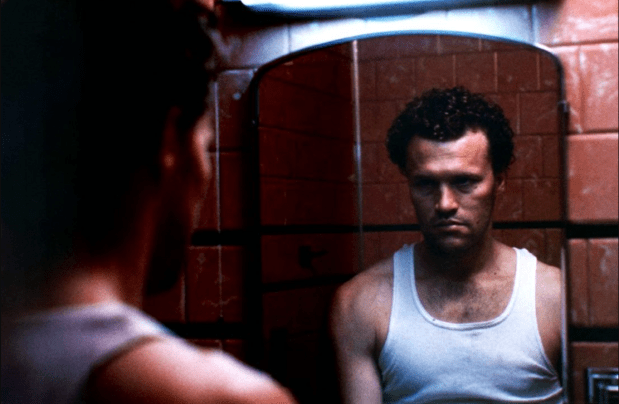
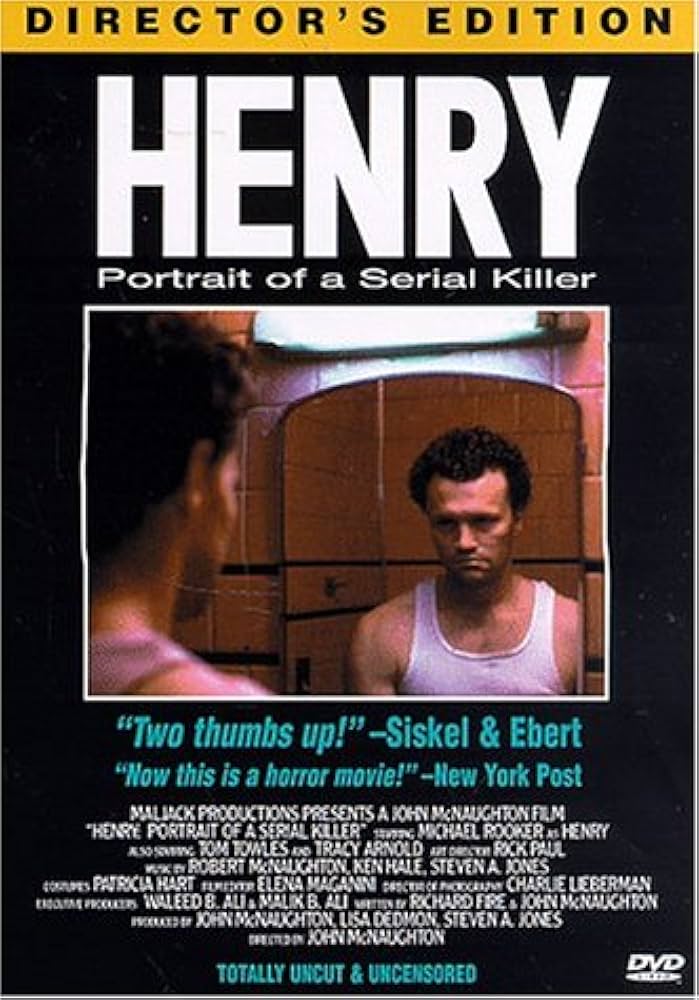
GUEST FILM REVIEW: Henry: Portrait of a Serial Killer (1986) – Holen’s Halloween Extravaganza 2024 part 4

HENRY:  PORTRAIT OF A SERIAL KILLER (1986 Maljack Productions)

Directed by John McNaughton

Originally shown at the Chicago International Film Festival in 1986, this controversial low budget portrait of a serial killer took until 1990 to see a wider release. Saddled with the onus of an X rating, the indignation of puritans, and the schlock tagline “he’s not Freddy, he’s not Jason… he’s real,” you’d be excused for dismissing it as exploitative trash from a distance. However, you’d be remiss not to change that opinion after watching the thing.

The film was met with lavish praise from most prominent critics at the time, something few horror movies can ever claim. It’s a bleak, stark, and clinical look at violence and psychopathy. Henry: Portrait of a Serial Killer is a high brow look at a low brow existence of purposeless violence and squalor.

Michael Rooker plays the titular killer with icy perfection. There’s nothing exploitative about it, Henry doesn’t even seem to particularly enjoy the killings. It’s just something to do, a compulsion. He lives with his old prison buddy Otis, an oaf who eventually joins him on his homicidal streak. Unlike Henry, Otis gets off on the killing, giving him a sense of power and thrill. There are times Otis wants to kill out of frustration or passion, but Henry has to hold him back, informing him that’s the easiest way to get caught.

Henry’s modus operandi is to appear as if he has none. His killings are random with a different weapon every time, living as a vagabond to avoid any police suspicion. Otis lacks the discipline to play by Henry’s demented rules for an extended period, and the relationship begins to turn sour.

Joining them in the dynamic is Otis’ sister Becky who comes to live with the two of them. Henry feels protective of her, and she begins to fall for Henry. Incapable of reciprocating any healthy emotional bond with another person causes things go sour between them as well, although Becky doesn’t have the sense to realize this before it’s too late. He comes to view her as dead weight, baggage that will hold him down, and his lifestyle requires that he travel often and light.

Shot on grimy looking 16mm film, the haggard and grainy look compliments the frigid nature of the piece perfectly. When the two leads acquire a camcorder and begin to film the murders, it lends itself even more to a documentary feel. It’s easy to sensationalize material like this, but this grounded approach and the cast’s nuanced performances bring a disturbing verisimilitude. It’s a perfect watch if you’re looking for a psychological approach to ultra violence this Halloween, and it works as a grim character study any other time of year as well.

4.5/5

GUEST FILM REVIEW: Terrifier 3 (2024) – Holen’s Halloween Extravaganza 2024 part 3

TERRIFIER 3 (2024)

Directed by Damien Leone

Since I’ve been covering horror films of old the last two weeks, I thought it apt to cover one more contemporary. As contemporary as it gets as a matter of fact, as I just got out of an opening night showing a few hours before writing this. If you’re unfamiliar with the Terrifier saga, it focuses on serial killer/demonic supernatural entity Art the Clown. Initially appearing in short films and an anthology, he was granted a feature length excursion in 2016, the little indie movie that could, Terrifier. Made for around just $50,000, the film was panned critically, but garnered enough of a cult following to warrant a sequel.

Terrifier 2 was released in 2022 with a budget of just a quarter of a million dollars. However, the film was a surprise hit, making fifteen million dollars at the box office and garnering a number of positive reviews. Fifteen million may not sound like a lot these days, but bear in mind that this is an independent film series so violent that each entry has been released unrated.

And oh: the violence. Director Damien Leone received offers from major studios after the success of the second film to finance the third, but he had the integrity to turn them all down because he knew they’d try to censor his vision. These films make standard slasher flicks look like Walt Disney. Reports of people fainting, vomiting, and leaving the theaters in droves have accompanied the release of each film. None of that happened at my screening of Terrifier 3. The place was packed and people were glued to their seats. I was amused at how many guys were there with reluctant looking dates, possibly getting their girlfriends back for dragging them to something like Anyone But You earlier this year in the cruelest way possible.

It’s not all gruesome macabre gore though. These movies have a spirited sense of humor, and they’re only getting stronger each time out. Art is mute, but unlike other slasher villains, he’s incredibly emotive. David Howard Thorton imbues his performance with the grace, physicality, and body language of a silent film star, leading to moments of genuine hilarity. Whether he’s mocking his suffering victims or eroding their guard before hacking them to pieces, Thorton is perfect and totally committed. I was worried they wouldn’t be able to top sadistic comedy of the salt and bleach scene from 2, but I’m happy to report I laughed as much during 3 than I have at any comedy I’ve seen in years.


Another impressive aspect of 2 and 3 is the introduction of Sienna Shaw in the former film as the main protagonist. Played by real life martial artist, stunt performer, smokeshow, and general badass Lauren LaVera, we’re gifted a likable character to root for against Art. I say this is impressive because the film manages to have its cake and eat it too. A criticism levied at many slasher movies is that the one dimensional personalities of the victims makes the audience root for the killer, or at least see the movie through their point of view. The film does have its number of anonymous one dimensional meat bags for Art to cut through, but we have someone fundamentally good (angelic even) we hope to see triumph over him. Only after watching him creatively waste the supporting cast of course.

Art disposed of most of Sienna’s friends and family in a Halloween massacre during the second film, and she’s understandably having a hard time coping with that at the beginning of this one. Taking place five years after the previous film, Art being believed dead, Sienna is discharged from a mental institution to the care of her aunt and uncle where she hopes to spend a quiet Christmas with them and her young cousin, Gabbie. Art, who’s simply been dormant, is awakened in a condemned building by a demolition crew. Dispersing them in skin peeling fashion, he now has access to their van and all the goodies inside it.

Lauren LaVera crushes it here. She played a high schooler in one of those high schools where everyone looks like they’re pushing 30 in Terrifier 2, but here she’s convincing as a traumatized woman that fights every moment to stay strong for those around her. Haunted by violent hallucinations of the people she couldn’t save, LaVera navigates the precarious balancing act of portraying a damaged character that still has her innate toughness.

There are supernatural elements to Art and Sienna explored more in this film I don’t intend to spoil here. The imagery is not subtle, but in a film like this, subtle doesn’t really play. I’ve heard criticism that the plot is somewhat aimless compared to the first two with the addition of all the additional mythos. I can understand boring people considering some of Art’s kills to be unnecessary from an economic writing standpoint, but one of the main reasons people see these movies is for the spectacle of those inventively grotesque murders. Being so hyper-focused on plot is missing the forest for the trees. Besides, Art being on screen is guaranteed gold every time, and I was never bored or felt like the story was dragging when we cut to Sienna, because I liked her as a character and wanted her to prevail.

Admittedly, you need the right mindset or physical constitution to endure or enjoy this thing. Maybe I’m a sick fuck, but I had an absolute blast seeing this in the theater. So far each film has been a step up from its predecessor, and its cliffhanger ending has me excited for part four whenever it’s released. Damien Leone has assembled a group of very talented people, and his direction rises to their level. The film has reportedly already earned fifteen million dollars, which I hope ensures the production of the next one.

4/5

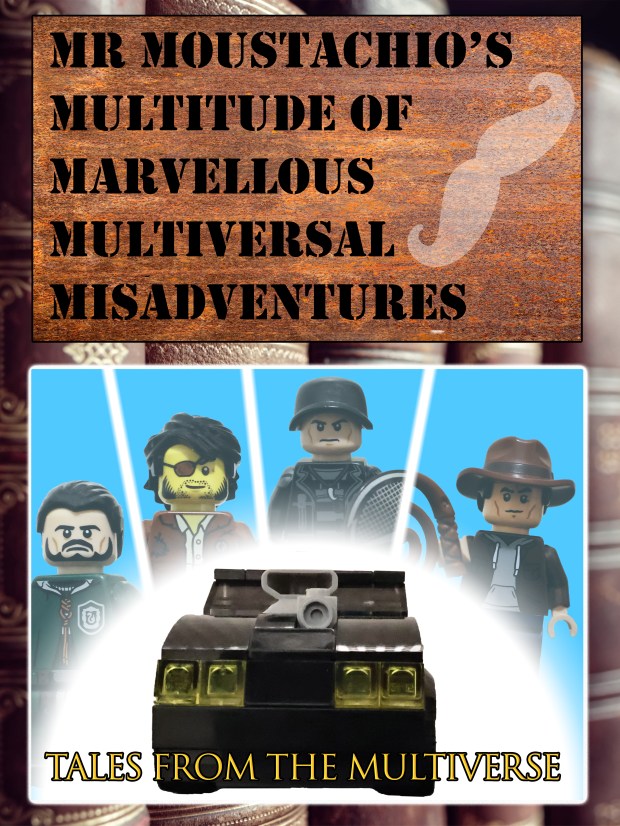
Mr Moustachio’s Multitude of Marvellous Multiversal Misadventures: Tales From The Multiverse Chapter 3 by Harrison Kopp

by Harrison Kopp

Mr Moustachio’s Multitude of Marvellous Multiversal Misadventures
Tales From The Multivers Chapter 3


Part 1 – Man Of A Thousand Blades

Sunset Town

The 21st century

An hour before it’s dark


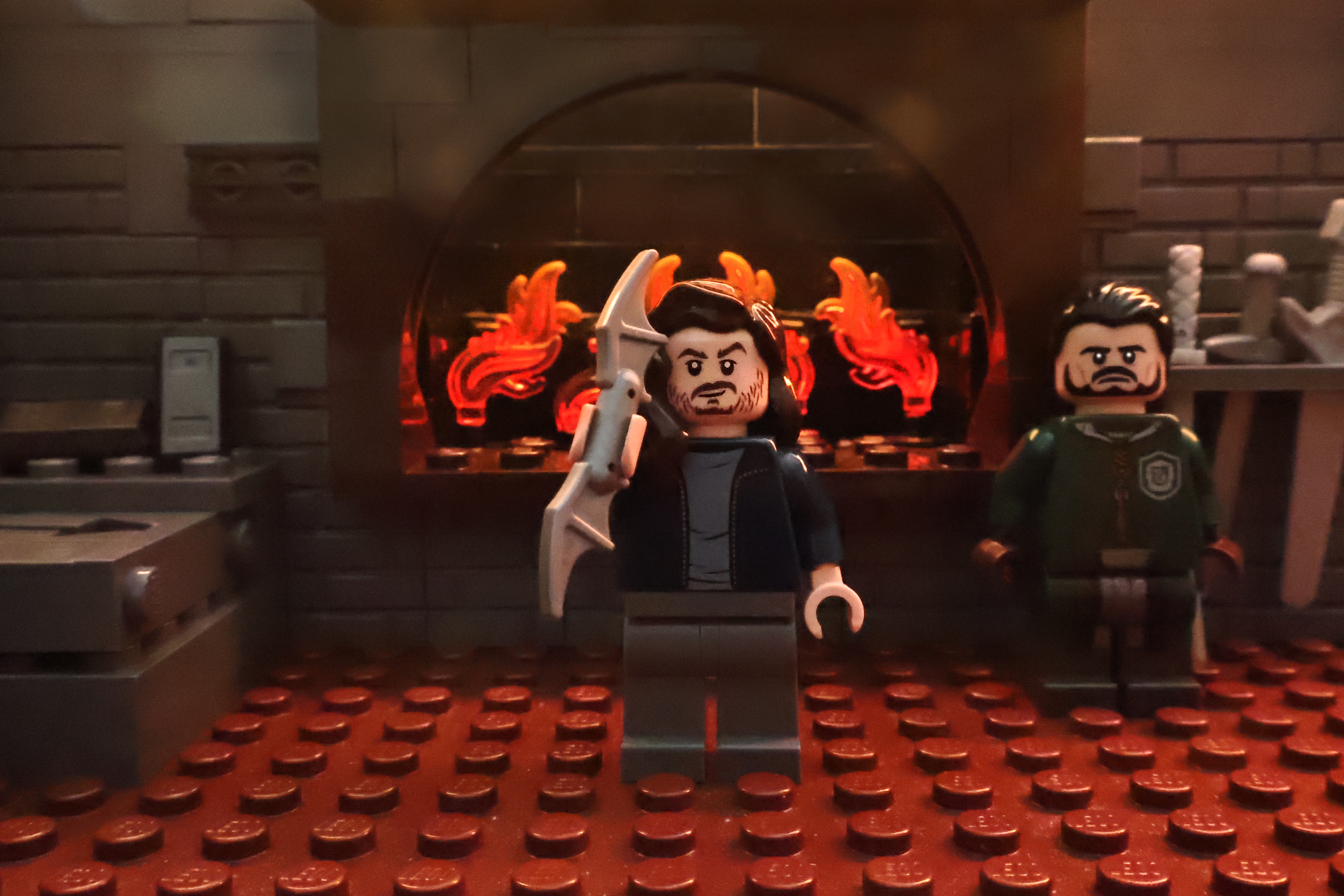
Sweat was pouring off El Moustachio’s brow. The heat of the furnace was intense. The temperature needed to melt this metal of interstellar origin was unimaginable. The master of the forge, an aging individual with a black beard and more lines on his face than most had years lived, watched over the proceedings.

“If you forge it properly, it will be harder and sharper than any other metal you will find. But fail in your technique and it will fail you when you will need it most.”

Moustachio was concentrating intently. The skill required was beyond anything he had trained for in the past. And that included the mandatory boomerang training he had taken in school back when he was a kid.

Finishing his efforts, he set the blade to cool. That afternoon, the pair returned, and the forgemaster inspected the Australian’s handiwork.

Moustachio had crafted a new boomerang. It was still moustache-shaped, but this time it was a little different. His previous boomerang had had the grips on each end and the blade in the middle, but this one reversed it. He could still throw it with ease, but now, with the blades on the ends, he could also wield it in close quarters as one would a double-bladed knife. Easily the superior weapon of the two.

The forgemaster turned it over in his hand, running his eye along the cutting edge.

“Never have I seen so flawless a blade in all my years teaching,” the master said.

“Thank you,” said Moustachio.

“And never before have I seen so many attempts.” The older man continued, gesturing to the many discarded semi-completed blades (Moustachio had been here only 80 days, but had spent most of them in the forge).  “You have learned well with each try, and your determination and drive for perfection is beyond that of any of my previous students. This blade will not fail you.”

And so the time came for Moustachio to move on in his travels through the multiverse. He bid his master farewell and gunned the engine of the V8 interceptor, roaring off into the great unknown with his new weapon.


Part 2- Tennessee Bones & The Temple Of Doom Metal


South America

1995


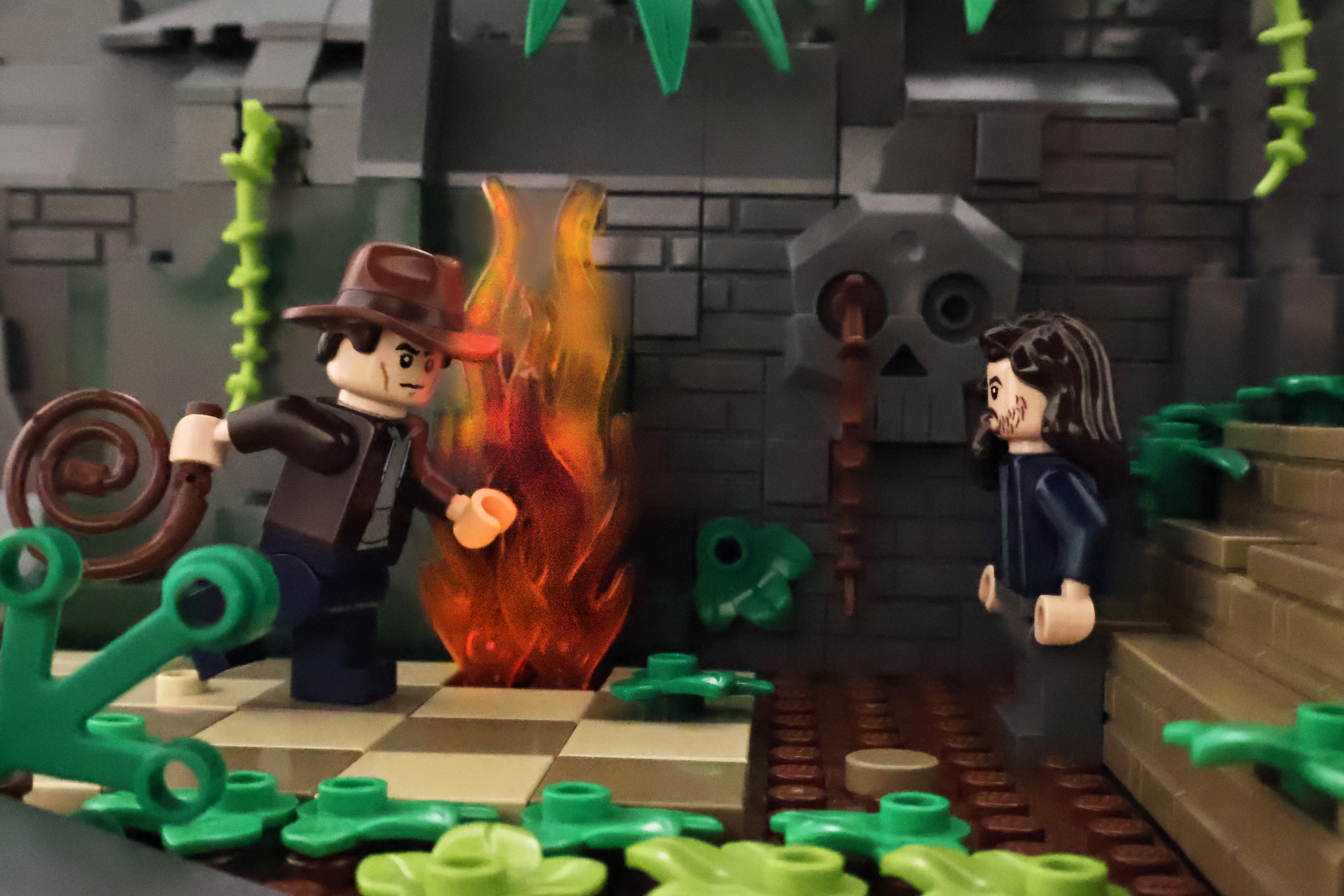
Tennessee Bones strode purposefully through the South American jungles, occasionally pausing to hack at some vines blocking his path. Behind him walked El Moustachio, enjoying the clear path the former man had created. The two men were here trying to locate a hidden temple dedicated to Doom Metal.

It was rumoured to contain many artefacts of the musical genre, some of which had essentially become ‘extinct’ in the music collector’s scene in the rest of the world. But so too had the temple and its treasures been lost. The two men were following a tattered map. While they both had their doubts as to its veracity, they were both willing to give it a try.

Abruptly, Tennessee came to a standstill. Under the brim of his fedora hat his eyes studied the dense vegetation in front of him. Then, without a word, he stalked forward and made three direct cuts to a specific part of foliage.

The plants melted away to reveal a hole in a rocky wall. From inside the faint sound of wind could be heard.

“Looks like it’s through here,” he called back to his Australian companion.

The two men carefully ventured forth. There was no telling what traps had been laid to protect the precious musical artefacts inside.


After a short time, with more than a few close calls, they happened across a large circular chamber, with pedestals lining the outer wall. A mass of candles lit the room, and atop each pedestal sat a vinyl record or compact disc (as well as a few other, more obscure, music formats). The two men knew they were in business.

Tennessee could hardly contain himself, bounding forward with such enthusiasm that if there had been any traps in the room he would have gleefully sprung them without the chance to react.

“The superintendent will be thrilled with these finds. The museum will be having a new exhibit alright. We might even need to build a new wing to house it all. I won’t be able to bring this all back with me in one trip.”

The Canadian ran from pedestal to pedestal, gawking at sights once thought completely lost to mankind.

Moustachio homed in on one in particular:  Black Sabbath’s 1970 debut album. There was an entire shrine dedicated to it at the back of the room, with copies of the album on every possible format. Even 8-track! Moustachio wasn’t even sure if it came on 8-Track back in his home universe.

The plaque below the display described the album as the forebearer of the genre.

It seems some things do remain consistent across the universes, Moustachio thought to himself.

Tennessee had no use for it. It was, after all, widely available, unlike some of the other rare finds in the room. Moustachio happily helped himself to the cassette edition of the album. Why that one in particular, I hear you ask?

Well part of the process of transferring universes using the V8 Interceptor required the driver to be listening to pure rock music. Where before he would have to tune into the radio and get lucky, now he could play it on demand.

(Is Black Sabbath strictly rock music? Well, heavy metal founders this, riffmaster that yadda yadda. They still count as rock music in my book. I’m pretty sure they described themselves as hard rock music back in the day. Motorhead would always introduce themselves as rock and roll too. And besides, these are just labels record companies give bands to market them to people who liked similar bands. Iron Maiden aren’t heavy metal, or hard rock or progressive metal- their Iron Maiden! Listen to whatever you want to, and don’t let anyone tell you you can’t enjoy Ghost because “they’re not heavy metal”).

Anyway, sorry about that. Back to the story. The two men parted ways, happy to have spent the time together in company, but both with their own paths to tread. Tennessee Bones still had numerous treasures to uncover, and Moustachio once again set out into the infinite multiverse searching for a way home.


Part 3 – A World Without Heroes

Earth-88

1942

 The throaty crackle of a powerful V8 engine shattered the stillness of the Egyptian desert morning. Its dawn chorus was echoed by the quieter, but rougher, sound of a diesel truck engine.

Racing through sand roads was Moustachio’s V8 Interceptor, now with a modification to the rear to fit one large fuel tank and another large tank with an assortment of compartments for various liquids. Being out on the road in the multiverse often took him away from oil and coolant for extended periods of time.

Fleeing the black car was a Mercedes-Benz LG3000. The workhorse truck had had a head start, but Moustachio had quickly closed the distance. The Australian pulled a revolver from his door-well and fired at the truck’s rear. This did not escape the notice of its occupants, and out from inside the truck swung a stony-faced German in black armour.

He effortlessly climbed to the roof of the truck and fearlessly turned to face the source of the bullets.

Moustachio fired again. Three shots. With almost impossible reflexes, the unusual German Soldier raised his shield, blocking them all. Upon his shield was a familiar 3-point star insignia.

The German was not content to merely soak up ballistics, however, and promptly hurled his shield directly at the V8 Interceptor’s windscreen.

Moustachio swerved to avoid the flying shield, nearly taking out a wandering camel. The shield, meanwhile, bounced off the ground at a peculiar angle, before ricocheting off a rock wall and returning to its owner’s arm.

Suddenly Moustachio knew exactly who this was. And he wasn’t thrilled at the idea of having to take on Captain America. Well, more like his German variant. Kapitan Deutschland, probably.

They were approaching the outskirts of Cairo now. This chase could get infinitely more dangerous if it continued. Bullets sprayed the air next to his car, and he flicked his eyes to the mirrors. A couple of German pursuit cars had caught up to him.

Crud, Moustachio thought to himself.

Atop the truck Kapitan Deutschland readied his shield for another throw. Behind him the vehicular gunners adjusted their aim. Between the two of them, one would hit their target.

With a heavy heart, Moustachio had to withdraw from this chase.

Regretfully he gunned the engine and disappeared into another universe seconds before his position was riddled with gunfire. He hated to leave the cargo in the hands of the Germans, let alone give them free reign on the rest of this world, but he had no choice.

One day I’ll come back he thought to himself as he disappeared in a fiery-orange flash.

Part 5 – A Selection Of Items That Can Be Found In The Interceptor’s Back Seat


The Cross Factour Live

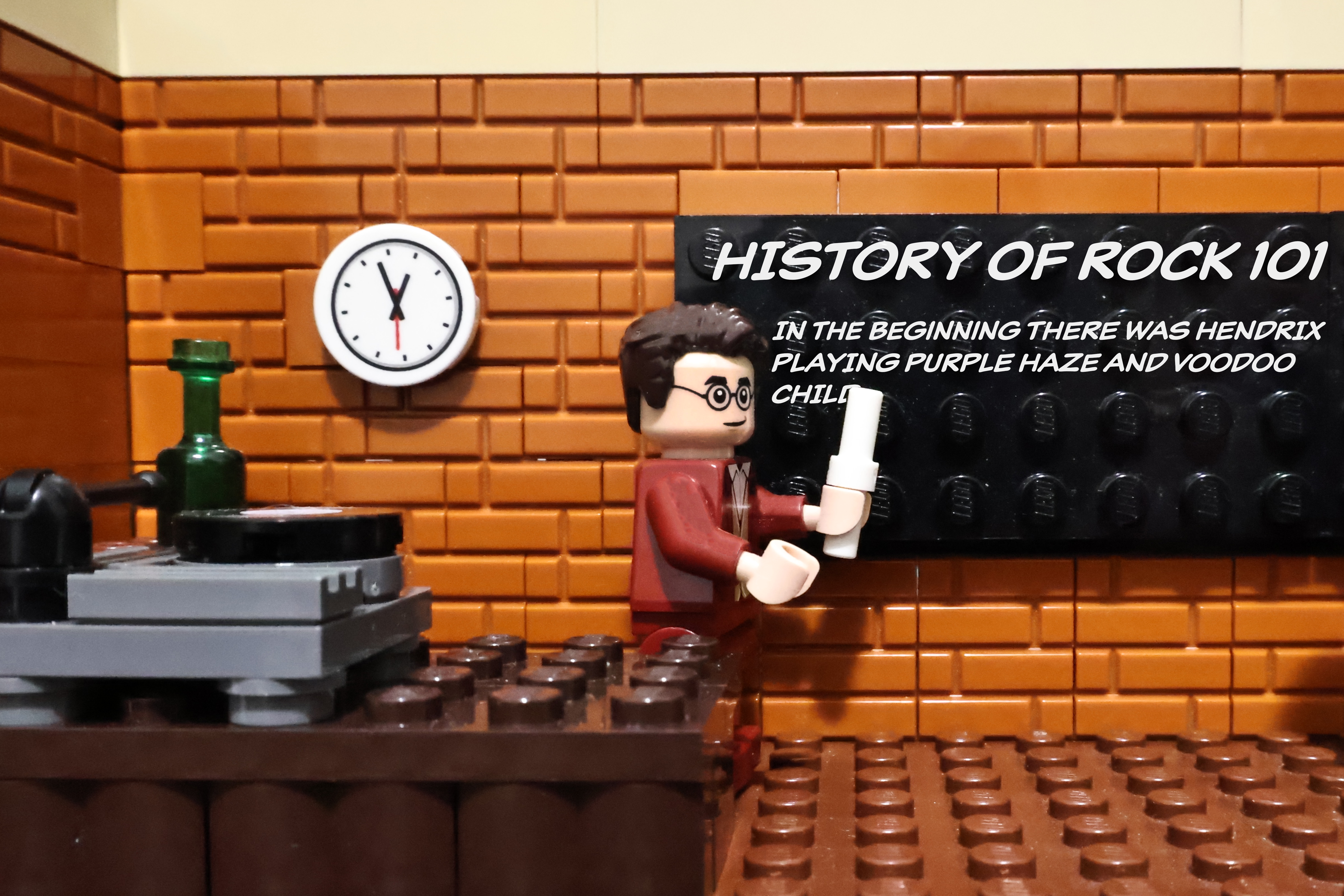
As you could imagine, in the multiverse you could often find alternate versions of history. In the music world this meant a wealth of albums you could only dream of back home. Moustachio had bought a few of them along with him. For his friend Tee Bone Man there was the rest of the Van Halen discography with David Lee Roth on vocals. For the Brainiac there was Kiss’s Creatures of the Night album, but with Eddie Van Halen playing guitar instead of Ace Frehley. He’d also taken the 8-track copy of Black Sabbath, for good measure. There could be some weird people out there who collected formats that they couldn’t even play.

For himself, Moustachio had a couple of interesting finds. He had grabbed a neat 7” single from Thin Lizzy for the song “Reelin’ in the Years”. He knew this as a Steely Dan song in his home universe, but routinely called it the best Thin Lizzy song they never wrote. He was thrilled to have a version with Phil Lynott singing, and the sizzling dual-guitars.
But the best find for him was the live album from Iron Maiden’s ’95 – ’96 tour, with Tony Martin on vocals. Moustachio loved Blaze Bayley, but he also always wanted to hear what it would have sounded like if Tony Martin replaced Bruce Dickinson in 1994.


A Dual IPA Beer

This was a genius one. Someone had invented a bottle with two distinct segments, one taking up the top half of the bottle and the other the bottom half. There was a one-way valve in that divider that allowed liquid from the bottom to enter the top, but not the other way around.

This bottle was filled with two different IPA beers – one in each half. As the drinker drank, the top liquid would be replaced with liquid from the bottom half, ensuring that every single mouthful tasted different. A truly revolutionary concept.

This would, however, upon reaching the halfway point, also make it look like the remaining liquid was levitating.


Kylo Ren’s Lightsaber

On Kef Bir, Moustachio had bartered with a fisherman for the lightsabre Kylo Ren had thrown into the sea when he turned back to the light side. It wasn’t functioning anymore, as the water had thoroughly soaked the insides, but Moustachio was sure his friends back home could get it working again.


Part 45– Colourful Dossier

Earth-1340


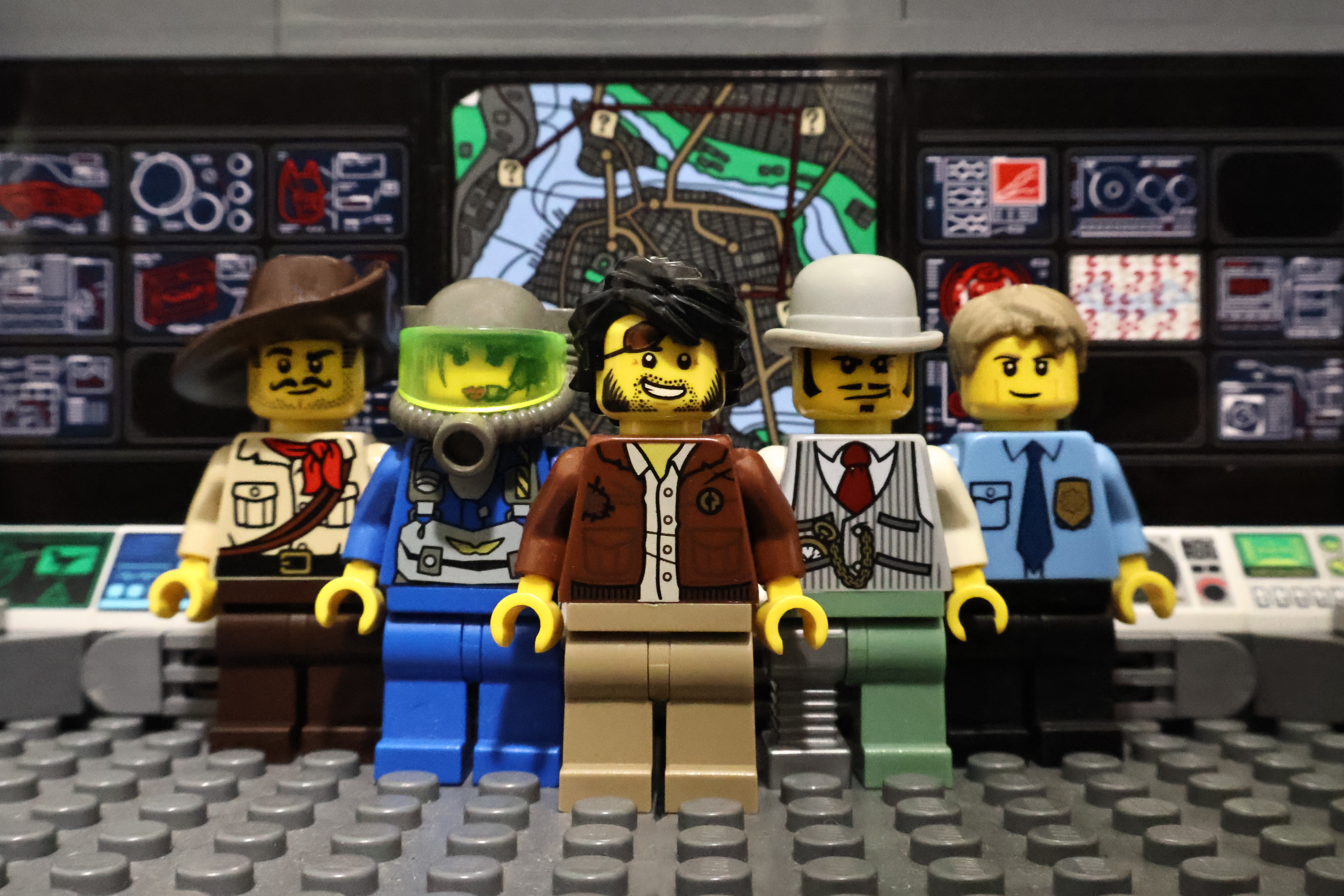
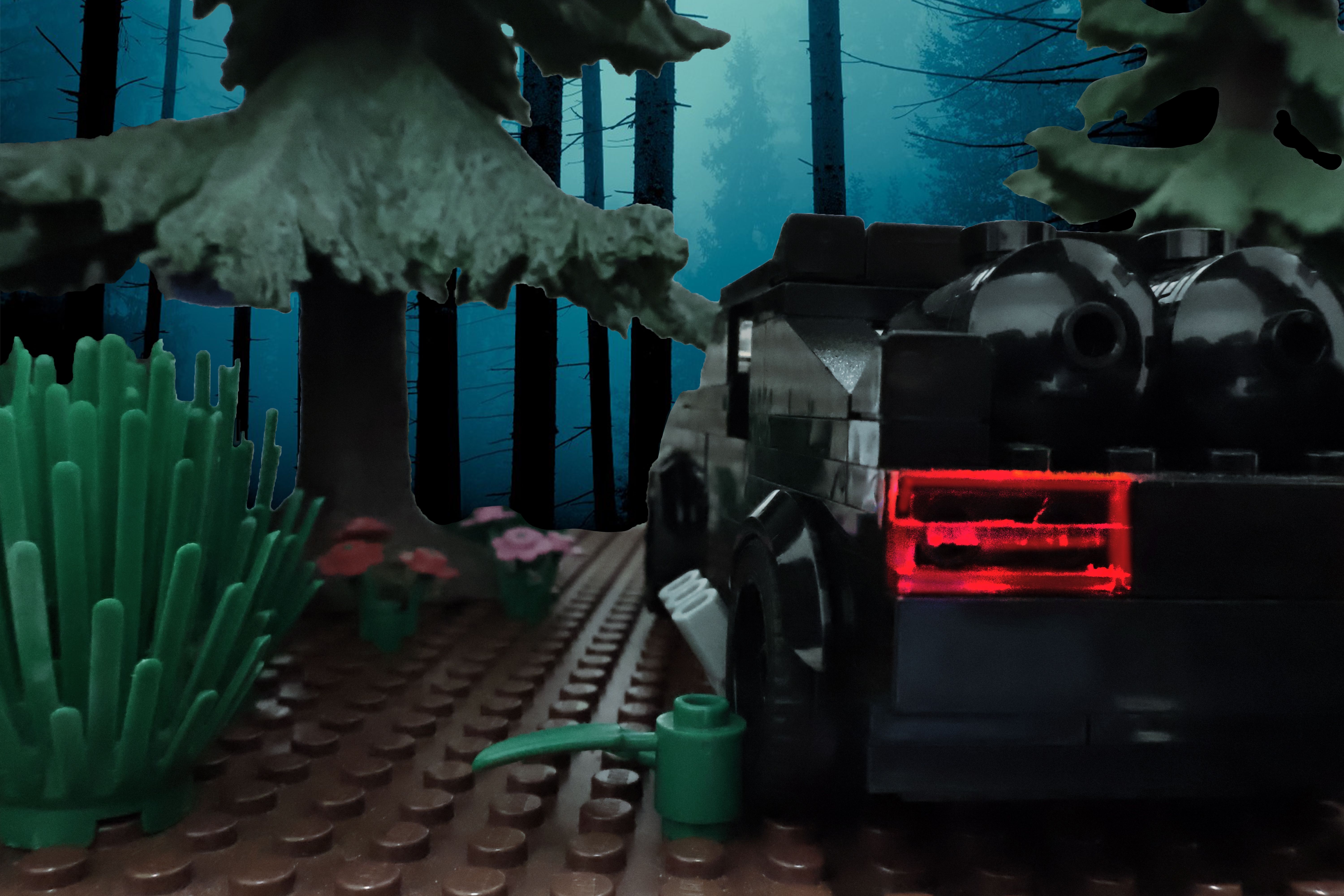
This was a weird one. El Moustachio had found himself in a universe where everything appeared to be made out of some form of plastic building block. It took a lot of getting used to. Not being able to scratch one’s own back was certainly a bummer, but he came to appreciate the simplicity of the world in a lot of aspects.

It didn’t take him long to find a group of like-minded heroes. The League of Extraordinary Minifigures, as they had named themselves, were more than willing to accept Moustachio’s assistance in their endeavours. And while he would embark on several adventures with this team, he ultimately decided to move on and seek his home universe once again.


Now these are, of course, only a small selection of El Moustachio’s exploits in the multiverse. The true extent of his adventures stretched over several months and are too numerous to give form to in this level of detail. But we will give you a taste of the next full-length adventure in this series in the coming paragraphs.


Part 6 – A Savage Circle

A World Not Too Dissimilar To Our Own

Wednesday Morning, 3AM


With an uncontrollable scream, the Brainiac lifted his lightsaber in the air with both hands, ready to strike the killing blow.  “Time to die, clone!”  He swung the blade down…

…And was met with the sharp end of a Vibranium boomerang embedded in his chest.  In his mad rage, he could not see that Shinzon was still armed, with the deadly boomerang in his right hand.  Shinzon grinned wide as he shoved it deep.

“Time to die indeed!” he cried in victory, as the Brainiac collapsed on the ground.

Barely able to speak, Brainiac sputtered blood from his mouth and fell to his knees as his vision blurred.

He awoke with a start. Not the same Brainiac that was killed by Shinzon, though. This one lived in a different universe (and we shall refer to him as Brainiac II henceforth, to avoid confusion). He was soaked in sweat and breathing heavily. He couldn’t believe the nightmare he just had. It was a nightmare right? It felt so visceral and real.

He lay back down in his bed and tried not to think about it. Life had been crap enough recently, without adding thoughts of his imminent death to it.

But it was at this very moment that his life was about to change for the better, as elsewhere in the Bruce County, one El Moustachio and his V8 Interceptor burst into this universe in a burst of golden-brown flame.


THE ADVENTURES OF TEE BONE MAN:  PHASE ONE – THE SQUIRREL SAGA 

THE ADVENTURES OF TEE BONE MAN:  PHASE TWO – THE MULTIVERSE SAGA

THE ADVENTURES OF THE NORTHERN LIGHTS:  PHASE THREE – THE UNICRON SAGA

  • Chapter One:  A New Beginning


SPINOFFS AND SIDE QUESTS


THE COMPLETE ADVENTURES OF EDIE VAN HEELIN’

THE WRITER’S ROOM