REVIEW: Deep Purple – Whoosh! (2020 Super Deluxe box set review)

DEEP PURPLE – Whoosh! (2020 Edel Limited Edition Collector’s Box Set)

Includes:

  • Whoosh! (CD and 2 x LPs)
  • The Infinite Live Recordings, Vol 2. (3 x 10″ EPs)
  • DVD – Live at Hellfest, Roger Glover and Bob Ezrin in Conversation


Whoosh!

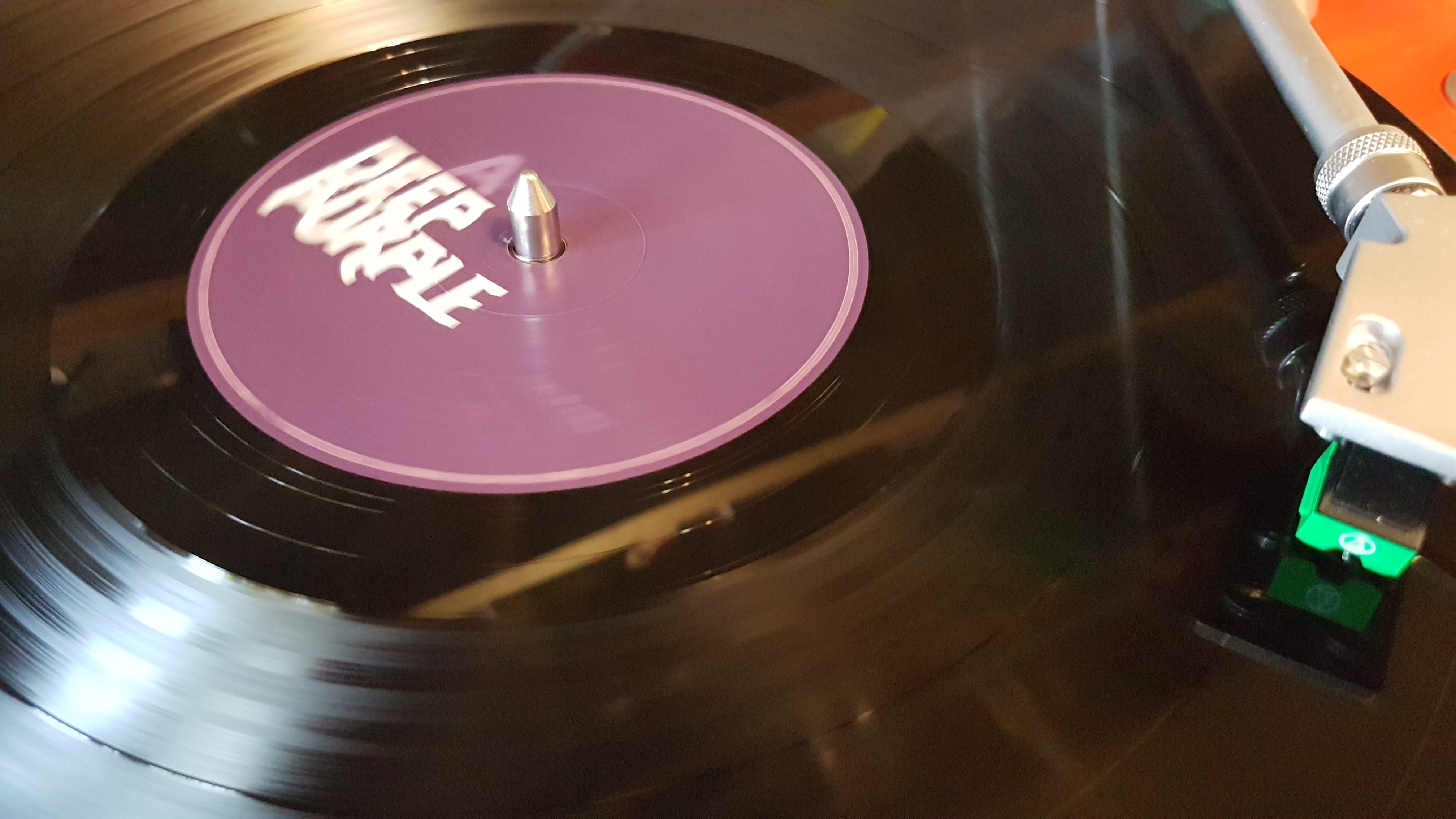
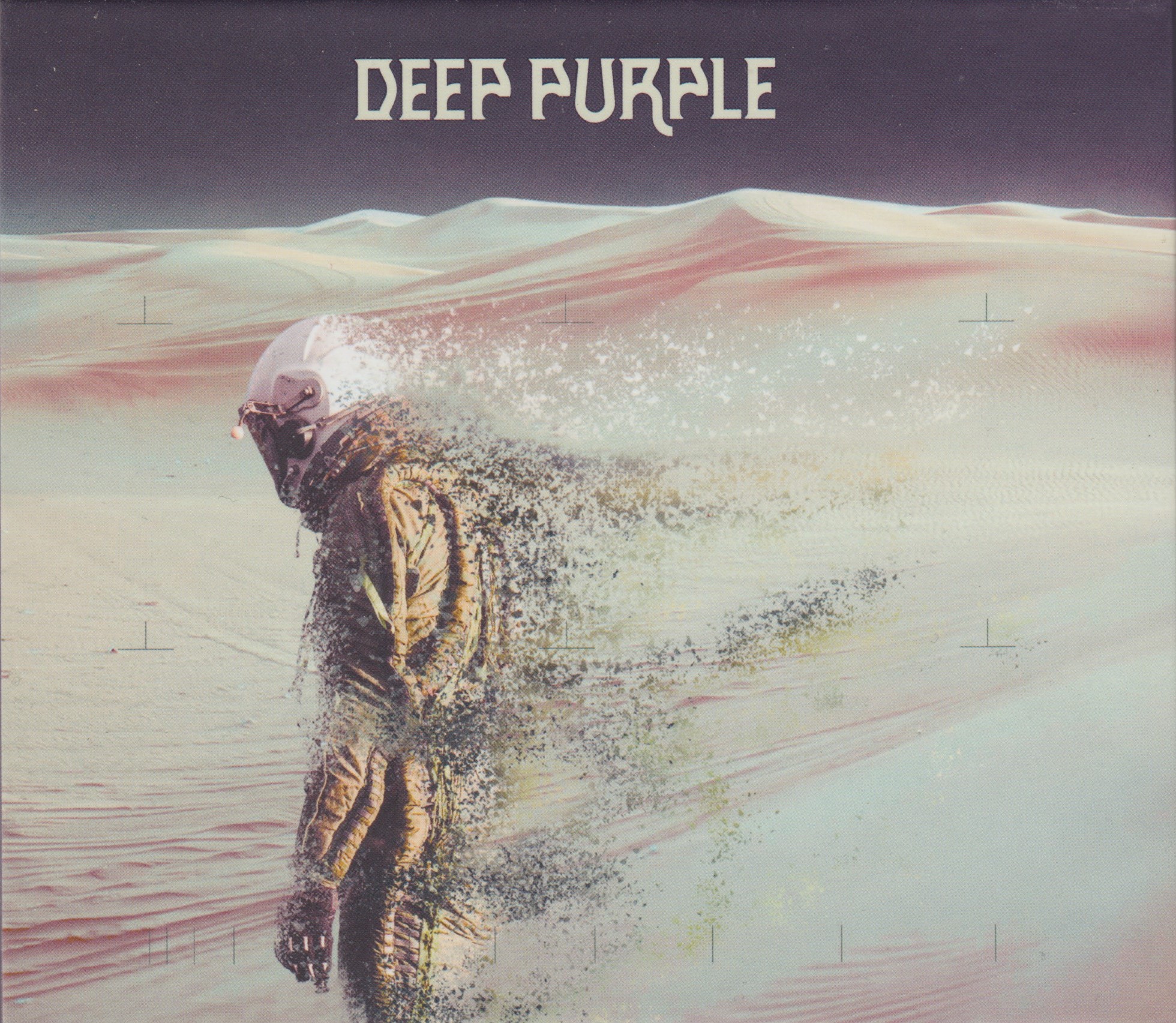
Every Deep Purple album seems like the final album.Β  Maybe this one is; maybe it isn’t.Β  It feels like the band treat every album as seriously as if it was their last.Β  The cover art and music of Whoosh! takes us back to 1968 and Shades of Deep Purple.Β  The logo is similar, and there is a new version of the 52 year old first Deep Purple song ever, “And The Address”.

Opening with the lead single “Throw My Bones“, the album sets a mid-tempo pace from the start.Β  This is a lush, catchy groove with hints of classical and funk.Β  It began life during the Infinite sessions but was not finished until Whoosh!Β  Purple pick it up a bit on “Drop the Weapon”, a non-preachy appeal for cooler heads to prevail.Β  It has a similar vibe to the 1988 album Accidentally On Purpose by Ian Gillan and Roger Glover.Β  The immediate riffs and hooky vocals are bound to make this a favourite.

“We’re All the Same in the Dark” has a cool groove and a jaw dropping funky Morse solo.Β  Purple haven’t sounded this funky since Glenn Hughes was in the band.Β  Airey and Glover give it some heaviness.Β  “Nothing At All” sounds like a Morse composition, but his intricate classical-inspired interplay with Airey is sheer delight.Β  This could be the best track on Whoosh!, and contender for one of the best songs of the entire Morse era.Β  A massive chorus could help this one cross over on radio.Β  Though it’s a far different song, “Nothing at All” has elements that recall “Never A Word” from Bananas.Β  A regal-sounding crowning achievement.

“No Need to Shout” opens with the growl of a Hammond.Β  “Just a bunch a crap, you’re talkin’ out your hat!” sings Ian on a song featuring rare female backing vocals.Β  This is one of a few new Deep Purple songs that display a pissed-off attitude.Β  “I got your message loud and clear, the meaningless ringing in my ear.”Β  Add in a couple naughty words and you can tell Ian isn’t having any of it.Β  Cooler though is “Step By Step”, a very different kind of song with perhaps some lineage with “Vincent Price” from Now What?!Β  The haunting, ghostly quality of “Step By Step” sets it aside with a cascade of keyboard accents.

Purple start to boogie on “What the What” (a friendlier way of saying “What the Fuck”).Β  While Don’s hammering the keys, Steve stabs out with some tasty guitar twang.Β  If any song recalls “old” Deep Purple, it’s “What the What”, which could have been on 1973’s Who Do We Think We Are!Β  But that album completely lacks the joie de vivre of “What the What”.Β  Then Purple get heavy on “The Long Way Round” which just drives.Β  The keyboard solo is out of left field but is a spacey masterwork to itself.Β  There’s even a sly Black Sabbath callback — “I promised myself I would not get Trashed again.”Β  Then the song dissolves into a beautiful, quiet stream of notes.Β  This serves as a great lead-in to “Power of the Moon”, an excellent track previously heard on the “Throw My Bones” single.Β  It stalks prey in the cover of night.

Another heavy growl unexpectedly opens “Remission Possible”, an absolutely smokeshow of fretwork.Β  It’s a brief instrumental interlude just before the excellent “Man Alive”.Β  This track, enhanced by orchestra, sounds absolutely massive.Β  It has serious heft, but it’s not weighed down.Β  Ian is writing about some heavy themes and it will take deeper analysis of the album as a whole to decipher them all.Β  Roger Glover was very happy with Ian’s writing on the album, which takes a more contemplative tone without going heavy-handed.

The final side of vinyl begins with another instrumental, the aforementioned “And the Address” from Shades Of.Β  Deep Purple have occasionally re-recorded old material with new lineups, such as “Hush ’88” and “Bludsucker”.Β  This cut of “And the Address” has more momentum.Β  The only guy present who played on the original is Ian Paice, but Don Airey is a dead ringer for Jon Lord.Β  “And the Address” is one of the most enjoyable songs on Whoosh!, probably surpassing the original recording.

There’s still one track to go:Β  the “bonus track” called “Dancing In My Sleep”.Β  Safe to say it’s called a “bonus track” because it’s the most different of all the songs.Β  It’s an Airey conception based on a cool little techno beat.Β  Though it’s certainly not dance music, it does have one foot in that world and it’s a sheer delight to hear Purple stretch out into new territory 52 years into their game.

A seriously fine album this late in the career.Β  An album so fresh that it is hard to rate so soon.Β  But clearly a high point, with a band still exploring new ideas completely unafraid of what people might say.Β  In fact, a band who still has something to say.Β  Something worth listening to.

4.25/5 stars

But that’s not all of course.Β  Go big or go home.Β  Check out the rest of the box set’s contents in detail below.


The Infinite Live Recordings, Vol. 2

The previously released Infinite Live Recordings, Vol. 1 came out in 2017.Β  The concept behind the series is simple: pure live releases with no overdubs.Β  Vol. 2 comes from a show in 2017 on the Infinite Tour in Rio.Β  It is the big bonus in this box set, and present on a set of three beautiful 10″ coloured records.Β  72 minutes of live Purple — essentially, a double live album.
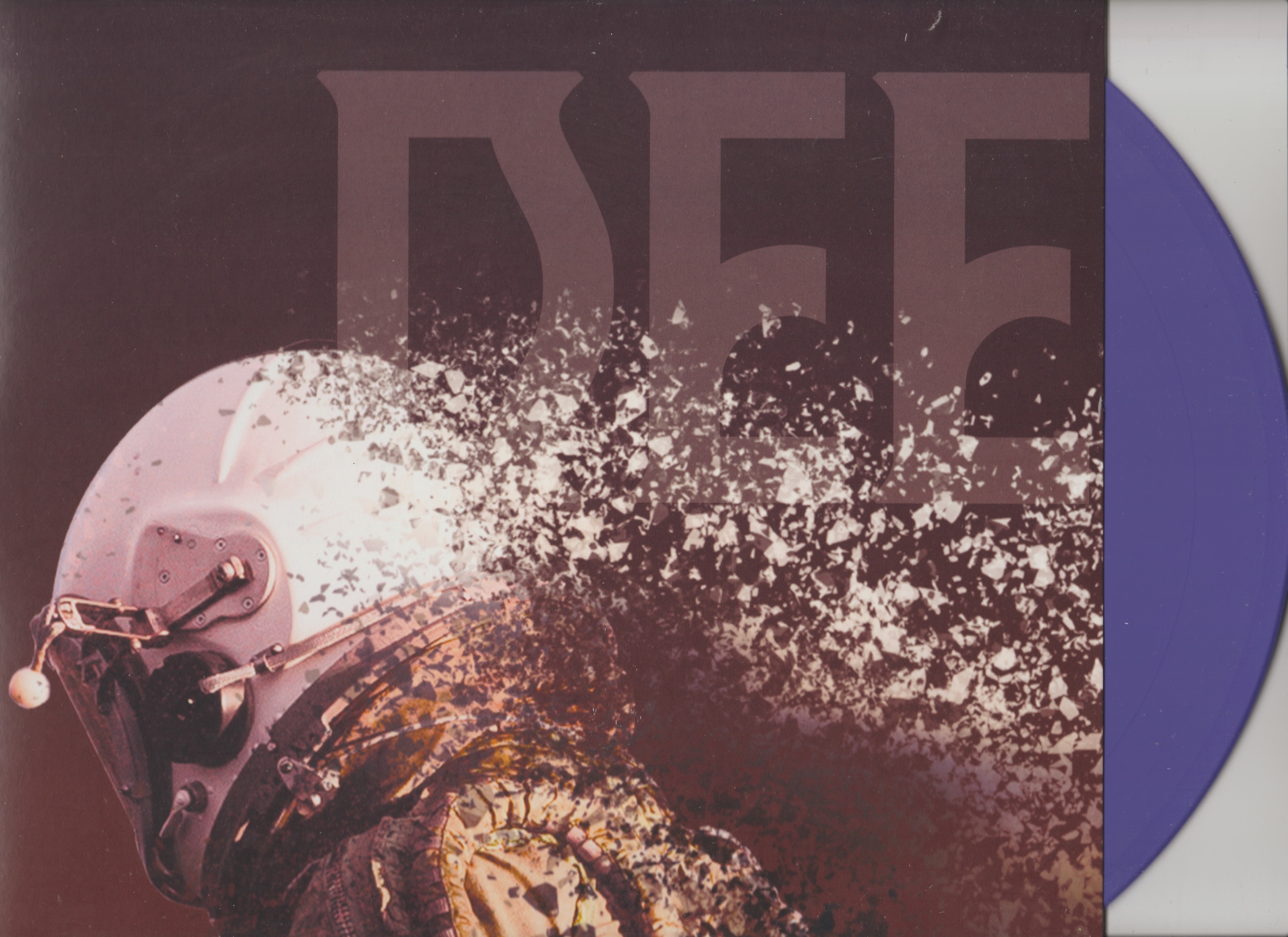
The opening thunder of “Highway Star” is robust on purple 10″ vinyl.Β  How these guys can still blast through it full speed is unknown, but they do it.Β  Mr. Gillan still gives it his all, which is not the same in 2017 dollars as it was in 1970 dollars, but still more than the average mortal his age.Β  Mr. Morse and Mr. Airey give each version of “Highway Star” a different feel, while Mr. Paice in the back is the only original member left from the 1968 lineage.Β  Sticking to Machine Head, Purple seamlessly go into “Pictures of Home”.Β  The old familiar groove of Mr. Glover is comforting warmth from the emptiness, eagles and snow.Β  Morse’s solo is a composition to itself, and then Airey gets to put his spin on Jon Lord’s classic organ solo.Β  Then it’s an unfortunate side flip as the band goes back to In Rock with “Bloodsucker”.Β  Gillian is more a verbal timekeeper than the screamer he once was, but the track is otherwise flawless and heavier than lead.Β  A more mainstream hit, “Strange Kind of Woman” flows from that, and relaxes the groove a bit.Β  Don Airey gets his first of two solos (this one organ) as the last track on this disc.
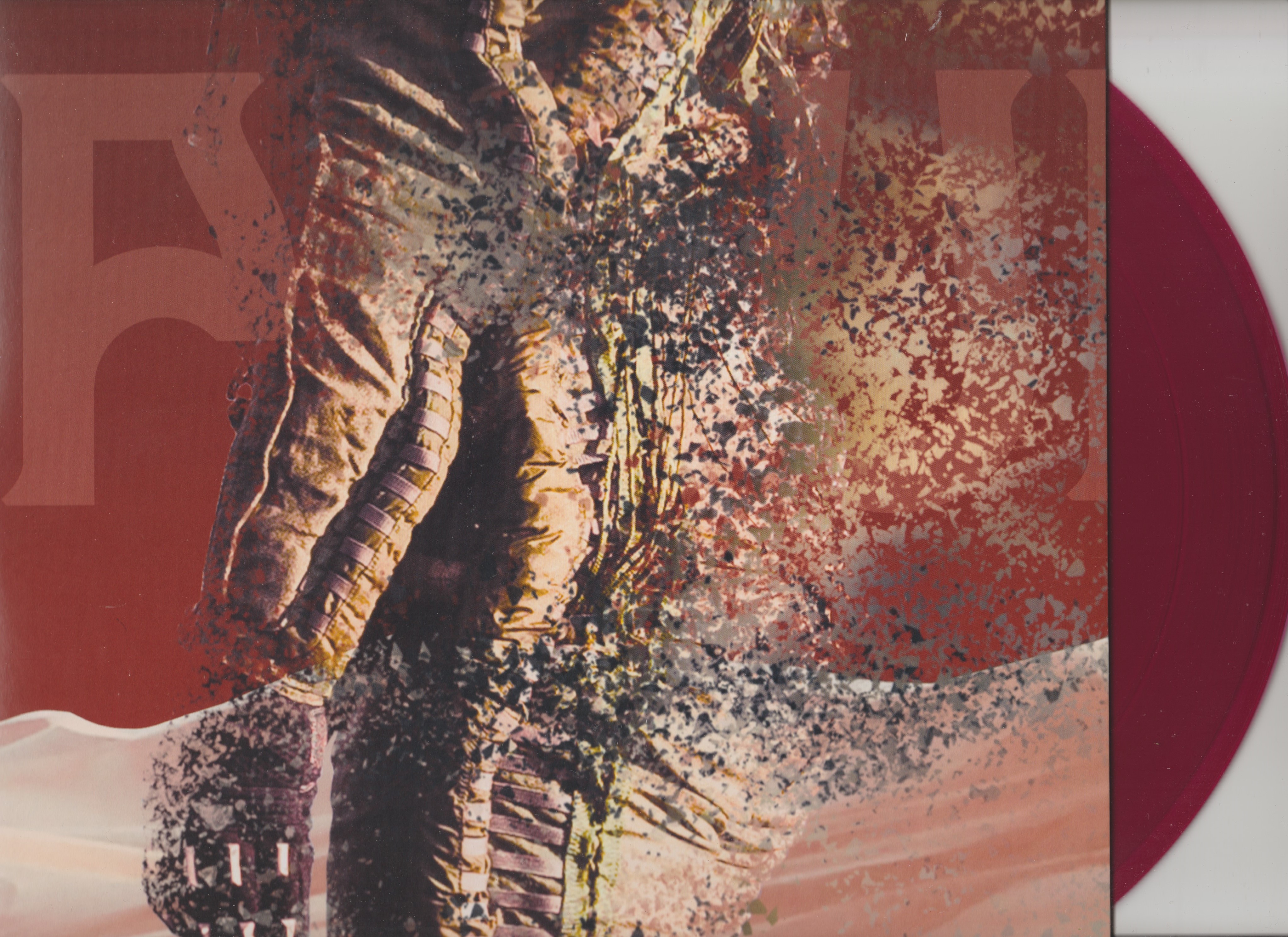
The action continues on transparent burgundy vinyl, and “Lazy”.Β  Morse’s signature string bending is the star of this show.Β  There are a couple different twists in this fresh version including a nifty Gillan harmonica solo.Β  Then it’s the only new song of the set, “Birds of Prey” from Infinite.Β  It’s weighty and worthy of its place.Β  Steve Morse is the Captain on this flight.Β  Gillan ends the track on a joke and then, after a side flip, introduces Don Airey’s keyboard solo including Ozzy Osbourne’s “Mr. Crowley”.Β  This diverse and fun solo goes into “Perfect Stranger” (no “s”?) which has steadfastly remained in the setlist ever since its 1984 conception.Β  Gillan is shaky but the Purple is solid.
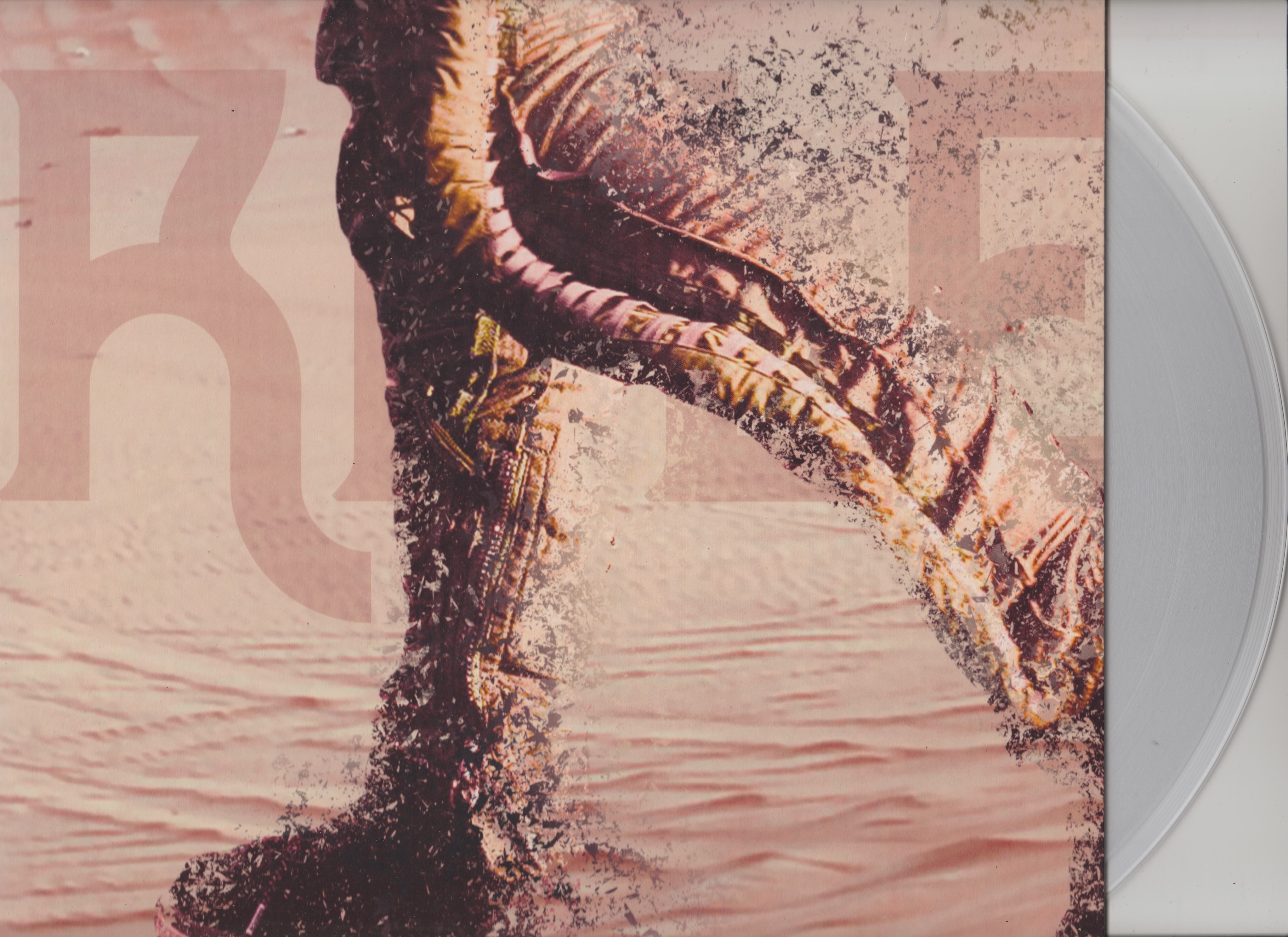
The final vinyl, clear 10″ power, commences with “Space Truckin'” signalling the beginning of the end.Β  “Smoke on the Water” is the penultimate moment, slow and groovy after all this blazing rock.Β  Ian Paice has a couple nice moments on this one and Steve Morse’s stuttery solo is completely compelling.Β  One more side flip, and Purple end the set with their first hit “Hush” and the “Peter Gunn” theme.Β  Glover goes funky on this one with a bassline a little like “Another One Bites the Dust” in parts.

An entertaining and good live album, but one you won’t play often simply because Deep Purple have 846 live albums (exaggeration).

There is still more live material from the same tour in DVD form included in this box set.


Live at Hellfest

Next we have a double feature DVD:Β  A live show from Hellfest in 2017, and an interview session with Roger Glover and Bob Ezrin.Β  The Hellfest show has a much longer runtime with more new material.Β  They open the show with “Time For Bedlam” from Infinite. Ian doesn’t even attempt to sing it in tune, but we’ll always cut the guy some slack for still getting up there and givin’ ‘er.Β  The track has a “Pictures From Home” vibe, and the band look cool playing midday in shades.Β  Into “Fireball”, Ian Paice leads the charge as if it was 1971.Β  Don Airey has an Ozzy bobblehead on his keyboard!Β  Then it’s “Bloodsucker”, powered by Paicey.Β  “Strange Kind of Woman” is a nice melodic respite after a pair of piledrivers like that.Β  Ian ends this one with a bizarre freeform spoken word beat poetry bit, but with Morse shredding next to him.

The Jon Lord tribute from Now What?!, “Uncommon Man”, is heartfelt, and a solid track from their current era.Β  It sounds massive.Β  As good in quality is “The Surprising” from Infinite, something of an epic, and performed with full gusto.Β  Intricate symbol work by Paice.

After a brief pause, it’s on to Don Airey and “Lazy”.Β  A high speed workout like that merits something slower to follow, so it’s “Birds of Prey” from Infinite, a steady groove with dynamics.Β  Steve Morse’s solo takes center stage and it’s a melter.Β  “Hell To Pay” picks up the pace.Β  Not Purple’s most remarkable single, nor the best version, but nice to have in live form.Β  Airey’s jammy keyboard solo on this track is stellar, just as the sun starts going down.Β  Then he gets his own full-blown solo, with the Ozzy bobblehead there next to him during “Mr. Crowley”.Β  Roger Glover just watches from the side as Don goes to town through familiar melodies and themes.Β  The crowd eats it up smiling.

Don takes it into “Perfect Strangers” without missing a beat, and soon the rest of the band joins him.Β  This version has some stellar Morse guitar trickery.Β  The set is almost finished, with only “Space Truckin'”, “Smoke on the Water”, “Hush” and “Black Night” left to satisfy cravings for the classics.Β  Even at the end Paicey still brings that thunder.Β  “Hush” has the “Peter Gunn” theme attached, and “Black Night” brings the show to a massive finish.

It’s absolutely delightful watching Ian Paice play the drums, as he mouths along to every beat as if playing beatbox along to himself.Β  It’s fantastic and an expression of pure joy.

It’s not over yet.Β  The DVD has even more content.


Roger Glover and Bob Ezrin in Conversation

The DVD also includes the conversation with Roger Glover and Whoosh! producer Bob Ezrin.Β  This is another full 70 minutes of content.Β  Ezrin was involved with Purple from the jamming stage in Nashville and speaks in terms of “we”.Β  One of the biggest takeaways from this interview is a piece of wisdom from the late Jon Lord as told by Roger Glover.Β  Lord didn’t want to do more than two takes of a solo.Β  More than that, and he starting thinking too much.

The pair discuss the lyrics, the songs, the title (nicked from Faulty Towers), the playing, and more.Β  It’s lovely watching the pair just enjoy Steve Morse’s harmonics.Β  “Like capturing lightning,” says Roger.Β  Watching this portion of the DVD will enhance your enjoyment of the album.Β  It’s fun knowing what parts of the songs turned on the musicians and producer.Β  “Stretch out,” advised Bob.Β  And so Purple interpreted that as stretching it out every way.Β  “I wanna put the Deep back in Purple,” said Bob.Β  The boys also praise Ian Gillan’s focus, from eating right to meditating.Β  They even go back in time and talk about Glover’s joining of Deep Purple in 1969.

Ezrin particularly loved seeing magic unfold live before his eyes and ears, captured on tape.Β  He is obviously a fan of Deep Purple as musicians and as people.Β  Whether you can get into Ezrin-era Purple or not, there is real chemistry between band and producer.

You’ll probably only watch this conversation once, but you’ll be glad you did that at least.Β  There is so much knowledge and history to absorb here that all fans are advised to give the whole thing a spin.


Summing up

The box set itself comes with a cool black T-shirt with the “strolling dissolving astronaut” graphic.Β  This is the second album in a row with simple excellent art design for Deep Purple.Β  The astronaut recalls the music video for “Knocking At Your Back Door” from 1984.Β  He appears in numerous places in this set in different forms.Β Β There are three art prints (two 12×12 and one 12×6), and of course all this music!Β  The vinyl copy of Whoosh! comes in a gatefold sleeve with credits and photos.Β  It sounds phenomenal with plenty of bottom end.Β  For lyrics, you’ll have to dig into the included CD copy.

Of course, if you don’t need all the extra live stuff and added goodies, you could just buy Whoosh! on CD, vinyl or download.Β  It’s frequently said that the benchmark for Purple isΒ Purpendicular.Β  “Best album since Purpendicular,” fans often enthuse.Β  Whoosh! could be the best album of the Ezrin era, and is a contender for best of the Steve Morse epoch.Β  A serious fan will want the whole box with the three live 10″ discs.Β  They are beautiful to look at and sound good on the turntable.Β  Though the set is expensive, this is the kind of thing I’m willing to pay for.

4.25/5 stars for Whoosh!

4/5 stars for the box set

Sunday Chuckle: Say hello to T-Bone

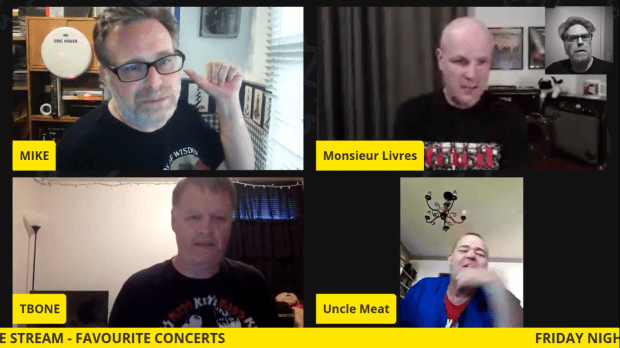
Deke wins the lottery for making me laugh this week, with his surprise guest appearance by his buddy T-Bone on Friday’s live stream.

Going all out this time, Deke got a picture of T-Bone printed out at Walmart, taped it to a paper plate, taped that to a wooden spoon, and had “T-Bone” read his Favourite Concerts list on the show.

Thanks for making me laugh dude!

VIDEO: Geek VLOG 2.0 Time Well Wasted Episode 2.0

Recently I had the absolute pleasure of being interviewed by Mr. Sebastien Munier for his brand new Geek VLOG series. (Long time followers may remember Seb from my short-lived Tyler & LeBrain series of podcasts.)Β  His excellent new YouTube show features 10 questions for geeky friends.Β  Thank you Seb for having me on, it was an honour and I hope everyone subscribes to your new show.Β  I know I will continue watching.

Please enjoy the interview below.

Epic 3+ Hour Live Stream! Concerts, Guests, Unboxing and Stories

That. Was. Epic.

Three (or four, or five, or six?) guests. Six lists. One unboxing. A marathon live stream like none before. Bear witness to the greatest Nigel Tufnel Top Ten list ever as we rhyme off our favourite concerts.

For the unboxing, go to 0:05:30 of the stream.

For the start of the lists, skip to 0:32:10.

Thank you Mom and T-Bone for your lists!Β  Thanks to Meat, Mr. Books, and Superdekes for co-hosting.Β  Special thanks to Rob Daniels for joining us at the end!Β  And as always thanks to YOU for watching!


R.I.P. Frankie Banali

After a 16 month battle with pancreatic cancer, Frankie Banali has passed away.

His best album, W.A.S.P.’s The Headless Children, will always be a cornerstone of this collection.Β  Metal Health was the first hard rock album I ever acquired and it changed my life for good.Β  To say Frankie was dedicated would be an understatement.Β  His dedication led to a rejuvenated Quiet Riot and some excellent albums with James Durbin on vocals.Β  Against the odds, Banali silenced the critics, myself included.Β 

One of the hardest hitters in rock, Banali has an extensive resume including Hughes/Thrall, Heavy Bones and Faster Pussycat.Β  He was one of those drummers you could identify just by his snare sound.Β  A true original.

Now Frankie rides the wind, forever free.Β  Rest in peace.

A Real Live Friday Live Stream

This week’s topic comes to you from the originator of the Nigel Tufnel Top Ten series of lists, Uncle Meat himself.

Top 11 Favourite Concerts of All Time!

We may have listed “best concerts” before, but this will be special.Β  Meat, Mr. Books and Superdekes will be joining me Friday night at 7:00 PM E.S.T. with as many facts as we can recall about our favourite concert experiences.Β  There will also be one “surprise” list that will blow you away.

Now fuelled by Streamyard, the shows keep getting better and better!Β  There have been so many great list ideas that we have not got to yet.Β  We have new guests lined up.Β  Critical to this growth has been Kevin/Buried On Mars who hooked me up with Streamyard, vastly improving the quality of the show.Β  I’m very fortunate to have Uncle Meat by my side with his Nigel Tufnel Top Ten concept.Β  I think if Meat didn’t come up with that idea, these live streams might have ended a long time ago!Β  And of course Superdekes, who has gone above and beyond the call of duty on multiple occasions.Β  He doesn’t have to do this, but he loves doing it!

Join us 7:00 PM E.S.T. for the big show!Β  Facebook:Β  Michael LadanoΒ or Facebook:Β  MikeLeBrain.Β  YouTube:Β  Mike LeBrain.


Casual Thursday Stream: A chat with 2loud2oldmusic!

Just went live with John from 2loud2oldmusic.com!Β  Check out our KISS-heavy chat below.Β  John comes in at the 05:05 mark.


REVIEW: Judas Priest – Point of Entry (1981, Remastered)

JUDAS PRIEST – Point of Entry (1981, 2001 Sony remaster)

Point of Entry will always be one of those “other” Judas Priest albums. It wasn’t a ground breaker and wasn’t a massive seller. It will always just be “the album that came after British Steel” or “the one that came before Screaming for Vengeance“.Β  It did fine (500,000 US sales) and spawned a killer single called “Heading Out to the Highway”, but it didn’t make history like the other two records.

Coming after British Steel, Priest continued with producer Tom Allom and drummer Dave Holland, and it doesn’t sound like they were overly interested in taking chances.Β  Sonically Point of Entry is a carbon copy, though with less impactful songs.Β  In 2001, it was issued remastered by Sony with two bonus tracks.

For me, Point of Entry occupies an interesting space.Β  Listening to it on a recent road trip took me back to 1987 or 88, when I was in the midst of seriously trying to collect “all the Priest”.Β  From the perspective of a kid in 1988, Point of Entry was what I thought 1981 must have sounded like, though it wasn’t that long before.Β  So Point of Entry takes me back not to the early 80s, but the late 80s.Β  And in the late 80s, it sounded good.

Sure, I was aware that it sounded a lot like British Steel before, but without the massive landmark tracks like “Metal Gods”.Β  But what about “Desert Plains”?Β  Why wasn’t it as important as “Metal Gods”?

To this day, I don’t know.

Point of Entry does boast a few songs that could go toe-to-toe with any on British Steel.Β  Certainly “Desert Plains” and “Heading Out to the Highway” can stand up to the prior album.Β  “Highway” has one of those riffs so classic that I sometimes find myself humming it in a grocery line wondering what song was in my head.Β  As a mid-tempo road song, it does the job.Β  One could argue it’s just a sequel to “Living After Midnight”, but you just try and resist this one.

“Heading Out to the Highway” was made into an unintentionally funny video, mixing on-set with on-location footage in an obvious way.Β  Worse though were the two videos that followed:Β  “Don’t Go” and “Hot Rockin'”.Β  “Don’t Go” features the band playing trapped inside a small room, with a door that leads various impossible locations including outer space.Β  Fortunately the song is better:Β  slow and plaintive, yet with that solid rocking beat and a killer guitar solo.Β  “Hot Rockin'” is high-speed but tends to be forgotten because Priest have better material at this tempo.Β  The video is situated in a sauna, and then a concert stage where Rob’s flaming feet light fire to his microphone, and the microphone to a couple guitars.Β  Funny to look at, but I think it’s one of those cases where we’re laughing at the band, not with them.

“Turning Circles”, and a lot of the rest of the album, fall into various categories.Β  This one fits alongside “Don’t Go” as a slow but hard track.Β  “We’ve all got somethin’ wrong to say,” sings Rob in this song that seems to be about ending a relationship.Β  The “ah ha, ah ha” break in the middle is an album highlight, and to me it sounds exactly like my bedroom in 1987.

It’s “Desert Plains” that really brings it home.Β  There is a pulse to this song, created by Dave Holland and Ian Hill.Β  You don’t associate those two guys with awesome rock beats often, but here it is.Β  “Desert Plains” is an instant classic, and it’s alive with movement.Β  From the verses, to the choruses, to Holland’s drum “sound effects” (like “wild mountain thunder”), this is a Priest classic and shall forever remain so.Β  This side one closer should have been a video way before “Hot Rockin'”.

The second side opens with “Solar Angels”, another track with an interesting rhythm (slow drums, fast guitar chug).Β  The song feels like it could use some more substance, but it’s still enjoyable albeit in a “Metal Gods” knock-off kind of way.Β  Though heaviness is always celebrated, who doesn’t enjoy when Rob Halford gets sassy?Β  That’s “You Say Yes”, an outstanding shoulda-been hit.Β  The verses verge on punk rock as Rob spits out the words as only he can.Β  Then the airy “what I do, what I do, what I do” middle section goes right to heaven — or my room in ’87, I’m not sure which.

Point of Entry ends on three decent but unremarkable mid-tempo tracks, which perhaps always served to weaken the album’s impressions.Β  “All the Way” might be an attempt to rewrite “Living After Midnight”, and although it’s a cool track we all know Priest have better stuff in this vein.Β  “Troubleshooter” might even be more of a rewrite, with that opening drum beat sounding a little familiar.Β  But Rob’s vocals kill it.Β  Finally “On the Run” is a screamy album closer where Rob is once again the star.

As with previous CDs in this Priest remasters series, there are two bonus tracks, one of which has nothing to do with Point of Entry.Β  “Thunder Road” sounds a lot like Ram It Down era Priest, so you can safely assume it’s from those sessions in the late 80s.Β  Clearly outtake quality, almost like a prototype for “Johnny B Goode”.Β  Then there is a live version of “Desert Plains” from what sounds like the 1987 tour judging by the big echoey drums and Rob’s added screams.Β  It’s much faster than the album cut, all but destroying the pulse of the original.Β  Yet the song still kills!Β  Somehow it didn’t make it onto the Priest…Live! album, which was already stuffed full.

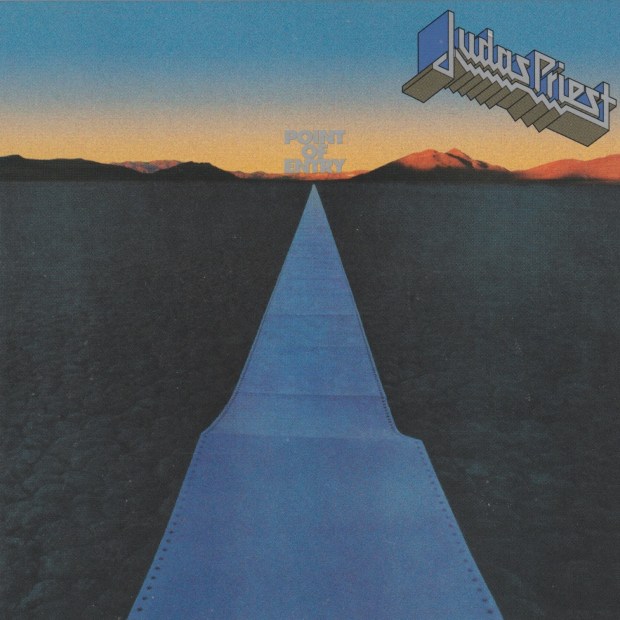
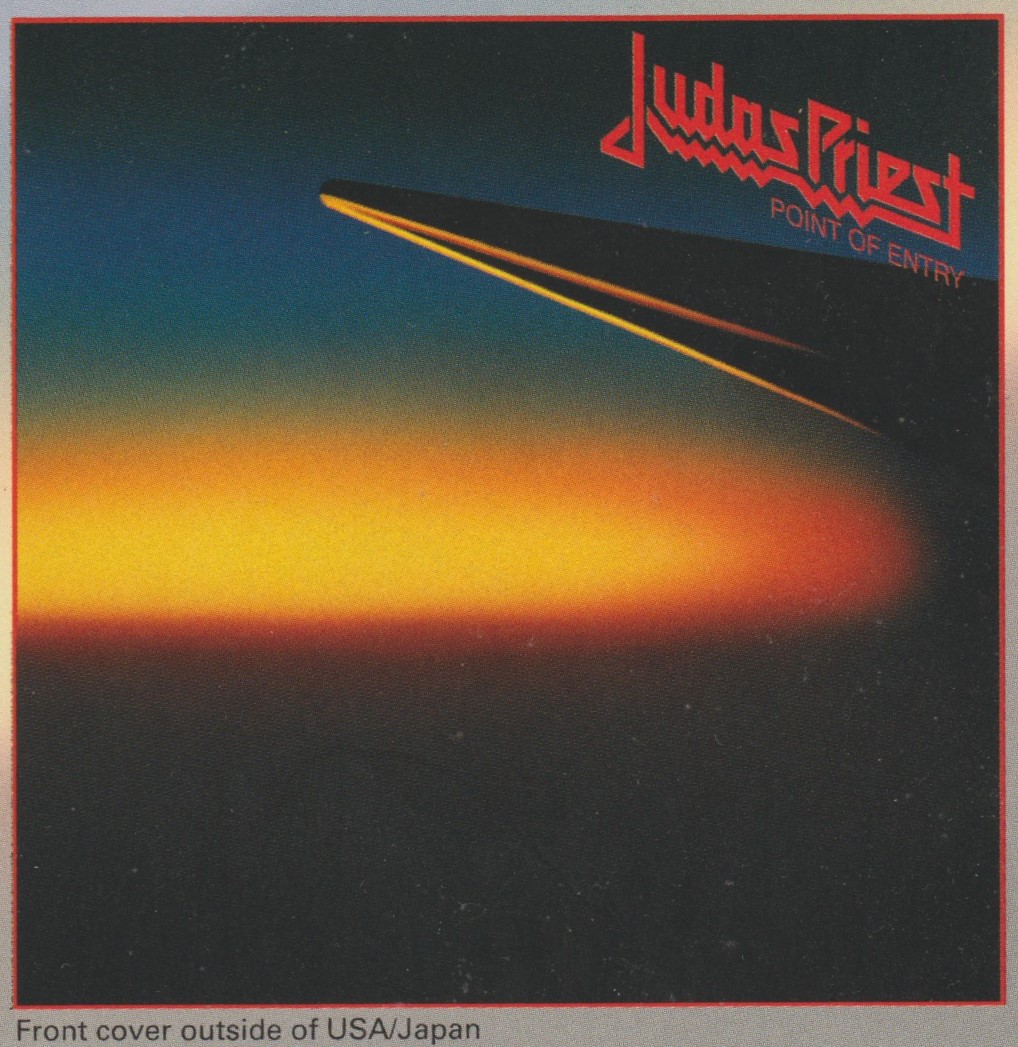
In the late 90s, a guy sold a used copy of this on CD to me, but he left something inside.Β  Something I wish I’d kept because it was so bizarre and funny.Β  The back cover features five white boxes in the desert.Β  The guy left a little white piece of note paper inside, explaining what he thought the back cover was about.Β  Β “Maybe they are graves,” said part of it.Β  I wish I could remember the rest.Β  (I always thought the five boxes represented the five band members, with the large one in the back being Dave Holland and the drum kit.)Β  And speaking of the cover, this album does look better on vinyl.Β  I have vinyl for almost all the Priest up to Ram It Down, and they all look better on vinyl.

Although Point of Entry will always live in the shadows of the towering albums that came before and after, it still leaves a glow behind.

3.75/5 stars

REVIEW: Judas Priest – Sin After Sin (1977)

JUDAS PRIEST – Sin After Sin (Originally 1977, 2001 Sony reissue)

β€œSIN AFTER SIN, I have endured, but the wounds I bear are the wounds of love.”

This lyric from “Genocide” on 1976’s Sad Wings of Destiny would have been little more than a throwaway, if Priest didn’t recycle the words “sin after sin” for their next album title.Β  Though the song may have appeared to be the same, much had actually changed.Β  For the first time, they had a producer that understood that kind of aggressive rock that the young band were trying to create:Β  Roger Glover, ex-Deep Purple, who had already recorded several albums for Elf, Ian Gillan and Nazareth.Β  Perhaps even more significantly, for the first time they had a serious drummer creating the beats:Β  the not-yet-legendary Simon Phillips, who had still already played on a Jack Bruce album.Β  This was just a session for Phillips, but it enabled Priest to break the shackles of rhythm and really start exploring.

Opener “Sinner” might have been the same kind of tempos that Priest were working with before, but there is a new slickness to the drums; an effortless drive with increasingly interesting accents.Β  With a solid backing, Priest sound more vicious.Β  “Demonic vultures stalking, drawn by the smell of war and pain.”Β  The apocalypse has never sounded cooler.Β  As Phillips drops sonic bombs left and right, KK Downing goes to town on what would become his live showcase solo.Β  His growls and trills sound like a beast inflicting wounds on a struggling combatant.Β  At almost seven minutes, “Sinner” is the album epic, and it’s the opening track!

Priest previously recorded a cover of Joan Baez’ “Diamonds and Rust” for Gull records; that early version can be acquired on The Best of Judas Priest or Hero, Hero.Β  The Glover-produced track is the more famous and better of the two.Β  Radio play for “Diamonds and Rust” helped push the album to eventually sell 500,000 copies.Β  Rob Halford’s high pitched harmonies gleam like polished silver.

Ironic observation:Β  I hope by now we all know a light year is a measurement of distance, not time.Β  It is the amount of distance that light can travel in one year (9.46 trillion kilometres).Β  So, really really far.Β  Joan Baez playfully used it as a melodramatic measure of time in “Diamonds and Rust”.Β  (“A couple of light years ago”.)Β  On the next track “Starbreaker”, Halford refers to “light year miles away”, a crudely worded hyperbole for distance.Β  So with Sin After Sin, you get it both ways.Β  Regardless of scientific accuracy (or not) “Starbreaker” is a good track with a slightly flat riff.Β  Though Phillips is brilliant, it could just use a little more pep.

Like with Sad Wings of Destiny, you gotta have a ballad in there somewhere, and on side one that’s “Last Rose of Summer”.Β  This softie isn’t bad, though Priest have done and will do better.Β  Using a ballad to close a side isn’t always wise either, but on CD nobody really notices except us nerds.

“Let Us Prey/Call For the Priest” is a pretty epic side two opener, with harmony guitars playing an opening instrumental anthem.Β  Then a choir of Halfords joins in, and the band break in to what could be their fastest song yet.Β  From the wickedly fast dual guitar solos to the powerful rhythm, this song is a blitzkrieg of metal trademarks.Β  It’s relentless and all over the board, something that 80s Priest rarely was.

Side two keeps getting better with the groove of “Raw Deal”, which was Rob’s real “coming out” to fans in the know.Β  Today he calls it a “heavy metal gay rights song”.Β  It’s actually one of Halford’s best lyrics.Β  Instead of mashing together science fiction words and singing about battlefields, this time Halford paints a hazy picture of what is probably a gay club in Fire Island, New York.Β  It’s vivid but vague:Β  “The mirror on the wall was collecting and reflecting, all the heavy bodies ducking, stealing eager for some action.”Β  It’s also backed by some seriously cool Priest music, almost funky but always heavy.Β  “The true free expression I demand is human rights – right?”Β  It was all there in the lyrics all along.

A second ballad, the dirge “Here Comes the Tears” brings a cloudier mood.Β  An ode to loneliness, “Here Comes the Tears” is the one to play when you just can’t take it anymore.Β  When Halford starts givin’ ‘er at the end with the wildest screams in history, it sounds like an exorcism.Β  The guitars howl, a hint of piano can be heard, and there is an underlying choir of Robs singing sadly in unison.Β  Finally “Dissident Aggressor”, famously covered by Slayer, concludes the album on a violently fast note.Β  “Stab!Β  Fall!Β  Punch!Β  Crawl!”Β  This song is not for amateurs and might be the heaviest thing Priest have ever done.Β  There are plenty of contenders, but “Dissident Aggressor” must be in the Top Five Heaviest Priest Songs Ever.Β  But that being said, they still have the balls to end the song with another multi-layered harmony of Halfords.

The 2001 Sony remastered CD has two bonus tracks, and the first is the best in the entire series:Β  “Race With the Devil”, a cover of a track by The Gun.Β  This version, recorded for the next album Stained Class (Les Binks on drums) could easily have been a B-side all this time.Β  Why it went unreleased until 2001 is unknown.Β  Perhaps it was lost, but now that it has gotten a proper mastering job it is available on CD.Β  This is un-retouched, which cannot be said for other unreleased tracks in the Priest Remasters series.Β  “Run With the Devil” is raw, riffy, fast, and wicked.Β  All it really needed to make it album quality is a better guitar solo.Β  The second bonus track is a live “Jawbreaker” (Dave Holland on drums) from the Defenders of the Faith tour.Β  Out of place, but an excellent song regardless.

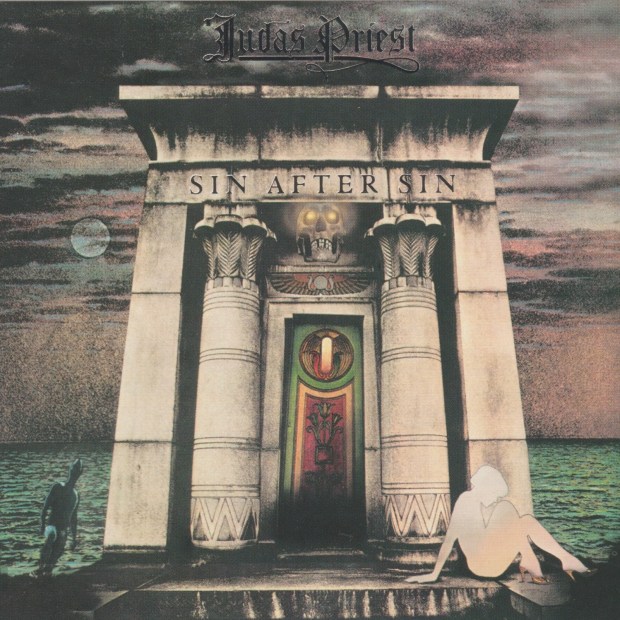
Incidentally, Sin After Sin is the last album before Priest adopted the first version of their current logo design.

4/5 stars

RE-REVIEW: Judas Priest – Sad Wings of Destiny (1976)

I was listening to Sad Wings of Destiny recently and wrote up a brand new review before realizing I already reviewed it.Β  Fortunately, I had lots more to say.Β  For my original 2015 review, click here.

JUDAS PRIEST – Sad Wings of Destiny (1976 Gull, 1998 Snapper Music)

1974’s Rocka Rolla didn’t set the world on fire, so back to the drawing board for album #2.Β  Having rid themselves of most of their early bluesy material, Judas Priest went heavier, and more diverse simultaneously.Β  The resulting album, 1976’s Sad Wings of Destiny, is considered an early classic by the band.Β  Some feel they rarely reached these heights again as they took their metal more mainstream in the 80s.

“Victim of Changes”, which opens the album, introduced the world to the high notes that Rob Halford was able to hit.Β  “Whiskey woman don’t you know that you are driving me insaaaaaaaaaaaaaane!”Β  Yet that note is nothing compared with Rob’s final shrieks.Β  This track combines an earlier unreleased Priest song titled “Whiskey Woman” written by original singer Al Atkins with a track called “Red Light Lady” brought in by Halford from his old band Hiroshima.Β  You can hear the moment the two songs are welded together at around the 4:45 mark.Β  Together at almost eight minutes they form a complex, classic Priest track that represents a high water mark.Β  Twisting from a metal groove into ballady territor-y and back again, this is drama the way Priest do it.Β  And they never do it better.

“The Ripper” boasts similar high notes but it’s almost a parody.Β  This riff-based shorty (2:51) is from the perspective of Jack the Ripper (or if you like, Jack the Knife).Β  With a galloping beat from new drummer Alan Moore (who was eventually replaced by the far superior Les Binks), “The Ripper” is as metal as things got in 1976.Β  Its placement as second track is perfect because the next two, “Dreamer Deceiver” and “Deceiver” form a single 8:34 epic.Β  “Dreamer Deceiver”, which forms the majority of the song, is an epic ballad about a supernatural being who tempts those below.

“Saw a figure floating, ‘neath the willow trees.
Asked us if we were happy, we said we didn’t know.
Took us by the hand and up we go.”

They follow the dreamer through the purple hazy clouds into the cosmos.Β  The intricate acoustic guitars let Rob Halford dominate with his story.Β  Though the track is haunting, it seems the people in the song find “complete contentment” and live without worries.Β  But as the song builds, adding piano, Rob’s vocals become more urgent (and high).Β  Though it seems like a heavenly paradise, the second part “Deceiver” changes the mood considerably.

“Solar winds are blowing, neutron star controlling.
All is lost, doomed and tossed, at what cost forever?”

There is always a price when temptations seem too good to be true.Β  This song brings another heavy gallop, the kind which Iron Maiden would later perfect.Β  Solos blast, as Halford warns us all of the “Deceiver”!Β  This is the kind of metal that people associate with Judas Priest, though its’ far more impressive if you consider it part of a larger composition.

Side one can be viewed as just three songs:Β  two epics and a hard rocker.Β  Side two has more to offer, though it opens in epic enough quality.Β  Glenn Tipton’s piano piece “Prelude” is foreboding.Β  As a Sabbath-like instrumental, it serves to set the scene for “Tyrant” (though “Tyrant” is always performed live without “Prelude”).Β  Overdubbed vocals make for a cool chorus, but this one is just a molten metal burner.Β  It wastes no time in laying waste, with guitar solos galore, in both single and dual formations.

“Genocide” is a slower, cooler groove that doesn’t seem to match its violent title.Β  But this is from the perspective of a survivor.Β  “Save me, my people have died, total genocide.”Β  This is the song that gave us the next album title, Sin After Sin:Β  “Sin after sin, I have endured, but the wounds I bear are the wounds of love.”Β  Cool track and a necessary one to give the album balance.Β  Songs of this tempo and style would make up the bulk for Priest albums in the future, yet it’s not simple or blockheaded like some 80s Priest tended to be.Β  It retains some complexity and traverses multiple musical landscapes through its length.

Next:Β  a complete left turn.Β  “Epitaph” (written by Tipton) is a piano-based funeral dirge that sounds a heck of a lot like Queen.Β  It’s beautiful though.Β  With Halford’s vocals layered as a choir, it’s a daring change of pace even though Queen were pretty much the biggest band in the world in 1976.

“Epitaph” fades directly into the final track “Island of Domination”, another metal chug but with an apocalyptic bent.Β  Rob’s lyrics are unusually styled with archaic sounding lines like “‘Twas as if all hell had broke loose on this night.”Β  This could be Rob’s first BDSM-themed song with lines like “Lashings of strappings with beatings competing to win.”Β  If not, then it’s just a brutal battle set to the tune of speedy Priest metal.

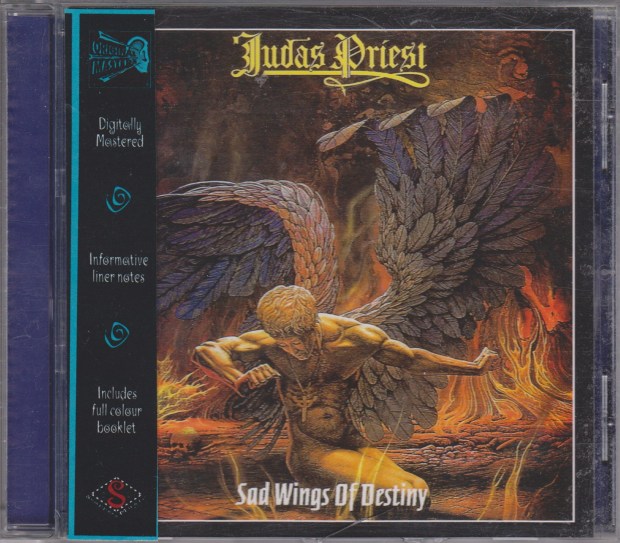
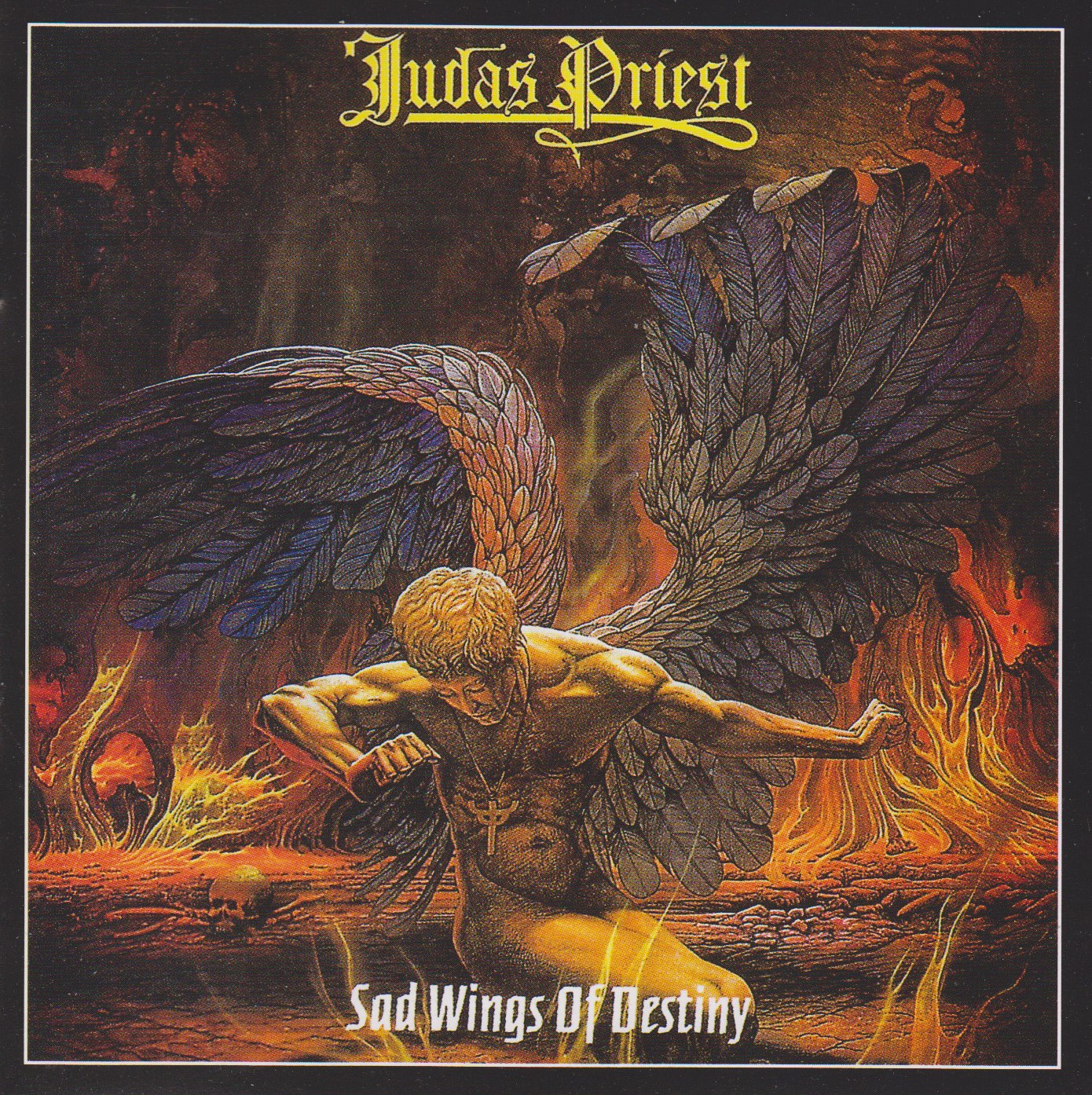
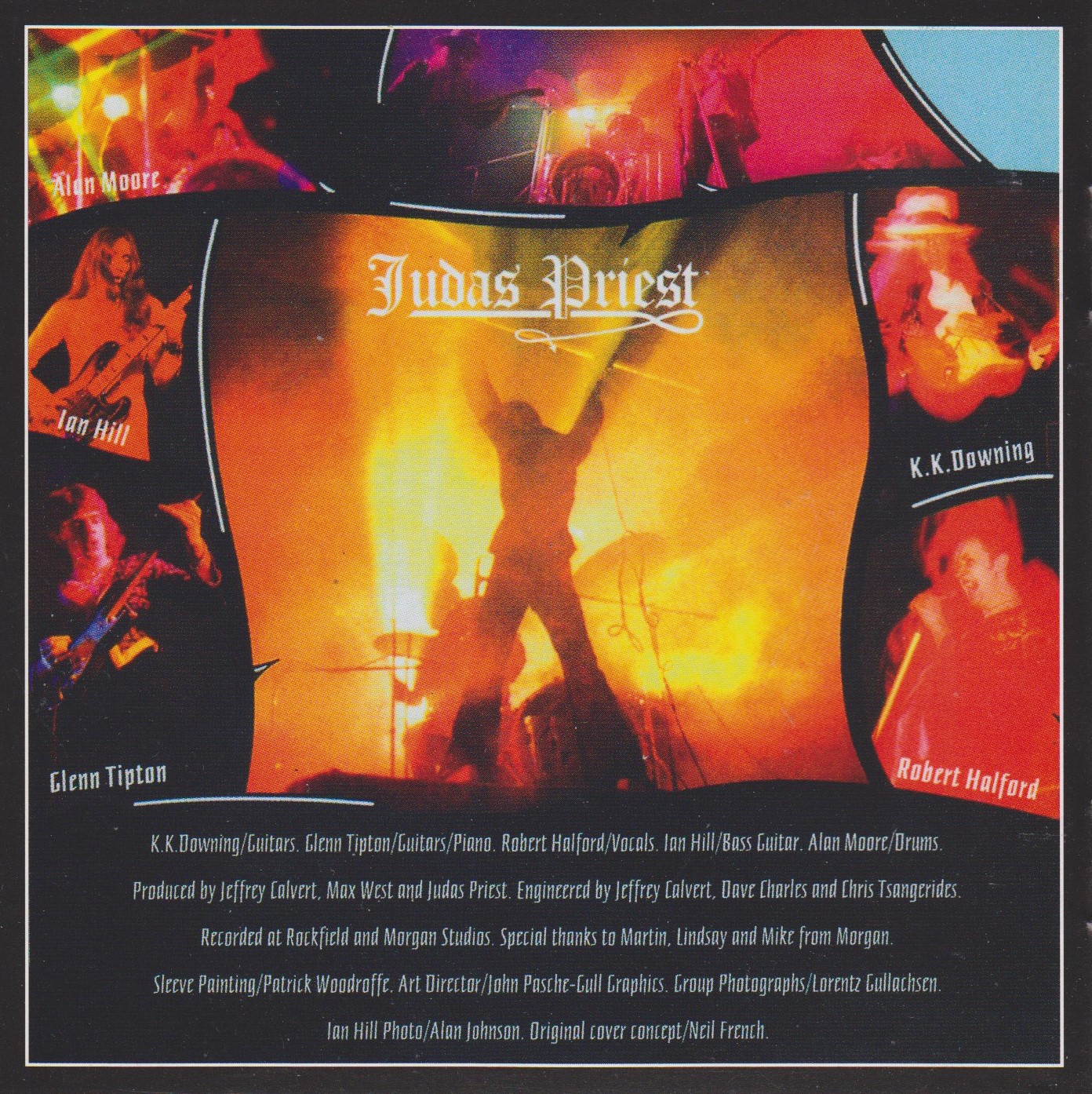
It must be said that Sad Wings has a striking album cover, with the angel depicted burning in hell.Β  School teachers worldwide would have loved this cover back in 1976.Β  The angel character would return 14 years later as the Painkilller.Β  The “devil’s tuning fork” necklace that the angel is wearing would become Priest’s symbol on later albums as well.

Though Sad Wings is an essential album for a serious metal collection, and stuffed full with riff after riff of majesty, it is frustrating hard to find good versions on CD.Β  Priest’s albums on Gull records have never been officially reissued by the band.Β  The 1998 CD release by Snapper music is usually rated fairly well.Β  If you’re unsure then get an original Gull vinyl copy.Β  But do get Sad Wings of Destiny and prepare to hear a young, vital and daring Judas Priest just beginning to learn what they can do.

5/5 stars