In the early 1970’s, a new young band was rumbling out of Europe with a fresh, sludgy heavy rock sound. With a debut album produced by Rodger Bain under their belts, they peddled that new style of music often called “heavy metal”, known for its loud distorted guitars and long-haired musicians.
Black Sabbath? Not this time. Let’s not forget Cardiff’s own Budgie.
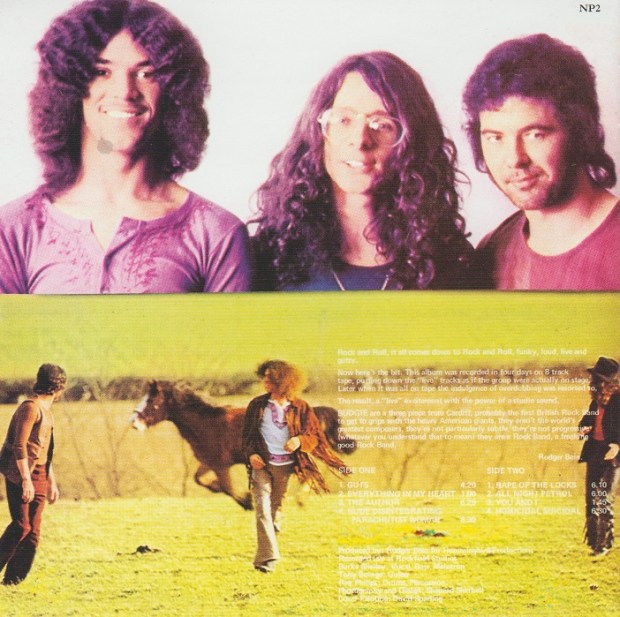
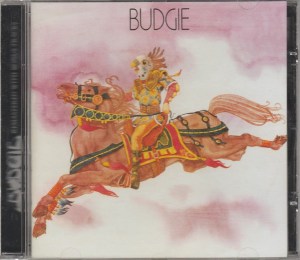
Budgie’s 1971 self-titled debut album demonstrates that the band had already found their own niche. Lead throat Burke Shelley had the looks and the voice of a young Geddy Lee, but three full years before Rush’s first album in 1974. They had obvious Sabbathy elements, but without the doom and evil overtones. They wrote long, groove oriented songs unlike anything Ozzy & co. were writing. Shelley’s lyrics and song titles ran from unusual to bizarre. The opener “Guts” is a great example of the strangeness and groove coming together in one addictive sludgy confection.
Budgie were also known for soft acoustic interludes. “Everything in My Heart” is one, clocking in at less than a minute. (According to the liner notes, Shelley recalls he wrote this for some girl he liked.) This acts as a sort of prelude to “The Author” which combines the quiet side with the sludge. The droning heavy riffage, switching lanes with softer sections, make for a pretty epic Budgie track. As a power trio, Shelley’s bass becomes the deliverer of many hooks. However on “Nude Disintegrating Parachutist Woman” the bass joins forces with Tony Bourge’s distorted axe to build a wall of riff. Both the album and single versions are included on the 2004 deluxe CD edition. One is over twice as long as the other! The album cut contains a long Purple-like instrumental section.
“Rape of the Locks” (a satire about a hair cut, get it?) commences with a very Blackmore guitar freakout. The riffs are more Sabbath, while its jammy aspects remind of the first album by the Scorpions. Burke Shelley continues the groove on “All Night Petrol”, both punishing and catchy. “You and I” is another acoustic interlude, 1:42 of Burke trying to be lovey-dovey. It acts as a reset before the final onslaught: “Homicidal Suicidal”. Soundgarden covered this one in 1991 on an obscure B-side. Perhaps it is the definitive example of the early Budgie sound. Almost seven minutes of heavy Budgie, drums hammering at the walls while Burke rumbles the foundation. Meanwhile there’s Tony Bourge with the riff of riffs.
The bonus tracks on this edition are well worth seeking. In addition to the above mentioned single edit of “Nude Disintegrating Parachutist Woman” there is its B-side “Crash Course in Brain Surgery” which Metallica covered. This is an unreleased alternate mix of one of Budgie’s best known metal thrashers. Finally there are 2003 re-recordings by the reformed Budgie composed of Shelley, Steve Williams and Simon Lees. “Parachutist Woman” and “Guts” are very different from the originals, although the arrangements are pretty much the same. It’s just a matter of different musicians and 32 years!
The Budgie remasters can be expensive to track down, but well worth it. May as well get all the extra tracks if you’re going to hunt for some Budgie.
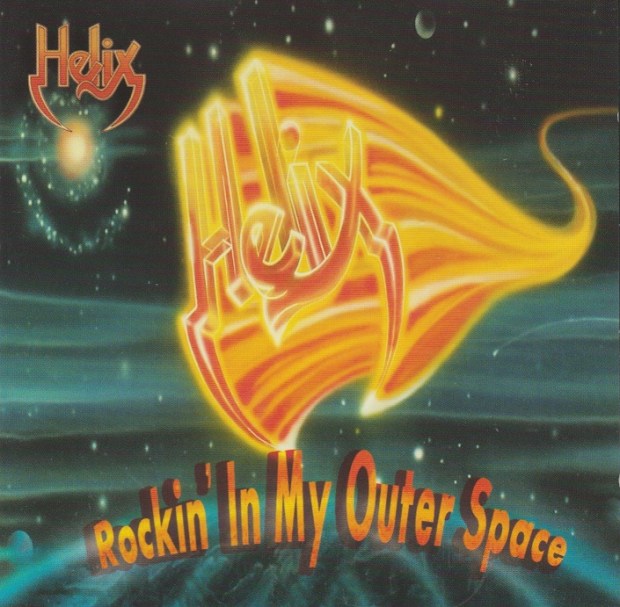
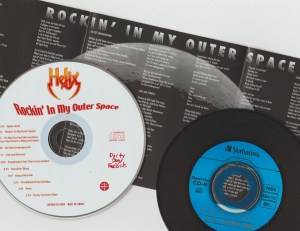
This album was a long time coming. The last “true” Helix studio album (eg: not live, greatest hits or previously unreleased songs) was the excellent It’s A Business Doing Pleasure, twelve years previous to this one. A lot happened in those twelve years, including member changes, management and record company splits, and even a Brian Vollmer solo album (When Pigs Fly). That Helix came out with an album this good with no warning was a pleasant surprise.
Almost every song here is quality stuff, with only the instrumental opener “Space Junk” and the jokey closer “Sunny Summer Daze” not fitting in with the serious rocking going on here. A couple of these recordings had previously appeared on Vollmer’s solo CD (with Brian Doerner on drums), but this sounds more like a proper Helix album. The title track features a killer chorus (reminded me of “Rock You” a bit) with those recognizable Helix backing vocals. It’s also the most “party” of all the new songs, some of them being a little darker. Glen “Archie” Gamble (drums) utilizes some interesting cymbal work, a little different from what you usually hear on a Helix record. His playing gives this version of Helix a different rhythm.
“Six Feet Underground” has some nice acoustic work, and is extremely catchy. “Panic” has some irresistible vocals. “It’s Hard To Feel the Sunshine When Your Heart is Filled With Rain” might have an overly long title, but the song is amazing, as heard live in concert. A wicked harmonica solo fills the spot with a guitar solo might normally fit. “The Ballad Of Sam & Mary” is a jokey lyric as Helix have done before, but with some serious kick behind it. (Listen for a cameo by Brian’s wife Lynda Vollmer.) It’s only when you get to the closer with its Hawiian guitar that you feel like the album just hit a speedbump. The final track’s saving grace is a guest appearance by former member “Doctor” Doerner on guitar.
This album represented a muscular return for Helix, one that kicked off a stream of new Helix records. The band seemed revitalized even as lineups changed, as they continued to follow through with more quality rock and roll. Rockin’ in My Outer Space is a pleasure for fans because it’s different. This is not party music. There are audible dark clouds and angry riffs. The changes in heavy metal over the previous decade are obvious here. The guitars are chunkier and dirtier, and no song has a party-hardy chorus like the days of old, though the title track comes close. Helix are known for a certain brand of rock, and it’s nice when they choose to stretch out.
Fear not Helix fans. Brian Vollmer and his gang of little-known but excellent players did not disappoint when they finally decided to release a new album under the Helix Band banner. Aside from the first and last tracks, this is one you’ll be playing all the way through.
And heck, you get used to the the first and last tracks after a while.
4/5 stars
Bonus: In 2005, Helix returned to Sweden to play Sweden Rock. iTunes have one song from their set available for download: “Rock You” This track features the short-lived but very cool six-piece lineup of Brian Vollmer, Archie Gamble, Jeff Fountain (bass), Jim Lawson (guitar), Rainer Wiechmann (guitar and producer) and Cindy Wiechmann (vocals and other instruments). This is the version of Helix that supported this album, and fortunately it was captured live. Check it out for an idea of what this great lineup sounded like live.
Of Extreme’s five studio albums, there can be little doubt that Extreme III is the most ambitious. It is a sprawling set over 80 minutes in length; too long for a single CD. So long that only the cassette version has all 15 tracks in one place. In contains three distinct sides, each different from the other, countless styles, and an orchestra. Extreme took what made them popular on the last album, and what was currently going on with grunge rock, and tossed it all out the window. They followed their own direction and were not rewarded with sales, but something more important: a masterpiece.
The first “side” (keep in mind this is a CD) is subtitled “Yours” and consists of rockers both hard and funky. After a comedic intro, “Warheads” annihilates the speakers. A short choppy riff blows in, tempo opened up wide. Gary Cherone tries to keep his messages entertaining, and this anti-war anthem has a pretty obvious message. Nuno Bettencourt joins him for the choruses and breaks for a cool neo-classical solo. The same message carries over into the first single “Rest in Peace”, introduced by a string quartet playing the song’s melody before Nuno kicks it with a funky riff. During the solo, Nuno even quotes Jim Hendrix. “Rest in Peace” was not an immediate single, it takes some growing. This is true of the whole album. There is a lot going on. Even that little Hendrix lick — blink and you’ll miss it, but it’s there making the solo that much cooler. It is worth mentioning that Extreme did a fantastic video for “Rest in Peace” based on a 1952 National Film Board of Canada short called “Neighbours”. This wordless film served as the blueprint, but as a result they got sued and had to change it.
Gary Cherone loves creating his own portmanteaus (“Americocaine”, “Pornograffitti”), so “Politicalamity” is the title of the third track. It’s a wah-wah soaked funky rocker with fully-loaded horns making their first album appearance, in the tradition of “Get the Funk Out”. Lyrically it continues the anti-war theme dominating the first side, and also social injustice, but in a fun catchy style. “Rich and poor, salute your country’s colours. Less is more, When one oppresses the other.” That was 1992; I wonder what Gary would have to say about today? Racial equality dominates “Color Me Blind”, one of the hardest rockers on the side. “I had a dream last night, I was blind, and I couldn’t see colour of any kind.” It is possible that the lyrical tone of the album turned off some old fans, though Gary keeps things from getting preachy.
“Cupid’s Dead” is the only song on the first side without a serious message. This rap-rock hybrid features a guest rapper (John Preziosa Jr.) and a chugging, funky riff. Hard rock bands who incorporated rapping were seldom successful, but Extreme dodged this bullet. “Cupid’s Dead” is good enough that is was recently dusted off for the Pornograffitti Live 25 tour. Drummer Paul Geary and bassist Pat Badger keep the funk rolling in heavy fashion. The side-ending “Peacemaker Die” features Martin Luther King’s “I have a dream” speech, surely some of the most powerful words in American history. It is difficult to not get the chills when Dr. King speaks, framed in this excellent funk rock lament.
Take a moment’s break here and pretend you’re flipping a record. Side two is subtitled “Mine” as a contrast to “Yours” for side one. “Mine” consists of six ballads, but only five are on the CD due to the 80 minute time restriction. Nuno expressed regret that the sixth track didn’t fit and hoped one day a 2 CD edition would be released. Still hoping!
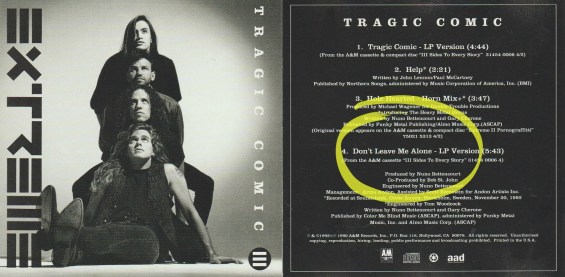
“Seven Sundays” is a romantic song, a piano ballad with Gary in falsetto mode. Nuno adds synth strings for textures. “If I had one wish, it wouldn’t be hard to choose. Seven Sundays in a row, because that’s the day that I spend with you.” Quite a turn from “Cupid’s Dead”, but that’s why it’s on another side. “Tragic Comic” was the natural successor to the hits on Extreme II, a fun acoustic track with a “Hole Hearted” beat. The lyrics are clever comedy and the track was selected as a single. Many will identify with the hapless romantic, the titular stut-tut-tuttering p-poet. “And when we dine, I forget to push in your seat. I wear the wine, spillin’ it all over my sleeves.” Been there done that Gary! The lighthearted song is a delightful contrast to the darker material on side one.
Van Halen-style volume swells make up the intro guitar melody of “Our Father”, an electric power ballad with some stunning six-string mastery. “Stop the World” was chosen as a single, a light melancholy ballad reminding us that if we forget history we are bound to repeat it. These serious songs were not destined to repeat the big singles of albums past. When you play these songs, you feel things and you think things, and not everybody wants music to do that to them. Nuno’s solo on “Stop the World” is warm, immaculate perfection. “Stop the World” merges directly into “God Isn’t Dead?” (except in single form of course). “God Isn’t Dead?” is the darkest spot yet, quiet and painfully plaintive. Piano and orchestra paint a stark picture.
The final song on the side, and a hint of the daybreak ahead, is “Don’t Leave Me Alone”, which is only on the cassette version. Fear not however; it can be found in CD form on CD singles. Just rip everything to your computer and slide “Don’t Leave Me Alone” into the correction position in the running order. It belongs here at the end of the “Mine” side. It deliberately ends it on a brighter note than “God Isn’t Dead?” though it is still far from a good-time ballad. It is dusky lament, but with hints of light in the tunnel. Nuno’s moog solo is a treat.
At 12 songs, the “Yours” and “Mine” sides would make a complete album on their own, and it would still be an ambitious project at that. Regardless, the third side titled “& the Truth” is the most industrious of them all, an eager fulfillment of talents bursting at the seams. III Sides to Every Story…”Yours”, “Mine”, “& the Truth”. This time, the side is made up of one massive 22 minute song called “Everything Under the Sun”. It in turn is subdivided into three parts. This is where the orchestra really comes into play.
Part I, “Rise ‘n Shine” is the sunrise after the blackness of the second side. Gentle acoustics rouse you from your slumber, and Nuno takes the first verse of this duet. Gary follows on the second as the orchestra swells. “Rise ‘n Shine” is the most hopeful sounding music on the album, a bright and steady composition brilliantly structured. Daniel and his dreams may be a Biblical reference but they don’t have to be. A brief interlude foreshadows the melody of Part III, but first is Part II, “Am I Ever Gonna Change”. This section was chopped out and used as an individual song live and on compilations. You can hear why, since it has that echoey Van Halen guitar lick and a powerful nut-kicking chorus. The orchestra returns and it’s Extreme at full power. This eventually fades into the quiet start of Part III, “Who Cares?”. Inaudible voices whisper during a piano passage, and then the orchestra returns at maximum. Biblical overtones: “Tell me Jesus, are you angry? One more sheep has just gone astray.” Nuno’s singing is run through a vocoder giving him a computerized voice. Some might think it sounds like The Elder gone wrong, but that would be selling “Who Cares?” short. Finally Nuno breaks out of the circuit boards and come in at full voice for the final choruses. The melodies from “Rise n’ Shine” and “Am I Ever Gonna Change” are reprised as the epic piece finally comes to a close.
There is little debate that “Everything Under the Sun” is the grandest thing Extreme have attempted in the studio. It was a successful experiment, as it remains interesting and engaging through its entire 22 minute length. You cannot say that for every Rush song of that nature.
Unfortunately for Extreme, the timing was all wrong, and this album soon found its way in bargain bins at cut rate prices. The good news is that means you can get a copy yourself for next to nothing. Try also to track down copies of the “Stop the World” or “Tragic Comic” singles, in order to get the full package. They are plentiful on sites such as Discogs, and it’s important to hear the album at its full complete length. III Sides to Every Story is an unsung hard rock masterwork, and if you want some softer rock songs with lots of brains and a huge heart, give it a shot.
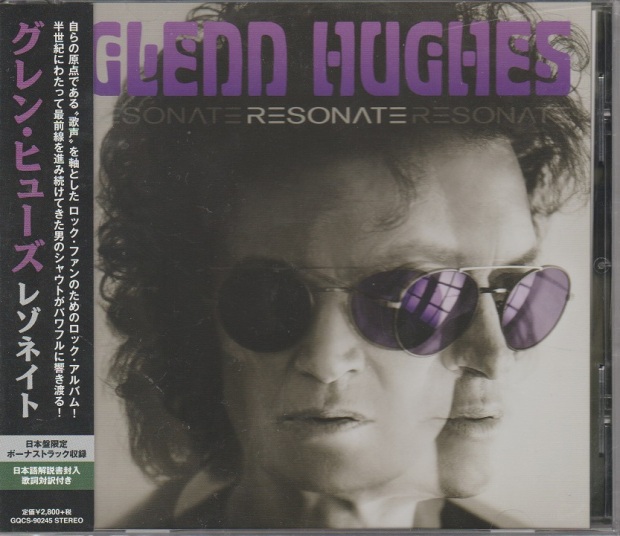
Glenn Hughes has been consistently prolific since a mid-90s comeback. Lean, clean n’ mean, Glenn Hughes has reclaimed his title as The Voice of Rock. His latest solo album Resonate made numerous top albums of 2016 lists. The only reason he didn’t make ours is that we were holding out to get the Japanese version with the exclusive track. In Japan they call him “The God of Voice” and this CD easily demonstrates why.
It is pointless to break this CD down song by song. They are all incredible. They represent the kind of hard rock that Deep Purple made famous: riffs, heavy organ, and incredible lead vocals. In the Deep Purple days, it seemed Glenn’s soulful croon didn’t always fit in with heavy rock, which made them that more unique. Today, Glenn sounds at home. Resonate is consistently heavy, and impressive at every turn. There are no big star names in his band, but Glenn’s old buddy Chad Smith from Red Hot Chili Peppers has two guest shots: “Heavy” and “Long Time Gone”, the opener and closer on the standard tracklist. Smith is always a joy to listen to, and when he works with Glenn, it’s the heaviest Chad Smith gets. Glenn on bass and Chad on drums: it seldom gets better than that.
Everyone will pick their own favourites, but one that we can’t put down is “Landmines”. The funky electric boogie is one of the album highlights; a real hard rock dance number to get down to. On “Landmines”, Glenn’s current self meets his 70s persona. That should create a time travel paradox, but it doesn’t. All it fuels is one hell of a boogie woogie oogie. Runner up: “Steady”. But any of these songs can slide in and out of the top spot on a given day.
The Japanese bonus track is an acoustic version of the ballad “When I Fall”. In some respects it’s better than the album version, but it’s all just a matter of taste. The Zeppelin-like mellotron is delightful. The only bummer is that the Japanese version doesn’t have the song “Nothing’s the Same”. That’s OK; the domestic version of Resonate has that and a bonus DVD. It’s a killer acoustic cover of a lesser known Gary Moore song, and it is worth buying the album again for. It doesn’t matter which version you go for. Resonate kills.
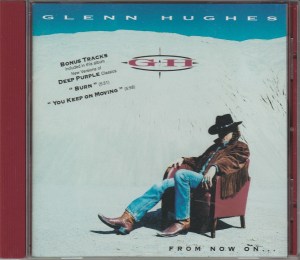
GLENN HUGHES – From Now On… (originally 1994, 1996 Explorer records reissue)
Glenn Hughes had his struggles, from being kicked out of Black Sabbath in 1986 to a long coked-out period of inactivity. He began making waves again in 1992, but it was 1994’s From Now On… solo CD that really inaugurated the lean, clean & mean Glenn Hughes that still dominates today. He has continued to release powerful soulful rock music under his own name and with supergroups such as Black Country Communion and California Breed. The critics can’t stop raving about Glenn Hughes today, but in 1994 he wasn’t getting the attention deserved.
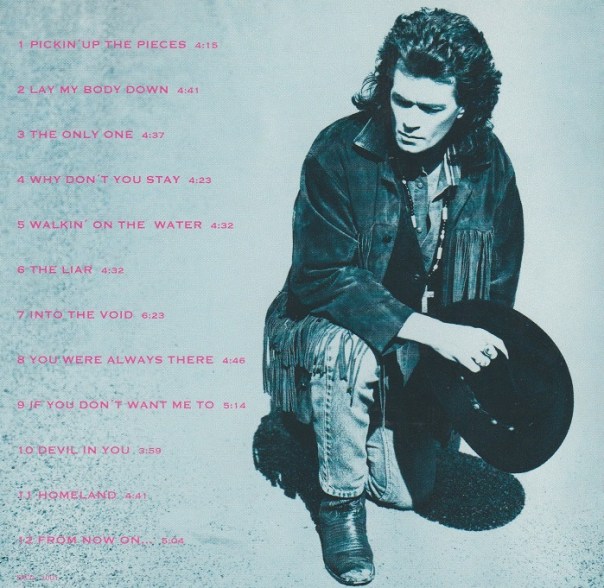
From Now On… features a Swedish band including two members of Europe: John Levén (bass) and Mic Michaeli (keys). Comparing this album to the music that Levén and Michaeli make today, you can hear their influence. There is the soul but also big big hooks. The first opening track however is wide open and takes no prisoners. “Picking up the Pieces” probably had an autobiographical meaning for Glenn, but the track is fast-forward bluesy metal as his old band Deep Purple have been known to do. His voice is enviable, powerful and clean. John Levén is a superb musician, but one only wishes it was Glenn on bass too, since he is the original maestro. He takes it to a slower, sexier groove on “Lay My Body Down”, with big soul vocals.
Epic melodic rock diamonds begin to take shape with “The Only One”. This epic track echoes some of the big choruses Glenn did with the supergroup Phenomena. Think old tracks like “Kiss of Fire” and “Still the Night” from 1985. “The Only One” is a successor to those tracks, with a big melodic chorus and a killer performance from Glenn. “Why Don’t You Stay” is a soul ballad, but still in gear with the big 80s-style Glenn Hughes choruses. It is closest in direction to Europe (a-la Prisoners in Paradise). Hold on tight because that chorus crashes in like a tidal wave.
Back in the Deep Purple days, Glenn was the funky one. “Walkin’ on the Water” brings a little bit of that funk vibe, but the focus is Glenn’s slinky vocalizin’. A little bit of the Sabbath chug emerges on “The Liar” which acts as a natural side closer. Rainbow’s 1995 album Stranger in Us All has a song with similar hooks called “Cold Hearted Woman”, but this is probably just coincidence. Wicked guitars dart across the speakers as Glenn protests, “You’re the one they call the liar!”
There is a subtle progressive vibe to “Into the Void”. Glenn sings it soft on the verses, and with power on the choruses. You can hear the spooky keyboard influence of Mic Michaeli who co-wrote the song. An unreleased Hughes/Thrall song finally emerged on “You Were Always There”, a funky little 80s number. Re-recorded for 1994, it nonetheless sounds like period in which it was written. Unfortunately “You Were Always There” begins a sluggish patch midway through the second side. Rolling into the ballad “If You Don’t Want Me To”, nothing stands out like the previous songs. “Devil in You”, another unreleased Hughes/Thrall song, begins to get things on track. “Homeland” really delivers and it’s back to the soaring power choruses. (And no, it’s not the same song as Europe’s “Homeland” on Prisoners in Paradise. This one is co-written by Mel Galley.) It’s bright days indeed, and “Homeland” is a beacon. This builds up to the original CD closer and title track “From Now On…”. This track pulses with understated power, and the incredible “voice of rock”, as Glenn is called.
The 1996 Explorer records reiusse adds two bonus tracks: remakes of Deep Purple’s “Burn” (from Burn, 1974) and “You Keep on Moving” (from Come Taste the Band, 1975). While Deep Purple re-recordings are numerous (hello Joe Lynn Turner and David Coverdale!), these two by Glenn Hughes are among the best you will find. It is true that Whitesnake’s The Purple Album also has re-recordings of these two songs. Glenn’s versions get the edge, due to the sheer power of the man’s vocal performance. He didn’t have to downtune the songs as David did.
No album by Glenn Hughes will lead you astray, but From Now On… (with or without bonus tracks) is easy and cheap to find used. Why not make it your first solo purchase from the man that the Japanese call “The God of Voice”?
EXTREME – Saudades de Rock(2008 Frontiers in Europe, Victor in Japan, with exclusive bonus tracks)
Extreme were one of those bands that always seemed to resist reuniting. Nuno didn’t seem interested, or was too busy with Perry Farrell and Rihanna. When they finally did get the band back together, they did it right with a few tours and a new album to prove they still had the goods. 2008’s Saudades de Rock (Portuguese for “Nostalgic Yearnings of Rock”) earned positive reviews from rock critics. It did moderate sales but the important thing was that it was good.
Immediately “Star” reminds us why Extreme were special in the first place: Those harmonies, the good time Halen-inspired riffs, the kick-ass singer and a solid beat. Gary Cherone’s voice has aged well, coming over as a cross between Sammy Hagar, Freddie Mercury and Paul Stanley (good company to be in). This song best exemplifies the “nostalgic yearnings of rock”, as the arrangement could have come from 1990. Extensive (jaw-dropping) solos and a big chorus immediately remind us why this band was so critically acclaimed 25 years ago.
It’s not all longing for days gone by. “Comfortably Dumb” concentrates its focus on the groove, like a bizarre cross between Soundgarden and the Trews. The space-age guitar work by Nuno Bettencourt separates it from anyone else. His style has matured nicely but still makes you wonder just how the hell he does it. His machine-gun guitar riff on “Learn to Love” does the same. It’s not all trickery: these are also great compositions, with challenging rock arrangements. Time changes and flurries of notes keep it interesting. The middle section gives all the members a little time to shine including new drummer Kevin Figueiredo.
The first knuckleball is thrown on “Take Us Alive”, a genuine electric bluegrass shuffle. Remember Extreme always prided themselves in their diversity, modeling themselves after Queen who were unafraid to do anything. “Take Us Alive” is a new step for Extreme who have never gone this twangy. Unsurprisingly they mastered this direction too. A saucy funk rocker called “Run” goes in another direction, akin to Queen’s own funky experiments, just heavier. Like Queen, Extreme topped it with a fine melodic chorus, but stay tuned for a superb outro.
“Last Hour” is not a ballad; more of a heavy dirge. Nuno takes a quiet solo full of volume swells before going full shred. He then rips a page from the book of his solo album with the punky “Flower Man” (I say “punky” rather than “punk” since few genuine punk songs have a blazing Nuno Bettencourt guitar solo). “King of the Ladies” is something else entirely, featuring Nuno on lead vocals. It’s trippy, slinky, drony, modern and sultry with smoking instrumental sections and sounds like nothing else you can think of. Few bands can take so many directions on one album and have it sound like a cohesive whole.
Every Extreme album has at least one ballad, and “Ghost” is a wonderful continuation of this tradition. With the focus on the piano, it’s a reprieve in the relentless guitar assault that makes up the majority of Saudades de Rock. You have heard this sound before on albums like Extreme III. We then visit the Houses of the Holy with “Slide” which possesses the unmistakable Zeppelin funk. You’ll be wondering, where’s that confounded bridge? The riff is a wink and a nod to “Sweet Emotion” and there is definitely some of that Aero-groove mixed with the Zoso Magic.
An acoustic reprieve is offered with “Interface”, a floaty ballad that fits this leg of the running order. It merges into the funk-Halen of “Sunrise”, a nice heavy track before “Peace (Saudades)” takes us out on a dreamy, Queen-like ballad. Yes that’s a lot of ballads late in the game and on paper it shouldn’t work. It does because Extreme are consummate balladeers (each one being different) and successful composers of album-length works with a start, middle and ending. “Peace” is a triumph and uplifting finale.
There are two bonus tracks available at the end of different versions of Saudades de Rock. Both are old demos from the vaults, ancient relics of a pre-fame Extreme. It’s a cool idea to release old unheard songs as bonus tracks, though unorthodox. “Mr. Bates” (1986) is exclusive to Japan only. It’s something like seeing old baby photos, or highschool yearbook grad pictures. You wince and think “Well, they were young.” Even so young, Nuno obviously had more talent than the average bear. Europe got the better song “Americocaine” (1985), which shows off that blend of Gary and Nuno’s voices that, one day, would earn them millions. You could imagine “Americocaine” showing up at the end credits of a minor 80s action movie.
Extreme played to their strengths, didn’t try to repeat anything from the past, while giving fans exactly the kind of album they needed. The bonus tracks don’t fit, but who says a “bonus track” has to fit? These are bonuses in the truest sense. Rare little treats you can’t find anywhere else. Any fan of the 1989 debut album Extreme will love them, because that is the era they resemble.
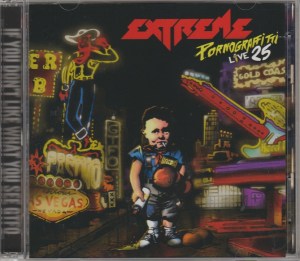
EXTREME – Pornograffitti Live 25 (2016 Victor Japan 2 CD set)
When you hear that an album like Pornograffitti (which defined one of our teenage summers) turned 25 last year, don’t it make you feel old? Maybe you haven’t played it in a while. (If you haven’t, here is a refresher course.) It was one of those discs that had appealing songs from start to finish, each different from the last. All 13 songs (14 if you include the solo “Flight of the Wounded Bumblebee”) are reproduced in sequence on this new live CD release, fresh from a hot show in Vegas in 2015. You can buy a blu-ray or DVD of the concert too, but CD collectors will want to spring for this Japanese double set. On a second disc you get “Play With Me” (given more exposure in the movie Air Guitar Nation) and “Cupid’s Dead”, normally exclusive to the video version. The total package is close to an hour and a half of some of Extreme’s best songs. The Japanese printing also has its own cover art, though no other exclusives.
The familiar taped intro of rain and piano inaugurates the “funked-up fairy tail” that is Pornograffitti. “Trying so hard to keep up with the Joneses!” begins Gary and and the Vegas crowd knows all the words. With Nuno Bettencourt and Pat Badger helping out, the Extreme vocals are nice and thick live. The sound is beefy goodness, wound up in electric guitar strings. Kicking it on drums, Kevin Figueiredo keeps things pretty close to the way original drummer Paul Geary did it. “Decadence Dance” is sincerely good nostalgia.
Following the vague storyline of the original album, “Lil’ Jack Horny” shows up amidst shimmery guitar harmonics and a funky lil’ riff. The horn parts (tapes?) jack up the funky little guitar number, which carries over to “When I’m President”. Nuno squeaks and squonks while Gary waxes poetic. “So go ask Alice, ah you know what he said? What did he say — remember, I wanna be elected?” Maybe one day Gary, because it is indeed true: just about anyone can be president! Cherone promises that things’ll be different. You can even be in his cabinet!
The funk peaks (obviously) on “Get the Funk Out” which remains as silly and fun as it was 15 years ago. (Listen for a little bit of a lyrical modernization from Nuno!) It’s pure live smoke only slowed down by the obligatory audience participation section. This appropriately segues into “More Than Words”, which is slightly more than a singalong. Stripped naked of the loud guitars, Nuno and Gary can still harmonize as clean and perfect as they always have.
“Money” resumes the rock, as Gary bemoans the modern worship of the almighty dollar. Nimbly killing it on both guitar and harmonies, Nuno Bettencourt is a super hero. He does it again on “It (‘s a Monster)”, a stock album track that goes from point A to point B at top speed. Some real gems start showing up a in steady string from there. “Pornograffitti” possesses some serious funk metal riffage and guitar tricks, performed at an unbelievable level of rock supremacy. Then it is time for the slow jazz lounge croon “When I First Kissed You”. Piano flourishes and Figueiredo on brushes lend it a really pretty dusky sound.
“And now back to our regularly scheduled program!” shouts Gary as Extreme once again puts on their rock and roll shoes. It’s time for “Suzi (Wants Her All Day What?)”, another funky rock combo. Nuno plays some of the fastest licks ever attempted, but that is mere warm-up, for next is “Flight of the Wounded Bumblebee”, the legendary guitar instrumental that re-defined the guitar instrumental for a short while. There is no time to recover because it’s straight into “He-Man Woman Hater”. This Van Halen-like blast contains some of Nuno’s finest fret abuse.
Pornograffitti was also a little different, and one aspect of that is that it ended with two ballads. Historically that has been demonstrated as a risky way to end an album, but Extreme pulled it off by using two that were different from any of the others on the CD. “Song For Love” was a big pompous Queen-like anthem, and you can all but see the lighters and cell phones waving in the air. “Hole Hearted” was the memorable acoustic closing number, great for campfires and rock concerts alike. Live is just as solid as the studio original.
Onto to the Japanese bonus CD with its two bonus tracks. “Play With Me” has always been a bit of a novelty, but notable for its sheer velocity and Mozart-a-go-go guitar dexterity. Few players have chops like these. “Cupid’s Dead” is a set highlight – heavy, funky and progressive at times. Extreme III deserves as much praise as Extreme II: Pornograffitti so it is quite pleasing to have this adventurous track close.
Bravo to Extreme for making this trip back in time a real treat.
AEROSMITH – Just Push Play (2001 Sony, includes bonus track “Face”)
“I don’t think we’ve made a decent album in years. Just Push Play is my least favorite.” – Joe Perry
The sad and depressing fact of the matter is, Aerosmith could have retired long before Just Push Play, and we would have lost nothing terribly valuable. They’ve pandered for hits before, but never as blatantly contrived as Just Push Play. It’s an embarrassing state of affairs that deserves every inch of scorn we’re about to unload upon it.
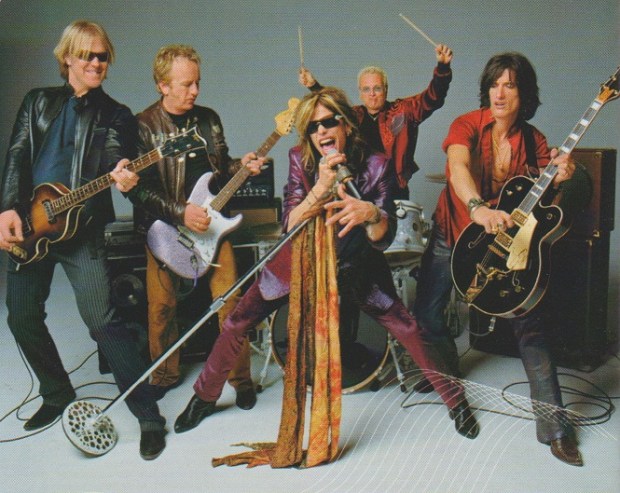
Hi-tech digital tracks written and produced with outsiders make up Just Push Play, a weak attempt to be young hip and cool when Aerosmith were anything but. Look at the sleek haircuts in the band photo. Only Joe Perry appears to know what band he’s in. The album was recorded with sterility. At no time were all five members in the studio together, according to Joe, and that’s exactly how it sounds.
If their heads weren’t in the clouds (coming off their biggest hit single ever) they might have made a rock album. “Beyond Beautiful” is a close imitation, a robotic and stiff carbon copy. Ballads like “Fly Away From Here” sound as if faxed in from the office. These blatant attempts to repeat past glories are among the most offensive on Just Push Play. It is true that one of Aerosmith’s first hits (“Dream On”) was a ballad. That was a long time ago and a long way from being flat broke and banging out a song in the middle of the night on a piano. These new ballads like “Luv Lies” and “Sunshine” are written specifically by hitsmiths in order to appeal to people who would not normally buy an Aerosmith CD. The result is that they appeal to nobody.
As bland and unappealing as these forgettable ballads are, none are as offensive as the title track “Just Push Play”. Nobody asked Aerosmith to do a rasta-hip-hop track. The Run-DMC version of “Walk This Way” is the definitive Aero-rap, a masterpiece of serendipity and cutting edge ambition. Aerosmith thought it was necessary to revisit that sound 15 years later, and once again the result is a blurry facsimile that pales in comparison.
“Jaded”, the first single, is a great Aero-hit, one of the few from this era of co-writers and collaborators. Fortunately you don’t have to buy the album to get it, as there was a five track EP you could buy instead. If you go that way, you can still enjoy a couple different versions of the charismatic single. “Jaded” had the kind of chorus that Aerosmith used to be able to write in their sleep, but now apparently need help to do.
There were different bonus tracks for different regions. US and Canada got nil, but Europe got “Face” while Japan received “Won’t Let You Down” and a bunch of other stuff including five live tracks from 1978 (California and Texxas Jams). That 2 CD Japanese edition might be worth tracking down for the bonus material, but “Face” remained exclusive to Europe. Is it worth it? Actually…it might be. “Face” is an acoustic track that sounds a bit like a B-side. It’s closest to “Jaded” in sound, and sounds looser than most of the rest of the album. It’s certainly not going to become a lost favourite, but if you find a copy at the right price, consider it.
Quiet Riot took the unusual step of firing their only original member, lead singer Kevin DuBrow, in 1987. They soldiered on with new singer Paul Shortino and did a brief tour of Japan before calling it a day for the band. Meanwhile, Kevin DuBrow was supposed to working on a new band called Little Women.
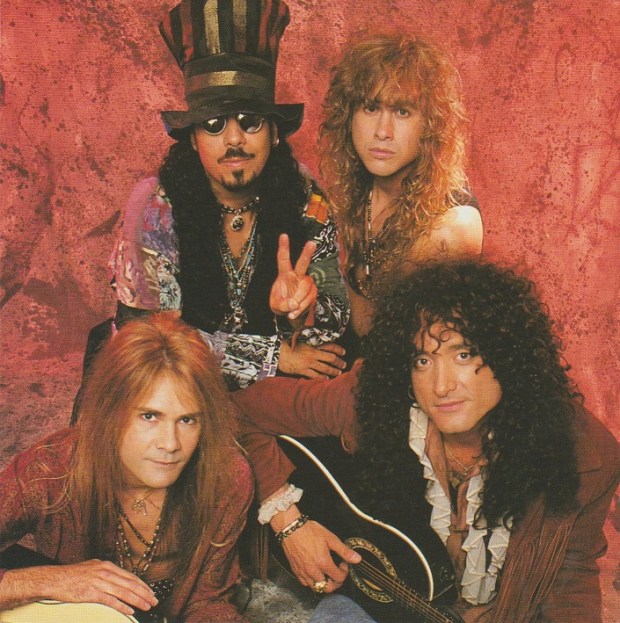
In 1991, various media were reporting that Kevin DuBrow and Carlos Cavazo had gotten back together in 1991 as a new band called Heat. It was a quiet reunion for the singer and guitarist who had been estranged since DuBrow’s firing in 1987. Within two years of forming Heat, the band had morphed into a new version of Quiet Riot, now featuring former drummer Frankie Banali and newcomer Kenny Hillary (RIP).
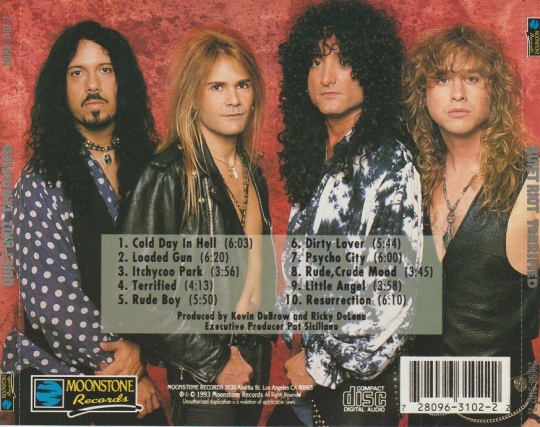
Terrified features 3/4 of the classic Metal Health lineup with only Rudy Sarzo being absent. (He’d join again later on Alive and Well). Like a mighty ship changing course in heavy waters, Terrified is a monstrous Quiet Riot CD, anchored by Cavazo’s newly heavy guitar playing and Banali’s inimitable thunder. The drum production on this album could be the best on any Quiet Riot disc, and up there with Banali’s sound with bands such as W.A.S.P.
Lots of winners on the Terrified: “Cold Day In Hell” boasts an angry 90s groove, but with the melodic sensibilities of Metal Health-era QR. “Loaded Gun” almost sounds like a Metal Health outtake, because it has a throwback vibe. Their cover of “Itchycoo Park” is the only acoustic song, a much needed respite before re-entering the fray on the storming title track. Only a few filler tracks (in a row) almost derail the album, but soon we’re back on track with “Rude, Crude Mood”. It may be one of the worst lyrics that DuBrow’s ever written but the music sure rocks. “Little Angel” is fast but forgettable, and before long you’re into “Resurrection”, a six-minute instrumental tour-de-force. Banali and Cavazo take the helm on it with a shuddering riff, and they don’t let go until it’s fade out. An awesome track.
Quiet Riot’s career can be divided up into a number of phases. In the 1970s, there was the Randy Rhoads era represented by two decent Japanese albums. This was followed by the the so-called “classic era” of major label releases (Metal Health to QR) from 1983-1988. Then there is the reunion era which runs from Terrified to Rehab (2006) and finally Kevin Dubrow’s death in 2007. As a coda, Frankie Banali resurrected the name with a variety of lead singers and continues to tour and record. Their last album was 2014’s 10 featuring lead singer Jizzy Pearl. Terrified would stand as the best album of the reunion era, which they sadly struggled to equal on later releases like Down to the Bone.
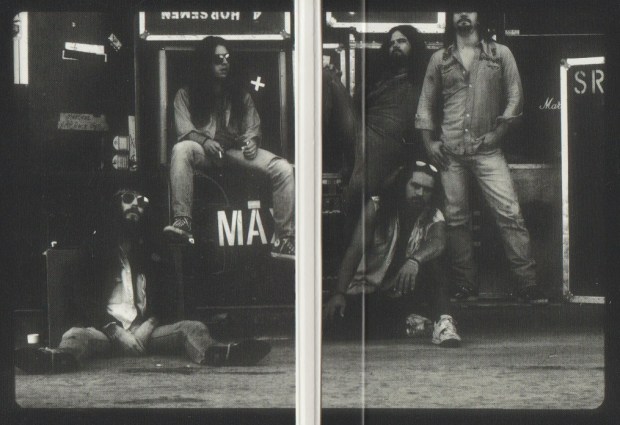
THE FOUR HORSEMEN – Death Before Suckass – Live at Saratoga Winners (2012)
“No edits. No overdubs. No bullshit.” No kidding! There also also no frills, just seven songs and 30 minutes of rock and roll.
Death Before Suckass, recorded fall 1991, sounds like a crowd recording. You can tell by the douchebag talking before the Horsemen’s set. “You should see our drum kit! It fuckin’ blows that one away! $5000 Yamaha…” Whoop-de-do, fucko. Because no matter how much your kit costs, I doubt you could hammer on it as hard as Ken “Dimwit” Montgomery did on his.
Dimwit swiftly kicks things into motion, with “75 Again”, a screamy rocker that is about 9 out of 10 on the AC/DC scale of kickass. Lead singer Frankie Starr’s voice was primed for screaming, and could do it better than most. Without even a pause, “Hothead” follows up. In a groove now, lead guitarist Dave Lizmi greases up his Gibson and lays down some beautifully fluid solo work. In the realm of heavy bluesy rock and roll, few can touch Dave Lizmi. Then rhythm guitarist Haggis takes out his slide for the single “Tired Wings”, soaking it in whiskey stained blues. Frankie’s charismatic singing shares the spotlight with the biting licks.
A non-album Savoy Brown that used to get some live play was “Can’t Get Next to You”, an AC/DC blues a-la “The Jack”. There is a sloppy edit into “Wanted Man” but as Haggis says in the liner notes, there is nothing perfect about this CD. “Wanted Man” comes close, with Lizmi again doing some really impressive playing on the six string. The most familiar songs are the singles “Nobody Said it Was Easy” and “Rockin’ is Ma Business”. The beat is a little faster, a little more intense for the stage. The only tragedy is the fidelity of this CD does not capture the thunder. You can hear it on the stage, but you cannot feel it shake the floor. Too bad, because you can be assured it all but certainly did shake the floor.
And this leads to a quandry. This album is packaged intentionally minimalist. It suits the recording inside. But it has hard to ignore that what is recorded inside is only 30 minutes, and costs $18 US plus shipping. Yes, it definitely costs The Four Horsemen a lot to press up these independent discs, and they surely don’t make a lot of money on them. Still, it is hard for the cash-strapped fan to justify that kind of money, unless you are a superfan. And unfortunately, it is likely that only superfans will be able to appreciate Death Before Suckass as the valuable noisy treasure that it is.
 BUDGIE – Budgie (originally 1971, 2004 Noteworthy Productions reissue)






















 mikeladano.com