UNSPOOLED: An Adventure in 8-Tracks by Tim Durling (2022)
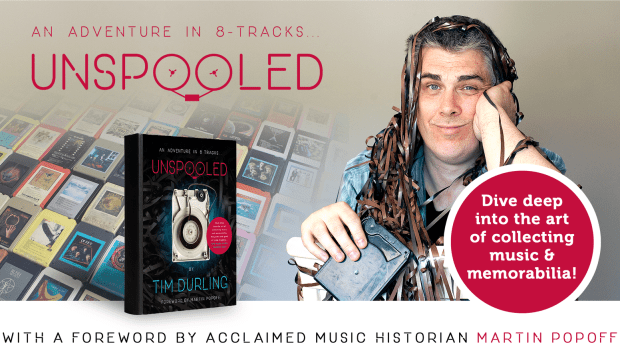
Every collector is different. We cannot be painted with a single brush. I, for example, collect music formats that I have the equipment to play. I don’t own any reel-to-reel and only a couple 8-track tapes for that reason. Tim Durling on the other hand doesn’t care. He loves 8-tracks even though he has no way to play them, nor does he really have any interest in getting into the players. Restoration of the players and tapes themselves is a expensive hobby that many do enjoy, but Tim is all about the collecting.
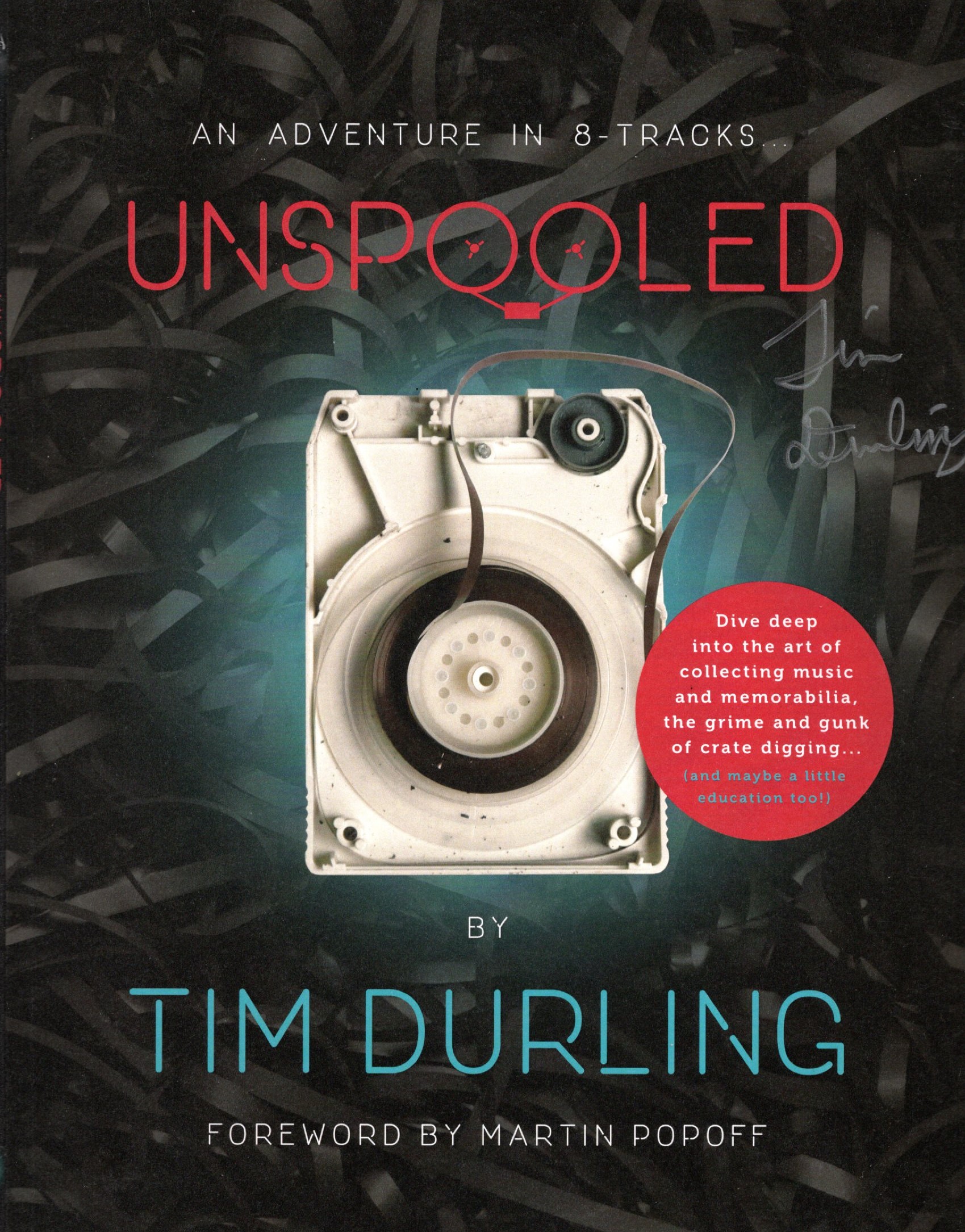
A single Journey tape sitting in a desk drawer was the modest beginning, years before Tim really dove into it. His passion for collecting the bands he loves is at the heart of Unspooled, Tim’s first book and a great resource for 8-track tapes. If the praise that Martin Popoff throws down in the forward isn’t enough to convince you, then I give up!
Unspooled is a visual feast. Every page pops with vivid print, and many are loaded with photos of tapes that you never knew existed on 8-track. Tim was fascinated early on to learn that record clubs such as Columbia House sold 8-track tapes through the mail, long after they were available in stores. These “RCO” tapes can be very difficult, but rewarding to find, especially when you have a love affair with collecting. See for yourself, how pretty the 8-tracks look when photographed next to their cassette, CD and LP counterparts. How many albums do you own in four formats?
Tim includes lists of known RCO tapes from 1981 to 1988. Wait…1988? Yes, somebody in 1988 was still ordering 8-track tapes from record clubs! Astounding. And Tim’s got the proof. He also has pictures from his childhood (sweet GI Joe’s, dude!) and of obscure tech like the infamous 8-track to cassette car adapter. Chapters are named after related songs, but there are plenty of surprises along the way. I’ve never seen a Bruce Springsteen box set on 8-track before.
Interviews and stories from friends and experts help colour in the picture a bit. Information you wouldn’t just find yourself. For example, what is a “coffee can tape”? 8-tracks were notorious for unspooling and being difficult to fix. Often customers would carry the mass of unspooled tape in a coffee can to be repaired. And here’s something else I didn’t know, but should have expected. Counterfeit tapes are a problem now in the collector’s market. Some of these tapes go for serious coin today. Stuff that you used to find at a garage sale for 10 cents, or worse, in the garbage. Contributions comes from characters such as Marco D’Auria the Contrarian, Ryan Murphy from RushFans, and yours truly, LeBrain.
Yes, that means I am biased, but I don’t think my review would be any different otherwise. Take Martin Popoff’s word for it. Limited copies of Unspooled are still available. Contact Tim’s Vinyl Confessions to order yours.
RECORD STORE TALES #976: Thank You! Happy 10 Years, Record Store Tales!
I don’t want to rehash the story again. I just want to say thanks!
Thanks to my buddy Aaron, who I first met in 1996 at the Record Store I managed. When I first started writing Record Store Tales, I sent him the earliest chapters to proof-read. (This is back when I was calling the whole story “Rock, Rock, ‘Til You Drop” and I was going by the pen-name of…dear God…I was going by the pen-name of “Johnny Cock”.) Aaron encouraged me to keep going.
Then my sister, Dr. Kathryn, twisted my arm to start posting the stories instead of just talking about it.
Finally former radio dude Craig Fee, wherever he is today, gave me the last push I needed to get going on WordPress. He sent me a link and an email saying, more or less, “just do it”. So I clicked the link, and began posting. It’s really that simple. I clicked a link, cut and pasted the first chapter, and hit “publish”.
I had almost no audience except Craig and Aaron. Not even HMO, our Heavy Metal Overlord, was reading yet. That is, until May 7 2012. Everything changed at that point and suddenly, the hits went crazy! If not for May 7, I probably would have lost interest years ago. If there’s one way to commit me to a project…it’s to tell me to quit.
So: Thank you to all of the above, and to all of you, new or old! I hope you enjoy what we’ve done here and where we’re going in the future. If not…too bad!
Rock, Rock, ‘Til You Drop indeed!
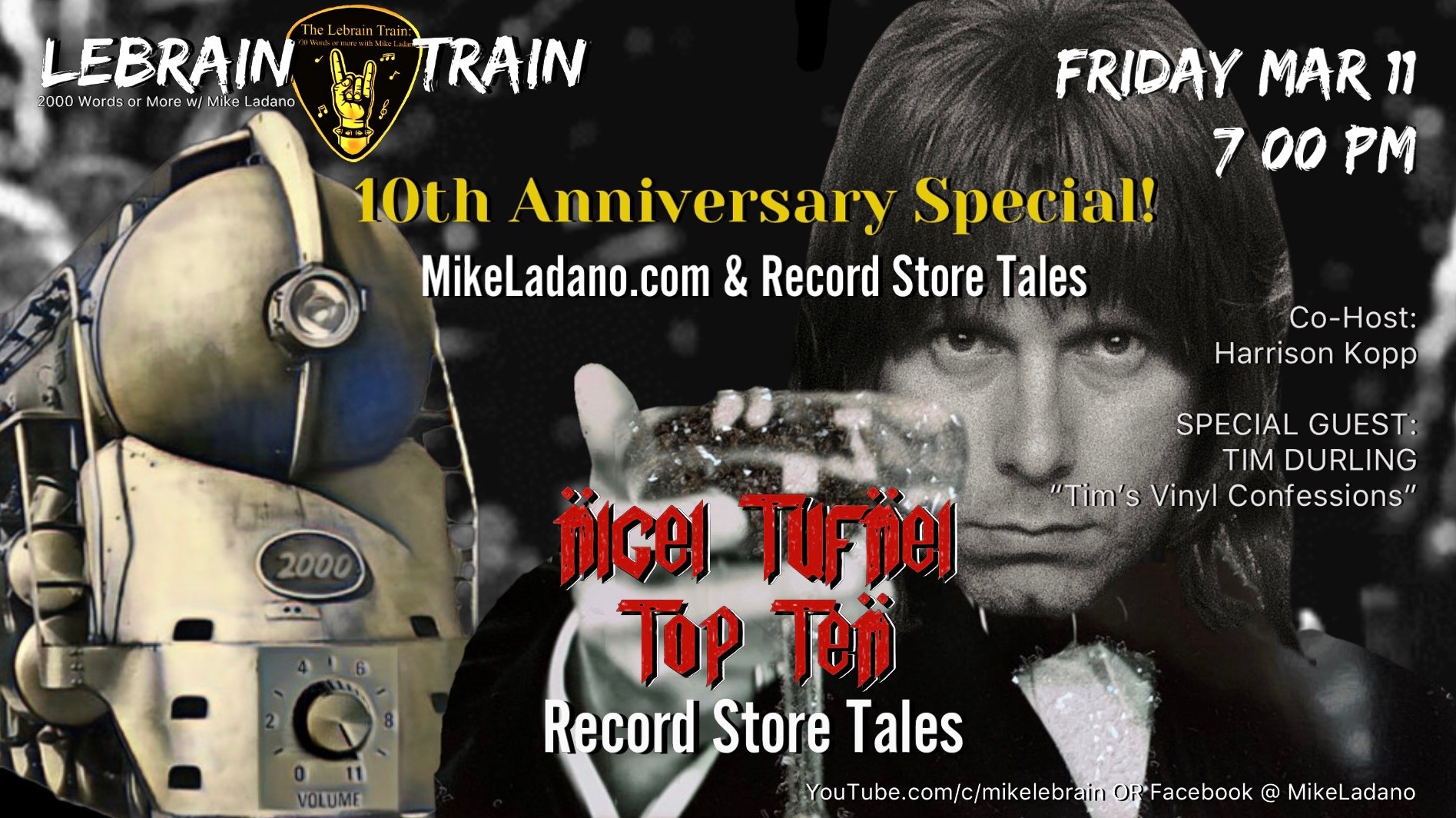
This Friday, we will be celebrating 10 years of Record Store Tales, and mikeladano.com, on the LeBrain Train. Please join me! If you would like to appear as a special guest, let me know in the comments.
As I’ve learned more about my friend Sarge since his passing, I’ve discovered something that comes up over and over again. Sarge just wanted people to be happy. He didn’t have to agree with them. Whatever made them happy, made him happy. He encouraged people to be individuals and find joy in their own skin. I guess that’s one reason why he was such a great body piercer. He was also an artist, as some of these pictures I’ve rediscovered prove.
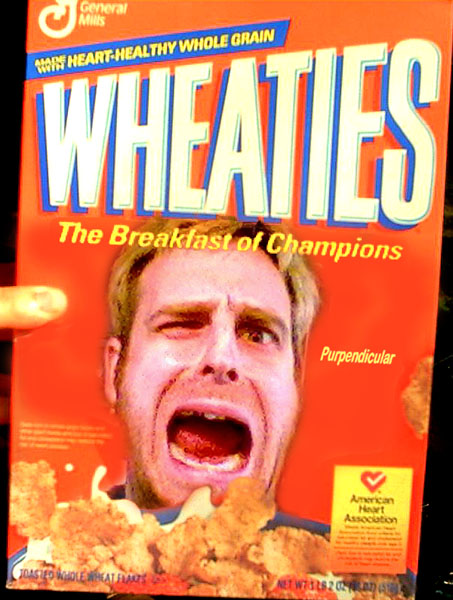
During the period I knew him, I had a couple different online handles. One was “Purpendicular” or just “Purp”, and I don’t need to explain to you where that came from. After a brief hiatus I used Dewey Finn, a reference to Jack Black’s character in School of Rock, before reverting back to Purp. Sarge made all sorts of art in that period for me, without me asking at all. There were the infamous “Purp Ate My Balls” shirts. There was also the artwork he made below.
My face on a Wheaties box, and why not? The other day someone asked me if I’d ever wanted my face on a Wheaties box, and I said with a wink, “Already been there, man!”
And below, my face on a British tabloid. And again why not?
With Sarge gone I’m so happy to be able to resurrect these bits of art that he did just for a laugh. His laughs, and mine too.
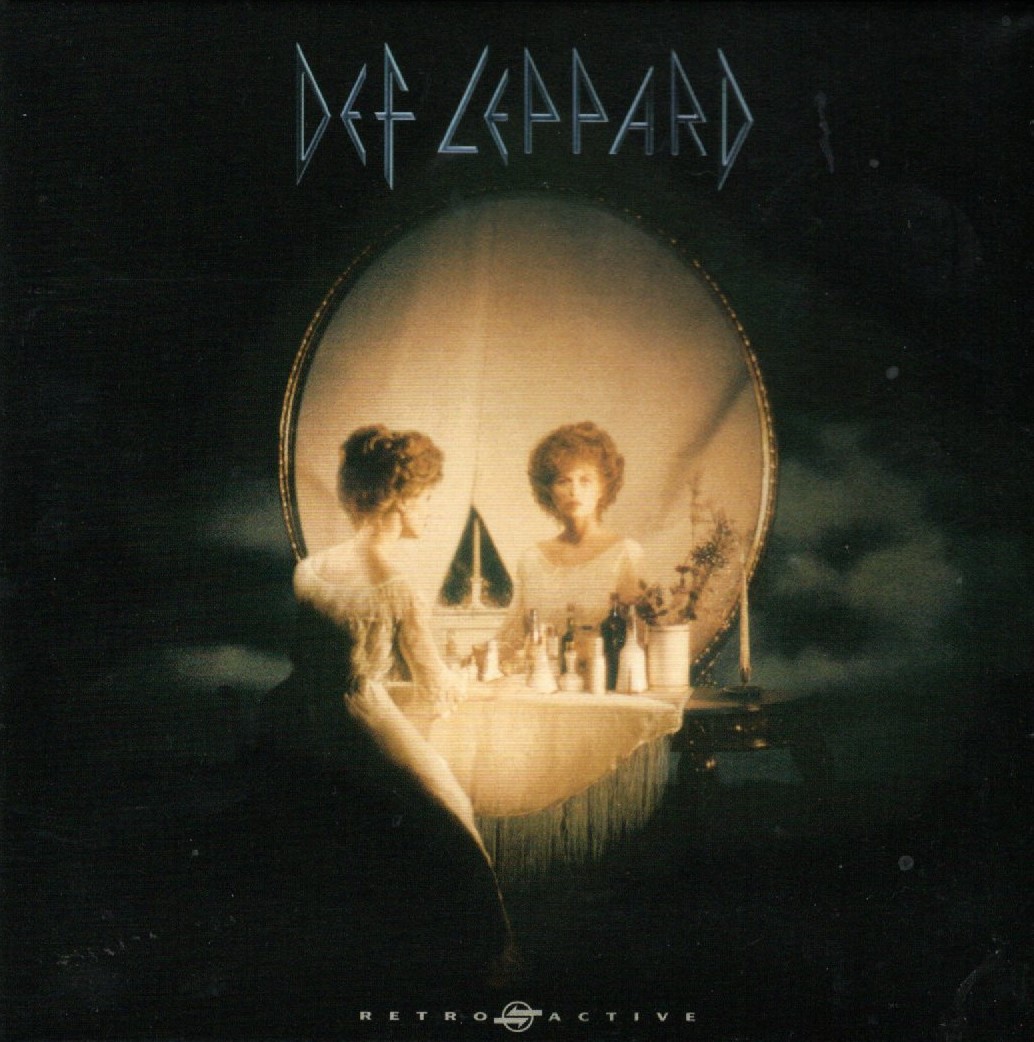
Like Hysteria before it, Adrenalize produced a wealth of riches in B-sides. Between the two albums, they had enough B-side studio material to turn into an album compilation. Tellingly, the final album called Retro-Active featured very different cover art, and a toned-down logo. It was intended to be the ending of an era, and the start of a new one. Guitarist Steve Clark was gone, replaced by veteran Vivian Campbell. The grunge era was two years deep, and Leppard were about to change sonically. In their minds they needed to “clear the decks” of old material so they could focus on the new.
What’s interesting about Retro-Active is that it is not simply a compilation of rare material. Everything has been reworked to some degree — everything. There are even two “new” songs, unfinished tracks with Steve Clark that were finally completed for this album. We will take this album track by track and go over the changes made to the original B-sides. (The printing on this 2019 CD reissue is so small, I had to pull out my original 1993 CD to read the notes.)
1. “Desert Song”. A track begun during the Hysteria sessions but left unfinished without lyrics or vocals. Joe finished the words in 1993, while Phil laid down guitar overdubs and Rick Allen re-recorded the drums. Steve Clark is featured on the second guitar solo. What’s surprising about “Desert Song” is how modern it sounds even though it was originally written in 1987. A slow, heavy groove is melded with middle-eastern vibes for a dark winner.
2. “Fractured Love”. Another from the Hysteria sessions. You can tell the intro is of more recent vintage compared to the body of the song. Joe’s vocals suddenly revert to the old screamin’ Elliott and it’s absolutely brilliant. Drums were re-recorded in ’93, along with the new intro by Joe and Phil Collen. Both these songs sound ahead of their times and well suited to the darker moods prevalent in the early 90s. “Fractured” is choppy, intense and reminiscent of the old band while still sounding like a 90s song. Steve Clark on lead guitar!
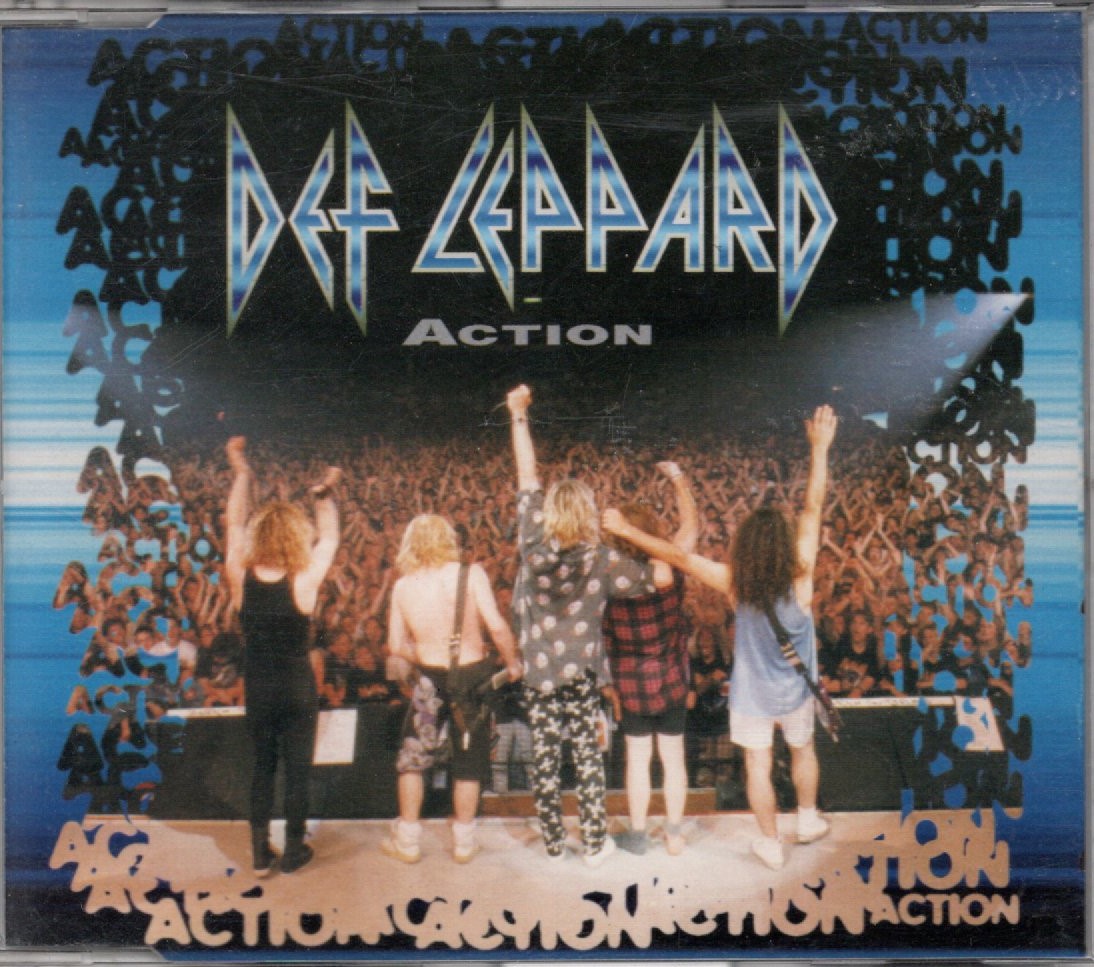
3. “Action”. This Sweet cover originated on the 1992 “Make Love Like a Man” CD single. Vivian Campbell had joined the band by this time and the track features some of his guitar work. Like most of the tracks on Retro-Active, the drums were re-recorded by Rick Allen in 1993. “Action” became a Leppard staple over the years, and as a rare fast/heavy rock singalong, you can hear why. In fact, it was later released as a single, from this album!
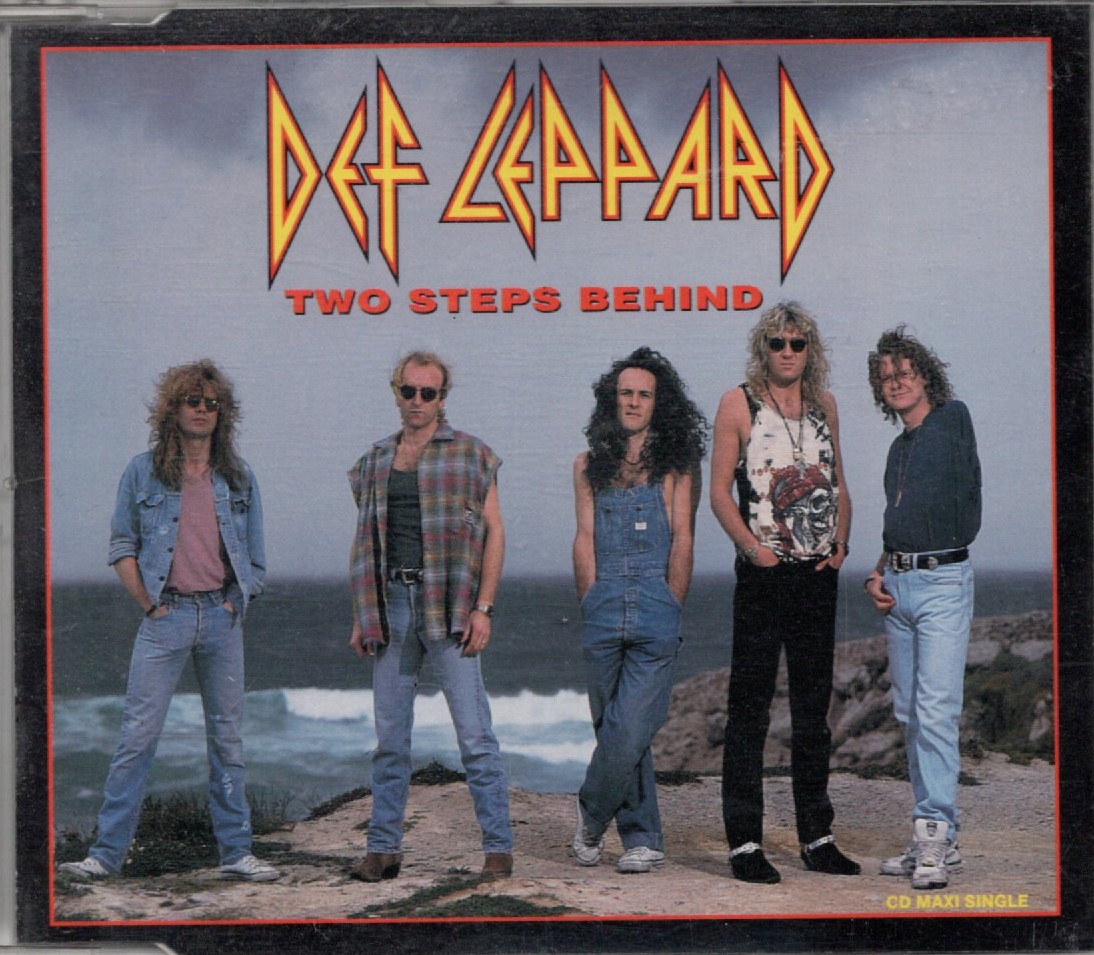
4. “Two Steps Behind” (Acoustic Version). As we’ll see, “Two Steps Behind” exists in a number of different versions. The demo was electric. The first version released appeared on “Make Love Like a Man” as a purely acoustic song with no drums. The second release had strings added by Michael Kamen for the Last Action Hero soundtrack, and that version was released as its own single. The version on Retro-Active is the popular Kamen single mix. This was Leppard’s very first acoustic song and it opened new doors for the traditionally hard rocking band.
5. “She’s Too Tough”. Helix recorded this Leppard outtake themselves for 1987’s Wild in the Streets. From their version, you could hear the song deserved wider renown. Def Leppard released their finished version on the single for “Tonight” in 1993. The drums were re-recorded for Retro-Active but there were no other changes made. This blitz of a rocker features the screamin’ Joe voice and all the adrenaline you can handle (and was missing from Adrenalize).
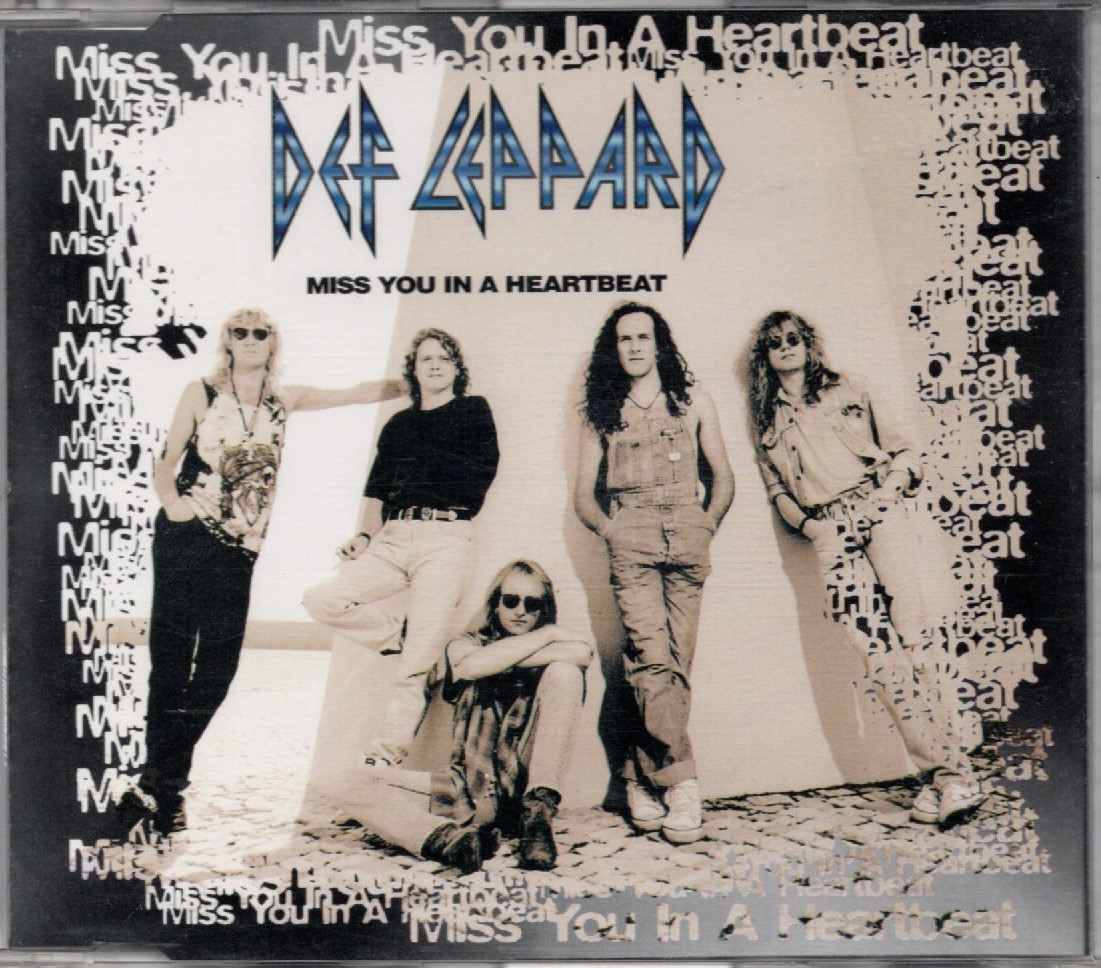
6. “Miss You In a Heartbeat” (Acoustic Version). This is actually a piano version of a song that exists in many forms. It was first recorded by Paul Rodgers and Kenney Jones as The Law in 1991. For that band, it was a low-charting single. It faired better for Leppard themselves, who released it as a single A-side themselves in 1993. This quieter version features a stunning acoustic guitar solo by Phil Collen. There are many, many versions of this song, as you will see as we proceed through this series. (And this album!)
7. “Only After Dark”. The Mick Ronson cover was first released on the “Let’s Get Rocked” single. Both Vivian and Phil added guitar overdubs for the Retro-Active version. The additional guitar depth is noticeable. Leppard are so good as these kinds of glam rock songs.
8. “Ride Into the Sun”. From the very first EP, and then re-recorded on the “Hysteria” single. Could this be the fastest Def Leppard tune? It’s certainly among them. Also ranks highly among the heaviest, and best, of Def Leppard! Rick re-recorded the drums, and for some reason Ian Hunter from Mott the Hoople added a honky-tonk piano intro. The “studio talk” at the end of the song has also been trimmed off. Sonically, this could be the best sounding version of “Ride Into the Sun”, though the preferred will always be the “Hysteria” B-side.
9. “From the Inside”. Originally released as part of a three-song session with Hothouse Flowers on “Have You Ever Needed Someone So Bad“. Billing themselves as “Acoustic Hippies from Hell”, Leppard were really leaning into their acoustic side! The song originated as a TV broadcast on a program called Friday at the Dome with Joe Elliott and Liam Ó Maonlaí. The only modification made to this version is that the count-in at the start has been deleted. Leppard fans may be surprised by the tin whistle but it’s not too much of a stretch. The bleak song is about the dark side of addiction.
10. “Ring of Fire”. Dipping back into the Hysteria B-side collection, “Ring of Fire” has a new intro. The drums were re-cut and backing vocals thickened up. It’s one of two Mutt Lange co-writes on the album and stands as one of Leppard’s harder rockers from the era. An excellent track, “so stick around and settle down, enjoy the mystery.”
11. “I Wanna Be Your Hero”. From the “Animal” EP, this is the second Lange co-write on Retro-Active. With new drums added, here it stands as one of the highlights among many highlights. The track should always have been on Hysteria. Combining ballad and rocker into one meaty package, “I Wanna Be Your Hero” is a stone cold Leppard classic.
12. “Miss You In a Heartbeat” (Electric Version). Nothing was overdubbed or re-recorded for this track, but the opening fades out of “I Wanna Be Your Hero”, meaning it is still different from its original B-side release on “Make Love Like a Man”. Another stone cold Leppard classic. A majestic electric ballad with layers of Phil’s sweetest guitars and backing vocals. A masterpiece.
13. “Two Steps Behind” (Electric Version). Previously unreleased. Joe’s original backing track was fully Leppardized with all the band members including Vivian. This gives you an idea of how the song was originally envisioned before it took its better known acoustic guise. The acoustic version is more original, but this one does boast a big huge Leppard chorus.
14. Unlisted bonus track! “Miss You In a Heartbeat” (Acoustic, Acoustic Version). This third version of the ballad is the softest. It is the piano-based version, but without the backing band. Just Joe, the piano, and Phil on an acoustic guitar solo. A nice surprise.
There are more demo versions of these songs on the B-sides of singles, that we will get to when we arrive at the appropriate disc in the CD Collection Volume 2.
As it turns out, Retro-Active was not entirely the clearing of the vaults we thought it was. There was still one more song with Steve Clark unfinished. One more compilation to release. The future was on the horizon, but the past had to be dealt with first. Which doesn’t diminish Retro-Active in any way. Where there is repeat of tracks, it is justified by the versions being completely different in tone and direction. It plays like a “new Def Leppard studio album” to the layman, but a compilation of the deepest cuts to the faithful. Cuts that have been freshened up and don’t repeat the exact B-sides in their collections. A win/win.
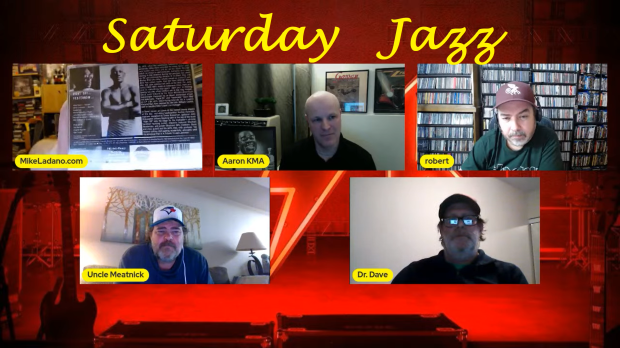
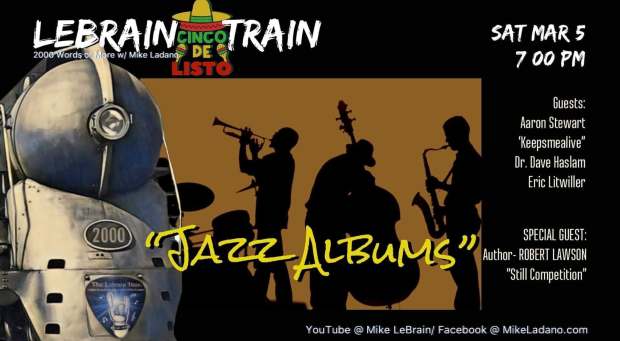
Tremendous fun and a lot of learning tonight in the School of Jazz! Author Robert Lawson has a jazz collection to die for and we got a small taste of it tonight. The panel for Saturday Jazz consisted of four experts and one newbie:
Robert Lawson (serious author and hardcore jazz collector)
As the talk veered from Miles Davis to Herbie Hancock, Bill Evans, Thelonious Monk, Charles Mingus and more, my wishlist grew and grew and grew. Stay tuned to the end to see some of Robert’s most enviable box sets.
As we often do, we started the show with some unboxings. Check it all out below! See you next week.
Upcoming schedule:
Friday March 11 – The 10 Year Anniversary Show – Record Store Tales and mikeladano.com (with Harrison and Tim Durling)
Friday March 25 – 2 Years of the LeBrain Train (with Tee Bone and Robert Daniels)
Friday April 1 – The Prank Show (With Chris Thuss and Michael Morwood)
The LeBrain Train: 2000 Words or More with Mike & Friends
Episode 100 – Saturday Jazz
When a guy with the musical intelligence and credentials of author Robert Lawson asks if he can participate in your Saturday jazz show, you say yes!
Much like Donnie in The Big Lebowski, I’m out of my element here. A casual jazz fan like me cannot compete with the knowledge of the guests this week. It’s a Cinco de Listo Top Five Jazz records and the panel consists of:
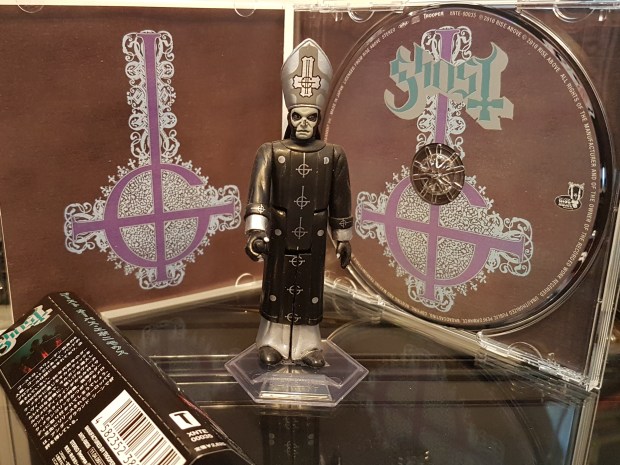
GHOST – Opus Eponymous (2010 Rise Above Japanese import)
They could have gone down as a novelty, if the music wasn’t so genuine. An expert mix of metal, Satan and Abba. From the gloom of the north came Ghost, led by Papa Emeritus and his Nameless Ghouls. We knew little about the band then, except that they were just too good to have come out nowhere like that.
As Ghost have grown and evolved, the shadow of their first album grows even longer. Opus Eponymous consisted of an intro, eight gothic keyboard-drenched metal anthems from hell, and one bonus cover track for the Japanese market. With “Papa’s” true identity wisely obscured at the time, the focus was off the extensive pre-Ghost discography of leader Tobias Forge. Though elements of his glam and death metal pasts remained, Ghost was truly unique right from their debut. Forge conjured a fictional backstory for the band in his mind. He imagined Ghost were a group of older guys. Active in the 70s, but started playing together in the late 60s. Very experienced and maybe a little bitter. Opus Eponymous was not meant to sound like a debut, and it does not.
Like entering a church on a cloudy day, “Deus Culpa” greets you as the light organ drifts through. But this is no ordinary mass, and the sermon is quite devilish. Foreboding dissonance and flat chords warn you against entering, but still you go. Then suddenly the rolling electric bass of “Con Clavi Con Dio” is followed by a blast of guitar and evil organ!
“Lucifer! We are here for your praise, evil one!” sings Forge with a provocative calm. What really made Ghost stand out was the juxtaposition of evil metal, with the keyboards and otherworldly, ethereal lead vocals of “Papa Emeritus”. Choir-like backing vocals and the persistent howl of organ add to the classic horror scene. Listening to the lyrics, it is clear that Forge knows his subject matter convincingly enough. But he also knows how to write a song and every second of “Con Clavi Con Dio” delivers some sort of hook, thrill, or chill. The production is also outstanding in its bare simplicity, compared to later Ghost.
The plinking intro of “Ritual” disguises its true heaviness, at first. Forge deftly merged a plutonium-heavy riff with light and delicate vocal harmonies. While you’re being caressed by the sweetest Satanic prayers, you’re also enduring the assault of guitars and bass. “Ritual” sounds, somehow, like a song that could have emerged from the year 1985, but with the wisdom of future knowledge. Quite possibly the pinnacle of this album.
Galloping in the dark, “Elizabeth” (long “i”, not short “i”) is among the heaviest tracks despite its melodic chorus. As a song about a suspected 16th century Hungarian serial killer, it could be one of the less evil songs on the record! It is followed by the dastardly catchy “Stand By Him”, featuring a very traditional metal guitar solo section. ”Tis the night of the witch, tonight,” beckons Forge, and you cannot resist his call to this tale of revenge. (Or justice?) Then comes in the chopper-like opening guitars of “Satan Prayer”, the most blunt of all the songs. Yet like the others, impossible to resist, because of impeccable construction from melody and riff. The clever keyboards and dual guitar solo are a confectionery topping over the robust chug of distortion.
A crack of thunder, the crash of drums, and “Death Knell” is here. Forge sells the creepy vocal easily, though not difficult given the words as he sings of evil rebirth. One of the most straight metal of the tracks, and the outro is pure Ozzy. “Prime Mover” then enters like a warning siren. Once the smoke has cleared, the bass does its work to level the stragglers. Forge floats over the waste, ethereal and haunting.
All that’s left on the domestic album is the brilliant instrumental closer “Genesis”. Apparently it’s a sped-up waltz; I think it’s a piece of hammering progressive brilliance. The repetitive keyboards provide the melodic hook, and ghostly guitars add to the story. Not to be left out, the bassline is delicious to listen to. There’s also a very Sabbath-y acoustic outro. The rituals are complete and a new evil is born. An outstanding album closer!
The Japanese CD contains a dark rendition of the Beatles’ “Here Comes the Sun”, mournful and sad. It’s the opposite of the George Harrison original. Some like it; some feel it’s the worst track on the album. It does work as a sort of coda, but is probably experienced best separately.
With Opus Eponymous, Ghost arrived. To their credit they’ve never tried to repeat this exact album. Instead Ghost continued to explore, a growth personified by adopting the guise of a new singer on every album (Papa II, Papa III etc.), even though they were all played by Tobias Forge! This remarkable debut is just as valuable as the later more diverse records, perhaps simply because of its more focused singular vision.
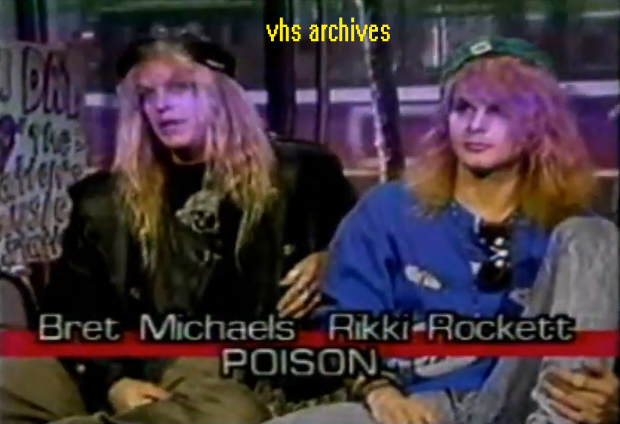
I love this vintage interview clip. If anyone in rock holds the title of “Captain A.D.D.”, it would have to be Poison’s Bret Michaels! This scattershot blurb on good press vs. bad press goes about a million miles per hour, but it’s all fun.
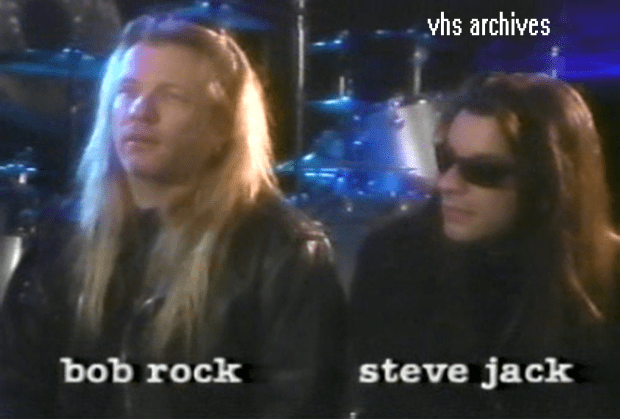
CBC had a music program called Ear to the Ground in the early 1990s. Their Rockhead episode aired at the tail end of 1993 (judging by the New Year’s ads). Rockhead, of course, included producer extraordinaire Bob Rock on lead guitar — and as a writer and musician, he’s as good as the bands he produced. But what made Rockhead special was not Bob himself. It was the singer he discovered, Steve Jack, a new screamer who could easily compete with the big boys on the scene.
Apparently Bob Rock experienced some resistance from people who thought being a successful producer should be enough. This is discussed alongside some killer live and rehearsal footage. Drummer Chris Taylor and bassist Jamey Kosh also get some camera time to talk about the boss! Other topics:
Four years of effort to get the record out
Going from unknowns to opening for Bon Jovi in Europe
Being true to your roots
The evolution of the songs and trying to say something “a little more deep”
The problem with the show Ear to the Ground was that they played a lot of music, but not complete songs. This meant it was both light on interviews, and light on music. Sort of a soupy in-between. You be the judge.
The quiet of the north was broken by the usual morning drone of cars, trucks and the activity of the modern world. Covered with a light dusting of snow, the grass and leaves woke from their nightly slumber. As the frigid tundra of Thunder Bay Ontario slowly warmed in the rays of the July sun, the citizens of the city emerged to begin their daily routine.
Except this day was hardly routine.
Thunder Bay is the great Canadian crossroads. One cannot drive from one side of the country to the other without passing through frosty Thunder Bay, the land of perpetual winter. Other routes involve going off the beaten track, but only fools dare cross into the United States. The level-headed travel the Trans-Canada Highway. All roads eventually wind back to Thunder Bay.
Down the highway, came the Caravan. They came from the warm southern reaches of the province, unprepared for the sudden July cold of Thunder Bay. They called themselves “The Sausagefesters”, a merry band of rock and rollers who adored the taste of red meat and distorted guitars. The Caravan powered its way through the Canadian shield, the tall majestic evergreens shading their journey. Bound for a new music festival called Sausagefest West (an offshoot of the original southern variety), their spirits could not have been higher. Happy songs rang as they made their way to Thunder Bay. If only they knew the dangers that lay ahead, they would not be singing so merrily.
Their trip had started peacefully enough, but now, travelling at speed down the cold asphalt, they found themselves careening towards a dark, towering figure ahead.
“Watch out!” yelled the passenger in the lead vehicle, a big meaty man with a scruffy exterior.
“I see it!” exclaimed the driver. “But I don’t know what I’m seeing!”
The driver, normally quite the brain, found himself frozen in shock. For what was ahead would chill the bones of any man. The massive figure ran towards them.
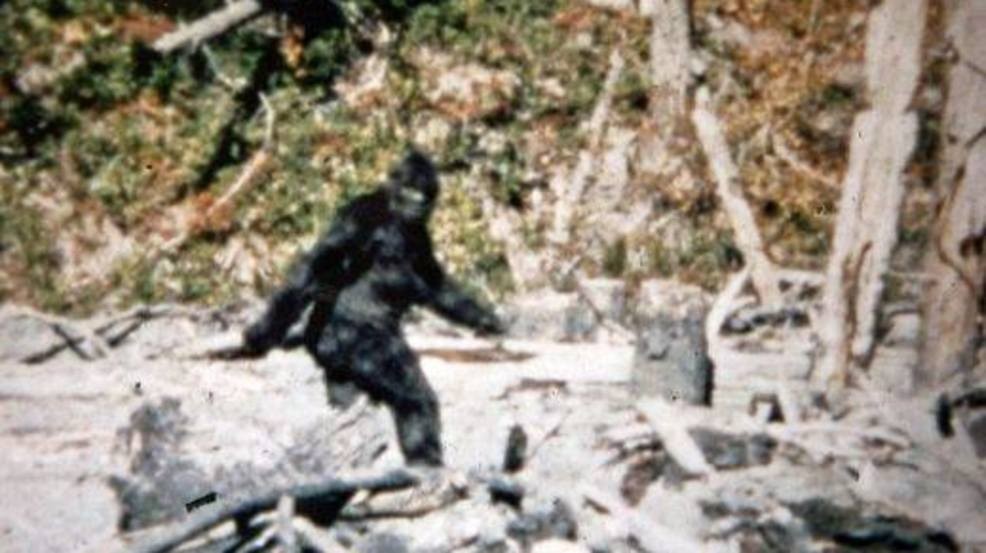
“It’s a sasquatch!” answered the meaty man. “Swerve!”
It was too late and the beast swatted the lead vehicle like a fly. The rest of the Caravan came to a screeching halt behind.
“Stay in your cars! Stay in your cars!” came the chorus of voices from behind.
Unconscious, the driver hung limply from the broken window. The meaty man got out the passenger’s side only to find the giant beast waiting for him. Its roars nearly deafened the man, who fell back to the cold ground. He managed to grab his phone from the snow. Retreating, he dialled a number as the beast advanced. It lunged again and the phone fell, hanging up the call.
He heard the phone immediately begin ringing back.
“Beth? I hear you calling!” the man screamed trying to reach the phone.
The beast crushed it with a mighty big foot.
“I can’t come home right now,” the man whimpered as the sasquatch moved in for the killing blow. The cars behind honked and flashed their lights trying to distract the sasquatch, but no one dared get out.
Then, suddenly, the beast looked up, his eye caught by a flash of colour.
A sound approached: a sonic boom, and then a roaring melody of distortion from the sky.
The beast began to retreat as the sound grew closer, and louder.
Like a bolt from the blue, a figure appeared overhead. From his back he pulled an electric guitar and the sound grew deafening. He flew towards the sasquatch.
Now truly afraid, the beast backed off, retreating to the treeline. The guitar-wielding figure landed and ripped out a wicked solo. With a shriek, the sasquatch ran into the woods.
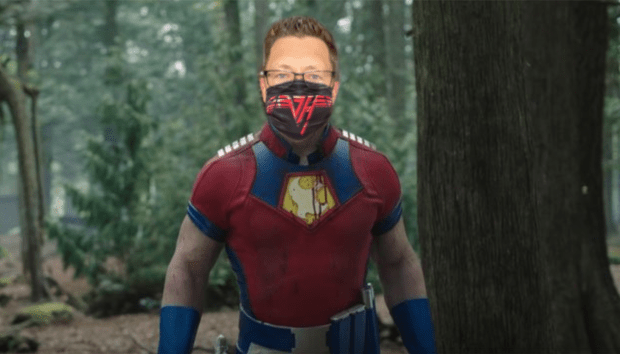
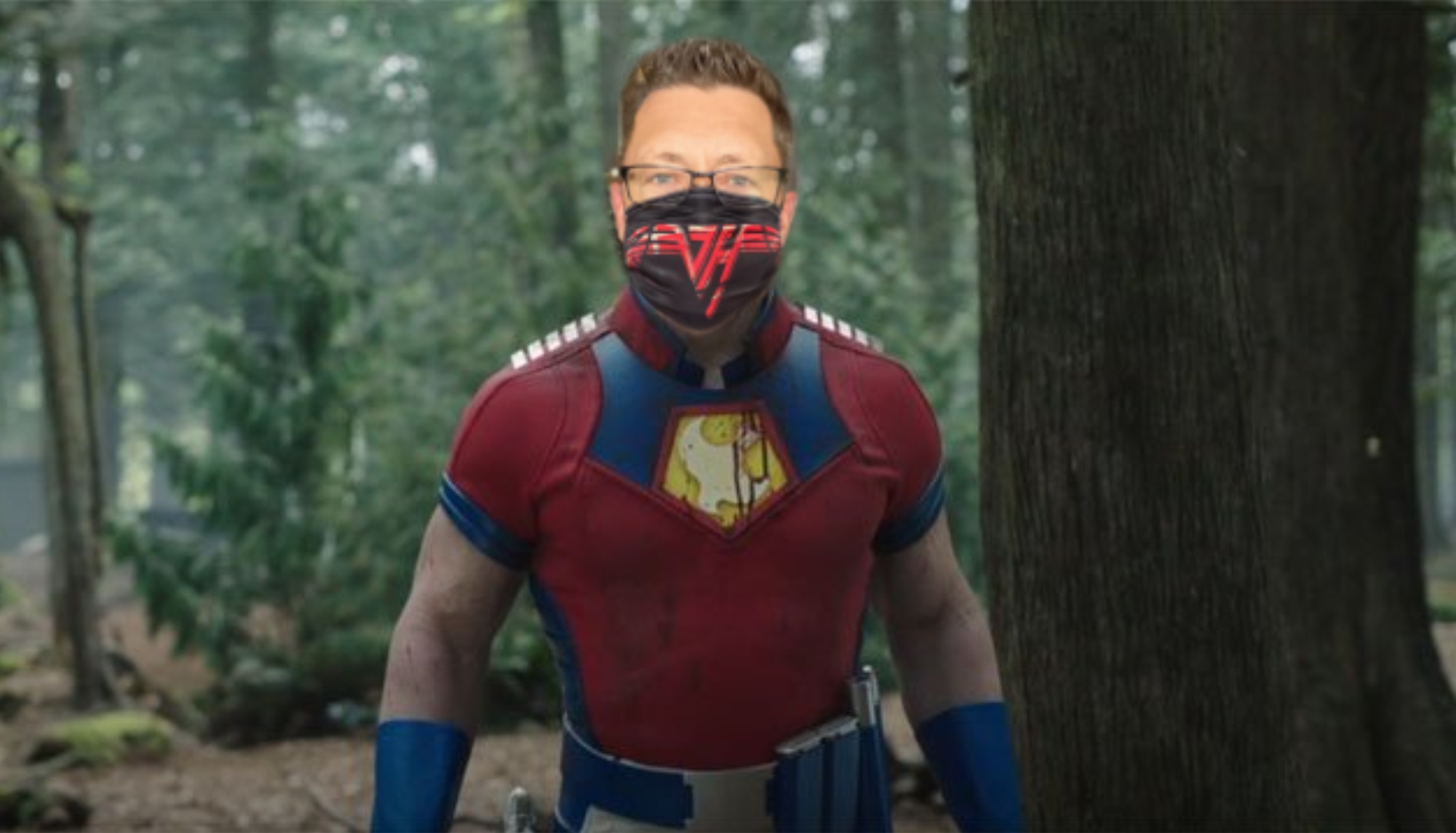
The flying guitarist moved his weapon around to his back, as he leaned over to help the meaty man up. “Here,” he said extending his hand. The meaty man noticed that the hero wore a mask bearing a distinctly stylized “VH” logo. He clasped the extended hand, and then as if by summoning, a motorcycle could be heard approaching, and soon rolled over the hill.
“You took quite a tumble!” the hero said with a heave-ho.
“Woah, thanks man. I feel like I’ve been hit by a truck, except covered with hair.”
The man on the motorcycle, clad in black, pulled up. The dark rider dismounted and unlocked the compartment on the back of his bike. The meaty man was stunned to see that it contained ice, and cans of beer.
“Drink this. This will make you feel better.” The rider handed a cold can of beer to the meaty man who eagerly cracked it open and sipped its nourishments.
“Thanks man,” he answered. “My friend driving, he’s knocked out. Can you help him?”
“Sure can!” answered the black biker. Stepping over to the driver’s side, he checked the brainiac behind the wheel.
“Hey man, you awake?” The driver opened his eyes. “Here, inhale this. This will make you feel better.” He handed the driver some kind of heated inhalant, which revived the man immediately.
“Woah! Thanks…what happened?” he asked in confusion.
The flying hero with guitar on his back, sauntered over. Below the mask, he sported bright spandex and a cape with a drawing of a steak bone. His voice boomed when he spoke.
“You guys ran into a sasquatch on the highway, a particularly nasty sasquatch. Not your fault, we get a lot of that up here in Thunder Bay.” The black rider nodded his head knowingly.
Feeling just as confused as before, the meaty man asked, “But who are you? Where did you come from? How did you know we were in trouble?”
The hero, with a kind look behind his glasses, answered simply.
“I’m Tee Bone Man.” A crack of thunder broke overhead. “The guy on the bike is my partner Superdekes.”
“Hey guys,” said the new arrival as he removed his sleek black helmet. “Me and Tee Bone here are powered by the fusion of arena rock, good Scotch, and guitars. We were sipping some drinks and rocking some Van Halen on the old turntable when we got a vibe that something bad was going down at the old current river. We play vinyl exclusively, because those danger vibes only come through the grooves. That’s how we knew something was up. So I hopped on the bike — Tee Bone can fly, but I can’t, and I’m not exactly sure how that happened.”
“It’s complicated,” shushed Tee Bone. “Origin stories can be told another time. The point is, anywhere my fellow rockers need help, I’ll be there. Wherever evil threatens rock and roll, I will answer to it. Tee Bone Man stands for music, lyrics and rock and roll! When any one of those things are in danger, you can count on me!” He paused. “And Superdekes too, if he’s within motorcycle riding distance!”
“We really gotta talk about the flying thing,” retorted Superdekes.
Then, there was a painfully long pregnant silence.
“Are you…are you pissing?” asked Tee Bone Man of the meaty one.
“Heh. Yeah. Had to go, you know.” Zipping up, he thanked the guys once again for their help.
“No problem,” the heroes answered. “No handshakes though. You take care of your buddy and drive safe! And don’t drive until that stuff wears off, give it a few hours.”
“We will!” they both answered, as Tee Bone Man lifted off. Waving goodbye, the hero flew. Superdekes kicked his bike into motion and was gone in mere seconds. The two friends watched them disappear into the distance. Their entire Caravan observed from the windows.
“Do you think that’ll be the last we’ll see of Tee Bone Man and Superdekes?” asked the driver to the meaty one.
“No way,” he answered. “Not even if hell freezes over!”
To be continued in Chapter 2: Hell Freezes Over…
THE ADVENTURES OF TEE BONE MAN: PHASE ONE – THE SQUIRREL SAGA
 UNSPOOLED: An Adventure in 8-Tracks by Tim Durling (2022)



















 mikeladano.com