BMG

REVIEW: Mötley Crüe – From the Beginning (2025)

MÖTLEY CRÜE – From the Beginning (2025 BMG)

There are two things that Motley Crue are really good at:  Pissing off their fans, and releasing compilations.

In 2019, the Crue released The Dirt soundtrack, featuring four new songs and 14 classics.  In 2025, with the well running very dry, they released From the Beginning, featuring no new songs in its 19 tracks, and just one new version of an old classic.

From the Beginning is at least the 7th Crue compilation of hits, depending on what you count and what you don’t (I’m not counting box sets).  This is a band that has only 10 studio albums.  The well is so dry that this compilation includes several tracks from past compilations.   So much could have been done better.

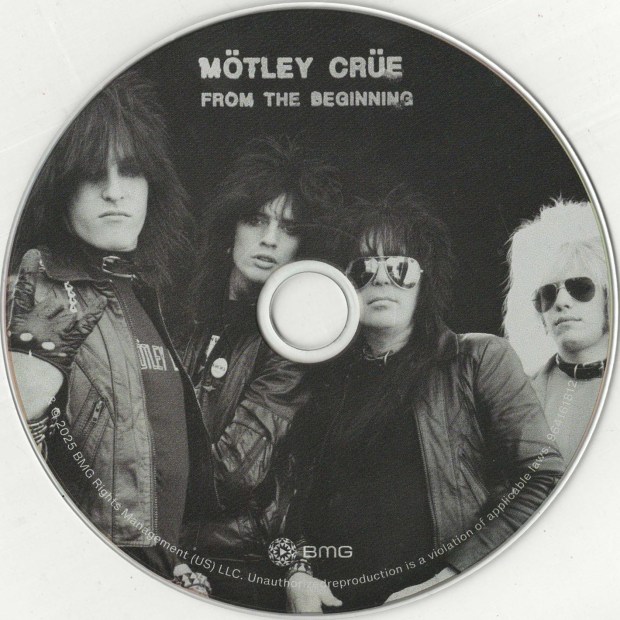
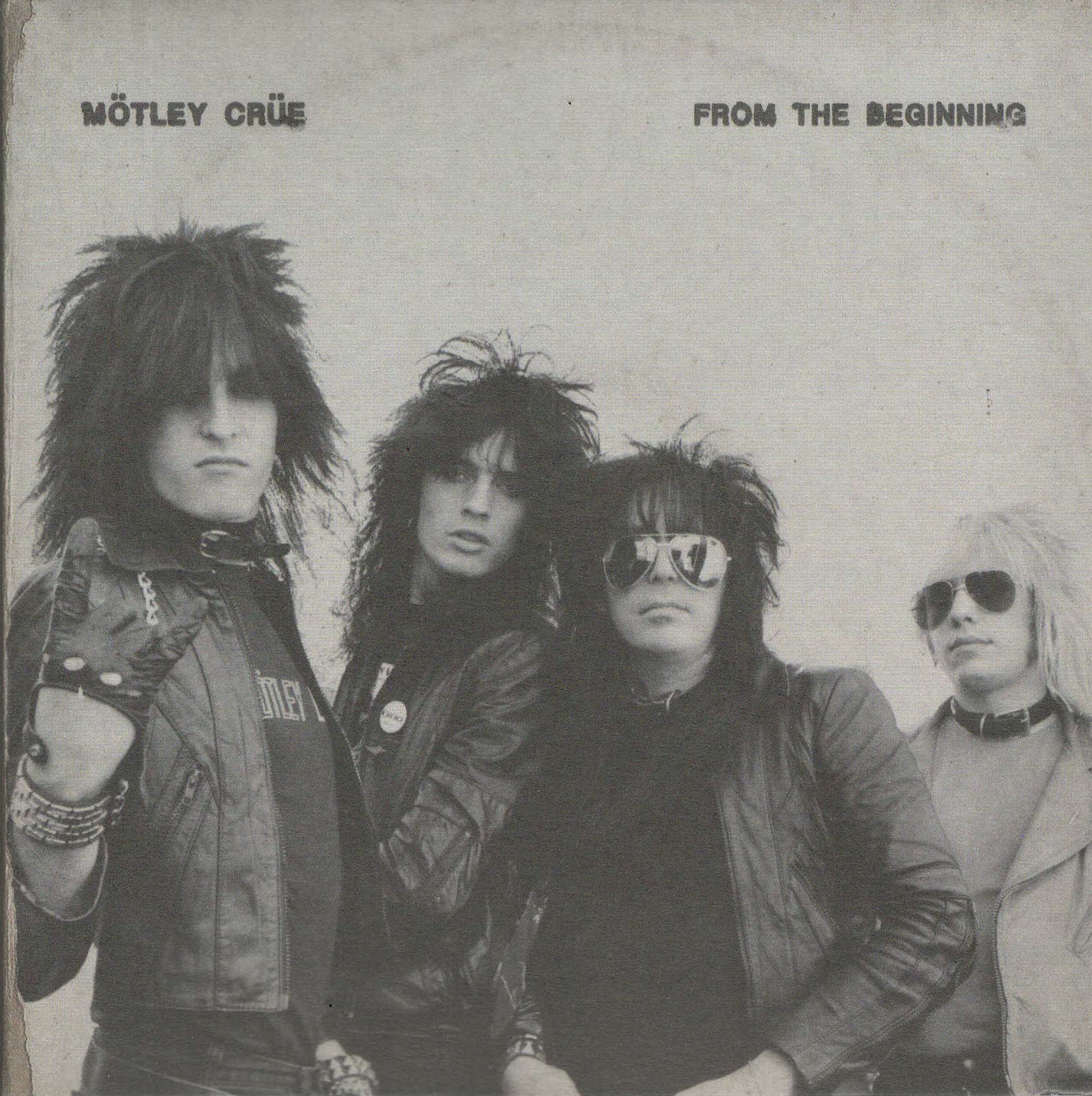
Let’s start with the fail of the packaging.  It’s always interesting when a band chooses a photo of an old lineup rather than the current one.  The inside fold out also features an old photo, meaning current guitarist John 5 is not pictured here, even though he’s on the album.  There are no liner notes, no credits, just an inner sleeve with eight past Motley Crue logos.  (Corabi’s is of course missing, as are several other mid-period Motley Crue logos.)   It’s cheap grey and black printing, no colour.  Absolutely nothing of value in the packaging for any fan, new or old.

Moving on to the one new version of an old song:  the original 1985 recording of “Home Sweet Home” is remixed to include Dolly Parton, who has reinvented herself as a rocker recently, in duet form.  There have been many successful duets when one artist is recorded many decades later over an old song.  This is not one of them.  It sounds fake, and it sounds silly to have 2025 Dolly singing with 1985 Vince.  The guy’s not dead!  There’s no reason for this, except that 2025 Vince Neil is no match for 2025 Dolly Parton.  This congested sounding remix is truly awful, and not because of Dolly Parton.  When singing without the old Vince backing tracks, she sounds magnificent and still powerful.  Couldn’t they even get John 5 to record a new solo over top?  No; they continue to use Mick Mars on their new releases while publicly attacking him.  With all respect to the incredible Dolly Parton, this version of “Home Sweet Home” shouldn’t even count as part of the Motley Crue discography.

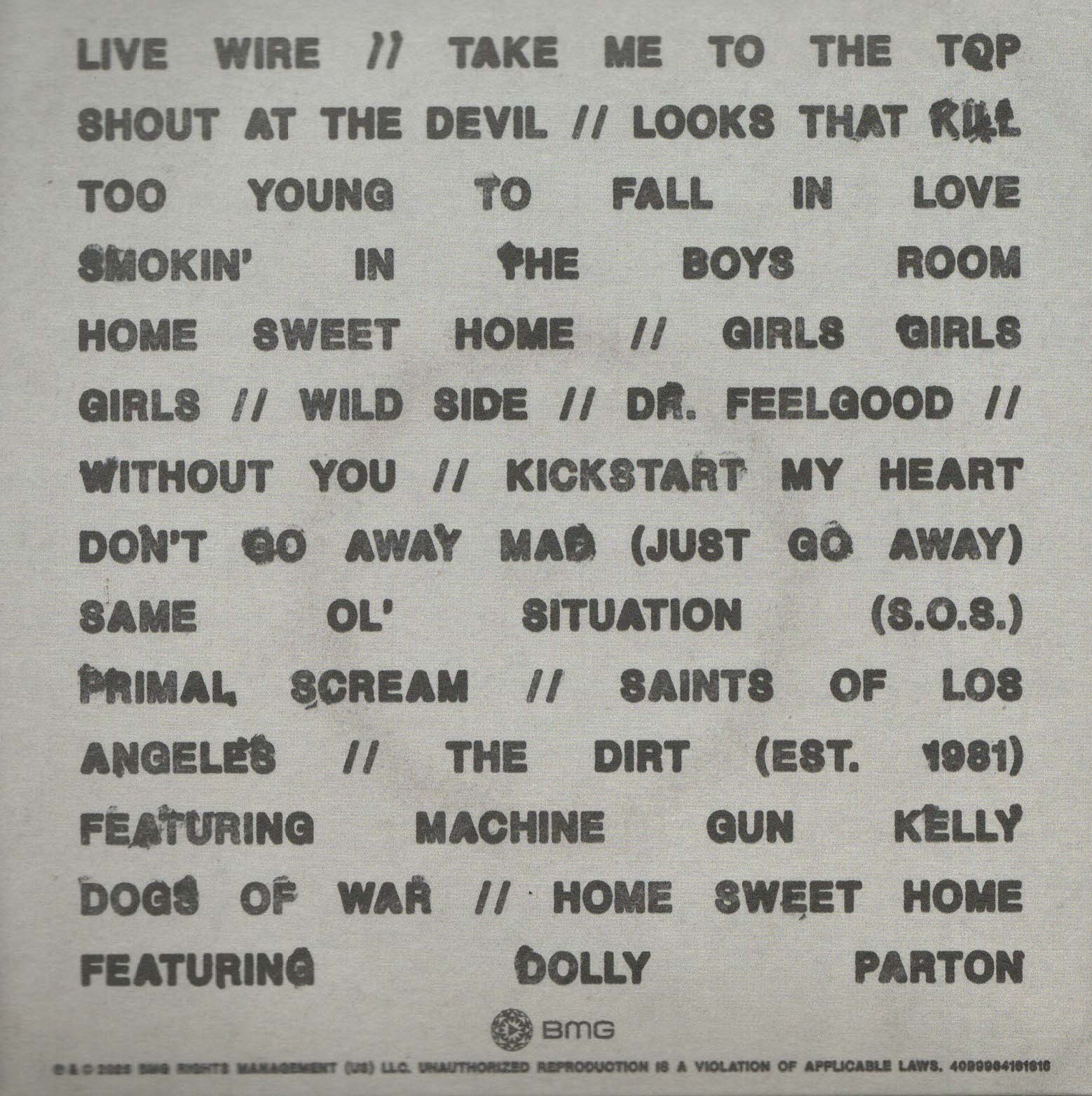
True to its word, From the Beginning is a chronological compilation, beginning with the common Elektra mixes of “Live Wire” and “Take Me to the Top”.  This one-two punch always serves well, and the compilation is off to a good start.  If anything, these songs sound more necessary today than ever, no matter who really played bass (which is very loud on this mastering)!  The crunch of Mick Mars’ guitar belching distortion is a satisfying sound, especially at its most primitive.  The classic suite of Shout at the Devil tracks are “Shout” itself, “Looks That Kill” and “Too Young to Fall In Love”.  Even two past superior compilations, Decade of Decadence and Greatest Hits (1998), didn’t include all three.  Decade featured just two songs per album, and excluded “Too Young”.  Greatest Hits (2009) did include all three, and most of the other songs on this set.  There’s something about these tracks that sound like they might be slightly remixed.  Wikipedia credits them as 2021 remasters, but…there’s something off.

Fortunately for the new fan making their first Motley purchase, the original “Home Sweet Home” is included in the Theater of Pain tracks, along with “Smokin’ in the Boys Room”.  For the old fan, we’ll wish they included something else like “Louder Than Hell”, but fat chance of that.  To the point, there should be a rule that “Home Sweet Home” only appears once on any single disc album.

The usual two from Girls, Girls, Girls (“Wild Side” and the title track) are followed by the usual five (yes, five) from Dr. Feelgood (title track, “Kickstart”, “Without You”, “Don’t Go Away Mad” and “Same Old Situation”).  These exact seven songs also appear on Greatest Hits (2009) though not in the same order, just in the same chunk.  Then, just like Greatest Hits, “Primal Scream” from Motley’s first compilation Decade of Decadence makes it appearance.  This song is like a wake up shot after snoozing through the same-old same-old.

At this point the compilation drops the album-by-album continuity, because as we all know, Vince Neil was fired from the band in 1992 after Decade of Decadence.  Motley doesn’t like to acknowledge several of the post-80s albums in their compilations, including Motley ’94 with John Corabi, and New Tattoo with Randy Castillo.  In this case, they also ignore 1997’s electronica-inflected reunion album Generation Swine and the new songs from the compilation albums of the era.  (These include the aforementioned Greatest Hits which had two new songs, and Red White & Crue which had four, all of varying quality.)  Instead we jump to 2008’s Saints of Las Angeles, a comeback album of sorts, and the last studio album the band would produce to date.  The title track is an appropriate addition and still kicks today with a chorus that is worthy of past glories.

Downhill from here, as we go to the irritating and completely un-memorable “The Dirt (Est. 1981)” from The Dirt soundtrack, itself a greatest hits with four new songs.  The presence of Machine Gun Kelly, who played Tommy Lee in the movie, makes this one a slog and an obvious attempt to lure in new younger fans.  Staying chronological, “Dogs of War” from the recent Cancelled EP is a nice addition since it features the current lineup and John 5 on guitar, but is otherwise forgettable.

Finally, the album closes on the Dolly duet, which we should really refer to as a fake duet since it sounds so achronological, both on the album and as a song.

For a similar but superior listening experience, just buy Greatest Hits, Decade of Decadence, or just the plain old 20th Century Masters, which at least had some text inside.

1.5/5 stars
VIDEO: @darcyska Album Review: AFI – Sing the Sorrow (2003)

On the weekend I had the pleasure of doing a show with D’Arcy Briggs from the YouTube channel @darcyska.  The topic was the recently reviewed Sing the Sorrow by A.F.I., which D’Arcy recently picked up thrifting as well.  With this happy coincidence, we sat down and reviewed the album.  It turns out we mostly agreed when we split it down track by track.

Check out this fun review, and a lot of praise for an album you should get!

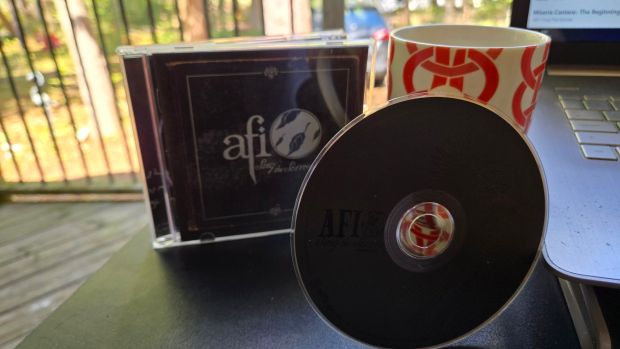
REVIEW: A.F.I. – Sing the Sorrow (2003)

A.F.I. – Sing the Sorrow (2003 BMG)

I don’t pretend to know about bands with whom I have only scratched the surface, so here are some basics on A.F.I.  I always considered them to be a punk emo band.  A.F.I. (A Fire Inside) are fronted by Davey Havok and have been around for almost 35 years now.  In 2003, they were new to me.  Working at the record store, some of the younger cooler employees put on A.F.I.’s new album Sing the Sorrow, and I immediately liked it.  It had a lot of metal riffing, and I dug Davey’s vocals.  I was an instant fan of the disc, and I played it regularly while it was charting in 2003.  I still spin it today, and though I’m not a pierced up record store guy with eyeliner anymore, I still dig A.F.I.

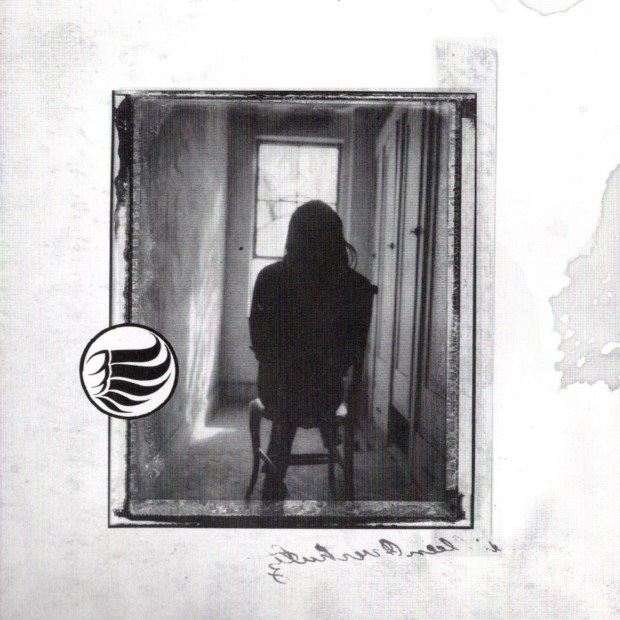
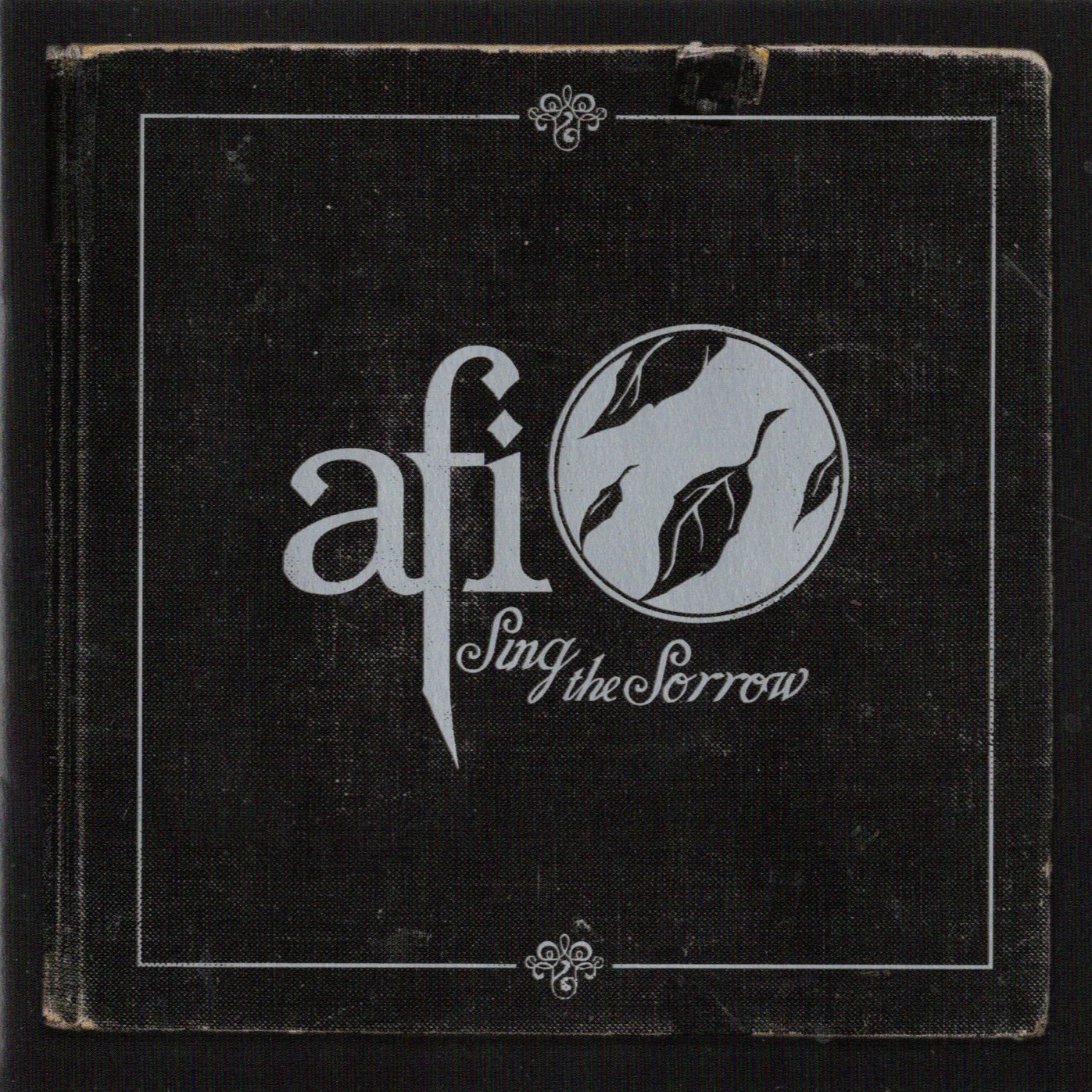
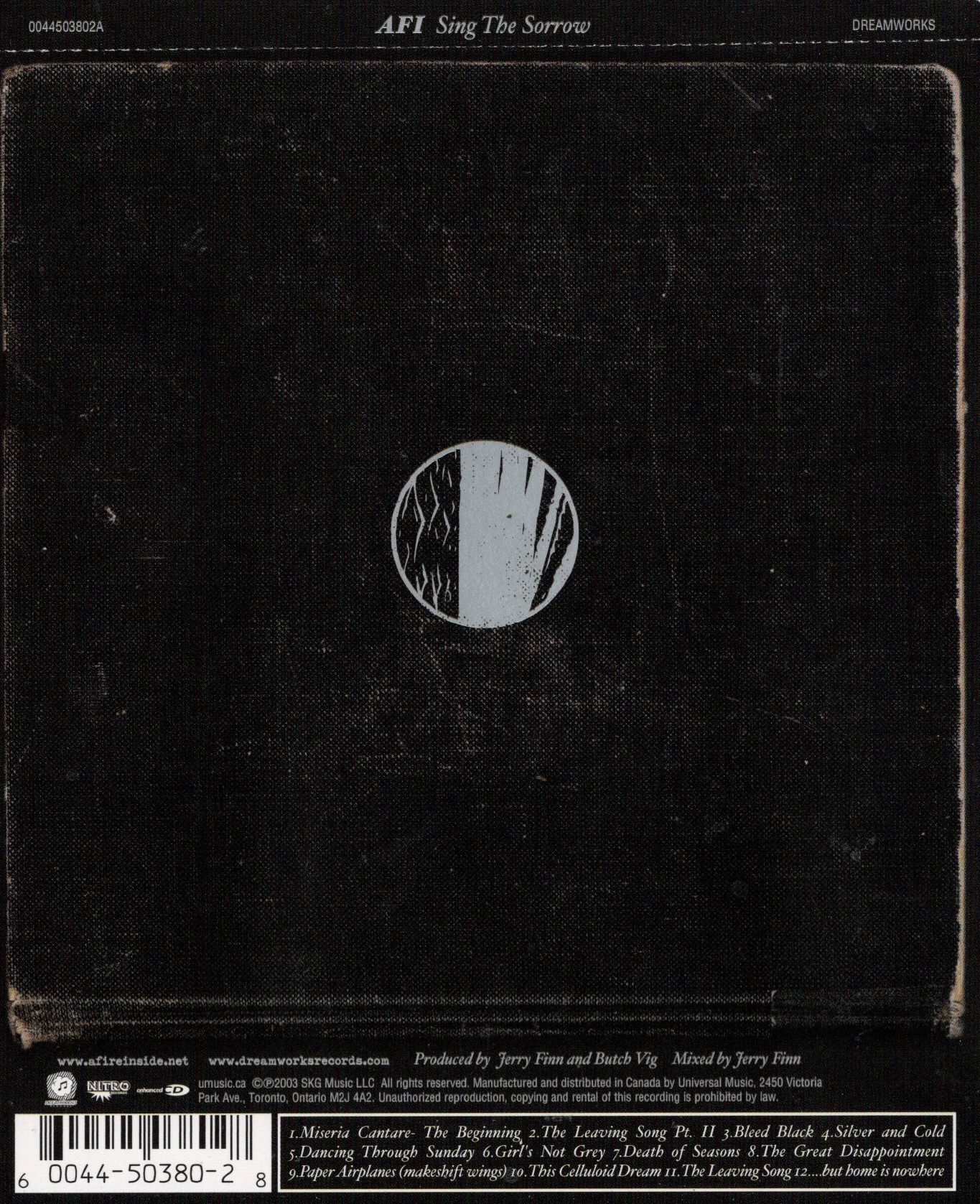
Sing the Sorrow was the band’s first big mainstream album after several punk/horror oriented releases.  One look at the back cover, and you know it’s going to sound amazing:  Produced by Butch Vig and Jerry Finn.  The front cover is striking, minimalist and classy.  All told, Sing the Sorrow is dark, but with spotlights of bright illumination.  Let’s give it a listen.

One thing immediately obvious is that A.F.I. like their grandiose song titles, and so the opening piece is called “Miseria Cantare- The Beginning”.  Very Ghost today, no?  This keyboard and industrial inflected piece begins with percussion and shouting:  “Love your hate, your faith lost, you are now one of us.”  And then comes Davey Havok, with soothing melodic and smooth vocals, delivering the melancholy hooks.  It’s hard to call this a full song as it’s more an intro, but it’s Davey that reels you comfortably in.

“The Leaving Song, Part II” (again with the pompous song titles that I love so much) is the first real song.  Based on a cool bunch of guitar notes and a couple catchy riffs, A.F.I. open not with a blitzkrieg but with a slow and determined dirge.  The choruses are gang vocal heaven.  This song acted a second single for the album, hitting #16 in the US.  Only Davey Havok could make these words sound positive:  “Break down, and cease all feeling, burn now, what once was breathing.”  Somehow his voice gives hope.

Paces accelerate with one of the best tunes on the album: “Bleed Black”.  This one should have been a single.  In my ears, this album has nothing but singles, and “Bleed Black” is chief among them.  “If you listen, listen, listen…listen close, beat by beat, you can hear when the heart stops, I saved the pieces when it broke, and ground them all to dust.”  Yet it sounds like a celebration of defiance, not a dirge of defeat!   The chorus is layered with alternative band/Davey vocals, and it’s like crowdsurfing on a cloud.  Then, A.F.I. take out the acoustics and go full dirge, but back to the chorus again before it’s too late.

“Silver and Cold” was the third single, a dark and slow tune with industrial effects and subtle, quieter sections and bigger bombastic choruses.  Mournful, but powerful too.  Tempos bounce back on “Dancing Through Sunday”, fast through and through, with incredible hooks from Davey and the band singing backing vocals.  Some cool and prominent bass work, some hammer-ons with the guitar, and we’re not far from familiar territory, but hold on – is that a guitar solo?  Yes it is, a full metal guitar solo by Jade Puget, with tapping and fancy fretwork, in the middle of this punky album!  And it’s the only solo too, one and done.  Talk about using that space effectively!

“Girl’s Not Grey” was the big first single, and it’s all tension and hooks.  “What follows has led me to this place, where I belong will all be erased.”  Is doesn’t sound like a hook, but that’s the magic of Davey Havok.  The guy turns a sentence like that into an anthem, because this song has anthemic qualities.  It’s all good, and the drumming is exceptional during the quiet section in the middle.  These guys just learned to cross genres in the best way, taking the things that work and using them sparingly and effectively.  And man, can Davey deliver hooks.

Dark lonely bass opens “Death of Seasons”.  Then, enter Davey, screaming as if in pain.  The song then shoots off into a punk rock sprint, but still with a chorus that delivers melody and more hooks.  The track ends with Davey declaring that “all of this hatred is fucking real,” before falling screaming into the background while mournful violins sing the last notes.  Really haunting stuff.

Guitars fade into “The Great Disappointment”, layered and ringing a haunted chord.  The bass indicates that there are still hooks ahead, so stick with it.  This could be considered the first ballad on the album.  A power ballad – power combined with pain.  It’s bleak.

“Paper Airplanes (Makeshift Wings)” is another notably dramatic title, with a punky blast of a song behind it.  This track allows you to climb back into the light.  With Davey combining his shouting voice with the clean singing in the same lines, it’s a great fun track to headbang to for a while and forget the misery.  Pay attention to the drums and percussion, as it’s not all simple bashing.  This band, with Hunter Burgan on bass and Adam Carson on drums, can play!

One of the biggest songs in terms of memorable melody is “This Celluloid Dream”, which is a great deep cut and easily could have been a single.  The tempo’s not too fast and Davey continues to deliver the goods vocally and melodically.  Same with all the backing vocalists:  they deliver.  Everything sums together like mathematics.  1+2+3=hooks.  Among the best songs on the album, and one that deserves some serious listens.

Remember way back when the album began, and we heard Part II of “The Leaving Song”?  Now we finally get to Part I, as second last “track” on the CD.  This quiet dirge begins with just some bare guitars and Davey singing mournfully.  “Leaving” seems to be a recurring things on the album, as “This Celluloid Dream” also uses the word.  Though sad, it’s a beautiful song.  I suppose you could consider the outro guitars here to be a “solo”, but that would be pushing it.

The album really goes out in a dramatic fashion.  The final track on the CD is a 15 minute bulk consisting of three actual pieces of music, two of them “hidden”.  “…But Home is Nowhere” is something of a return to form, with the tense guitars hammering out a stuttering riff while Davey delivers the mournful hooks.  “This is my life, this is eternal!” goes part of the anthemic chorus.

“The Spoken Word” is untitled in the CD booklet, but its lyrics are included.  After a silent pause we are greeted by piano and a creepy child’s voice.  This goes on a while, like an Alice Cooper interlude.  Then we get to the final real song, “The Time Imperfect” which is bare guitar and vocals, much like “The Leaving Song” at first.  Then the drums and bass come in to complete what we’ll call a ballad.  There’s one final blast of heavy as we drift along towards the end, followed by creepy, atmospheric reversed guitars, into the dusk.

Sing the Sorrow could not have been more accurately titled.  This album is an expression of pain, solitude, loss and also victory.  The victory is in the survival of it, and turning it into art.  Each chorus allows you to release pain.  Beyond that, it is clear that A.F.I. created a sonic painting here.  It is an album that takes one on a journey, and features no boundaries to its creative expression.  Special credit must go to guitarist Jade Puget who refuses to play it simple, safe, or uninteresting, but never puts the hooks second.

A masterpiece.

5/5 stars

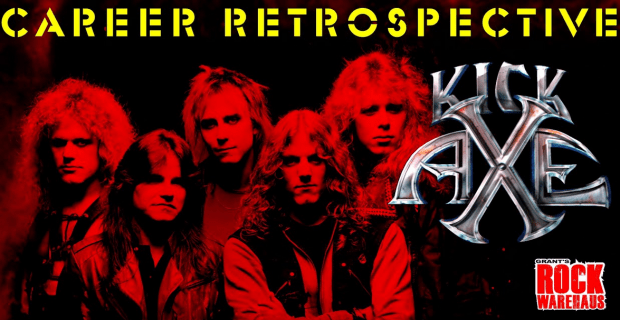
KICK AXE! Grant’s Rock Warehaus tackles one of the best Canadian bands with whom you’re not familiar enough! All albums ranked!

This weekend on Grant’s Rock Warehaus, we tackled a band that needs and deserves more attention:  Canada’s Kick Axe!

“Nobody’s talking about Kick Axe!” said Grant.  We aim to change that with this show.  Please give it a watch!  What are your favourite Kick Axe songs?

This show almost didn’t happen.  I wanted an expert on Kick Axe, so I asked Derek Williamson of Thunder Bay Ontario, who saw Kick Axe live back in the day and also interviewed the guitarist Larry Gillstrom.  He stonewalled me three times, so we decided to do it without him.

Show notes are below, if you want the Cole’s Notes version, but you’ll have to watch the video to get our album rankings.


Formed 1976, Regina Saskatchewan as “Hobbit”.

Original lineup:

  • Victor Langen, bass, vocals
  • Gary Langen, drums
  • Larry Gilstrom, guitar

Ray Harvey added on guitar.

Moved to Vancouver BC, Gary Langen leaves band replaced by Brian Gillstrom, Charles McNary hired as vocalist.

1981 – Playboy Street Rock – live track called “Reality is the Nightmare”.

1981 – Weekend Ride / One More Time (Harvey on vocals).

Produced by Bill Henderson and Brian Too Loud McLeod of Chilliwack.

Wrote “Heavy Metal Shuffle” which opened Vices later on.  Attempted to record an album but never released it.

McNary replaced by George Criston, who brought in power, range and soul as well as a unique sound.

1984 – Signed to CBS in Canada, approached Spencer Proffer to produce because they wanted the same sound as Metal Health by Quiet Riot.  Proffer liked the band personally and thought highly of their musicianship.  Album Vices released on Pasha in the US.

Recorded existing material (2 songs re-written with Proffer) in Hollywood at S.I.R.  30 Days in the Hole – a cover, like Cum On Feel the Noize, but not intended to be a hit, just a showcase for their talents.  Released on the soundtrack to Up the Creek.

Ran into Tony Iommi and Geezer Butler – supposedly approached Criston to replace Ian Gillan in Black Sabbath.  Proffer was working with both bands.

Vices is their best album.  Proffer intended it to be a concept album about vices.  Not a bad song.  Bangin’ backing vocals.  Music video for On the Road to Rock made major impact in Canada, with the comedic video attracting attention.  The Vices mascot was one of my first “rock buttons”.

Vices did not perform to expectations, but Kick Axe wrote three songs for the next Black Sabbath album:  “Wild in the Streets”, “Hunger”, and “Piece of the Rock”, later recorded by W.A.S.P. and King Kobra.  Kick Axe did not want to lose Criston to Sabbath.  “Piece of the Rock” is one of the rarest Kick Axe tracks, only released on a 2005 issue of Rock the World.

1985 – Second album – Pasha wants band more streamlined for radio.  Brought in Pasha staffer Randy Bishop to help on lyrics.  Co-wrote 5 songs and co-produced Welcome to the Club.  Some of the heaviness is blunted, in favour of better song structure and melodies.  Recorded at Metalworks in Toronto.  Cover art by Hugh Syme, which the band never understood the meaning of.

Band brought in cover of Joe Cocker’s version of “With A Little Help From My Friends”.  Rik Emmett, Lee Aaron, Andy Curran, Alfie Zappacosta and more on backing vocals.  Very cool music video made of the recording session.

Pretty solid album, though not as banging throughout as the original.  The cover tune is completely different, but really excellent.

The band and Proffer blame lack of sales on parent label Epic.  No support.  Toured with Autograph, Krokus, Night Ranger, Helix and Triumph.

1986 – Ray Harvey returns home to deal with family matters.  Joins Rock & Hyde as touring guitarist (Bob Rock & Paul Hyde).

The Transformers soundtrack released.  Hunger, and Nothing’s Gonna Stand In Our Way released as Spectre General.  All done by Proffer, without knowledge of the band.  Due to pseudonym used, no benefit to band happened.

Still signed to CBS in Canada.  Next album picked up by Roadrunner in US.

Rock the World (initially “Fuck the World”) recorded as four piece.  Self-produced primarily by Larry due to lack of funds provided by CBS.  Recorded at Right Trak in Vancouver.  Also forced to mix the album themselves.  The cover tune this time is The Chain by Fleetwood Mac.

Band breaks up – sherrifs seize equipment due to unpaid debts.  Later immortalized in the song Rocking Daze on Kick Axe IV.

2002 – Kick Axe reunite with Gary Langen returning, this time on lead vocals.  George Criston remains active in country and more soulful music.  Has expressed no interest in returning to rock.  Has not participated with reissues.  Has worked as a guitar tech for Sarah McLachlan, Dido, Avril Lavigne, and k.d. lang.

2004 – Kick Axe IV self produced.  Best song Rockin Daze written by Brian Gillstrom.  Decent album but not memorable long-term except for Rockin Daze.  Gary Langen has a style of voice reminiscent of Phil Naro.

2008 – Gary Langen leaves band, replaced by Daniel Nargang.

2023 – Run to the Thunder, first new song in decades, to be followed by new album.


REVIEW: The Max Rebo Band – “Jedi Rocks” (1997 CD single)

THE MAX REBO BAND – “Jedi Rocks” (1997 BMG CD single)

This is, in my humble fan opinion, one of the worst pieces of music ever included in a Star Wars movie, if not the very worst.

The 1997 Star Wars special editions are derided for many reason, but one that is not talked about nearly enough is the replacement of certain pieces of music.  In this case, “Lapti Nek” from the 1983 cut of Return of the Jedi was removed.  Why?  Because George Lucas loves to tinker.  He wasn’t happy that the singer in the band, Sy Snootles, didn’t have enough articulation and so thought to himself, “What could I do with a new song and a computer?”  The unfortunate results are called “Jedi Rocks”, by Jerry Hey.

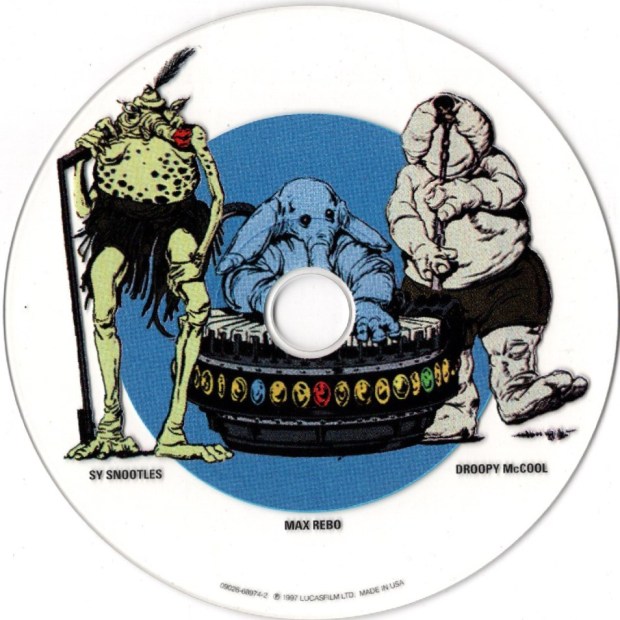
The original song, “Lapti Nek”, plays in Jabba’s palace just before he feeds Oola the slave girl to his pet Rancor monster.  In universe, it is performed by the Max Rebo band, originally a trio featuring keyboardist Max, singer Sy and flautist Droopy McCool.  The band is expanded in the special edition to include more singers, including a really annoying big-mouthed Yuzzum named…uhg…Joh Yowza.  You can just tell that certain parts of the song were designed to show off what computers could make Yowza’s mouth do in the scene in question.

This is shit.  At least “Lapti Nek” sounded a little alien.  “Jedi Rocks” sounds like generic blues rock written by a highschool music teacher for his class to perform at the spring pageant.  And it sounds completely terrestrial, aside from the silly cartoonish vocals.  You can identify an Earthly harmonica, drum kit, organ, saxophones, guitars and bass.  That should never be the case when you’re talking about an alien band from a galaxy far, far away.  More than half the track is bland jamming that could have been on any soundtrack from virtually any Earth-bound movie with a bar and a band in it.

The only reason to buy this single, since you’ll never listen to it, is the clear picture disc.  The CD single released for The Empire Strikes Back was a shaped Vader-head disc, but they realized this were not good for the insides of your CD transport, which prefers a perfectly balanced disc.  Hence, they switched to clear picture discs that look shaped but are not.

Cool disc, bad song.

0.5/5 stars
 

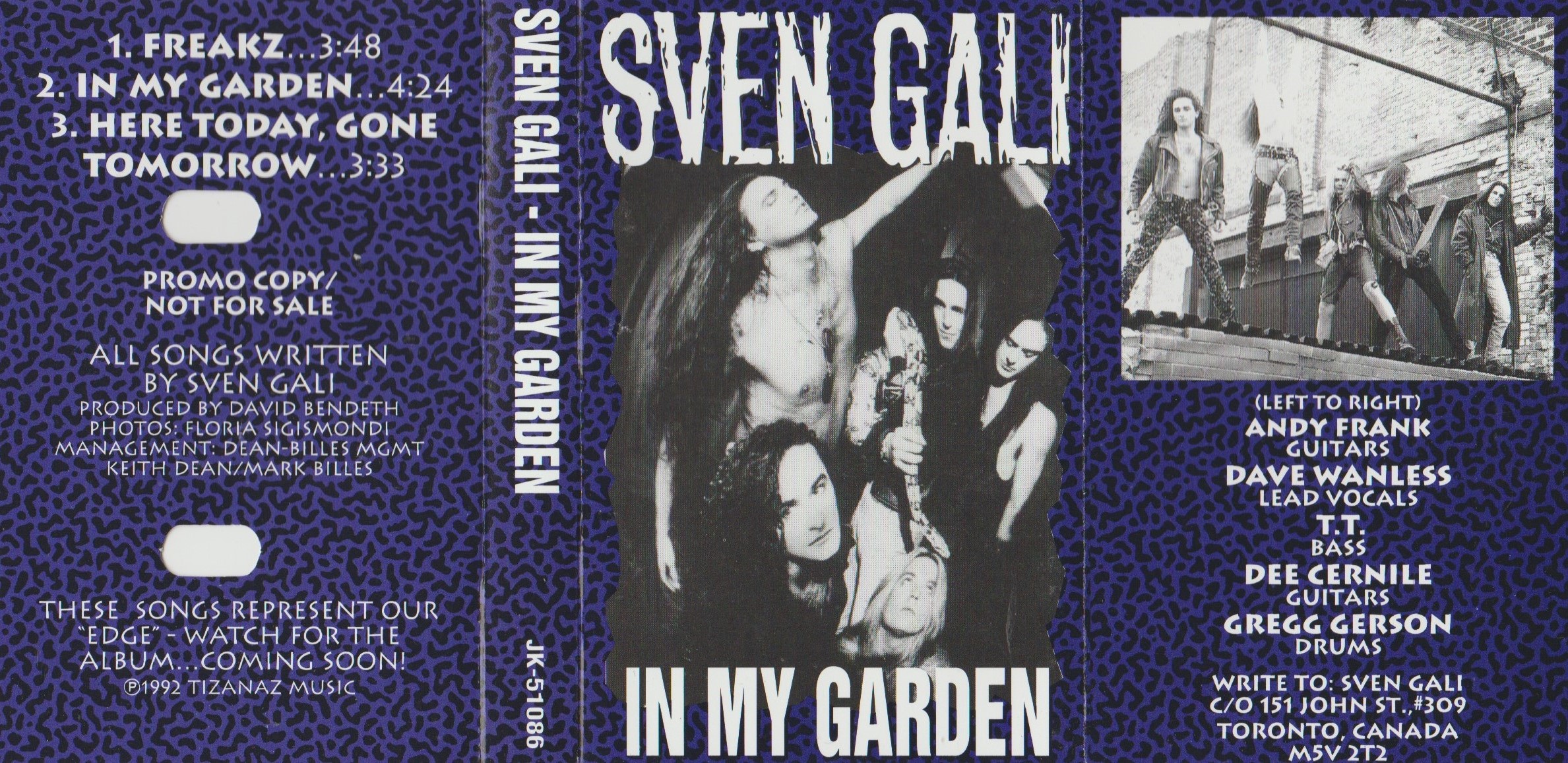
REVIEW: Sven Gali – In My Garden (1992 Promo cassette)

SVEN GALI – In My Garden (1992 BMG promo cassette)

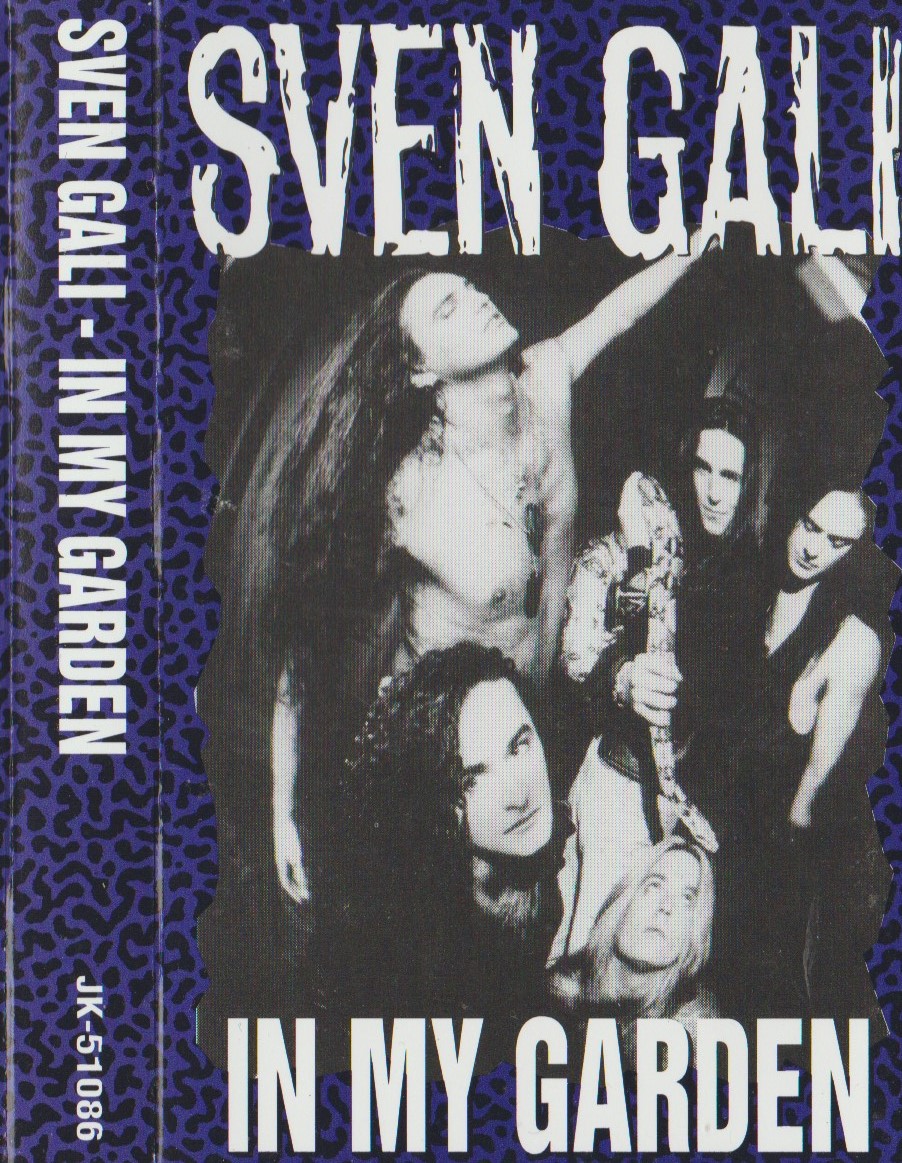
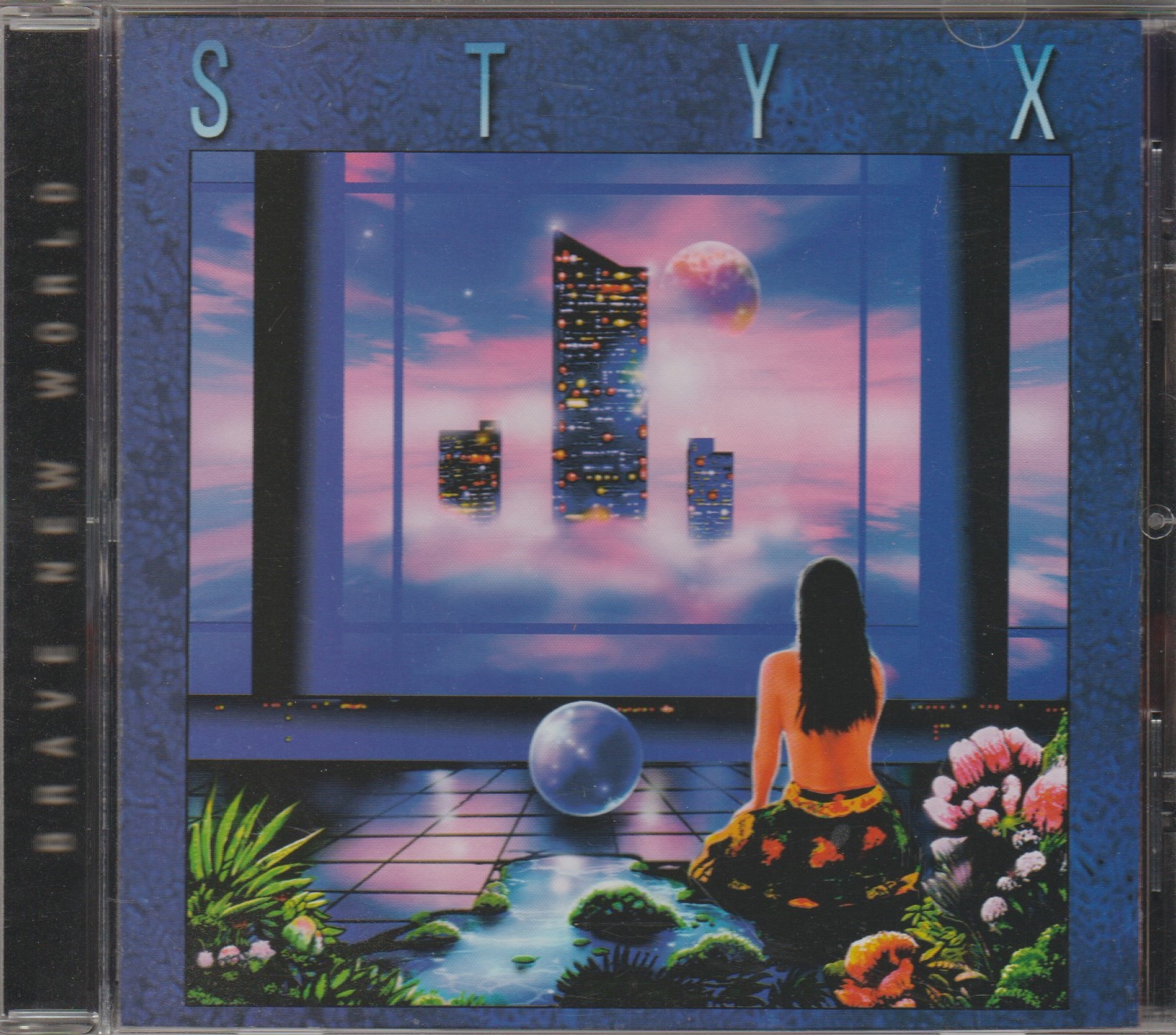
One of the great perks to a M.E.A.T Magazine subscription was getting free promo tapes in the mail.  One of the bands that M.E.A.T had been hyping was Sven Gali, who had a major label debut on deck with BMG for release.  We were all curious what Sven Gali sounded like…and then this promo tape arrived, previewing three of the tracks!

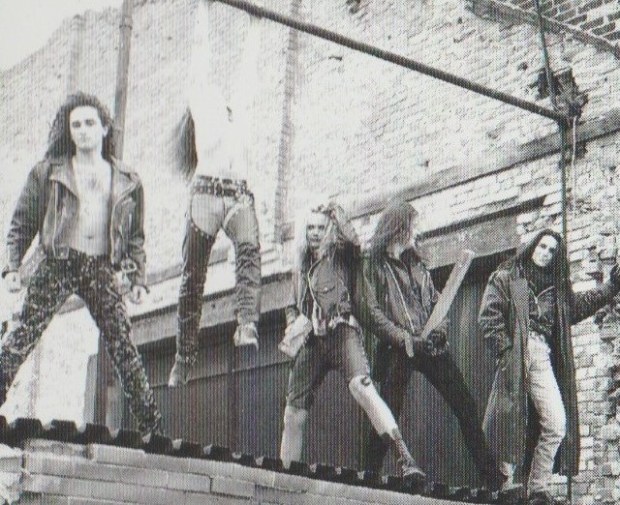
The lead singer can make or break a band, and Sven Gali had Dave Wanless.  Mr. Wanless had the power reminiscent of another successful Canadian, a certain Sebastian Something who was out there ruling the concert stages.  Wanless also had the right look, and of course a pretty good band!  From the ranks of Billy Idol came veteran drummer Gregg Gerson, joining with Dee Cernile (guitars, R.I.P.), Andy Frank (guitars), and “T.T.” (bass).  They could rock.  They had soloists arguably more interesting than the guys in Skid Row.  And, as evident in this tape, they could write hooks.

“Freakz” wasn’t the lead single, but it could have been.  Rebellious rock attitude, tires smoking down a dark alley, guns blazing…and just a pinch of funk.  “When you gonna learn, baybay!” screams Dave Wanless, and just know he’s got at least one fist raised when he’s singing it.

Up second is a track that did become a single, the dark ballad “In My Garden” (an edit version).  This world-class ballad has all the right ingredients including chorus hooks, a place to shout along, and perfect guitars.  In the early 1990s, if grunge had not derailed the rock n’ roll train, bands like Sven Gali (more aggressive than the 80s groups but not abandoning solos and choruses, and with an ear for musicianship) would have been the next wave.

The last track on the tape is the borderline thrash of “Here Today, Gone Tomorrow”, ironic in hindsight since Sven Gali only managed two albums before being submerged by the flotsam of the mid 90s rock scene.  Skid Row comparisons are easy to make (in a positive way), but there’s one major difference between Skid Row and Sven Gali.  That is Sven Gali still have their original singer where Skid Row do not.  (They have a new track out called “You Won’t Break Me” to be followed by a CD in 2020.)  They might not have exceeded the fame of Skid Row, but they might just end up having more material with their original singer….

This cassette whet the appetite for the eventual album, which maybe suffered from too much material, but on tape these songs sound ace!

4/5 stars

Check out the credits.  Photos by famed photographer Floria Sigismondi, who took just about every memorable photo of every 90s band you can think of.  Today she’s a movie director!  She’s the reason this tape looks so cool.

REVIEW: Kick Axe as “Spectre General” – The Transformers soundtrack (1986) – Kick Axe series Part Four

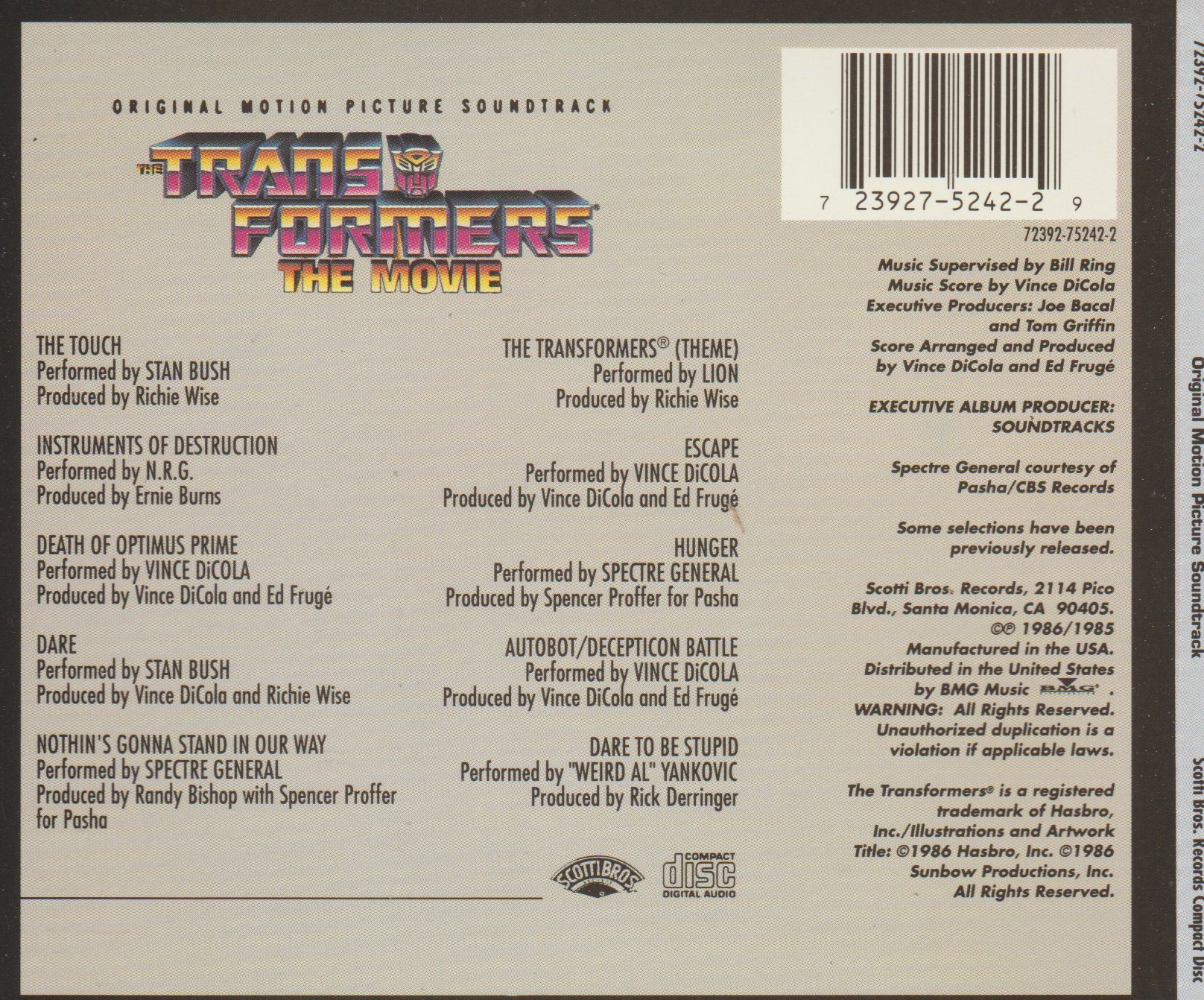
KICK AXE as SPECTRE GENERAL – “Hunger” and “Nothing’s Gonna Stand In Our Way”
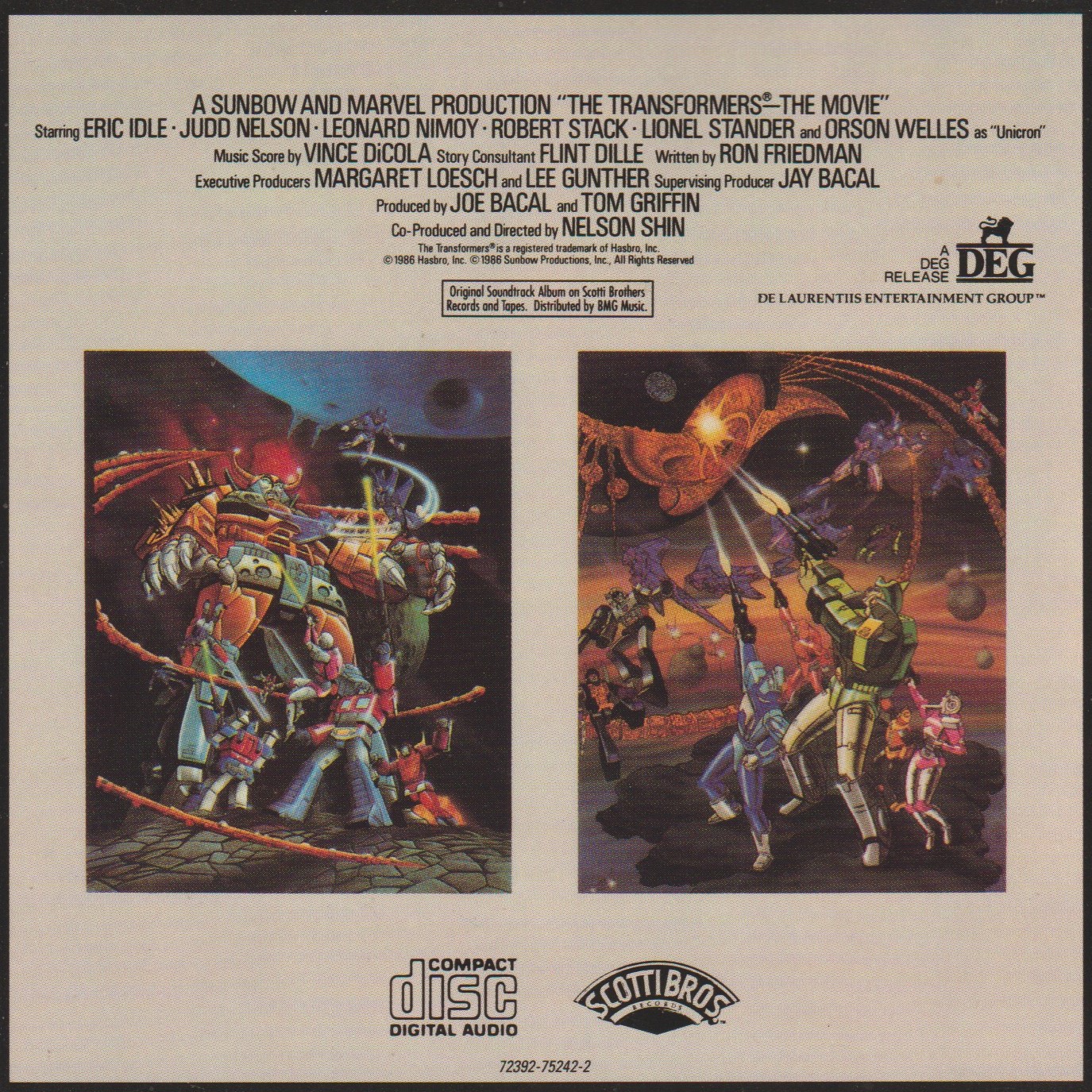
from Transformers: The Movie original motion picture soundtrack (1986 BMG)

Although the recordings were not released until 1986, it makes sense to talk about “Hunger” and “Nothing’s Gonna Stand In Our Way” now, in terms of storytelling.  After the Vices album was completed in 1984, Kick Axe were tasked to contribute to another project.  And it wasn’t a movie soundtrack.

Producer Spencer Proffer was scheduled to go into the studio with Black Sabbath — a Black Sabbath still fronted by Ian Gillan, though not for long.  Proffer felt that Sabbath needed fresh ideas and recruited Kick Axe to write some.  Though details are murky, we do know that Gillan left Black Sabbath abruptly to record Perfect Strangers with Deep Purple.  Kick Axe frontman George Criston was one of the singers that Tony Iommi was interested in as his replacement.  Whatever happened, no recordings of Sabbath with Criston have surfaced, but we do have the songs Kick Axe wrote for the sessions.

In a strange coincidence, they all first came out on November 9 1985, on two separate albums.  W.A.S.P.’s The Last Command (produced by Proffer) featured the Quiet Riot-like “Running Wild in the Streets”, though without proper writing credit.  Another album produced by Proffer was released the same day:  Ready to Strike by King Kobra.  “Piece of the Rock” and hit single “Hunger” were written by Kick Axe for the Sabbath project.

Ultimately, “Hunger” by Kick Axe did finally come out in the summer of 1986.  Too late, perhaps, considering people assumed it was a generic cover of a King Kobra song.  Especially since no one had ever heard of…Spectre General?

Who the hell is Spectre General?!

For reasons unknown but said to be contractual, Kick Axe couldn’t release their own song under their own name, so Proffer invented Spectre General, and that’s how they’re credited in Transformers: The Movie.  The band didn’t even know about it.  They had two songs on the original 10 track album:  “Hunger”, and a new song called “Nothing’s Gonna Stand In Our Way”, a cover version (John Farnham original) intended for the next record Welcome to the Club.

Perhaps it’s the familiarity of the King Kobra recording, but this version of “Hunger” does stand in its shadow.  Both Mark (Marcie) Free and George Criston are stellar vocalists, and the Free version just had more…weight.  Kick Axe’s original is heavier and chunkier, so perhaps in that way it’s actually superior.  “Nothing’s Gonna Stand in Our Way” is an upbeat number, hook-laden, with the trademark Kick Axe “chug” and backing vocals.  It’s pretty essential to have both these tracks to augment a Kick Axe collection.

Besides not getting their real name in the album, other contributions by Weird Al Yankovic and Stan Bush were featured more prominently in the movie than the two “Spectre General” songs.  The band Lion got to do the movie theme song.  Those were some memorable movie moments to any kid in the theater, particularly the Stan Bush selections.

It’s pretty amazing that Kick Axe came up with “Hunger” but were never really recognized for it.  It’s a great song and their original version of it is the proof.  Also strong, “Nothing’s Gonna Stand in Our Way” would have made a fine addition to the next album.  Clearly, the Canadian quintet had big league talent the whole time.

4.5/5 stars
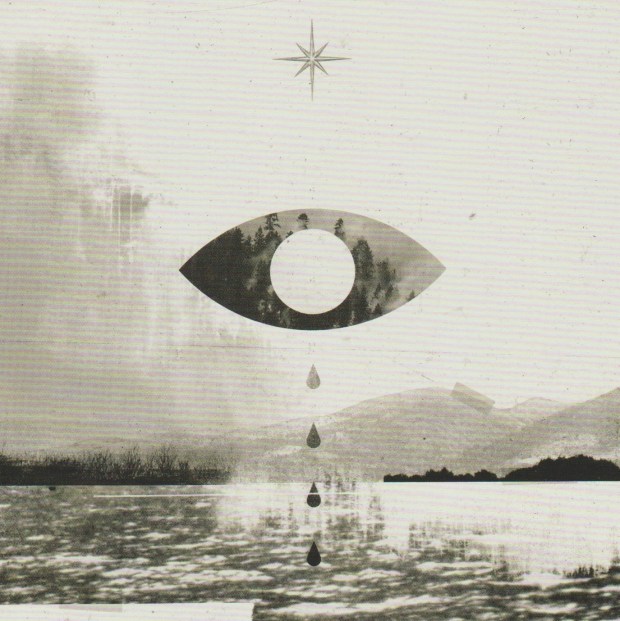
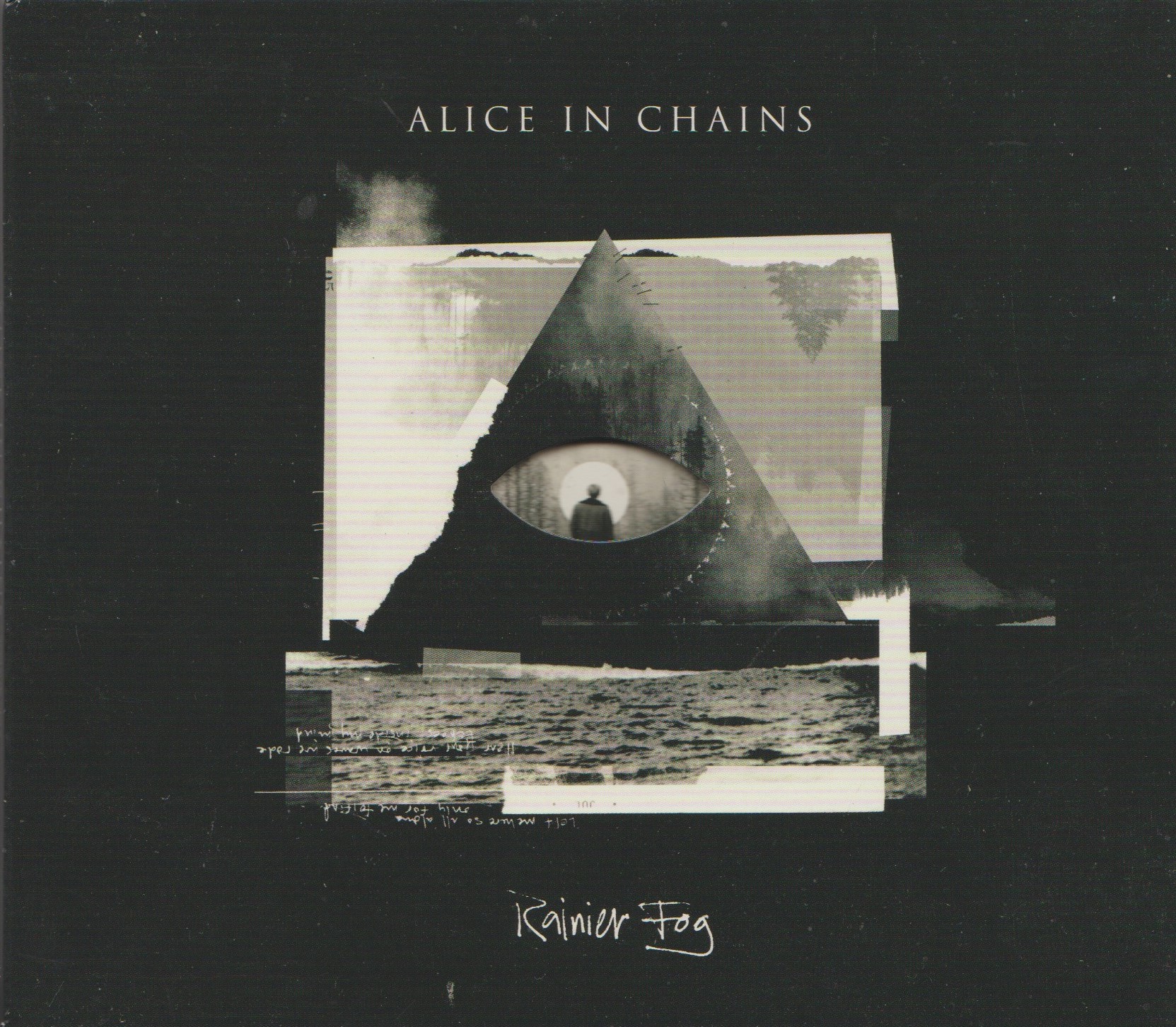
REVIEW: Alice in Chains – Rainier Fog (2018)

ALICE IN CHAINS – Rainier Fog (2018 BMG)

It’s always disappointing when you give a new album a fair shot, but it refuses to stay in your skull. Such is the case with the latest Alice In Chains, Rainier Fog.

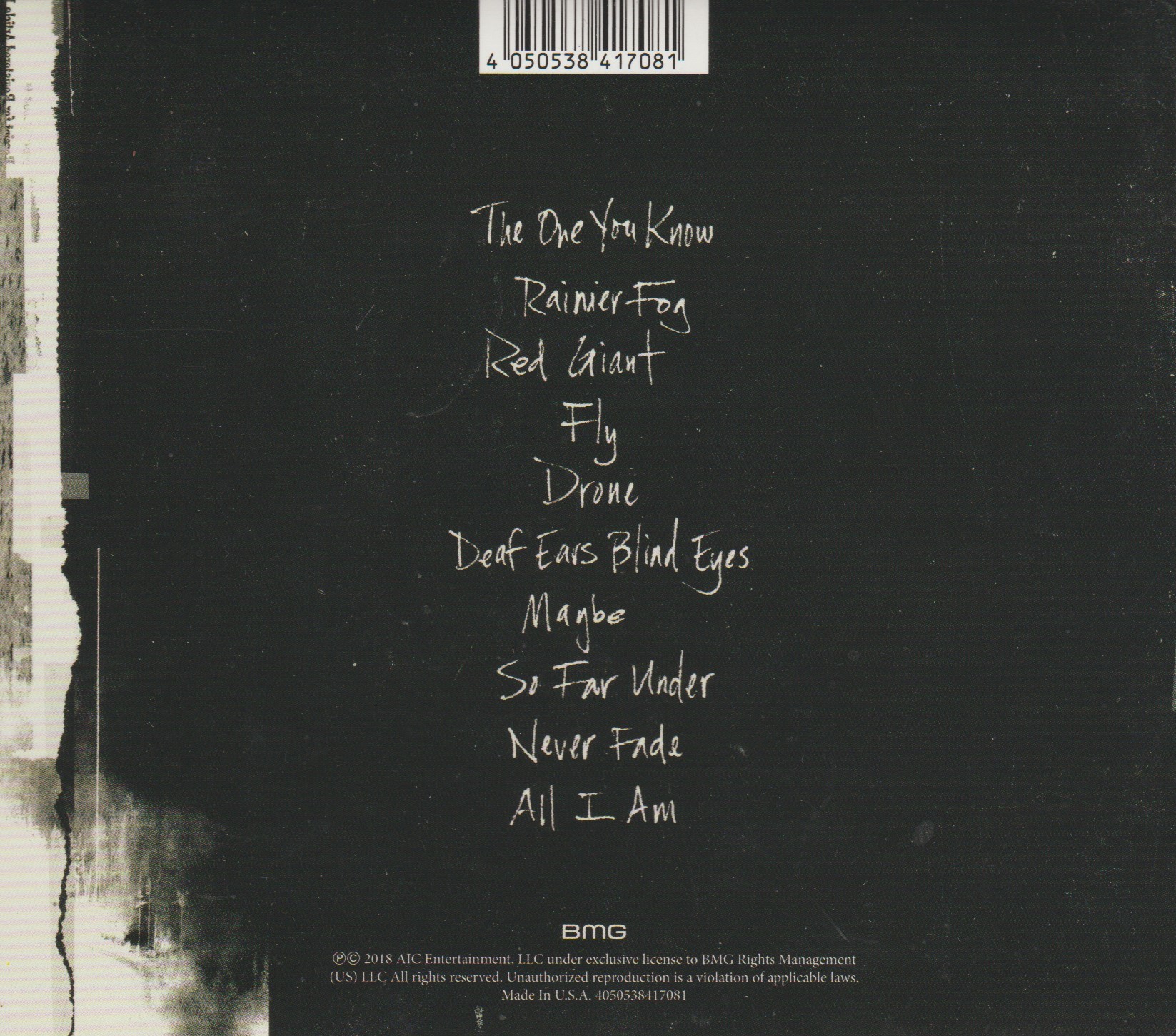
It’s especially disappointing since their last platter, 2013’s The Devil Put Dinosaurs Here, was so crushingly perfect.  It’s hard to put a finger on exactly why Rainier Fog lacks the same impact.  It’s not singer William Duvall — this is his third album with Alice In Chains, and he’s done an admirable job every time out.  It’s also not the fault of the lead track, “The One You Know” which is a terrific starter.  “Rainier Fog” is also slammingly good.  From there on, the songs are less memorable, with the exception of “Never Fade” which has a chorus that goes on for miles.

What’s the issue?  Is it that we’ve heard all this before?  Ever since the passing of Layne Staley, Alice In Chains lost that certain “fucked up” quality to their music.  Staley seemed to bring an unschooled approach, completely unafraid to make unconventional music.  Rainier Fog is terribly conventional by comparison with Dirt.  There are verses, choruses, melodies and all the accoutrements.  And they are all good ones.  Little guitar hooks snake in and out of verses, cool as hell.  Riffs are constructed from the strongest mortar.  These foundations support a collection of well written songs.  But most of them refuse to stick.  It’s baffling.

Perhaps Rainer Fog is one of those albums that doesn’t click until the 100th listen.  They exist and when they do, they often become favourites.  If that happens here, we will line up Rainier Fog for a re-review.

3/5 stars

REVIEW: Styx – Brave New World (1999)

STYX – Brave New World (1999 BMG)

Most bands have stinker albums somewhere in their history. For Styx, that would be their sadly disappointing reunion album Brave New World.  Styx were not exactly in harmony with lead singer Dennis DeYoung, and this would be his last album with the band.

The most obvious evidence of the dischord in the band is that Brave New World sounds like two groups.  In one:  Tommy Shaw and James Young.  In the other:  Dennis DeYoung.  The songs with Shaw and Young singing have hardly any DeYoung, and vice-versa.  It sounds as if they could find no common ground.  Far removed from the days of old, when even a disagreeing band could sound like a group.

The single “Everything is Cool” is by far the hardest rocking and best song.  There are a few decent ones, such as the exotic title track, but nothing that the band would still perform on stage today.  The most Styx-sounding track is Dennis’ ballad “While There’s Still Time”.  That’s right, a ballad!  Shaw’s “Just Fell In” is also swell, with a 1950s vibe.  Other songs such as “Number One” are annoyingly modernized.  The late 1990s is not a period that has aged well in music.  The production, the mish-mashing of styles…Styx seemed to pick up on the bad parts of these trends.  Too much programming, too many samples.  Not enough Dennis!  DeYoung can only be distinctly detected on a handful of tracks, mostly ballads.  These are often the best songs…all but “Hip Hop-cracy”, which is so painfully 1999.

It’s kind of a shame that the Styx reunion sputtered the way it did, but the silver lining was their second life with Lawrence Gowan.  The Styx reunion album was sadly a bust.

2/5 stars
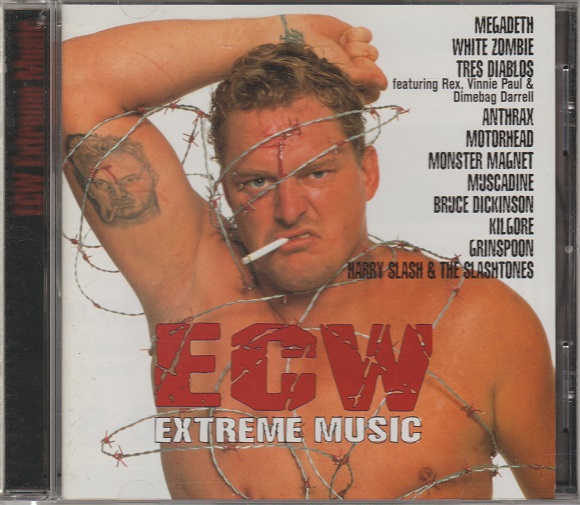
REVIEW: ECW Extreme Music – Various Artists (1998)

Welcome to…
…Hosted by Vinyl Connection

ECW Extreme Music (1998 CMC)

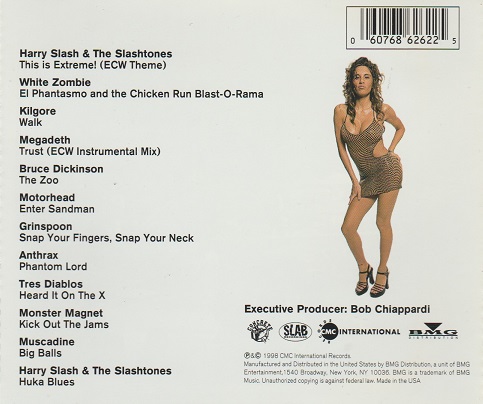
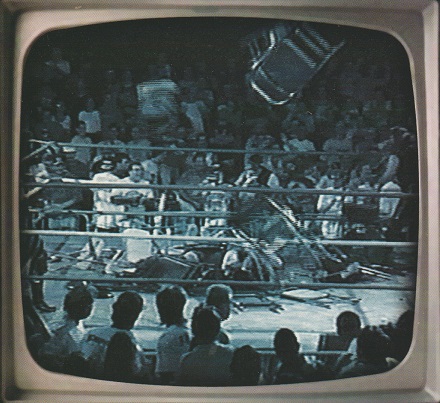
There are way too many CDs in my collection that I don’t like, but I own for one or two rarities.  ECW Extreme Music is one of those many.  I have never watched an ECW wrestling match in my life.  I only know one of the wrestlers pictured inside, Bam Bam Bigelow, because he was in the WWF when I was a kid.  I don’t like the 90s version of wrestling with the blood and barbed wire.  And I don’t like much of the music they used.

First is the generic riff/loop combo of Harry Slash and the Slashtones, whoever that is.  Skip that repetitive crap to get to a White Zombie remix. “El Phantasmo and the Chicken-Run Blast-O-Rama” was a great groove from Astro-Creep: 2000.  The “Wine, Women & Song” mix by Charlie Clouser is from their remix CD Supersexy Swingin’ Sounds.  It’s an enjoyable remix, which is something best appreciated on its own rather than on a remix album.

Somebody named Kilgore did a carbon copy cover of “Walk” by Pantera, presumably because using the original would have cost more?  It’s embarrassingly copycat.  Your friends who don’t know will assume it’s Pantera.  Fortunately a great Megadeth tune is next.  Cryptic Writings is an underrated album, and “Trust” was probably the second best track on it (right after “A Secret Place”).   This instrumental mix is an exclusive and has emphasis on Marty Friedman’s lead guitar which replaces the vocals.

Bruce Dickinson (and Roy Z) is next with a lacklustre cover of “The Zoo” by the Scorpions.  There’s nothing particularly wrong with it, it’s just a cover, but it’s also a non-album track that collectors will want.  Too bad it’s not exceptional like most of Bruce’s output.  It’s just good not great.  Another cover follows:  Motorhead doing “Enter Sandman”!  It’s as bizarre and weirdly perfect as you’d expect it to be.  Grinspoon are next with their fairly stinky version of Prong’s “Snap Your Fingers, Snap Your Neck”, robbed of all its snarl.  John Bush-era Anthrax are more impressive with Metallica’s “Phantom Lord” from Kill ‘Em All.  It’s breakneck, and also very cool to hear a Big Four thrash band covering another Big Four group.

Pantera, minus Phil Anselmo, are here for their cover of ZZ Top’s “Heard it on the X”.  It’s both ZZ Top and Pantera at the same time, and that’s kind of remarkable.  That’s it for this album though — nothing worthwhile from here out. What’s the point of having a cover of “Kick Out the Jams” (courtesy of Monster Magnet) but then beep out the naughty words?  Somebody named Muscadine decided to do “Big Balls” by AC/DC, a pretty obvious bad idea.  Just awful.  Then it’s more of Harry Slash to end the CD with some more pure filler.

CMC International released a lot of low budget crap over the years, and this CD is pretty poor.  There are five pages of merch advertising inside, including one for a ECW Extreme Music 2.  I skipped that one.  This CD is collectable for the Bruce Dickinson, Anthrax and Motorhead tracks.  But these are cover tunes we’re talking about, so tread wisely.

1.5/5 stars