TWISTED SISTER – “We’re Not Gonna Take It” (1984 Atlantic single)
I’ll skip the formalities, and I won’t be discussing the single A-side. What is understood need not be discussed. On the off chance that you spent your youth in Antarctica, here’s the very clever and original music video (later ripped off by Michael Jackson for his own “Black or White”).
The B-sides are three of Twisted’s all time best, recorded live, and unreleased on CD to date. All three are classics from YouCan’t Stop Rock ‘N’ Roll: “The Kids are Back”, “We’re Gonna Make It”, and the album’s title track. These were recorded live in Poughkeepsie, New York. Although it seems odd, Dee’s usual spoken opening, “We are Twisted fuckin’ Sister” skipped the expletive. I’m not sure if it’s edited out or not, for the release of this single.
As far as a single side of Twisted onslaught goes, I don’t know if you could have selected three better songs. The performances are typical live Sister; fast and reckless. In other words, perfect. The live tracks were co-produced by bassist Mark “The Animal” Mendoza so you know that the band at least had their hands in the mix, too.
Another cool fact: neither “The Kids are Back” nor “We’re Gonna Make It” are on the Live at the Marquee CD, minimizing overlap with that later release. They were recorded within the same time frame, so the band is in similar ferocious shape to that great live album.
FIGHT – Mutations (1994 Epic collector’s edition, 2008 Metal God Entertainment reissue)
Released in late 1994, Mutations (subtitled “collector’s edition“, which really means nothing) was a live/remix CD to follow War of Words. I seem to remember this being marketed as some sort of “extended EP” or some kind of not-album, which again is kind of meaningless. The original release was 45 minutes, a full length album by most measures.
Live Fight! Shame it was only four songs, as they absolutely kick ass. Rob Halford was still in peak voice in 1994, and every high scream is present on opener “Into the Pit”. Fight as a live band were less stiff than on the first album. They were no less precise, and each song is just as ferocious as its album counterpart. On “Nailed to the Gun”, bassist Jay Jay does the low death metal growls while Rob howls like a mad dog.
I was surprised that Rob put “Freewheel Burning” on the album, as he seemed to be trying to distance himself from his past at this time. Its the only Priest song and I don’t think they played many Priest songs on the tour at all (but I know they did cover Sabbath’s “Sweet Leaf”). Surprisingly it’s here that Rob’s voice falters, struggling with the demanding song. He redeems himself on the bluesy single “Little Crazy”.
I enjoy hearing live recordings from bands with two distinct lead guitar players trading off. Russ Parrish and Brian Tilse were both very different stylistically, and the contrast is awesome. The pace is aggressive, and these guys keep chugging on. (Note: Russ Parrish is not credited on this album. He had left the band by the time of release, but there is no question that he did play on all these tracks. Why he was not credited is a mystery, but he does appear on the remastered version cover art.)
I believe I am well on record as not being a fan of remixes in general. There are exceptions but so many remixes add techno-crapola that often serves to reduce the songs to repetitive mockeries of themselves. On a track like “War of Words” , they remove Scott Travis’ drums from sections, and replace him electronic beats. At the time I thought, “Why would you want to replace Scott Travis with a drum machine?” Today, it still bugs me. But hey, those who doubted the sincerity of Rob’s industrial work with Trent Reznor in Two should remember these remixes!
I’ll be honest, I struggle getting through the remix side in one sitting. There are some cool moments, such as the chance to hear isolated instruments and solos. “Vicious” is an example of a remix that works for me. It’s weird, it has an opera singer and dance beats added, but it’s pretty heavy and cool. But in general, the Fight songs were simple and repetitive to begin with. Making them simpler and more repetitive didn’t work for me. Sure, I own some Nine Inch Nails albums, but this sound isn’t where my heart lies.
Goodie-goodie-gosh, Mutations was reissued as part of the Into the Pit box set, with two bonus tracks. And these bonus tracks are (you guessed it) remixes. More versions of “Kill It” and “War of Words”. At least the “Culture of Corruption Mix” of “War of Words” is about half as long as the regular “Bloody Tongue Mix”.
Incidentally, why do remixes always have cliche sounding names? “Bloody Tongue Mix”! Raahhrr! Why not…”Toothpaste Mix”. Something original. I think remixers should strive to be more original in the naming of their work. Something nobody’s used yet. “I’m Rob Halford and I Endorsed This Mix Mix”.
This review dedicated to the greatUncle Meat. Part 1 of a 2 part series!
MARILLION – Early Stages (Official Bootleg Box Set 1982-1987) (EMI)
This is the first of two Marillion Official Bootleg box sets. The second covers the Hogarth years 1990-1994. Mine came with an autographed print!
I listened to this box again over the course of a week. I chose the car as the setting. I’ve spent a lot of time driving to Marillion in the past (lots of great memories) so this setting works for me. I enjoy loading long box sets onto my car MP3 player. I did that recently with the 12 CD Deep Purple Bootleg Series box set. As soon as I was done with that one, I dove into Early Stages.
I also acquired the recent compilation Early Stages: The Highlights. Why, you ask? Well, like many “highlights” packages, they usually stick on one exclusive song to get you to buy the same thing twice. The bait is “Market Square Heroes” Fife Aid 1988, the final song of the final show with Fish. OK, I’ll bite.
I don’t have a lot to say specifically about any of the concerts included in this box set. There are a lot of songs from periods before they were recorded on albums, and that’s cool. There are four different drummers on this set*, representing the rarely documented transitional periods in Marillion’s lineup. The discs are all of great sonic quality considering the years they were recorded. Fish is a great frontman, usually funny but occasionally serious, and always entertaining.
Here are some observations about some of the set’s highlights. From The Mayfair, Glasgow, 1982: “He Knows You Know” is not quite as slick as we’re used to, a little tentative, but no less powerful. An early version of “She Chameleon” is quite different musically from what it would become, although the lyrics are mostly in place.
When you get to the Marquee show (December of ’82), Fish is especially talkative and sentimental. The gem here is obviously “Grendel”, a song which never ceases to amaze me. Fish’s expressive voice has me hook, line and sinker. You’ll be treated to the complete workout of “Grendel” again in 1983 (Reading). The 1984 Hammersmith concert has emotional classics like “Jigsaw” and “Cinderella Search”. The real treat is an early version of the first track for the forthcoming album Misplaced Childhood; a track Fish calls “Side One”. It’s an early version, the lyrics still not all the way there, and it’s missing the entire “Lavender” section. But you can hear the shape of things to come.
Hey Uncle Meat! Who’s your favourite lyricist?
The box set closes with a late period show, and a big one: Wembley, 1987. A good chunk of Misplaced Childhood (all of Side One) and Clutching at Straws are presented. There are only a couple oldies: “Fugazi” and “Incubus”. This is a slicker, more commercial-sounding band, much more skilled at writing complicated yet catchy music.
Of note: there are a whopping 15 pages full of liners notes by one Derek W. Dick, aka Fish, and new cover art by Mark Wilkinson! If that doesn’t sell this set, then nothing will.
5/5 stars
* Mick Pointer, John Martyr, Andy Ward, and Ian Mosely. Only Jonathan Mover is not heard on this, although he is on the 6 CD Curtain Call box set.
Part 1 of a miniseries on Rob Halford’s solo career!
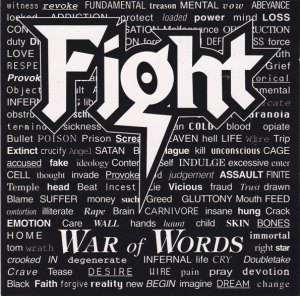
FIGHT – War of Words (1993 Sony)
I was devastated when Rob Halford left Priest. I was so heavily invested emotionally in the excellent Painkiller album, I couldn’t believe it was over! Last I had heard, the band were going to be working on two new songs for a greatest hits album (Metal Works) and then Rob would take a break to do a solo album. Instead, the band split completely! Halford and drummer extraordinaire Scott Travis formed Fight with guitarists Russ Parish and Brian Tilse, and the bass player from hell, Jay Jay. (Today, Parish goes by the name “Satchel” when he plays with Steel Panther!) Regarding Jay Jay, Halford says that he did a number of Rob’s own tattoos. Rob figured if he could play bass as well he he tattooed, he was in. Jay Jay also does the grunt-metal backing vocals.
The resulting album, War of Words, is a Pantera-esque thrash-fest, one of the heaviest things Rob had ever done (until Halford’s Crucible album), undeniable brutal, scream-laden, and punishing from start to finish. Halford had cleverly assembled two shredding guitar players with differing styles too: Tilse specialized in the noisy speedy solos, while Parrish played the more melodic and traditional speedy solos! War of Words is solo nirvana for fans of Rob and Priest. And Rob wrote every single song by himself.
The twin openers, “Into the Pit” and “Nailed to the Gun”, are two of a kind: they are rip-yer-head-off thrashers with Rob’s patented glass-breaking screams. The song structures on War of Words are simpler than what we heard with Priest, no doubt since Rob composed the songs by himself. This simplicity serves to make the album feel even heavier and more relentless.
The lyrics, just as simple and aggressive. “Into the Pit” doesn’t feature much in the way of poetry:
Conspiring, for sation Malfeasance, on high Obstruction, of duty Disorder, will rise
Rob takes the pace back a bit on the third track, “Life in Black” which I don’t think you can fairly call a ballad, to me it’s more Dio-era Sabbath with a very vintage-Dio sounding solo. (Rob had just helped out Sabbath live after Dio left, singing lead for two shows while opening for Ozzy Osbourne.) Meanwhile “Immortal Sin” bears a slow groove with a melodic chorus, downtuned but a bright spot in the proceedings.
The title track opens with the American First Amendment (Rob was living in Phoenix). It’s another aural assault with Rob keeping his vocals in the upper register. Travis’ incredible drumming punctuates every venomous word. Considering that less than three years prior, Rob (with Priest) was in court defending his band during the infamous “suicide trial”, the words are apt.
Dream Deceivers, directed by David Van Taylor, the excellent documentary on the Judas Priest trial
It’s back to dark haunting territory next: “Laid to Rest” ended the first side of the album. I find this one to contain one of Rob’s best vocal performances of the album. It’s reminiscent of “A Touch of Evil” by Priest, but downtuned and slightly exotic.
Side Two’s opener, “For All Eternity” is really the final reprieve. It is most definitely a power ballad in vintage Priest vibe, but again with the modern downtuned guitars. A song like this really proved Rob’s songwriting chops. He’s capable of writing emotive, catchy powerful music completely on his own, and the song is an achievement. The bridge around 2:25 is just awesomeness, but Tilse’s guitar solo completes the picture. As if that wasn’t enough, Rob returns to full on scream mode for the end.
“Little Crazy” was a critically acclaimed heavy metal blues, and the second single/video. I’m struggling to describe it beyond “heavy metal blues”, but this song is definitely a highlight. Rob puts everything he has into the slinky lead vocal, while band fuse the blues feel with heavy metal’s precision. I recall reviews of the time saying, “If Rob wanted to drop metal and go full-on blues, he could.” Now that would be interesting.
The rest of the album is no-holds-barred. The triple threat of “Contortion”, “Kill It”, and “Vicious” is almost too much. Each song strips everything down to the basics: simple riffs, violent words, relentless drums, without much in terms of melody. This is the most difficult part of the album to penetrate. In time the three songs grow. “Contortion” protests what we are doing to the Earth with angry frustration. “Kill It” is about TV preachers (whom I’m sure had their opinions on Priest during the trial). “Vicious” was always my favourite of the trio:
You cheating, lying, mother-fucking son of a bitch..
Vicious, vicious, Fucker, fucker!
I was going through an angry phase at the time!
Rob saved the best track for last. “Reality: A New Beginning” is a weighty epic, a perfect closer, slightly exotic and successfully combining Fight’s heavy side with Rob’s ability to write great melodies. This is simply an incredible song, a jewel in Halford’s crown, and a song which definitely deserves another look. The lyrics seem to be autobiographical:
This time, when I’m leaving, Who cares where I’ll go?
There was a hidden CD bonus track (not on cassette) after a five minute silence, a jokey song called “Jesus Saves”. Rob’s voice is electronically manipulated to sound…well, not sure what he’s supposed to sound like. An angry elf, I guess.
4.75/5 stars
There are some supplementary releases available:
1. This one is on my wishlist, I don’t own a physical copy: In 1994 Fight released a Christmas CD single called “Christmas Ride” with a message from Rob! They later reissued this as a free download from Rob’s site, but that is no longer around.
2. The live/remix EP, Mutations (next up in this series of reviews).
3. In 2007, a demo album called K5: The War of Words Demos was released. This featured demo versions of most of the album, plus five more. These include four new songs, and “Psycho Suicide” which was later remade for the second Fight album, A Small Deadly Space. The demos reveal that a much more conventional-sounding metal album was initially planned. (“The Beast Denies” is a very different version of “Reality: A New Beginning”.)
4. The 2008 Fight box set Into the Pit contains remixed versions of War of Words (again without “Jesus Saves”) and A Small Deadly Space. But the cool thing it contains is a DVD, Fight Live In Phoenix. The band rips through the entire album, in sequence (no “Jesus Saves”!) and then Rob’s solo track, “Light Comes Out of Black” (from the Buffy the Vampire Slayer movie soundtrack).
5. Buffy the Vampire Slayer original motion picture soundtrack. This is the only place you can get the studio version of “Light Comes Out of Black”, featuring his backing band…Pantera. All of Pantera.
I like “Light Comes Out of Black”, but it’s a lot easier to swallow than Fight is on first listen. I remember a M.E.A.T Magazine interview with Glenn Tipton and KK Downing, where they trashed it. “If it were on Painkiller, it would be one of the weaker songs, if not the weakest,” said KK.
KK might have been right about that to a certain extent, but only because Painkiller consists of 10 awesome songs!
RECORD STORE TALES Part 199: Hooray! Hooray! It’s Stock Transfer Day!
A couple weeks ago, I was out driving, rocking to Kiss’ Hotter Than Hell. Suddenly I realized the car in front of me was being driven by my former boss at the record store. We happened to be going in the same direction. I followed him as he pulled into the old record store, where he turned off. He didn’t see me wave but from the stop lights, I could see him go to the back of the vehicle and pull out a big box of discs for the record store.
This brought back a vivid memory — Stock Transfer Day! STD!
Twice a week, the local store managers were required to travel to a central location to pick up stock from the other stores. This stock could include special orders being transferred from store to store. The majority of the boxes were full of stuff for our shelves, and fresh jewel cases since we went through hundreds a week. These would fill the trunk, pile up on the back seats, and once in a while the passenger seat too.
The managers decided to do stock transfer on Monday nights, and Thursday afternoons. I hated Monday nights and Thursday afternoons. The only good thing about stock transfer was the chance to see some of my store manager friends, such as the eternally interesting Joe. It was during one of these stock transfers that I witnessed the immortal Open Door Piss.
What bugged me most about the stock transfer arrangements were that the time, gas and mileage on our cars was considered to be “part of our salaries”. This part of it really sucked, as you could spend a good chunk of your night hanging around doing nothing, waiting for someone. Sometimes a traffic accident or tie-up on the highway could screw somebody’s route home. That’s just the way this city was(n’t) planned out.
So while you’re waiting for someone with some orders that you absolutely need, you’re sitting doing nothing, burning your own time. This happened frequently in winter, but in the summer too. While this is ensuing, at home your porch is unoccupied and lacking in beverages. And that is a shame.
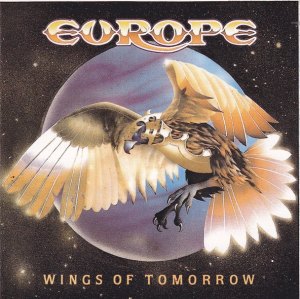
In many ways, Wings of Tomorrow is the perfect Europe album. It combines their early grand metallic leanings with the keyboards and anthemic sheen they would later become known for. Like the first Europe album, it’s loaded with hard rockers, the odd ballad, and an instrumental guitar workout. The same lineup from the last album was intact, with the major difference being Joey Tempest adding more keyboards to the mix.
The opener “Stormwind” is a great hard rock/metal tune, with a memorable chorus, riff, plus a tricky sounding solo from virtuoso John Norum. Second up is the ferocious “Scream of Anger”, featuring Norum playing the heavily distorted riff through a talk box. This is a solid burner, scorched-Earth policy firmly in place, taking no prisoners. Tempest wrote this song with Yngwie Malmsteen bassist Marcel Jacob.
The best known song on the album is “Open Your Heart”, which a later lineup of the band re-recorded for the underrated Out of This World record. I prefer the re-recorded version, because it includes an additional guitar part, really cool and catchy, immediately after the acoustic intro. The original version is still a great song though, a power ballad, and probably the first great Europe power ballad.
The angry prowler, “Treated Bad Again”, takes us back into metal territory. This predatory number would have fit in perfectly on something like a mid-period Judas Priest album. Then, as on the debut album, John Norum ends Side 1 with an instrumental. This one is called “Aphasia”, which refers to a medical condition that can render sufferers unable to speak. Get it?
Side 2 opened with an assaulting metal riff, on the album’s title track. It’s a jagged riff that juxtaposes nicely with Joey’s smooth voice. “Wasted Time” sounds like the aforementioned Yngwie at first, just because of the riff, but then it begins to gallop into Diamond Head style chorus. The guitar solo is shredder’s envy. “Lyin’ Eyes” maintains the momentum.
All this sets the stage for the penultimate song, and possibly the best ballad Europe ever recorded: “Dreamer”. It’s a piano power ballad, without the saccharine overload of songs like “Carrie”. This one’s just a classic ballad, much like you’d find on the first Europe album, but refined a bit.
Wings of Tomorrow closes with the reckless pace of “Dance the Night Away”, which sounds nothing like what its title implies. It’s a simple metal song, fast burning riff, and plenty of solos. It’s a shame the guitar wasn’t mixed in heavier. You get the impression that this album would have sounded so much harder live.
I don’t know if anybody could have predicted the massive success of the next album, The Final Countdown, after labouring in obscurity for two records. But success did come, and these early albums are a memento of a time before Joey Tempest wrote “hits”.
For the last installment of this series, click here.
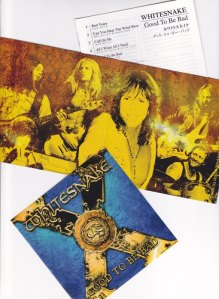
WHITESNAKE – Good to Be Bad (2008 Warner/SPV)
Whitesnake disbanded in 1990. Coverdale did his album with Jimmy Page, but that didn’t prove to last either. Although they’d started writing for a second album, the affair ended and David Coverdale assembled a new Whitesnake for a Greatest Hits tour in 1994. This reformation eventually led to an album in 1997 called Restless Heart (billed as “David Coverdale and Whitesnake”. This R&B flavoured album, a personal favourite, did not resonate with some fans of 80’s ‘Snake.
After another hiatus, and a solo album (2000’s Into the Light), David once again formed a new group of ‘Snakes, a mixture of old and new members. After several years of touring (and lineup changes), the long awaited new Whitesnake album, Good to Be Bad, hit the shelves in 2008. Former Dio guitarist Doug Aldrich and Winger’s Reb Beach had been a formidable guitar duo since 2002.
Similarly to his partnership with Adrian Vandenberg, David has retained his writing style of co-writing with just one co-writer; in this case, Aldrich. It seems to be evident that the guys have gone for a John Sykes guitar sound and style. You can certainly hear a lot of trademark sounds and tricks that Sykes used to do, that gave the 1987 album such a cool sound. This isn’t to say that they don’t play plenty of their own style too, but the retro stuff is frequent.
So similar is the direction of this album to 1987, that you can play “name that tune” with all the new songs:
“Can You Hear The Wind Blow” for example directly references moments on 1987, right down to those flares that Sykes used to do. “All I Want, All I Need” equals “Is This Love” Part Deux. Basically, every song on Good To Be Bad is a mash-up of songs from Coverdale Page, 1987 and Slip Of The Tongue, and you can hear the references quite distinctly. “A Fool in Love” is “Crying in the Rain”. “Lay Down Your Love” is “Shake My Tree”, without Jimmy Page. Throw in a little “Kashmir” during “‘Til The End Of Time” (which seems to be based off “Till The Day I Die” from Come An’ Get It) too.
Having said that, despite the lack of originality, Good To Be Bad is still a very enjoyable listen, and a very welcome return. A world without David Coverdale’s voice is like a world without crème brûlée. That voice is in fine form, perhaps even stronger than it was on 1997’s Restless Heart. The album has a lot more life to it than Restless Heart, although it does lack that album’s subtlety and R&B moments. The band play great, kicking it on every tune, even the ballads. The melodies are strong and memorable. It’s just…too contrived.
The bonus live disc is the the Canadian special edition is highlights from Live: In The Shadow Of The Blues. No big deal. It’s nice to hear Whitesnake playing “Burn/Stormbringer” from David’s Deep Purple days, and cool to hear the old 70’s classics.
The real cool version to have is the Japanese release with two bonus tracks. And a sticker! Can’t forget the sticker. The bonus tracks are both remixes (a “Doug solo” version of “All For Love”, and a stripped down version of the lovely “Summer Rain”). For $20, I wasn’t complaining.
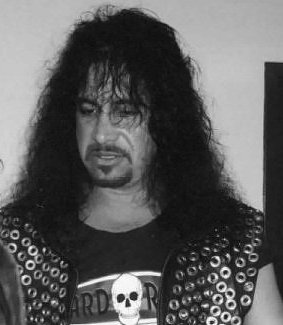
We were in Kincardine, Ontario, on Queen street, or “the main drag” as my dad calls it. We were in this crappy clothing store called Sandy’s that’s not there anymore. But this time, they had a Kiss T-shirt for sale! I never saw any cool band shirts in Kincardine before. We spent much of each summer there, and when I was younger the place seemed kind of dull. Finding a Kiss shirt there, well obviously I had to get it. It was 1992, a Revenge shirt.
My dad asked, “Did you find a shirt, son?”
“Yep,” I answered. “This one is cool, because it has the new Kiss member on it.” [Eric Singer]
“Yeah,” my dad said with a disapproving smirk. “I don’t think I’ve ever seen that bearded guy before…”
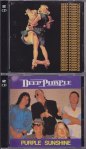
DEEP PURPLE – Collector’s Edition: The Bootleg Series 1984-2000 (2000 Thames Thompson, Australia only, 12 CD set)
There are two (!) 12 CD Deep Purple bootleg collections; this is the first and best of them. Although Deep Purple’s career is chock full of live albums chronicling this period, this set does feature many treats that are hard to find or not available on official live albums. These really are bootlegs; the band decided to release their own versions of pre-existing audience bootleg albums! All artwork, errors included, are copied from the original bootleg releases.
Before you get too excited I will state right off the bat: There’s no Deep Purple Mk V or VI. No Joe Lynn Turner, or Joe Satriani. There is, however, a show from 1995 with Steve Morse, previewing tracks from the yet-to-be recorded Purpendicular album. This transitional period is very cool. You get to hear Morse perform “Anyone’s Daughter”, which was dropped from the set not long after. Since Morse and Blackmore’s styles are vastly different, it’s a cool take on a track that you don’t hear often as it is. In addition, you’ll hear Morse reinvent “Woman From Tokyo” on a bootleg from 2000.
The Bootleg Series also contains my favourite version of “The Battle Rages On” ever released. 1995, Ft. Lauderdale Florida, Ian Gillan tore the roof off with that song. In my mind I always imagined his screams directed towards Blackmore, even though he was probably furthest from Gillan’s mind. It’s a magical version, you can hear the electricity and the emotion. Just awesome.
Also a treat is a revisiting of the old In Rock classic, “Into the Fire” from 2000. This version crushes! Unfortunately, a stiff and slow version of “Sometimes I Feel Like Screaming” follows it. Deep Purple are that kind of band, usually they just kill it. But their history does contain rare stumbles, and this take of “Sometimes I Feel Like Screaming” is nothing stacked up against other versions available. On the other hand, Purple just smoke the Abandon track “’69” immediately afterwards! They extend this concise rocker to include an extended jam with a nod and wink to “Paint It, Black”.
Other highlights: Blackmore’s solo spot “Difficult to Cure”. Rarely heard 80’s-era tracks such as “Under the Gun”, “A Gypsy’s Kiss”, “Nobody’s Home”, “The Unwritten Law”, “Bad Attitude”, “Hard Lovin’ Woman”, and “Dead or Alive”. You can’t buy a live version of “The Unwritten Law” anywhere else. “Fools”, a rarely played track from Fireball, simply crushes. Holy Ian Paice, Batman! Steve puts his own slant on the guitar part in “Fools”, but it is his solo spot on “Cascades” that is truly intoxicating.
These being bootlegs, don’t expect sound quality or packaging or liner notes, unfortunately. The sound quality does improve as you go from the oldest discs to the most recent. The oldest shows have a lot of crowd noise, and poor sounding drums. By the time you get the Japan 2000 show, things sound much better although can still stray towards muddy at times. Packaging-wise, what you see is what you get: A box, six jewel cases, front covers and back covers.
This was an Australia-only release. I have no idea what it’s worth today. I haven’t seen one in years.
I decided that there’s no point rating these bootlegs individually. For one, it’s a set, and when it came down to splitting hairs, I like them equally. And that speaks volumes as to the consistency of this band.
DEEP PURPLE – Power House (1977 Warner Bros, Japanese import)
I have always loved listening to the Power House album, featuring the classic Deep Purple Mk II era. After Purple broke up in ’76, the market was inundated with compilations and live albums. This one, and others like Last Concert inJapan, and When We Rock We Rock… were snapped up by fans who wanted more Purple. All of these albums have been rendered redundant by superior, current Deep Purple remasters. If you’re the kind of fan who collects all of those 70’s posthumous Hendrix albums, then you’ll dig Power House, a brief but enjoyable romp through less familiar Purple. You’ll even get the original liner notes by Simon Robinson.
Power House consisted of 6 then-unreleased tracks. Here’s your complete track list:
1. “Painted Horse”. This is an outtake from the Who Do We Think We Are sessions in July 1972. This is the track that Blackmore “didn’t like”. He hated what Gillan did with the vocal, and demanded it be changed. Gillan refused, and the result was a great, unique Deep Purple rocker that remained unreleased until after the band was defunct.
2. “Hush”
3. “Wring That Neck”
4. “Child In Time”
From the Concerto for Group and Orchestra program in September 1969. The original hit LP release of the Concerto had just the three movements of that piece. Deep Purple played a standard three song set before the Concerto, and here it was released on Power House. These three versions remain among my favourite performances of these songs. “Child In Time” had yet to be recorded on album, and Jon Lord’s melodies are experimental and in development. Very cool. It’s “Hush” that really smokes, a definitive version of this cover. Gillan made it his own right there.
Today the Concerto is available remixed on two discs, with the full piece, the Deep Purple set, and the Royal Philharmonic’s rendition of Malcolm Arnold’s “Symphony No. 6”, which was also performed that night.
5. “Black Night”. Another nearly definitive version in my books! This is a B-side, recorded at the Made in Japan dates in August 1972. This is widely available today on various extended versions of the Japan shows, the Singles A’s and B’s, 24 Carat Purple, and many others.
6. “Cry Free”. Outtake from the Deep Purple In Rock sessions in January 1970. It is incredible how fertile the band were in the early 1970’s. As if In Rock wasn’t amazing enough, this kind of song doesn’t even make the album? Amazing that Deep Purple’s outtakes were so impressive. That they could throw this away speaks volumes of their confidence at the time.
Regardless of Power House being superseded in recent years by better packages, I still enjoy this album, in this sequence.


 I believe I am well on record as not being a fan of remixes in general. There
  I’ll be honest, I struggle getting through the remix side in one sitting. There are some cool moments, such as the chance to hear isolated instruments and solos. “Vicious” is an example of a remix that works for me. It’s weird, it has an opera singer and dance beats added, but it’s pretty heavy and cool. But in general, the Fight songs were simple and repetitive to begin with. Making them simpler and more repetitive didn’t work for me. Sure, I own some Nine Inch Nails albums, but this sound isn’t where my heart lies.




 EUROPE – Wings of Tomorrow (1984 Epic)





 : Lebrain



You must be logged in to post a comment.