Deep Purple

REVIEW: Deep Purple – In Concert with the London Symphony Orchestra (1999)

Thanks for joining me this week for Purple Week at mikeladano.com.  Today is Part 5 and the last album for now.    But don’t worry, I don’t think we’ve seen the last of Deep Purple around these parts…  

Part 1:  Shades of Deep Purple
Part 2:  The Book of Taliesyn
Part 3:  Perfect Strangers
Part 4: Whitesnake – Live in ’84 – Back to the Bone
Part 5:  In Concert with the London Symphony Orchestra 

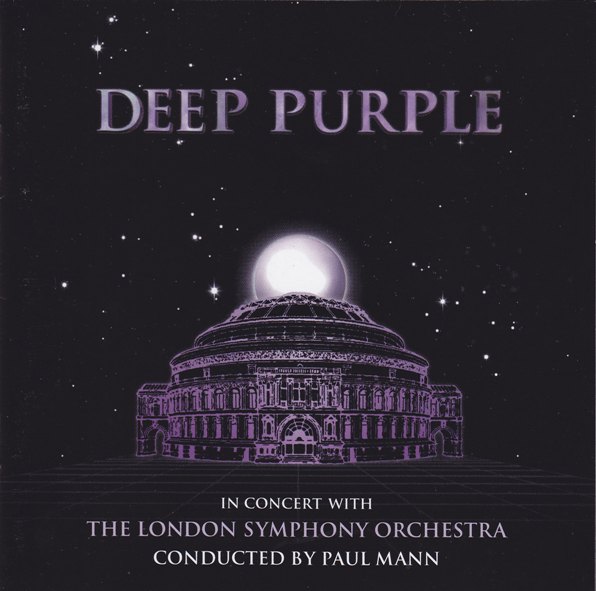
DEEP PURPLE – In Concert with the London Symphony Orchestra conducted by Paul Mann (1999 Eagle Records)

The original Concerto for Group and Orchestra (1969) was Jon Lord’s baby.  The rest of the band didn’t care too much for it, and it had only ever been performed twice.  The Albert Hall recording became a successful live album, and it was performed once more in Los Angeles.  Soon after, the original score was lost, permanently.  Even if Deep Purple wanted to (and let’s face it, if Blackmore were in the band he’d probably say no), it could never be performed again without the sheet music.

I’ll let Jon Lord take it from here.  From the liner notes to the CD:

“Marco de Goeij, a young Dutch composer…had decided to re-create it by listening to the recording and watching the video.  Over and over and over again.  A task of mind-bending complexity, dexterity and musicality, which then only left me the far simpler job of filling in what he had been unable to decipher, re-creating what I could remember of my original orchestration, and in part, as those who know the work will hear, re-composing where I felt it needed it.”

Conductor Paul Mann had independently been searching for the original lost manuscript.  When Jon informed him of the re-created one, Mann was on board with the London Symphony to do it once more.  Deep Purple now had a new guitar player, Steve Morse, who undoubtedly would have to bring his own slant to the guitar solos.  For Jon and the fans, it’s the stuff of wishes come true.

Since the Concerto was really Lord’s project, it seems like a fair compromise for each of the members of Deep Purple to also get a moment or two to showcase their solo work.  In fact many musicians from those solo works are welcomed to the stage, including the Steve Morse Band, Ronnie James Dio, Mickey Lee Soule (ex-Rainbow and ex-Gillan), Sam Brown, and more.  Deep Purple fans are generally open to different styles of music, and this album showcases those styles in a professional, classy format.

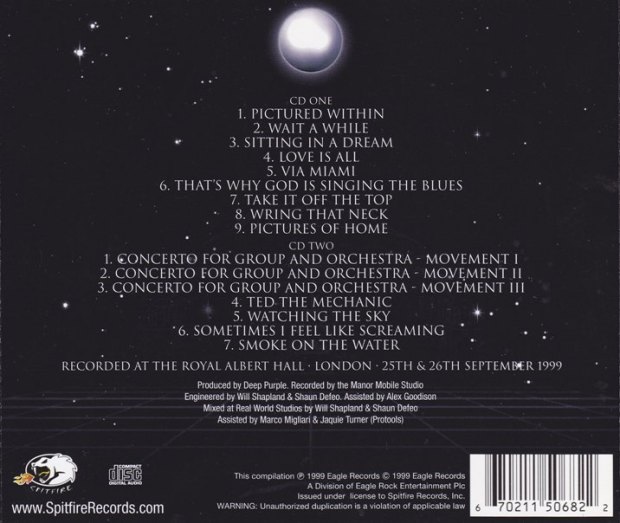
Once again at the Albert Hall, the set commences with a disc highlighting the solo careers. Lord’s “Pictured Within” (with Miller Anderson)  and “Wait a While” (with Sam Brown) begin the proceedings with a quiet, powerful pair of songs backed by Jon’s piano and dramatic strings. These versions are, dare-I-say-it, superior to the original studio versions.

From there, Roger Glover’s solo career gets a looksee, with “Sitting in a Dream” and the irresistibly bouncy “Love is All”, my favourite. Ronnie James Dio reprises his vocals from the original Butterfly Ball versions, sounding as great as he did nearly 30 years prior!  It really is impossible not to like “Love is All”, which of the two is especially fun.
DP LONDON SYMPHONY_0003

In 1988, Ian Gillan and Roger Glover did a project together called Accidentally on Purpose, a quirky tropical pop rock album.  “Via Miami” is one of the more upbeat tracks from that album.  Ian’s “That’s Why God is Singing the Blues” features his solo band’s guitarist Steve Morris (not Morse!)  Both it and “Via Miami” spark and roll along joyfully.

Steve Morse (not Morris!) is up next with the Dixie Dregs’ “Take it Off The Top”.  It’s the Steve Morse Band and the Kick Horns.  It’s always a pleasure to listen to Dave LaRue, Van Romaine, and Steve Morse playing together, but to hear them at the Albert Hall?  That’s a venue suitable to the genius they wrench from strings and wood.  Graham Preskett joins on violin to dual Morse with string acrobatics.

Ian Paice’s spotlight song is a horn-laden jazz version of Purple’s “Wring That Neck”. This is my kinda jazz, the kind with a rock beat you can swing to!  The violin solo lends it a bluegrass feel, too. The first CD ends with a powerfully heavy “Pictures From Home”, originally from the immortal Machine Head record, performed by Deep Purple with the London Symphony.  It’s a powerful, dramatic song on which for the full Deep Purple to enter.

Disc two features the entire Concerto from start to finish, all three movements, roughly 50 minutes in length. This truly was Lord’s baby, the piece that kept him up nights in 1968 and 1969 writing little black notes on white paper. It made Deep Purple a unique property when it was released on LP 1969, but had not been heard live in 30 years. Purple fans will be in seventh heaven with this de-extinction. Indeed, Morse’s guitar is different, but he hits the right notes at the right time while still playing within his style.  Otherwise, I’ll be damned but I can’t tell the difference.

What can I say of the Concerto itself?  I think it’s pretty cool, and I’ve always geeked out to stuff like this.  Jon envisioned it as “rock band meets orchestra” — at first they say hello, and play around, then they start shouting at each other, and before long it’s all-out war!  Speaking of shouting, my favourite is probably Movement II, which has Gillan’s all-too-brief but oh-so-perfect vocal.

DP LONDON SYMPHONY_0002

The disc concludes with three more (three Morse?) of recent vintage. “Ted The Mechanic” and “Sometimes I Feel Like Screaming” are two of the best songs from Purpendicular, and “Watching The Sky” is probably the heaviest song from Abandon. I personally feel that all the Abandon material was better live than on album, and “Watching The Sky” maintains that.  Unfortunately none of the Abandon songs were really that great.

Of course, “Smoke On The Water” ends the album with guests returning, including Ronnie James Dio who takes a verse. “What do you think Ronnie!”  Then the Elf himself is up at the microphone singing “Smoke on the Water” with Blackmore’s old band Deep Purple.  I shouldn’t need to tell you that this is one of my all-time favourite live versions of “Smoke”.

This album, which ended up being one of Lord’s last with Purple, was really a special gift to the fans. It is a beautifully crafted live performance containing some of the rarest of the rare gems in the extended Purple canon. An event like this will never happen again. There is a DVD of this show, but beware, it is only about 2/3 of the set.  What a disappointment that DVD version was.  You want every moment, but you won’t get it.

If you do hunger for more after this, then you can binge on The Soundboard Series 12 CD boxed set. It consists of 6 shows, two of which featured full live performances of the Concerto, with guests such as (yup!) Ronnie James Dio. There is also Live at the Rotterdam Ahoy which lacks the Concerto portion, but makes up for it with a more extensive set of classic rockers, including Dio’s own “Rainbow In The Dark” and “Fever Dreams”!…But that’s another review.

5/5 stars. For the true fan, and anybody who’s not afraid to expand their listening territory.
DP LONDON SYMPHONY_0005

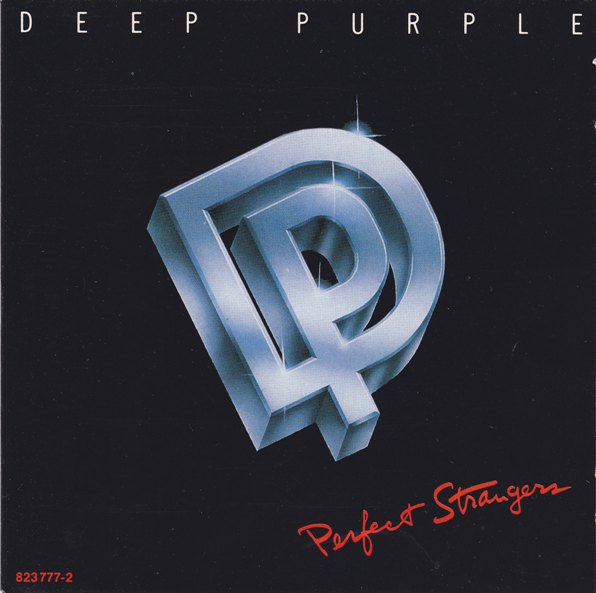
REVIEW: Deep Purple – Perfect Strangers (1984)

It’s Purple Week at mikeladano.com!  It’s all Deep Purple and Deep Purple alumni, all week.  This is Part 3…and this time we’re going Epic Review Time.  

Part 1:  Shades of Deep Purple
Part 2:  The Book of Taliesyn

PERFECT STRANGERS_0001

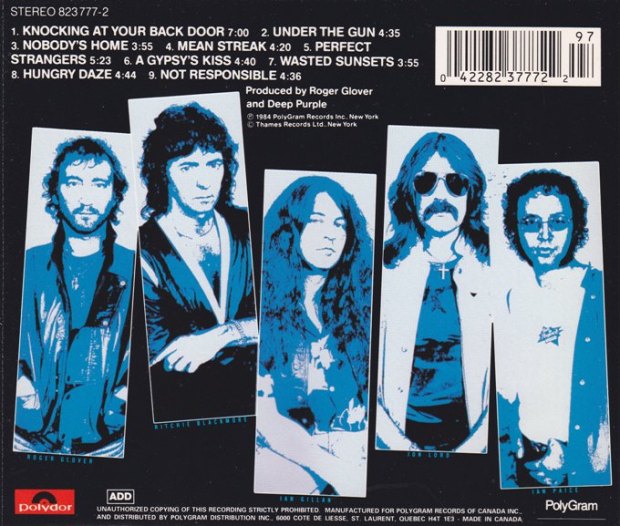
DEEP PURPLE – Perfect Strangers (1984 Polygram)

Deep Purple were the proverbial candle that was burned at both ends.  Their first four studio albums (plus a friggin’ concerto!) were cranked out in a mere two years.  Management and record labels pushed the band to stay on the road, only taking precious breaks to write and record new music.  Sometimes the pressure worked (Machine Head) and sometimes it didn’t (Who Do We Think We Are).  Ian Gillan’s resignation signaled the end of the celebrated Deep Purple Mk II lineup.  Though the band successfully carried on with David Coverdale & Glenn Hughes, even those lineups imploded and by 1976, Deep Purple officially ceased to exist.

The absence of Purple created a void that was filled by greatest hits records, live albums, and well-known side projects such as Ritchie Blackmore’s Rainbow, Gillan, and Whitesnake.  Still, there was such a demand for Deep Purple itself that original singer Rod Evans put together his own bogus “Deep Purple” and played several shows in 1980!  In his band were a couple guys from Iron Butterfly, but no other former Purple alumni.  Just Rod.  The guy who didn’t sing “Highway Star”, “Smoke on the Water”, or “Lazy”.  Needless to say, Rod Evans’ bogus “Deep Purple” did not last as soon as word got out.  The lawyers for the other former Deep Purple members ensured that by running ads in the local papers. “The following members will not be appearing with the band called Deep Purple at [such and such a date and venue] : Ritchie Blackmore, Ian Gillan, Ian Paice, Jon Lord, Roger Glover, Glenn Hughes, David Coverdale.”  A show in Montreal was particularly horrid, and reportedly the band’s stage act involved one of the members bringing out a chain saw to cut stuff up. They were hit with lawsuits galore and quickly packed it in, but not before recording two new songs for a projected new “Deep Purple” studio album. The two songs, “Blood Blister” and “Brum Doogie”, are thankfully lost.  A video of “Smoke on the Water” live in Mexico remains, to remind us why this was not a good idea.  [For more on the bogus “Deep Purple”, click here.]

Clearly, lots of profits were to made if the real Deep Purple were ever to reunite.  They tried earlier on, but were hung up when Ian Gillan joined Black Sabbath.  When Ian’s Sabbath commitments were finished a year later, it finally happened.  Jon Lord had freed himself of Whitesnake, and Ritchie, Roger Glover and Ian Paice were all ready willing and able.  The reunion was on, for real this time.

The band quickly agreed on creating new music (otherwise, what’s the point of it?), and decided that there had to be a level of quality that served the name Deep Purple.  They retreated to the gorgeous Stowe, Vermont and found themselves to be in great spirits and full of ideas.  Another wise decision was the use of bassist Glover to produce.  After his first stint in Purple, he became quite successful as a producer.  He recorded some of the best Nazareth albums, a Judas Priest record (Sin After Sin) , Rainbow, David Coverdale, and countless more.  It only made sense to keep production of the new album within the band when you have a guy like Roger in the band!

The album that resulted, Perfect Strangers, was more modern but unmistakably Deep Purple.  Taking advantage of modern recording studios resulted in an album with rich instrumental tones.  As great as classic Deep Purple albums were sonically, Perfect Strangers has a new richness and clarity.  Jon’s organ is deep and gorgeous, but Ian Paice’s drum sound is monstrous.

The opening track “Knocking at Your Back Door” (hah hah hah) commences with ominous keys from Jon, sounding at first like the pipes of doom.  Then Roger begins a quick pulse, and Paice crashes that cymbal, and my God, Deep Purple is back!  Ritchie and Ian join them for the first Deep Purple epic of the album — and on the first track, no less!  “Knocking at Your Back Door” may be a joke lyrically, but it’s dead serious musically.  It’s Deep Purple, but streamlined.  Extraneous things have been discarded; others are sleeker.  The only disappointment about the song is actually the guitar solo, which just slightly does not fit.  Glover once said about this album that Ritchie struggles with solos in the studio more so than live.  Something about when the red light goes on, he gets cold feet.  There’s some incredible playing in this guitar solo, but parts of it feel out of place and overdone.

PERFECT STRANGERS_0003

That one minor complaint is probably the only quibble you’ll read here about Perfect Strangers.  The album continues to impress as it plays.  “Under the Gun” is a song that would sound so great live today; shame that it hasn’t been played live in 30 years.  I can’t imagine why.  “Under the Gun” demonstrates the streamlined groove that Purple were going for in the 80’s.  Listen to Paicey’s drums.  They are relentless and powerful, but he’s also playing it simpler than he used to.  This is intentional.  When I say “streamlined”, that doesn’t mean there aren’t long solos, because Ritchie’s here is over a minute long (in a 4:34 song)!

“Nobody’s Home” gives Jon Lord a change to stretch out a bit on the synths, but it’s just a feint.  This track re-writes “Black Night” for 1984, and ties it all up with a little bow in under four minutes.  “Your lights are burnin’ bright, but nobody’s home!” sings Ian, for once not speaking of Blackmore!  Jon takes the spotlight with a nice quick solo on the Hammond, a sound not often heard in ’84.

Side one was closed by the nasty little “Mean Streak”.  It has one of those quirky Gillan lyrics that I like so much. “She came home last night, rockin’ rollin’ drunk. She talk no sense but she sound good so she thunk.”  It’s a cool rock track with a chugging riff; always a deadly combination when wielded by Deep Purple.  It boasts one of Ritchie’s coolest solos on the album.

I will never forget seeing this video on MuchMusic, introduced by Bruce Dickinson.  Of Deep Purple he said, “Well, they’re very good. But not as good at football as they appear. No. They’re not.” The VJ (Erica Ehm) asked, “Why not?”  Dickinson simply responded, “Because they’re not! What a silly question.”

Of all the songs on Perfect Strangers, only one has been consistently played live every tour:  the title track.  This epic, like its  side one counterpart “Knocking at Your Back Door”, opens with Jon’s ominous keys.  This time it’s the old trusty Hammond, and then the band crash in with the riff to kill all riffs.  I think in some respects, this song has become Deep Purple’s “Kashmir”, especially when played in concert.  It has evolved to become more exotic since it was first recorded, though it does contain those flavors here.  The lyrics are ambiguously beautiful.  Back in the Record Store days, I talked to a guy once who thought the lyrics were about God.  I’ll leave it up to you.  Blackmore called it his favourite Deep Purple song.  It’s a tough call, but Top Five for sure.  I cannot survive without this song in my life, period.

Then WHAM! “A Gypsy’s Kiss,” right in the kisser.  If any doubters had thoughts that Purple had lost anything in the past decade, this song proved them dead wrong.  Blazing pace, blazing Paice, the whole place is ablaze!  Again, Ian’s lyrics are awesome, and I love the self-referencing.  “Space truckers free and high, Teamsters get ya by and by.”  I also really like this verse, because, hey. John Wayne, man.

John Wayne, the Alamo,
Crazy Horse, Geronimo,
I’ll smoke a piece with you.
Mind, Body, Heart and Soul,
We got Rock and Roll,
And there’s nothing they can do.

A good Deep Purple album rarely has a slow blues buried deep within.  “Wasted Sunsets” is the album’s heavy blues track, like “When a Blind Man Cries” was to Machine Head (though it was relegated to a mere B-side).  Jon’s organ sets the mood stunningly, and Ritchie absolutely nails it.  I get the feeling that Ian is baring his soul in the lyrics, although he doesn’t seem too regretful of all those one night stands.

For self referencing, no lyric on the album beats out “Hungry Daze”:

The mountain’s getting cold and lonely,
The trees are bare,
We all came out to Montreux,
But that’s another song, you’ve heard it all before!

Regrets?  Hell no.  “Different girls, laughing girls, forever girls and it was loud!”  Gillan has a talent for making cheeky lyrics like this work with serious music.  “Hungry Daze” has that modern Purple groove with the same kind of chugging exotic riff that powers “Perfect Strangers” — but faster!  There’s even backwards tapes (Jon’s organ), a sound unheard on a Deep Purple album since 1969, but back in style in 1984.

Lucky cassette and compact disc buyers got a bonus track: “Not Responsible”.  When I first got the album (on cassette) I wondered, “Why is this song a bonus track? It’s one of the best songs!”  Good question!  (Perhaps because it’s the only song on which Gillan dropped an f-bomb.)  I think it closes the album even better than “Hungry Daze” does.  Lyrically it’s more drinking and debauchery.  “So I’ll raise a glass to you, the foot is on the other shoe.”  I consider “Not Responsible” to be of equal value to any of the better tracks on the album proper, so if you only own this on LP, consider getting this song (legally) to complete the picture.

PERFECT STRANGERS 12 INCHWant more?  There’s one more, but you’ll have to do a little research to get it in full.  “Son of Aleric” is a killer slow groove 10 minute instrumental, with all the flavor of the album.  It was released on the B-side of “Perfect Strangers”.  If you bought the 7″ single, you got the 5:28 edit version.  If you bought the 12″ single, you got the full Monty at 10:03.  The full version was rarely issued on CD.  I have it on a compilation CD with the cumbersome title of Knocking at Your Back Door: The Best of Deep Purple in the 80’s.  But “Son of Aleric” is only on the UK version!  (Other territories just got a live version of “Child in Time” from the live album Nobody’s Perfect.  Bummer.)  This is the kind of open Deep Purple jam that you just want to melt into.  It’s magic.

If you like Deep Purple, but do not own Perfect Strangers, then I advise that you remedy that situation at your earliest convenience.  I am no stranger to this album; I have played it hundreds of times, often more than once in the same day.  I have never grown tired of it.  For that reason, and many more, Perfect Strangers earns the coveted:

5/5 stars

PERFECT STRANGERS_0002

REVIEW: Deep Purple – The Book of Taliesyn (1968)

It’s Purple Week at mikeladano.com!  It’s all Deep Purple and Deep Purple alumni, all week.  This is Part 2.  

Part 1:  Shades of Deep Purple

DEEP PURPLE – The Book of Taliesyn (1968 EMI, 2000 remaster)

I’m not a big fan of The Book of Taliesyn, and that’s not because I don’t like Deep Purple Mk I. I do like Deep Purple Mk I, or at least some of it. I think the third Purple album from ’69 is one of the band’s all-time best, and an underrated classic. The Book of only scratches the surface. The band had yet to find their sound, which would emerge fully formed a year later on Deep Purple In Rock. This album does represent significant growth, but not in the heavy metal direction that Purple would co-pioneer.  Instead, Book of travels further down the orchestral roads with Jon Lord.

The Book of Taliesyn, like Shades of Deep Purple before it, is built with cover songs as its cornerstones. It contains one of my favourite Deep Purple Mk I tracks: their version of Neil Diamond’s “Kentucky Woman”. Energetic, ragged and rocking hard, “Kentucky Woman” is the absolute best track here.  Ian Paice is the MVP, but singer Rod Evans is well suited to this kind of tune. Other standouts include “Wring That Neck”, the legendary instrumental (also called “Hard Road”) that the band continued to play through the decades even after Blackmore left the band in the 90’s.  “The Shield” isn’t bad, as it features a long instrumental break featuring Jon and Ritchie.  There is also the track “Anthem”, a Jon Lord helmed piece that delves into classical, forshadowing the “April” suite from the third album, as well as the Concerto for Group and Orchestra itself. So, the band was certainly stretching out here. There is a definite growth from the first album. Unfortunately, the album is bogged down by another slow, boring Beatles cover (“We Can Work It Out”, this time) and also “River Deep, Mountain High”, a whole 10 minutes thereof, which does nothing to help the band.  The only notable thing about it is Jon’s “Thus Spoke Zarathustra” intro.

DP BOOK OF TALIESYN_0003Like the other two albums in this series of remasters on Spitfire, there are five previously unreleased bonus tracks. All are valuable in their own way. Keep in mind that these tapes are old and may not sound as good as you’re used to. But, “Playground” is a bright instrumental from BBC tapes, and “Wring That Neck” is presented live. “Hey Bop a Re Bop” is buried treasure, an early version of what would become “Painter” on the next album.  There are two more cool covers to boot.  “Oh No No No” is a studio outtake, but I don’t recognize it.  It’s a mid-tempo pop rocker with splashes of Jon’s organ that quench the thirst.  Nicky Simper demonstrates some impressive bass chops, but he just wasn’t the right fit for the band.  A BBC Top Gear session yielded a song called “It’s All Over”, a slow country blues ballad that Thin Lizzy could have done at the same time.  This is a great tune, and it’s a shame that Purple never recorded it properly.

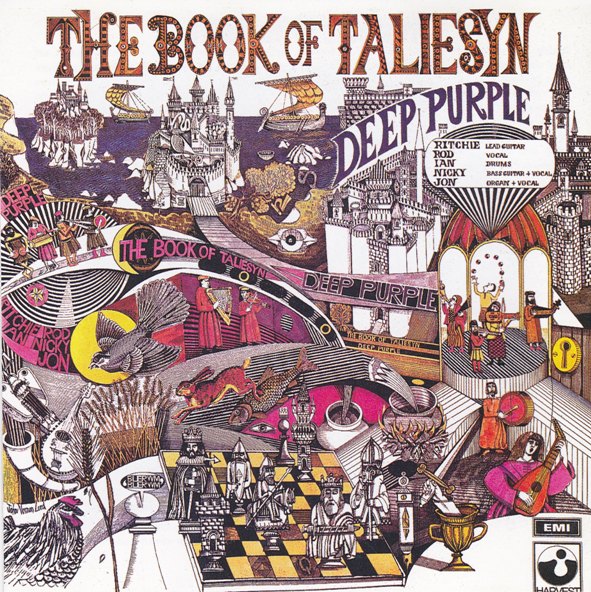
The colourful cover art is a quaint reminder that once upon a time, album covers were 12.375″ x 12.375″ and you could gaze upon the finer details for hours.  CD just doesn’t cut it.  This cover was so different for the band.  Their name and the album title appear on it several times, and each band member is credited (first names only) on the front.  The bizarre landscape foreshadows the Hieronymus Bosch painting on the next album.

2/5 stars. Not quite the band we know and love, but slowly getting there.

REVIEW: Deep Purple – Shades of (1968)

It’s a late start, but welcome to Purple Week!  It’s going to be all Deep Purple and Deep Purple alumni all week to Saturday, with at least two Epic Reviews lined up.  Let’s go!

DEEP PURPLE – Shades of (1968 EMI, 2000 remaster)

I’m not a big fan of Shades of Deep Purple, and that’s not because I don’t like Deep Purple Mk I. I do like Deep Purple Mk I, or at least some of it. I think the third Purple album from ’69 is one of the band’s all-time best, and an underrated classic. Shades of only scratches the surface. In 1968, these five guys didn’t have the road experience together yet to really gel as a unit. They had just formed and almost immediately began recording demos that landed them a record deal.  Ritchie Blackmore, a session player, had yet to emerge as the confident axeman that he is, still shyly putting together his solos while Jon Lord takes the forefront more often than not.

SHADES OF DEEP PURPLE_0003Deep Purple opened their very first vinyl with an instrumental.  “And the Address” is remarkably recognizable as Deep Purple, particularly because of Ian Paice and Jon Lord.

“Hush” was and is still an extraordinary version, and my preferred take over the 1988 Ian Gillan version. “I’m So Glad” isn’t bad, but “Mandrake Root” is not what it would later become live. “Help” has been slowed down to a crawl (reportedly, the way the Beatles wanted to do it) but it doesn’t rock. “Love Help Me” is 60’s pop rock goodness, as is “One More Rainy Day”, but “Hey Joe” is another one that would come across better live.  It doesn’t help that Shades of Deep Purple doesn’t really sound that great.

The five bonus tracks are all valuable, as these are some of Purple’s earliest live performances. Something like “Hey Joe” live (from the BBC) begins to show what the band would make of it. There’s also the rare track “Shadows” which is better than some of the tracks on the album itself.  This outtake probably could have used a little additional polishing, but it is what it is, and it’s worth checking out if only for Ritchie’s solo.  The audio fidelity on these tracks is sketchy, be forewarned.  That shouldn’t be unexpected for demos of this age.

2/5 stars. Hold tight, rock fans — a year later, the best of Mk I was yet to come!

SHADES OF DEEP PURPLE_0004

#361: LeBrain Goes to Toronto (Video)

RECORD STORE TALES MkII: Getting More Tale
#361: LeBrain Goes to Toronto

Went to Toronto yesterday to visit Mrs. LeBrain at the hospital, and also visited Sonic Boom music at 215 Spadina while I was in town.  I’m tired, so all I had the energy for was this quick & dirty 4 minute video.  Hope you like it.  You know I found music to buy…

Road tunes:

  1. Deep Purple – Slaves and Masters
  2. Ted Nugent – Shutup & Jam!
  3. Whitesnake – Snakebite
  4. Whitesnake – Saints An’ Sinners

REVIEW: Deep Purple – Purpendicular (1996 US bonus track)

“The banjo player took a hike” — Ian Gillan


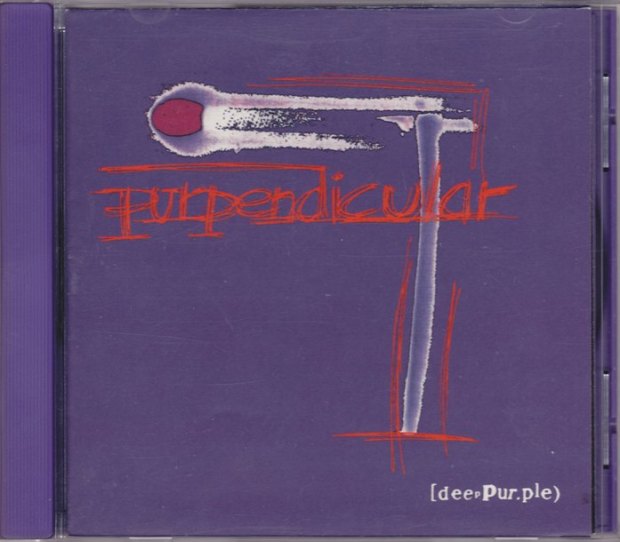
PURPENDICULAR US_0001DEEP PURPLE – Purpendicular (1996 BMG)

When Blackmore quit Purple for the second time, I had written the band off. I wasn’t too keen on the previous studio record The Battle Rages On, and what is Purple without the man in black? I didn’t want to hear a hack Deep Purple, struggling on to pay the bills with some sub-Blackmore player.  The first time he left, it shattered the band and they were unable to continue past one record with Tommy Bolin. Then I started reading reviews of live shows with Steve Morse on guitar. Steve Morse? What the hell was that going to sound like? Morse and Ritchie Blackmore — it is hard to imagine two electric guitar players who sound less alike. (Joe Satriani was also briefly in the band to help them finish up touring commitments.  Bootlegs of shows with Satriani are well worth checking out.)

When Purple finally released their new studio album Purpendicular, I had to buy it on import.  It didn’t even have a North American release.   When it was released officially in the US, an extra bonus track was added, so I tracked that down and bought it too. That is how much I really love this record. It had a huge impact on me musically in the mid to late 90’s, and when I saw Purple on this tour, they were smoking!

PURPENDICULAR US_0002


Kicking off with some of that patented Morse shredding, the oddly titled “Vavoom: Ted The Mechanic” kicks you in the teeth and won’t let go. This was, according to Gillan, done on purpose.  It was a statement: “Here is our new guitar player, bitches.”  Ian’s lyrics, ranging from bizarre to absurd and back again, are at their absolute peak on this album. (Check out “Somebody Stole My Guitar”.) Clearly, when the man had been freed of Blackmore’s shackles, he had been creatively revitalized.  That probably followed in turn for each of the members.

The second track is the melancholy, bass-driven “Loosen My Strings”, a song which wouldn’t sound out of place on Slaves and Masters. From there, the album goes from strength to strength: The powerful progressive epic “Sometimes I Feel Like Screaming” (probably the best track on the album) to the bright and positive “A Touch Away”. Every song is backed by Morse’s unmistakable picking, miles away from Blackmore’s style of riffing, or medieval tendencies. That is not an attack against Blackmore, but sometimes a quality change can be refreshing. Morse utilizes pinch harmonics frequently on this album, which is a new sound for Deep Purple.  He also utilizes long sustained notes with wide vibrato, a classic Steve Morse sound.

PURPENDICULAR US_0004

There are very few weak songs on Purpendicular.  The plodding “Soon Forgotten” can be skipped.  Not all the songs are immediate.  Some of them are complex arrangements designed to take a little effort to penetrate. This album must be played a couple times for it to sink in. But when it does, stand back and prepare to be blown away.  I wouldn’t want to miss “The Aviator”, a rare acoustic Purple tune.  Morse lends it a celtic feel.  For folks who prefer the 70’s jamming Deep Purple, check into “Rosa’s Cantina” and give a shout-out to “Hey Cisco”.  And if you like it a little more straightforward and rocking, you may prefer catchy rockers like “Somebody Stole My Guitar” and “I’m Not Your Lover Now”.

PURPENDICULAR US_0003I mentioned that I re-bought this album for a US bonus track.  “Don’t Hold Your Breath” is a bright upbeat rock song, and worth tracking down.  It’s not necessarily an album highlight, but why do without?  Jon Lord’s organ sounds on this one are particularly enticing.


There was also one outtake from this album, a silly little jam/band intro called “Dick Pimple”.  This was put out on a fanclub-only release, and later reissued on Ian Gillan & Tony Iommi’s compilation CD WhoCares.  It’s a 10 minute track, giving the fans a rare chance to hear Purple with Morse jam just for shits & giggles.  Because it’s Deep Purple, it is a quality jam, and completely unlike anything on Purpendicular.

Purpendicular was a vital record for Deep Purple.  If they had blown it, that would have been it.  They couldn’t have continued with any credibility if it didn’t kill.  Fortunately it did.  I am pleased to report that despite the tragic death of Jon Lord, Deep Purple has managed four more great records since, all with Steve Morse on guitar.

4.5/5 stars

PURPENDICULAR US_0005

REVIEW: Deep Purple – Live in Graz 1975 (2014)

NEW-ish RELEASE

DEEP PURPLE – Live in Graz 1975 (2014 Edel)

Any time there is an official Deep Purple archival release coming out, diehards have to pay attention.  The current library of vintage live CDs is the Official Deep Purple (Overseas) Live Series.  A mouthful.  Live in Paris was the first in the series, followed by Copenhagen 1972 (which I missed but have to catch up on).  Graz 1975 is the third, and it has a long history of incomplete releases going all the way back to 1976!  Some songs were used on the single LP Made in Europe in that year.   In 1996, five songs were remixed and included on Mk III: The Final Concerts.  Now the entire April 3 show in Graz, Austria has been remixed again and released in its completion.

As a guy who owns virtually every single official Deep Purple release and catching up on the rest, I’m amazed at how crisp and fucking essential this new mix of “Burn” is.  The liner notes call it “surely the best version of this song, ever.” Paice and Blackmore both play with an excitement and energy that is even above their standards.  Lord too, but my God are Ian and Ritchie fueled up, laying down fill after fill that were of that moment.  Ritchie was on the verge of leaving — he was gone after only two more shows.  Even if you’ve heard this exact same recording of “Burn” from Mk III: The Final Concerts before, you haven’t heard it like this.  This new mix kills the prior ones, rendering them almost obsolete.  Ditto with “Stormbringer”, which captures all the energy that that was missing from Made in Europe.

I’m always pleased to hear “The Gypsy” from Stormbringer, an underrated track from an underrated album.  Glenn Hughes’ young pipes are achingly powerful, drowning out David Coverdale.  An unreleased “Lady Double Dealer” is the last short song before the show progresses on to long 10 minute or more jams.  Ritchie’s manic pick scrapes are deliciously perfect.  This usually isn’t one of my go-to Deep Purple songs, but this absolutely smokes any version I’ve heard before.

LIVE IN GRAZ 1975_0005

The first long bomber is Ritchie’s blues centerpiece, “Mistreated”.  I confess I usually snooze through this one.  This version will be familiar as one of the “bonus tracks” on Mk III: The Final Concerts.  Ritchie is the main focus of “Mistreated”, and he stretches out far and wide, using bits from “Lazy”, “Sail Away” and classical melodies.  Coverdale is much stronger vocally than he tends to be on this song.  A ramshackle “Smoke on the Water” is also dull by comparison with the first part of the set.  Its highlight is a long, building and breaking Jon Lord organ solo, which leads into “With a Little Help from my Friends”.  “You Fool No One” is over 10 minutes, and it gives Ian Paice a chance to strut his stuff.  Paice is one of those drummers that it pays off to focus on and really listen to, because he is always doing something interesting.  All of this is outshined by a 20 minute “Space Truckin'”. Richard Strauss’ “Thus Spake Zarathustra” is a suitably bombastic segue, for a band of Deep Purple’s stature.  They also detour into “Child in Time”.  If you’re not wiped out by now, you will be by the end.

Gotta say that those responsible do a great job with these Deep Purple products. Absolutely no qualms about this release at all.  Not essential to anyone but fans of Deep Purple Mk III.

3.5/5 stars

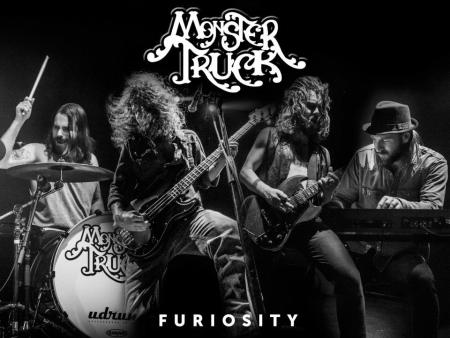
#339: Tyler and LeBrain episode two – Monster Truck & More

1a a a a a a a a a a a a monster furiosity live

RECORD STORE TALES Mk II: Getting More Tale
#339: Tyler and LeBrain episode two – Monster Truck & More

Missed the last episode of Tyler and LeBrain? Click here for episode one: Nickelback, and get up to speed.

Today’s subect:  Continuing our Nickelback discussion, Tyler and I turn to a controversial comparison: Do Nickelback and Monster Truck sound the same?  Listen to what we have to say, and leave your thoughts in the comments.  Enjoy.

*NOTE: I got the name of the Fu Manchu song and album wrong.  It’s “Saturn III” from The Action Is Go.  

#328: Slowly Going Deaf? (RSTs Mk II: Getting More Tale)

RECORD STORE TALES Mk II: Getting More Tale
#328: Slowly Going Deaf?

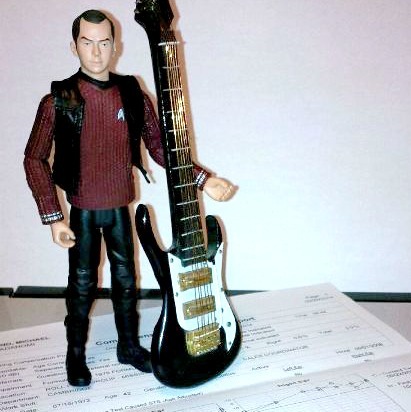
IMG_20141012_062958

I’ve been listening to music for as long as I can remember.  I’ve been listening to rock music — and I’ve been told to turn it down — since I was 11 years old.  That’s 30 years ago.  Remember all those times your parents said, “Turn it down, or you’ll be deaf by the time you’re 40!”  Let’s see if that’s true.

I’m not the concert-goer that a lot of you are.  I’ve always had a thing about crowds, but I’ve definitely seen my share of loud shows: Black Sabbath & Motorhead, Helix and Deep Purple are not the kind of bands that turn it down.  In 1972 Deep Purple were declared by Guinness to be the world’s loudest band!  But I don’t enjoy the sheer earthquake noise levels you can get at a concert like that, so I’ve been using earplugs much of the time for almost 20 years.  I started wearing them shortly after seeing Kiss in ’96.  I find this cuts a lot of the noise, and renders the concert to a volume more akin to a loud home stereo.

Where I’m most guilty of playing it too loud is the car.  Sometimes I don’t realize just how loud it is in there until I start the car in the morning, having left the stereo on at full blast.  I seem to turn it up, turn it up, turn it up…and get used to it.  Like a frog in cold water that you begin to slowly heat to boil, I become accommodated to the volume of the rock.  So that would concern me, where hearing loss is concerned.

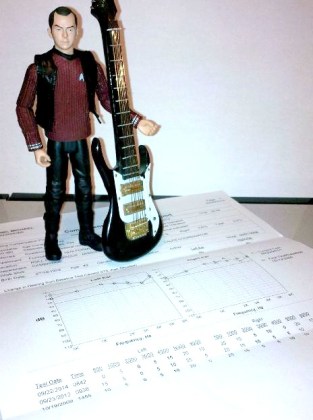
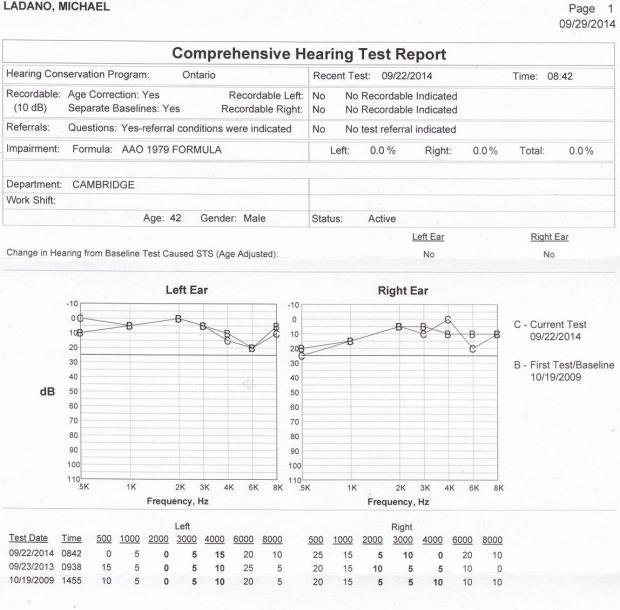
How much hearing have I lost?  I completed a hearing test at work a short while ago, and have received the results.  Using a 2009 baseline as the comparison, it looks like it’s barely changed at all!

Here’s how the exam worked.  A mobile hearing test truck pulls into the parking lot and we take the hearing tests six people at a time.  Each one of us enters a soundproof booth, which look like we’re sitting in the escape pods of a spaceship, especially after we don our special noise-cancelling headphones.  Unfortunately it’s not a perfect setup.  I and several others could hear the beeping of forklifts and tow motors in the yard, through the booth and headphones.  This doesn’t help when you’re supposed to push a little button at the sound of a beep in your ears.  The test took about five minutes to complete and the results came back about two weeks later.  And here they are.  I don’t know what half this stuff means, but I’m told I have no major loss.  Alright!

TEST

Part 310: Logos Galore

RECORD STORE TALES Part 310: Logos Galore

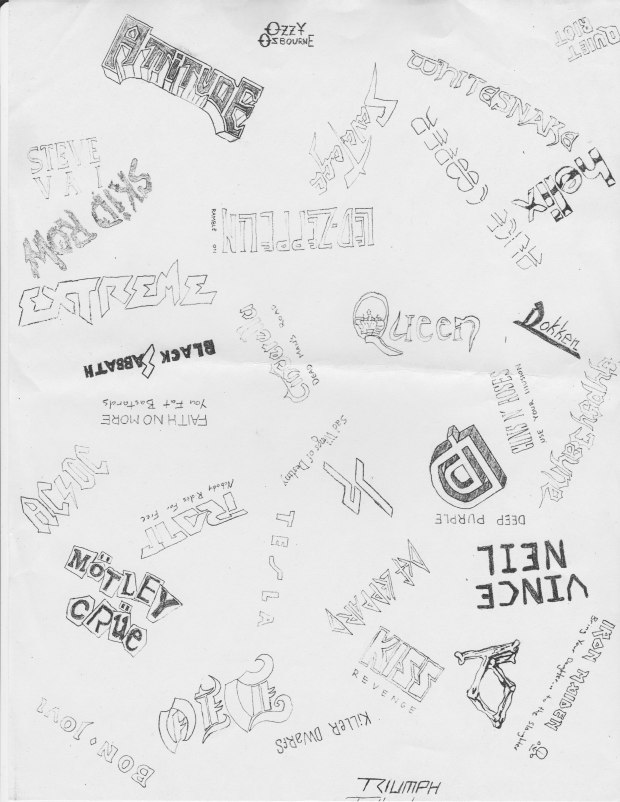
This subject came up in discussion a few months ago: Did you used to draw band logos on all of your stuff? Sure you did! If you’re reading this blog, then you’re a music lover, and all true music lovers have scrawled a logo on something at least once.

I found a single page with dozens of my old hand-drawn logos. This goes back to my first days at the Record Store!  Some are good, some are shite, some aren’t even the real logo!   I think the TS “bone” logo looks pretty good, and I’m going to give myself props for using obscure versions of the Kiss and Helix logos.

LOGOS_0002