Post-Rainbow, Joe Lynn Turner embarked upon a solo career. With the last Rainbow drummer Chuck Burgi on hand, Joe debuted his solo self with Rescue You in 1985 on Elektra. Roy Thomas Baker, best known for his work with Queen, worked on the production. All songs were written by Joe and guitarist Alan Greenwood. The direction was heavy on keyboards, and sampled drum sounds. The only thing in common with Rainbow is the voice.
That voice cannot be mistaken. Nobody can sing soul-driven broken hearted AOR rock like Joe Lynn Turner. Opening track “Losing You” fits this description like a glove. The samples and keyboards are occasionally distracting, but the melodies are strong. Joe has always been a fine writer. Perhaps Journey should have knocked on Joe’s door for some help when they were struggling to come up with Raised On Radio. The second song, “Young Hearts” is pure pop rock like Steve Perry did on Street Talk in 1984.
“Endlessly” was the single/video, a keyboard rock ballad, and a decent one at that, but it is overwhelmed by the title track. “Rescue You” is once again very keyboard heavy, but rocks better than anything else on the album. It has a European flavour, sounding a bit like some of the material Glenn Hughes was doing in the 1980s. Back to the Americas, “Feel the Fire” is a bit limp, but sounds like something that could have been played on radio.
The LP continued on side two with “Get Tough” which isn’t that at all. The toughest thing about it is Burgi’s excellent drumming at the start. The bassline sounds like “Livin’ on a Prayer” but before that song was ever conceived. One gets the feeling that many of these songs could have been hits if only recorded by someone more famous. “Eyes of Love” is a decent moody mid-tempo song, and Joe sounds awesome on it. “On the Run” is a bit more upbeat, boasting a strong chorus that’s as good as anything on Slippery When Wet. Moving into Purple territory, “Soul Searcher” could have fit in well on their Slaves and Masters LP. One almost aches to hear what Blackmore and Lord would have added to it. Going into the closer, “The Race is On” really has the life sucked from it with the keys and samples. You can distinctly hear a heavy blazing rocker desperately trying to get out. The recorded song sounds half-arsed, with those unnecessary keys taking up valuable sonic ground.
Not a bad solo debut from Joe, but certainly inferior to the Rainbow that came before and the Purple that came after.
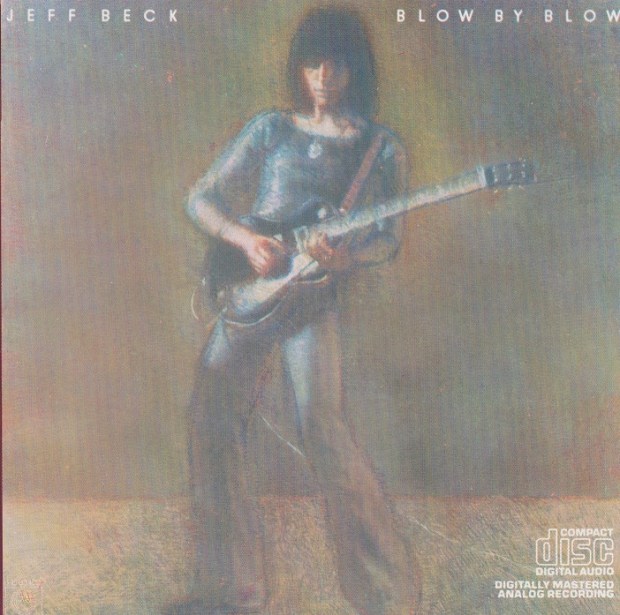
Jeff Beck’s first solo album, Blow By Blow, was co-produced by George Martin. The talents of both need no elaboration. A guitar god and “the” producer’s producer were bound to make something special together. With an ace quartet (Max Middleton on keyboards, Phil Chen on bass and drummer Richard Bailey), there were no weak links.
Blow By Blow spans many musical genres, all augmented with Jeff’s sharp and slippery fingerwork. Funk, jazz, blues, Carribean and progressive rock all collide in the grooves. The songs are instrumental hybrids of styles, but Jeff keeps it consistent. His guitar speaks. There really isn’t a better way to describe what he does with tone, technique and technology. There is even an uncredited Stevie Wonder cameo on “Thelonius”. If you can’t get enough funky clavinet, you’ll love Blow By Blow.
This albums is tops in almost every conceivable measure. The drum rhythms and bass grooves are hard hitting and relentless. Musicianship like this is rare and valuable. Without Jeff Beck there could be no Steve Vai — this, I firmly believe.
Play Blow By Blow, and then play it again. Thanks to George Martin’s fine musical sensibilities, it reveals new nuances each time. A complete triumph.
5/5 stars
This has been a 200 word review in the tradition of the#200wordchallenge.
The scene: Earth, post-Rapture. A seedy bar somewhere in America, haunted by the few remaining survivors. In walks a cloaked figure, here to recruit the only man who can help him defeat the Antichrist: former CIA agent Stan Smith. On the jukebox in the futuristic post-apocalyptic watering hole: “Barael’s Blade” by The Sword. (American Dad season 5 episode 9 – “Rapture’s Delight”)
Sounds bizarre, right? Seth MacFarlane’s American Dad has always usedmodern rock musicin interesting ways, and this wasn’t the only use of music by The Sword on that show. “Iron Swan” appeared in an episode called “Minstrel Krampus” (also featuring soul crooner Charles Bradley). Interestingly, not only are both these appearances in rather twisted Christmas episodes, but both songs were drawn from The Sword’s debut long-player, Age of Winters.
The doomy riffs of opening track “Celestial Crown” immediately recall early Black Sabbath circa 1970-72, but drawn out, slowed down, grinding heavy like a glacier carving its path through a mountain. J.D. Cronise’s howling vocals break the ice on “Barael’s Blade”, but the assault continues right on to “Freya”. This track, the ogre stomping “Freya”, wields multiple guitar riffs as heavy as the thunder of an avalanche. The Norse goddess of fertility is also the goddess of war and death. “Freya” brings the sonic conflict to your speakers.
When the “Winter’s Wolves” arrive, your senses are already overloaded by the riff-heavy metal. “Wolves” centers on a heavy drum section, like Bill Ward on ephedrine. Almost as if part of the same song, “The Horned Goddess” reverberates like a coda to “Winter’s Wolves”, different yet solidly in the same icy field. “The Horned Goddess” soon transforms into a stampede of mammoths making their last stand. Hypnotizing lead vocals welcome you into this hazy landscape of sound.
Acoustic instrumentation brings “Iron Swan” a different aura, like the Beatles via The Sword. Then it immediately launches in a thrash metal “War Pigs”, as if all the speedy chops the band had in storage were being used up right now at this very moment. Epic only touches on what “Iron Swan” is, as there is so much riffery that it becomes overwhelming. Scientific studies* have shown that the human memory can only retain so many riffs at one time, and so “Iron Swan” becomes like a wave of them hitting your senses one after the other.
Painting of an Aurochs (Wikipedia)
The Aurochs, a part of European megafauna until their extinction in the early 1600s, were the direct ancestor of the modern domestic bovine whose products millions of people consume every day. It is the Aurochs you see in cave paintings today. The Sword have given us a seven-minute-plus “Lament for the Aurochs”, and we do not forget the impact that mankind has had on the ancient land we inhabit. Although back-breeding has produced Auroch-like “Heck cattle”, we shall never feel the ground shake with a herd of Aurochs again.
“And none may see again the shimmering of Avalon, Or know the fates of all the races man has cursed, Long gone are the ages of the alchemists, Now there are none who know the secrets of the earth.
“Lament the passing of the Aurochs, And the slaying of the ancient wyrm, Would you dare meet the gaze of the basilisk, Or face the flames as the phoenix burns?”
The Aurochs give way to an epic instrumental “March of the Lor”, another exercise in maximizing potential riffage. When “Ebethron” arrives to end the album with a hammering blow, it is a mercy killing. Age of Winters is almost non-stop, all-in, nothing but riffs and pounding through its entire length. That in mind, it only takes a short while to recover, and hit play one more time….
I look forward to exploring more of The Sword’s discography.
4.5/5 stars
Look for a review of album #2, Gods of the Earth, soon.
“The best revenge is to live well.” — Don Dokken’s liner notes. Passive aggressive much?
Dokken imploded in 1989 not with a bang but a whimper. Rather than remembering the live album they finished with (Beast From the East), people recall the animosity and bitter attacks in the rock press. George Lynch and Mick Brown began Lynch Mob, while Jeff Pilson formed War & Peace. Don Dokken meanwhile was cooking up a hot new band. The only issue was the name. The ex-members, who owned a stake in the Dokken name, refused to let Don use it. They also shot down the names “Dokken II” and “DKN”. (Reportedly Dokken was told if he wanted to just use the vowels “OE” for his new band, that would be fine with the others!) Don was understandably upset that he couldn’t use his own last name for his name, so he opted to bill himself as Don Dokken the solo artist.
His solo band was a killer. Fresh out of Europe with a smash hit album under his belt, John Norum joined on guitar. Billy White from the thrash metal band Watchtower was the second guitar player, giving Dokken a double guitar lineup (or three if you count Don himself). King Diamond’s Mikkey Dee was aboard on drums, several years away from joining Motorhead (and now Scorpions). Rounding out the band was veteran Accept bassist Peter Baltes, who played with Dokken in their earliest days.
With all this burning anger coupled with tremendous instrumental firepower, one might expect Don to come back rockin’ harder than ever. His solo album Up From the Ashes was a down-ratchet from Dokken, slightly, with an emphasis on melodic rock. It did however continue the core Dokken sound, with some biting and very Lynch-like guitar riffs.
Entering with the kind of jagged riffs that made Dokken famous, “Crash ‘N Burn” sounds almost exactly like Don’s old band. Hard rock, smooth vocals, and six-string acrobatics. There is no familiar Jeff Pilson backing vocal, but Peter Baltes and John Norum get the job done. The incredibly impressive guitar histrionics are clearly not George Lynch, but fans will love what John and Billy White cooked up. A strong follow-up called “1000 Miles Away” sits in a comfortable mid-tempo rock zone. It’s not a ballad, it’s not a rocker, but it’s somewhere in between. Hit material. The album’s single was a track called “Mirror Mirror”, with a stuttery Van Halen riff. The lyrics are very telling:
“Mirror mirror, on the wall, Seven years, I survived them all, Mirror mirror, tell me more, If that was love, then love is war.”
Dokken had a roughly seven-year long life as a recording band, so think what you will.
A lot of Up From the Ashes fits into a nice little hard rock box, a little smoother around than edges than classic Dokken, but strong as ever. “When Some Nights” has a similar vibe to “1000 Miles Away”, and there are many others. No real weak songs abide within. There are only a few that are head and shoulders standouts. Among these is “Living a Lie”, a sharp Norum co-write with a Europe-like sound. Also up there, “Give It Up” is a brief blast of rock. “Stay” leans in a slightly more pop direction, successfully so.
Drony ballads are less impressive. “When Love Finds a Fool” is fortunately the only one, which does at least boast some impressive musical contributions from all the players. The momentum is killed by starting side two with this slow Scorpions-wannabe. Another issue is a slightly damp production, which makes the drums sound woefully underpowered. This is a shame since Mikkey Dee is such a drum demon.
With Up From the Ashes, Don re-established himself. Nobody could accuse him of leaning on George Lynch. With the benefit of 20/20 hindsight, this band really should have been called Dokken.
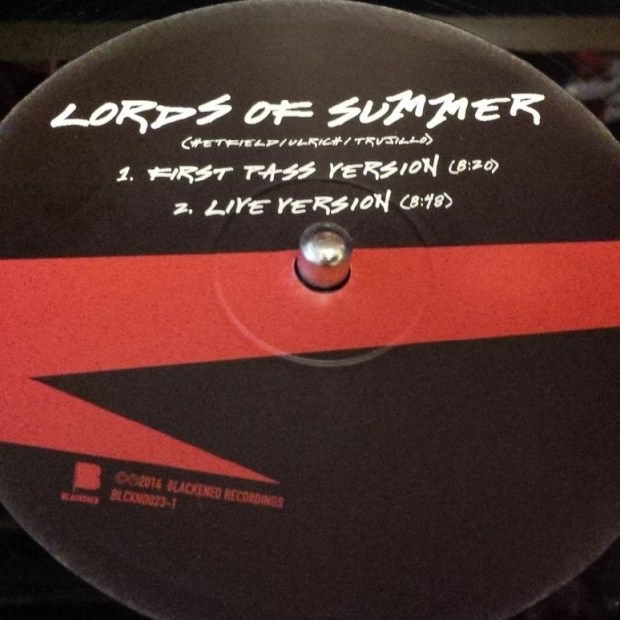
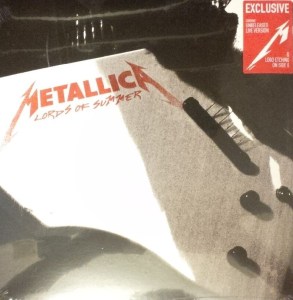
METALLICA – “Lords of Summer” (2014 Blackened Record Store Day single, additional download versions)
This past Friday, Metallica ended the eight-year long wait for a new album and put out the sharp-edged Hardwired…To Self-Destruct. If you go for the deluxe edition (a measly $16!) then you’ll get the full 78 minute studio album and a bonus CD (to be reviewed later) with another 14 tracks. That’s another 79 minutes of metal for a grand total of $16. The value is insane.
Cast your minds back to 2014. Metallica, embarking on a summer tour, released a new single called “Lords of Summer”. The concept of “Lords of Summer” was pretty simple. It’s a song about touring season, and it was one of the new pieces of music that the band were working on for the next album. Ultimately, a slightly shorter and re-recorded “Lords of Summer” was included on the bonus CD for Hardwired. The vinyl single (Record Store Day, limited to 4000 copies) has the original “First Pass Version” (8:20). This was also made available via download. If you’re already familiar with “Lords of Summer” then this is the version you know. The “First Pass” is not as polished as Hardwired, but similar in direction with the same focus on metal riffs and melody. Like much of the album, “Lords of Summer” careens from riff to riff blasting away at different tempos. While not one of Metallica’s most remarkable songs, it has some cool individual riffs cooked up within it.
For the sake of completion, we should also discuss the “Garage Demo Version” of “Lords of Summer”. This was included as a bonus track with Metallica’s official live downloads from that tour. It was first played in Bogota Columbia, March 16 2014. The “Garage Demo” (also 8:20) is different recording from the “First Pass”; very similar but even rougher. Fans familiar with Metallica’s usual demos know that they are often so rough that the lyrics are not yet in place. This time, the song was already fully formed in its demo stage.
The Record Store Day vinyl single contained a bonus live version, recorded in Rome on July 1 2014. By that time the band had been playing it all summer, so it’s tight. Kirk’s solo is drowned out in the mix, but of course you can hear the drums loud and clear. Compare this to the version in Bogota, which captures the song played live for the first time ever. The arrangement is the same, but it’s still coming together in Bogota. The Roman version demonstrates that practice makes perfect. But why stop there? There are a total of 33 different live versions available for download on Metallica’s site!
There is one last bonus, which is the etched B-side on the Record Store Day vinyl. Admittedly it looks pretty…but it’s just an “M”. It’s minimalist cool, but what happened?…they couldn’t afford to etch the etallica?
For this review, we listened to the following:
“First Pass Version” (8:20, available as single download or on vinyl Record Store Day single)
“Garage Demo Version” (8:20, available with purchase of a concert at LiveMetallica)
July 1, 2014, Rome Italy (8:48, available on vinyl Record Store Day single or for download at LiveMetallica)
March 16, 2014, Bogota Columbia (9:18, available for download at LiveMetallica)
With 31 more live versions online, plus the new album version at 7:09, there are in total 36 official versions of “Lords of Summer” out there to consume. Happy hunting.
The ever-polarising Metallica are back. This time, Metallica may have finally released an album that pleases everyone. Amazon averages are remarkably high. Fans seem to be willing to forgive past mis-steps. Hell, Metallica are even back on Napster in 2016!
With Hardwired…To Self-Destruct being a long musical journey, it will naturally take time to absorb. It’s easy to imagine that you could review this album a year from now and have a whole new set of thoughts to share about it. Ultimately, Hardwired…To Self-Destruct is mostly strong throughout with few moments that drag. It does play a tad on the long side, not even including the third bonus CD. At 78 minutes, the album proper is actually only about as long as Load. The difference in the listening is that Load was a very diverse album of rock stylings, but Hardwired is full-on classic sounding Metallica through its entire length. There are a few back alleys previously unexplored, but all solidly within the realm of heavy metal.
The direction is not that dissimilar from Death Magnetic, just refined. There are many traditional metal riffs, Maiden-esque and sweet. You will discover several album highlights. There is only one track, “Am I Savage?”, that hasn’t hit the mark yet. Current contenders for favourite songs include “Hardwired“, “Atlas, Rise!”, “Now That We’re Dead” and closer “Spit Out the Bone”. Jessie David, metal specialist at 107.5 DaveRocks, says “Murder One” is her outstanding track. “It’s killer,” she warns. Each listener will likely add their own to this list. It is probable that every single track will have its fans, because none of them suck.
Many will want to know how the album is sonically — is it overdriven? The “loudness wars” took their toll on the last album. The best way to answer that is visually, so check out the waveform of “Hardwired” in Audacity.
It’s pretty loud, but not quite as bad as Death Magnetic.
Hardwired…To Self-Destruct will continue to evolve in the ears of listeners as time goes on. A provisional rating may change at any given time. But there is no question that Metallica are still able to stir the molten iron souls of fans with great new songs and performances. They are Metallica, and that seems unlikely to change.
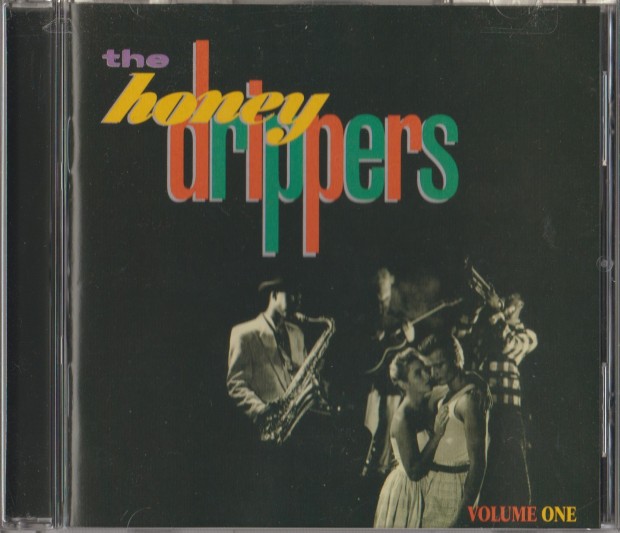
THE HONEYDRIPPERS – Volume One (1984 Atlantic, 2007 Rhino reissue)
In 1981, Robert Plant felt like playing some old fashioned rock and roll again. He assembled a group of friends including Jimmy Page, Jeff Beck, Nile Rodgers, Dave Weckl and Paul Shaffer. With a handful of covers ready to go, The Honeydrippers Volume One EP went top ten in the US and Canada. I have now officially bought this EP four times: First time on cassette, then vinyl, then CD, and now finally this remastered CD with one bonus track. One bonus track is all they could be bothered to beef this up by. A grand total of 22 minutes, up from 18.
Originally released in 1984, in a lot of ways this was as close to a Page/Plant reunion as we were likely to get in the 80’s, although this is very different from Led Zeppelin. These are classic golden oldies, rock and roll and R&B hits: the sound like guys like Plant and Page grew up with. So get up, get down and dance!
“I Get A Thrill” is an excellent track with which to open the EP. It’s a great song with wonderful backing vocal harmonies. A nice fast one to dance to. Everybody should know “Sea of Love”, the lush, elegant slow-dancer. Today it is better known than the Phil Phillips original. The music video might be most notable for the speedo-wearing Frank Zappa lookalike on the xylophone. Ray Charles is last for side one: “I Got A Woman”. It’s breakneck fast, and might be too much for those on the dance floor cutting a rug! Don’t go and break a leg….
Does humour belong in music?
Plant croons his way through “Young Boy Blues”, a Phil Spector oldie done justice by Robert’s rich voice. It’s as lush and brilliant as “Sea of Love” and easily as good as the better-known single. Back to cutting a rug though, you’d better get up for “Rockin’ At Midnight”, another hit single for the Honeydrippers. Jeff Beck nails the perfect guitar solo in the midst of a boppin’ horn section. Rock perfection!
The one measly bonus track is a live version of “Rockin’ At Midnight”. It’s shorter than the studio version of the song by two minutes. It’s hard to fathom how Rhino only had one bonus track to include. Plant performed live with the Honeydrippers numerous times. To think they only ever recorded one track live is pretty hard to believe.
This remaster (released in 2007 as part of the Plant remasters) sounds great, and despite the short running time, is worth your cash as long as you’ve never bought it on CD before. It’s fun, it’s warm, it’s a great listening experience and every one of these tracks is a bonafide classic. It’s kind of odd hearing Plant’s distinctive squeal on some of these songs, but it actually works.
4/5 stars, but only because they could have included more bonus material.
The Tom Werman-produced Girls, Girls, Girls album is a bit underrated. Its weaknesses are fairly obvious, but its strengths are less appreciated. The Crue were coming off a bit of a stinker (Theater of Pain), so some changes were in order. The band dropped the makeup and spandex in favour of a tougher street-ready look. The intended direction this time was a bit of a combo of the first three Crue album. They wanted the rawness of Too Fast For Love, the heaviness of Shout at the Devil, and the sleaze of Theater. There was no reinvention of the wheel, nor was anybody in the band capable of that. Nikki Sixx was deep into a heroin problem at this time, barely focused on the music at all. This has been documented in his graphic book The Heroin Diaries. Much of his time was spent hiding in a closet with a gun, afraid of imaginary intruders.
As an audience in 1987, we really did not suspect that things were such a shambles behind the scenes. The band looked good, and sounded like they had rediscovered the skills of writing memorable songs. Case in point: opening track (and second single) “Wild Side”. Boasting the kind of rock groove that Motley made their trademark, “Wild Side” rocked. They even threw in a time change on the bridge. “Wild Side” was augmented with a cool music video, showcasing the Motley stage show in 1987. This included a spinning, upside down Tommy Lee drum kit. “Girls, Girls, Girls” was a video too, but it never saw airplay up in Canada. Too risqué for the frozen tundra of the north? It too was a hit, played live in concert right to Motley’s final show (opening number, in fact).
The album was rounded out by a number of cool, sleazy rock tracks and a couple ballads. “Dancing On Glass” kicks; it’s pretty much an autobiographical track about living in the fast lane. This is something the Crue were well acquainted with.
“Silver spoon and needle, Witchy tombstone smile, I’m no puppet, I engrave my veins with style.”
Since the cassette didn’t come with a lyric sheet, kids of the 80’s (or at least the parents of the 80’s) probably had no idea what Vince was singing about. The song is given some traditional rock cred with soulful female backing vocals and boogie piano.
“Bad Boy Boogie” continued the theme, this time with some tasty Mick Mars slide guitar instead of piano. “Better lock up your daughters when the Motleys hit the road.” The song is a series of sexual innuendos, cleverness put to the side in favour of blunt sleaze. “Got my finger in the pie, my hand in the cookie jar.” Aerosmith leaks through the grooves on “Bad Boy Boogie” which wears its influence on its sleeve. The good times continue to bounce on “Five Years Dead”, loaded with more of Mick’s greasy slide. It’s a similar song to “Sumthin’ for Nuthin'”, which is even more fun. This time Vince is a gigolo, getting paid for pleasure (sumthin’ for nuthin’)! “Leave the money where it’s easy to see,” he sings with glee. It’s brilliant Motley filth just the way you like it. Best of all is the smokin’ “All in the Name Of…”, which pours high octane fuel in the tank and opens ‘er up wide. It’s sleazier than sleazy: “She’s only 15, she’s the reason, the reason I can’t sleep. You say illegal, I say legal’s never been my scene.” Probably a true story….
There are only two ballads, one of which is just 1:26 of filler (“Nona”). The other is the very entertaining “You’re All I Need”, which sounds inspired by Alice Cooper. It is a delicate piano based murder ballad, like the Coop has done so well. “You’re All I Need” isn’t Coop quality, but on the Motley scale it’s one of their better ballads. It has an anthemic quality, a pompous melancholy. The lyrics doomed it to semi-obscurity, which is too bad, since on the whole it’s a stronger song than the better known “Without You”.
Unfortunately for this album, “Nona” was not the only filler. An excruciating (and live?!) cover of “Jailhouse Rock” ends the album on a pretty putrid note. It’s not good at all, and reeks of weakness. Why would you end your new album with a cover, and a live cover at that? Only because you didn’t have enough quality tunes to make the cut.
The 2003 remastered edition of Girls, Girls, Girls came with bonus tracks, like all the albums in the Crucial Crue collection. Three of them are instrumental versions, bordering on filler material. Motley Crue are not Rainbow or Marillion — you don’t get much out of an instrumental version. “Nona” did once have a rock section in its longer demo form. More entertaining than the demos is the band and Tom Werman intro. Funny stuff. Then there is a long sought ballad “Rodeo”. This song was first mentioned in band interviews in 1989, when it was mentioned for possible inclusion on a never-released album called Motley Crue: The Ballads. The demo here is not very well fleshed out, but you can hear that it had a cool chorus ready to go. Finally there is a live version for “All in the Name Of…” from Moscow in 1989. Fans may recall that Motley played at the infamous Moscow Music Peace Festival…shortly before Tommy attacked Jon Bon Jovi and ripped the shirt off his back. Peace and love, man!
Although the Crue were only firing on a couple cylinders at the time, they managed to piece together a worthwhile album. There are only two mis-steps, which are “Nona” and “Jailhouse Rock”. The remastered edition adds a couple more worthwhile bonus tracks to extend your listening experience. Go for that one if you find it first.
3.5/5 stars
Side one
1. “Wild Side” 4:40
2. “Girls, Girls, Girls” 4:30
3. “Dancing on Glass” 4:18
4. “Bad Boy Boogie” 3:27
5. “Nona” 1:27
Side two
6. “Five Years Dead” 3:50
7. “All in the Name Of…” 3:39
8. “Sumthin’ for Nuthin'” 4:41
9. “You’re All I Need” 4:43
10. “Jailhouse Rock” (live) 4:39
2003 Remastered Edition bonus tracks
11. “Girls, Girls, Girls” (Tom Werman & band intro, rough mix of instrumental track) 5:38
12. “Wild Side” (rough mix of instrumental track) 4:06
13. “Rodeo” (unreleased track) 4:14
14. “Nona” (instrumental demo idea) 2:42
15. “All in the Name Of…” (live in Moscow) 5:02
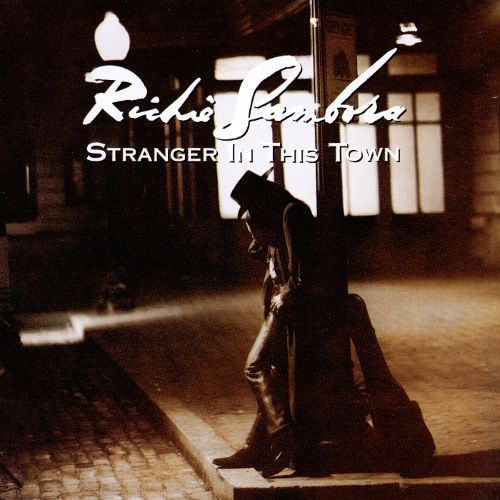
RICHIE SAMBORA – Stranger In This Town (1991 Mercury 2 CD deluxe)
Bon Jovi went on hiatus after the lengthy New Jersey tour. Their future appeared uncertain. Jon had released his first solo album, a soundtrack called Blaze of Glory. Alec John Such was reportedly opening carwashes in Hungary, although that was probably a joke answer in a magazine interview. Meanwhile, the rest of Bon Jovi (Richie Sambora, David Bryan and Tico Torres) gathered in the studio to record. With Tony Levin on bass and Chapman Stick, the group assembled Richie’s first solo album, Stranger In This Town. Although fans were worried about a possible split, there was much excitement for Richie to have a chance to sing his own songs. Adding to the hype, Eric Clapton appeared as a special guest. (Randy Jackson played bass on one song, “One Light Burning”.)
Sambora seemed to determine to fly his own colours. Predominantly, that’s blue, as in the blues. He also mixed in soul, pop, and rock to create an album that wouldn’t alienate any Bon Jovi fans. David Bryan contributed songwriting, and there is even one Bon Jovi song in the mix. It’s not a guitar album, although it need not be stated that the guitar playing on this album is brilliant. Richie went for feel and atmosphere rather than flash.
This is apparent on opening track “Rest in Peace”. It’s not really a full-fledged song, but more an introduction to the album. It even has listening instructions: “Turn down the lights…light a candle…welcome.” That doesn’t sound very rock and roll, does it? But it is good advice. That’s the kind of album this is. “Rest in Peace” is loaded with soul, and this merges with the pop rock on “Church of Desire”. A song like this wouldn’t have worked with Bon Jovi. It has more soul, and its quiet production lets the music breathe more than Bon Jovi songs do. It’s a brilliant track, and Richie’s solo just blasts. Different from Bon Jovi, but accessible for Bon Jovi fans: it’s an ideal song for a first Sambora album.
The blues single “Stranger In This Town” sounds like something Richie had been aching to do for years. Backed by a choir of vocalists, this is Richie fulfilling some musical dreams. Both blues fans and rock fans should enjoy the middle ground where they meet on “Stranger In This Town”. As a single, it seemed to represent the image Richie was going for. This album has three singles in a row, making the first side a little more consistently strong. “Ballad of Youth” was the debut single, combining Bon Jovi’s anthemic melodies with Richie’s new laid-back vibe. It even has a Bon Jovi-like positive message. “Don’t waste your life away, thinkin’ ’bout yesterday’s blues.” The excellent third single was the synth ballad “One Light Burning” which almost sounds like Richie Sambora joined the Cars. For the programmed sounds and percussion, Richie said they had “about 100 computers” networked together. Oh, 1991! Though a ballad, it’s the centerpiece of the album.
It’s possible they intended “Mr. Bluesman” to be the centerpiece, but the lyrics are difficult to digest. When you write a song as a tribute to your hero, such as this tribute to Eric Clapton, lyrics are always the trick. Thankfully Mr. Clapton’s guest guitar appearance, though brief, does tell us the story. Hearing him rip on this blues ballad is like a searchlight cutting through the murky haze. But here’s the weird thing. Didn’t Eric find Brian May’s tribute song “Blues Breaker” embarrassing? Yet he appeared on this ballad?
“Rosie” is a Bon Jovi song that was heavily bootlegged, from the fruitful New Jersey sessions. It sounds like Bon Jovi, but Richie’s version has way more guitar. Unfortunately the Bon Jovi version has never been released. It was mysteriously not included on the Sons of Beaches demos that came out in 2014, even though the other songs were. One has to assume Jon didn’t include it on his set because Richie already had his version out. The next track “River of Love” is a title that has nothing to do with the Bon Jovi demo of the same name. This is the first and last really greasy rocker on the album.
It’s ballads from there out, but terrific songs nonetheless. “Father Time” (written with Desmond Child) is a melancholy rock ballad that Jon probably wishes he wrote. It’s a powerful song, like an amped up “One Light Burning”. Guitars burn up and down your spine while Sambora soothes your ears with his soulful croon. Tico and David provide the solid base upon which the song is built. Their expert chops are essential parts of the entire album. Things draw to a close on “The Answer”, an acoustic lullaby-like song that has a lot of heart. A sentimental ballad asking existential questions is an unconventional way to end an album, which is part of what makes it special.
Mercury did something unusual for the era, but very common today. They released Stranger In This Town as a single CD, and a 2 CD deluxe edition. The deluxe is housed in a long box, and has two bonus tracks. At the end of CD is “The Wind Cries Mary”, which saves fans from having to buy the atrocious Ford Fairlane soundtrack on which it originated. It’s a smoking Hendrix cover, and the best tune on that soundtrack. On the second CD you will find an almost 20 minute interview with Richie discussing the songs on this album. No revelations here; it’s really just an extended promo for the album. Half of it is music anyway…snippets of the same music from disc one! An OK extra, but the real bonus is “The Wind Cries Mary”.
The final extra, usually missing on the second hand market, is the metal guitar pick shaped pendant. It has Richie’s solo logo on it, but nobody’s going to be wearing this thing. All this is packed in the box, which is a beauty but awkward to store.
As an introduction of the “real” Richie to the fans, Stranger In This Town was a success. He differentiated himself from Bon Jovi, and also proved he could sing an entire album easily. Critically and commercially, the album was less successful. There were mixed reviews, with the rock press hung up on the soft songs. With the benefit of 25 years’ hindsight, Stranger has aged well, better than Bon Jovi itself.
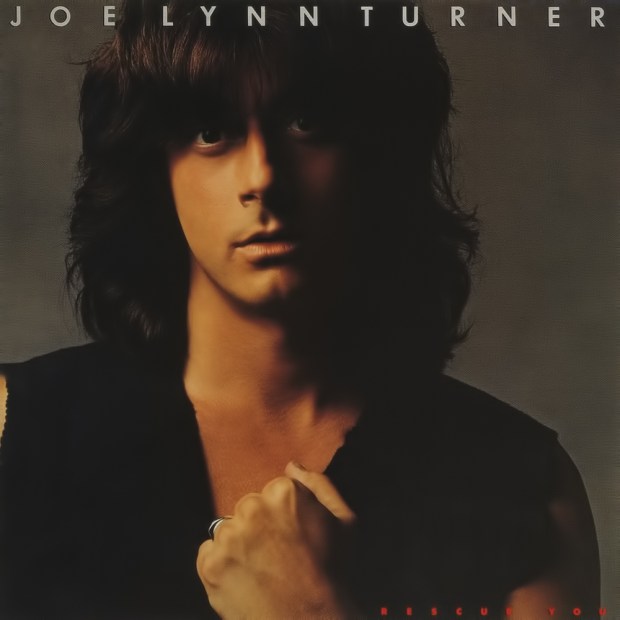
 JOE LYNN TURNER – Rescue You (1985 Elektra)







 DON DOKKEN – Up From the Ashes (1990 Geffen)




 METALLICA – Hardwired…To Self-Destruct (2016 Blackened)




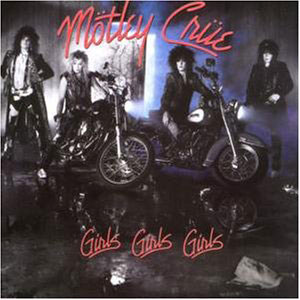
 MÖTLEY CRÜE – Girls, Girls, Girls (originally 1987, 2003 remaster)


You must be logged in to post a comment.