Now that you’re all down from your 420 high, it’s time to take it down low!
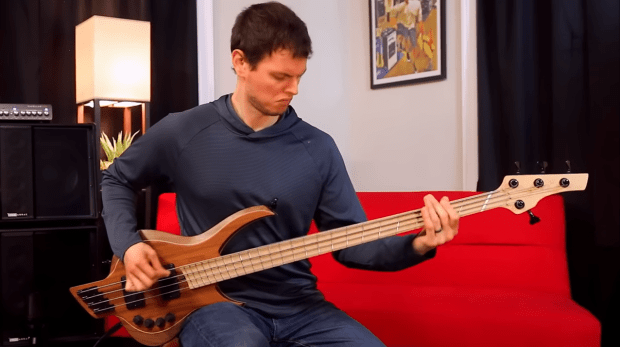
Nate Navarro’s new bass has an extra-long string length, enabling him to go lower than ever. Check it out! This is a 42″ scale Sub Octave Bass Guitar from Lignum!
Now that you’re all down from your 420 high, it’s time to take it down low!
Nate Navarro’s new bass has an extra-long string length, enabling him to go lower than ever. Check it out! This is a 42″ scale Sub Octave Bass Guitar from Lignum!
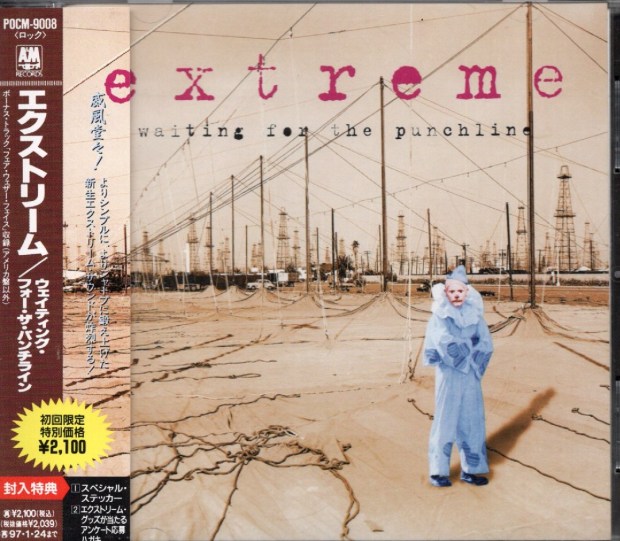
 EXTREME – Waiting for the Punchline (1995 Polydor Japan)
Let’s start with the bonus track! “Fair-Weather Faith” is only available here, on the Japanese pressing of Extreme’s fourth album. And it is…well, it’s probably not controversial to say it’s the weakest of the 13 (12 plus one unlisted) tracks. That’s why it’s a bonus track. Is there anything wrong with it? Hell no! But do you absolutely need it in your life? No. You can live without it. Be warned though that Gary sings his ass off, while Nuno plays it funky. It sounds as if this is one of the tracks with Paul Geary on drums. (Mike Mangini joined the band mid-album.) Like many Extreme songs, religion is the topic. Gary is critical of these who put on the act of believing for the benefit of those around them. Decent bonus track, but not especially mind-blowing.
(The rest of this review was previously published in 2017)
Sometimes you just gotta laugh. Extreme released two of their finest albums after grunge wiped the slate clean. Extreme were the punchline, but that didn’t stop them from making a smokin’ fourth album. In 1992 Nuno envisioned the next album as “really funky”, and there is some funk here. However Waiting for the Punchline was much more straight ahead: stripped down, no orchestras, no rap, just guitar rock through and through.
“There Is No God” sounds like an odd title from a band as Christian as Extreme were, but Gary Cherone has always been a lyrical champion. It’s not as simple as it appears, but the groove just lays waste. The next track “Cynical Fuck” turns it up further. It is pure smoke, and perfect for the decade it was written in. “Tell Me Something I Don’t Know” takes the soft/hard approach with a loud droning Nuno riff. It’s another brilliant song, and harder than what Extreme were doing before. Much of Waiting for the Punchline is driven by the bass and drums. The interesting thing about this is that drummer Paul Geary left during the making of this album, and was replaced by Mike Mangini who is now in Dream Theater. You hear two very distinct drum styles through the CD. Geary has a straight ahead approach, while Mangini is capable of just about anything. His first track is the single “Hip Today” and you can hear how his beats are anything but basic.
“Hip Today” is a good tune and a good indicator of what the album sounds like: Bass, drums, guitar. Listen to how the rhythm guitar drops out when Nuno solos. Just like the first classic Van Halen. The lyrics sound bitter as Gary warns the next generation of bands that their time too will end. Things slow down a little on “Naked”, before the side-ending instrumental “Midnight Express”. This is a truly brilliant track, proof that Nuno’s stunning plectrum practice has paid off. When it comes to acoustic guitar work in rock and roll band, Nuno is among the very best. “Midnight Express” gives me callouses just thinking about it.
Dark moods commence the second side with “Leave Me Alone”, a sentiment many of us understand. Don’t worry about me — I’m happy alone sometimes. Nuno uses volume swells a-la Van Halen’s “Cathedral” to create a nifty riff. Into “No Respect”, Nuno makes his guitar purr, while the rhythm section throws it into overdrive. “Evilangelist” tackles the religion questions again, with a funky riff and cool digitized chorus. The dark and heavy vibes give way to light shortly on “Shadow Boxing” and “Unconditionally”. Both tracks are brilliant but different. “Shadow Boxing” might be considered the “Hole Hearted” of this album, while “Unconditionally” leans towards “More Than Words”. Neither are re-writes, but those are the easiest comparisons.
One final surprise is the unlisted bonus track. It wasn’t on the cassette version, but you will find the title track “Waiting for the Punchline” after “Unconditionally” (or “Fair-Weather Faith” on the Japanese CD). There are two cool things about this. One: it’s an awesome track, much like the angrier stuff on side one. Two: it closes the album even better than “Unconditionally”. Great little surprise so don’t hit “stop”!
The thing about Waiting for the Punchline is that it’s a grower. The first couple listens, I thought “It’s not as good as their old stuff, but what is these days?” The new stripped down Extreme didn’t seem as interesting as the lavish one from Extreme III or the flashy one from Extreme II. After a few listens, different textures began to emerge, add their own colours and depth. Particular with the guitar work, but also the rhythms, there is much delight to be discovered here.
5/5 stars


 HOLLYWOOD MONSTERS – Thriving On Chaos (2020 Voice Music, Japanese import)
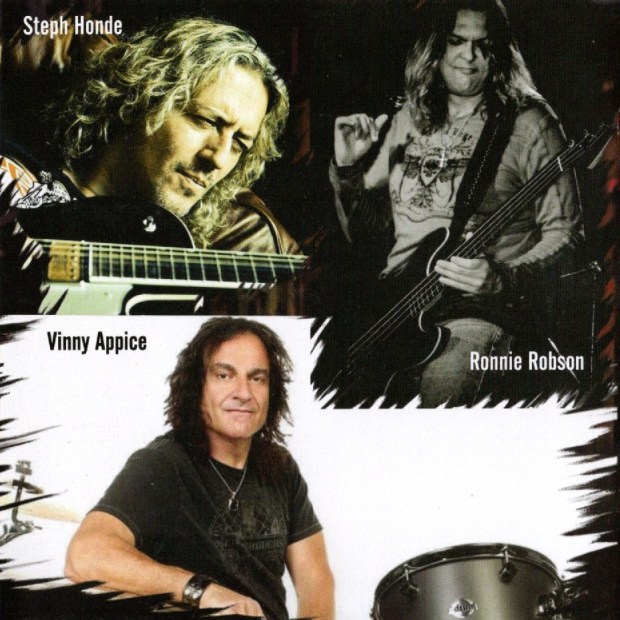
Supergroup? Or just a good time? Singer/guitarist Steph Honde, drummer Vinny Appice, and bassist Ronnie Robson gathered a load of friends and recorded a fun heavy metal album of originals and covers. There is also a healthy helping of Canadian content (such as Robson in the core trio)!
Opener “A Scream Looking For a Mouth” is a raging heavy metal track along the lines of vintage high-voltage Motorhead. Hell of an opener. Add Deep Purple’s Don Airey on guest Hammond organ solo, which just hits the right spot amidst all that raging. “Speak of the Devil” continues the heavy, though not the speed, thankfully, or you’d be seeing a chiropractor from all the headbangin’. A catchy chorus and solid riffing make it another instant winner. Solid metal. A chunky riff kicks off “Something Wicked”, a really fun uptempo rocker.
Things get slower and darker on the monumental “Running Up Hill”, which is instant hit material. Ted McKenna on drums. Instant classic, with a chorus that kills. Regardless of the daily struggles we face, Honde reminds us, “Never surrender!” It’s a message of positivity, and the best track on the album.
“Numb” is another good one, grinding out a riff slow an’ easy. The added keyboards provide texture. Even better is the beautiful acoustic ballad “In This House”. Honde has an excellent acoustic album called Empire of Ashes, and this track easily could have fit on it. Though he’s a rocker, he is exceptional at tender acoustic ballads.
The first cover is “I Don’t Need No Doctor” featuring Jim Crean on backing vocals. It kicks all the expected asses, and Honde’s guitar soloing is tasty as hell. Next up: Canadian content with the Goddo cover “Drop Dead”, featuring Greg Godovitz on co-lead vocals and Tommy Denander on lead guitar. It smokes, and that lead solo? Set phasers to stun!
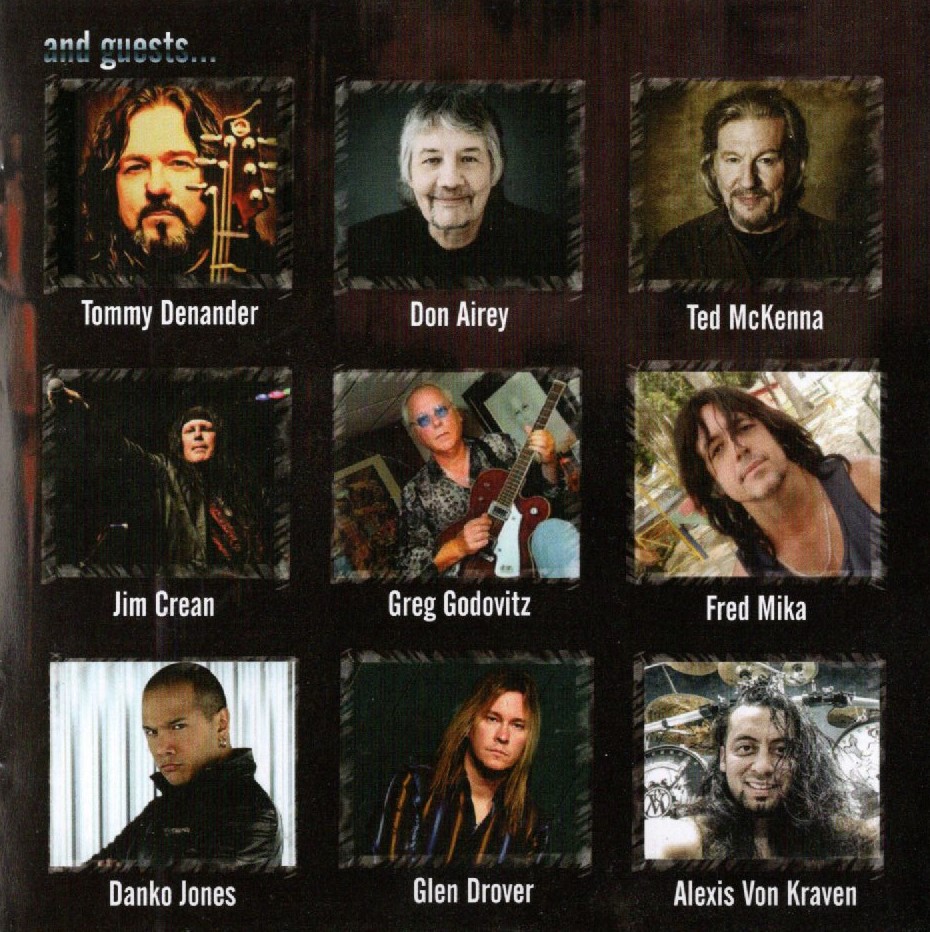 “Thriving On Chaos” is another impressive original. It has a slow, dramatic riff that is somehow familiar. Excellent songwriting, and hard to pigeonhole. It’s followed by a very Maiden-esque song called “Fortune Teller”, which has a vibe very similar to some of the tracks on Fear of the Dark. Fred Mika plays drums on this tempered-steel monster.
The final cover (and Canadian guest) is the Thin Lizzy cover “Cold Sweat”, as sung by Danko Jones. Danko is the perfect guy for it! He nails the Phil vibe, yet with his own snarl. And the Steph Honde guitar solo? Call the fire department! This alchemy of Jones/Honde/Appice/Robson is pure combustion. You can seldom go wrong with a Thin Lizzy cover, but here everything goes so, so right.
Always a surprise when the Japanese bonus track is one of the highlights. The heavy, thumping “I Am the Best You Can Get” slays! “Heavy” is an understatement! Vocalist Steph Honde goes from scream on the verses, to growl on the chorus. The droning chorus is the best part! This one features (Canadian) Glen Drover on lead guitar and Alexis Von Kraven on the relentless drums. The Japanese CD even comes with a printed interview with Steph Honde – though I cannot read Japanese!
Pick it up – shell out for the Japanese if it’s within your means.
4/5 stars


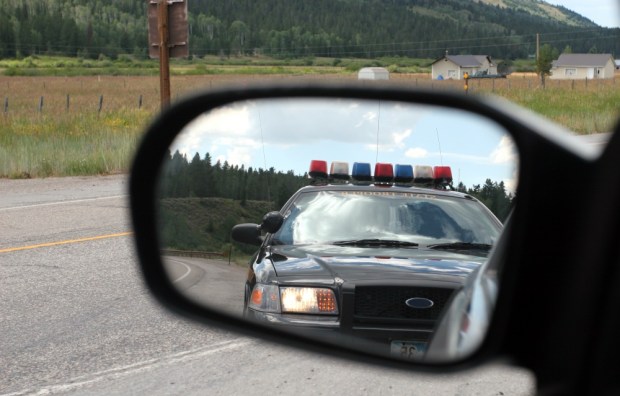
My dad is back with another classic. Watch and see!
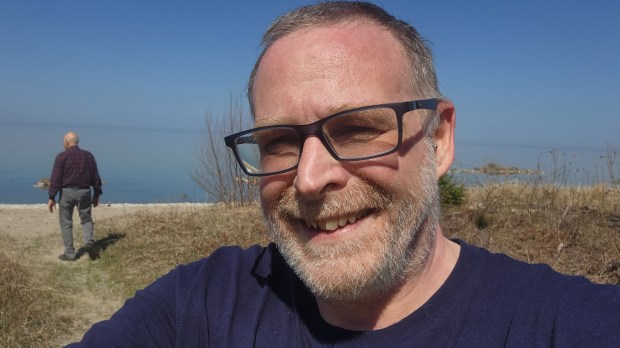
Jen and I made the trip up to the cottage with my dad on Saturday April 15 – opening weekend. A full two weeks earlier than 2022. I finally feel alive again! I’m back, baby! I’m back.
Music on the trip up:
Music on the trip back:
There was only one hiccup on the way home. I almost got a speeding ticket. The only reason I didn’t was the officer had to respond to an emergency immediately. Whew. That was close.
The lake levels are down this year and the water smelled terrible. We can hope that this changes in the summer, but there are no guarantees. The water may remain shallow and stinky. If so, we will have to go elsewhere to swim this summer!
Please enjoy this brief video of nature, beauty, and one weird-ass castle.
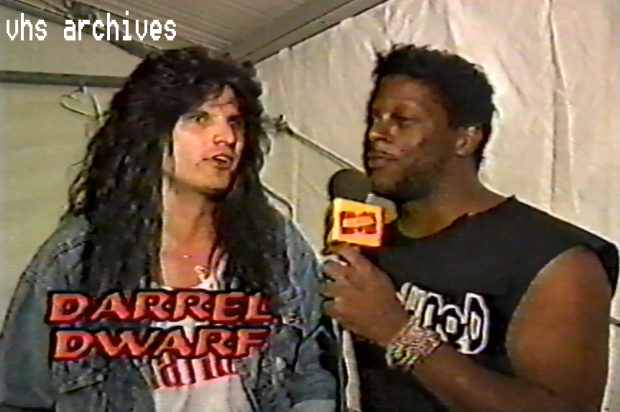
August 19, 1991. Judas Priest’s final show with Rob Halford for over a decade. Michael Williams caught Darrell Dwarf Millar of the Killer Dwarfs checking out Alice Cooper, Priest, Motorhead and more at Operation Rock and Roll! Darrell discusses working with the very busy Andy Johns for the next Dwarfs record, Method to the Madness, which was set to begin in L.A. in September of that year.
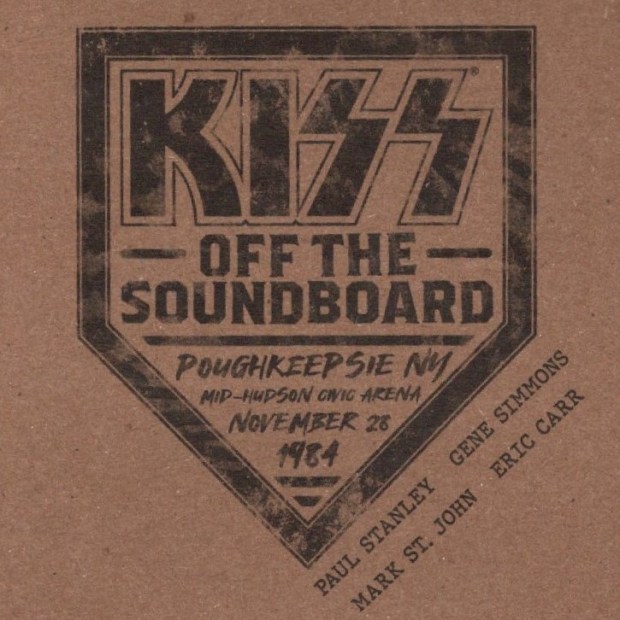

 – Off the Soundboard – Poughkeepsie NY 11.26.1984 (2023 Universal)
Are you getting sick of reading all the same complaints about the new Kiss Off the Soundboard CD from Poughkeepsie NY 1984, the fifth in this series?
Me too!
If you can’t appreciate the historical value of a Mark St. John show with Kiss, then I can’t help you.
If you didn’t know Kiss played these songs at lightspeed in the 1980s, then you never saw Animalize Live Uncensored.
And if you don’t know what an official bootleg is, then this CD is not for you anyway.
Actually, the only thing I’m really sick of is typing “Poughkeepsie”!
There are Kiss bootlegs with Mark floating around out there. I can’t vouch for the audio quality on those. This, I can tell you, is soundboard quality, which in my opinion is the best way to hear a live album. Unpolished, the way it was that night on the board. I love hearing the band make mistakes. I have no problem with the fact you can barely hear the bass on some tracks, and too much on others. The vocals are clear and each member is distinct in their singing. Whether you think Paul is too “erratic” or not, that’s personal taste.
The setlist is similar to Animalize Live. You won’t hear any Animalize deep cuts that were not on that video. Two songs are incomplete (“Young and Wasted” and “Rock and Roll all Nite”) due to tape issues but are included for their historical significance. No issues here. In fact, “Rock and Roll all Nite” might be better this way…it often drags on too long at the end of a show!
The jazz-influenced Mark definitely added his own style and twists to the solos, even simple ones like “Detroit Rock City”. There, he inserted an extra note or two to make it his. Mark was a shredder, and that was the direction Kiss wanted to go in at that time. It was the 80s. Bands had to have shredders if they wanted the kids to take them seriously. Mark wasn’t even Kiss’ first shredder, but he was certainly unique. There’s a lot of whammy bar, and some pretty wicked licks on songs like “Fits Like a Glove”. Now, before you get too excited, the “Guitar Solo” listed on the back cover is Paul Stanley’s familiar solo that he was playing during that era.
Mark aside, Eric Carr is a star on this album. He was a busier drummer than Peter Criss and he goes to town on songs like “Cold Gin” and “Under the Gun”. Fox fans will not want to miss this CD in their collection. Peak Eric. His drum solo will be familiar, yet will also most likely sound better than any version you currently own. Unfortunately he stops singing on part of “Young and Wasted”, which is one of the partial songs anyway, so no big deal. We have him singing that on Animalize Live.
Paul Stanley’s performance is pure rock and roll, and especially expressive on “I Still Love You”, but many have complained about the F-bombs dropped during his intro to “Love Gun”. Hey…check out the Animalize Live version for something naughtier than an F-bomb!
If you’re Kiss collector, this is ending up in your library regardless. Choose your format and go wild like the animals.
3.5/5 stars for the quality
3.5/5 stars as a “Kiss show”
5/5 stars for historical value and significance to the Kiss army


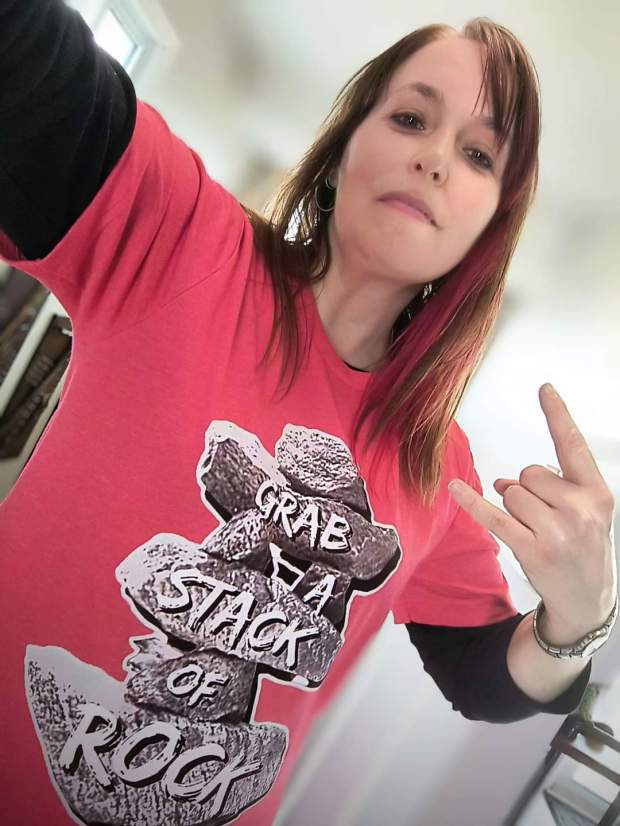
Just look at these handsome devils and one Dr. of Music!


Tonight I will be LIVE on Grant’s Rock Warehaus to discuss a forgotten 90s supergroup: the Neurotic Outsiders!
The 90s were a weird time. For all intents and purposes, one of the biggest bands in the world was gone: Guns N’ Roses. We had to settle for solo albums from Duff, Slash, Gilby and Izzy.
Matt Sorum and Duff McKagan teamed up with Steve Jones from the Sex Pistols, and John Taylor from Duran Duran, to form the punky supergroup Neurotic Outsiders. They made one album. One and done! But what an album it was. We’ll be discussing all this and more tonight on Grant’s Rock Warehaus!
7:00 PM EST

RECORD STORE TALES #1056: Spring Metal on the Other Side of Winter
I think many people share my sentiment that this winter was absolutely brutal.
Since ages past, it has always been a celebration when the sun emerges warmly after a long, cold winter. Memories flooding back. So many memories.
1986. On the back porch at the cottage, playing “Turbo Lover” and “Locked In”, freshly recorded in mono from MuchMusic, from the brand new Judas Priest album Turbo. I was probably told to turn it down….
1987. On my bike. I had received The Final Countdown by Europe for Easter. It was difficult for me to get into; different from what I was used to. I remember cruising down Carson Ave on my bike with that album in my head. Best track for me: “Cherokee”. I loved the keyboard hook and the chorus.
1988. I was given Skyscraper by David Lee Roth for Easter. It became a “warm weather album” that spring, played many times weekly in a Walkman while riding a bike or strolling through the neighbourhood looking for girls. (Not that I ever found any.) Memories of setting up my ghetto blaster on the front porch, with Skyscraper serenading the street. That cassette wore out rapidly. It was one my first CD re-buys a couple years down the road (spring ’91).
1989. Trying to look cool, and practicing my guitar on the front patio for the world to see. I was never any good, but I am sure that “Mary Had A Little Lamb” really delivered the spring-like vibes I was laying down. In my earphones were things like New Jersey by Bon Jovi, House Of Lords’ self-titled debut, Quiet Riot’s latest with Paul Shortino on lead vocals. Amazingly though, 1987’s Hysteria by Def Leppard was still in my Walkman. The album had incredibly long legs. I was hoping for one more single, which never came to be. I picked “Love and Affection” as my favourite in ’89. Then, I had some new buys! We had just joined Columbia House. I split the membership with my sister and picked up these treasures that rocked my whole spring:
Shortly after the first seven, I added Triumph Stages to the list, which carried on rocking me into the summer of 1989. That year was one of the most critical in my life as a music fan, and the spring motherlode from Columbia House had a lot to do with it.
1990. I was now working at the local grocery store, Zehrs. Short-haired and geekier than ever, I was really getting in Black Sabbath. Pushing the shopping carts in long lines, singing “Sweet Leaf”, but having no idea what it was about. When I declared it as my favourite Black Sabbath song, people reacted strangely and I didn’t know why. I guess they thought I was into the pot! I thought the “Leaf” of the song was a girl named Leaf.
1991. The end of highschool loomed…I felt very free. Very excited about the future. The future of hard rock. Little did I know! I was listening to a lot of the new Mr. Big that spring, an album called Lean Into It. I thought they had really refined their sound. I had also taken the dive into indi rock, and Raw M.E.A.T was absolutely one of my favourite CDs that spring.
Good place to end this trip down memory land: happy memories, all of them! I wonder what will be dominating the car stereo with the windows down this spring?


 mikeladano.com