rarities

REVIEW: Journey – Time3 (1992 box set)

scan_20161015-2JOURNEY – Time3 (1992 Sony 3 CD box set)

Very few box sets satisfy the way that Journey’s Time3 satisfies.  When it was released in 1992, Journey wasn’t even a functioning entity anymore.  Sony’s box set still represents the kind of care and attention to detail that makes for an extraordinary listen.  It is arranged (mostly) chronologically with ample rare and unreleased material.  What is most remarkable is how great this rare and unreleased material is.  Aerosmith did a similar looking box set in 1992 as well (Pandora’s Box), but their set isn’t as steady a listen as Time3 is.  Time3‘s ample wealth of worthwhile rarities rank it easily as the superior set.

From start to bitter 80’s breakup, every Journey member from 1975 to 1986 is included.  George Tickner, Aynsley Dunbar, Robert Fleischman, Randy Jackson, Mike Baird and anybody else you may not have known were in Journey are represented in this box.  There are ample liner notes and photos explaining the roots and branches.  (Humorously the notes claim the early Journey instrumental “Nickel & Dime” may have been the prototype that Rush ripped off for “Tom Sawyer”.)  Valuable early rarities include the unreleased jazz rock number “Cookie Duster” and an excellent vocal track called “For You” recorded  with Robert Fleischman singing.  Fleischman might be best known as the original singer for Vinnie Vincent’s Invasion a decade later, but in Journey he turned in a pretty powerful pop rock song.  This was just before Steve Perry joined the band as its first full-time lead singer.  Keyboardist Gregg Rolie took care of the vocals before Perry joined, in addition to performing several smoking organ solos included herein.

There is a distinct change between the early progressive jam rock tracks and “For You”.  When they hired on a lead singer, it was with the intention to get a big break, and Steve Perry was the final ingredient.  With Perry they recorded brilliant classics such as “Patiently”, “Anytime” and the unforgettable “Wheel in the Sky”, which unfortunately is only included here as a live version.  Indeed, the Journey box set’s only weakness is a substitution of (non-rare) live versions for studio originals.  “Lights” is another such substitution.

Just as the band were making this prog-to-pop transition, drummer Aynsley Dunbar left.  His style was more progressive and frankly too highbrow for the direction Journey were going.  He was replaced by another total pro, the feel-oriented Steve Smith, a jazzbo at heart who can play R&B like nobody’s business.  “Too Late” from 1979’s Evolution is a perfect example of what he did to the Journey sound, as things simplified.

scan_20161015-4

With Smith behind the kit, the hits kept pouring in.  “Lovin’ Touchin’ Squeezin'” (also included live), “Any Way You Want It”, “Line of Fire” and many more burned up speakers across America.  The band very quickly went from “point A” to “point B”, but also with several exceptional looks backward.  Some of these lesser known gems include “Little Girl” from a rare Journey soundtrack album called Dream, After Dream done for the Japanese market.  There is also the live “Dixie Highway” from Captured that shows off some serious instrumental chops.  A rare highlight is the soulful and unreleased cover of “Good Times”, with full-on horn section, from 1978.  It’s one of the songs that make it worth buying a box set like this.

Rolie left after Dream, After Dream and did not appear on the one new Journey song on Captured:  “The Party’s Over (Hopelessly in Love)”.  This brilliant pop rocker pointed the way towards the next era of Journey.  From The Babys came new keyboardist (and sometimes guitarist and singer) Jonathan Cain.  Cain forever brought Journey into the 1980’s, with modern keyboard accompaniment and serious writing abilities.  He has since become an indisposable member of the band, as important as founding guitarist Neal Schon himself.  Jon Cain’s first was the Escape album, which has sold nine million copies to date.  Not a bad little debut.  With “Don’t Stop Believin'” , “Stone in Love” and the smash ballad “Open Arms”, Journey ascended to the top of the mountain.  These tracks are all included as their studio originals.

There are a number of notable and great rarities from this period included in Time3.  “Natural Thing” was the soul-laden B-side to “Don’t Stop Believin'”, but feast your ears upon “La Raza Del Sol”, which snuck out as the progressive flipside of “Still They Ride”.  This blazingly recalls the arrangements of the early years with an unusually contemoplative lyric.  Check out Schon’s flamenco guitar solo.  There is the understated and brilliant rocker “Only Solutions”, from the 1982 Tron soundtrack.  These are valuable songs, that any Journey fan should enjoy completely.  Moving forward, “All That Really Matters” is a synthy demo with Jon Cain on lead vocals.  It doesn’t sound like Journey, but Cain fans will find it interesting.  Two more soundtrack songs are indispensable:  “Only the Young” from Vision Quest, and “Ask the Lonely” from Two of a Kind (both 1983).  Each song was significant enough to include on 1988’s Greatest Hits, so fans are well acquainted with both.  It’s incredible to think that Journey had songs of this quality to give to soundtracks.

scan_20161015-5

Towards the end, as bands often do, Journey began falling apart.  Steve Perry had a hit solo debut Street Talk (1984) and he returned to Journey more confident, imposing a soul/R&B direction upon the band.  Steve Smith and founding bassist Ross Valory were out.  Randy Jackson and Mike Baird were in.  Raised on Radio took forever to record and underwhelmed fans upon reception.  A live version of “I’ll Be Alright Without You” with the new members indicates that Journey had sanded off the rough edges.

Even at the end, there were still interesting happenings.  The liner notes reveal that even as the band was ending, they were winning awards.  Journey performed at the 1987 Bay Area Music Awards with a different singer — Michael Bolton.  One has to wonder where that could have gone.  The last music on this set chronologically comes in the shape of two unreleased instrumentals called “With a Tear” and “Into Your Arms”.  They were recorded in 1986 but not used for Raised on Radio, and so they were finished in 1992 by Schon and Cain for this box set.  Sadly these instrumentals are better than most of the tracks on Raised on Radio.  One is a ballad, and one is a rocker, but both are exceptional.  Journey started life with instrumentals, and so it’s fitting that Schon and Cain polished off the box set with a couple as well.
scan_20161015

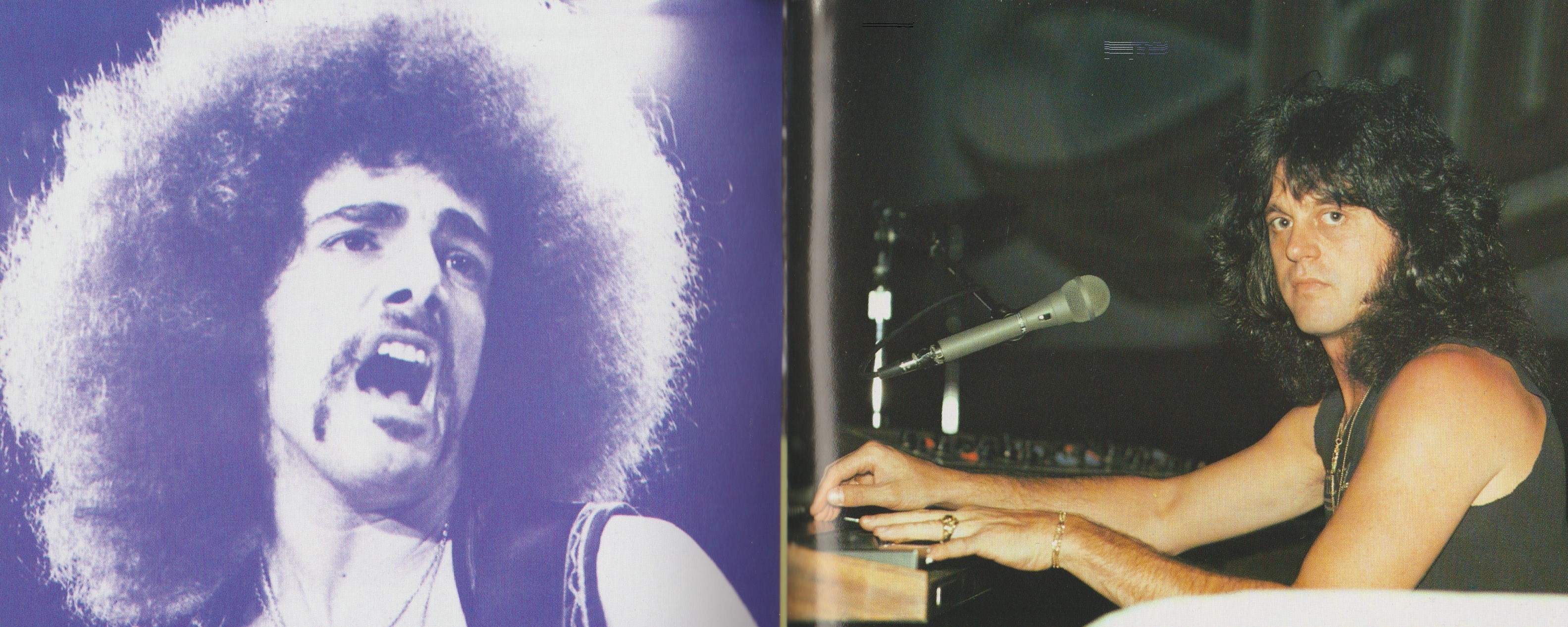
This box set was reissued a number of times, but for the money you can’t beat the original 1992 printing with the long box and large booklet.  The liner notes are ample but the rare photos may even top them.  From the earliest days there are pictures of the band with original guitarist George Tickner and drummer Prairie Prince.  Prince was invited to join permanently, but chose to join the Tubes instead, a band he found more creative.  He was replaced by Aynsley Dunbar who recorded the first LP.  Also pictured within are some truly impressive hair styles, clothes, and moustaches.

With tracks this strong from start to finish, great packaging, and such a wealth of rare material, it seems Time3 should be an easy 5/5 stars.  However, that niggling issue of live tracks (particularly “Wheel in the Sky”) replacing studio cuts is really devious.  It’s unnecessary.  It all but forces casual buyers to also own Greatest Hits for the studio versions.  It seems very calculated.

Otherwise, proceed.

4.5/5 stars

scan_20161015-3


REVIEW: Van Halen – LIVE: Right here, right now. (1993, plus “Jump” live single)

scan_20160929VAN HALEN – LIVE: Right here, right now. (1993 Warner Bros, plus “Jump” live single)

The summer of ’93 was the “Summer of Live Albums” here at LeBrain HQ.  There were many live discs out to digest, several of them from “must-purchase” bands.  Most notable was Ozzy’s Live & Loud which came in a metal speaker grille cover.  Iron Maiden also put out A Real Live One, the first of a two-album live set.  And then there was a big’un:  Van Halen’s first live album, the double Right here, right now.

What did all three releases have in common?  They were all boring duds.

Sad but true.  In Van Halen’s case, the disappointment was acute.  Sure it was “Van Hagar” and not the “real deal” if you believe in that  sort of thing, but that wasn’t the issue.  There are a few problems with Right here, right now but none of them have to do with the singer.  The setlist is a real drag, with way too much material from For Unlawful Carnal Knowledge.  10 of the 11 songs from F.U.C.K. are on this album!  (“The Dream is Over” being the only missing song — you had to buy this on VHS to get it!)  A F.U.C.K. song opens the set, another closes the set…it’s too much, especially since F.U.C.K. was (one of?) the weakest Halen albums to date.

Issue #2 is perhaps a bit silly, since Van Halen shows are known for their solos: but this album has too many solos.  Eddie’s aside; he always going to blow your mind.  Unfortunately, Michael Anthony and Alex Van Halen are, quite frankly, boring soloists.  Did “Ultra Bass” need to be five minutes long?  It’s best when Michael’s just playing, but as fans know his bass solo is half notes, and half noise.  Immediately after that is “Pleasure Dome/Drum Solo”, nine whole minutes.  The instrumental “Pleasure Dome” section is best since it resembles a song (a driving hard one at that).

The final major issue is one we didn’t even know about until recently.  Sammy Hagar revealed in his book Red that this album was heavily overdubbed afterwards, and I wouldn’t doubt it.  (Hagar claims that he re-sang the entire thing over again in the studio.)  There was always something underneath the surface that didn’t feel right about this album, and that could be it right there.  Right here, right now feels dulled, perhaps by too much studio polish after the fact.

It’s not all bad of course, how could it be?  “Poundcake” and “Judgement Day” start it off strongly.  Then they went and dropped a ballad (“When It’s Love”) and a shitty song (“Spanked”), and all momentum is stopped.  The duo of “You Really Got Me” and “Cabo Wabo” are pretty damn great though.  There are a couple Hagar solo tracks in set which add some spice to the mix.  The acoustic ballad “Give to Live” is just Sammy alone, but “One Way to Rock” is the whole ass-kickin’ band.  Of all the Hagar tracks the band has played live, “One Way to Rock” sounds most natural as a Van Halen song.  The final surprise is “Won’t Get Fooled Again”, which Eddie does not play keyboards on.  Instead he mimics Pete Townsend’s synthesizer part with his guitar.  Who purists will hate Sammy’s take on it, but fuck it.  It’s a pretty damn good version of a hard to cover classic.

There are a couple other decent tracks to be had.  German and Japanese versions contain two bonus tracks:  “Mine All Mine” (from the OU812 tour) and another Hagar track, “Eagles Fly”.  They can also be found on the “Jump” live single.  Unlike much of the rest of the album “Mine All Mine” has some bite to it.  It’s a great example of synthesizer working well in a hard rock song.  (Unfortunately it fades out early.)  As for “Eagles Fly”, this is a song Sammy played acoustic on the occasions he didn’t play “Give to Live”.  Although it was played less, “Eagles Fly” edges out the other just slightly by a nose.  These two bonus tracks are worth tracking down the single for, or an import version of the album.

I traded up my original copy of LIVE: Right here, right now for a US import that came in a cardboard digipack.  Although it has no bonus tracks, it does have some bonus photos, which is still pretty cool.

It’s not fun to say any Van Halen album isn’t essential, but Right here, right now is not essential.

2/5 stars


COMPLETE VAN HALEN REVIEW SERIES:

VAN HALEN – Zero (1977 Gene Simmons demo bootleg)
VAN HALEN – Van Halen (1978 Warner)
VAN HALEN – Van Halen II (1979 Warner)
VAN HALEN – Women and Children First (1980 Warner)
VAN HALEN – Fair Warning (1981 Warner)
VAN HALEN – Diver Down (1982 Warner)
VAN HALEN – 1984 (1984 Warner)
VAN HALEN – 5150 (1986 Warner Bros.)
VAN HALEN – OU812 (1988 Warner)
VAN HALEN – For Unlawful Carnal Knowledge (1991)
VAN HALEN – Balance (1995 Warner – Japanese version included)
VAN HALEN – Best Of Volume I (1996 Warner)
VAN HALEN – 3 (Collectors’ tin 1998)
VAN HALEN – The Best of Both Worlds (2005 Warner)
VAN HALEN – A Different Kind of Truth (2012)
VAN HALEN – Tokyo Dome Live in Concert (2015)
VAN HALEN – Tokyo Dome Live in Concert (2015) Review by Tommy Morais

+

VAN HALEN – “Best of Both Worlds” (1986 Warner 7″ single)
VAN HALEN – “Can’t Get This Stuff No More” / “Me Wise Magic” (1996 Warner promo singles)
VAN HALEN – “Can’t Stop Loving You” (Parts 1 & 2, inc. collector’s tin)
VAN HALEN – “Right Now” (1992 cassette single, Warner)
VAN HALEN vs. JOHN LENNON – “Imagine A Jump” mashup by “Mighty Mike”
RECORD STORE TALES Part 186:  The Van Halen Tin


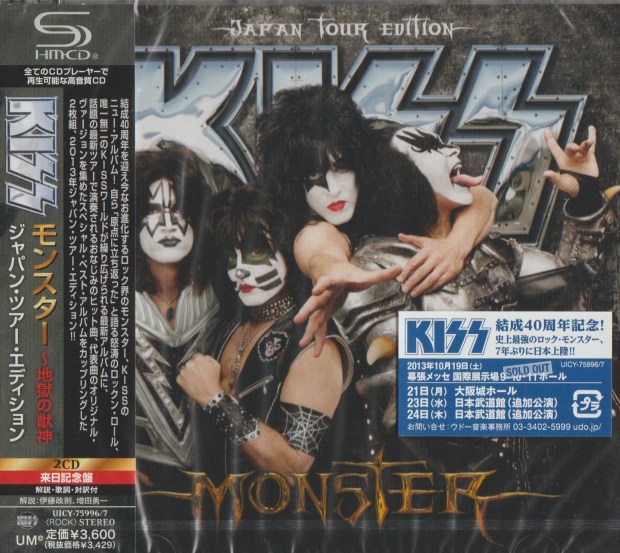
REVIEW: KISS – Monster (Japan Tour Edition bonus CD)

This review is for reader Juan, from Spain — thank you for reading!

KISS – Monster (Japan Tour Edition, 2013 Universal Japan)

In my 32 years of collecting music, I have learned a number of immutable laws of the hobby.  The Three Laws of Collecting are:

The First Law:  Japan shall always get the best stuff.
The Second Law:  Anything worth releasing is worth re-releasing.
The Third Law:  Kiss fans shall buy anything, often more than once.

The Three Laws of Collecting are why I now have purchased my fifth copy of Kiss Monster.  The album came out in 2012, meaning I have bought more than one copy per year since its release:  Original CD, vinyl, iTunes, Japanese CD, and now this 2 CD Japan Tour Edition, which has all the tracks from all the versions, and then some.

scan_20161018-4

This is not a review of Monster; we have reviewed that album twice now (once by Mike Ladano and once by Tommy Morais).  Rather this is a review of the Tour Edition’s second disc, which is a pretty cool “best of” collection covering a very nice chunk of Kisstory.  What can another greatest hits possibly offer?  Believe it or not, the Monster Tour Edition has a slightly different slant that might be interesting to die-hards.

This is the first time “Psycho Circus” has opened a Kiss compilation.  It was their tour opener in 1998-99 and so naturally fits this slot.  It was one of the stronger tracks from Psycho-Circus itself, which was otherwise a pretty disappointing reunion album.  Mainly because Peter and Ace barely played on it.  Indeed, on this track you will get Kevin Valentine on drums and Tommy Thayer on guitar, uncredited.  That said, the track still kicks ass and has proven to be the only song from that album that still gets played now and then.

I’m always happy to hear oldies like “Let Me Go, Rock ‘N’ Roll” on a hits CD.  The same goes for “Black Diamond”, one of the more epic Kiss tracks.  These old album cuts might not be as well known to casual fans and might surprise even Kiss haters.  However, no casual fan or Kiss hater is going to be hearing the Monster Tour Edition.  So the die-hards again will be hearing “Shout it Out Loud”, “Rock and Roll all Nite”, “Detroit Rock City”, “God of Thunder”, “Love Gun” and “I Was Made For Lovin’ You” for the umpteenth time.  Mixed in among these are some of the second-tier hits from the 80’s:  “I Love it Loud”, “Lick It Up”, “Heaven’s On Fire”.  The exact mixture of ingredients is different, but these songs have been on best-of CDs by Kiss before.

The one unique inclusion is “Say Yeah” from 2009’s Sonic Boom, its first appearance on a hits disc.  Its place here is deserved.  Sonic Boom represented a strong return to the studio for Kiss after a decade long absence.  “Say Yeah” was one of three songs played live in concert, and sounds the most like a timeless Kiss anthem.  (Sonic Boom was represented on the last greatest hits compilation, Kiss 40, by “Modern Day Delilah”.)

Finally there is the riffy “Right Here Right Now” which was previously the iTunes bonus track for Monster.  A physical copy is always better, and a Japanese high quality HMCD is even better than that.  And don’t worry — the original Japanese bonus track, a live version of “King of the Night Time World” from the Rock the Nation tour, is still intact on disc one.  (More on that in the video below.)

This version of Monster is finally the definitive one with all the tracks in one place.  The bonus hits disc is some pretty awesome icing.  When you have as many hits discs as Kiss do, you may just wonder “what’s the difference”?  Each one is different in its own often minor ways, and fans who appreciate this stuff will enjoy hearing a couple unique tunes for a change.

The only flaw with this HMCD reissue is that it lacks the original 3D lenticular cover. That is a bummer. I simply kept my original cover (it is a separate piece you can take out) from a prior version of Monster which I later gifted to a friend.  In fact that friend reviewed the single disc Japanese Monster!

I must add another law to my Three Laws of Collecting:

The Zeroth Law*:  You shall always have some buyer’s regret.

It is true.  I had all these songs before.  The only one I didn’t have physically was the iTunes download “Right Here Right Now”.  But I “had” to have it.  I could question that.  “You could have put that money towards some new tires”.  The CD could have paid for a week of lunches at Harvey’s.    A fool and their money?

I’m fine with that.

$/5 stars

*I didn’t make that word up.  Isaac Asimov added the Zeroth Law of Robotics to his Three Laws in 1985.  

REVIEW: The Four Horsemen – Left For Dead (1988-1992) (CD/DVD set)

“You know, Sean Connery was the best Roger Moore they ever had.” — Frank C. Starr

THE FOUR HORSEMEN – Left For Dead (1988-1992) (2005 CD/DVD set)

“Nobody said it was easy…and they were fucking right!”

The final review in this Four Horsemen series is a valuable live album/DVD set.  The CD was put together from “a box of old tapes”, all from 1992 gigs (one of which was Toronto), and there are ample liner notes discussing the band’s history and the songs herein.  It’s a brilliant live set, loaded with energy and Frank C. Starr’s unmistakable charisma.  Every track sweats whiskey.  With an opening one-two punch of “’75 Again” and “Moonshine”, you know you’re in for an action packed ride.  “Moonshine” is particularly cool, because the album version featured an authentic over-the-phone lead vocal, but the live one is full-on.  Throwing in a couple extra screams, Frankie added the icing on the cake.  Man, we so miss Frank C. Starr.

It’s a noisy affair, which actually suits this band just fine.  It’s appropriate that a Four Horsemen live album isn’t an overdubbed and glossed collection.  What it sounds like is a live band in a tiny club.  All three of the Horsemen’s singles are included in live form.  The slide-drenched “Tired Wings” goes down a treat.  “Nobody Said it Was Easy” and “Rockin’ is Ma Business” are both electrifying; the latter especially so.  You don’t hear a singer with a voice like Frank’s very often.  He had the grit, the power and the ability, wrapped up in a rock star-sized bottle of Jack.  Frank Starr has to be one of the greatest unsung losses in modern rock.

And what a band behind him!  There is a constant and very hard-hitting beat at the back, courtesy of the man-mountain Ken “Dimwit” Montgomery.  According to the liner notes, Dimwit was a psychiatric nurse in addition to being a hell of a punk rock drummer.  The name Dimwit was clearly a joke, but there is a dark side.  The rigors of his work and the amount of care and emotion that went into it may have contributed to the depression and substance abuse that eventually took his life.  It’s sad really, but thankfully these live recordings exist.

One non-album cut is included in this set, a slow raunchy one called “Can’t Get Next To You”.  The AC/DC influences are obvious as this one is clearly in the musical mode of “The Jack”.   The fans wouldn’t have known this song, but Frank wants to see how many people know the album.  Introducing “Hot Head” he announces, “Let’s see if some of you fuckers actually went out and bought this shit!”…right before an equipment breakdown!  And it’s all there, documented for history.  Leaving in things like amp troubles makes for a more authentic listening experience.

All told, only two songs from the legendary first Four Horsemen record are not on the live CD:  “Can’t Stop Rockin'” and “Homesick Blues”.  Although unlisted, “I Need a Thrill” does contain the “Something Good” coda, just like the album.  It’s even longer, with some absolutely consummate playing from lead guitarist Dave Lizmi.  The low grade sound quality perhaps enhances the overall experience.  This was a dirty rock and roll band and that’s how the live CD sounds.  That seems right.  With almost the entire first album plus an unreleased song, any Horsemen fan worth his or her salt should probably get their ears on this.  But there is still the DVD to feast our eyes upon!

img_20160924_061452

Interspersed with rare footage and interviews, you get all the original Horsemen music videos, starting with “Rockin’ is Ma Business”.   The stark music video for “Nobody Said it Was Easy” is a previously unseen version with some risque shots.  An interesting clip from MTV has the band mistakenly called “Four Horseman”.  (Apparently it was Riki Rachtman’s first show.  But then MTV got the name wrong on a later episode too!  MuchMusic got it right though.)  A rare live bootleg of “Hard Lovin’ Man” is audio garbage but video gold.  “High School Rock and Roller” is a blast to watch, especially the moving mountain that was Dimwit on drums.  There is big stage action from October ’91, opening for Lynyrd Skynyrd (“’75 Again” and “Rockin’ in Ma Business”).   Perhaps most interesting are some rejected music videos that didn’t see the light of day.  An early version of “Tired Wings” (with a pre-fame Kate Moss) is pretty crap and rightfully hated by the band.  Better than this is a rare “Mexican version” of “Nobody Said it Was Easy”.  The intro borrows liberally from “The Old Man Down the Road” by John Fogerty, but it’s cool watching the band mime in a hot dusty town in Mexico.  Then there is a never before seen $2000 budget video for “Welfare Boogie” from the original EP.  This video was rejected by MTV because the band were “too ugly”.

DVD special features are sparse but cool.  There is an exclusive acoustic demo version of “Tired Wings”.  What a different spin this is!  In demo form it was a slow acoustic drawl, laid back with angelic band harmonies.  The lyrics and melodies are identical but the arrangement is completely different.  This is set to a nostalgic slide show of rare band photos.  There is also a band commentary track for the main feature (Haggis, Dave Lizmi and Ben Pape). Lots of laughs, memories and anecdotes.  And making fun of “Dave Lizmo’s” hockey stick-style guitar neck.   Mostly they poke fun of each other’s clothes.  It’s a lot of fun to hang out with the Horsemen.  The audio commentary track is a highly recommended shambles.

The CD/DVD set can be ordered straight from the band, and it comes autographed.  I think mine is signed by Haggis but I cannot be sure!

4/5 stars

REVIEW: The Four Horsemen – Welfare Boogie (21st Anniversary Edition)

scan_20160918THE FOUR HORSEMEN – Welfare Boogie (originally 1990, 2009 Anniversary Edition with bonus tracks)

It feels right to review this re-released EP only after we have already discussed Nobody Said it Was Easy and Gettin’ Pretty Good at Barely Gettin’ By.  Until I met T-Rev at the old Record Store, I didn’t even know such an EP existed.  But he had it; an original copy purchased somewhere in the States before we met.  He taped it for me (same songs both sides) and that was the first I heard of the Horsemen’s 1990 debut EP.  I hunted high and low for another CD copy, but failed until this 2009 reissue.  Originally and simply titled The Four Horsemen, the reissued EP sports the new title Welfare Boogie, and five bonus tracks.

According to the liner notes, the band didn’t mind if they sounded a bit like AC/DC since “nobody is doing AC/DC anymore, not even AC/DC”.  The EP has the same raw and rough vibe of Powerage-era Bon Scott, but with a guy who can also scream like Brian Johnson.  “Welfare Boogie” itself works as an example.  It’s a basic riff, a rawk vibe, a shout-along chorus and a charismatic shrieker (Frank C. Starr).  This track and the laid-back rock and roll “Shelly” were both written solely by drummer Ken “Dimwit” Montgomery.  Dave Lizmi’s guitar solo is equal parts Angus Young and Ace Frehley.  The date might say 1990, but it sounds more like 1978.  “High School Rock N’ Roller” was written by founding member, Haggis (aka Kid Chaos aka Stephen Harris), who had finished a world tour with the Cult.  Once again, it’s easy to point at early AC/DC as the prime influence.  The one track that sounds more like punk rock (Dimwit was from D.O.A.) than AC/DC is “Hard Lovin’ Man”.  Starr might not have written it, but it’s clearly about him.  I have heard him reference his tattooed weiner before in a RIP Magazine interview.  (“It has eyes!” he seemed to beam with pride.)  The lyrics:

“I got heart of stone,
And a hand of steel,
Got a tattooed pecker,
And a Batmobile.”

“I”m a hard lovin’ man,” he boasts, before inviting “come here baby and see how hard I am.”  All this to the rock and roll blitzkrieg of a song so fast that it doesn’t even break the 2 1/2 minute mark.  The four tracks combined make for a grand little EP, not even 13 minutes long!  In and out, mission accomplished.  Thankfully the bonus tracks extend the experience for those wanting a little bit more action.

A cassette demo of “Rockin’ is Ma Business” demonstrates a work in progress as the band fiddled with the arrangement.  Comparing the final track to the demo, it sounds like it ingested a steady diet of coffee and gin before cranking it up to 11.  Always interesting to hear these early works in progress.  The bones are there but the meat is only being added.  “The Needle” is an unreleased song, a menacing night prowler with teeth flashing in the gloom.

“Born to Boogie” transformed completely between this demo and a later demo included on Nobody Said it Was Easy.  According to the liner notes here, this song eventually mutated again into “Can’t Stop Rockin'” from the album.  This track however is just a good time boogie with a bouncy riff lifted from “New York Groove” by Ace Frehley.  Then there is “Ain’t Telling Me”, a purely AC/DC stomp with a hint of Guns N’ Roses on top like a cherry.  Finally, a fun track called “Bring On the Girls” goes down like a round of tequila.  You can hear that the chords here later became “Moonshine” on the LP.  Even the bass line is identical, but this is a more party-hearty version of a fondly remembered deep cut.

This collection of songs was never meant to be more than a warm-up.  The main course was always intended to be the LP.  When a band is as good as The Four Horsemen were, the EP still impresses more than a thousand other bands’ proper albums.

3.5/5 stars


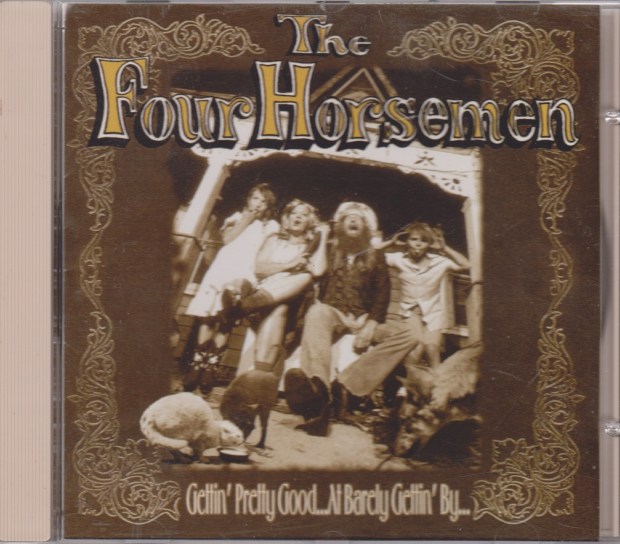
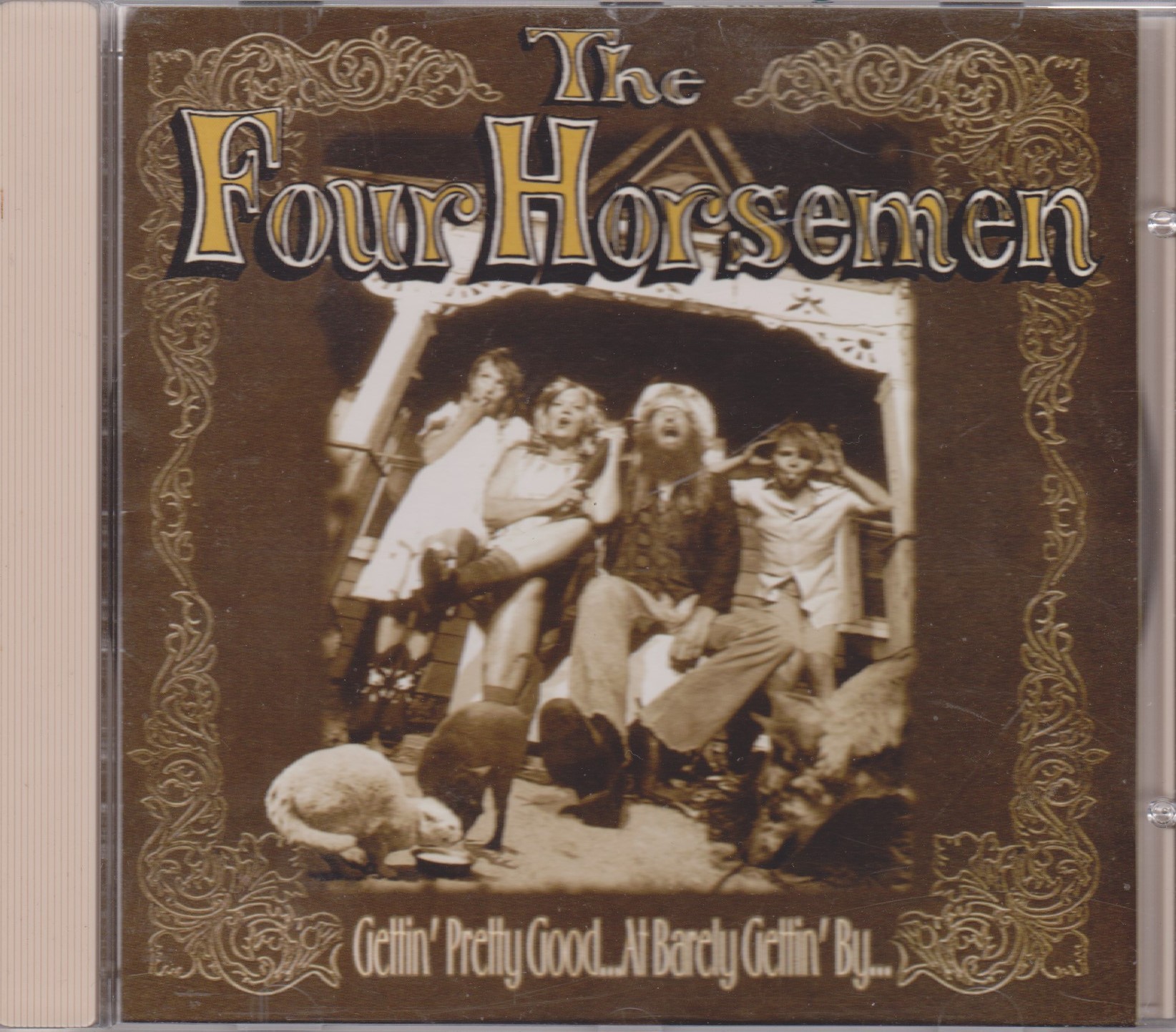
REVIEW: The Four Horsemen – Gettin’ Pretty Good…at Barely Gettin’ By (1996)

scan_20160908THE FOUR HORSEMEN – Gettin’ Pretty Good…at Barely Gettin’ By (1996 Magnetic Air)

The Four Horsemen seemed to burn the candle at both ends.  Before really even getting off the ground, they imploded, but not before dropping one of the greatest unsung records of the decade:  Nobody Said it Was Easy.  They had Rick Rubin, they had Def American, they had a guy that was in the Cult and another from D.O.A., and they had tours with the Black Crowes and Lynyrd Skynyrd.  They also had a volatile frontman who drove the band nuts and ended up in jail, and they just couldn’t make it last.

Founding member Haggis tried to give it another shot.  He reformed the band with a new singer named Tim Beattie, but ultimately the album was shelved.  It sounded like a completely different band, a southern soul band with nothing hard or heavy.  That’s not a bad thing:  the album Daylight Again was finally released in 2009, and it’s incredible (and we’ll get there soon).  Instead they folded again, but not for long.  Dave Lizmi and Frank C. Starr formed a new Four Horsemen, with Canadians Pharoah (bass) and drummer extraordinaire Randy Cooke.  With another Canadian, producer Rich Chycki, they forged a rare followup:  one as good as the original.

Slimmed down to a single guitar band, the new Horsemen sounded leaner and less AC/DC.  Frankie’s voice had changed and he was no longer screaming, and that also lessened similarities to AC/DC.  He had also become more expressive, while losing none of his power or character.  They opened the album with a southern flavoured “Still Alive and Well”, a Rick Derringer cover.  Considering the five year gap between albums, they couldn’t have picked a better opener.

The title track “Gettin’ Pretty Good at Barely Gettin’ By” goes deeper into the swamps of the south.  Lizmi takes out the slide, and who doesn’t love some greasy slide guitars?  This is an uplifting hard rocker, stating the Horsemen’s modus operandi:  “Well well, oh my my, what have we here?  Some good old fashioned music, lots of whiskey and beer.”  Lizmi wrote the lyrics for this album, but the words sound like Frankie’s.  It’s a celebration of rock and roll, proudly and loudly.

The third song in a killer triple threat of openers is “Drunk Again”, which sounds exactly like you hope it does: fast, upbeat, cocked and loaded.  Gotta love the female backing vocals, giving it a kick of soul.  The performance sounds live and authentic.  At one point, it sounds like Frankie cracks up chuckling right in the middle of a line.  “It’s been 40 days since I looked at my face…ah shit…”  This is the kind of music everybody needs for a serious rock and roll party.

scan_20160908-3

There are few more standout songs that have to be discussed.  First is “Song for Absent Friends”, one of the most emotionally bare tracks you’ll ever find from a band of this ilk.  Original drummer Ken “Dimwit” Montgomery, a Canadian punk legend, died in 1994 of a drug overdose.  “Song for Absent Friends” sends legitimate tingles up the spine.  You can feel the hurt.  But it’s not a funeral, it’s as much a celebration of Dimwit as the rest of the album is a celebration of life.

“And I know that you all are out there somewhere,
On a leave of absence from this place,
And I still have a place for you all,
A place around near me,
And your glasses will always be full.”

Then we have the blazingly fast drag race of “Hot Rod”, featuring the lyric “I got the hottest rod around,” ha ha. It’s that slippery fast guitar lick that knocks you out. But if you want a song that’ll knock some teeth out, with some biting lyrics, look no further than “Back in Business Again”. Frank sounds pissed!

“And we were headed for the top babe,
Way back in ’91,
Some record business scumbags took it from us,
Well they forgot my gun.
Well now we’re back in business folks,
I’ve come to claim what’s mine,
See we’re the Four fucking Horsemen,
Back for a second time!”

That’s nothing. Clearly, they were still ticked that they got dropped by the label in 1992. I don’t think Frank or Dave thought much of the latest wave of bands that were topping the charts in the early part of the 1990’s. Exhibit A:

“Now pay attention,
I got a little story here to tell ya,
It kinda goes like this.
You know I had a couple years off there babe,
To kinda take some time,
And I heard a bunch of whining, little wussy rock n rollers,
Complaining about how fame and fortune’s got them down.
I say we gather up all these little bastards,
Shove them back to their little nowhere town,
See I was born on this stage,
And I plan to stick around!”

Frank didn’t get that chance, either.

Before Gettin’ Pretty Good…at Barely Gettin’ By was even released (by the Canadian label Magnetic Air), Frank was hit by a drunk driver while riding a motorcyle. He suffered massive brain trauma. He never woke from coma, and died four years later.

It’s almost absurd how much hardship fell upon this band, almost as if the fates decided that nothing would stand in the way of grunge. The Horsemen tended to end their albums with emotional epics, and this album ends with “What the Hell Went Wrong”. It’s a complicated question with many answers, but the bottom line is that the success the Four Horsemen had was inversely proportional to their talent.

In one of the strangest twists of an already twisty story, the masses finally heard the Four Horsemen when “Back in Business Again” was used in the movie G.I. Joe: Retaliation.  Completely out of context, but who cares.  The movie starring Dwayne “The Rock” Johnson made $375.7 million.  That’s a lot of people who got to hear a kick ass Four Horsemen track with theater quality sound!

Rest in peace, Frankie.  Rest in peace, Dimwit.

5/5 stars
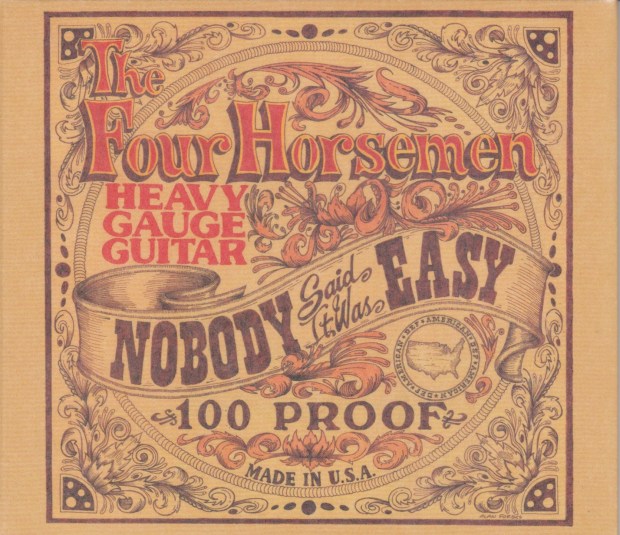

REVIEW: The Four Horsemen – Nobody Said it Was Easy (21st Anniversary Edition)

Giddy up! Part one of a five part Four Horsemen series this week at mikeladano.com!


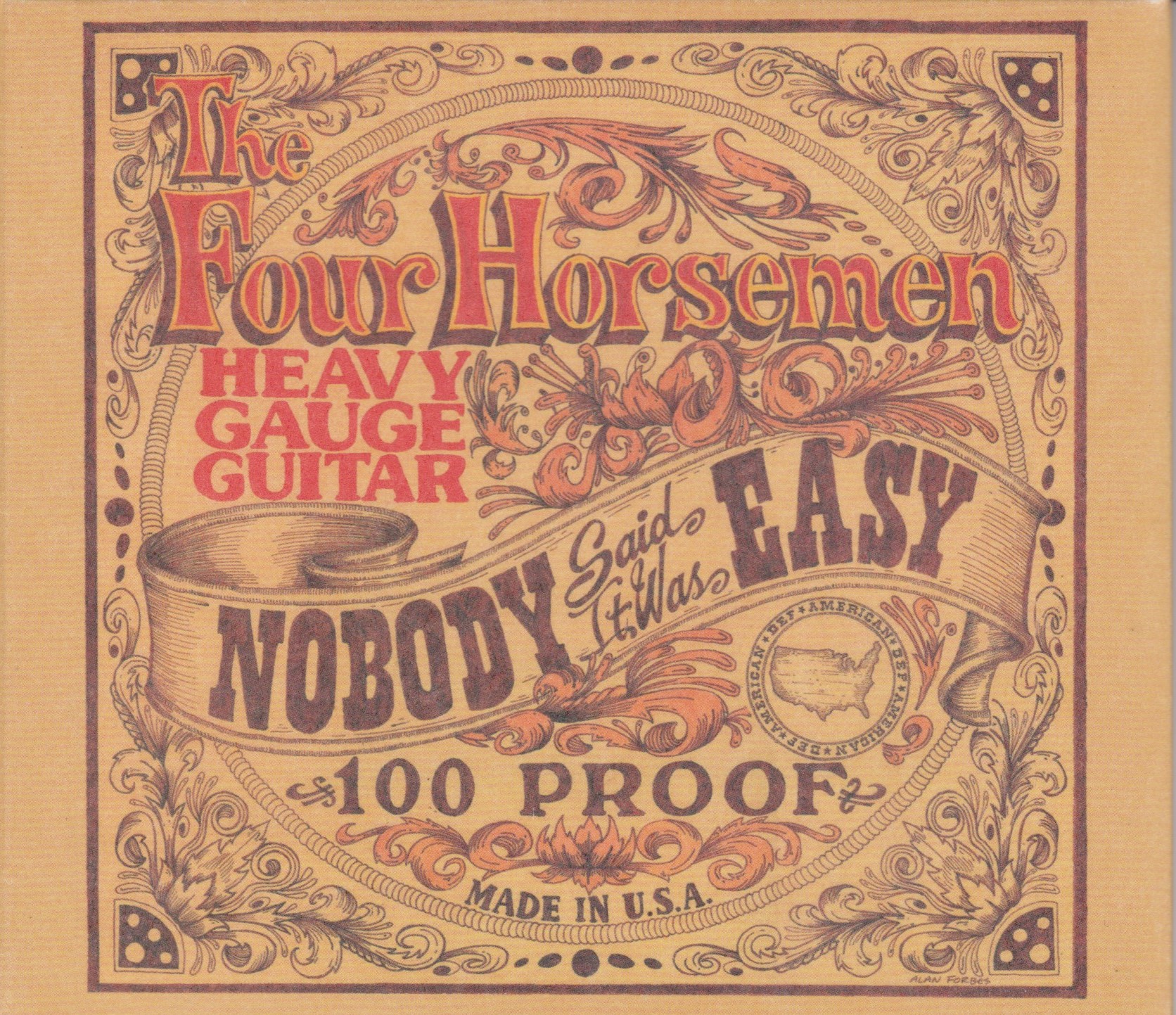
scan_20160907THE FOUR HORSEMEN – Nobody Said it Was Easy (originally 1991 Def American, 2009 Anniversary Edition with bonus tracks)

1991’s Nobody Said it Was Easy was one of the greatest rock albums to ever come from the grunge decade that you’ve never heard of.  The Four Horsemen were a multinational band, with Rick Rubin at the helm at the legendary Sound City studios, and one of the greatest rock star frontmen to ever grace the stage:  the late Frank C. Starr.

There could only be one Frankie.  But there was so much more to this band than just the singer.

There was Haggis, on rhythm guitar (ex-The Cult, formerly known as Kid Chaos).  He lent the album an AC/DC edge with simple rock and roll riffs.  Then there was Dave Lizmi, an uber-talented guitarist with a knack for classic tube-amp driven solos.  On bass was Ben Pape who provided the album with interesting and melodic basslines.  Finally, on drums, the man the myth the legend:  Kenneth “Dimwit” Montgomery.  A Canadian native as big as the mountains that spawned him, Dimwit was an absolute beast on the skins.  His brother Charles Montgomery would change his name to Chuck Biscuits and join Danzig.  Both brothers would spend time in the legendary Canadian punk band D.O.A.  Sadly, Dimwit succumbed to drugs and died in 1995.  What a gargantuan loss.  (He later inspired the Horsemen track “Song for Absent Friends” from their second CD.)

This album was preceded by an impossible-to-find four song EP (since reissued), so when it was released on Def American, it was the first time most of us heard the Horsemen.  And it was instant.  With three unforgettable singles, the Horsemen kicked out the jams.

“Nobody Said it Was Easy” was a hell of an introduction.  With a riff similar to those peddled by the Black Crowes a year before, but with a much harder edge, the track kicked every ass in the room.  Get into the groove and enjoy, because the party is just starting.  Frankie had a rock n’ roll voice, but when he let loose with his screaming, that’s when we knew he was special.  Able to sing with a Brian Johnson shred, the Horsemen really had an ace in their pocket with him.  Frankie was something else.  He took no prisoners and without him, the Horsemen just didn’t sound like the Horsemen.

There aren’t breaks between the songs, so “Nobody Said it Was Easy” goes right into “Rockin’ is Ma Business”, the heavier second single.  Louder, groovier and weightier, “Rockin’ is Ma Business” proves its point.  “And if it’s so good why am I still fuckin’ broke?” asks Frankie before Lizmi rips into another solo.  (That would be a question for the accountants, Frankie!)

The third (and some say the best) single was the slide-drenched “Tired Wings”.  With a southern Skynyrd vibe, “Tired Wings” is simply awesome.  I’m a sucker for a slide guitar, and there’s enough here to drown a cat. Haggis makes sure there is plenty to go around.

There could have been more singles, but the band hit the rocks when Frank was arrested and jailed for a year on drug charges. They were dropped by the record label, who stopped promoting the record. That effectively put the band on ice for several years, but that’s another tale for another review (or two).

T-Rev always pointed out the strength of the closing track, essentially two songs over eight minutes long, “I Need a Thrill/Somethin’ Good”.  The song reeks of cigarettes, booze and tired hotel rooms.  With organ and loads of Lizmi licks, it’s an epic track soaked in feeling.   T-Rev pointed out that the Horsemen seemed to like closing their albums with slow bluesy epics like this.  The next CD, Gettin’ Pretty Good…at Barely Gettin’ By has a similar track called “What the Hell Went Wrong”.  Their long lost second album (finally available today) called Daylight Again closes with an 11 minute version of “Amazing Grace”.  That’s the kind of track this is.  It could only be an album closer.

This CD reissue has three bonus cuts from the original demo tapes.  I didn’t really want to trade up my old original CD copy of this album, but these bonus tracks made it worth while.  “She’s Got It” was written by Dimwit, and has a pure AC/DC riff like they used to write when Bon Scott was alive.  “Born to Boogie” is a rare Starr co-write (with Haggis).  This is a completely different song from the same-titled demo that was included on the EP reissue (Welfare Boogie).  It has a completely different riff, which is good because the original one basically sounded like “New York Groove” by Ace Frehley.  I prefer this version, the faster and more fun of the two.  Finally there is a different version of “Homesick Blues”, featuring a harmonica part by Tim Beattie.  The funny thing here is that Beattie later joined a reformed Horsemen as their lead singer!  It is he that recorded Daylight Again, before yet another version of the band would form and start recording with Frankie up in Canada….

But again, that’s another story for another review.  If you are one of the many rock fans who missed the Four Horsemen during their brief heyday, then this CD reissue makes the album easy to acquire.  The important thing is to get it!*

5/5 stars
scan_20160907-2

* But beware!  I know of at least one customer, Freddy, who purchased a defective copy of the original CD with Dwight Yoakam instead of the Four Horsemen! (Record Store Tales Part 224: Rockin’ is Ma Business)

For a review by 1537, click here  (It’s Dirty, It’s a Pity).


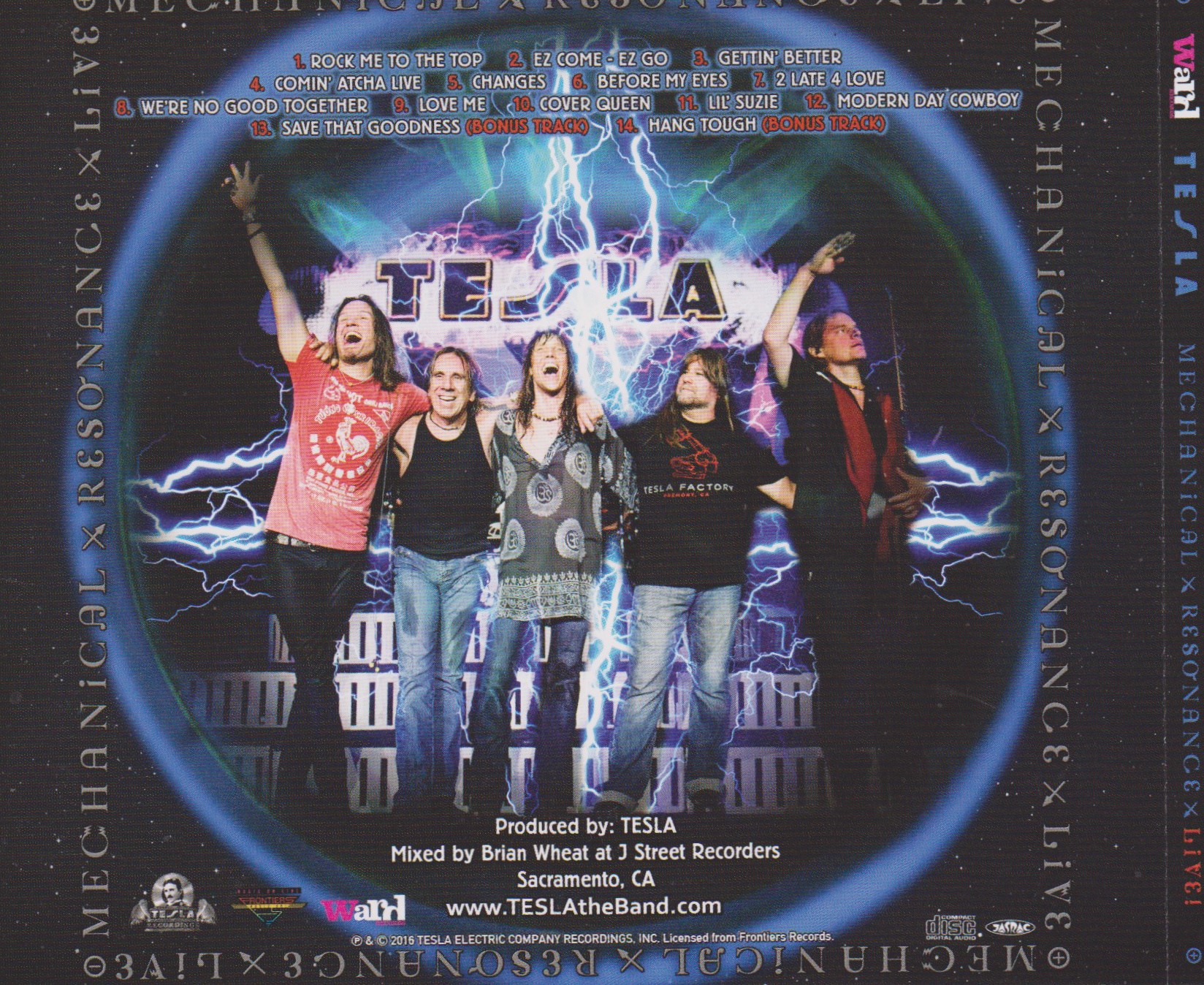
REVIEW: Tesla – Mechanical Resonance Live! (2016 Japanese with bonus track)


scan_20160915-3TESLA – Mechanical Resonance Live! (2016 Ward Records, Japanese with bonus track)

30 years?  Holy shit, I remember when Tesla was considered a new band.  Far more talented that the critics gave them credit for, or the bands they are lumped in with, Tesla have officially stood the test of time.  May as well use the 30th anniversary to put out a live album.  Unlike many other bands from their era, Tesla produced a number of studio albums worth listening to from front to back.  Their debut Mechanical Resonance has long been a favourite, a high quality slab o’ rock, so may as well play the whole thing live, right?

Tesla tweaked the song order (presumably for the live concert experience) to start with “Rock Me to the Top”.  Eternally young singer Jeff Keith has barely aged, and has lost nothing in the decades.  The rasp, the power, and the character are all intact.  The keys have been lowered, as any 30 year old band would have to do, but it’s hardly noticeable.  This makes Mechanical Resonance Live an absolute pleasure to listen to.

The other guys in the band kick as much ass as possible.  Tesla are a guitar band, and losing the talented and charismatic axeman Tommy Skeoch (first in the 90’s and then again in 2006) was a hell of a blow to suffer.  With mainstay Frankie Hannon on guitar, and new addition Dave Rude, they have continued on forcefully.  You can tell one ingredient is missing compared to the original LP, but that also makes it a fresh take on an old favourite.  As for the rhythm section of Brian Wheat (bass) and Troy Luccketta (drums), I think age has only made them better (just listen to “Cover Queen”).  Troy has his own distinct drum style, and you can hear that in the cymbal work.

scan_20160915-2

Strangely, some of the songs that stick out most are the slow tracks.  “Changes” for example is amped up, guitars duelling furiously, with Jeff pouring his all into the microphone.  “Before My Eyes” is another slower song with some stunning guitar work from Rude and Hannon.  Of course the hits are also fantastic — “Little Suzie”, “EZ Come EZ Go”, and of course an explosive “Modern Day Cowboy” which is moved to the closing slot in the set.

Tesla have a 30 year friendship with Def Leppard, and that’s why there is one new studio song written and produced by Phil Collen.  The opening chords, melody and rhythm of “Save That Goodness” are all immediately identifiably Def Leppard.  Tesla are a little more rough-edged than Leppard, and that especially comes out in Jeff Keith’s rasp.  Great track, and something special for the fans craving new music since 2014’s Simplicity.  I’m a sucker for a great new song at the end of a live album.

But that’s not all!  The Japanese release has one more extra — the classic “Hang Tough” from The Great Radio Controversy.  It sounds live, but there’s no crowd noise.  Whether it’s mixed out or if this is a rehearsal recording, the booklet does not say.

4/5 stars
scan_20160915-4

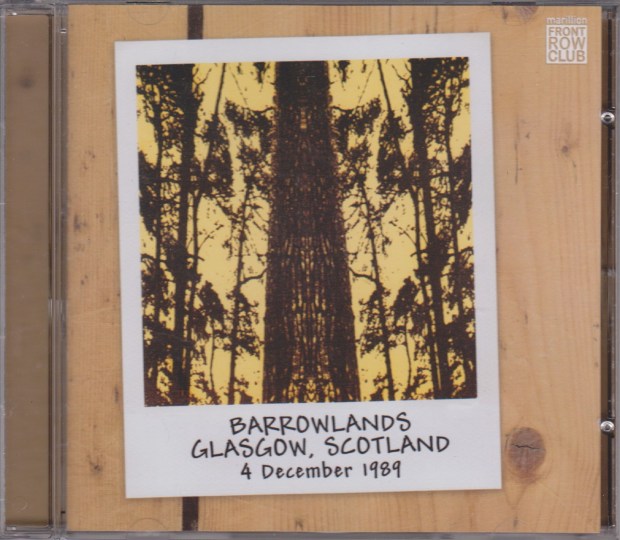
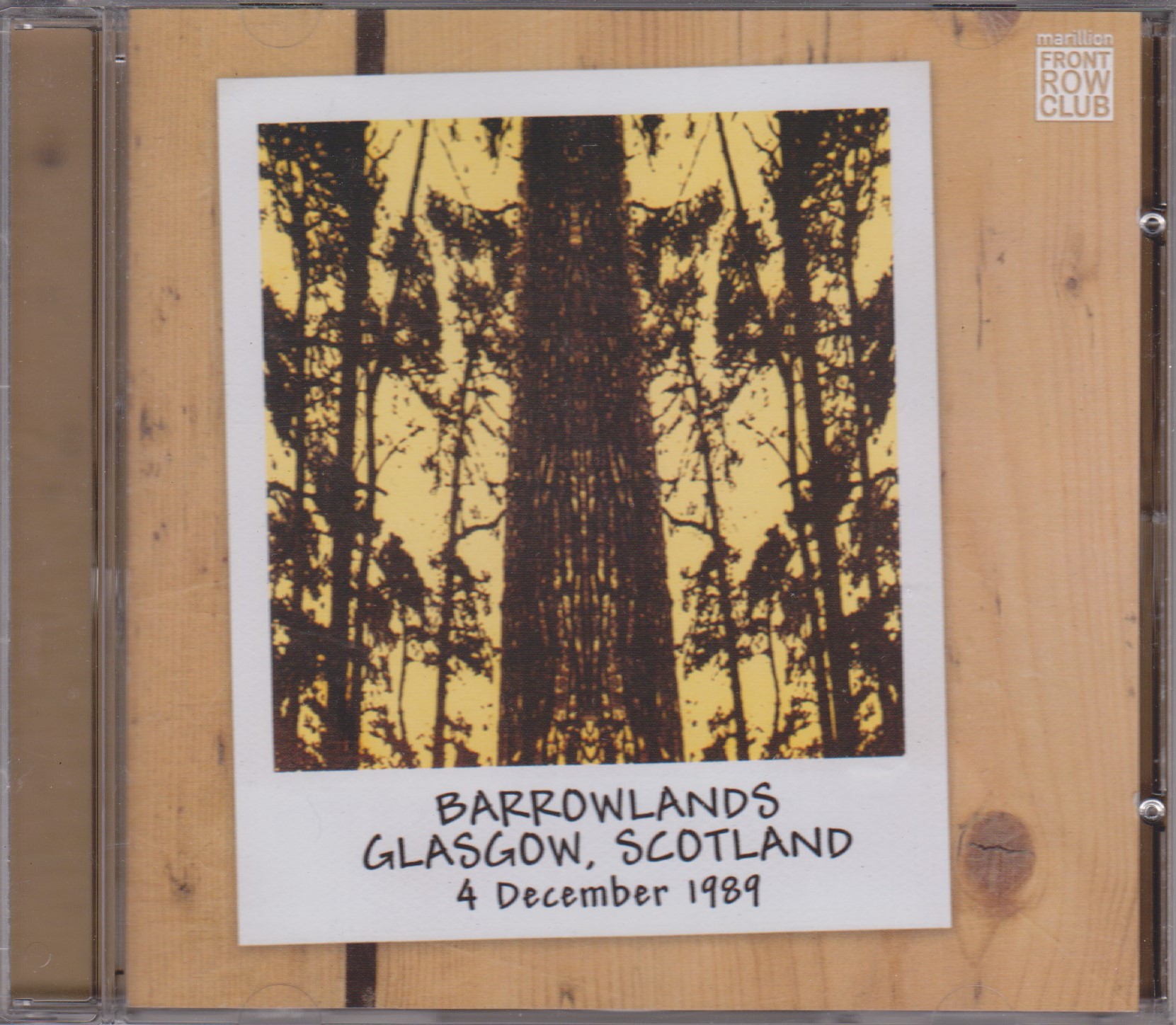
REVIEW: Marillion – Barrowlands, Glasgow, Scotland. 4 December 1989. (FRC-005)

By request of J.

Scan_20160615MARILLION – Barrowlands, Glasgow, Scotland. 4 December 1989. (FRC-005 – 2002 Racket Records)

Marillion have always been an innovative band, not just musically, but also the ways they interact with their fans.  In 1992, they started offering mail-order exclusive live albums to the diehards.  The first one, Live in at the Borderline sold out quickly.  Live in Caracas took a few years to sell out; I have an original copy of that one.  The third, Live in Glasgow, also sold out quickly.  Today I own a remastered and reissued version, Barrowlands, Glasgow, Scotland, released in 2002 as part of Marillion’s Front Row Club.

The Front Row Club was a subscription service.  Sign up for a year, and Marillion would mail you a live album every two months.  Some were single discs, like Barrowlands, and some were doubles.  They were sourced from all parts of Marillion’s history.  Subscribers could choose to opt out of releases they didn’t want, for example I didn’t need a second copy of Caracas.  There were 43 Front Row Club releases in total, and I have them all (excepting the optional Caracas).  (For a review of FRC-006:  River, click here.)

In 1989, Marillion were showing off the new guy, Steve “H” Hogarth on vocals, guitars and keyboards.  If they were to get a cold reception, Scotland would have been the place.  After all, former singer Fish was a proud Scot, and replacing a singer is always dicey.  Fortunately for Marillion, fans embraced Steve H very much, and the Barrowlands show is evidence of that.

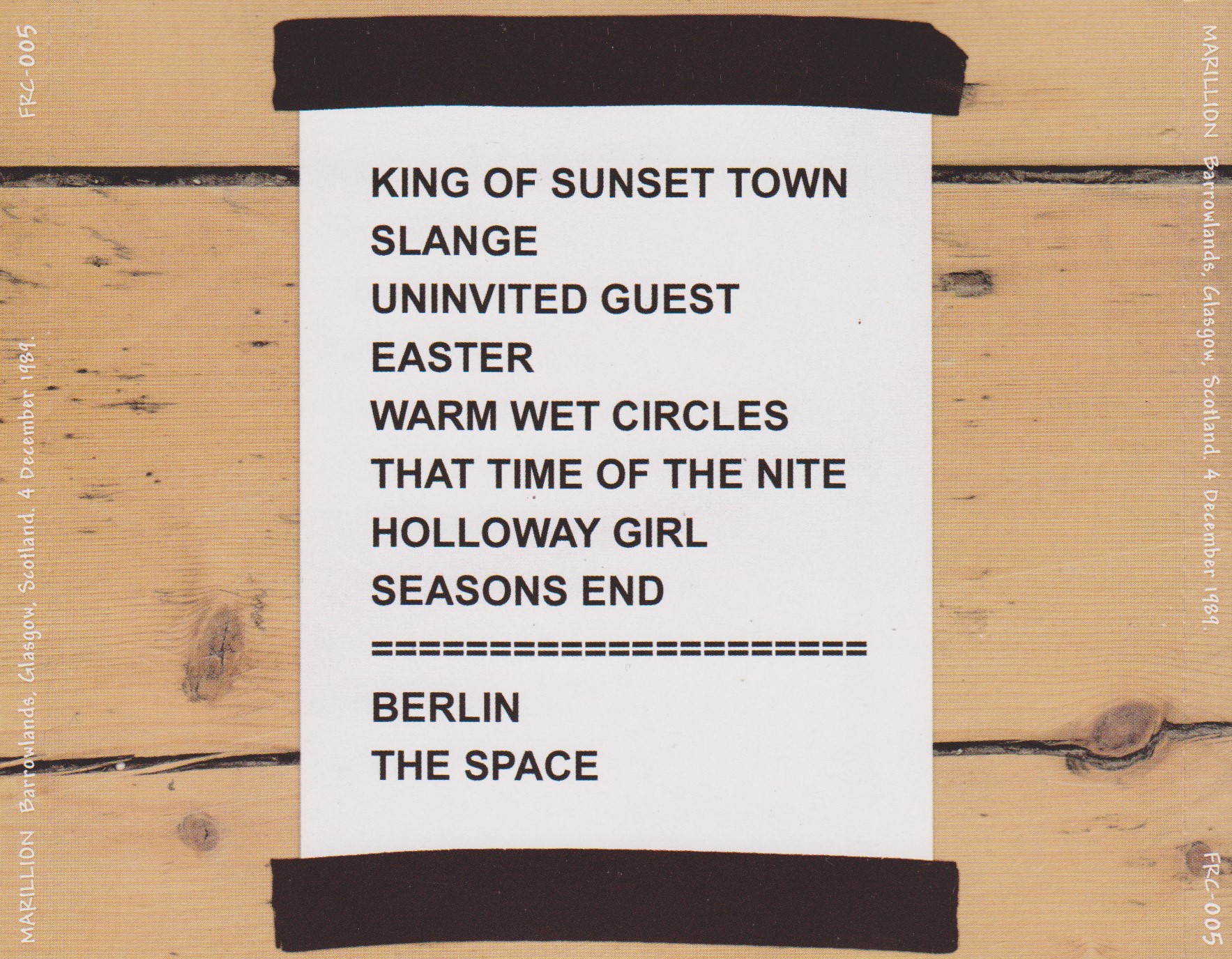
Opening with the brand new classic, “King of Sunset Town”, it sounds like Marillion had them in the palms of their hands from the first notes.  This releases was recorded from the desk onto cassette tape, and it sounds remarkably good considering!  “Sunset Town” has the instrumental adventures that fans expect, but with a passionate vocal very unlike Fish.  Singing along, the fans were already familiar with the new material.  The drums sound amazing in the Barrowlands, and Steve Rothery’s solo had the fans screaming.

There are only eight tracks from Barrowlands — apparently, somebody forgot to flip the tape as the band played.  Instead, two songs from a show in Bradford were added to the end.

“Slàinte Mhath” (or “Slange” as it is spelled phonetically on the back cover) is a beloved fan favourite. It was one of the songs that H felt more comfortable singing.  The crowd grew quiet.  This was an important song to get right.  No worries there.  “And you listen, with a tear in your eye, to their hopes and betrayals, and your only reply is slàinte mhath.”  (Cheers, good health.)  The line is greeted with a few excited screams.  While he was nothing like Fish, H managed to raise the hair on my arms.

“Good evening Glasgow!  It’s very nice to meet you.  We waited a long time for this!”  It must have been a tremendous relief for H to be accepted in Glasgow.  Two new singles follow “Slàinte”: “Uninvited Guest” and the ballad “Easter”. These are songs that remained in the setlist for tour after tour, and they do not vary much from other live takes. It is interesting to listen to these fresh versions, new to the band as they were to the crowd. “Easter” is youthful and beautiful.

Hogarth seemed drawn towards the Clutching at Straws material. “Warm Wet Circles”/”That Time of the Night” were performed for a few tours after, and Steve did them very well.  It’s a 10 minute slab of progressive rock with labyrinthine lyrics as only Fish could write.  Hogarth nailed it.

“On promenades where drunks propose to lonely arcade mannequins,
Where ceremonies pause at the jeweller’s shop display,
Feigning casual silence in strained romantic interludes,
‘Til they commit themselves to the muted journey home.”

I mean come ON!

And that’s it for old songs.  More were played that night, but the tape didn’t get them.  Too bad, because they included “Market Square Heroes”, “Incommunicado”, “Kayleigh” and lots more.  Barrowlands goes on with “Holloway Girl”, which boils with a dark intensity.  Marillion and Mark Kelly are very good at using keyboards for texture, and this is a good example.  Also dark and powerful is “Seasons End”, introduced by the Christmas carol “Oh Come Emmanuel”.  This early warning about global warming is a reminder that this is not some new theory.  We’ve known about global warming for decades.  Marillion turned that into a pretty epic quality track.

That’s it for the Barrowlands tracks.  “Berlin” and “The Space” are added to make it an even 10.  There’s a shift in sound quality as it gets a little clearer, but it’s not obtrusive.  “The Space” is a very apt way to end a CD.

Rating something like this…it’s almost “What’s the point?”  There are 43 of these bloody Front Row Club albums.  You can’t get them anymore.  You have to look at this as a good but incomplete set of some of the earliest live Marillion with Hogarth.  When we’re talking about a band with probably 100 live albums or more, it all becomes a little hard to see the forest for the trees!

3.5/5 stars?

Scan_20160615 (2)

REVIEW: Motley Crue – Quaternary (1994 Japanese EP)

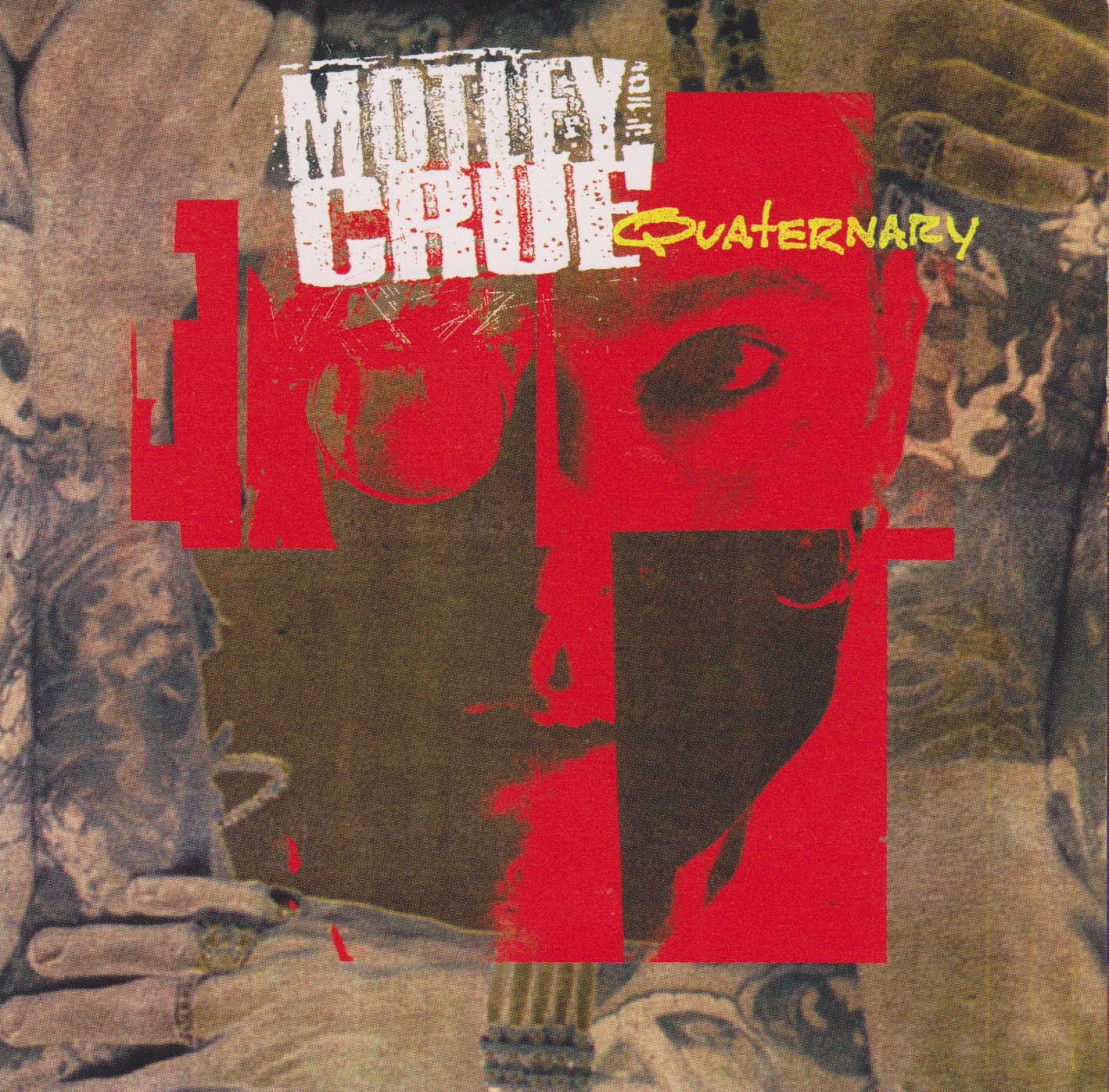
MOTLEY CRUE – Quaternary (1994 Elektra Japanese EP)

For me, undoubtedly the most heavily anticipated new album of 1994 was the new Motley Crue.  Originally titled ‘Til Death Do Us Part, the self-titled ’94 Crue disc was their first with new singer/guitarist John Corabi.  They holed up with producer Bob Rock and knuckled down, creating what could have been the most important album of their careers.  The long wait (five years between studio albums) and cryptic remarks from the studio indicated that this would be the heaviest Motley album ever, and their most ambitious.  The new, serious Motley for the 90’s had, as always, written plenty of extra material too.

In addition, producer Bob Rock had an idea for getting creative juices flowing.  He asked each of the four members of Motley Crue to write and record a solo track with no input from the other members.  This was slightly historic:  the first time Nikki Sixx, Mick Mars, Tommy Lee or John Corabi had done anything solo.  With all the numerous outtakes recorded for the Motley Crue LP, there was now plenty of extra material to put out as a bonus EP.

Scan_20160612A mail-away coupon inside the Motley Crue CD alerted fans that five more tracks were available by mail order only.  20,000 copies of the original EP were pressed.  They included all four solo tracks and a new Motley Crue song called “Babykills”, featuring fifth Beatle Billy Preston on clavinet!

Still, the lucky fans in Japan didn’t have to mail away for anything.  They were able to buy Quaternary right on their store shelves, and because it’s Japan, they also got bonus tracks.  The Japanese version of Quaternary was not a five song EP, but more like a nine-song mini-album.  I had no idea such a thing existed until finding one at Sam the Record Man in Toronto in the summer of 1996.   It still has the price tag:  I paid $49.99, for a total of three songs that I did not have before.

Today, every one of these songs can be found on the box set Music to Crash Your Car To: Volume II, along with even more bonus mixes.

Quaternary commences with industrial noises and studio dialogue:

Tommy Lee:  “I can’t play with fuckin’ clothes on man, this is bullshit.”
Bob Rock: “Play naked.”
Tommy Lee: “Fuckin’ jeans on, a fuckin’ shirt…what up with that?”
Bob Rock: “What, do you work in a bank?”

The industro-rap metal of Tommy Lee’s “Planet Boom” is a track he had been working on for years. An early version made its debut in the background on the 1992 home video release Decade of Decadence. Even though the words “industro-rap” and “Tommy Lee” don’t really sound good together, “Planet Boom” kicks ass. Tommy played all the instruments, utilising a simple, detuned Sabbathy riff and a relentless drum loop. The strength of his vocal came as a surprise, as did the song in general. A few years later it was remixed for Pamela Anderson’s movie Barb Wire. (Stick with this original.)

After a brief studio discussion with Mick Mars about hemorrhoids (?), his blues instrumental “Bittersuite” blows your ears off. Motley fans know that Mick Mars is the most musically talented member, considered an underrated and under appreciated rock god. The blues-rock of “Bittersuite” isn’t as satisfying as I imagine a pure blues offering to be, but there is no doubting Mick’s talent here. Both as a writer and a player, Mick hit it out of the park (Chris Taylor played drums). Mick’s goal was to pay tribute to rock-blues greats like Beck, Hendrix and Blackmore. Mission accomplished. His guitar tone is beautiful and so are his emotive licks.

Nikki Sixx goes third, with another industrial-metal cross. “Father” is one angry fucked up track. It’s heavy and direct, on-trend for 1994, and very abrasive. The riff and song are simple, but Nikki’s anger leaks through. “Father — where were you?” Backwards guitars, electronics and loops on top — you can tell Nikki and Tommy were listening to the same kinds of music at the time!

New kid John Corabi goes last, and in the liner notes he says that “Friends” is his first piano song. He meant to go acoustic, but “Friends” just came out of him. It’s a pretty Queen-like ballad with lovely harmonies in the middle. Although Mick Mars’ song is probably a greater technical achievement, “Friends” is my favourite of the solo tracks. When a guy like Corabi gets going on a ballad, it’s usually going to be amazing anyway. Throw in the Queen elements, and I’m just a sucker for it! It’s really a shame that Motley did not continue with John beyond this. The potential for greatness was always there.

After more studio chatter, we break into “Babykills”, the Billy Preston collaboration. “Babykills” is fun and funky hard rock, probably the heaviest thing Preston ever played on. Unfortunately his part is little more than an added topping. Great tune though; probably far too good to lie hidden away on an obscure mail-order EP.

An impromptu jam that seems to be called “I Just Wanna Fuck You (In the Ass)” ends the original EP on a jokey note.  “What the fuck do you want, for fuck all?”

Scan_20160612 (3)

As mentioned, the Japanese had bonus tracks.   These are tracks that did not make the finished Motley Crue album, since they had recorded so much extra material.  “10,000 Miles Away” is a cool blues ballad, showing off more of Mick’s fine fingerwork.  It was obviously too much of a standard sounding song to fit in with the experimental Motley Crue album.  Not that the album stood a chance in hell after grunge cleared the decks, but you do wonder if it would have been better received if some of these more digestible songs were included on it.

The one track on the Japanese release that is easy to skip is the Skinny Puppy remix of “Hooligan’s Holiday”.  This track was already available on the “Hooligan’s Holiday” single and it’s since been re-released in other places too.  It’s long — over 11 minutes.  Dave “Rave” Ogilvie remixed it with Dwayne Goettel and cEvin Key, so it is of possible interest to Skinny Puppy collectors.  The thing that bugs me about it is that it strikes me as lazy.  The song is pretty much the same as always for the first three minutes, and then the remixing begins.  The whacked out and frankly boring remixed part goes on for almost seven more minutes, before transitioning back to the standard song.  In other words, what Skinny Puppy did here was edit out the middle section and guitar solo of the song, drop in seven minutes of remixed barf, and then put the ending back on.

Two demos round out the CD:  “Hammered” (which did make the album) and “Livin’ in the No” (which did not).  The “Hammered” demo is structurally the same as the album version, no radical departures.  It sounds like much of it is live in the studio, and it’s clear that Motley were focusing on grooves.  It’s all about the four guys being locked in.  Finally “Livin’ in the No” is in the standard hard rock mold.  Again, a track like this fits in less well with the unorthodox LP, but might have made it more accessible for fans.  Even so, a guy like Vince Neil would never have been able to sing “Livin’ in the No” and make it sound good.

There is little question that the Motley Crue album deserves its 5/5 star rating.  This being a collection of outtakes, the same cannot be expected.  Still, it does deserve a very respectable:

4/5 stars

Get the complete EP including all Japanese bonus tracks on Music to Crash Your Car To: Volume II. That set also contains more remixes originally from single B-sides of the era: “Misunderstood” (Guitar Solo/Scream Version), “Hooligan’s Holiday” (Derelict Version), “Misunderstood” (Successful Format Version), “Hooligan’s Holiday” (Brown Nose Edit).

Scan_20160612 (5)