Happy Friday, everyone. WTF Search Terms is a series in which I reveal actual search terms that somehow led real people to mikeladano.com. This time I asked my buddyChristo pick 10 of his favourites from the pile, which he did — along with his own commentary. Enjoy!
WTF Search Terms XV: Fan Favorites – Thussy Edition
Lebrain has wanted me to collaborate with him for a while, and I am no writer, so we decided to do a WTF Search Terms. He sent me a big list of weird search terms, and all I can say is a lot of people looking for porn found Lebrain’s blog. Also, no one can spell anymore. So, keep reading below to find out my top ten WTF Search Terms!
10. google videos jethu tull too juong old to rock and roll and too juomg to died
Someone was looking for some very specific porn, and ran into Lebrain.
8. toronto shemales tumblr
“If the girl did something to you but you didn’t do it back then you didn’t really do anything.”
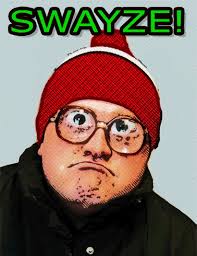
7. videos da bada white snack
I had to include this one, because it apparently got 9 hits! Why?
6. oshawa women that like to fuck
Local easy girls, for when hookers are too expensive.
5. marilyn manson without ribs
Even I know that rumour isn’t true.
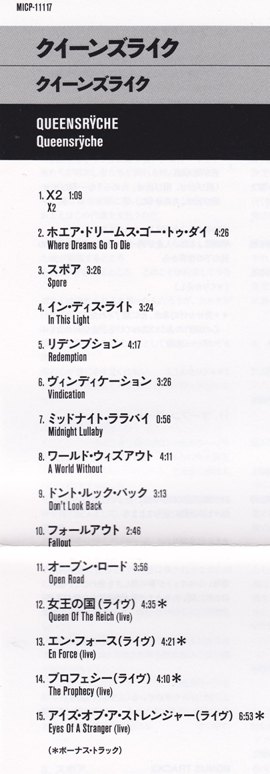
4. (Three-in-one!) a. queensryche queensryche eyes of the strangers japan bonus b. queensryche queensryche eye of the strangers japan import c. queensrycheeye of the strangers japan bonus youtube
I got this Japanese import CD from one of our franchisees. Even though we technically were not “allowed” to buy CDs from one of our franchises, we all did it, even the head office people who enforced the rules. In this case the franchisee himself was glad to have a guaranteed sale, rather than sit on an expensive Dokken flop for several months in inventory. It even came with the original obi strip, stickers, and everything else was mint. The scarcity of the complete package was reason alone to buy it.
The infamous Shadowlife will probably go down in history as the worst Dokken album. It’s certainly the most dysfunctional (even though that was the title of the previous, much better album). The dysfunction largely came down guitarist George Lynch, who according to sources at the time, purposely sabotaged the album. He did this to put an end to Dokken, go the claims. Don himself was very unhappy with it, as quotes from the era will reveal (look them up). He also referred to a lead vocal shot (“Here I Stand”) by bassist Jeff Pilson as too “bar band-y”, meaning the lead singer of a pro band is the lead singer, and the bassist is the bassist. Clearly, ego was an issue as well.
Kelly Gray
Not to escape without blame is producer Kelly Gray, who had just ruined the career of Sven Gali a couple years prior. Gray produces, engineers, mixes, and even co-wrote a couple tracks. According to Don, Mr. Gray would not let the band sing their trademark harmonies, opting for grittier more modern sounds. Gray’s trademark distortion on the lead vocals is omnipresent.
There are very few standout tracks here, although many have good parts and interesting bits. It is difficult to remember any songs distinctly even after a few listens. The grungy “Puppet On A String” is OK, due to a blazing George Lynch guitar solo (although buried in the mix). It has a heavy groove, but the distorted lead vocal wrecks it for me. “Cracks in the Ground” is better, containing a shadow of the Dokken harmonies, but mired in boring melodies and production. “I Feel” sounds like Dokken, at least. Not really great Dokken, but Dokken nevertheless.
The Japanese, always so lucky, got two bonus tracks: “How Many Lives” and “Deep Waters”. Neither stand out any more than the album tracks. Not really a bonus this time, sorry Japan. If anything, these songs detract from the album, by making it a longer, more agonizing experience.
In general the album is too slow, too tunelessly dull, too dreary. It’s disjointed and it’s uninspired. Too rainy, like a dark Seattle mist. Mick Brown does rock, at least. There are a few heavy songs, such as “Hello”, but I think my favourite song would be the moody acoustic ballad “Convenience Store Messiah”. It’s the only song that sounds like a fully composed, complete arrangement.
Avoid.
1/5 stars
Afterword:I played around the idea of just writing a two word review a-la Spinal Tap (“Shit Sandwich”). I was going to call it “Shadow Turd”. In the end, my OCD level attention to detail refused to allow it, and the wordy essay on the art of turd-making you just read was posted instead. I’m sorry. (Blame Kelly Gray for that, too.)
QUEENSRŸCHE – Queensrÿche(2013 Avalon Japanese import)
I purchased and reviewed the domestic “deluxe edition” of Queensryche (2013) in July of this year. I initially gave it a 3.25/5 stars, but I have since revised that score to 3.5/5. The album continues to appeal to me greatly months later, which is more than I can say for most Queensryche discs since Promised Land. At the end of that review, I cryptically added, “Oh, and the live bonus tracks absolutely smoke.”
Since nobody likes a tease, I’ve decided to focus on all four live tracks for this review. For the very reasonable price of $32 USD plus $3 shipping, I had a sealed copy of Queensryche sent to me from Japan, so I now have all four live tracks. If you want the short report: They’re good enough that Queensryche should consider releasing a full live CD/DVD. I’d buy it based on these four tracks. But nobody comes to mikeladano.com for the short version.
“Queen of the Reich” is the first song I ever heard from the original Queensryche, as I suspect is true for most of the band’s fanbase. Right from the opening scream, I feel that this is the band that represents Queensryche. Every note is nailed, as is every scream. On this song Todd La Torre can do no wrong, but not just that. I would say that his versions are, in general, fresh sounding. He is reverent to the originals, but I also hear his own voice. I must also commend Scott Rockenfield. His drums are heavy as fuck, and his bass drum precisely punctuates every beat.
“En Force” is a welcome surprise. In 2001, Eddie Jackson told me that it was considered in the running for the Live Evolution album but did not make the cut. The good news is the guys still know how to play it! This has never been my absolute favourite track from The Warning, but to hear it live with all the screams intact? That’s something I never thought would happen again.
“Prophecy” is a difficult song, and although Todd doesn’t sing it album-perfect, I have to ask myself, who else these days can sing these Queensryche songs like this? Not too many singers. I just hope Todd doesn’t blow out his voice. I’m sure this kind of singing takes its toll.
Last is the classic “Eyes of a Stranger”. This is the only bonus track not from the stone ages of the Ryche, the only representation of Operation: Mindcrime. It is actually this track, in many respects, that shows off the talents of Todd La Torre. It is another side of the spectrum, and Todd pulls this off as well. Look, I know Geoff Tate’s the original, etc. etc. I get that. Focused on the here and now, this is how I’d like to hear Queensryche sound. Heavy, slightly progressive rock music with shredding vocals. That’s what I like, and Queensryche deliver on these four bonus tracks.
Lastly, a word about Parker Lundgren. I remember when Kelly Gray joined the band, on Live Evolution he lent a different sound to the band. It was good, just different. Parker fits much more seamlessly. He doesn’t attract attention to himself by playing things differently, he played it the way you remember it.
Yeah, so I bought the album twice. You knew I was going to. For the bonus tracks:
In a previous chapter, I mentioned that in 1994, I had created our store’s very first online ads. They were in colour, made in full glorious ANSI, and eye-catching. We even had a flashing logo on screen! I did this for free, because I was so passionate about the store. And it was fun! (Tip: One thing I had to learn was that if you do something for free once, it becomes expected later.)
The reactions were mostly positive. One guy, a 14 year old kid who went by the online handle “Mr. Self Destruct” (I think his real name was Justin), posted a message that was a bit of a wake up call.
“The kind of things I look for,” he said, “like imported Nine Inch Nails and Pop Will Eat Itself singles, you can’t get at a mall store like the one that Mike works at. You can only get those downtown, at the good stores.”
That burned! So I decided to do something about it.
The boss had always told T-Rev and I to order stock that we thought the store needed. We both took this to heart. T-Rev for example made sure we stocked things like the new Guns N’ Roses single (“Sympathy for the Devil”) and several other up and coming titles. Later on, Trevor made sure we stocked all the Oasis singles. I took care of the Nine Inch Nails side.
I ordered in “Sin”, Pretty Hate Machine, “Head Like A Hole”, Fixed, and Broken. Fixed had just been deleted, we missed that one. I ended up buying copies of “Sin” and Pretty Hate Machine for myself (we ordered 3 copies of each). Unfortunately, it wasn’t like having a few of these titles in stock changed the fortunes of our store. They sold all but immediately, but there was no sudden and dramatic jump in numbers. Yet, by summer 1995 we had a much cooler selection. I like to think we made a difference, albeit a small one, to music lovers. We sure did try anyway. It was more about just loving the job and store, and wanting to give 200%.
By that summer, we were even carrying live bootlegs. The boss picked them up in Toronto, and he’d walk in with a box full of 20 or 30. I remember T-Rev and I drooling all over them and the boss warning us that there would be no discount on these puppies! (I didn’t need a discount to want them!)
This period circa 1995-1996, was probably my personal peak at the record store. It was my peak time for happiness, for motivation, input, pride, and satisfaction. It was a time of mutual respect, fellowship, and hard work. I loved every day of it.
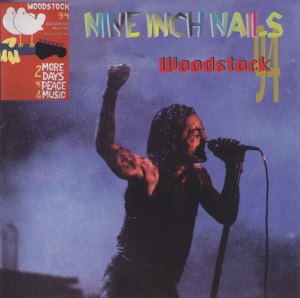
Our inventory now had some stuff that you couldn’t get at the cool downtown stores. I still have some of the bootlegs that I bought: bands like Guns N’ Roses (Covering ‘Em) and Nine Inch Nails (Woodstock 94). There were lots more titles (such as the Pearl Jam edition of Covering ‘Em), and our boss would try to get multiple copies of the good ones, like Nine Inch Nails. We even started getting in Japanese imports! I remember when we carried Hormoaning, by Nirvana, it was like $60 with taxes. The one guy who bought it had to trade in most of the rest of his collection to buy it. My buddy Aaron got the other copy.
I spread the word online, and a few of those people became customers. Guess who was among them? Mr. Self Destruct!
“Part 6 in a miniseries of reviews on Rob Halford’s solo career! If you missed the last part, click here!” That was a rhyme, that ain’t no crime…Breaking the Law! Breaking the Law!
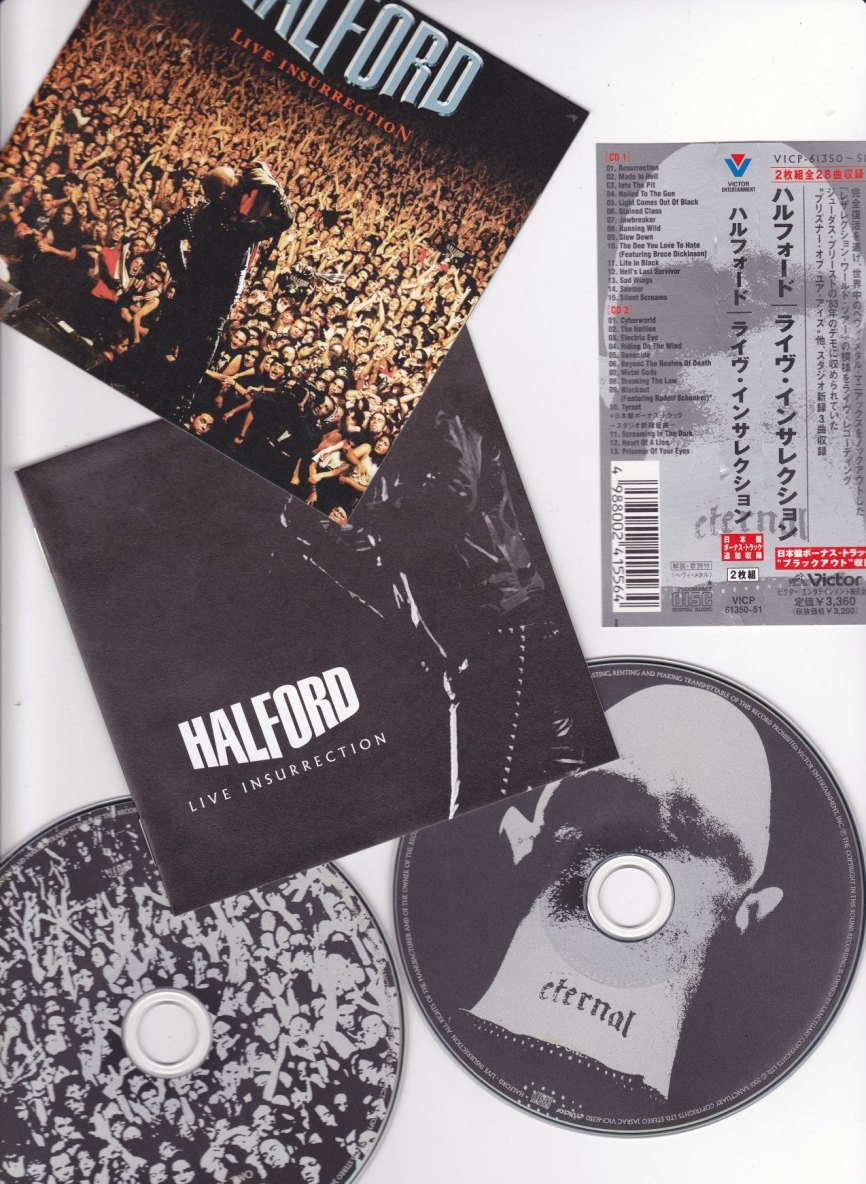
HALFORD – Live Insurrection (2002 Japanese Import)
Having a wealth of solo and Priest material to draw from, this seems like a good place for a double live album to drop. And so it was; Live Insurrection, Rob’s first full-fledged live solo outing. For me personally, this is the peak. This Rob’s home run of solo projects.
Admittedly, there is a certain sense of Rob trying to bury parts of his recent past. There are no songs from Two, and the set is Priest-heavier than prior tours. I found the Halford band to be kind of faceless, a little devoid of personality. They’re absolute pros and there is no question of them cutting it. That’s not the issue, it’s just one of…I can’t hear the different personalities of the players, compared to Fight.
On the other hand, the setlist is so much richer than Fight used to do. The songs are culled from the Halford album Resurrection, the Judas Priest back catologue, and the first Fight album, with a lot of added surprises.
These surprises include three studio tracks, two of which are tracks written by Judas Priest, but never released at the time! You also get Rob’s duet with Bruce Dickinson of Iron Maiden, “live” (recorded during rehearsal I believe), and the two bonus tracks from the Japanese version of the Halford album, once again performed live. Rob even sings his first-ever solo track, “Light Comes Out Of Black” which was originally on the Buffy The Vampire Slayer soundtrack back in 1992. The Priest material is a great mix: old obscure stuff from Sad Wings and Stained Class, as well as more obvious stuff from Hell Bent and Screaming. Rob’s voice is in fine form, doing justice to the Priest and Fight material.
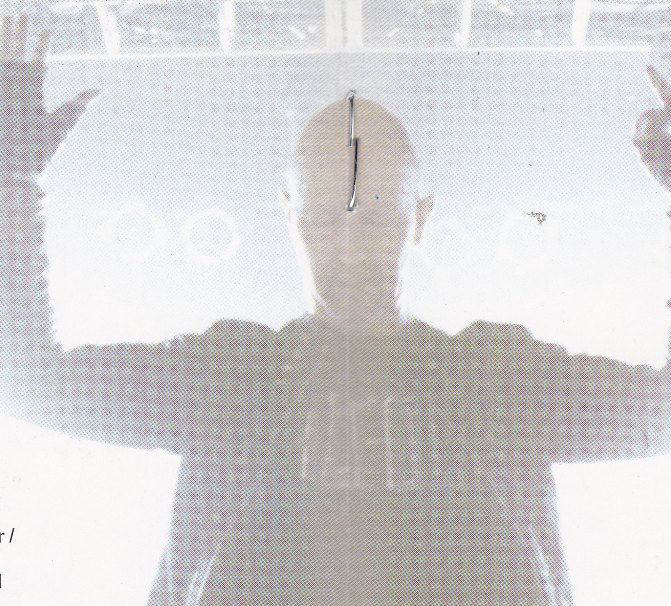
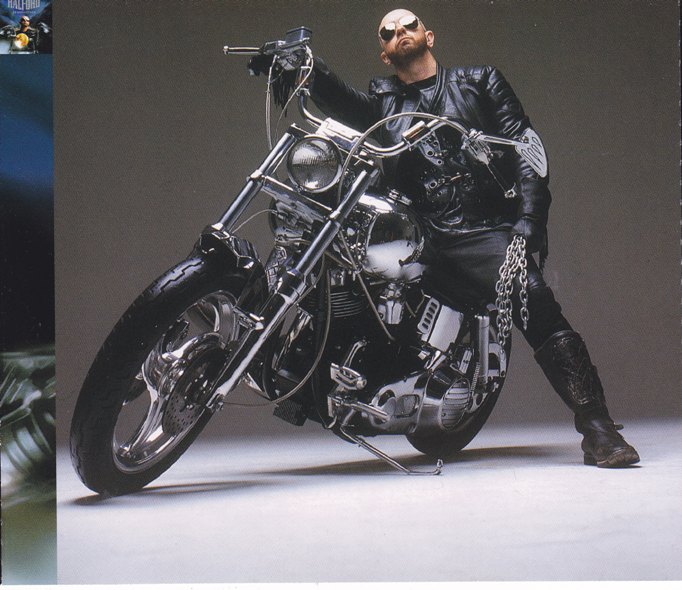
Rob’s so hardcore, he stapled his fuckin’ forehead!
The Japanese bonus track is “Blackout”. Yes, the old Scorpions tune, and recorded here with a Scorpion: Rudolph Schenker! Halford easily handles Klaus Meine’s vocal part. It’s a great bonus track, easily worth the extra cash that I spent on this import version. I got this from Amazon.com in 2002.
They give you lots of great packaging with this live album. Decent liner notes, lots of pictures, plenty to look at while you spend a couple hours listening to this platter of metal perfection. Enjoy the feast.
5/5 stars
I’ll be taking a summer break from this series. I’m a bit burned out on Halford albums now, and there are so many new arrivals to listen to! But fear not. I’ll be following this review with Crucible, another Japanese release, a box set, and more.
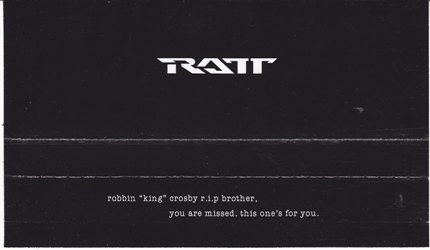
RATT – Infestation (2010 Roadrunner Japanese and iTunes editions)
Ratt needed a comeback. Lineup changes galore, deaths, poorly-received changes in sound — forget all that stuff. The band has since stabilized. Pearcy’s back on lead vocals, and Carlos Cavazo (ex-Quiet Riot) has taken over guitar duties from John Corabi. Corabi’s a rhythm player, not a soloist (and that’s not a knock on Corabi). Cavazo rocks out quite a few solos on this album. The difference is noticeable, and it’s a welcome return to something like the Ratt sound of yore. Do you like twin leads? Cavazo and Warren DeMartini rip out a few, each with his own distinct sound, but meshing well like they’ve been doing this forever. Cavazo also contributes strong co-writes to about half the album. Surely, you can’t imagine a better match than this for Ratt.
Pearcy’s in great voice, the passages of time disguise-able. But be forwarned, if you never liked Pearcy’s style before, this album is not going to change your mind. His vocals are augmented by some nice, but not overdone, backing vocals from the band. Longtime bassist Robbie Crane supplies backing vocals while holding down the bottom end.
The sound of the album is pure Ratt, but modernly produced; surely the best sounding record they’ve done so far. Picture a heavier Out Of The Cellar. There are nods and winks to other eras of Ratt as well: I hear a little bit of “Way Cool” here and there, and damned if “Best Of Me” wouldn’t have fit right in on Detonator. Yet this is no retro-fest, as much as it does echo the 80’s. There are still sounds here that sound tougher and more modern, like the fast and heavy opener “Eat Me Up Alive” (my second favourite song). There’s filler here, but even the filler is worth holding your finger off the skip button. All except perhaps the dreadful “A Little Too Much”.
There Japanese bonus track is a cool slow groove rocker called “Scatter”, with a great memorable chorus. This is the best song to me. Itunes got the track as well, but because I always prefer a physical edition, I bought the Japanese for my physical copy. You will have to judge the value of that expenditure yourself, however I deemed it worthwhile.
There are also three live bonus tracks on the iTunes version, worth getting. These songs are “You Think You’re Tough”, “Tell The World”, and “Way Cool Jr.”, all previously unreleased and with Cavazo on guitar, “Live from the Rockline Studios”. “You Think You’re Tough” is my favourite song from Ratt EP.
If you have ever liked Ratt, pick up Infestation if you’re curious what the band sounds like 25 years later. This is a solid Ratt album, not classic, but song for song among their better records. They’ve retained their signature “Ratt N’ Roll” sound, but also what dignity and integrity a bunch of Ratts have. Well done.
You gotta give ’em credit for trying. Three (!) singers since Steve Perry left, and Journey still refuse to patch it up or pack it in. Arnel Pineda is still the singer, back here for his second Journey album, and now contributing songwriting to the mix.
Otherwise, Eclipse (stylized as ECL1PS3 on the cover art) is heavily dominated by Neal Schon and Jonathan Cain, and you can tell that this is Neal’s album. Upon playing Eclipse, you will be inundated by colossal Schon riff after colossal Schon riff. This is backed by some dramatic synth by Cain. It’s a much heavier Journey album than any in recent memory. It’s a good mix, and producer Kevin Shirley captured it. I’ve been skeptical in the past when Journey puts out a new album and says, “This is us being heavier.” Stuff like the Red 5 EP…they were just underwhelming and were missing the soul of Journey.
I would argue that the soul of Journey belongs to Steve Perry, but Arnel Pineda turns in a stunning performance this time. Not that he didn’t last time, but this time it sounds less like he’s trying to be Steve Perry. This time it sounds like he’s more himself, and it’s better that way. Incredible set of pipes on this man by the way.
As long time fans know, Journey did three albums before Steve Perry joined the band. These albums had their roots in more instrumental, progressive rock. One or two of the guitar passages on Eclipse sound a like stuff from those first three albums. It’s fleeting but it’s there.
Fave track: “Edge of the Moment”.
Most Journey-esque song: “City Of Hope”. (It even calls out an older Journey song title called “Message Of Love”.)
Meanwhile, the fine “She’s A Mystery” (co-written by Pineda) is a great little epic acoustic/electric song with some sweet Schon overtones that sound like gulls flying overhead. It captures the vibe of the more atmospheric material from Trial By Fire that I liked so much.
The extra thick case of the Japanese CD, can’t replace it if you break it!
The Japanese bonus track is a live cut of “Don’t Stop Believin'”, from the DVD Live In Manila. No live album was ever made of that live concert, so this is a CD exclusive. The Japanese CD also comes in an extra wide case, housing a lenticular cover insert. Very similar to the recent “3D” Kiss Monster cover.
The thing about Journey albums of late is memorability. Your brain says “this is a good song, it has a melody I like,” but a day later you can’t remember how the song went. Eclipse is also like that. All the songs are strong, melodic workman-like Journey songs. They just seem to lack whatever it was about the classics that made them stick in the head. Maybe I need to listen to it more, but I rarely have the craving to do so, when I can spend the time with Trial By Fire.
HALFORD – Resurrection (2000 Japanese edition, 2008 remastered edition)
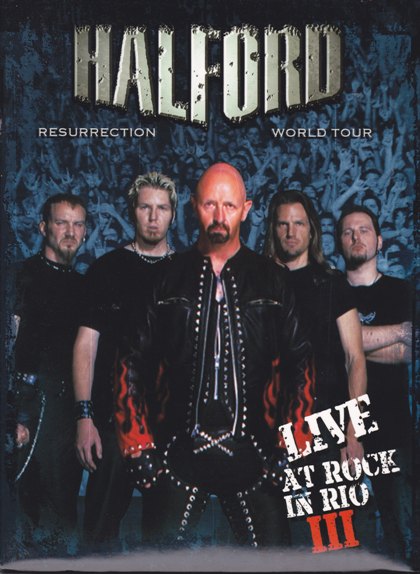
Note: There have been several versions of this CD. The original CD and Japanese import versions had a certain tracklisting, but the track order was changed up a bit for the Remastered edition (see tracklists at bottom). Since that’s the version that’s out right now, that’s what I’ve decided to review. I got mine in a combo pack with the DVD, Resurrection World Tour Live at Rock in Rio III. Rob has also retroactively started to number his solo albums; as such the remastered version is technically Halford 1: Resurrection.
Voyeurs by Two was not a mega seller regardless of the association with Trent Reznor and Nothing Records. Rob needed to return to heavy metal or risk alienating his fanbase.
I think pretty much everyone was enthused by the title track and lead off single, “Resurrection”. This wasn’t techno wizardry with whispery vocals. This was heavy metal, with screams! Although Rob was already headed in that direction at the end of Two, while working with Bob Marlette, it is Roy Z that drives this one single home. Yes, Roy Z, the Roy Z that Bruce Dickinson utilized to collaborate on manya greatsoloalbum. With Halford now drinking at the well of riffage that is Roy Z, “Resurrection” was bound to smoke. And it does. Take the sound of classic Judas Priest circa Painkiller, adjust for 10 years of sonic trends, stir in Roy Z, and you have “Resurrection”. Rob makes sure you know he’s serious from the very opening, screaming as only he can.
What I dislike are the lyrics. “I walked alone into a Fight”? Rob, you weren’t alone, you had Scott Travis with you! “I tried to look too far ahead, and saw the road lead to my past instead.” In other words, sorry about the Two album, this is what I really want to be doing.
The first three tracks totally smoke, all falling somewhere in a Defenders/Painkiller vibe of Priestly goodness. At first I didn’t like “Night Fall”, the fourth track, too much. Its redeeming value is a great chorus, totally in the Defenders mold.
“Silent Screams” is one of the songs that Rob was working on with Marlette at the end of Two. Rob was especially proud of this lengthy number, and he released a demo version of it for free on his official website. The demo version is an evolution from Two. It has screams (appropriately enough) and heavy guitar riffs. The album version has a more emotional lead vocal and tones down the keyboards. The song is a bit slow and ploddy to start with but it is epic in quality and it sure does rock by the halfway point!
The big gimmick on the album was the duet with Bruce Dickinson, “The One You Love to Hate”. The connection is Roy Z, but obviously a matchup like this would generate much hype. Arguably the two best singers in metal, together at last. Bruce sounds great, holding his own against the Metal God, who sounds vintage 80’s. I have to say I enjoyed this one a lot. Shortly thereafter, there were rumours of a coming supergroup called the Three Tremors – Rob, Bruce, and Geoff Tate of Queensryche. All three artists were touring together at the time, but this idea was never meant to be taken seriously.
“Cyber World” is fast and heavy but unfortunately also boring and skip-worthy. Likewise, the groovier “Slow Down”. Dull title, dull song. I tend to think of Resurrection as losing steam on side 2. I guess that’s why the remastered edition inserts the Japanese bonus track “Hell’s Last Survivor” right here. Sounding something of a Screaming for Vengeance outtake, I think this was placed here to compensate for some of the weaker tracks.
“Temptation” is a little on the boring side, so two new tracks are inserted at this point for the remastered edition: “God Bringer of Death” and “Fetish”. In my opinion it doesn’t sound like they belong here. Rob’s voice had changed a lot in the 8 years since, and the sound is more like later Halford albums. Neither song is particularly notable.
On the other hand, “Sad Wings”, which was previously only on the Japanese version, is awesome. It has a sharp riff and a chorus that is designed to remind you what band he was the singer of. This is followed by “Twist” which sounds like maybe it had its origins in Two, but I like it a lot. “Drive” is also pretty decent, and the album ends with “Saviour” which has an anthemic chorus.
Bottom line: Pretty decent if a bit safe comeback. Rob wasn’t treading any new ground here musically, but Roy Z never fails to class up any album he’s on. His tasteful and blistering solo work is just marvelous.
Back then in the olden days, you were actually expected to type that whole url into your browser!
RECORD STORE TALES Part 204: An Introduction to sHEAVY
MARCH, 2000. Saturday night. One of our store owners was throwing a house party. Tom, being the usual musical selector at parties, put a cassette on for me. He rewound to the beginning and hit “play”.
“Mike,” he said, wild-eyed with excitement. “One of my customers gave me this tape. It’s the new Ozzy. It’s not out yet. This is a bootleg copy.”
This intense, guitar heavy distortion faded in. The voice, also distorted and processed, was a dead ringer for a young Ozzy!
“Ozzy’s singing great, isn’t he?” Tom inquired mischievously.
“That’s not Zakk Wylde on guitar,” I retorted. “I’d know if it was Zakk, and that guy’s not Zakk.”
Tom faltered. “That’s, uhhh, the new guy.”
I called bullshit. “This isn’t Ozzy. It sounds a hell of a lot like early Sabbath, and it’s really good, but it’s not Ozzy.”
“Fuck!” Tom spat out. “I can’t believe you got it so fast. When I heard it, I truly thought it was new Ozzy at first. At least the way the new Ozzy should be, you know what I mean? Hear all that fuckin’ Sabbath going on there?”
I did indeed hear all the Sabbath going on. In fact, of all the bands that people hyped to me as being “Sabbath-y”, this band came closest.
The band is from St John’s, Canada, and they are called Sheavy. They kicked serious ass. The album we were listening to was 1998’s The Electric Sleep. The song: “Virtual Machine”. Often found on many bit torrent sites as a “lost” Black Sabbath reunion song. It is not. It is Sheavy, and that’s how close they nail the vintage Black Sabbath sound.
The singer is a fellow named Steve Hennessey, and according to the CD booklet, he once had an audition with Tony Iommi and Black Sabbath’s then-producer, Bob Marlette! What could that have been for? An Iommi solo album, or Sabbath itself? The CD doesn’t reveal. “Special thanks to Tony Iommi, Bob Marlette, Ralph Baker and Paul Loasby for the audition and an experience I will never forget,” is all it says! He nails every inflection that Ozzy used to do, it’s that uncanny.
I marveled at the music, and decided to buy it the next day. I ordered it from Amazon along with Jalamanta, the first solo album from then-Fu Manchu drummer Brant Bjork. (Even though I worked in a record store, there was no point in trying to order obscurities like these through our supplier.) When they arrived, I was blown away by both. I occasionally brought Sheavy to the store to play at work, and many people asked if this was the new Sabbath or the new Ozzy. “Nope,” I’d say. “This is a band from Newfoundland and Labrador called Sheavy. They’re awesome.”
Unfortunately for a Canadian band, their albums were really hard to find! A little while later, I picked up the next album, Celestial Hi-Fi, on Japanese import, from HMV. The bonus track “Nine December” is an asskicker that made it worth the extra cash. They’re just an awesome band, and they grew past the Sabbath-clone tag after a couple albums. Unfortunately, toiling away in relative obscurity for almost 20 years has taken its toll, and the band’s future is uncertain. For that reason I’m grateful they’ve left many great albums behind.
For the last installment of this series, click here.
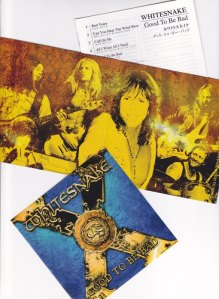
WHITESNAKE – Good to Be Bad (2008 Warner/SPV)
Whitesnake disbanded in 1990. Coverdale did his album with Jimmy Page, but that didn’t prove to last either. Although they’d started writing for a second album, the affair ended and David Coverdale assembled a new Whitesnake for a Greatest Hits tour in 1994. This reformation eventually led to an album in 1997 called Restless Heart (billed as “David Coverdale and Whitesnake”. This R&B flavoured album, a personal favourite, did not resonate with some fans of 80’s ‘Snake.
After another hiatus, and a solo album (2000’s Into the Light), David once again formed a new group of ‘Snakes, a mixture of old and new members. After several years of touring (and lineup changes), the long awaited new Whitesnake album, Good to Be Bad, hit the shelves in 2008. Former Dio guitarist Doug Aldrich and Winger’s Reb Beach had been a formidable guitar duo since 2002.
Similarly to his partnership with Adrian Vandenberg, David has retained his writing style of co-writing with just one co-writer; in this case, Aldrich. It seems to be evident that the guys have gone for a John Sykes guitar sound and style. You can certainly hear a lot of trademark sounds and tricks that Sykes used to do, that gave the 1987 album such a cool sound. This isn’t to say that they don’t play plenty of their own style too, but the retro stuff is frequent.
So similar is the direction of this album to 1987, that you can play “name that tune” with all the new songs:
“Can You Hear The Wind Blow” for example directly references moments on 1987, right down to those flares that Sykes used to do. “All I Want, All I Need” equals “Is This Love” Part Deux. Basically, every song on Good To Be Bad is a mash-up of songs from Coverdale Page, 1987 and Slip Of The Tongue, and you can hear the references quite distinctly. “A Fool in Love” is “Crying in the Rain”. “Lay Down Your Love” is “Shake My Tree”, without Jimmy Page. Throw in a little “Kashmir” during “‘Til The End Of Time” (which seems to be based off “Till The Day I Die” from Come An’ Get It) too.
Having said that, despite the lack of originality, Good To Be Bad is still a very enjoyable listen, and a very welcome return. A world without David Coverdale’s voice is like a world without crème brûlée. That voice is in fine form, perhaps even stronger than it was on 1997’s Restless Heart. The album has a lot more life to it than Restless Heart, although it does lack that album’s subtlety and R&B moments. The band play great, kicking it on every tune, even the ballads. The melodies are strong and memorable. It’s just…too contrived.
The bonus live disc is the the Canadian special edition is highlights from Live: In The Shadow Of The Blues. No big deal. It’s nice to hear Whitesnake playing “Burn/Stormbringer” from David’s Deep Purple days, and cool to hear the old 70’s classics.
The real cool version to have is the Japanese release with two bonus tracks. And a sticker! Can’t forget the sticker. The bonus tracks are both remixes (a “Doug solo” version of “All For Love”, and a stripped down version of the lovely “Summer Rain”). For $20, I wasn’t complaining.









 Otherwise, Eclipse (stylized as ECL1PS3 on the cover art) is heavily dominated by Neal Schon and Jonathan Cain, and you can tell that this is Neal’s album. Upon playing Eclipse, you will be inundated by colossal Schon riff after colossal Schon riff. This is backed by some dramatic synth by Cain. It’s a much heavier Journey album than any in recent memory. It’s a good mix, and producer Kevin Shirley captured it. I’ve been skeptical in the past when Journey puts out a new album and says, “This is us being heavier.” Stuff like the Red 5 EP…they were just underwhelming and were missing the soul of Journey.




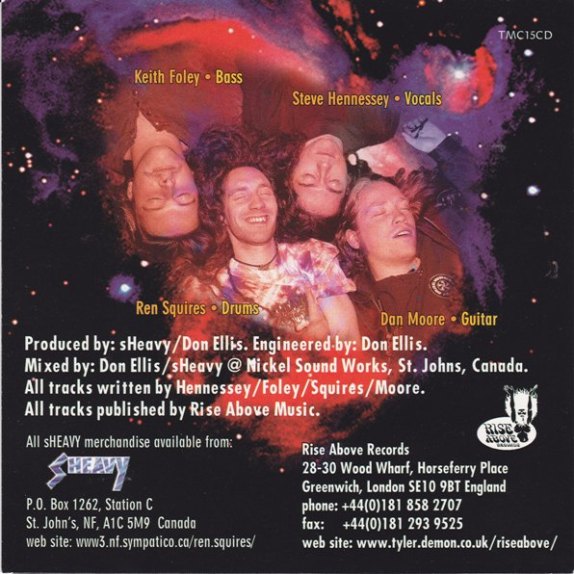
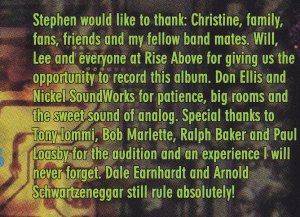 The singer is a fellow named Steve Hennessey, and according to the CD booklet, he once had an audition with Tony Iommi and Black Sabbath’s then-producer, Bob Marlette! What could that have been for? An Iommi solo album, or Sabbath itself? The CD doesn’t reveal. “Special thanks to Tony Iommi, Bob Marlette, Ralph Baker and Paul Loasby for the audition and an experience I will never forget,” is all it says! He nails every inflection that Ozzy used to do, it’s that uncanny.




 mikeladano.com