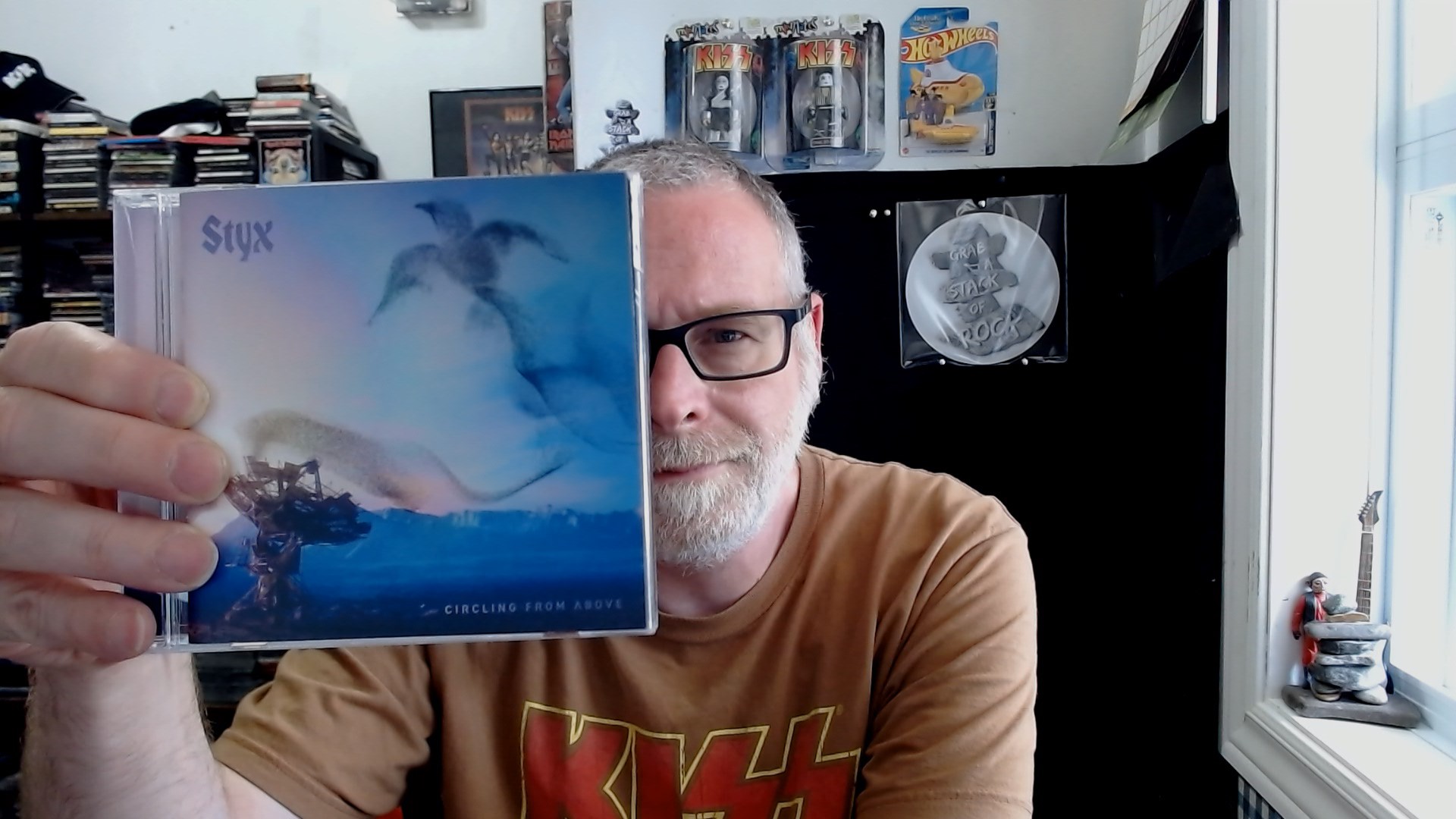
Our Music and Mental Health series on YouTube seemed to do some good. We decided to keep going with it. Viewers told us they’d like updates on how we’re all doing, so here’s an update on:
Jen’s health
House issues
Writing Grandma’s funeral speech
The speech is now coming along, and I’ll be proud to post it here after the funeral.
I hope you get something from this video, because when things get hard, sometimes you just gotta laugh.
Click the pic below to get to our Music & Mental Health playlist on YouTube, and check it out.
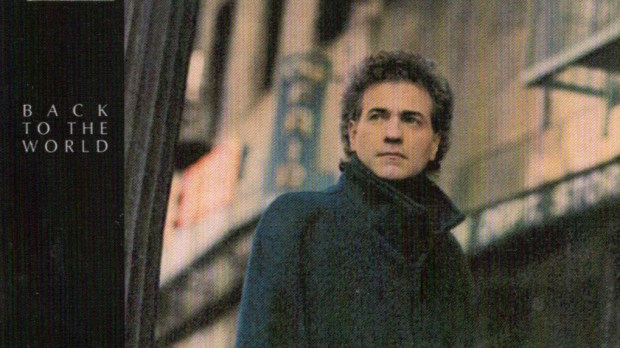
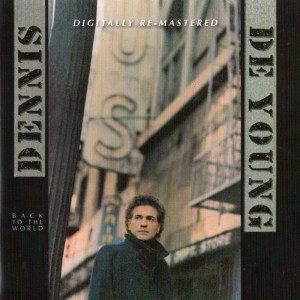
DENNIS DeYOUNG – Back to the World (1986 A&M, 2013 BGO reissue)
Though his solo debut Desert Moon was a moderate hit, Dennis DeYoung took no time off and was back with a second album two years later. Still using Tom Dziallo on guitar, Dennis also added C.J. Vanston on keyboards. With Dennis being an acclaimed keyboardist himself, was this too much of the instrument? Once again, DeYoung wrote everything himself, with no cover tunes this time.
Opening the album is the theme from The Karate Kid II, “This Is the Time”. Fortunately the song is a lot better than the film. With emphasis on saxophone and keyboards, this is a pleasant, anthemic light rock theme. With some exposure, it could have been a minor hit, but fortune was not with Dennis this time. The track only made it to #93, while the album peaked at #108.
“Warning Shot” has a bombastic Styx-like opening, though with less emphasis on guitar. Dennis’ singing here is top notch, employing a lovely falsetto when necessary. When the chorus hits, it feels like this is the Dennis we have been waiting for. A spectacular guitar solo brings it into a classic rock realm, but really “Warning Shot” is all chorus. A host of backing singers join in and the song launches into the stratosphere. It should have been a single.
The biggest hit, the ballad “Call Me”, was the single, which hit #5 on the Adult Contemporary charts, where no Styx fans were likely to hear it. It has some nice saxophone textures, but it’s unremarkable and will always live in the shadow of Dennis’ better known ballads. It’s just too light. “Unanswered Prayers” is better, with some lyrical guitar work in the intro and solo. This slow number feels like a nice one for a slow dance, but the album needs a jolt of energy and this isn’t it.
Opening side two, “Black Wall” is darker and harder edged. It’s a slow burner with focus returning to the guitar. It is not exactly the energy injection we need, but at least it is a change of direction. The “Black Wall” in the title refers to the Vietnam Veterans Memorial, in Washington D.C. The powerful music is suitably dramatic and deliberate, with the soulful backing vocalists dominating the chorus.
A bluesy harmonica solo introduces “Southbound Ryan”…but the electronic tom tom drums just jar you when they come in. Fortunately once that’s out of the way, we’re onto one of the best tracks on the album and the shot of energy we so desperately needed. A smoking horn section blasts forth, and the tempo is finally hot! That horn section is like the jelly in a PB&J! So sweet, so good, just the perfect punch for a song that deserved it.
Fortunately, the tempos and horns remain on the next song, “I’ll Get Lucky”. We’re definitely in the 80s now, with more keyboards and programming at the forefront. Notably, C.J. Vanston contributed a rocking instrumental section in the middle. The song is a bit jerky, going from dense sections to sparse ones, and it feels bumpy compared to the prior one. Would it have been better had Dennis just played it simple instead of trying to get so clever with the production? Once again, Dennis produced the album himself.
The final song, “Person to Person” has a Styx-like vocal and might have worked on one of the later albums. It’s a little too savvy for a pop record, which is a good thing. Had Styx done it, hopefully it would have less synth and corny toms, but it was 1986 and that was the sound to have. At least Dennis closed the album on an uptempo note, and a song with a memorable chorus.
Had Dennis employed an outside producer, perhaps his first two studio albums would be more even. Back to the World and Desert Moon share this problem. Both albums sag in spots, and despite some awesome songs throughout, there are not enough of them.
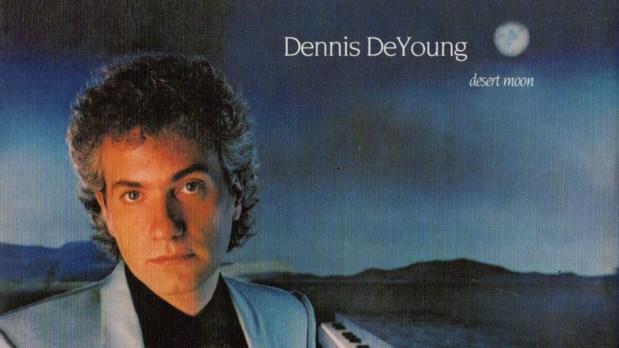
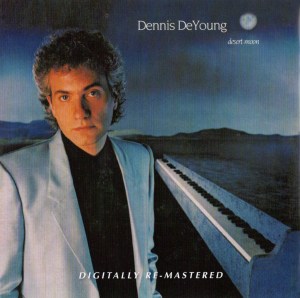
DENNIS DeYOUNG – Desert Moon (1984 A&M, 2013 BGO reissue)
Alas for me in ’83, Styx were coming very close to an end. Tommy Shaw didn’t want to sing songs about robots (or something) but what it really came down to was Dennis DeYoung’s vision vs. his. Dennis was the theatrical one, and Tommy was the rocker. That’s putting it in simplistic terms, but by the end of the tour, Tommy was out. The other three members of Styx wanted to replace him and carry on, but Dennis was not interested. In 1984, Styx issued their live album Caught in the Act, and said goodbye. Less than six months later, Dennis DeYoung was out of the gates with his debut solo album.
Desert Moon demonstrated that Dennis was full of new ideas. He wrote seven of the eight songs, with a Hendrix cover in the mix, and no co-writers. Not that Dennis needed co-writers before, but he did often share credits on early Styx tracks with his bandmates. Guitars on Desert Moon were handled by Tom Dziallo, who also programmed drums when necessary. Dennis takes care of all keyboard duties, augmented by saxophone on some tracks.
I can distinctly remember watching MuchMusic in 1984, when a new Dennis DeYoung video came on, called “Desert Moon”. It was a top 10 hit, and a ballad. I was quite clear in my youth that I did not like Styx for their ballads. I dismissed Dennis as a solo artist immediately. I am sure he was broken-hearted that a 12 year old Canadian kid didn’t like his new direction.
I should not have dismissed Dennis so easily. If I had bought his new album, I would have loved the opening rocker “Don’t Wait For Heroes”. It could have been a Styx song, the upbeat triumphant kind of single that they were known for pre-“Roboto”. Styx fans might have considered it a return to form for the singer. While not as guitar-heavy as the two-guitar band, it does rock, with the drums (by Tom Radtke) in particular driving the song. The melodies evoke “Don’t Let It End (Reprise)” on Kilroy Was Here, but with more edge. The end refrain of “get up, get up, get up!” should indeed make you get up.
Guitars come to the forefront on “Please”, with a riff and a chug. Then on the pre-chorus, Dennis lets the keyboards come out. “Please” is a duet with Rosemary Butler, a singer with dozens of albums on her resumé. A tasty guitar solo continues to keep things accessible to Styx fans, but the duet is really impressive. Butler goes head to head with DeYoung, and blows him away by the end with some incredible high notes.
New wave sounds inflect “Boys Will Be Boys”, which Dennis delivers with spoken-word verses. The fast beats and bouncing synth recall Devo and bands of a similar nature, not to mention that Alice Cooper ’80 sound. There is also a clear 1950s influence on the chorus, with that “dip dip dip dip dow!” The production recalls “Music Time” from the final Styx record Caught in the Act.
You don’t know that you’re listening to a Hendrix cover at first. It sounds more like a slowed down “Peter Gunn”, but then Dennis sings those lines. “You don’t care for me, I don’t care about that…” Only then do you realize you are grooving to “Fire”. Unlike every other cover of it, Dennis all but rewrites it as a slow rock groove. While “Fire” is not an album highlight (think about that a moment), it is one of the most interesting versions you’ll ever hear. It takes guts to reimagine a song like “Fire”, and it takes talent to pull it off so well.
The aforementioned title track “Desert Moon” opens side two. It was the top ten ballad, and it’s easy to hear why. It’s a slow, romantic sounding song with a resounding nostalgic chorus about summer nights, innocence and dreams. The formula worked. In the liner notes of the BGO edition CD release, Dennis credits the arrangement which emphasizes his voice, and therefore the lyrics. The guitar solo is also a thing of beauty, with one sustained note that just sings. A magnificent solo.
Dennis digs into his classic rock and broadway roots for “Suspicious”. It’s a DeYoung trademark, but in light of exceptional material preceding it, it tends to go unremembered. It might be a case of too much synth. “Gravity” uses such electronics as well, but in more upbeat setting. “I wanna climb Mt. Everest, and find my Shangri-La,” sings Dennis. The fast New Wave beats during the chorus are fun but the song struggles to find an identity, and the listener has trouble hanging on.
Desert Moon ends on “Dear Darling (I’ll Be There)”, a final ballad, and just not enough to recover the album from a dip in memorability at the end. It’s simply too much saccharine at the end of the day. Another upbeat track should have ended the album, though at least there is a fine sax solo to dig into.
Dennis suffered an injury while making a music video and never got to tour Desert Moon properly. Would it have made a difference? Unlikely. While Dennis was more than capable of delivering a good album on his own, left to his own devices, it didn’t have the consistency we were used to with Styx. Perhaps a co-producer would have made a difference, since Dennis produced this album by himself. The performances are all excellent, particularly lead vocals, but there needed to be more spark within some of the songs.
GRAB A STACK OF ROCK With Mike, Aaron KMA and Tim Durling
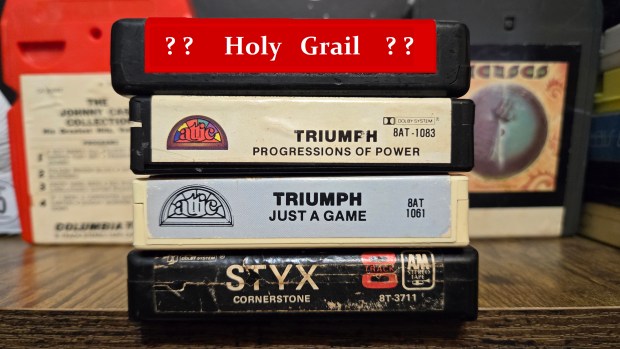
Special Edition Episode: An 8 Track Holy Grail & More
This video is years in the making. More than just an “unboxing” video, this is a fun and informative episode that documents one man’s journey to collect his favourite bands on obsolete formats, and another man’s ability to find them.
About four years ago, Aaron provided Tim with a rare 8-track tape that he needed for his collection. Another one of Aaron’s tapes went to Martin Popoff. But there was one tape that Tim needed to “complete” a specific collection. And this summer, Aaron found that one too. He just has a knack for it, and it seems appropriate that it was Aaron who found this last tape. There’s a story that goes with it, and three tapes that went to me as well!
“Complete” is in quotes, because this video is far more than just an unboxing video. This is a philosophical (and fun) discussion about 8-track tapes, collecting, and genuine Australian bubble wrap. We discuss breaks in the middle of tracks, altered track listings, and for good measure, a little bit about vintage Star Wars toys. We also speculate on one tape that may still be out there, but remains unknown.
This episode is in two parts. It begins with Aaron and I unboxing three beautiful 8-track tapes, and a number of birthday gifts. Also inside that box was Tim’s tape, which I mailed immediately to New Brunswick. The video cuts and picks up with Tim, ready to open his treasure in front of the cameras.
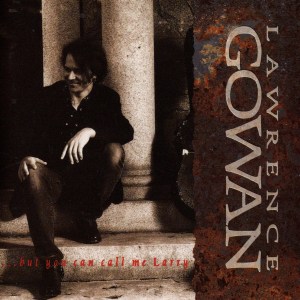
LAWRENCE GOWAN – …but you can call me Larry (1993 Anthem/Columbia)
Lawrence Gowan was clearly making changes for his first album since 1990’s Lost Brotherhood. He was now going by his full name, Lawrence Gowan, though long-timers had a hard time not just calling him Gowan. He assembled an ace crew of musicians including Robert Fripp and Tony Levin from King Crimson, Ken Greer from Red Rider, Jann Arden, and drummer/producer Jerry Marotta, who goes back with Levin. The result is a more organic album playfully called …but you can call me Larry. The sound is pure 1993, in the best possible way.
Tinkling acoustics open “Soul’s Road”, a far cry from from the synthesizers of a decade ago. This great song soon kicks into gear on the chorus with the crackling electric guitars and the cry of a pedal steel (by Greer). It reverts back to acoustics and piano on the verses. Gowan employs just a touch of rasp in his voice for an earthy vibe. It has just the right balance between hard and soft. Great opening track, and should have been a hit.
“When There’s Time (For Love)” features Colin Linden on guitar, and stays in the acoustic zone. This slow song is loaded with melody and passion, and once again really comes to life on the excellent chorus. This is a ballad for a quiet night in, but it isn’t lifeless at all. The drums keep it moving, and the musicianship on all instruments is absolutely stunning. Such a full, rich mix. You can really feel the bass. That’s Paul Northfield’s mixing work, done at Morin Heights in Quebec, where the album was recorded.
Co-written with Jim Vallance, “Innocence” goes for a different vibe, with a tense little piano line soon giving way to a powerful chorus. Tony Levin shares bass duties with Terry Gowan, who is currently touring with his brother in Styx. This rocker still maintains a touch of acoustic guitar in the background, but this is a rock song with just a hint of nocturnal menace.
Back to ballad territory, “Your Stone Walls” has a folksy sound, beginning with minimal instrumentation and letting the acoustic guitar carry the weight. It gradually builds, adding organ and drums, but the folksy sound remains. It’s an exceptionally beautiful song, especially as it continues to grow into something more epic, with soulful backing vocals and keyboards.
Things really pick up on the moving “Dancing On My Own Ground”. Levin’s bass has a lot to do with why this one moves with such an incredible pulse. Upbeat and bright, this acoustic rocker is probably the album highlight for those who like feel-good music. There’s a violin solo to boot. Gowan’s music always includes outstanding musicians, often from the progressive rock genre. It’s no wonder he ended up in Styx with that kind of experience.
By contrast, “Cry On My Shoulder” is the opposite; a somber piano ballad. (Was the idea of having two “On My…” song titles in a row a coincidence?) This one features ample cello parts, and a stunning slide guitar part by Ken Greer.
Things go suddenly retro on “Moonchild’s Psychedelic Holiday”. Using sitar became more common in the early 9os, and of course that combined with the word “psychedelic” means we’re going back to the era of free love. There are only slight Beatles-isms incorporated, but Jim, both Hendrix and Morrison, are cited in the lyrics. It feels a little corny and contrived, but others may think it’s the best thing on the album. Enjoy some purple haze and see what you think.
The somber acoustics of “You Never Let Go” feels like we’re back on track. Yet, it’s poweful. The lyrics tell a tale of a friend, a bad seed, that Gowan can see the other side of. Even though it is mostly a quieter song, there is an undercurrent. A drive. A power. A tension. It’s all released at the halfway point when the electric guitars kick in. One of the more impressive songs on the album.
Larry goes upbeat again on “(In The) Wild Summer Night”. It never goes too hard or heavy, but this rocker has some rhythmic piano, great drums, and a bouncing chorus to keep the party going. If you can criticise …but you can call me Larry for anything, it would be that the album gets burning too rarely. There is nothing here as bouncing as “Strange Animal” obviously, but “(In The) Wild Summer Night” gets the blood flowing. The soul singing comes back for the outro, as the drums just light it up. Get out of your chair!
“Last Laugh” features Jann Arden, slide guitar, dobro, and hand percussion. This laid back acoustic song really breathes when Jann joins Lawrence on the second verse. Most songs on this album seem to have a feature or two that makes them stand out from the others. In this case it’s Jann Arden. Though it is not a loud song, it’s very powerful. “We’ll have the last laugh, now…” they sing.
Album closer “Little Face” is the one with Robert Fripp. Even so, I would have held this song for last anyway. It is meant to be a closer, with a tension that builds and builds as the song goes on. Impressive drums here, and a dark powerful vibe with exceptional guitar work by the King Crimson mastermind. A burning closer with a great chorus. “Little Face” is the cherry on top of an impressive record.
One look at the covers, front and back, and you know immediately that the design is by Hugh Syme. Hugh did a number of albums in 1993 with similar fonts and marble designs: Rush, Coverdale-Page, and Def Leppard too. In fact this CD layout is virtually identical to Retro-Active by Def Leppard. Hey, if it works…
RECORD STORE TALES #1093: What Are the Earliest Pieces of Music You Remember Loving?
We are all shaped by our earliest experiences, whether we admit it or not. What were the first songs and pieces of music that you remember loving? Let’s have a look at 10 of mine, from my pre-heavy metal years!
10. The Doctor Who theme.
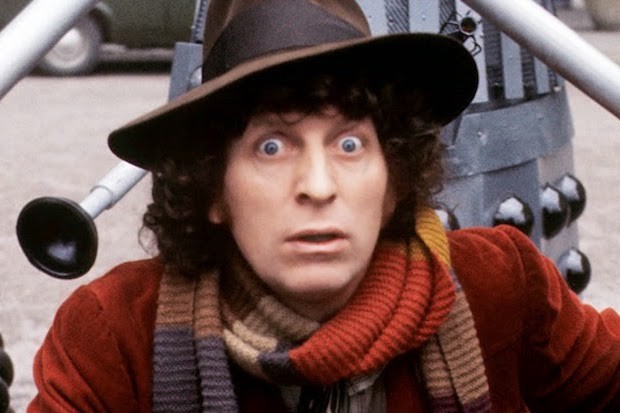
I grew up with the third and fourth doctors: Jon Pertwee, and Tom Baker. In particular I remember the Baker years as the most important to my childhood. I asked my mom to knit me a long brown scarf like Baker’s Doctor wore. I also remember sitting in front of the TV and recording the intro music to Doctor Who, so I could rewind and play that tape whenever I wanted to. The music was all synth, and entirely spooky, cool and catchy.
9. John Williams’ scores.
Star Wars was first. Empire was second. Raiders was third. Those three soundtracks made up the majority of my musical listening for years. I didn’t own any other records. Just John Williams. When you consider the impact that Holst’s The Planets had on Williams, and heavy metal too, it is no wonder that heavy metal music would later speak so clearly to me.
8. Joey Scarbury – “Theme from The Greatest American Hero (Believe It or Not)”
My earliest musical loves all came from TV or cinema. This was the first non-Williams record I owned, on a 7″ single. Mike Post co-wrote the song, and he would figure into the career of Van Halen much much later. “Believe It Or Not” was a pleasant pop song with an irresistible chorus. The B-side was a ballad called “Little Bit of Us”. I hated it. I remember playing the single at 78 RPM to see if it would make the song any better. It didn’t.
7. Magnum P.I. and The A-Team theme songs.
Here’s Mike Post again, with the theme music to Magnum P.I. starring Tom Selleck. Funky electric guitar hovered behind a bouncing string section playing the theme. It was like my John Williams soundtracks had collided with rock instrumentation. I would sit in bed and hum these themes, singing myself to sleep. And guess who was behind the A-Team’s music? Also Mike Post! Military drums and more symphonic theme greatness. I was well on my way, wasn’t I? These two themes were critically important to the whole action TV show genre.
6. Michael Jackson – “Beat It” and “Thriller”
Like every kid in the mid-80s, I loved Michael Jackson. It would not be an exaggeration to claim that every kid in my grade liked Michael Jackson to a certain degree. He had a number of hits on the radio, including “Say Say Say” with Paul McCartney, which I was frustrated to find was not on my Thriller cassette. Of course, I had no idea who Eddie Van Halen was yet, but he was in my head, playing the “Beat It” guitar solo without my knowledge. Michael’s songs were perfectly written and produced. His videos were groundbreaking, but I hadn’t seem them yet. I wasn’t even sure what he looked like at first. Tabloid photos always showed a gaunt Jackson hiding from the cameras. Once we saw his videos, I was shocked at how effeminate his speaking voice was, for a guy who sang so powerfully. Yet, I only played two or three songs on the tape.
5. Culture Club – “Karma Chameleon”
Hot on the heels of Jackson was Boy George. “Karma Chameleon” was impossible to forget, and I could care less about any of his other hits. I had the Colour By Numbers cassette and never played it except for one song. The album cover shocked me! I thought Culture Club was synonymous with Boy George – a one-man band. I had no idea there were other members, or what they looked like. I liked the tune, but this band was not for me. Eventually I would erase both Jackson and Boy George, and record other things on their tapes.
4. Styx – Kilroy Was Here
“Mr. Roboto” was the song that hooked me, but the album itself was pretty good: “Cold War”, “High Time”, “Don’t Let It End (Reprise)”, “Heavy Metal Poisoning” and “Double Life” were awesome rock songs! As before, I had no interest in the ballads. I played them once or twice, and just skipped them from then on. Styx were the first band with multiple singers that I liked: Dennis DeYoung, Tommy Shaw, and James Young. I wonder what influence this would later have on my love of KISS. Styx were bombastic and huge. The gatefold album came with lyrics, which I studied as if they were containing deep hidden meaning.
3. AC/DC – “Dirty Deeds Done Dirt Cheap”
I recorded this song from my best friend Bob, along with “The Mighty Quinn” by Manfred Mann, and if memory serves, “Ooby Dooby” by Roy Orbison. I might be wrong on that last one, but AC/DC was the one I kept playing over and over, sometimes to irritate people. I remember distinctly telling people I liked the chorus because the singer sounded like “he had a frog in his throat”. My classmate Alan Runstedtler said “I like songs with the guy with the frog in his throat!” and so did I. It was pure comedy and novelty to me, but the guitars lay the groundwork for what would come later.
2. John Fogerty – “The Old Man Down the Road”
MuchMusic had arrived! I had no idea who Fogerty was, or that he was in a legendary rock band called Creedence Clearwater Revival. All I knew was that he had a really, really cool music video on TV, and I couldn’t stop watching it. The upbeat bluesy song with rattling slide guitar seemed cool to me. I decided that I liked John Forgerty based on that one song. I was slowly discovering rock music, and the last song on this list was the last one I loved before going full-metal in 1984.
1. Quiet Riot – “Cum On Feel the Noize”
I didn’t know what they looked like. I didn’t know anything about their prior history, the two Japanese albums, or Randy Rhoads. All I knew was I had finally found “my thing”. My sound. Bombastic, big, loud, catchy, well-written, and perfect.
Without Quiet Riot, I may never have taken my next tenative steps: Helix, Iron Maiden, Judas Priest, and W.A.S.P. All much heavier than Quiet Riot. Without Styx, I might never got gotten into Quiet Riot. Without John Williams, I might never had dug into Styx. Who knows?
I loved Quiet Riot well past their best-before date. I remember other kids at school making fun of me for calling Quiet Riot my favourite band. “They’re out!” laughed Ian Johnson. “Duran Duran are current!”
Fuck Duran Duran.
My journey into metal was natural and organic. I don’t know if those kids from school even listen to music anymore. Their loss.
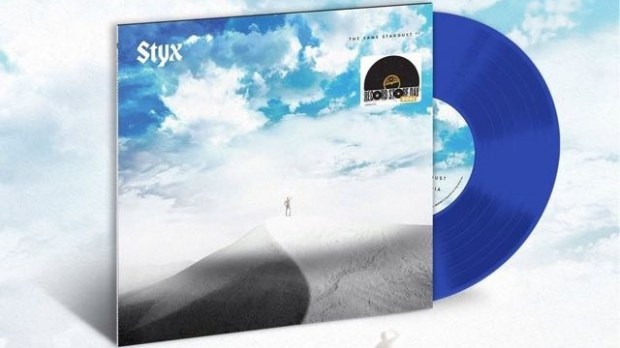
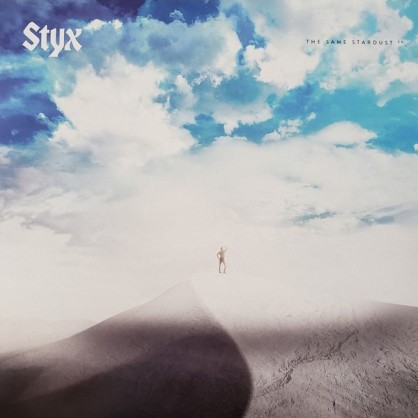
Anecdote: I wasn’t able to get this Styx EP with seven exclusive tracks on Record Store Day, so I knew I would have to pay the “late tax”. I was surprised that pretty much every copy for sale on Discogs was coming from Russia. Given the current situation I didn’t want to risk having a record coming in from Russia. I found one from somewhere else (Estonia perhaps) and bit the bullet and ordered. Two days later I got an email saying, “We are relocating to Russia! We will mail your record from there!” I almost asked to cancel but decided to be patient, and it has finally arrived. In perfect shape. Whew.
To accompany their excellent new album Crash of the Crown, Styx released an EP with two exclusive studio bonus tracks, and five live. Not bad value for an EP when all of them are previously unreleased. The record is on beautiful, heavy transparent blue vinyl, is low on surface noise, and just sounds wonderful!
The title track “The Same Stardust” opens, and it’s a theme we often hear in science: we are all, every one of us, made of the same matter from a star that exploded billions of years ago. It’s a unifying theme, but not a wimpy song. A crescendo of drums leads us to an upbeat rocker with lead vocals by Lawrence Gowan. There’s a great little riff after the chorus, and Gowan’s lead vocal recalls the Beatles. “Walk away from hate!” he sings, reflecting the sentiments of the Fab Four. Tommy Shaw sings the powerful bridge and then rips into a melodically cool solo. Easily of album, or single quality.
The second exclusive studio song is called “Age of Entropia” and it is best described as progressive like Styx of old. Tommy sings this number with a gentle acoustic opening. It builds into a more robust construction in time, really sounding like only one band: Styx. Good song but less instant.
Side two contains the live material, and the side opener is a track as desirable as the unreleased studio songs, if not more: a new live version of “Mr. Roboto” from 2020! This often shunned hit has finally been recorded again in a live setting, now with Gowan on vocals. It’s been tuned down a bit, but it still thrills. As soon you hear that trademark keyboard opening, you can’t help but smile. Especially knowing how rarely it gets played live. We all miss Dennis DeYoung but it is clear that Tommy Shaw doesn’t really want to hear about him. Gowan does an admirable job, as do all the Styx vocalists, as there is a lot going on. He even adds some of his own flare. There’s a slightly harder edge on this “Mr. Roboto” and that’s just fine.
Another treat, at least to those in the know, is “Radio Silence” from the excellent album The Mission. One of the best tunes from that sci-fi concept album indeed, and the first live release of any song from it. So that’s special, even if Crash of the Crown may very well have topped The Mission. That’s subjective…but possible.
Classics follow, dominated by Tommy Shaw tuneage. “Man in the Wilderness” has the same vibe as the newer material, cut from the same cloth. The heavy solo section is jaw-droppingly cool with wicked wah-wah effects. James Young gets the spotlight on his heavy hitting “Miss America”. Always a welcome listen, his unique vocal stylings are necessary for the overall Styx sound. And that riff! Speaking of riffs, Tommy closes the disc with the legendary “Renegade”. Still classic, still awesome, still hard to resist the urge to shake it! And though it does sound tuned down, Tommy’s voice has an incredible timeless youth.
The Same Stardust is a damn near essential add-on to your Crash of the Crown album. It would have made an awesome bonus disc to a deluxe version of…oh, man. After what I paid for this, if they put The Same Stardust on a future deluxe edition of Crash of the Crown, I’ll be pissed!
2021: the year of the hamster wheel. It sure felt like we were spinning our tires all year! Sometimes inching a little forward in the mud, only to slide right back. What a year. But we did get some great music out of it.
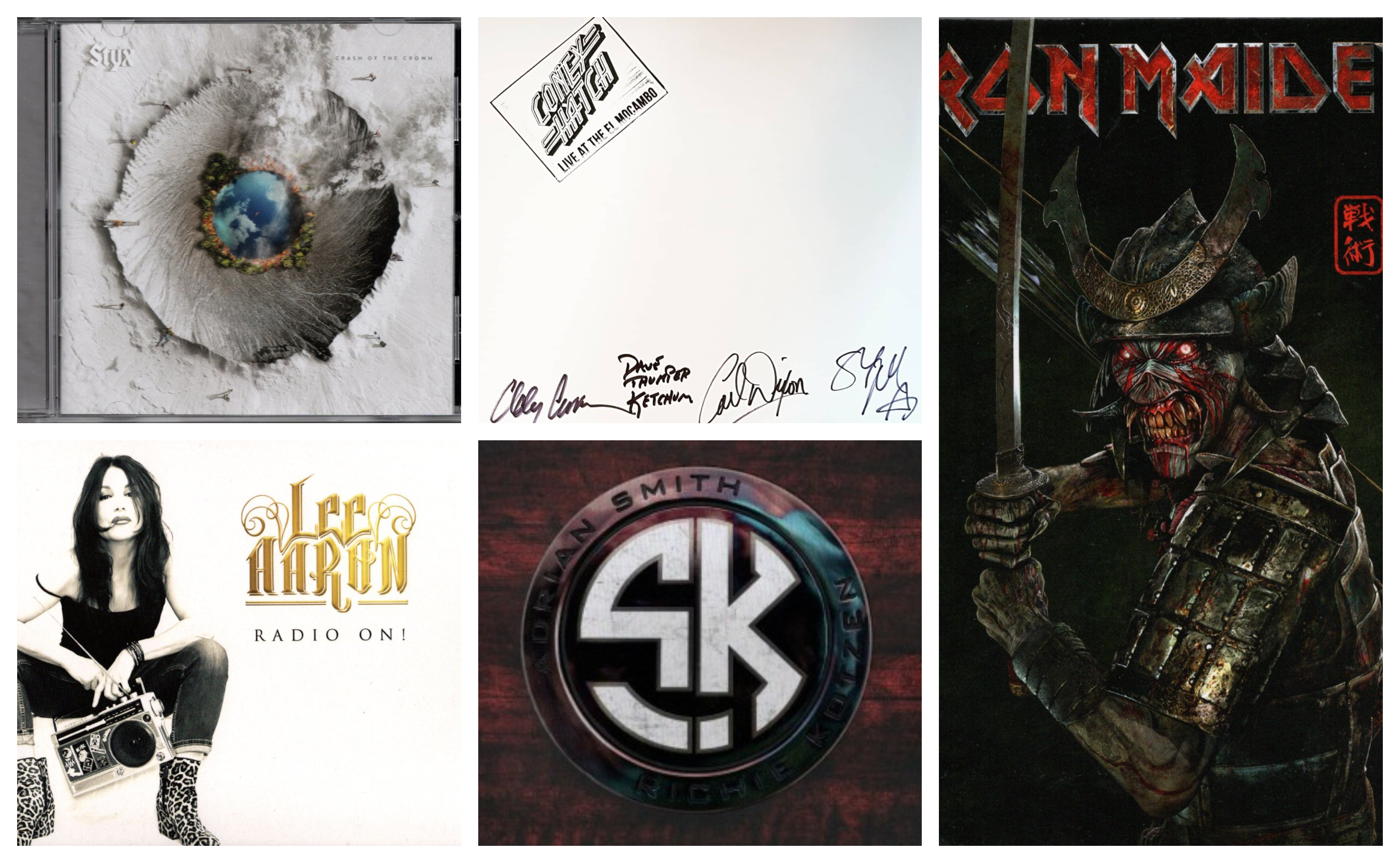
Here at LeBrain HQ, if you go strictly by the numbers, there were two bands that dominated the year, both oldies acts from the 1980s: Coney Hatch and Iron Maiden! They (or members thereof) appear numerous times in the lists you’re about to read. Not so “oldies” after all eh? Five appearances for Iron Maiden, and a whopping seven for Coney and its members!
Even I was surprised by the lists this year! All my favourite things, and the stats of 2021, are curated below.
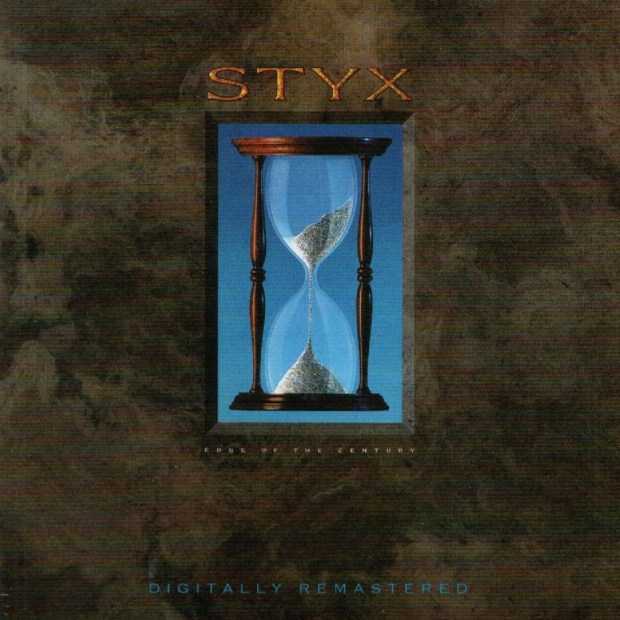
STYX – Edge of the Century (1990 A&M, 2019 BGO remaster)
Kilroy Was Hereseemed to be the end of Styx. Although the album went platinum, it was also divisive. The band were fractured and the tour was difficult. Members did not enjoy playing characters on stage. Was this a rock band or was it Broadway? Styx split up in ’84, with members embarking on new projects. Dennis DeYoung did moderately well with his solo debut Desert Moon, and Tommy Shaw had a fairly big hit with Girls With Guns. James “JY” Young went in another direction on his own City Slicker album with Jan Hammer. For all intents and purposes, Styx spent the second half of the 80s completely defunct.
In 1990 two interesting things occurred. First, Tommy Shaw formed a supergroup with Jack Blades (Night Ranger) and Ted Nugent called Damn Yankees. They came out of the gates with a surprising self-titled hit album that didn’t particularly sound like Styx, Night Ranger or Ted Nugent. But it spawned a couple hit singles and went double platinum. When Styx reunited at the same time, it was without Tommy Shaw. Styx would never record with the classic lineup again.
The Styx reunion we got in 1990 was, frankly, not the Styx reunion we deserved. A new guitarist, songwriter and singer would be needed and he arrived in the form of solo artist Glen Burtnik. He was only slightly younger than Shaw, but brought in a modern edge. He was able to sing Tommy’s high parts, and could write. The first single, “Love is the Ritual”, was written by Burtnik and partner Plinky Giglio with no other members of Styx contributing. Clearly, they were trying to turn a page and appeal to a new younger generation, and make people forget all about “Mr. Roboto”, or that dreaded “progressive rock” tag.
The new album was titled Edge of the Century and produced by Dennis, now in control of Styx. Even so, “Love is the Ritual” sounds like a Winger reject, with full-on Beau Hill production. You’d never guess it was Styx, and one suspects this is why it was chosen as the lead single. It was also the first track on the album.
Leading the new album with a song featuring a new unfamiliar singer was a risky move. The turgid track is a clone of Winger’s “Can’t Get Enuff” and features some stinky synth bass. The faux-funk of the rhythm track is unpalatable, and only a hint of Dennis DeYoung on backing vocals indicates that this song has anything to do with Styx. They’re barely in their own music video. Almost as bad are the cringey lyrics.
The song that should have opened the album, “Show Me the Way”, was a legitimate hit. A church-like ballad with soaring chorus, it struck a chord with Americans during the first Gulf War. It has the sound of a true Styx classic and fits well with past ballads. Dennis is a remarkable songwriter and the chorus on this track is just legendary.
Edge of the Century tends to be remembered for “Show Me the Way”, but good Styx-like material is still buried within. Burtnik’s back on the title track, but this infectious hard rocker does sound more like Styx. It fits that slot like a classic Tommy Shaw rocker. The wicked riff is as memorable as the catchy chorus.
The songs alternate from Glen to Dennis, and DeYoung’s ballad “Love At First Sight” is a traditional 80s power ballad with chiming keyboards. It sounds exactly like every other power ballad from 1990, but at least it is a good one. It was the third single and did OK on the charts.
One mark of a good Styx album is a decent acoustic song, and Glen Burtnik has “All In a Day’s Work” for that necessity. It’s just acoustic guitar, vocals, some keyboards and Dennis’ accordion. Very Styxian, especially when they sing together.
The second side opens with a traditional rock n’ roller, “Not Dead Yet”, which is a song by a chicago artist named Ralph Covert, sung by Dennis. It’s DeYoung’s first rocker on the album, and it’s leather jacket cool. Burtnik’s back on “World Tonite”, the cheesiest song on the album. This generic rocker with it’s “Girls wanna dance, boys wanna fight” lyric is pretty awful. Parts of it verge on rap. Its only saving grace is the harmonica that periodically blasts through. In no universe would anybody say “That sounds like Styx to me.”
Dennis is really good at ballads, and “Carrie Ann” is surprisingly strong. Like another “Babe”, it has a strong chorus and memorable hooks. Did “Babe” need a sequel? It matters not; “Carrie Ann” is pretty good for what it is. We’ve had a few ballads now, and an acoustic song, but have you noticed what is missing so far? James “JY” Young. He does not check in until the second-to-last tune, “Homewrecker”. It is a Quiet Riot-like rocker (similar to “Run For Cover”), and unsurprisingly the hardest rocker on the album. JY was overdue. That fact that you can really only feel his presence on this one track is one of the major weaknesses to Edge of the Century. However, they try to make up for it with with a smokin’ guitar solo, and a killer keyboard break from Dennis too. “Homewrecker” may be derivative but JY hasn’t rocked out this hard on a Styx album since “Half-Penny, Two-Penny” back in ’81. It’s over all too soon.
Edge of the Century is still missing one key Styx ingredient, and they save it for last: something big and pompous and overblown. That is “Back to Chicago”. Air-shaking blasts of horns and clarinet accompany a huge broadway-ready chorus. It’s hard to imagine when you start this album on “Love is the Ritual” that you will end it on something as different as “Back to Chicago”. Styx albums albums are often diverse, with heavy riff rockers butting up against pretentious set pieces. But they’ve always been cohesive. By the end of Edge of the Century, any thought of cohesiveness are out the window. Although the same five guys plays on all 10 songs, it sounds like two or three separate bands.
Edge of the Century is like a lost Styx album. The band split after a short tour, with the album going Gold but no further. Due to the sad passing of drummer John Panozzo, this lineup could never exist again. Styx reunited in 1995 (with Shaw), but they stopped playing “Show Me the Way” when Dennis was let go in 1999. “Love is the Ritual” continued to be played live when Burtnik was in the band again (on bass filling in for Chuck Panozzo) from 1999-2003.
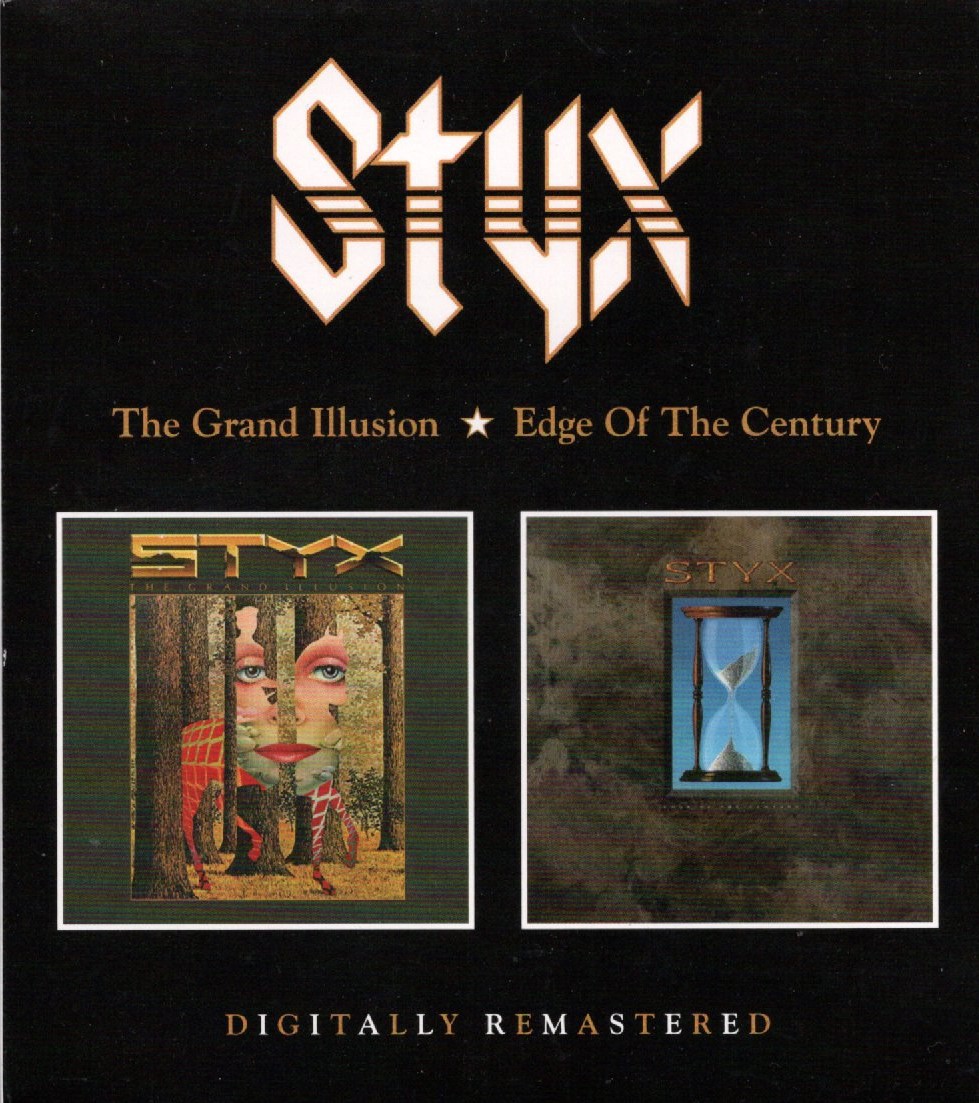
Fortunately, the album can be acquired remastered in a fine reissue on BGO Records, paired in a 2 CD set with The Grand Illusion. The reissue includes the original lyrics and liner notes, along with an essay detailing Styx history.
“I don’t think Styx will ever topThe Mission.” — Me
“I think Styx just topped The Mission.” — Also me
STYX – Crash of the Crown (2021 Universal)
Remarkable! 49 years old, and still putting out some truly superlative records. What’s the secret?
Like their contemporaries Journey and Whitesnake, Styx have expanded to a seven-member band including new guitarist/songwriter/producer Will Evankovich. With just as many songwriting credits on the new album Crash of the Crown as Tommy Shaw has, this addition feels appropriate. James “JY” Young and Chuck Panozzo (original bassist, now part time) are the only links to the distant past. Styx have not always been the most focused on new music (14 year gap between Cyclorama and The Mission) but it seems like Evankovich has sparked their creativity. Two albums in a row, Styx have risen to high-water marks, pleasing fans and stunning critics.
If there’s a blatant concept this time it’s not as obvious, but recurring musical themes hint that there might be more going on than just 15 new tracks. Crash of the Crown is assembled from smaller chunks of music that flow together in one seamless whole, but the individual songs are all under four minutes, including two brief interludes.
Opening with a wicked Lawrence Gowan keyboard bit, “The Fight of Our Lives” is a powerful and catchy intro to this distinguished album. Tommy Shaw: lead vocals, backed by the increasingly thick Styx choir. Pay attention to the main guitar theme as it’ll be back. Beatles-y chords are another recurring affair. (The Fab Four sound like a major influence on both Crash of the Crown, and the new Dennis DeYoung album 26 East Vol. 2.)
A progressive guitar/keyboard riff brings us to “A Monster”. If anything it’s a song about the last two years. “Here’s to the prisoners trapped in their cages,” could certainly be about the current time, “a monster chasing its tail”. Big guitar solos and hooks make this an unorthodox and complex little winner.
Acoustics ring on “Reveries”, the first Gowan lead vocal. It has a big powerful chorus and the acoustic base is reminiscent of classic 70s Styx. But before too long, Tommy Shaw and JY rise up for a massive tandem electric guitar break. Stuff like this is why they need a third guitarist now, so the rhythm doesn’t drop out live. “Reveries” flows seamlessly into the dull rain of “Hold Back the Darkness”. The foreboding tune, like clouds warning to stay ashore, is spare with piano and acoustics forming the basis.
Winston Churchill’s words form a part of “Save Us From Ourselves”, always a nice touch in a rock song. It possesses a more upbeat pulse, but no less powerful. The Tommy Shaw refrain in the chorus is typically bright and rhapsodic. It builds into something stageworthy, and leads into the title track and single “Crash of the Crown”. Individually, this song impresses less on the radio. It belongs on the album, flowing in and out. It’s a component of a larger piece. Incidentally it’s the first Styx song with three lead singers. In order: JY, Shaw and Gowan, each with completely unique sections. Stick with it, and a riff from “Fight Of Our Lives” returns to knock you back in your seat. Then there’s some instrumental wickedness and robot vocoder madness. It is like three or four songs crammed into one and it’s boggling why it was chosen as a single. Except to impress the fact that Styx aren’t playing around.
You need a bit of a break after a workout like “Crash of the Crown” and so the folksy “Our Wonderful Lives” is the ideal tonic. A huge singalong chorus is backed by simple kick drums, acoustics, and accordion. It’s a beam of hope on an album born from dark times. Sounding a bit like “39” by Queen, and completed with a blast of Beatles-y horns.
The dark growl of a Hammond B3 transitions into “Common Ground”, slower and thick with the modern Styx harmonies. It has some very different parts, one pounding with heavy drums and one light and flighty. While it stands as a song to itself, it also works to transition into “Sound the Alarm”, an RSD single and album highlight. This handsome Shaw ballad is reminiscent of some of his past best and serves as a bit of a hippy-like anthem. “There is no future in the way it was,” Shaw sings correctly. All at once, it has ingredients similar to “Show Me with Way”, “Mr. Roboto”, “High Enough” and “Fooling Yourself (The Angry Young Man)”. There’s sorrow, there’s hope, there’s bombast and a digital pulse.
The digital pulse leads directly into the drum-heavy “Long Live the King”. It’s also the most Queen-like, with an absolutely May-ish solo. Imagine if you tried to build a Queen song on top of the drum beat from Guns N’ Roses’ “You Could Be Mine”.
Gowan has a brief piano segue called “Lost At Sea” before the proper song “Coming Out the Other Side”. This calm ballad has a taste of India with the tabla, but manages not to sound like the Beatles this time. It recalls rebirth, and there’s a killer solo to go on top. “To Those” goes full-blown upbeat triumphant Styx, a brilliant refrain brimming with adrenaline. “For those who do survive, find beauty in your lives. Don’t be afraid of love, stand up and rise above.”
Instrumental segue “Another Farewell” steers into the final track “Stream”, which sounds and reads like an ending to a story. Whether the band intended to or not, it seems they’ve made another concept album in Crash of the Crown. “We’ve never been a protest band,” insists Shaw, “We’re more like a gospel caravan trying to send out positive messages wherever we go.” If that’s the case, then “Stream” must be the happy musical ending, an upbeat drift into the fade.
Perhaps there’s a clue to Styx’s meaning in the packaging. Morse code hidden in the CD tray reveals the words “WHOS GONNA SAVE US FROM OURSELVES”.
According to the lengthy liner notes, Styx went into Crash of the Crown with no compromises and came out of it with the album they wanted. With a diverse set of instruments at hand, they clearly had no inhibitions. The end result is an album less direct the The Mission, but dense with ideas compacted into mere minutes of songs. Fortunately most of those ideas were really excellent. Any time a band like Styx makes an album, there’s a fear it will be the last one. It sounds like this band has plenty more fuel left in the solid rocket boosters. Whatever the future holds, Crash of the Crown is the kind of triumph any young band would hold as their magnum opus. With Styx, there is so much history it’s futile to compare.